JD Sports raises profit guidance but is yet to repay furlough money

0

The JD Sports share price is up by 2.92% during the morning session on Monday

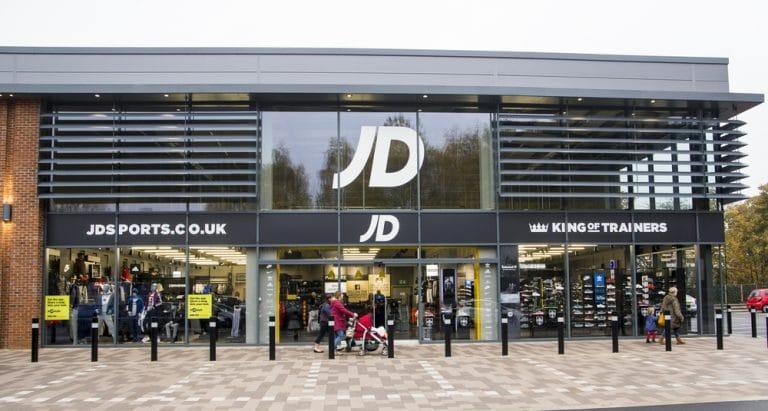
JD Sports has improved its profit outlook having reopened its UK shops, despite facing controversies over executive pay and the furlough scheme.

Having received more than £100m from the government as stores shut down due to the pandemic, Peter Cowgill, the chief of the online sports fashion brand, received around £6m in bonuses since February last year.

JD Sports has specifically seen an uplift in trading in Britain as restrictions have eased, while most of its stores across the world are now open.

However, the company is now facing pressure, as it outlined its positive outlook at its yearly shareholder meeting, despite Cowgill accepting a large bonus and having not yet paid back the furlough money.

JD Sports has said it used the money for its intended purpose and is analysing the recovery of the UK economy before fully committing to repay the government.

“In a world where doing the right thing has never been more important for companies on the stock market, JD Sports is pushing its luck when it comes to certain issues,” said Russ Mould, investment director at AJ Bell.

“The fact it still hasn’t repaid furlough support from the Government despite guiding for at least £550 million in profit this year is disgraceful. It’s even more of an insult that it is still biding its time to make a firm decision or not whether to give back the money.

“This is an incredibly successful business which is making significant amounts of money. The furlough scheme was put in place to support companies during dark times, but JD Sports is one of many businesses which have thrived with online sales during the pandemic,” Mould added.

“Therefore, it should really use money from online operations to support disruption to its store estate, not rely on Government hand-me-downs. Shareholders should be pushing for the company to pull up its socks and give that money back.”

Strong day for European markets as investors ‘pile into airline and retail stocks’

0

As the mood of investors was beginning to become a concern, markets bounced back from a weak start to the week. The FTSE 100 was up 1% to 7,109 as “investors piled into airlines and retail stocks, suggesting that the Covid delta variant is no longer considered to be a major concern,” according to Russ Mould, investment director at AJ Bell.

Following a month in the red, Associated British Foods climbed by 5.19% on Thursday on the back of a strong trading update. AO World, the Bolton-based electrical retailer, said its new financial year made a good start and PZ Cussons said it is raising prices to deal with inflationary pressures.

“These nuggets of information are very important to investors as they are proof that many businesses are holding up as the world returns to normal, and not struggling following the initial post-lockdown boost where pent-up demand saw a widespread spending spree by consumers. It was a similar story yesterday from Dixons which said trading continued to be strong,” said Mould.

The FTSE 250 climbed by 1% thanks to a push from airlines and property-related stocks such as Grafton and Howden Joinery, both reaping the rewards from more people doing up their homes. In Europe, the Euro Stoxx 50 advanced 1.1% with banks, utilities and energy companies leading the way.

“These strong market gains could serve to fire up investors and help them to regain confidence in equities. The key challenge is to sustain the positive performance as it could only take a few down days on the market for investors to turn gloomy again,” Mould said.

FTSE 100 Top Movers

Associated British Foods (5.12%), Fresnillo (4.33%) and IAG (3.99%) are heading up the FTSE 100 on a day of solid gains across the index.

At the other end, B&M European Value Retail (-2.09%), London Stock Exchange Group (-1.1%) and Admiral Group (-0.83%), have made the biggest falls so far on Thursday.

Nissan goes big on electric vehicles with new ‘gigafactory’ in Sunderland

0

Prime Minister Boris Johnson heaped praise on the project

Nissan (TYO:7201) has revealed plans to expand its production of electric vehicles at its plant in Sunderland.

The move, which will involve building its electric model on site, could help to create up to 1,650 new jobs.

It will make Nissan’s Sunderland plant the largest battery ‘gigafactory‘ in the UK.

The Japanese carmaker reaffirmed its ambition to work towards a net-zero future, as the government’s pending ban on diesel and petrol cars draws closer by the day.

Prime Minister Boris Johnson heaped praise on the project, while the government is rumoured to have contributed to the funding of the project.

More details regarding the specifications of the new vehicle will be revealed closer to the launch date of the car, while other production locations have not yet been disclosed.

The plan is for the new gigafactory to power 100,000 Nissan electric cars per year.

“This is a landmark day for Nissan, our partners, the UK and the automotive industry as a whole,” said Nissan chief operating officer Ashwani Gupta. Nissan EV36Zero will transform the idea of what is possible for our industry and set a roadmap for the future for all.”

“We reached a new frontier with the Nissan Leaf, the world’s first mass-market all-electric vehicle. Now, with our partners, Nissan will pioneer the next phase of the automotive industry as we accelerate towards full electrification and carbon neutrality.”

The projected number of electric vehicles on the road is of 51.7 million by 2025 and 144.3 million by 2030. The question is, who will manage to grab a decent portion of the market? What will become of Tesla? And what are real threats to the electric vehicle market?

Read more about electric vehicle threats that keep Elon Musk up at night here.

Gap to close all stores across the UK and Ireland

0

Gap has been conducting business in the UK and Ireland since 1987 and 2006 respectively

Gap revealed on Wednesday its intention to shut all 81 of its stores in the UK and Ireland.

The move, which will see the company become online-only in the UK and Ireland, has put 1,000 jobs in doubt.

The American fashion brand confirmed it will gradually close the stores between the end of August and the end of September.

A spokesperson for the company said: “The ecommerce business continues to grow and we want to meet our customers where they are shopping. We’re becoming a digital-first business and we’re looking for a partner to help to drive our online business.”

Gap has been conducting business in the UK and Ireland since 1987 and 2006 respectively.

The clothing giant undertook a review of the company as it considered selling its shops across Europe. It will now look at doing the same across Europe.

While Gap is analysing its current mode of operating, it reaffirmed its desire to continue operating in the UK, Ireland and across Europe.

“We believe in Gap’s global brand power. We are executing against Gap’s power plan and partnering to amplify our global reach,” the company said in a statement. 

“We are not exiting the UK market. We will continue to run and operate our Gap e-commerce business in the United Kingdom and Republic of Ireland.”

The Gap share price closed up 3.8% last night at $33.81 in New York.

Primark raises guidance as Q3 sales surpass expectations

0

Primark made £3.6bn in revenue during Q3, an increase of 47% year-on-year

Associated British Foods, the parent company of Primark, increased the clothes retailer’s profit outlook for the year after its sales surpassed expectations on reopening following lockdowns.

During Q3 ending in June, Primark confirmed its revenue reached £1.6bn, up from £0.6bn over the same period a year ago. This is having reopened all of its stores, in addition to opening seven new stores.

Primark said its profit would be approximately the same as last year, which is an increase compared to its previous guidance of “somewhat lower”.

Associated British Foods revealed that Primark made £3.6bn in revenue during Q3, an increase of 47% year-on-year.

While the sudden increase in sales can be put down in part to previous lockdowns, Primark has surpassed its exceptions due to pent-up demand from consumers.

Its performance varied depending on the region as coronavirus restrictions are different depending on the area.

Shares in associated British Foods are up by over 3.29% in the early trading hours on Thursday.

Primark is striving to reduce its stock levels, which increased to £400m above usual levels as its stores were forced to close down during 2020.

It expects for stock levels to get back to normal by the end of the current year, on the assumption that its shops remain open.

Henderson High Income: Pent-up consumer demand points to a strong economic recovery

David Smith, Fund Manager for Henderson High Income, discusses the Trusts recent outperformance, how he has navigated the re-opening of the UK economy, and provides his economic and income outlook over the coming months.

Read more about our latest insights

Before investing in an investment trust referred to in this document, you should satisfy yourself as to its suitability and the risks involved, you may wish to consult a financial adviser. Past performance is not a guide to future performance. The value of an investment and the income from it can fall as well as rise and you may not get back the amount originally invested. Tax assumptions and reliefs depend upon an investor’s particular circumstances and may change if those circumstances or the law change. Nothing in this document is intended to or should be construed as advice.  This document is not a recommendation to sell or purchase any investment. It does not form part of any contract for the sale or purchase of any investment. We may record telephone calls for our mutual protection, to improve customer service and for regulatory record keeping purposes.

Issued in the UK by Janus Henderson Investors. Janus Henderson Investors is the name under which investment products and services are provided by Janus Capital International Limited (reg no. 3594615), Henderson Global Investors  Limited (reg. no. 906355), Henderson Investment Funds Limited (reg. no. 2678531), Henderson Equity Partners Limited (reg. no.2606646), (each registered in England and  Wales at 201 Bishopsgate, London EC2M 3AE and regulated by the Financial  Conduct Authority) and Henderson Management S.A. (reg no. B22848 at 2 Rue de Bitbourg, L-1273, Luxembourg and regulated by the Commission de Surveillance du Secteur Financier).

Janus Henderson, Janus, Henderson, Perkins, Intech, VelocityShares, Knowledge Shared, Knowledge. Shared and Knowledge Labs are trademarks of Janus Henderson Group plc or one of its subsidiaries. © Janus Henderson Group plc.

Oil rises as eyes turn to this week’s OPEC+ ministerial meeting

Oil prices hovering around their highest price since October 2018

Attention will turn to the OPEC+ ministerial meeting on Thursday, as officials will discuss crude output levels and supply for the coming months.

Giles Coghlan, Chief Currency Analyst, HYCM said: “Naturally, buyers will be trying gauge what’s in store next, after the bullish run we have seen in the USOIL markets recently.”

At present, both Brent crude oil and West Texas Intermediate are hovering around their highest price since October 2018, amid rumours that demand could increase substantially during H2.

Reuters reported that analysts at Goldman Sachs believe demand will rise by an additional 2.2m barrels per day before the close of 2021. This would mean a 5m barrels per day shortfall.

“Given that the OPEC+ have kept output levels on a tight leash in recent months, with global economies now beginning to consume more oil, expectations are mounting that the organisation could loosen its hold and increase supply,” said Coghlan.

“However, there are two main factors that could undermine this narrative,” Coghlan added. “The first being the recent spike in new COVID-19 cases around the globe, driven largely by the more infectious Delta variant. Particularly as Australia and New Zealand have not yet vaccinated so much of their population, the rise in cases means that a recovery in demand might be a slippery prospect, with these countries remaining vulnerable to further lockdown restrictions.”

“Secondly, ongoing talks between Iran and other world powers regarding the revival of Tehran’s Nuclear deal could prove another setback, should these negotiations take longer than expected. Although many analysts expect this output to be absorbed, it could potentially result in some short-term downside.”

It will take careful precision from the OPEC+ to make sure that oil prices remain supported, while ensuring added production levels.

“Some reports suggest that the cartel is mulling over bringing additional supply online in response to the fast rebound in demand, but how much more can they bring to the table?,” said Coghlan.

“Current estimates suggest that this could look like an extra 500,000 to 1,000,000 barrels per day. Ultimately, the bottom line is that as the global vaccine rollout continues, the general outlook for USOIL is optimistic, and deeper pullbacks that are backed around $68 would be a clear buy.”

What does the end of the stamp duty holiday mean for the property market in 2021?

0

Average UK house prices now stand at £265,000

The stamp duty holiday at the current threshold of £500,000 will come to an end on 30 June, and will stagger back to normal levels before the final deadline in September.

The question on everyone’s minds now is what the end of the stamp duty holiday will mean for the housing market.

The stamp duty holiday has buoyed the property market during the pandemic, with greater demand for property and surging housing prices.

According to figures released by the ONS, average house prices in the UK have jumped by 8.9% for the year to May 2021, now standing at £265,000.

GoodMove, the property buyer, carried out research which found that 39% of Brits took advantage of the stamp duty holiday when buying their home during the past year. It is estimated that they made savings of up to £15,000.

“The stamp duty holiday, as well as demand for more spacious properties fuelled by lockdown, has helped the property market succeed through what has been an immensely difficult year in other industries,” said Ross Counsell, chartered surveyor and director at GoodMove.

But what does the stamp duty holiday exemption mean for the housing market for the rest of 2021?

“As we have seen from HPI statistics across the year, the housing market has become extremely saturated, following people rushing to buy properties to meet the deadline. Mortgage approvals and new buyer enquiries for properties have risen by 44% with the rise in demand reflecting the inflation of house prices,” said Ross Counsell.

“In a sense, the government’s exclusion of contract exchange with Stamp Duty may be of benefit in the long run. We can expect to see a decline in demand from October once the deadline officially ends, and expect this to be a better time to buy a property this year before rushing to try and meet the deadline.”

Counsell is of the view that buyers should wait to purchase property until the end of the new deadline.

“For anyone looking to purchase a property, the advice is simple – hang fire. If the statistics are reflective of anything over the past year, the Stamp Duty is of benefit to only one side of the coin – the sellers. If buyers can wait it out until the end of the deadline, they should expect to save a significant amount of money on a property,” Counsell said.

“A home is the heart of you and your family, and with only three months to go until the end of the Stamp Duty deadline, it’s worth buyers taking their time to find their dream property. Such a significant stage of life should not be rushed, as this can cause dissatisfaction in the long term.”

Eurozone inflation slows compared to UK and US

0

Inflation across the EU is down by 0.1% from May to 1.9% in June

Eurozone inflation fell in June amid a fall in the price of oil, according to data published on Wednesday.

Inflation across the EU is down by 0.1% from May to 1.9% in June.

The figure matched the European Central Bank’s inflation target of below but close to 2%.

“Additionally, the Core CPI also slowed down to 0.9%, in marked contrast to the recent surprise prints in both the US and UK,” said Jesús Cabra Guisasola, Associate at Validus Risk Management.

Slowing Eurozone inflation is in marked contrast to the US and UK.

“Unlike the US and UK CPI data which helped initiate a move towards a more hawkish tone, these numbers will continue to support the ECB’s ultra-loose monetary policy in the coming months, as Chief Economist Lane already signalled that the September meeting would be too soon for a tapering debate.”

For individual countries, Germany‘s yearly rate of inflation came in at 2.1%, down by 0.3% from May. While Spain held the same at 2.4%, France and Italy saw a 0.1% increase, up to 1.9% and 1.3% respectively.

“So far the market reaction has been muted. However, the euro has come under some downside pressures in recent weeks, with the currency depreciating against the dollar from $1.22 to below the $1.19 level,” said Jesús Cabra Guisasola.

The Bank of England predicted last week that inflation would exceed 3%, above its target for a “temporary period”.

“The economy will experience a temporary period of strong GDP growth and above-target CPI inflation, after which growth and inflation will fall back,” the monetary policy committee said.

“A decline in eurozone CPI should provide some relief for markets given the impact it could have upon ECB thinking. Nonetheless, markets are on the back foot, with travel stocks once again feeling the heat in the UK,” said Joshua Mahony, Senior Market Analyst at IG.

“European stocks are on the back foot in early trade today, with another bout of sterling weakness providing little upside momentum for the FTSE 100. On a day dominated by economic data, eurozone inflation has provided a welcome sign of easing pressure on the central banks.”

Vietnam Holding: ‘exposure to a high-growth frontier market with conviction stock ideas’

Vietnam Holding

Vietnam Holding (LON:VNH) is a closed-ended fund that invests in high-growth companies in Vietnam, focusing on domestic consumption, industrialisation and urbanisation.

The London-listed investment trust, launched in 2006, offers nimble stock selection with integrated ESG. It has also been signed up to the United Nations Principles for Responsible Investment (PRI) for over ten years.

“We have a team of 12 people on the ground in Vietnam actively managing the fairly concentrated portfolio”, said Craig Martin, chairman of Dynam Capital, the manager of Vietnam Holding.

In June, Edison Group, the investment research and advisory company, released a research note on the fund, making the case that it offers investors exposure to a high-growth frontier market.

Edison Analyst View

Edison is of the view that Vietnam Holding gives investors exposure to a high-growth frontier market with “conviction stock ideas across the market cap spectrum”.

Vietnam’s transformation began some 30 years ago and the analyst now feels that the country is booming. 60% of the fund is geared towards consumption, industrialisation and urbanisation, and Edison feels that it is well placed to offer exposure to these mega trends.

“VNH’s performance relative to the index can be volatile”, said Edison’s research note. This is because it is a very concentrated fund. “Over the past month (to end-May), the top four holdings (39% of NAV) drove strong outperformance vs the index (19% NAV TR vs 8% for the index), resulting in the fund’s NAV outperforming over one and three months,” the note added.

Performance

Vietnam Holding does not have a benchmark, however, Edison used two Vietnamese equity indices to measure the fund’s performance.

The London-based fund has outperformed the VN Index (385 members, the broader market index of the two) and VN All-Share Index (259 members) over the past six months and one year period by 9.2% and 6.3%, and 12.1% and 9.2% respectively. This is on a net asset value (NAV) total return basis.

The portfolio is set to perform well in 2021, according to Edison. That is because of its allocation to economically sensitive industries including banks and retail, providing the economy continues to perform well supported by the “global cyclical recovery and ongoing domestic growth”.

UK Investor Magazine Conference

Vietnam Holding (LON:VNH) presented at the UK Investor Magazine Virtual Conference in March.

Craig Martin, Chairman of Dynam Capital, the manager of Vietnam Holding, presents the case of investing in Vietnam and provides detailed insight into the Southeast Asian economy.