Sainsbury’s records loss as Covid and Argos costs spiralled

0

Sainsbury’s underlying profits fell by 39% to £356m from £586m

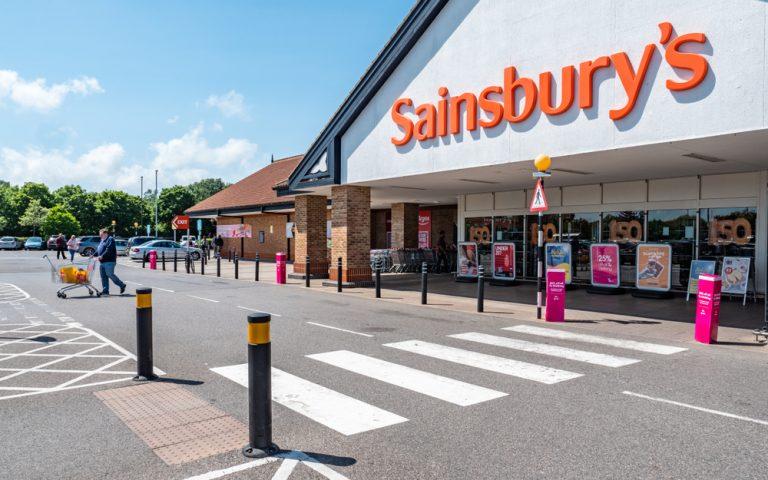
Sainsbury’s (LON:SBRY) recorded an annual loss as the cost of serving customers during the pandemic, along with its transformation of its Argos business weighed down on its balance sheet.

The FTSE 100 supermarket chain confirmed on Wednesday that is made a loss before tax of £261m for the year ending March 6, a swing from a £255m pre-tax profit the year before. The results followed £321m worth of write downs which were in the most part connected to its decision to shut 420 Argos high street shops.

The group’s underlying profits fell by 39% to £356m from £586m after Covid-19 related costs, sick pay, PPE etc, amounted to £485m.

Sainsbury’s announced in December that it would repay £440m of business rates relief it received during the pandemic. It followed similar moves by Tesco, Asda, Morrisons and Aldi and means the grocers collectively returned more than £1.7bn.

The supermarket has also benefited from the huge demand for food deliveries during the pandemic, resulting in online sales jumping by 120% as it has doubled its capacity to more than 850,000 online orders a week.

The supermarket is expecting its underlying profits will double this year to £620m, above the £586m from before the pandemic. This is based on the grocer’s expectation that its heavy costs will fall off, while its banking arm will see a rise in profitability, which should outweigh falling sales as customer behaviour returns to normal.

“This year’s financial results have been heavily influenced by the pandemic. Food and Argos sales are significantly higher, but the cost of keeping colleagues and customers safe during the pandemic has been high”, Simon Roberts, Sainsbury’s chief executive, said.

“Sainsbury’s was the biggest faller on the FTSE after taking a big hit from Covid-related costs. Supermarkets have done a stellar job of keeping their shelves stocked during the pandemic and expanding online capacity, but this hard work is not translating into a sharp rise in profit as some people might have expected.

Lumber prices are soaring in possible signal of oncoming inflation

0

Lumber up by over 200% since onset of pandemic

The price of lumber, also known as timber, a type of wood that has been processed into beams and planks, has reached $1,420, as it soared since the beginning of the pandemic.

Having reached a then record of $1,188 just a week ago, lumber is up by well over 200% since lockdowns came into effect.

The price squeeze triggered circuit breakers yesterday and caused trading of the commodity to cease for the day.

Supply Issues

“The market is in trouble. It could spiral out of control in the next few months,” Dustin Jalbert, senior economist at Fastmarkets RISI, told Fortune. It comes down to a lack of supply at a time when demand is growing for lumber as housebuilders are looking to get to work.

The undersupply has been caused by the pandemic. As lockdowns came into effect across America, production of lumber stopped, while many people took it themselves to carry out DIY projects. This was then compounded by the arrival of a housing boom caused by record-low interest rates which came about as a result of the recession. By March, housebuilding reached its highest level since 2006 exacerbating the undersupply of lumber

Possible Signal of Inflation

It will not be received as welcomed news to home builders but the commodity’s ceiling could be even higher, as a potential sign of inflation in the US economy.

“The pipeline for lumber and other wood products demand remains quite deep in 2021…Builders have plenty of ongoing projects to keep working through, which is keeping lumber and panel demand high, and making it very difficult for mills to ramp production up fast enough to rebalance the market,” says Dustin Jalbert, senior economist at Fastmarkets RISI, where he specializes in wood prices.

It is a part of a wider trend of commodity prices, which have surged in recent weeks, including corn, coffee, sugar and copper. In the UK, IHS Markit recorded that rapid cost inflation persisted across the UK private sector, led by higher fuel bills, staff wages, commodity prices and freight surcharges. “A combination of greater operating expenses and stronger customer demand meant that average prices charged continued to increase at one of the fastest rates for the past three-and-a-half years,” the composite PMI said.

Are we entering the next chapter for equity markets?

Alan Green joins the Podcast as we digest recent updates from FTSE 100 majors such as BP, WPP, Lloyds and Persimmon.

The shares operate in some of the most cyclical industries including commodities, advertising, finance and house building. This broad spread means these companies provide vital insight into the health of the wider economy.

While the recent updates from these companies were strong, the FTSE 100 is yet to breach 7,000 with any conviction, highlighting that investors could have already priced in much of the economic recovery to stock markets. We look at whether this signals we are entering the chapter for stock markets.

We discuss in detail Corcel (LON:CRCL), Catenae Innovation (LON:CTEA) and Versarian (LON:VRS).

Persimmon recover swiftly from pandemic

House sales 11% above pre-COVID-19 levels says Persimmon

Persimmon (LON:PSM) said on Wednesday that its house sales during 2021 are 11% higher than before the coronavirus pandemic took hold in a sign of continued strength for the UK housing market.

Forward sales for the quarter are worth £3bn, according to the FTSE 100 homebuilder, up 23% on a year ago, when lockdowns started, in comparison to £2.7bn in 2019.

Persimmon also said that the average price of a house built is rising, up to £252,000, from £244,500 a year before.

Dean Finch, chief executive, said it had been a strong start to the year with build rates at pre-COVID-19 levels and first-half volumes approaching those of 2019.

Persimmon was also buying land, he added, with 6,000 plots across 29 locations acquired this year.

Commenting on the trading update, Steve Clayton, Hargreaves and Lansdown Select fund manager said:

“Persimmon’s current run-rate of sales suggests the full-year outlook could be significantly better than previous expectations. That explains the bounce in the shares in early trading, up 2% to 3210p. The market was expecting the group to match 2019’s outcome this year, but rather than simply recovering, the group looks to have moved straight onto outright growth, if it can maintain momentum in the business.”

“There are challenges ahead. Stamp Duty is coming back, and can Persimmon actually maintain production at the levels currently demanded? Persimmon’s earlier caution means it faces pressure to lift the rate of new site openings. Adding 6,000 new land plots in the quarter is a good start here, but buying land is not the same as building on it. The group are taking a cautious approach, suggesting that build rates will only match the 2019 level for the rest of the year, so analysts will be wary of pushing forecasts too far forwards at this stage. But with over £900m of cash in the bank, Persimmon faces its challenges from a position of huge strength.”

Microsoft sales rise on strength of cloud service and computer sales

0

Microsoft’s income for Q3 rose by 44% year-on-year to $15.5bn

Microsoft (NASDAQ:MSFT) has confirmed that it met its expected sales for the quarter while it exceeded profit forecasts.

The company, founded by Bill Gates and Paul Allen in 1975, is now one of the most valuable companies in the world, worth nearly $2trn, as its share price soared over the past year. This was thanks to it securing market share in the growing cloud computing, as well as in other areas, including its Teams collaboration service.

Such services saw raised demand during lockdowns, as Microsoft’s Azure cloud service made up ground on the market leading Amazon Web Services by growing by 50% over the last quarter.

Many people working or studying from home made the decision to buy new PCs, which caused an upturn in the Microsoft Windows operating system and video game businesses.

Net income for Q3 ended in March rose by 44% year-on-year to $15.5bn. Revenue and adjusted earnings per share were $41.7 billion and $1.95 per share, above analysts’ estimates of $41.03 billion and $1.78 per share.

Ben Barringer, equity research analyst at Quilter Cheviot commented on Microsoft’s results:

“Microsoft posted a good set of numbers, largely in line with expectations, with 16% revenue growth over the quarter primarily as a result of its cloud business, which increased revenue by over 46%. Although Microsoft’s cloud platform Azure did experience a slight reduction in growth after the 48% increase posted in the previous quarter, it is still ahead of expectations.”

“Looking forward, Microsoft has phenomenal revenue resilience with plenty of revenue streams including Teams, Azure, LinkedIn, gaming, security, business analytics, AI and many more. The business should be buoyed by increased global spending on technology, which is expected to increase from around 5% of GDP to 10%, with cloud penetration also expected to increase from 20% to 80% in the years ahead.”

FTSE 100 boosted by decent gains from BP, Shell and Lloyds

0

Boosted by decent gains for BP and Shell, and a 3.3% surge from Lloyds – which posted Q1 pre-tax profit of £1.9 billion against the £74 million seen this time last year – the FTSE 100 climbed 0.6% after the bell. That still, however, wasn’t enough to lift the UK index back to 7,000, instead leaving it 30 points short of that landmark level.

“Europe displayed no signs of the pre-press conference cautiousness that often clouds Fed Wednesdays, instead striving to recover Tuesday’s losses,” said Connor Campbell, financial analyst at Spreadex.

In the Eurozone, even with Deutsche Bank rising 5.4%, the DAX could only manage a 0.3% increase, keeping the German bourse 10 points adrift of 15,300. As for the CAC, a 0.4% jump sent it above 6,230, around 20 points off last week’s highs.

“If the European markets were ignoring the tension of a Fed Wednesday, the Dow Jones certainly isn’t. The futures point to a 0.1% decline from the index when trading gets underway Stateside, pushing it the wrong side of 33,950,” Campbell added.

“Though the broad consensus is that Jerome Powell and the rest of the FOMC will keep things unchanged this evening, there have been some reports suggesting that the topic of tapering bond purchases could be broached. If that is the case, then the markets could be about to end April on a bum note.”

FTSE 100 Top Movers

Lloyds (3.28%), WPP (2.84%) and Persimmon (1.92%) are the top movers at mid-morning on the FTSE 100.

At the other end, Fresnillo (-3.29%), Sainsburys (-2.23%) and Reckitt Benckiser (-1.86%) have made the biggest falls so far today.

Lloyds

Lloyds saw its profits soar during Q1 as a more positive outlook allowed the bank to reverse some of provisions it had made for loan losses following the spread of coronavirus.

The FTSE 100 bank followed in the footsteps of HSBC earlier in the week by writing back some of last year’s losses. A number of banks took large forward-looking provisions around the beginning of the pandemic, although defaults have stayed low, thanks in part to government support.

Director Dealings: Eleco PLC

Eleco plc (AIM: ELCO), the AIM-listed construction software specialist, announces that it was informed on 27 April 2021 that on 26 and 27 April 2021, Kevin Craig, Non-Executive Director of the Company, purchased 60,000 ordinary shares of 1 pence each in the capital of the Company ("Ordinary Shares") 30,000 Ordinary Shares at a price of 108 pence per Ordinary Share and 30,000 Ordinary Shares at a price of 110 pence per Ordinary Share, respectively (together, the "Purchase").
"My latest investment is a sign of confidence in the business, its trajectory, its leadership, its progress to date ...

Santander profits surge 61%

0

Santander to close 111 branches by August 2021

Santander (LON:BNC) announced its pre-tax profit rose by 61% in Q1 in what the bank described as a “strong” set of results.

The bank’s profit rose to £184m, up from £114m, over the three month period.

Santander also said that its return on tangible equity (RoTE) more than doubled to 9.4%, up from 4.3%.

Wednesday’s results arrive just a month after the bank, which falls under the umbrella of Spanish bank Santander, confirmed it would be closing over 100 of its branches across the UK, by the end of August 2021.

At is a move being replicated across the sector as other banks seek to reduce their sites in order to adapt to consumer demand. Up to 840 staff members will be affected by Santander’s decision.

Commenting on the results, chief executive Nathan Bostock, who will leave the firm he has run since 2014 at the end of the year, said:

“This is a strong set of results which demonstrates the progress we are making in transforming the bank for the future and reflects the strategic decisions we have taken,” he said.

“As the UK begins to emerge from the pandemic, our priority continues to be to support customers, colleagues and communities at what remains a difficult time for many.”

“Although the economic outlook is more positive, market conditions will remain uncertain given the low interest rate environment and the lasting impacts of the pandemic.”

“We plan to succeed by continuing to focus on delivering an excellent customer experience, while further simplifying how we operate and improving our digital capability.”

Lloyds records £1.9bn profit as bank reverses loan provisions

0

António Horta-Osório set to leave as chief executive of Lloyds

Lloyds (LON:LLOY) saw its profits soar during Q1 as a more positive outlook allowed the bank to reverse some of provisions it had made for loan losses following the spread of coronavirus.

The FTSE 100 bank followed in the footsteps of HSBC earlier in the week by writing back some of last year’s losses.

A number of banks took large forward-looking provisions around the beginning of the pandemic, although defaults have stayed low, thanks in part to government support.

Lloyds confirmed it has made a profit before tax of £1.9bn for the quarter ending in March, well up from below £100m for the same period a year ago.

The improvement can be mostly put down to a drop in bad debt provisions. Lloyds reported a net impairment credit of £323m, compared with a £1.4bn charge in the first quarter of 2020.

The group’s revenues fell by 7% compared to the year before to £3.7bn, while the fall was still below what analysts had expected, the Financial Times reported.

Chief executive António Horta-Osório, who is set to leave to become chairman of Credit Suisse, said the pandemic “continues to have a significant impact on people”, but added that “the long-run transformation of the group has positioned the business well to address the challenges”.

He is being replaced by the HSBC banker Charlie Nunn, who will take over at Lloyds on 16 August. The chief financial officer, William Chalmers, will act as chief executive in the interim.

Alphabet doubles profit as online advertising surges during pandemic

0

Alphabet makes more money from digital advertising than any other company

Alphabet (NASDAQ:GOOGL), the owner of Google and YouTube, has more than doubled its profits as firms spent money on online advertising to get the attention of people working and playing online during the pandemic.

The company said it managed to surpass analysts’ expectations because of “elevated consumer activity online”.

Alphabet‘s revenues rose by 34% to $55.31bn in Q1, a new record, while its net profits increased to $17.93bn. Its share price could open at a new high today, The Times reported, after it jumped by 3.7% to $2,375 during after-hours trading.

The company’s valuation stands at $1.5trn, as it makes more money from digital advertising than any other company, selling space on Youtube, Google and its other websites.

Sales within the company’s Google search business increased by 30% to $31.88bn, while Youtube ad revenues rose by 49% to $6.01bn. Its rapidly-growing cloud computing division has seen a 46% jump in sales, getting to $4.05bn.

Alphabet’s board has confirmed it has given the go-ahead for a $50bn share buyback programme. The news has come as the company faces up to increasing pressure from regulators over its market dominance.