


Premier Inn has cause for optimism as staycations look set to boom
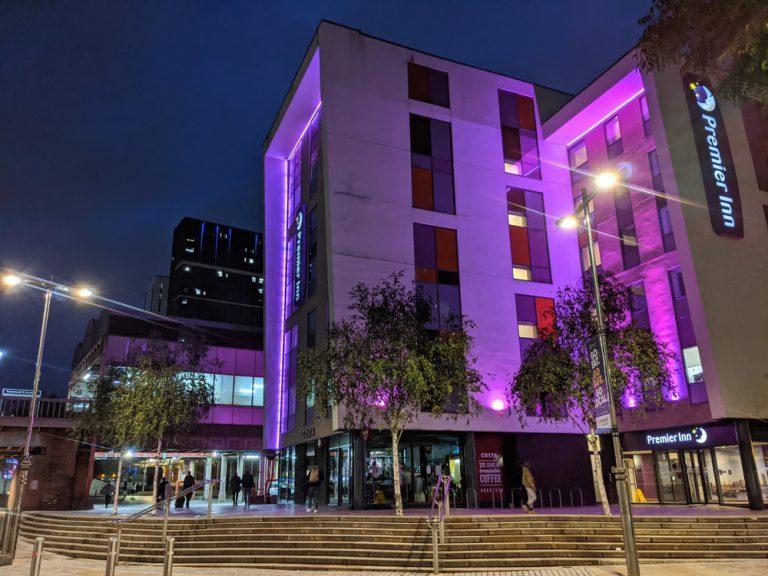
‘Anywhere with a beach or a view’ all but fully booked for the summer says Premier Inn CEO
Premier Inn (LON:WTB) is enjoying a surge in bookings as Brits settle for staycations over the summer holidays.
The prospect of guests booking every room out at 15% of its over 800 hotels located in touristy destinations is welcomed news after the pandemic caused Whitbread, the owner of Premier Inn, to fall to a full-year loss of £1bn.
Alison Brittain, the Whitbread chief executive, said that the financial year ended in February 25 had been one of the most difficult in its nearly 300 year history, however she as he said that the FTSE 100 company was in a good position to capitalise as restrictions are lifted across the country.
While its hotels will be fully opened from May 17, Brittain said that “anywhere with a beach or a view” was all but fully booked for the summer.
The Premier Inn CEO said the magnitude of the pent-up demand has caused people to think far in advance.
“We opened up the bookings for Cheltenham 2022 a year in advance and we were fully booked within 48 hours at all our hotels within quite a wide mileage. This shows that people are thinking ahead to things they have missed out on during the pandemic,” she said.
Amisha Chohan, equity research analyst at Quilter Cheviot commented further on the results:
“The pandemic pain is temporary, and the business will be one of the big beneficiaries of the post-lockdown bounceback and staycation boom. In fact, in the second half of 2020, the group was successful in winning market-share, suggesting the market has become more concentrated as competitors were forced to exit the market.”
“Premier Inn, in particular, is primed to take advantage of a ‘leisure bounce’ and could be an interesting recovery play once the economy springs back to life. The hotel chain will emerge from the crisis stronger, opening between 2-3,000 rooms in the UK and 2,000 in Germany, and will see an upside from the acceleration of the vaccine rollout in the UK and across Europe,” Chohan said.
“The reopening of the UK economy and restrictions on international travel will provide a boost to Premier Inn, particularly in the coastal and tourist locations which account for around 15% of the chain’s overall estate. A full recovery in leisure demand will require the return of unrestricted events later on this year.”
XLMedia expecting revenues to improve in 2021 after being ‘knocked off track’

Revenue fell to $54.8m in 2020, down from $79.7m the year before
XLMedia (LON:XLM) said it performed relatively well during 2020 as it revealed its results for the year.
The online marketing company also said it is expecting to see a big upturn in its revenues for the coming year.
The AIM-listed group’s revenue fell to $54.8m in 2020, down from $79.7m the year before.
XLMedia said its results came down to a Google search ranking penalty in January, in addition to being impacted by the coronavirus pandemic which caused an estimated $2m a month, as sports events and activity in financial services were reduced.
EBITDA decreased to $12.2m from US$33.5m in 2019 while adjusted pre-tex profit fell to $4.5m from $25.3m the year before.
XLMedia just about swung to a pre-tax profit of $1.1m following a loss of $57.7m in 2019.
Cash and short-term investments stood at $13.9m at the end of the year, compared to $29.9m at the end of 2019.
The media firm said its revenue levels in January 2021 are catching up to where they were the year before, as the board is expecting a material improvement in revenues this year.
“We entered 2020 with strategic and operational clarity, only to find ourselves knocked off track in the short term by the unforeseen challenges of a Google penalty and the Covid-19 global pandemic. Even against this backdrop the business performed relatively well, and we made significant progress on the priorities of upgrading the asset portfolio and restructuring the organisation, which will drive performance over the longer term,” said Stuart Simms, the chief executive officer of XLMedia.
“Over the last few months, the company completed two significant acquisitions in the US Sports market. This is a very positive and material step in rebalancing the group, providing immediate scale in an attractive and high-growth, regulated market.”
“Completing the transformation of the business, including the overhaul of the systems supporting it and delivering the long-term operating structure to maximise growth will involve further significant investment in 2021. Notwithstanding this, our level of confidence in the business performance and recovery continues to grow and we have entered 2021 with positive momentum, which we expect to lead to revenue materially ahead of the previous year,” he added.
Tesla beats expectations thanks to environmental credits and bitcoin

Tesla posted record deliveries in Q1 despite global chip shortage
Tesla (NASDAQ:TSLA) narrowly beat analysts’ expectations for Q1 revenue the company revealed on Monday, as its environmental credit sales rose and it liquidated part of its bitcoin holding.
The electric vehicle manufacturer posted record deliveries in Q1 even though there was a global chip shortage. However, the company’s profit was not a result of its car sales.
Tesla invested $1.5bn in bitcoin, but then sold around 10% of it off during Q1. The company’s proceeds from the sale came in at $272, with a $101m “positive impact”.
“We do believe long term in the value of bitcoin,” said chief financial officer Zachary Kirkhorn. “It is our intent to hold what we have long term and continue to accumulate bitcoin from transactions from our customers as they purchase vehicles.”
Tesla has now made a profit for seven consecutive quarters, mostly down to their environmental credits.
Tesla earned $518m from sales of those credits, up 46% from a year before. Tesla earns credits for surpassing its emissions and fuel economy standards and sells them to other companies that fall short.
“Higher regulatory credits, lower taxes, and bitcoin sales buoyed financial results. Back these out, and it was a large miss,” Roth Capital Partners analyst Craig Irwin said.
Tesla said it managed to find its way through the global chip shortage by adapting to using new chips, which included developing new software.
Musk said it had “some of the most difficult supply chain challenges,” citing a chip shortage. “We’re mostly out of that particular problem,” he said.
The average price of its vehicles fell by 13% as production of the more expensive S and X models stopped ahead of major updates.
Its average cost per vehicle is now below $38,000 in Q1, compared with $84,000 in 2017.
Revenue rose to $10.39 billion from $5.99 billion a year earlier. Analysts had expected revenue of $10.29 billion, according to IBES data from Refinitiv.
IWG says office occupancy rates will rebound as world shifts to hybrid models

IWG expecting occupancy rates to get back to pre-pandemic levels by the middle of 2022
IWG (LON:IWG), the office space provider, is expecting occupancy rates to get back to pre-pandemic levels by the middle of 2022 as demand for hybrid working models is leading the company to a recover following a challenging start to the year.
Recent jumps in Covid-19 cases across the world have given cause for concern for office property providers as authorities in the worst hit areas are encouraging people to work from home and employers to put off returning to their offices.
“We are expecting to come back to healthy levels of occupancy and recovery in price as we go through the year and expect to get back probably by mid-2022 to full power,” Chief Executive Mark Dixon said on an analysts’ call.
IWG shares were down by nearly 2% to 355.90p just after lunchtime on the back of the company’s update.
The FTSE 250 company said it had seen “unprecedented demand” for its products which are suited for a mixture of office and remote work, the new norm since the beginning of the pandemic over a year ago.
IWG, owned by Regus, confirmed its open centre revenue for the quarter ending March 31 dropped by 16.1%, although the period represented “a clear inflection point” for its business with occupancy growth restarting in March after months of decline.
The company said activity in China was ahead of pre-pandemic levels, as Southeast Asia came out of the crisis faster than other regions.
It added that the U.S. market, its largest, was also showing signs of improvement, with Texas and Florida seeing growth.
“These early signs of improvement continue to take root in many parts of the business,” IWG said.
Although IWG has identified hybrid work models and flexible spaces as inevitable in future, the company has yet to detail the financial impact of adjustments to its real estate.
“Trends in both franchise agreements and enterprise accounts are encouraging, albeit the market will want to see a more concrete delivery of larger franchise agreements over the next couple of quarters,” Davy Research analyst David Greenall said.
FTSE 100 continues to struggle with getting back to 7,000

There was little to Tuesday’s open, the European indices barely flickering into life after the opening bell. Despite strong earnings from HSBC and BP – the bank and oil firm rose 0.8% and 1.4% respectively, following surges in their first quarter profits – the FTSE barely budged. The UK index was flat at 6,964 still having trouble get back above 7,000 following the rather significant wobble suffered this time last week.
“Admittedly, the FTSE wasn’t alone in shying away from any major action as the session got underway. The DAX trickled 0.2% lower, slipping under 15,300, while the CAC was just as unchanged as its UK peer, sitting at 6,220,” said Connor Campbell, financial analyst at Spreadex.
“At present the session isn’t looking like it is going to pick up this afternoon. The Dow Jones futures have the US index rising 0.1% at best, just about hefting it back across the psychologically significant 34,000 mark.”
“Unlike Wednesday and Thursday, which see the month’s Fed meeting and first glimpse US Q1 GDP reading respectively, Tuesday afternoon is fairly light on data. The most relevant figure is the CB consumer confidence number, which is expected to rise from 109.7 to 113.1,” Campbell added.
As for earnings, Google-parent Alphabet and Microsoft both report after the market closes this evening.
FTSE 100 Top Movers
HSBC (1.88%), Auto Trader (1.22%) and Pershing Square Holdings (1.2%) are the top risers on the FTSE 100 at mid-morning on Tuesday.
At the other end, Aveva Group (-5.76%), Rolls-Royce (-3.26%) and Bunzl (-2.10%), are the index’s top fallers.
BP
BP’s earnings climbed over the last quarter, as a result of significantly higher oil prices and bumper revenue from natural gas trading. Profits rose to $3.3bn on a replacement cost (RC) basis, up from a loss of $628m in Q1 of 2020 when the pandemic began, and a profit of $825m in the final quarter of 2020.
On an underlying RC basis, Q1 profits more than tripled year-on-year, to $2.6bn. The FTSE 100 oil giant also said it will begin its share buyback in Q2, after it hit its net reduction targets early following a ‘strong quarter’. This is in addition to its regular quarterly dividend payment of 5.25 cents per share.
HSBC
HSBC announced that it made profits that surpassed its expectations as it sees the outlook around the economy improving. The major bank confirmed an income of $5.8bn for Q1 to March 31, up from $3.2bn the year before.
More than 50% of the company’s profits came from Asia, where the bank conducts a significant portion of its business. The FTSE 100 company said it had let go of $3bn worth of cash set aside for bad loans as a result of seeing a brighter outlook.
House sales soar on pandemic-induced ‘search for space’

Glasgow, Bristol, Nottingham, Stoke, and Middlesbrough are the top five busiest markets in the UK
The UK housing market has recorded £149bn worth of property sales in the first 15 weeks of 2021, equating to almost double the value of homes sold in the same period in 2020 and 2019.
These are the latest findings from Zoopla, the UK’s leading property portal, in its monthly House Price Index.
The numbers are fuelled by the enduring ‘search for space’ that emerged during the pandemic and shaped the market over the past 12 months.
One in every 50 homes was sold between 1 January and 15 April, up from one in every 100 homes during the same period last year.
Glasgow, Bristol, Nottingham, Stoke, and Middlesbrough are the top five busiest sales markets in the UK.
The supply of new homes for sale has proved to be a casualty of the extreme market momentum, and in the first half of April, the number of homes available to buy was 30% lower than the level of stock recorded during the same period in the comparatively ‘normal’ markets of 2017-19.
Furthermore, the total number of homes listed for sale in the year to date is 19% lower than average levels recorded in 2020 – this is despite a 50 day market closure in England (and longer in Wales and Scotland) last year when little-to-no new stock was brought to market.
Three and four-bedroom houses have recorded the biggest annual drop in supply – reflective of buyer demand for more space and an overall trend in homeowner appetites to upsize.
Buyer demand peaked in the week following Easter, at double the levels of the same period in 2017-19, and is currently up 27% in the year to date compared to the average levels in 2020 – despite the acceleration of demand recorded during the pandemic.
However, since the first stage of lockdown easing on April 12th in England, buyer demand has fallen back slightly. This comes as households start to focus on catching up with friends and family, and taking advantage of leisure activities and amenities that haven’t been available since January.
David Ross, Managing Director, Hometrack, commented: “Behavioural changes associated with the easing of lockdown – children returning to school, people getting more comfortable having buyers view their homes – has led to an increase in the number of family homes being listed for sale.”
“But, it’s not enough to match the appetite in the market for extra space. Houses currently make up 59% of properties listed – that’s down from 76% in 2017.”
“The resurgence of first-time buyers, using 95% LTV mortgage guarantee products, is further constraining available supply. All of this continues to support price growth in the short term. Though it has moderated slightly this month, it’s still the fifth month in a row that annual growth figures have sat at 4.0% or above.”
The Property Franchise Group sees profits jump as housing market finished year off strong

TPFG’s pre-tax profits jumped up by 20% to £4.8m
The Property Franchise Group (LON:TPFG) on Tuesday announced its full year results for the year ended 31 December 2020, which saw profit before tax up 20% to £4.8m, up from £4m in 2019.
TPFG’s revenue increased slightly to £11.5m from £11.4m in 2019, while its adjusted EBITDA increased 8% to £5.8m.
Pre-tax profits jumped up by 20% to £4.8m as the company maintained a strong balance sheet, with net cash of £8.8m at the year-end. Net debt at 31 March 21 was £7.3m.
TPFG will pay out a dividend of 8.7p, up from 2.6p in 2019.
TPFG is managing 58,000 rental properties and has commenced negotiations for the acquisition of Hunters.
Chief Executive Officer, Gareth Samples, commented:
“2020 and the year to date has seen the Group achieve many significant milestones and I am very pleased with the results that we have delivered. Whilst navigating the global pandemic we were resourceful in protecting the business in the first half and had the right strategy in place to take advantage of the buoyant housing market throughout the remainder of the year. Our franchisees have worked incredibly hard throughout the year and I would like to thank all our network and the central team for their continued dedication.”
“The acquisition of Hunters post-period end and the strategic partnership announced today with LSL has significantly bolstered our position in the market, and I am excited to see what we can achieve in the coming year. Looking forward, we have a strengthened platform to focus on the growth of our Financial Services capability, build upon the success of our hybrid offering, EweMove, and leverage Hunters and TPFG’s existing strengths across the enlarged Group. We are confident that our success will be underpinned by our unrivalled management team, scale, excellent stable of brands and strong relationships with our franchisees.”
BP ahead of schedule following positive Q1 results
BP will begin its share buyback in Q2
BP’s (LON:BP) earnings climbed over the last quarter, as a result of significantly higher oil prices and bumper revenue from natural gas trading.
Profits rose to $3.3bn on a replacement cost (RC) basis, up from a loss of $628m in Q1 of 2020 when the pandemic began, and a profit of $825m in the final quarter of 2020.
On an underlying RC basis, Q1 profits more than tripled year-on-year, to $2.6bn.
The FTSE 100 oil giant also said it will begin its share buyback in Q2, after it hit its net reduction targets early following a ‘strong quarter’. This is in addition to its regular quarterly dividend payment of 5.25 cents per share.
BP shares reacted positively to the company’s Q1 results, rising by 3% in early trading, before retreating a bit.
BP also announced that strong cash flow in the quarter had allowed it to reach its debt reduction targets around a year early.
Commenting on the results, Steve Clayton, manager of the HL Select UK Income Shares fund, which has a position in BP said:
“The market could not have asked for more from BP with these results. The company has seized the opportunity of a recovery in energy prices to pay down its debts, leaving it well set for the future when conditions might not be so favourable. Crucially, BP’s cost control has left it able to generate surplus cash at oil prices as low as $45, underpinning the group’s ability to pay dividends back to investors.”
“The energy sector had a tough pandemic; oil prices crashed as travel ground to a halt around the globe. BP is now riding the recovery and reshaping the business for a low-carbon future. The scale of the task ahead is huge, BP cannot become a green energy business overnight. But with investments into wind power, hydrogen production and EV charging networks mounting up, the transition is underway. Divestments of some of BP’s existing oil and gas assets will speed the journey. The crucial question, as yet unanswered is what returns will BP be able to achieve from its growing portfolio of green energy investments. In the meantime, investors can look to a dividend yield of 5%.”
HSBC profits jump as economic outlook improves
More than 50% of the company’s profits came from Asia
HSBC (LON:HSBA) announced on Tuesday that it made profits that surpassed its expectations as it sees the outlook around the economy improving.
The major bank confirmed an income of $5.8bn for Q1 to March 31, up from $3.2bn the year before.
More than 50% of the company’s profits came from Asia, where the bank conducts a significant portion of its business.
HSBC said it had let go of $3bn worth of cash set aside for bad loans as a result of seeing a brighter outlook.
Strong growth of its mortgage business in Hong Kong and the UK also helped to bolster the bank’s profits.
HSBC is still committed to its restructuring plan, including cutting 35,000 jobs and focusing on getting more client fees in Asia.
HSBC’s profits represent a big reversal for the company after it saw its profits fall by 34% in 2020 as the coronavirus pandemic made an impact on the business.
Noel Quinn, HSBC’s group chief executive, said the bank had made a “good start to the year”.
He said: “Global banking and markets had a good quarter, and we saw solid business growth in strategic areas, including Asia Wealth and trade finance, and mortgages in Hong Kong and the UK.
“We also strengthened our lending pipelines in our retail and wholesale businesses.”
While most of the bank’s profits came from Asia, the company said it was profitable across all regions, confirming that its UK arm made profits of $1bn.
The FTSE 100 bank expects lending to continue to grow in 2021, although that growth depends on the global recovery from the pandemic.
“There doesn’t look like there is an immediate cure for the bank’s underlying ailment, the ultra-low rates plaguing the banking sector,” said Susannah Streeter, senior investment and markets analyst at Hargreaves Lansdown.
“HSBC is not alone in feeling the squeeze of net interest margins, which tightened again slightly over the quarter, but other banks with huge investment banking arms have been able to capitalise on the trading surge over the past year.
“The bank notes that the outlook remains highly uncertain. HSBC’s resilience could be tested as governments remove the arms of support that have been wrapped around their economies to help them limp through the crisis.”