Shares across the world made further gains on Thursday following the Federal Reserve saying that it was too soon to consider pulling back emergency support for the economy, while Joe Biden proposed a stimulus package.
The MSCI world equity index, which tracks shares in 49 countries, rose by 0.2%, on the way to its best month since November, Reuters reported.
US Treasury yields advance 1.8 basis points to 1.6486, below Wednesday’s two-week high, as euro zone government bond yields stayed below two-month highs.
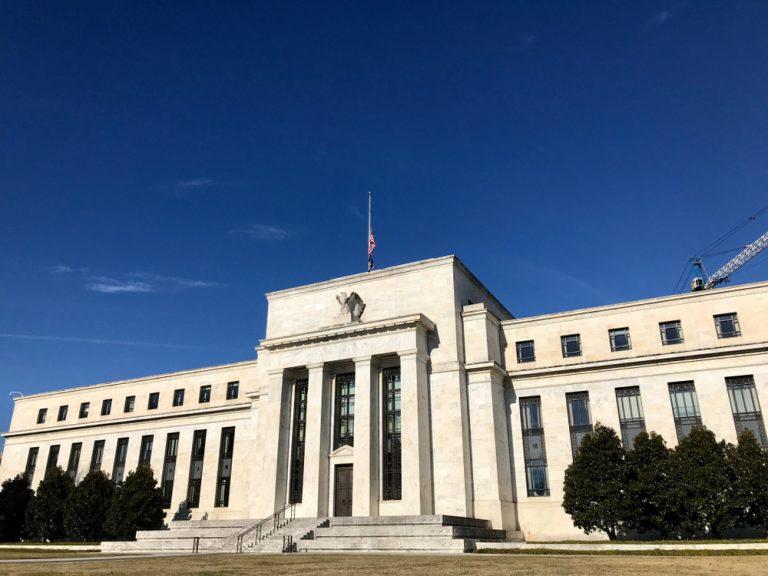
Fed Chair Jerome Powell said yesterday that “it is not time yet” to start discussing any policy changes after the US central bank left interest rates and its bond-buying programme unchanged, despite holding a positive outlook over the US’s economic recovery.
The Fed’s position, robust US corporate earnings and the notion that Biden is going big on infrastructure were all supportive for markets, said François Savary, chief investment officer at Swiss wealth manager Prime Partners.
“The Fed confirmed the roadmap for any change in policy, which is a reassuring factor,” he said. “It looks like tapering won’t materialise until 2022 and that has induced weakness for the dollar, is supportive of market liquidity and means less pressure on emerging markets.”
Sales of Hellman’s mayonnaise surged thanks to Super Bowl ad
Unilever (LON:ULVR) said on Thursday that it will buy back €3bn of shares after robust sales, specifically of ice cream and mayonnaise, led the company to report strong growth during Q1.
The owner of brands including Marmite, Hellman’s mayonnaise and Magnum ice cream stated its intention to repurchase stock in May and finalise the programme by the end of the year.
The decision came about as the FTSE 100 company recorded growth in its underlying sales of 5.7% for Q1, easily surpassing expectations of 3.9%.
The company’s strong results came about as Unilever’s foods and refreshment division grew by 9.8%, in part thanks to people being able to socialise outdoors, while the company’s marketing company, including an advert during the Super Bowl, helped propel sales to double-digits.
Growth came largely thanks to the respective recoveries in China and India, although the latter is experiencing a worrying spike in Covid-19 cases.
The plan for the buyback “reflects our strong cash flow delivery and balance sheet position,” said chief financial officer Graeme Pitkethly.
“We have had a good start to the year. We are growing faster than our markets,” Pitkethly said.
A year or two ago, the market was questioning whether Unilever could grow at all, yet now it is beating its sales growth target.
AJ Bell investment director Russ Mould, reflected on the company’s performance:
“Amid expectations of inflation accelerating this year, Unilever’s pricing power strengths will be put to the test,” said Mould.
“It has flagged additional supply chain costs and raw material inflation, which is putting pressure on margins, so the solution would be to pass on those costs to the end customer.”
“Of the 5.7% sales growth in the first quarter, 1% can be attributed to higher selling prices and the rest greater sales volumes, so it is already displaying pricing power, particularly in its food and refreshment products.”
A dramatic increase in the number of iPhone sales has seen Apple (NASDAQ:AAPL) record its best-ever start to a year as the company enjoys renewed demand for its gadgets.
Apple’s total revenues rose by more than 50% to $89.6bn, surpassing analysts’ expectations. It was a record for Q2 as its smartphones and computers sold at unexpectedly high rates.
The FAANG company’s net income doubled to $23.6bn as strong levels of demand for Apple’s new iPhone 12 model, which was released last autumn, cemented its position. Sales of the iPhone surged by nearly 66% to $47.94bn.
CEO of Apple Tim Cook, said that the company swerved the chip shortage in Q2 by using up its supply buffers.
In the fiscal third quarter, the shortage could cost the company $3 billion to $4 billion in revenue, said Chief Financial Officer Luca Maestri.
Tim Cook, chief executive, added: “This quarter reflects both the enduring ways our products have helped our users meet this moment in their own lives, as well as the optimism consumers seem to feel about better days ahead for all of us.”
Apple, based in Cupertino, California, is one of the world’s most valuable companies with a market value of over $2.2 trillion. As well as making iPhones, iPads and Mac computers, it also provides services such as the iCloud storage library and App Store.
Shell announced on Thursday that its profits rose during Q1 as the oil giant recovered from the pandemic-induced downturn through a recovery in energy consumption and prices.
Profits at the Anglo-Dutch FTSE 100 company increased by 13% to $3.2bn compared to the same period the year before.
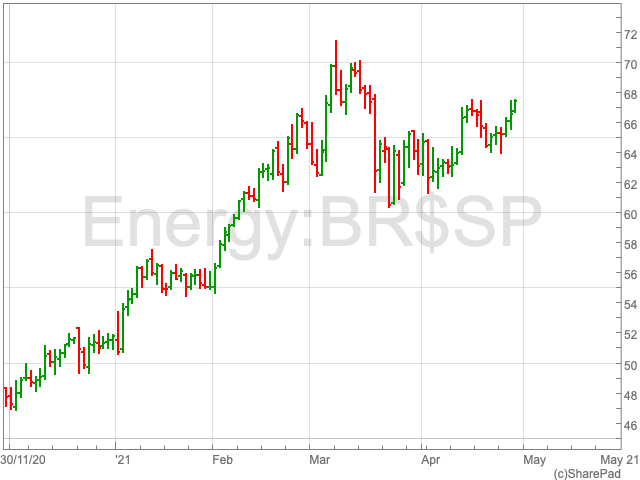
As a result, Shell made the decision to increase its quarterly dividend by 4% thanks to its improvement in trading. Following the announcement Shell shares are up by 1.37% in mid-morning trading.
The oil industry more generally is in the early stages of a recovery following the damage caused by Covid-19, which made energy companies tighten their spending and reduce costs.
Brent crude oil, the benchmark used across the world for the commodity, had remained above $60 per barrel in recent weeks as major producers have put in place supply cuts as demand returns to normal levels.
Royal Dutch Shell confirmed earlier this month that the impact of the Texas winter storm saw the company lose out on $200m in the first quarter of 2021.
Chief executive Ben van Beurden said: “Shell has made a strong start to 2021, generating over $8bn of cash in the quarter. Our integrated business model is ideally positioned to benefit from recovering demand.
“Our competitive and robust financial performance provides the platform to achieve the goals of our Powering Progress strategy.”
He also said that Shell had reduced net debt by more than $4bn in the quarter, progressing towards the $65bn milestone it needs to hit before increasing shareholder distributions.
The FTSE 100 is up by 0.7% at mid-morning trading breaking past 7,000 on a busy day for corporate news in the UK.
“Oil major Shell eked out modest gains suggesting investors had already largely priced its return to profit off the back of higher oil prices,” says AJ Bell investment director Russ Mould.
“Continuing strong numbers out of the US technology sector, together with the US Federal Reserve’s latest attempts to allay fears of any imminent rate rise, laid the foundations for the FTSE 100 to mount its latest assault on the 7,000 level,” Mould added.
FTSE 100 Top Movers
Smith and Nephew (5.02%), Standard Chartered (4.37%) and Unilever (3.27%) are the top risers on the FTSE 100 so far this morning.
While Natwest (-3.73%), RELX (-2.05%) and Evraz (-1.13%) have made the biggest losses on the UK index.
Natwest
Natwest has confirmed a dramatic increase in its profits as it joined other banks in getting back money initially allocated to covering bad loans. The part state-owned bank said its profits before tax rose by 82% to £946m for Q1 as £102m of funds were released.
The FTSE 100 bank also said that support given out by the government was ensuring that businesses are not defaulting on their loans.
Shell
Shell announced on Thursday that its profits rose during Q1 as the oil giant recovered from the pandemic-induced downturn through a recovery in energy consumption and prices.
Profits at the Anglo-Dutch FTSE 100 company increased by 13% to $3.2bn compared to the same period the year before. As a result, Shell made the decision to increase its quarterly dividend by 4% thanks to its improvement in trading. Following the announcement Shell shares are up by 1.37% in mid-morning trading.
Flutter Entertainment said its betting revenues grew by 43%
Revenues at Flutter Entertainment (LON:FLTR), owner of Paddy Power, have grown by 32% to £1.485m in the first three months of 2021, the company revealed on Thursday.
The Dublin-based FTSE 100 company form said that its sports betting revenues grew by 43% to £896m, while gaming increased by 18% to £589m.
The £1.485bn total was 33% more than the £1.126bn in revenues that the gambling giant reported for the first quarter of 2020.
Flutter estimated its brands accounted for 56% of all Cheltenham customers, with Paddy Power the number one downloaded app during the week.
Peter Jackson, chief executive of Flutter Entertainment, which owns aa number of betting and gaming brands, said the business made a positive start to the year:
“2021 is off to a strong start for the Group. We continued to significantly grow our global player base which in turn drove a 42% increase in our online revenue. At the same time, safer gambling continues to be a key priority across our markets with new measures introduced including our Gamban partnership in the US and development of the planned Affordability Triple Step in the UK,” Jackson said.
“Our UK & Ireland brands continued the strong momentum from 2020, taking further market share with customer acquisition up 59% during the Cheltenham Festival. In Australia we have been highly focused on retaining retail customers that migrated to our platform during 2020 and while it is still early days, we have been pleased with the retention rates to date. In our International division, the investment we are making to enhance player generosity and reinvigorate the PokerStars brand has seen an encouraging early response from customers.”
“In the US, we continue to lead the market with revenue of almost $400m in the quarter. We believe that the quality and breadth of our offering remains a key differentiator for FanDuel sports and the key driver of our leadership position. Our US business had over 1.6m average monthly players in Q1, meaning that it is now twice the size of our Australian business and is quickly closing in on our International division. We are continuing to consider our options with respect to a possible US listing of a small shareholding of FanDuel Group. No decision has been made at this time and we will update the market as appropriate.”
Natwest CEO in optimistic mood as UK makes recovery
Natwest (LON:NWG) has confirmed a dramatic increase in its profits as it joined other banks in getting back money initially allocated to covering bad loans.
The part state-owned bank said its profits before tax rose by 82% to £946m for Q1 as £102m of funds were released.
The bank also said that support given out by the government was ensuring that businesses are not defaulting on their loans.
Chief executive Alison Rose said there were “reasons for optimism” as the UK’s vaccine rollout moves along and restrictions are eased while its loan book had performed better than expected in the period.
“However, there is continuing uncertainty for our economy and for many of our customers as a result of COVID-19,” she added.
Natwest followed the path of two of its main competitors in HSBC and Lloyds who both earned back billions set aside in case loans went bad due to the pandemic.
Natwest’s profit came a year after it fell to a £351m loss for 2020 when is set aside £3.2bn was an insurance against loans going bad.
Natwest releasing £102m amounts to a small part of this figure, mainly reflecting the bank’s commercial lending, as “support schemes continue to mitigate realised levels of default”.
The bank – formerly known as the Royal Bank of Scotland – profited from a surge in mortgage lending as there was an upturn in the housing market, with loans for new homes amounting to £9.6bn over the last quarter, up by over £8.4bn from the three month period that came before.
Retail bank customer deposits rose by 4.2% to £179.1bn since the end of 2020 as spending slumped and savings increased in lockdown.
Last month the UK Treasury announced it has finalised the sale of £1.1bn worth of shares back to Natwest. The Treasury’s stake in the British bank is now down to 59.8% from 61.7% following the third sale of its holding.
Greatland Gold expecting the establishment of the portal in the coming weeks
Greatland Gold (AIM:GGP) has provided an update on the drilling campaign at the Havieron deposit in the Paterson region of Western Australia, which it is developing under a joint venture with Newcrest.
The latest results further highlight the potential for extensions to the Initial Resource published last December, according to the AIM-listed company.
Early works are advancing with the box cut 90% complete and surface works 85% complete.
Greatland Gold also said it is expecting the establishment of the portal in the coming weeks.
Results from Growth Drilling continue to support the potential for resource expansion of the Havieron gold-copper mineralised system, particularly within and around the Northern Breccia, and below the Inferred Mineral Resource estimate in the South East Crescent Zone and adjacent Breccia Zones.
The precious metals company also reported “excellent” results from infill drilling.
“The high-grade infill drilling results provide additional confidence of both geological and grade continuity within the existing resource shell,” the update said.
Figure 1 3D Plan view schematic showing the spatial association of the South East Crescent + Breccia, North West Crescent, Northern Breccia and Eastern Breccia targets.
Northern Breccia:
Hole HAD083BW4: 156.6 metres (m) @ 1.1 grams per tonne (g/t) gold ( Au) and 0.22% copper (Cu) from 805.8m, including 27.4m @ 2.6g/t Au & 0.49% Cu from 923.5m.
Hole HAD090: 119.0m @ 1.0g/t Au & 0.11% Cu from 954.7m, including 13.0m @ 4.1g/t Au & 0.67% Cu from 1042.2m
Hole HAD106W1: 73.9m @ 1.5g/t Au & 0.13% Cu from 673.1m
South East Crescent and Breccia:
Hole HAD086: 72.0m @ 2.2g/t Au & 0.02% Cu from 1281m.
Figure 2 Plan view schematic of a horizontal slice at 4700mRL through the Crescent Sulphide Zone and Breccia-hosted Zones, showing the extents of the December 2020 Inferred Resource, 0.5 and 1.0 g/t Au LeapfrogTM grade shells with the newly reported intercepts for this period shown in red trace. Also shown is the Eastern Breccia, Northern Breccia and North West Crescent mineralisation outlines projected to the 4700mN section – drilling is ongoing to confirm the extent of these zones. Drilling reported in the 11th March 2021 announcement is shown in blue trace. Drilling previous to this is not shown for clarity.
The 2021 Growth Drilling programme is ongoing, with priorities established in North West Crescent and Northern Breccia, Eastern Breccia, South East Crescent and Breccia and new targets outside of the immediate vicinity of the Havieron deposit.
“We are very pleased with another set of excellent results which continue to highlight the world-class potential of Havieron. The latest results from the infill and growth drilling campaigns further support the delivery of an indicated mineral resource as well as the potential expansion of the Havieron gold-copper mineralised system,” said Shaun Day, the chief executive officer of Greatland Gold.
“Alongside this, the joint venture continues to advance earthmoving activities with the box cut and surface works nearing completion and the portal and decline progressing to plan. With the 2021 65,000m drilling campaign well underway and the early works programme progressing at pace, we look forward to updating the market on the continuing progress at Havieron,” he added.
Builders merchant Travis Perkins has demerged the Wickes home improvement retail business. This is an area that has held up well during lockdowns. Trade demand was reduced, particularly last spring, but there was more DIY spending.
The underlying market has been growing consistently and this should continue. Wickes is in a good place to take market share.
At the Travis Perkins general meeting to approve the demerger, 44.7% of votes were cast against the Wickes share plans. These involve transitional awards to executive directors of Wickes. The ISS had advised shareholders to vote against the r...
Fresnillo maintains 2021 guidance despite continued uncertainty
Fresnillo (LON:FRES), the world’s largest producer of silver, released a Q1 output update on Wednesday which said its production of silver had declined.
The FTSE 100 company’s attributable silver production was 12.6 moz, down by 2.4% from the quarter before.
The fall came about as a lower volume of ore processed as San Julián Disseminated Ore Body and a lower ore grade at Saucito and the Pyrites plant. This was partly mitigated by a higher development ore grade at Juanicipio.
Production of gold was up by 5.9% quarter-on-quarter to 228.2 koz, as a result of a higher ore grade at Herradura and Saucito. These results were counteracted by lower volumes of ore processed at Noche Buena and reduced ore output throughout and lower ore grade at San Julián Veins.
The company maintained 2021 guidance despite the continued uncertainty presented by the current coronavirus situation in Mexico.
Octavio Alvídrez, chief executive of Fresnillo, commented:
“The health and well-being of our people remains our first priority and we have maintained a range of measures to ensure their safety, while also continuing to support our local communities.”
“First quarter silver production was marginally below the previous quarter, with the encouraging contribution of development ore from our new Juanicipio project offsetting lower grades at Saucito. I am also pleased to report continued progress at the Fresnillo mine with development rates showing an improvement. Quarterly gold production was ahead of the last quarter driven by the higher than expected grade at Herradura. Construction of Juanicipio is making good progress and we are on track to commission the plant by the fourth quarter.”
“Though the pandemic continues to present certain operational challenges, Fresnillo has started 2021 well with Q1 operations in line with expectations and our full year guidance remains unchanged.”