Gin and spirits supplier British Honey Company (LON: BHC) is acquiring Union Distillers for an initial £8m in cash and shares. This adds to the range of brands that Aquis Stock Exchange-quoted British Honey owns and provides scope for significant expansion.
The deal will give British Honey greater scale and Union Distillers will be able to use the group’s software. The group will also have greater opportunities in the UK off-trade.
The enlarged group production capacity will be three million bottles, seven million cans and five million miniatures. There is potential for cross-selling brands.
U...
Rising bond yields a warning sign for investors in US stock market
The benchmark yield on 10-year Treasury notes up to 1.31%
The S&P 500 index climbed to an all-time high earlier this week amid optimism around the US economy. With high oil prices, along with a positive mood around vaccine roll-outs and a pending stimulus package, confidence in the US economy is growing.
However, despite the recent rally, the US stock market could be in a vulnerable position. Investors are remaining cautious over equity markets, as bond yields rise on the possibility of inflation.
Since 2009, high prices for bonds and low yields have provided support for equity markets, as they compete for capital. However, this changed with forecasts of rising inflation, which could be exacerbated by Joe Biden’s $1.9trn stimulus package.
“Yields rise when bond prices fall, and the potential for increased government spending implies increased government borrowing, thus a larger supply of bonds driving the price down,” said Toby Sturgeon, Global Head of Fiduciary Investment Services at ZEDRA.
The benchmark yield on 10-year Treasury notes climbed to 1.31% on Friday, having reached its highest point in 12 months earlier this week, on concerns about the prospect of higher inflation. The yield on the 30-year Treasury bond rose to 2.1% on early Friday trading.
With yields creeping over 1.3%, it is a warning sign for investors looking to make gains from a strong recovery in the US economy over the coming year.
A sharp rise in yields “is something that certainly poses a significant risk,” said Padhraic Garvey, head of research, Americas at ING.
“What we don’t want to see in the very near term is (the 10-year yield) hitting 1.40%, 1.50% and still looking up,” Garvey added.
In that case, equities could become an unattractive proposition for investors. With pent-up demand, loose monetary policy, and bond yields on the up, Joe Biden’s fiscal stimulus could actually put the US stock market at risk.
Rishi Sunak hints at tax rises amid rising deficit
UK debt at 100.6% of GDP
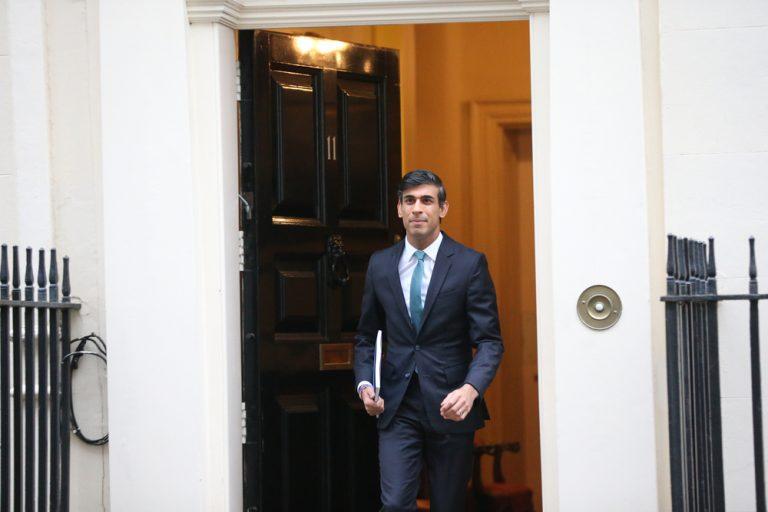
Chancellor Rishi Sunak has alluded to the possibility of a hike in taxes as the UK faces up to holes in its finances following the economic impact caused by nationwide lockdowns.
Public debt grew by £8bn in January, the Office for National Statistics has revealed.
Following the release of government figures recentlySunak said:
“We’ve been able to respond comprehensively and generously through this crisis because of our strong public finances.”
“Therefore, it’s right that once our economy begins to recover, we should look to return the public finances to a more sustainable footing and I’ll always be honest with the British people about how we will do this.”
While it is the first time there has been a deficit in January in over a decade, the figure was lower than the £24.5m forecasted by economists.
Government spending during January 2021 rose by over 30% from the year before to £81.9bn.
During 2020/21, the UK is forecast to record a deficit of £350bn, the highest as a proportion of GDP (17%) since the second world war.
In total, government debt stands at 100.6% of UK GDP, according to the ONS. UK debt is now in excess of £2.1trn, following continuously high rates of borrowing during the pandemic.
Pound up past $1.40 ahead of announcement by Prime Minister
Pound strengthening ‘not a proxy’ for the FTSE 100
The pound edged past $1.40 on Friday, its highest level in nearly three years, in a show of continued optimism surrounding the UK economy.
As the close of Friday trading nears, Cable is sitting above the $1.40 mark, up over 0.3% on the day.
The pound has been steadily progressing upwards recently, reaching $1.39 at the beginning of the week, coinciding with a rise in the FTSE 100.
The pound is up to 1.16 against the Euro, a 1% rise from Thursday’s close. It is also up 3.56% against the Eurozone currency over the last three months.
This follows a heavy fall in the value of the pound in the lead up to an anticipated ‘hard Brexit’ from the European Union.
Simon French, chief economist at Panmure Gordon, said: “Brexit has given international investors an excuse since 2016 to reduce their holdings in sterling. As the UK progresses through 2021 it is likely to see more stability in its relationship with the EU as adjustment frictions begin to dissipate. This should translate to a greater upside for the pound against the euro than than against the dollar in our view.
Cable’s recent surge comes following vaccine roll-outs surpassing expectations, in addition to an expected easing of lockdown measures by the Prime Minister next week.
Russ Mould, investment director at AJ Mould, said:
“The run for sterling towards the $1.40 mark against the dollar reflects, in part, optimism about what a rapid vaccine roll-out would mean for reopening in the UK, setting quite high expectations ahead of Boris Johnson’s statement on the easing of restrictions on Monday.”
While the pound strengthening is a sign of economic optimism in the UK, the news has done nothing to rally the FTSE 100 index.
“A strong pound isn’t helping the index – crimping the relative value of its dominant overseas earnings in the latest reminder that the multi-national index is in no way a proxy for the UK economy,” said Mould.
WATR: Invest in the future of water technology
The UK Investor Magazine Podcast is joined by Glyn Cotton, CEO and Co-Founder or water technology company WATR.
WATR is setting out to improve the quality water on a global scale by working with the UK’s water companies in improving the health of our water, through to helping provide safe drinking water in the third world.
Astonishingly, one million people a year still die from poor water quality and the overall market in improving water sanitisation is estimated to be worth £4.29bn.
WATR has engaged in many years of development which saw them win a startup award at Web Summit and is now raising funds via Seedrs to propel growth in the coming years.
Having already met the Seedrs campaign target of £250,000, WATR is now in overfunding meaning investors can still secure an allocation.
Find out more on the WATR crowdfunding page on Seedrs here.
Dye and Durham confirms talks ongoing with IDOX
Idox share price up 17.59% during pre-lunchtime trade
Dye and Durham, the legal technology company, confirmed on Friday that it has approached Idox to discuss a potential acquisition.
Dye and Durham, listed on the Toronto Stock Exchange, submitted three non-binding indicative proposals of 67p, 70p and 75p per Idox share. These would be paid in cash on 9 February, 17 February and 18 February 2021 respectively.
The proposal, on a fully diluted basis, puts Idox’s equity value at £342.8m.
The Idox share price is up by 17.59% to 72.2p today as the company confirmed the approach by Dye and Durham. Year-to-date Idox’s share price is up by over 40% from 50.4p at the turn of the year.
Dye and Durham outlined the rationale behind the company’s approach in a statement:
“Dye & Durham’s vision is to be the world’s leading provider of public records registry data and the workflows this information powers,” the statement read.
“Having an established platform in our key markets of Canada, the United Kingdom and Australia, Idox is a natural strategic vertical asset for Dye & Durham to own as the Company provides the specialist software solutions to over 90% of local government authorities in the United Kingdom, which supports the complex operations and management of public record information.”
“On a daily basis, Dye & Durham’s many customers across the United Kingdom access the public record information Idox’s software manages, allowing them to manage their information and regulatory requirements.”
Idox, the AIM-listed company, confirmed talks had taken place with Dye and Durham “in order to explore a basis for the agreement of a recommended cash offer”.
FTSE 100 flat following retail sales slump
The FTSE 100 barely moved today with major news about lockdowns set to come the other side of the weekend. NatWest and Segro both announced end of year results along with positive news regarding dividend payouts, while the pound continued to strengthen against the dollar.
“Unsurprising news that retail sales slumped significantly in January thanks to the latest lockdown left the FTSE 100 struggling for direction on Friday, broadly unmoved at a little above the 6,600 mark,” says AJ Bell investment director Russ Mould.
“The run for sterling towards the $1.40 mark against the dollar reflects, in part, optimism about what a rapid vaccine roll-out would mean for reopening in the UK, setting quite high expectations ahead of Boris Johnson’s statement on the easing of restrictions on Monday,” Mould added.
FTSE 100 movers
At the summit of the FTSE 100 at mid-morning on Friday is Antofagasta (3.41%), Evaz (3.23%) and Rolls-Royce (2.76%).
AstraZeneca (-1.82%), RELX Group (-1.27%) and Berkley Group (-1.15%) were the biggest fallers.
Natwest
NatWest posted a pre-tax loss of £351m as the bank announced a phased withdrawal from Ireland. Natwest’s loss represents a huge swing from a profit of £4.2bn a year ago. The change is a result of £3.2bn of loans being written off down to fears they may not be repaid.
The FTSE 100 bank will pay out a £364m dividend for the year at 3p per share, however £225m will go to the UK government, the majority owner of the bank.
Segro
Segro saw its profits soar as the boom in online retail raised demand for warehouse space during the pandemic. The company’s pre-tax profit rose by 62% to £1.5bn, up from £902m the year before.
The FTSE 100 property company confirmed a final year dividend of 15.2p, up by 5.6% from 14.4p.
Segro profits soar as online retail raises demand for warehouse space during pandemic
Segro dividend up to 15.2p per share
Segro (LON:SGRO) announced a 62% increase in profit during 2020, as a result of higher property valuations.
The property investment company also relaunched its sustainability plan.
The surge in online retailing during the coronavirus pandemic caused an increase in the price of industrial property values. The valuation of Segro’s portfolio rose by 10.3% during 2020.
“The pandemic has reinforced the importance of efficient and resilient distribution networks to facilitate the provision of a wide variety of goods and services, leading to increased demand for warehouse space,” said David Sleath, chief executive of Segro.
Subsequently, the company’s pre-tax profit soared to £1.5bn, up from £902m the year before.
Segro invested £1.3bn in acquiring new properties throughout the year, a record for the company funded by share issues and additional debt.
The FTSE 100 property company confirmed a final year dividend of 15.2p, up by 5.6% from 14.4p. Segro’s share price jumped up by 1.5% to 977.4p, having moved sideways since the beginning of the year.
Commenting on the results, David Sleath, chief executive, said:
“SEGRO delivered another strong set of financial results in 2020, with record lettings driven by our customer focus and the increasing demand for prime industrial properties from a wide occupier base,” Sleath said.
“The pandemic has reinforced the importance of efficient and resilient distribution networks to facilitate the provision of a wide variety of goods and services, leading to increased demand for warehouse space. 2020 saw a record level of investment for SEGRO as we seek to capitalise on these favourable trends, giving us confidence in our ability to drive further growth in rental income, earnings and dividends over the coming years.”
Additionally, following a review, Segro reinstated its sustainability plan.
“We have also reviewed, challenged and refreshed our approach to sustainability. Today we are re-launching our Responsible SEGRO framework, with three long-term priorities that outline our commitment to society and position us to truly deliver on our Purpose of ‘creating the space that enables extraordinary things to happen’,” Sleath said.
NatWest posts pre-tax loss of £351m as bank announces withdrawal from Ireland
Natwest dividend at 3p per share
Natwest (LON:NWG), formerly known as the Royal Bank of Scotland, confirmed a £351m loss on Friday.
The bank also announced it would be exiting from the Republic of Ireland in a phased withdrawal.
Natwest will discontinue its Irish arm, Ulster Bank after a review showed the bank was not making sustainable returns, said chief executive Alison Rose.
“Following an extensive review and despite the progress that has been made, it has become clear Ulster Bank will not be able to generate sustainable long-term returns for our shareholders,” Rose said.
“As a result, we are to begin a phased withdrawal from the Republic of Ireland over the coming years which will be undertaken with careful consideration of the impact on customers and our colleagues.”
Natwest’s loss represents a huge swing from a profit of £4.2bn a year ago. The change is a result of £3.2bn of loans being written off down to fears they may not be repaid.
Income across the bank’s commercial and retail businesses fell by 10% during 2020, while a cost reduction of £277m was achieved, surpassing the bank’s annual target.
Natwest will pay out a £364m dividend for the year at 3p per share, however £225m will go to the UK government, the majority owner of the bank.
Natwest shares fell by 1.28% on Friday morning following the company’s results, down to 169.1p per share.
Alison Rose commented on the bank’s performance during a challenging year:
“The past year presented some extraordinary challenges for our customers, colleagues and communities. We provided exceptional levels of support to those who needed it, including the approval of over £14 billion of lending under UK Government schemes, demonstrating that we have truly put Our Purpose at the heart of this business.
Being purpose-led isn’t just the right thing to do, it has a powerful commercial imperative and is fundamental to building sustainable value in our business,” Rose said.

Recruiter Hays to reinstate dividend following hiring spree
Hays will make £100m payment to shareholders in August
The FTSE 250 recruiter Hays (LON:HAS) is reinstating dividend payouts as more people are being hired for new jobs.
Alistair Cox, chief executive at Hayes, said:
“Finally, with recovery in fees and our profits accelerating in Q2, this provides us with confidence to resume paying core dividends at our full-year results in August.”
“We have also identified £150 million of surplus capital, which we also intend to return to shareholders in phases via special dividends, again commencing at our results in August,” Cox continued.
Cox anticipates growth in employment in technology, life sciences and the green economy, as hiring levels rebound.
Hays plans to payout the surplus cash to shareholders in two phases. The first being a £100m payment in August.
Shares in the recruiter finished the day’s trading 3% down at 153.3p. Hays shares are 7% up year-to-date from 143.3p
Alistair Cox praised his employees’ efforts since the beginning of the pandemic:
“We have helped over 200,000 talented people find their next job and provided advice, guidance and training to millions of others,” Cox said.
“We have prioritised the wellbeing of our own people and Temps, and I am proud of the steadfast way all our colleagues have adapted to the changing world, helping their clients and candidates at a time of great need.”
“Their resilience, together with the investments we have made across our business, delivered improving profit momentum through the half with overall trading distinctly stronger than we had earlier anticipated.”