
Bitcoin over $44,000 as Tesla buys $1.5bn worth

Tesla will also accept payments in bitcoin

Tesla announced on Monday that the company has purchased $1.5bn worth of bitcoin

Tesla has said it established its bitcoin holding for “more flexibility to further diversify and maximize returns on our cash,” in a filing with the Securities and Exchange Commission. 

Furthermore, Tesla will be accepting payments in the form of bitcoin in exchange for its products.

The revelation has caused a surge in the price of the digital currency to a record high of $44,100.  

Elon Musk has spoken out in favour of bitcoin on numerous occasions via his social media platforms. At the end of January the Tesla CEO caused the price of the crypto currency to jump up to $37,000 when he changed his Twitter bio to “bitcoin”. 

Analysts are viewing the move by Tesla as a potential watershed moment in bitcoin’s journey. 

“I think we will see an acceleration of companies looking to allocate to Bitcoin now that Tesla has made the first move,” said Eric Turner, vice president of market intelligence at cryptocurrency research and data firm Messari. 

“One of the largest companies in the world now owns Bitcoin and by extension, every investor that owns Tesla (or even just an S&P 500 fund) has exposure to it as well,” Turner said.

Tesla’s investment into bitcoin is a significant portion of its overall cash holdings. According to Tesla’s most recent filing, the company has in excess of $19bn in cash or an equivalent.

The news means more of the same for bitcoin’s rising yet volatile price. At the beginning of 2020 one bitcoin was valued at under $10,000.

Investment bank JP Morgan has recently revealed a long-term price target of $146,000 for bitcoin.
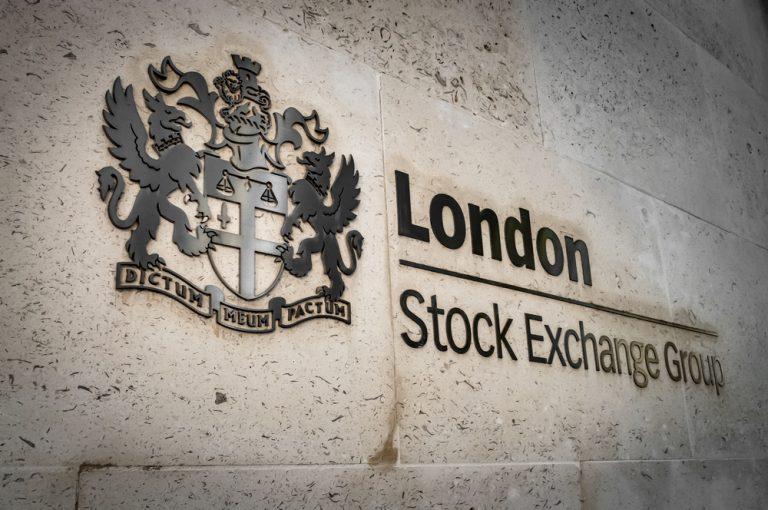

The FTSE 100 rises in risk-on trade on stimulus hopes

0

The mood is risk-on this morning on the FTSE 100. The index made solid gains during the morning session as positive news regarding oil prices and Joe Biden’s stimulus package emerged over the weekend.

“The FTSE 100 started a new week with solid gains built on optimism over the vaccine-led fightback against the pandemic, strong gains in Asia and US stimulus hopes,” said Russ Mould, investment director at AJ Bell. 

“US Treasury Secretary Janet Yellen’s weekend claim that the country could return to full employment if Congress were to pass President Biden’s $1.9 trillion stimulus package gave markets a window into what such significant action could mean for the world’s largest economy,” Mould added. 

The positive sentiment comes despite concerns over the efficacy of vaccines against new variants of the coronavirus.

FTSE 100 movers

A number of FTSE 100 companies made solid gains before lunchtime on Monday. Among the biggest risers were Anglo American (4.68%), Evraz (3.78%) and Mondi (3.34%). 

At the bottom end, Informa (-1.72%), Smurfit Kappa Group (-1.49%) and Rolls-Royce Group (-1.19%) were among the top fallers.

Oil

Looked to as a barometer for the outlook of the world economy, oil rebounded to pre-pandemic levels today. Brent crude oil was valued this morning at $60 per barrel for the first time since January 2020.

“The biggest driver for the latest surge in prices seen through last week was a sharp upturn in expectations for economic and oil demand recovery on signs that the coronavirus may finally be in retreat,” Vandana Hari, founder of Singapore-based oil markets data firm Vanda Insights told the BBC.

Boohoo

Online fashion retailer Boohoo reached an agreement to buy high street fashion brands Dorothy Perkins, Wallace and Burtons. The deal to acquire digital assets and intellectual property rights, and not any physical stores, is worth £25.2m.

Boohoo’s deal follows Asos’ takeover of Topshop, Topman, Miss Selfridge and HIIT last week.  It is the latest stage of the break-up of Sir Philip Green’s Arcadia fashion empire which fell into administration last November.

Oil prices rebound to pre-pandemic levels

Oil price increase a sign the recovery is in sight

Having reached an all-time low in April 2020 due to worldwide lockdowns, oil has climbed back to its pre-pandemic level.

Brent crude oil was valued this morning at $60 per barrel for the first time since January 2020. 

The news is a continuation of the commodity’s resurgence throughout February. Since the final day of last month, the value of Brent crude oil has risen by around $5, a 10% jump. 

The price of oil is looked to as a barometer of activity as the world economy continues to cope with the ongoing coronavirus pandemic. 

After worldwide lockdowns first came into effect in early 2020, oil prices plummeted into negative territory. Producers who did not have adequate storage capacity, were paying buyers to take the commodity off their hands.

“The biggest driver for the latest surge in prices seen through last week was a sharp upturn in expectations for economic and oil demand recovery on signs that the coronavirus may finally be in retreat,” Vandana Hari, founder of Singapore-based oil markets data firm Vanda Insights told the BBC.

Other factors, including efforts to restrict supply by OPEC nations, especially Saudi Arabia, have helped the price of oil to rebound. 

Russ Mould, investment director at AJ Bell, views the news as a sign investors are now looking ahead to a recovery in demand. 

Mould added that it could unleash a new turn of events in the industry as big oil companies seek alternative business models. 

“This could help add fuel to M&A chatter in the industry after it emerged ExxonMobil and Chevron had held talks over a combination last year,” said Mould. 

“The last round of mega-mergers came a little over 20 years ago. However, this time round tie-ups could just double businesses’ problems given the need to transition away from the traditional oil and gas assets which dominate their portfolios as part of a global transition away from fossil fuels.”

New Greatland Gold CEO Shaun Day takes charge

0

Shaun Day brings a wealth of experience to Greatland Gold

Greatland Gold has today confirmed its new chief executive Shaun Day has taken up his position at the helm of the company. 

Day has replaced Gervaise Heddle who will remain as a board member until March 12 to ensure a smooth transition. 

Shaun Day is a Chartered Accountant with over 20 years of experience across various industries, from mining and infrastructure to investment banking. 

Day left his post as chief financial officer at Salt Lake Potash Ltd, a company listed on both the AIM and the ASX.  

Previously Day worked at the Australian gold producer Northern Star, where he oversaw the company’s market capitalisation growth from AU$700m to $8bn. 

Greatland Gold’s new CEO outlined his vision for the company in a statement released today. 

“I join Greatland at a very exciting time for the business and with a strong platform in place to drive further growth. Greatland will continue to progress its core strategy – advancing Havieron while pursuing value from our other exploration targets with tier-one potential,” Day said.

“Beyond this, I intend to apply my experience from growing major mining companies to oversee the development of Havieron and to scale-up the wider business.”

While Greatland Gold’s share price dropped during mid-morning trade, it has been a positive last 12 months for the precious metals company. 

On February 10 2020 the company’s share price was around 5p. Fast forward a year and shares in Greatland Gold are valued at over 25p each, including a surge to over 37p at the end of 2021.  

The year began on a positive note for Greatland Gold as the company divulged an expansive drilling program in Australia.

Greatland Gold recently shared an update on Newcrest’s drilling campaign at the Havieron deposit in the Paterson region of Western Australia.

In an update, Greatland Gold 2021 growth drilling programme includes plans for approximately 65,000 metres of drilling within the next six months and will focus on South East Crescent and Breccia, expansion of the existing Inferred Mineral Resource in Northern Breccia, and drill testing and interpretation of the geological and mineralisation controls in Eastern Breccia.

Boohoo buys high street brands from Arcadia

0

Boohoo deal the latest in a string of sales by Sir Philip Green

Boohoo has reached an agreement to buy high street fashion brands Dorothy Perkins, Wallace and Burtons. 

The deal to acquire digital assets and intellectual property rights, and not any physical stores, is worth £25.2m. 

Boohoo’s deal follows Asos’ takeover of Topshop, Topman, Miss Selfridge and HIIT last week. 

It is the latest stage of the breakup of Sir Philip Green’s Arcadia fashion empire which fell into administration last November.

None of the buyouts mentioned above include the purchase of physical stores putting thousands of jobs in doubt. 

The Boohoo deal is in addition to the company’s recent acquisition of Debenhams for £55m. 

Boohoo shares dipped at market opening on Monday by 3.5% upon news breaking of the company’s acquisitions. 

Boohoo has said the deal will allow the company to bolster its market share across a broader range of shoppers. It also said the takeovers conducted over the last year from Arcadia would provide an additional two million active users. 

Chief executive of Boohoo John Lyttle outlined the company’s strategy following its takeover of Dorothy Perkins, Wallace and Burton. 

“Acquiring these well-known brands in British fashion out of administration ensures their heritage is sustained, while our investment aims to transform them into brands that are fit for the current market environment,” Lyttle said. 

“We have a successful track record of integrating British heritage fashion brands onto our proven multi-brand platform, and we are looking forward to bringing these brands on board.”

Despite well publicised controversy over the company’s factory conditions, Boohoo’s pre-tax profits rose towards the end of 2020 to £68.1m, up from £45.2m.  

Burton, at its peak, employed over 10,000 people in 400 physical stores across the UK, sitting comfortably on the FTSE 100. However, following the takeover by Sir Philip Green and changing market dynamics, its position did not last.

Moonpig’s impressive debut

Moonpig (LON: MNPG) got off to an impressive start in its first week on the London market. The placing price was 350p, which was at the top of the indicated range, and the share price ended the week at 423.85p.
The company raised £20m in the placing and £9m went on the costs of flotation. The selling shareholders raised £454.8m in the initial placing. An additional 14 million shares were sold by shareholders as part of the over-allotment option.
Moonpig is the market leader in online cards in the UK. There is a continuing trend from offline to online cards and gifting. Lockdowns have boosted t...

BlueRock increases diamond resource

BlueRock Diamonds (LON: BRD) has revealed a significantly increased resource at the Kareevlei diamond mine in South Africa. This means that the mine has at least ten years life even before additional exploration.
There was a 49% increase in resource to 10.4 million net tonnes and a 53% increase in net carats to 516,200. The overall grade has edged up to 5 carats per tonne.
There was also 19% of the resource upgraded to indicated resources. The indicated resource from the KV1 and KV2 pipes is 108,600 and it was nil previously.
BlueRock plans to produce one million tonnes per annum. Last year th...

FTSE 100 finishes the week flat after US jobs report

0

The FTSE 100 traded largely flat on Friday as the market digested the latest instalment of jobs data from the United States. The FTSE 100 traded at 6,507, up four points just before the close on Friday afternoon.

It has been a relatively quiet week for the FTSE 100 as traders remain cautious over continued lockdowns.

A handful of FTSE 100 companies made solid gains on Friday. Among the biggest risers were Shell (3.5%), Whitbread (+5.9%), and Glencore (+3.9%). 

At the other end, the shares of Pearson (1.7%), Ashtead Group (-2.3%) and Johnson Matthey (-4.2%) were some of the top fallers.

49,000 jobs added to US economy

The non-farm payroll report, a measure of employment levels in the US, confirmed 49,00 jobs had been added in January as the unemployment rate fell by 0.4% to 6.3%. The new unemployment level, while down on April’s high of 14.7%, is still around twice the pre-lockdown level. 

“The non-farm report failed to meet expectations which resulted in a dip in the dollar. GBP/USD rebounded past $1.373 as the dollar weakened against the pound by 0.4%,” said Connor Campbell, analyst at Spreadex.

UK house prices

Building on a positive update from Barratt Developments on Thursday, house builders were again strong following the most recent report on the UK housing market.

House prices fell in January for the first time since May as the stamp duty holiday came to an end. The average price of a house in the UK now stands at £229,748. Analysts have warned Rishi Shunak against a sudden withdrawal of the stamp duty policy.

Commodities

Commodity companies were among the top risers on Friday, topping a strong week for the FTSE 100’s commodities sectors.

Oil continued its momentum on the understanding that Saudi Arabia and other OPEC members would tighten the market in early 2021. Copper prices jumped up on Friday with the expectation that Joe Biden’s stimulus and a more prolific vaccine roll-out could boost demand for the metal.

Non-farm payroll figures miss expectations in the US

0

49,000 jobs added to US economy in January

The US economy added 49,000 jobs in January, with the unemployment rate falling from 6.7% to 6.3%. 

The consensus of an economist survey was for there to be 50,000 jobs added and the unemployment rate to remain unchanged.

The new unemployment figure of 6.3%, while well down on April’s peak high of 14.7%, is still around twice the pre-lockdown level, the report stated. 

The numbers show signs of an improvement, however, they are slight and give little indication of the longer-term prospects of the US economy.  

“While these numbers are an improvement, in truth, the US labour market is difficult to read in the current climate – mainly due to differing levels of Covid restrictions on a state-by-state basis,” said Robert Alster, CIO at investment management firm Close Brothers Asset.

Following the report the S&P 500 opened higher and touched intra-day record highs. 

While the non-farm payroll report showed a dip of 10,000 manufacturing jobs, data over the past eight months has been positive with 803,000 manufacturing jobs added since April.

With encouraging signs for manufacturing, attention will now turn to Joe Biden’s stimulus package in hope of a more sustained economic recovery.

“On a positive note, figures show manufacturers are seeing an uptick in demand which will help support jobs on that side of the economy. However, it remains to be seen whether President Biden’s $1.9 trillion Covid relief plan gets through the Senate,” Alster said.

Beyond the stimulus package the government’s vaccine roll out will play a vital role in further lowering unemployment figures, according to Robert Alster. 

“Overall, health policy is what matters most for unemployment and with the White House focused on the vaccine roll out, alongside mandating face masks, we could continue to see green shoots in the coming weeks and months,” he said.

House prices drop as stamp duty policy comes to an end

0

House prices fell by 0.3% in January

House prices fell in January for the first time in seven months as the government discontinued its stamp duty relief.

According to the Halifax house price index, property prices fell by 0.3% during the first month of the year. Economists polled by Reuters had expected an increase of 0.3%.  

The average price of a house in the UK now stands at £229,748 according to Nationwide.

Robert Gardner, Nationwide’s chief economist, outlined the impact of the stamp duty relief and predicted a slowdown in the housing market in the coming months. 

“To a large extent, the slowdown probably reflects a tapering of demand ahead of the end of the stamp duty holiday, which prompted many people considering a house move to bring forward their purchase,” Gardner said.

“If the stamp duty holiday ends as scheduled, and labour market conditions continue to weaken as most analysts expect, housing market activity is likely to slow, perhaps sharply, in the coming months.”

In the aftermath of the first coronavirus lockdown demand rose sharply thanks to the temporary removal of the tax on property buying. 

Tom Bill, head of UK residential research at Knight Frank, warned against the effects of suddenly withdrawing the policy on the economy. 

“The sensible option would be to taper the holiday and avoid any cliff-edge moments for the housing market for the wider economy, particularly given how important the mobility of labour will be in coming months,” Bill said.