Alibaba shares spring on Jack Ma sighting

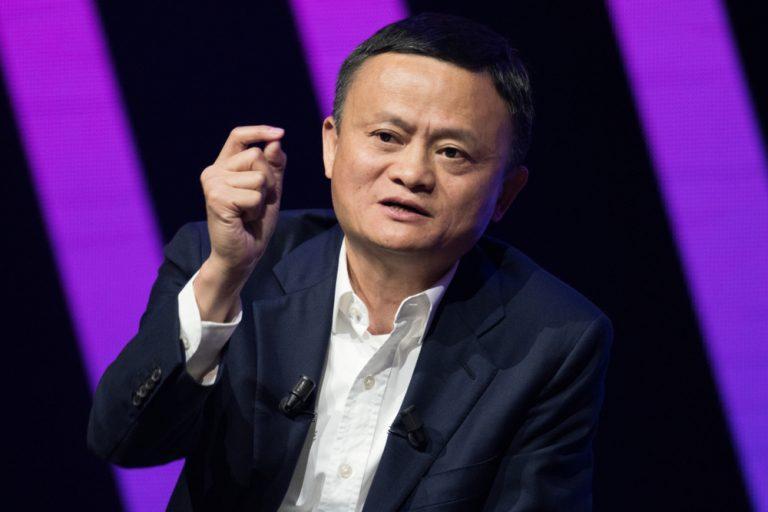
Shares at Chinese e-commerce giant Alibaba (HKG:9988) have jumped almost 10% after founder Jack Ma’s first sighting in three months quelled fears that the business tycoon might be dead.

He was seen on Wednesday speaking by video in an online ceremony for an annual rural teaching event. The brief 50 second-long video made no mention of his disappearance, after Ma vanished from the public eye following Chinese regulators’ decision to halt the Hong Kong listing of his new venture Ant Group in November.

The IPO would have been the biggest share offering in history.

Anti-monopoly regulators in China warned executives of Alibaba and five other tech giants in December not to “use their dominance” to block new competitors from entering their markets. The central bank and other regulators ordered Ant Group to overhaul its business before its IPO debut can go ahead.

Both Alibaba and Ant Group have confirmed they will adhere to regulators’ requests.

There had been speculation that Ma’s disappearance was due to him being detained by the authorities – although there was no evidence to conclude this – and shares at Alibaba plummeted in the lead-up to the New Year as investors’ fears mounted over Ma’s continued silence.

Ma’s last public appearance had been on 24 October, when he criticised Chinese regulators’ “pawnshop mentality” for hampering innovation in a speech in Shanghai. In November, authorities withdrew plans for what would have been a record-breaking £26bn stock market float for finance giant Ant Group with just two days to go.

Alibaba’s shares hiked 8.52% to 265.00 HKD as of GMT 14:52 as investors breathed a long-held sigh of relief, jump-starting what is likely to be a climb over the next few days and weeks to make up for the loss in confidence that had shed more than 36% off the stock’s annual peak in mid-October.

Ma boasts a title of one of Asia’s richest people, with a fortune estimated at around $58bn.

Hornby posts rise in Q3 sales

0

Hornby shares fell on Wednesday after the group revealed a trading statement for the Christmas period.

Group sales for the third quarter were up compared to the same period a year ago driven by a hugely popular product range and increased global demand as consumers spend more time at home.

Tighter Covid restrictions and the impact of courier companies pausing collections bound for Europe due to Brexit backlogs have led to a slower start to 202, however, shipping to Europe will soon start.

Direct sales are up 133% year on year and net cash at the end of December 2020 was £3.8m compared to net cash £3.9m at the end of September 2020.

Commenting on their new toy range for 2021, the group said: “We would normally be attending several Toy Fairs during January but these have been cancelled due to COVID restrictions. As such we have digitally previewed our latest range announcements which have been released to the trade and the public through various social media platforms. The feedback was encouraging, and we were buoyed by the levels of interest.”

Hornby expects to finish the year with sales 15-20% ahead of the prior year.

Chief Executive Officer, Lyndon Davies commented: “No one expected the last year to turn out as it did. It is hard, however, not to want to spread a little ‘good news’ amongst all the bad. The transformation at Hornby continues to accelerate, this is not time for braking, we must now accelerate upwards through the gears.”

Hornby shares are trading -4.24% at 63,20 (1413GMT).

House prices in London rose 4% in November

The UK House Price Index has released its figures from November 2020, detailing how prices rose 4% between October and November, with the annual price change in the capital over the year coming in at +9.7%.

In England as a whole, the November data shows on average, house prices have risen by 1.2% since October 2020. The annual price rise of 7.6% takes the average property value to £266,742.

London experienced the greatest monthly price rise, up by 4%, while the East of England saw the lowest monthly price growth, with a fall of -0.3%. London and Yorkshire and the Humber experienced the greatest annual price rise, up by 9.7%, with the East of England also saw the lowest annual price growth at +4.8%.

Price change by region for England

RegionAverage price November 2020Annual change % since November 2019Monthly change % since October 2020
East Midlands£208,6627.10.6
East of England£302,6244.8-0.3
London£513,9979.74.0
North East£140,2488.32.6
North West£180,2808.50.2
South East£342,2716.21.2
South West£278,3918.51.1
West Midlands£213,9746.91.0
Yorkshire and the Humber£180,8569.71.9
Data and chart courtesy of Gov.UK.

Estate agency Chestertons said there was “an obvious increase in market activity” in November 2020, with a lot more sellers trying to list their properties compared to the previous year.

Chestertons said that it had carried out 44% more valuations and brought 76% more new properties to the market compared to November 2019. The agency registered 24.6% more initial enquiries, saw 10% more people registering as buyers, and agreed 21% more viewing appointments.

Guy Gittins, managing director at Chestertons, commented on the Land Registry’s new figures:

“The second lockdown no doubt encouraged some people to put their property search on hold, but we didn’t notice a big difference and activity levels were still a lot higher than we anticipated for this time of year. Part of this was driven by the incentive of the stamp duty saving, but we believe the main driver was that people just wanted to move as quickly as possible while conditions were favourable”.

Chestertons also confirmed that the London housing market remained “strong” throughout December, and saw full-year figures reach an eight-year high for property enquiries, buyer registrations, property viewings, offers received and sales agreed.

All Set and Ready to Lead…India will be at the Head of the Pack for post COVID Growth

Sponsored and written by Red Ribbon Asset Management

Leading Analysts, including Nomura, are forecasting India will be leading the way out of the COVID downturn, and History is on their side.

We’ll be taking a look at the underlying issues in this article by Suchit Punnose, CEO and Founder at Red Ribbon Asset Management

In last month’s Asia 2021 Outlook, Nomura forecast a 9.9% growth in Indian GDP by the end of 2021: that’s more than China (9%), and waymore than the UK (5.5%) and the United States (4.7%), all of which are running off historically low recovery platforms as a result of the Pandemic. The UK’s forecast, for example, may be the highest since the 1980’s, but according to the Office of Budget Responsibility (“OBR”) the economy will not return to pre-Pandemic levels until the last quarter of 2022. Investors would do well to remember that even a dead cat bounces…On the other hand, India is expected to go on to deliver GDP growth of 11.9% by the first quarter of 2022, far higher than pre-Pandemic levels.

None of which should come as any surprise.

Before COVID gripped its chill hand on economies across the planet, GDP on the subcontinent was growing at a rate of 5.02% annually, barely half of the figure now being forecast by Nomura for the coming year. So unlike the UK there’s certainly something more than bouncing back at work here. Just look at the underlying data…in the second quarter alone, Nomura expects Indian GDP to grow by 32.4%, which means the so-called “base effect” of COVID will be completely eliminated on the subcontinent within six months (as opposed to two years in the UK).

Ten years ago the comparable (World Bank) figure for growth on the subcontinent was 8.5%, and in 2016 it was 8.26% (www.worldbank.org). So the latest Nomura forecast is well within the parameters of an already established, upwards growth trajectory. In fact, at 9.9%, it even foreshadows a sharp(ish) upwards tick over the near term.

And once again, that can be usefully contrasted with comparable trends for the UK economy over the same period. In 2010 GDP grew in the UK by 1.95%, but by 2016 it had fallen back to 1.92%. And before COVID struck, it had fallen back again to 1.41%. That’s why even on the basis of the latest OBR data, any UK recovery will still be two years behind India, heading for a downturnon what are already historically low figures. There’s no sign of an upward tick any time soon in the UK, sharp(ish) or otherwise.

So what’s the reason for those stark differences, and what does COVID have to do with it?

Well, there are three key indicators.

First of all, the UK has built up a staggering Budget Deficit of £394 Billion for the year to March 2021: struggling to balance massive recovery spending with dwindling tax receipts. As a whole, UK national debt currently exceeds £2 Trillion, which is more than 100% of GDP, and its expected to stay that way for at least the next five years. Putting it mildly, none of this is a healthy foundation for future economic growth. But even allowing for COVID recovery programmes on the subcontinent and an unprecedented level of public infrastructure spending, India’s deficit is only 17.9% of projected GDP (less than a fifth of the UK figure), so it has vastly more headroom for growth.

And then, secondly, there’s that tried and trusted bellwether of growth: Inflation. As Keynes once said, there’s no inflation in a junkyard: upward pressure on prices is usually a reliable indicator of healthy levels of consumer demand, and demand is a significant driver for growth. In 2020 the UK inflation rate slumped to 0.3%, which is the lowest level on record. And there’s a double whammy too: as the economic strictures of COVID are eased, inflation is likely to rise with a parallel increase in interest rates: so its not a good time to be holding £2 Trillion in debt (see above). On the other hand, inflation on the subcontinent is currently 4.95%, which is slightly higher (but not disturbingly so) than the midpoint 4% target maintained by the Reserve Bank of India since 2016, and in turn that reflects a robust level of consumer demand as a result of a burgeoning, increasingly wealthy and product hungry population.

And then, finally, there’s Housing: an Englishman’s home isn’t just his castle, over the years it’s been a pretty good investment too. Despite the shocks of COVID and the worst recession for three hundred years, house prices in the UK rose to a six-year high at the end of 2020, which speaks to a certain confidence in the future…or does it? Across the board, analysts in the UK are now predicting a sharp decline in house prices. Halifax (the country’s biggest mortgage lender) expects a fall of between 2% and 5% over the coming year, and the OBR is even more of a Cassandra: forecasting an 8% drop in prices during 2021. That’s certainly not a trend reflected on the subcontinent…house prices are going through the roof from Mumbai to Chennai.

So with strong fundamentals in Housing, Monetary and Macro Economic policy, India seems all set for further growth; and despite the fact that the traumatic impact of COVID must induce a necessary caution into any forward looking analysis, there’s little reason to doubt Nomura’s figures. After all, history has given us the compelling lesson of Spanish Flu: a hundred years ago we were also socially distancing, wearing masks and watching fearfully as old certainties crumbled away. But within two years global economies had bounced back with a vengeance… there’s no reason to doubt that they can (and will) do it again.

Expect India to be at the head of the pack when they do.

Red Ribbon Asset Management has more than a decade’s experience of successfully investing in the subcontinent’s markets: delivering above market rate returns for investors whilst at the same time staying loyal and committed to its core values of Planet, People and Profit.

Executive Overview

The World has come a long way since March 2020, and we’ve learned a lot of lessons along the way: but with effective vaccines now on the horizon, and signs of economic recovery emerging across the Planet, its time to look to the future. All of the data now suggests India will be playing a leading part.

Norilsk Nickel lists metal ETCs on the LSE

Global Palladium Fund (GPF), which was founded in 2016 by Norilsk Nickel (MCX:GMKN) – a nickel and palladium mining and smelting company based in Northern Russia – has announced the launch of a “competitively priced physically backed metal” ETC (exchange-traded commodity) range on the London Stock Exchange.

The ETCs are set to have the lowest charges in the European marketplace, with total expense ratios (TER) ranging from 0.145% to 0.20%. The range was launched earlier this week when issuer Ridgex listed them on Deutsche Börse on Monday. Further listings in Europe will be announced “in due course”.

GPF will track the spot prices of the four metals – gold, silver, platinum and palladium – and is expected to add additional copper and nickel ETCs to the range, which is targeted at “family offices, wealth managers, institutional and other professional investors”.

NTree International Ltd – a specialist in marketing, distribution and investor engagement – has been called in by GPF to lead the distribution and rollout of the products. The firm has set up a dedicated brand, Metal.Digital, as an “education resource” for professional investors seeking to focus their portfolios on metals.

According to GPF’s press release, the ETCs have “a strong focus on ESG”, backed by “LBMA-approved metal […] sourced from producers and suppliers who support the Sustainable Development Goals of the UN 2030 Agenda and other global initiatives in sustainable development and responsible mining”.

However, the Financial Times described GPF’s parent company Norilsk Nickel as “one of the mining industry’s most serious polluters”, with a track record as one of the worst sulphur dioxide emitters globally. The firm is currently disputing a record $2.1bn fine from the Russian government after an enormous fuel spill “turned two rivers in Siberia crimson”.

Anton Berlin, Vice President of Sales and Distribution at Norilsk Nickel, commented on the launch:

“Investor demand for metals will increase as economies step-up their energy transition and focus more on meeting the challenge of global climate change. Also, as a mining company, providing access to metals to a broader range of market participants helps improve market liquidity and price discovery”.

Timothy Harvey, Chief Executive Officer and Founder of NTree, added:

“Global Palladium Fund’s new ETCs provide exposure to the spot price of precious metals, with some of the lowest charges in Europe. We are excited to have helped design and manage such an innovative investor proposition and to continue working with GPF on the promotion of their ETC programme.

“We see growing investor appetite for commodities that will be driven by the cyclical recovery out of the pandemic and, perhaps more importantly, by the push towards a net zero carbon economy”.

Biden and the next chapter for global stock markets

Alan Green joins the UK Investor Magazine Podcast as Joe Biden is inaugurated as the President of the United States. Biden’s inauguration marks the next chapter for equity market, not only because of optimism surrounding stimulus promised by his administration, but because of the removal of the last great uncertainty of 2020.

With a Joe Biden Presidency, markets are now free of concerns over Trump’s unpredictability, which adds to the recent Brexit trade deal and the roll out of the COVID-19 vaccine in improving market sentiment.

However, with much of this positive news priced in, are markets now vulnerable to a correction with little fresh catalyst for upside on the horizon?

We also discuss Eddie Stobart (LON:ESL), Destiny Pharma (LON:DEST) and Mosman Oil & Gas (LON:MSMN).

Pearson reports Q4 rise in sales

0

Pearson shares rose on Wednesday after the group reported a rise in sales for the three months to the end of the year.

In the final quarter of the year, the group returned to sales growth as sales picked up 4% thanks to strong growth in the online learning business.

Pearson said it expects profits to come in at between £310m and £315m. For 2020 as a whole, sales declined by 10%.

The group commented in an update: “The challenging impact of COVID-19 has been felt most acutely across International and Global Assessment due to test centre and school closures, exam cancellations, reduced global mobility and international economic pressure on spending. It has accelerated demand for digital learning and performance in Global Online Learning has been strong. US Higher Education Courseware has performed in line with expectations, despite COVID-19.”

Global Online Learning sales grew 18% due to strong enrolments within virtual schools, however, Global Assessment sales fell by 14% as test centre closed during the lockdowns.

Andy Bird, the Pearson chief executive said: “Despite facing significant uncertainty, our teams have been laser-focused on closing out 2020, enabling us to report sales and profit for 2020 in line with expectations. Uncertainty remains in the near term as a result of the ongoing pandemic, with further lockdowns, exam cancellations and reduced global mobility. However, I am excited about our future given the shift to online learning and the huge opportunity to help more people develop the skills they need.

“At the end of 2020, we made several key hires to accelerate our digital growth and, looking ahead, we start the year with momentum, pace and confidence. Our broader goal is to become a more consumer-focused company, targeting the incredible opportunity that exists to have a direct relationship with millions of lifelong learners. We look forward to sharing more details at our Preliminary Results in March.”

Pearson shares (LON: PSON) are trading +6.95% at 726,20 (1022GMT).

Burberry campaign with Marcus Rashford boosts sales

0

Burberry’s successful campaign with footballer Marcus Rashford has helped the luxury retailer ride out the pandemic.

Despite a fall in “retail comparable store sales” for the three months to Boxing Day, the store saw “new, younger clientele” thanks to Rashford’s involvement with the brand.

Sales remained week and were down 9% due to the fall in tourism and footfall amid the pandemic. Sales in the Asia Pacific rose by 11% thanks to strong demand in Mainland China and Korea, however, fell in the EMEIA and Americas by -37% and -8% respectively.

Marco Gobbetti, the chief executive officer of Burberry, commented: “Despite the challenging external environment, we made good progress on our strategic priorities in the quarter. We saw a strong increase in full-price sales as our collections and communication resonated well with new, younger clientele as well as existing customers. Our localised plans and digital capabilities helped drive growth in rebounding markets and we implemented our planned reduction in markdown. While the short-term outlook remains uncertain due to COVID-19, we are well placed to accelerate when the pandemic eases.”

On the new campaign with Rashford, Burberry commented: “In November, we launched our Festive campaign, partnering with Marcus Rashford MBE, the English international footballer who has taken a prominent role against child poverty during the pandemic, and global charities championing youth-related causes.

“The consumer response to the campaign was exceptional, with engagement on our Instagram campaign posts more than double our Q2 average, and imagery featuring Marcus becoming our most liked Instagram post of all time. Marcus’ work to support the UK’s youth sits at the heart of our partnership and embodies our commitment to community and going beyond.”

Looking forward, Burberry remains encouraged by “the strong underlying outperformance of full-price sales in Q3”, despite headwinds from store closures.

Shares in Burberry have jumped 5% and are currently trading at 1.828,00 (0956GMT).

Inflation doubles to 0.6% in December

0

UK inflation doubled in December, according to the Office for National Statistics.

Despite a fall in food and drink prices, the cost of transport, recreation and culture rose in the run-up to Christmas. Prices were 0.3% higher than November and 0.6% up on the same period a year ago.

The ONS said:  “Despite the travel restrictions in place in December, prices for air fares followed their usual seasonal pattern, with price increases between November and December 2020.”

“In the UK, inflation has still been fairly benign though core prices have been higher than the more generally used headline number,” said Michael Hewson, the CMC Markets UK chief analyst. “It has also been tougher to track UK inflation in the past 12 months due to the unavailability of some products which are normally used to calculate prices in the inflation basket.

“Nonetheless, price pressures have been subdued with November prices falling back to 0.3 per cent, though core prices are higher at 1.1%,” he added.

The UK inflation has been falling over the past two years and fell to record lows of 0.2% in August, following the government’s Eat Out to Help Out scheme and VAT cut.

Jon Hudson is the UK Equity Fund Manager at Premier Miton Investors. He commented on the UK inflation in December: “At 0.8%, the inflation rate remains well below target but given the lockdowns it is unsurprising.

“Should the vaccine be successfully rolled out and restrictions reduced, it is likely inflation will pick up in the second half of the year, driven by consumers spending the money they have been unable to over the past year, and higher commodity prices.”

Netflix gains 8.5m new subscribers, shares surge

0

Netflix added 8.5m paid subscribers in the four months to 31 December – significantly higher than analyst expectations of 6.1m.

The streaming service saw strong trading as the world remained under lockdown restrictions. The group has a total of 203m paid subscribers across the world.

Revenue increased from $5.5bn to $6.6bn (£4.8bn), higher then expectations of $6.63bn for this quarter.

Throughout the festive season, Netflix streamed various Christmas films that performed particularly well.

“Our holiday movie slate also resonated with our members; in the first four weeks, 68m and 61m member households chose to watch Holidate (starring Emma Roberts) and The Christmas Chronicles: Part Two (starring Kurt Russell), respectively. Our first Portuguese language holiday film from Brazil, Just Another Christmas (starring Leandro Hassum), was also a big hit with 26m member households globally choosing to watch in the first 28 days of release,” said the group in a statement.

Streaming also was helped by the closure of cinemas and delays of major blockbuster films including James Bond and Avatar 2.

Shares in the group surged 11% on the update and have increased over 50% over the past year.

Alistair Thom, chief executive of free-to-air TV provider Freesat, commented on the streaming service update: “We’re approaching nearly a year of on-off lockdown restrictions and, for many of us, the only form of entertainment has been watching TV at home. Central to that has been streaming services like Netflix with people racking up hours of binge viewing, which the latest figures underline.”

“However, as things ‘get back to normal’ and other entertainment options resume, Netflix and its competitors will be hoping to hold onto their newly expanded audiences and that they retain their current viewing patterns.”