Bodycote raises dividend despite profit falling

0

Bodycote focusing on repositioning

Bodycote (LON:BOY) confirmed its revenue fell by 16.9% on Friday to £598m, as well as its organic revenues dropping by 20% during 2020.

The Macclesfield-based company’s operating profit decreased by by 44% to £75.2m, while its EBITDA margin fell more narrowly, to 26.4%, from 29.2% the year before.

The FTSE 250 company announced £36m of cash restructuring within its results, and said it would lead to £30m of yearly savings by 2022.

Bodycote said its free cash flow conversion, at 141% for 2020, was “excellent”, up from 91% the year before. Its closing debt was reported at £23m as the company paid £96m of the consideration for Ellison.

The company proposed a final dividend of 13.4p for 2020, putting the total payout for the year at 19.4p, up slightly from 19.3p per share the year prior.

Stephen Harris, chief executive at Bodycote, spoke about the impact of the pandemic on the business among other things:

“This year has been hugely challenging for our people. Not only have they been confronted with the impact on their personal lives from the COVID-19 pandemic and all its consequences, but they have also had to deal with significant changes in the working environment and organisation. I am immensely proud of the fortitude and resilience shown by our employees as they continued to deliver first-class service to our customers under the most trying of conditions.”

“As the COVID-19 pandemic hit, the need to safeguard the wellbeing of our employees drove an immediate, large scale mobilisation of resources across the Group. I am very pleased to see how effective the measures we have taken have been and I want to acknowledge the remarkable performance of the global and many local management teams involved in this unprecedented effort.”

“As part of our strategy, we have focused in recent years on repositioning the Group to take advantage of a number of megatrends in our end markets. Our expansion in Eastern Europe is targeted at supporting the Electric Vehicle supply chains that are establishing themselves in this Region. The change in focus of our civil aerospace business addresses the structural shift within the industry towards point-to-point air travel and narrow body aircraft. Additionally, the repurposing of some of our North American facilities aligns our business with the diminishing importance of fossil fuels. The restructuring programme we have been executing in 2020 represents an acceleration of our strategy and is exactly aligned with these secular trends.”


Hammerson posts huge loss as retail suffers during pandemic

1

Hammerson’s portfolio down to £6.34bn

Hammerson (LON:HMSO) confirmed an annual loss that more than doubled as the value of its properties fell and its rental income dropped as a result of the coronavirus pandemic.

The retail centre owner announced an IFRS loss of £1.7bn during 2020, compared to a £781m loss the year before.

Hammerson’s net rental income plunged by 49% to £157.6m due to lockdowns, in addition to tenant restructuring and higher provisions for bad debts and tenant incentives. The value of the FTSE 250 company’s portfolio, including London’s Brent Cross shopping centre and Birmingham’s Bullring, fell to £6.34bn from £8.3bn.

Hammerson’s commercial properties were already under pressure, as customers are increasingly opting to shop online. The pandemic has exacerbated this trend. The company has been badly affected by restrictions due to coronavirus as non-essential shops remained closed for a large chunk of the year.

Hammerson proposed a 0.2p final dividend with an enhanced payout if taken as scrip. The full-year dividend was 0.4p, or 4p as scrip, compared with 5.1p a year earlier.

Rita-Rose Gagné, Chief Executive of Hammerson, commented on the results and the year ahead:

“As our results show, Hammerson was hit hard. The retail sector, already in the grip of major structural change, has been significantly impacted by the restrictions imposed to tackle the pandemic, and we’ve also seen an increasing number of retail failures. Combined, this has resulted in the largest fall in net rental income and UK asset values in the Group’s history.”

“However, if this pandemic has highlighted anything, it is how much we all crave human contact as inherently social beings. As a business, Hammerson provides the places and social infrastructure where people want and need to be, and I am confident it will have a vital role in shaping neighbourhoods and communities in the future.”

“Our immediate focus in 2021 is leading Hammerson through Covid-19 to safety. This means further disposals to strengthen the balance sheet, managing refinancing, and sharpening our operations to maximise income. We will then focus on realising the quality of our destinations to drive the business forward. We are currently working on a thorough strategic and organisational review that will map out a route to future growth to transform the business in the context of what will remain a tough economic and structural backdrop.”

AstraZeneca shares dive as European countries suspend use of vaccine

0

Vaccine withdrawn by Denmark, Norway and Iceland as a ‘precaution’

Denmark, Norway and Iceland have halted the Oxford/AstraZeneca vaccine after a Danish women died with blood clots after receiving a jab.

The EU medicines agency stated that there is no indication the jab had caused the blood clots.

AstraZeneca confirmed in a statement that the drug had been studied extensively.

“Patient Safety is the highest priority for AstraZeneca. Regulators have clear and stringent efficacy and safety standards for the approval of any new medicine, and that includes Covid-19 Vaccine AstraZeneca.” Peer-reviewed data confirmed it had been “generally well tolerated”, the statement added.

The news emerging comes as a set back for the continent’s vaccination push that had recently gained momentum.

AstraZeneca’s share price fell by 2.52% on Thursday to 7,011p as the news broke.

Pound rises against the euro as ECB ramps up bond buying measures

Pound continues recent surge

The pound rose against the euro today following the ECB’s announcement that it will step up its bond buying over the first quarter of 2021.

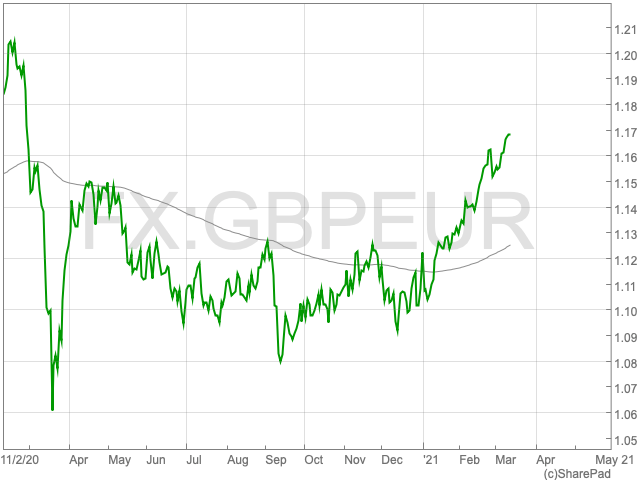
At 1230 GMT, when the ECB made its policy announcement, GBP/EUR was at 1.1661. However, at 1500 GMT on Thursday, one British pound was worth €1.1686.

The pound’s rise against the euro on Thursday is a continuation of a trend which has seen the UK currency surge over recent months.

In the middle of March 2020 the GBP/EURO exchange rate was just above 1.05. After a period of volatility between March and September, the pound found itself at 1.08 against the euro.

Over the past six months the pound has seen an 8.23% rise against the Eurozone currency. The pound has also risen strongly against the dollar over the same period, up 9.11%.

GBP/EUR

Today’s move followed the European Central Bank (ECB) confirming that its interest rate of 0.5% would remain unchanged.

The ECB also said it expects purchases under the pandemic emergency purchase programme (PEPP), its bond buying stimulus, would “be conducted at a significantly higher pace” over the next quarter, in an effort to contain rising bond yields.

The bond buying program has the effect of pushing down bond yields, which act as a benchmark for borrowing across the region.

A number of factors are responsible for Sterling’s recent resurgence. In February, the pound edged 1.16 against the Euro, as optimism surrounding the UK economy grew stronger due to vaccine roll-outs surpassing expectations.

Michael Brown, expert at international payments and foreign exchange firm Caxton FX, commented on the currency’s upward trajectory.

“It continued the steady ascent started a week prior and nearing the 1.17 handle once more,” Brown said.

“This, and the recent 1.1705 high, will prove a tough bar for the pound to jump, though the UK’s continued outperformance in Covid vaccinations means we should indeed break these levels in due course.”

ECB set to expand pace of bond buying stimulus to curb rising yields

0

ECB confirms interest rates to remain unchanged

As expected, the European Central Bank (ECB) confirmed on Thursday that its interest rate of 0.5% would remain unchanged.

The ECB also said it expects purchases under the pandemic emergency purchase programme (PEPP), its bond buying stimulus, would “be conducted at a significantly higher pace” over the next quarter, in an effort to contain rising bond yields.

The bond buying program has the effect of pushing down bond yields, which act as a benchmark for borrowing across the region.

The ECB also explained that it would “purchase flexibly according to market conditions and with a view to preventing a tightening of financing conditions that is inconsistent with countering the downward impact of the pandemic on the projected path of inflation”, in a statement today.

The pound jumped up against the euro to 1.679 shortly after the news broke, while the euro fell below 1.9450 against the dollar.

German bond yields, viewed as the region’s benchmark, plunged as the news of the ECB’s bond buying broke, as did the Italian bond yields.

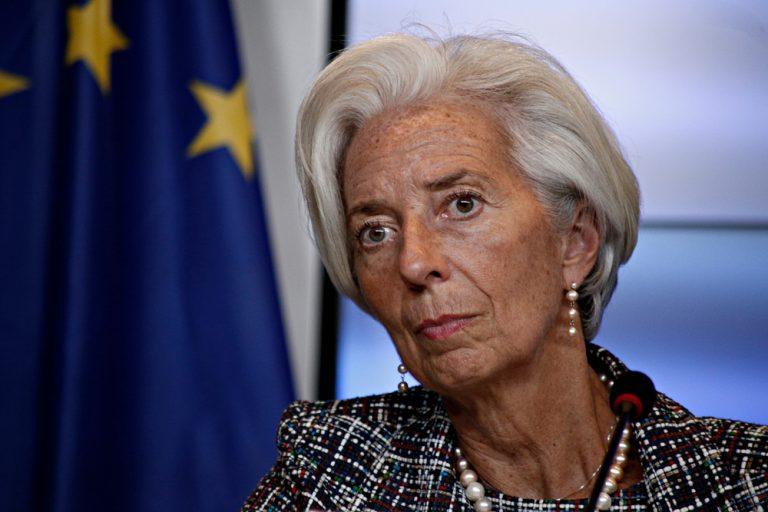
Christine Lagarde took centre stage in Frankfurt, Germany, as the ECB president provided reasoning behind the policy announcements, as well as an assessment of the eurozone area’s economic circumstances.

The former IMF chief warned against rising bond yields as a risk to financing conditions, and confirmed that as the cause for the ECB’s policy announcement.

Lagarde confirmed that high Covid-19 infection rates and lockdowns are continuing to hurt growth, while saying that the overall economic situation will improve.

The ECB president said the eurozone would likely contract in Q4 of 2020 and Q1 of 2021 for this reason. She also confirmed growth forecasts of 4%, 4.1% and 2.1%, for 2021, 2022 and 2023 respectively.

Commenting on the ECB’s bond purchasing program, Rupert Thompson, Chief Investment Officer at Kingswood, said: 

“The European Central Bank plans to step up the pace of its bond purchases over coming months in an attempt to prevent a tightening of financing conditions on the back of the recent rise in government bond yields.”

“The move didn’t require the ECB expanding the size of its €1.85trn quantitative easing program as this runs until next March and already gives it scope to purchase another €1trn of bonds. The action occurs against the backdrop of the disappointingly slow vaccine roll-out, which is delaying the economic recovery in the Eurozone, and also the fiscal stimulus in the region being considerably smaller than that now underway in the US.”

Marshalls raises expectations for 2021 as home improvement booms in the UK

2

Marshalls posts record start to the year

Marshalls (LON:MSLH) has raised its expectations for the coming year as an increase in the number of people doing up their homes resulted in a record breaking start to the year for the landscaping firm.

The company posted a 13.5% drop in its revenue during 2020, to £469.5m, a result of lower sales in the first half of the year.

However, sales recovered during the second half, as Q4 revenue surpassed that of the previous year.

Sales were up 7% at the end of February, while orders increased by 12% from the year before. This led Marshalls to raise expectations for the remainder of 2021.

Having not paid an interim dividend in 2020 due to the impact of the pandemic, Marshalls proposed a final dividend of 4.30p.

Neil Shah, director of research at Edison Group, draws attention to some factors which me be of interest in the coming year:

“Investors will keep a keen eye on the planned delivery of £5million of research and development expenditure, including long-term investment of £20million in a flagship site in St. Ives. Close attention should also be paid to progress of the e-commerce trading model launched in April 2020, which is expected to double throughout 2021, reflecting wider trends towards online retail that will most likely continue to be seen across sectors,” said Shah.

Commenting on these results, Martyn Coffey, chief executive, said:

“Trading has started strongly in 2021. At the end of February, sales are up 7 per cent and orders are up 12 per cent compared to same period in 2020. The CPA’s winter base case scenario predicts an increase in UK market volumes of 14.0 per cent in 2021 and 4.9 per cent in 2022. Despite wider market uncertainty, the underlying indicators in our main growth markets of New Build Housing, Road, Rail and Water Management remain positive.”

“Although market demand remains uncertain, we remain focused on developing future growth opportunities and delivering the strategic objectives in our 5 year Strategy. Our strategy continues to be underpinned by strong market positions, focused investment plans and an established brand. Marshalls’ liquidity is strong and will support our investment priorities going forward.”

“Encouraged by the strong trading performance, the Board is raising its expectations for 2021.”

John Lewis to close more stores as pandemic wipes out profit

0

John Lewis recorded a £517m loss for the year ending in January

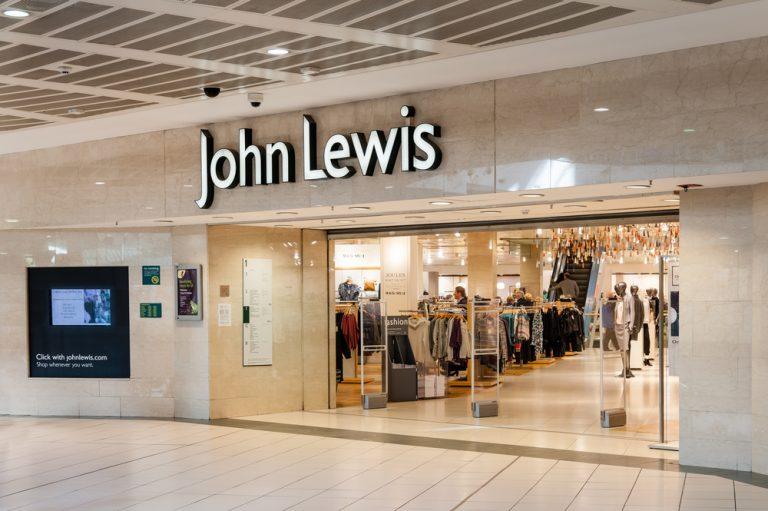
UK retailer John Lewis warned of further store closures after the retail giant posted a pandemic-induced loss as stores closed across the country.

John Lewis recorded a £517m loss for the year ending in January, compared to a profit of £146m the year before.

Previous reports have suggested up to eight stores could be closed in an effort to cut costs. Further store closures would be in addition to this figure.

While the retailer did not say how many stores could be impacted, it did confirm that a decision would be made by the end of March.

Chairman Sharon White told the BBC that the move to keep stores closed was “painful” but necessary due to a “decade of changes in shopping habits in one year”.

“There is no getting away from the fact that some areas can no longer profitably sustain a John Lewis store. Regrettably, we do not expect to reopen all our John Lewis shops at the end of lockdown, which will also have implications for our supply chain,” White added.

Danni Hewson, financial analyst at AJ Bell, commented on the store closures:

“We’ve been asking the question “what’s the future for our hight streets” for over a decade. Ever since Woolworths closed its doors in 2015 there have been rumblings of concern and calls for change,” Hewson said.

“The decision by John Lewis not to reopen some of its stores after lockdown ends isn’t surprising. Six years ago, when I went to the long awaited opening of a John Lewis store in Leeds, partners were falling over themselves to tell me how this was a store for the future. It was about experience; with restaurants, treatment rooms and advice on a good night’s sleep. It was also an integral part of their dot com offer, with the backrooms operating as streamlined warehouses.”

Sosandar strikes a deal with M&S

0

Sosandar established online partnerships with Next and John Lewis in August

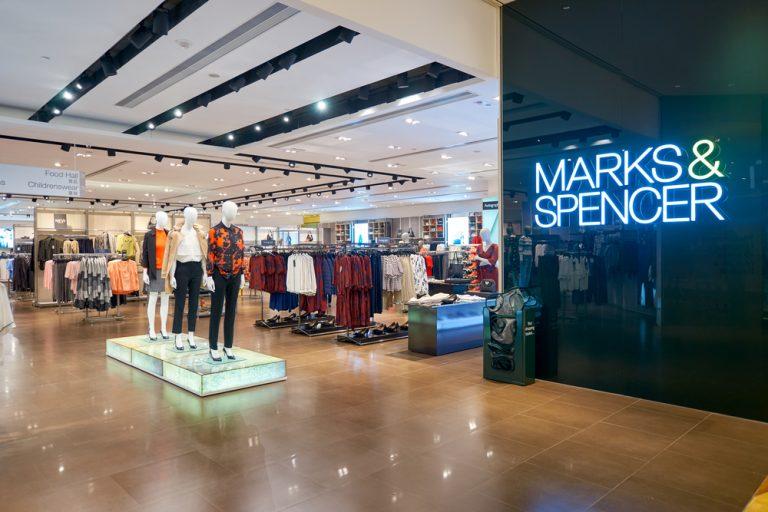
Sosandar (LON:SOS), the online women’s fashion brand, confirmed on Thursday that the company has entered an agreement to sell a curated collection of its products through Marks & Spencer as a third-party online retailer.

The agreement means a selected range of Sosandar’s clothes will be sold on M&S’ online platform from late March, followed by regular drops of new products over future months.

Sosandar’s initial range will include best-selling styles from Sosandar’s denim collection and its premium leather collection, in addition to dresses, knitwear, loungewear and accessories.

The agreement will allow the online fashion brand to draw awareness to its brand, while driving incremental sales and improving its EBITDA.

The agreement with M&S follows online partnerships that Sosandar has, having launched with both John Lewis and Next in August 2020.

Ali Hall and Julie Lavington, Co-CEOs of Sosandar, commented on the company’s new partnership:

“We are delighted to secure a new partnership with another renowned British retailer, Marks & Spencer, to sell our womenswear collections. This is a strong endorsement of the appeal and quality of our clothing and our growing customer base. We have worked closely with M&S to curate a stunning launch collection and we are confident that our products will resonate well with the extensive M&S customer base. We are delighted to be working together and are excited to see a positive outcome for both our businesses.”

“Following on from the recent success of our partnerships with John Lewis and Next, we are thrilled that another highly respected UK retailer has invited us to stock our product on their website. This milestone agreement demonstrates the ever-growing strong appeal of our offering to our target market and the potential Sosandar has to expand through third party brands.”

Greatland Gold reports ‘outstanding’ drilling results

Greatland Gold establishing new targets outside of Havieron deposit

Greatland Gold (AIM:GGP) reported on Thursday “outstanding” results from the company’s Havieron deposit in the Paterson region of Western Australia.

In addition, the company confirmed its JV partner, Newcrest, is on track with its growth programme for the coming year at Havieron with 65km of drilling up to 30 June to test potential extensions to the resource shell.

The company’s best results include 196.1 metres at 1.7 grammes a tonne (g/t) gold and 0.28% copper from a depth of 545.9 metres and 97 metres at 3.9g/t gold and 0.50% copper. Another of the drill results showed 169.5 metres at 3.4g/t gold and 0.33% copper, including 3.1 metres where the gold grade was as high as 95g/t.

Greatland Gold announced via a statement that its latest high-grade drilling results “provide additional confidence of both geological and grade continuity within the existing resource shell”.

The results support the delivery of an Indicated Mineral Resource estimate in the South East Crescent Zone and adjacent Breccia Zones.

The AIM-listed company also established priorities for its 2021 drilling programme.

The growth drilling programme will initially focus on the North West Crescent and Northern Breccia zone and is aimed at providing support for the potential expansion of the existing Inferred Mineral Resource estimate.

In the Eastern Breccia Zone, drill testing and interpretation of the geological and mineralisation controls is ongoing.

Greatland Gold is targeting potential resource definition of extensions below the existing resource shell and lateral extensions adjacent to the existing high-grade resource shell in the South East Crescent and Breccia Zone.

New targets outside of the immediate vicinity of the Havieron deposit, but within the Havieron Joint Venture area, have been identified with the potential to conduct drill testing of these targets in the future.

Shaun Day, Chief Executive Officer of Greatland Gold, commented on the results: 

“We are pleased to once again observe high grades of gold and copper at extensive widths, with all drill holes intercepting mineralisation. The results are outstanding and further highlight the world-class potential of Havieron. Additionally, these results layer onto existing data to further increase our confidence in the continuity of higher-grade mineralisation and support the delivery of an Indicated Mineral Resource estimate,” said Day

“Alongside this, Newcrest is on track to push forward with an exciting 2021 growth drilling programme. We are yet to define the full size of Havieron and, subject to further exploration success, this programme has the potential to significantly expand the mineralised footprint.”

“We look forward to a busy and exciting period over the next few months in the Paterson with growth drilling and early works programmes continuing apace at Havieron and the Juri JV commencing exploration activities.”

Greatland Gold announced its interim results for the six months ended 31 December 2020 on Tuesday.

FTSE 100 short of 6,750 as US stimulus passes through Congress

0

Despite the passing of Joe Biden’s stimulus plan, it was a quiet morning for the FTSE 100 and other European indexes.

Connor Campbell, analyst at Spreadex, commented on the index’s lacklustre start to the week. “While its miners – the index’s biggest burden this week – rebounded after the bell, the FTSE itself only managed a 0.1% increase, leaving it short of 6,750,” Campbell said.

FTSE 100 Top Movers

Flutter Entertainment (3.07%), Rio Tinto (2.88%) and Anglo American (2.6%) were the top risers on early Thursday morning trading on the FTSE 100.

Down at the bottom end, Persimmon (-4.2%), HSBC (-3.83%) and Evraz (-2.34%), are the index’s biggest fallers so far.

Rolls-Royce

Engineering company Rolls-Royce swung to a £4bn loss in 2020 as the coronavirus pandemic severely impacted the airline industry. The company’s loss came following an underlying profit before tax of £583m in 2019.

In 2020 its cash outflow was £4.2bn. The FSTE 100 company predicted an improvement this year to around £2bn, with its cash outflow set to turn positive during H2 of 2021.

Morissons

Morrisons (LON:MRW) confirmed on Thursday morning that its profit fell as the supermarket took on £290m extra costs due to the pandemic. The supermarket confirmed its profit before tax fell by 62.1% to £165m for the year ending on 31 January. The supermarket’s total revenue rose by 0.4% to £17.6bn.

Throughout the year the FTSE 100 company spent an additional £99m paying staff, £68m on bonuses for employees, £46m to protect its customers, as well as donating £12m to food banks.