Morrisons profit slashed as pandemic costs soar

0

Morrisons pre-tax profit down by 62.1%

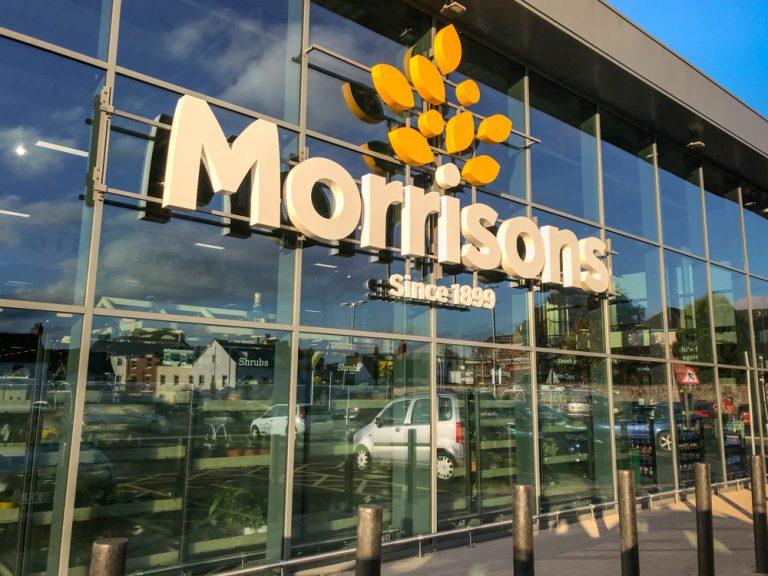
Morrisons (LON:MRW) confirmed on Thursday morning that its profit fell as the supermarket took on £290m extra costs due to the pandemic.

The FTSE 100 company confirmed its profit before tax fell by 62.1% to £165m for the year ending on 31 January. The supermarket’s total revenue rose by 0.4% to £17.6bn.

Throughout the year the supermarket spent an additional £99m paying staff, £68m on bonuses for employees, £46m to protect its customers, as well as donating £12m to food banks.

Other costs, including markdowns and seasonal waste, added up to £65m.

Morrisons‘ repayment of the government’s business rates relief also made an impact on profits, in addition to its decision to boost its online capacity.

The company spent an extra £10m in January due to Covid-19, incurring further costs than anticipated.

Profit was also impacted by Morrisons’ decision to boost its online capacity during the pandemic, and to repay the government’s business rates relief.

Ross Hindle, analyst at Third Bridge, commented on the supermarket’s outlook.

“Despite a strong top-line performance, Morrisons is expected to incur c.£290m in Covid-19 related costs. Stores have had to introduce expensive social distancing measures whilst also hiring more staff to meet increased demand.”

“Our experts expect Morrisons to continue to develop its wholesale business and to grow its margin accretive non-food home-ware and clothing offer. Specialists believe further growth in these areas will continue to differentiate Morrisons relative to the Big 4 and could offer some margin protection to the Group.”

David Potts, chief executive of Morrisons, commented on the supermarket’s role during the pandemic, and looked forward to targeted growth during the coming year:

“Morrisons key workers have played a vital role for all our stakeholders during the pandemic, especially the most vulnerable in British society, and their achievements over the last year have been remarkable. I am delighted that we are recognising their enormous contribution by becoming the first supermarket to pay a minimum of £10 an hour to all store colleagues. We are also today showing our continuing gratitude and appreciation for the incredible work of other key workers in the nation, by extending our 10% discount for NHS staff for the whole of 2021,” Potts said.

“I’m pleased with the greater recognition, warmth and affection for the Morrisons brand from all corners of the nation, following a year like no other. We must now look forward with hope towards better times for all, and we’re confident we can take our strong momentum into the new year, targeting profit growth and significantly lower net debt during 2021/22.”
Rolls-Royce makes £4bn loss amid ‘severe’ impact of pandemic

0

Rolls-Royce confirms 7,000 job losses during 2020

Engineering company Rolls-Royce (LON:RR) swung to a £4bn loss in 2020 as the coronavirus pandemic severely impacted the airline industry.

The company’s loss came following an underlying profit before tax of £583m in 2019.

In 2020 its cash outflow was £4.2bn. Rolls-Royce predicted an improvement this year to around £2bn, with its cash outflow set to turn positive during H2 of 2021.

Rolls-Royce has taken strong acton to reduce its costs by an added £1bn, including 7,000 job losses during 2020, with the aim of saving a total of £1.3bn by 2022.

Jack Winchester, analyst at Third Bridge, commented on the vulnerability of the aviation group’s business model.

“Rolls Royce’s management have been guiding this 4.2bnGBP cash outflow since mid December, but while it isn’t a surprise, it really does bring into focus the deep pain caused by the pandemic. This is a business which has been producing positive cash flows in the hundreds of millions basically since the turn of the millennium.”

“What we’ve seen over the past year is the inherent fragility of Rolls Royce’s business model – when you sell engines to customers at a loss, you are very dependent on your aftermarket ‘power by the hour’ business.”

The company raised £7.3bn to get through the pandemic via tapping up shareholders and borrowing from the Bank of England. The company will also look to raise money by selling off parts of the business.

At early morning trading, Rolls-Royce’s share price is up by 2.35% to 115.65p per share.

Warren East, chief executive of Rolls-Royce, commented on the measures taken by the company during the pandemic, as well as its outlook moving forward:

“The impact of the COVID-19 pandemic on the Group was felt most acutely by our Civil Aerospace business. In response, we took immediate actions to address our cost base, launching the largest restructuring in our recent history, consolidating our global manufacturing footprint and delivering significant cost reduction measures,” East said.

“We have taken decisive actions to enhance our financial resilience and permanently improve our operational efficiency, resulting in a regrettable, but unfortunately very necessary, reduction in the size of our workforce. With the support of our stakeholders we successfully secured additional liquidity with a rights issue, bond issuance and further credit facilities put in place during the year. We have made a good start on our programme of disposals and will continue with this in 2021. We continue to invest in developing market-leading technology and low carbon opportunities in all our end markets, to create value for our stakeholders and ensure we are well positioned to take advantage of the transition to a lower carbon economy and growing demand for more sustainable power solutions.”

Biden’s $1.9tn stimulus plan passes through Congress

0

Biden stimulus adds “further fuel to the fire” of expected inflation

Joe Biden’s $1.9tn coronavirus relief package is set to go through after receiving final support from the US House of Representatives on Wednesday.

The bill passed through the House by a narrow margin of 220 to 211 votes, with every Republican and only one Democrat opposing the proposal. Biden will now be able to sign the bill into law on Friday.

After weeks of process, the bill’s passing is a big step for the President who was elected with the mission to see the US out of the pandemic and into a more prosperous future.

In a statement from the White House moments after the vote, Biden said: “This legislation is about giving the backbone of this nation — the essential workers, the working people who built this country, the people who keep this country going — a fighting chance”.

The packaged includes direct payments of up to $1,400 for a significant number of American adults, unemployment benefits, $350bn worth of aid to local and state governments and an expansion of child tax credits.

“Right now markets are celebrating the additional stimulus and see it as a stronger bridge to a fully reopened economy,” said Jeff Buchbinder, equity strategist for LPL Financial.

However, Joshua Mahony, senior market analyst at IG, drew attention to a possible drawback of the President’s stimulus:

“While traders have been looking for this package as means to turbocharge the US economic recovery, there are plenty of questions over the impact it could have upon inflation,” Mahony said.

“Inflation expectations have already been soaring in the US, and the passing of this huge stimulus package adds further fuel to the fire. While Powell will try to soothe concerns that the Fed will need to tighten policy in the event of rising prices, the key questions is whether this package will accelerate the widespread expectations for a significant bounce in 2021 inflation levels.

Legal and General Share Price: earn a high dividend yield in a stable industry

0

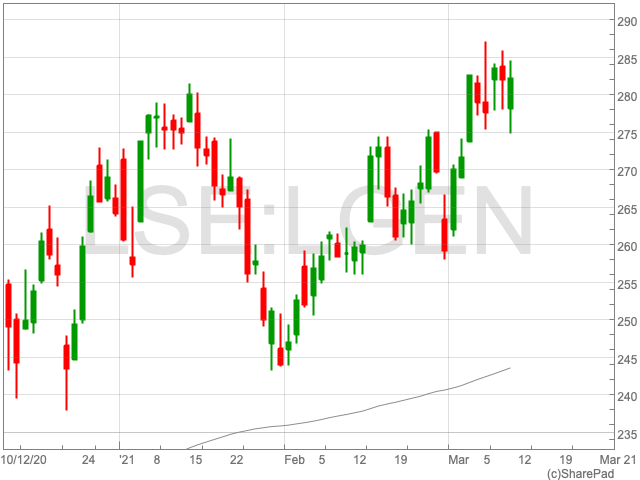
Legal and General’s (LON:LGEN) share price is up by 8% since the beginning of the year to 282p per share. Since the extent of pandemic became clear in March 2020, when Legal and General’s share price fell to 157.05p per share, the company’s stock value has increased by nearly 80%.

Financial Results

Legal and General confirmed on Wednesday that its profits fell for the financial year gone, although the firm says it is still on course to meet its five-year ambitions. The asset manager announced its operating profit fell by 3% to £2.2bn, while profit before tax was dipped by 12% to £1.6bn.

Legal and General’s board maintained its high yielding dividend, at 17.57p per share, throughout the pandemic. The company’s shares yield around 6.5%, one of the highest out of the FTSE 100 index. On the other hand, there is a possibility its high yielding dividend could take money away which could otherwise be invested.

Return on equity fell to 17.3% from 20.4% the year before, which Legal & General described as ‘resilient in light of market volatility’. The company’s Price-to-Earnings ratio stands at 9.3, while Aviva’s and Prudential’s are 6.5 and 12.2 respectively.

Outlook

While other sectors, like oil produces, are coming under pressure from innovative companies, Legal and General’s insurance industry can boast stability. Therefore the company can be expected to smoothly benefit from the ending of lockdowns and a general sense of economic optimism.

It has been reported that Legal and General has been assigned a “hold rating” from thirteen research firms that are covering the company. Three gave a sell recommendation, four issued a hold and five have issued a buy recommendation on the insurance company.

BP Share Price: reaping the benefits of restricted oil output

0

BP Share Price

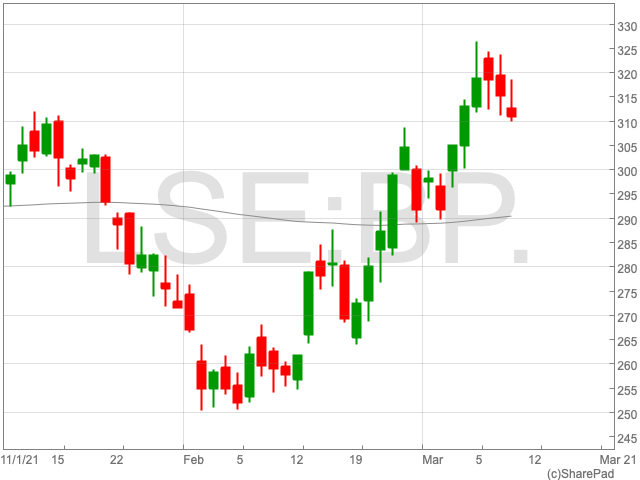
BP’s share price surged throughout February and into March despite a slight retreat in the last few days. BP shares are now at 313.75p per share, up by 21% over the past 30 days from 259.1p. The oil and gas sector has generally experienced an upturn, helped in part due to a resurgence in the price of oil. In addition to continued optimism around vaccine roll-outs, the decision to restrict oil production by OPEC+ has worked in the British oil giant’s favour.

BP Share Price

OPEC+

Earlier this month, OPEC+, the Organisation of the Petroleum Exporting Countries and its allies, decided to restrict its production of oil, opting to stick in the most part with its current quotas.

Prince Abdulaziz bin Salman, Saudi Arabia’s oil minister and son of King Salman, warned against complacency over the commodity’s recovery.

“Let us be certain that the glimmer we see ahead is not the headlight of an oncoming express train,” he said, at a meeting of oil ministers. “The right course of action now is to keep our powder dry, and to have contingencies in reserve to ensure against any unforeseen outcomes.”

So what does this mean for BP? Following the announcement by OPEC+, oil prices climbed to a 14-month high. As seen recently, when the price of oil rises, so does BP’s share price, because the company can make more money. Therefore, a continuation of OPEC+’s supplied control could bode well for BP’s share price.

However, the play does come with risks, according to Michael Hewson of CMC Markets.

“The surge in prices could also speed up the transition towards renewables if the price rises much above $70 a barrel for an extended period. It’s a bit of a gamble on the part of the Saudis, as they could hasten their own demise in a faster move towards renewables, as well as risking the strength of any post pandemic recovery.”

Earnings vs Sentiment: key market drivers after the tech sell off

Alan Green joins the UK Investor Magazine Podcast as the UK tech sell of takes a break after a week of declines. We look at the drivers of the recent sell off in the US and try to apply the lessons from the reversal to UK-listed shares.

This is a task with many considerations due the sector composition of the leading indices in London and New York. The FTSE 100 dominated by commodities and S&P 500 and NASDAQ heavily weight towards technology meaning their is a sharp contrast in the weighting towards those shares classed as value stocks and growth shares.

We also discuss Argo Blockchain (LON:ARB), Tertiary Minerals (LON:TYM) and Conroy Gold (LON:CGNR).

Tremor International recovers from pandemic to post record performance in Q4

0

Tremor International net revenue increased to $184.3m

Tremor International (LON:TRMR) posted a record breaking performance for Q4 – and more broadly the second half of the year – as the advertising company posted its full-year results on Wednesday.

The AIM-listed company confirmed its programmatic net revenue rose by 30% to $161.6m, however, this was offset by a forecasted decrease of 43% in performance activity.

Tremor International‘s net revenue increased to $184.3m, up 12%, with 88% of net revenues generated from programmatic activities. This compared to 76% in 2019.

The company announced a record H2 adjusted EBITDA of $58.7m, up 51% from the previous year, while Tremor International’s EBITDA for the full-year was $60.5m.

The advertising company confirmed it will not being paying any dividends to shareholders for the foreseeable future despite having done so in the past.

The company confirmed its earnings were affected by the pandemic’s impact on the global advertising industry during the first half of the year.

Ofer Druker, chief executive of Tremor International, commented on the company’s performance during the coronavirus pandemic:

“The record performance that Tremor achieved during the second half of 2020 and the strong start of 2021 is a clear endorsement of our strategy, the Company’s platform and our ability to generate sustainable organic growth. Whilst, as previously flagged, Tremor was impacted in the first half of 2020, as Covid-19 reduced demand across the advertising sector, overall, 2020 was a significant year in the Company’s development. It is clear that we have the right foundations in place to generate significant growth,” said Druker.

“On behalf of the Board and Tremor’s management team, I would like to thank all of our employees worldwide for their tenacity and dedication during what has been a challenging period for everyone. Tremor’s resilience, highlighted by our strong second half performance, would not be possible without each employee’s contribution.”

“We look forward to the future with real confidence in delivering further value for all our stakeholders.”

Bitcoin heading for $70,000 after breaching $55,000 mark

Norwegian gas and oil giant Aker ASA now investing in bitcoin

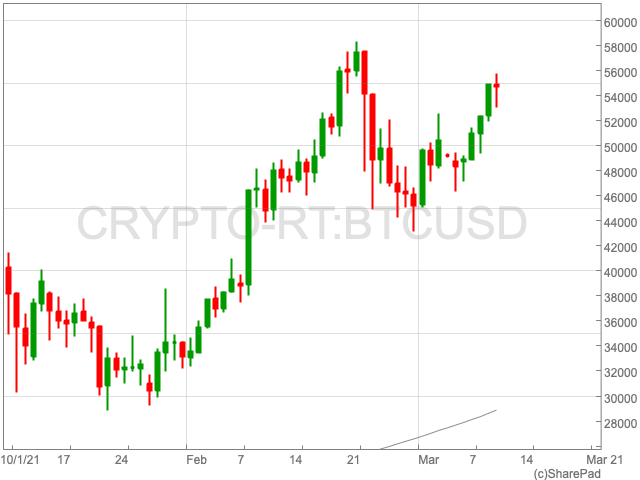
Bitcoin rose for the fourth day in a row yesterday, briefly getting above the $55,000 mark.

Heading into lunchtime on Wednesday the cryptocurrency is sitting at $54,863 following a slight retreat back.

Its market cap is again above $1tn as investors ponder the prospect of a new all-time high.

Only recently bitcoin recovered from a pullback. Having reached an all-time high above $58,000 towards the end of February, the cryptocurrency dipped below $44,000.

Bitcoin

Analysts are making the case that the blockchain technology is heading for $70,000 having overcome shorter-term price constraints.

“Bitcoin is very much out of trouble zone now as the price has broken most of its obstacles,” said Naeem Aslam, chief market analyst at Avatrade.

“The next target for the Bitcoin price is really the all-time high, and from there onwards the journey will begin towards a new target of 70K.”

Major players in finance are continuing to invest in the cryptocurrency, including Norwegian gas and oil giant Aker ASA, which confirmed its plan to launch a cryptocurrency arm with a massive $59 million opening investment.

The Restaurant Group to raise £175m from shareholders due to coronavirus challenges

0

The Restaurant Group owner Wagama needs to pay down existing debt

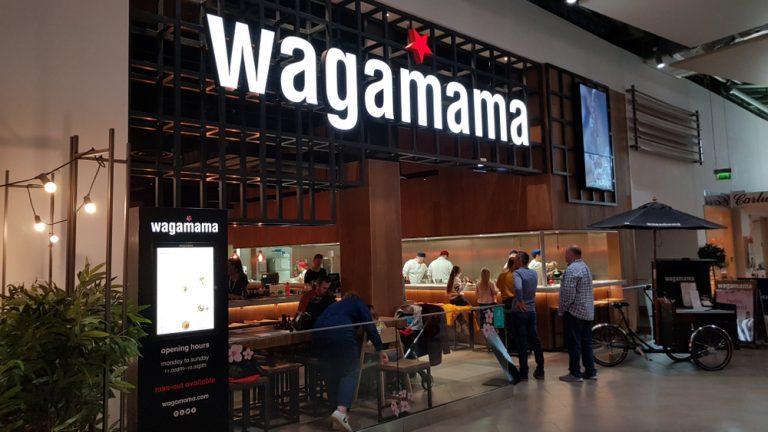
The Restaurant Group (LON: RTN), owner of Wagamama, is aiming to raise £175m from shareholders as a number of its restaurants had to close during the pandemic.

The company plans to use this money to pay down its existing debt, as well as a buffer in the event that lockdowns are prolonged.

During 2020 The Restaurant Group saw a 57% drop in its sales to £459.8m as many of its restaurants closed.

The impact on sales during the pandemic, in addition to its ongoing costs, meant the group confirmed a loss before tax of £127.6m, compared to a £37.3m loss in 2019.

Danni Hewson, financial analyst at AJ Bell, commented on the size of the fundraising as well as the group’s association with the Eat Out To Help Out Scheme.

“The Restaurant Group might be forever linked with the government’s Eat Out To Help Out scheme because of that photo of The Chancellor enjoying a Wagamama’s but now the business is hoping investors will “Buy In”,” said Hewson.

“The £175m it hopes to raise would be the sixth biggest secondary raising of the year so far in the UK and the business promises it is “well positioned to deliver long-term shareholder value.”

The pandemic has had a debilitating impact on the industry throughout the lockdown as causal dining firms recorded 30,000 job losses.

Andy Hornby, chief executive of the Restaurant Group, commented on the year-gone, as well as the proposed impact of the capital raising.

“The COVID-19 pandemic has presented enormous challenges for our sector but the TRG team has responded decisively to re-structure our business and preserve the maximum number of long term roles for our colleagues. TRG is operationally a much stronger business than twelve months ago,” said Hornby.

“The Capital Raising, announced today, will significantly strengthen the Group’s balance sheet and provides TRG with the flexibility to invest in growing our business. Whilst the sector outlook remains uncertain, and we are mindful of continuing restrictions across the UK, we are confident that the actions announced today will allow us to emerge as one of the long term winners.”

According to the UK Government’s current plans to ease lockdown restrictions, restaurants and other hospitality venues will reopen for outside dining on 12 April, while indoor dining is set to return on 17 May.

FTSE 100 dragged back by mining companies

0

The FTSE 100 opened 31 points down on Wednesday, or -0.45%, at 6700 points.

“While the rest of the markets opened flat, the FTSE took a drubbing after the bell, hammered by its mining stocks,” said Connor Campbell, financial analyst and Spreadex.

“Though copper’s losses have stalled after 2 days of decline, the UK index’s weighty miners are still deep in the red. Rio Tinto and BHP Group were the worst hit, falling 3.2% and 2.9% respectively.”

FTSE 100 Top Movers

Spiral-Sarco (3.33%), M&G (2.21%) and Just Eat (1.87%) headed up the index on Monday’s morning trading.

At the bottom end were three mining companies, Rio Tinto (-2.44%), Fresnillo (-1.84%) and BHP (-1.75%), the FTSE 100’s top fallers so far.

Just Eat

Just Eat Takeaway confirmed on Wednesday that it anticipated additional growth in 2021 after an increase in orders due as nationwide lockdowns to the coronavirus pandemic allowed the company to meet its expectations for 2020. 

Demand for food-delivery services soared by 42% to 588m orders during 2020 as lockdown restrictions kept customers away from restaurants. The FTSE 100 company also expects to increase its market share in 2021 in the UK on the basis of an 88% increase in orders over January and February of this year.

Legal and General confirmed on Wednesday that its profits fell for the financial year gone although the firm says it is still on course to meet its five-year ambitions. The asset manager announced its operating profit fell by 3% to £2.2bn, while profit before tax was dipped by 12% to £1.6bn.

The FTSE 100 company put these figures down to lower interest rates and market movements. Legal and General paid out a full year dividend of 17.57p per share despite the pandemic and in line with its five-year ambitions.