Standard Life Aberdeen slashes dividend after profits fall

0

Standard Life Aberdeen pre-tax profit at £487m

Standard Life Aberdeen (LON:SLA) has cut its dividend by a third following a dip in profits last year, while its chief executive has promised a return to growth.

The FTSE 100 company reduced its full-year dividend by one third to 14.6p per share, a move that was in line with analysts’ expectations.

Standard Life Aberdeen confirmed a profit before tax of £487m for 2020, down 16.6% on the year before, while its fee-based revenue fell by £0.2bn to £1.4bn.

The group is currently in the middle of a restructuring programme that saw the Standard Life name sold to Phoenix recently. A new name for the business will be announced later in 2021.

Stephen Bird, chief executive at Standard Life, commented on the results:

“We have seen growing momentum in the second half of 2020 with improved investment performance and flows which represent an inflection point as we pull out of the post-merger era. We remain on track to deliver targeted synergies and have identified more that we can deliver. We have exited some non-core businesses and made an acquisition that has extended our capabilities in private markets. We have simplified and clarified leadership structures across the business and placed a refreshed focus on Asia,” said Bird.

“We have a clear vision; we will focus on the future to enable our clients to be better investors. To do this we will pursue efficient, sustainable growth by ensuring that our product capabilities, technology and performance are first class. Our pursuit of client led growth, combined with focus on efficiency and careful deployment of capital, will enable us to generate sustainable value for our shareholders.”

“We have three growth vectors – Investments, Adviser and Personal. Thanks to our strong capital position, we have strategic flexibility around how we grow these businesses and we have set out clear ambitions.”

Two funds set to benefit from China’s growth in 2021

Growth Expected in 2021

China was the only major global economy to post gains during 2020, as it recovered quicker than the rest from the pandemic-induced slowdown. China recorded a growth rate of 2.3% last year, albeit its weakest performance in 44 years. Having scrapped its target for 2020, the country is aiming for a growth rate in excess of 6% for 2021.

With China set to overtake America as the largest economy in the world, foreign investors are increasingly keen to get a share of the pie.

Will Hobbs, chief investment officer at Barclays Wealth Management & Investments said Chinese equities are an important part of diversified multi asset class funds and portfolios. 

“At the most basic level, in investing in a diversified mix of assets investors are trying to harvest the gains from future innovative breakthroughs,” Hobbs said.

“The lesson from history is that there is no requirement for such breakthroughs, or indeed their primary beneficiaries, to come from a particular country or political creed.”

“In this context, exposure to Asian companies is a vital part of the design of this net – focusing all your efforts on one particular country or other means you risk missing important parts of the catch.”

Fidelity China Special Situations PLC and Matthews China Small Companies are newly established funds with exposure to the Chinese economy. Both performed well during 2020 and could be of interest to investors seeking to gain from the inexorable rise of the Chinese economy.

Fidelity China Special Situations PLC

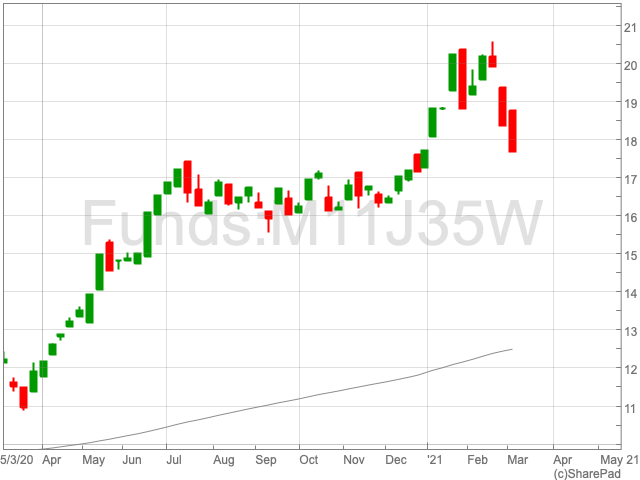
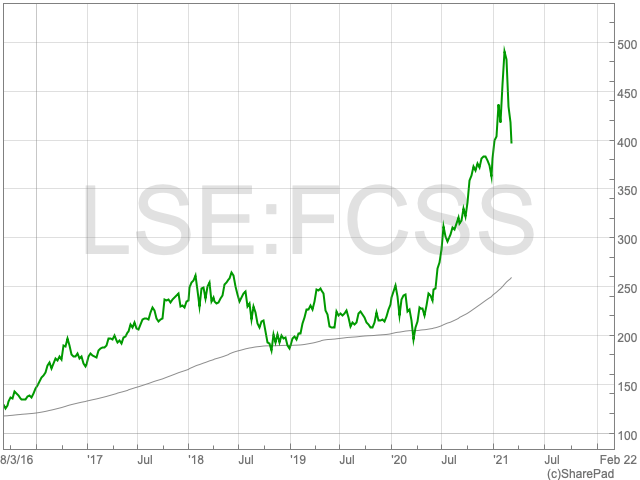
Fidelity China Special Situations PLC consists of an actively managed portfolio made up primarily of securities issued by companies listed in China and Chinese companies listed elsewhere. Over the 12 months to 31st January 2021, the trust’s NAV recorded a 75.9% return, outperforming its reference index, MSCI China Index, which delivered 40.2%. The trust’s share price rose by 92.7% over the same period. Over a five-year period the trust’s share price is up by 270.6%.

Fidelity China Special Situations PLC

The top 10 asset holdings make up 46.07% of the fund’s total, with Alibaba (8.09%), Tencent (8.09%) and Hang Seng China Enterprises Index Future (4.72%) forming the top three. However, one of the trust’s key aims is to seek out companies which are not well understood by the market, and are therefore undervalued. 25.3% of the trust’s holdings are in the consumer cyclical sector while 16.93% and 11.51% are in communications services and industrials respectively. The Fidelity China Special Situations PLC paid out a dividend of 4.3p for 2020, up slightly from 4.25p the year before.

Matthews China Small Companies

The fund seeks to achieve its investment objective by actively investing, directly or indirectly, at least 65% of its total net assets, in equities of small companies located in China. Over the past 12 months, the Matthews China Small Companies Fund (GBP) has seen a 53.11% gain, outperforming the MSCI China Small Cap Index (GBP), its benchmark index, which grew by 43.39%. The fund began operating on 30 January 2020, just over a year ago. Since then it is up by 45.65%.

Matthews China Small Companies

The fund’s top three holdings are KWG Group (real estate), Weimob (IT) and Alchip Technologies (IT) at 3.3%, 3.2% and 3% respectively. The Matthews China Small Companies is most heavily weighted to IT (27.9%), industrials (21.6%) and healthcare (12.1%). In fact it is more heavily weighted in each of these sectors than the benchmark MSCI China Small Cap Index by 5.3%, 10.1% and 3.1% respectively. Finally, money is reinvested into the fund rather than paying a dividend.

Carnival Share Price: Steadily rising in 2021

0

Carnival Share Price

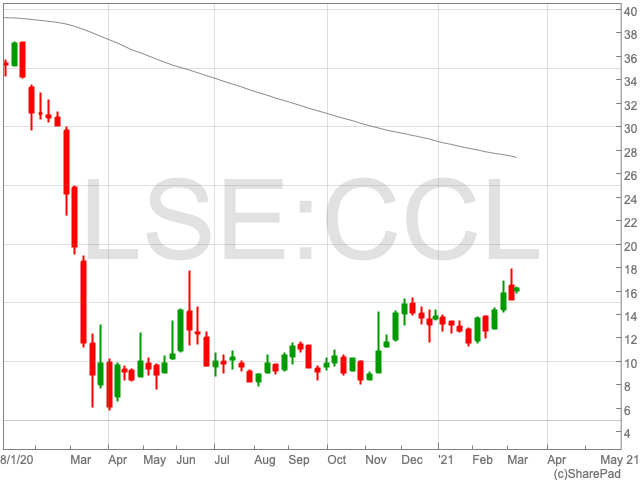
On 17 January 2020, the London-listed Carnival (LON:CCL) share price was at 3,708p per share. However, by April, the British-American cruise operator’s stock value plummeted to 614.8p per share as the extent of the ongoing travel restrictions became clear. Since then, the company’s share price has seen a mini-resurgence, climbing up to 1,620.85p. With the economic outlook around the world gradually becoming more optimistic, and restrictions being lifted over the coming weeks, now could be an opportune time for investors to capitalise.

Carnival share price

Financial Performance

Similar to the airlines, Carnival took a beating last year. In January the cruise operator disclosed an adjusted net loss of $1.9bn for Q4 of 2020. However, the airline has said its cash burn rate was slightly better than expected due to the timing of capital expenditures. Carnival also confirmed that it ended Q4 of 2020 with $9.5 billion of cash and cash equivalents.

Carnival’s chief financial officer David Bernstein outlined the company’s plan to use the cash to get through the coming year, even in the event of no revenue coming in.

“We ended the year with $9.5 billion in cash and have the liquidity in place to sustain ourselves throughout 2021, even in a zero-revenue environment.”

“While we raised capital mainly through debt this year, in the last few months we opportunistically strengthened our capital structure by raising $2.5 billion through at-the-market equity offering programs and by the early conversion of $1.5 billion of convertible debt.”

“As we return to full operations, our cash flow will be the primary driver to return to investment grade credit over time, creating greater shareholder value,” Bernstein said.

Getting Back to Business

Carnival confirmed its cumulative advanced bookings received for the first half of 2022 exceeded bookings for 2019. While bookings for the second half of 2021 are within “the historical range”.

Carnival Corporation & plc President and Chief Executive Officer Arnold Donald noted in the company’s annual report: “The booking trends that we have consistently experienced throughout this period affirm the strong fundamental demand for our brands which will facilitate our staggered resumption and support the long-term growth of our company.”

However, while demand is there, the powers that be are taking a cautious approach. The UK Prime Minister will finalise the plan to resume international travel no earlier than May 17, 2021. In addition, Carnival has outlined its intention to resume cruises in June 2021.

Deliveroo losses narrow ahead of London listing

0

Deliveroo to give top riders £10,000 each following the IPO

Deliveroo has revealed plans for its initial public offering (IPO), while confirming a 54% growth in sales and £224m of losses in 2020.

The online food retailer announced its intention to float on Monday with shares expected to begin trading by early April.

Deliveroo’s public announcement comes days after the UK government committed to altering a ruling so that founders would be able maintain control of their companies despite selling shares to investors on the stock market.

Will Shu, co-founder of Deliveroo and chief executive, will have 20 votes per share, while every other shareholder will have one vote per share, in line with the dual-class share structure included in Monday’s filing.

Shu has confirmed he will offer the company’s top riders £10,000 each following the IPO, which is expected to earn the founder a significant payday.

Deliveroo has its sights set on a $10bn valuation ahead of its initial public offering, which would be the highest valued new listing in London for a number of years.

Russ Mould, investment director at AJ Bell, refocused attention on the company’s loss during the pandemic, despite favourable market conditions.

“After the fanfare of how Deliveroo is going to reward drivers with bonuses and give customers a chance to buy the shares, here comes the hard facts. The most important point is how the company remains loss-making despite experiencing a surge in business going through its platform during the pandemic.

“It’s hard to see it’ll have another year when market factors were so much in its favour. Lockdowns kept people at home for months at a time and online grocery slots were hard to come by, so demand for takeaways shot up. A cynic might ask, if Deliveroo couldn’t deliver a profit against that backdrop, when will it?”

“Fans of the business will point out that it has narrowed its losses by nearly 30% and that its underlying gross profit has shot up, both in absolute terms and as a percentage of the gross transaction value. That’s likely to be enough to fuel interest for many people in the shares when they come to the London market.”

FTSE 100 makes early gains following attack on oil facility in Saudi Arabia

0

Following an early rise to 6,673.21, the FTSE 100 retreate below Friday’s close to 6,626.95, down 0.0.54%. The index has so far been propped up by oil prices following an attack on a facility in Saudi Arabia.

“The FTSE 100 made a solid start to the week underpinned by renewed gains for oil off the back of attacks on facilities in Saudi Arabia over the weekend,” said AJ Bell investment director Russ Mould.

“This lifted index heavyweights BP and Royal Dutch Shell as the black stuff traded above $70 per barrel for the first time since January 2020 when tensions between Iran and the US were rapidly escalating.”

“The only problem is the rise in oil will only add to the key concern which is dogging markets – namely the risk of runaway inflation and a resulting increase in interest rates,” said Mould.

“The other key driver for positive sentiment this morning is also a double-edged sword with the news that the US has signed off its long-awaited $1.9 trillion stimulus package. This is also seen as a major catalyst for rising prices,” Mould said.

FTSE 100 Top Movers

Pearson (3.32%), Lloyds (2.64%) and Pershing Square Holdings (2.47%) are Monday’s top movers on the FTSE 100 so far.

London Stock Exchange Group (-5.15%), Ocado Group (-4.24%) and BT Group (-3.59%) are the day’s biggest fallers.

Phoenix Group

Phoenix Group reported a substantial increase in operating profit for 2020, and said it is in a strong position to leverage the key industry drivers of growth. 

The FTSE 100 company confirmed an operating profit of £1.2bn, up from £810m the year before.

Pearson

Pearson confirmed on Monday that it will maintain its dividend for the year as the education company expects a recovery after its sales took a hit during the pandemic. 

The FTSE 100 firm has proposed a final dividend of 13.5p per share. This brings the full-year figure to 19.5p, in line with 2019.

Shoe Zone scraps dividend as stores remain closed

0

Shoe Zone posts pre-tax loss of £14.6m

Shoe Zone (LON:SHOE), the footwear seller, swung to a loss in 2020 and scrapped its dividend, as nationwide lockdowns took a toll on the company’s sales.

The AIM-listed company also announced the appointment of a new finance director, Terry Boot, as Peter Foot stepped aside after seven months.

Shoe Zone made a loss before tax for the year which amounted to £14.6m, down from £6.7m the year before. The company’s revenue also fell by 24% to £122.6m.

Shoe Zone’s gross margin contracted to 61.4% from 62.7%.

The shoe seller confirmed its stores remained closed and said it was unable to forecast accurately due to ongoing uncertainties.

Anthony Smith, chief executive at Shoe Zone, commented on the the results, as well as looking ahead.

“In my second year back as Chief Executive, it is disappointing I am reporting on a year impacted by COVID-19. Despite this, there are positives such as the continued growth of digital and the commitment and focus of our loyal employees. The financial pressure caused by COVID-19 has meant we now have debt on the balance sheet for the first time in over 15 years.”

“The business model of digital, big box, hybrid and town centre stores remains the same although the percentage contributions of each area are changing fast due to lockdown restrictions, some of which will be a permanent shift.”

Phoenix Group sees profits surge in 2020

0

Phoenix Group assets under management at £338bn

Phoenix Group (LON:PHNX) reported a substantial increase in operating profit for 2020, and said it is in a strong position to leverage the key industry drivers of growth.

The FTSE 100 company confirmed an operating profit of £1.2bn, up from £810m the year before.

The insurance firm also recorded a rise in its assets under management from £248bn in 2019 to £338bn.

Phoenix Group’s board declared a final dividend of 24.1p per share, bringing the full-year dividend up to 47.5p per share. This is up from 46.8p per share in 2019.

After an hour of trading, the company’s share price was up by 2.34% to 744p per share.

Commenting on the results, Group CEO, Andy Briggs said:

“2020 was a landmark year for Phoenix during which we completed the acquisition of ReAssure and became the UK’s largest long-term savings and retirement business. We delivered record cash generation of £1.7 billion, our Solvency balance sheet remained resilient, we delivered our highest ever year of Open business growth, and we have recommended a 3% increase in our 2020 final dividend.”

“We are led by our purpose of ‘helping people secure a life of possibilities’ to deliver for all of our stakeholders and are putting sustainability at the heart of our business. During the year we have focused on delivering better outcomes for our customers, investing in our people, supporting our local communities, and have made a commitment to be net-zero carbon across our operations by 2025 and our investment portfolio by 2050. COVID-19 has challenged each and every one of us and I am very grateful for the outstanding dedication and professionalism of my colleagues which ensured we protected our customers throughout.”

“Looking ahead to 2021, we will continue to optimise our in-force Heritage business for cash and resilience, while the recent acquisition of the Standard Life brand will support us in accelerating our Open business growth strategy.”

Diversified Gas and Oil CEO “exceptionally pleased” with full-year results

0

Diversified Gas and Oil posts record production levels

Diversified Gas and Oil (LON:DGOC) released its full-year results for 2020 on Monday as chief executive Rusty Hutson revealed his delight at the group’s resilience.

Adjusted earnings increased by 1% to $301mn for the year, helped by hedge cash settlements of $145m, which offset lower gas prices during 2020.

Total revenue, including the hedge cash settlements, came to $533m, an 8% rise on 2019’s figure.

Diversified Gas and Oil confirmed a net loss of $23m, a swing from $99m in net income the year before.

The oil company posted record production levels, as its exit rate for 2020 came in at around 100,000 barrels per day. This is 18% above the volume recorded at the end of 2019.

Diversified Oil and Gas proposed a final quarterly dividend of $0.04 per share, bringing the full-year 2020 dividend to $0.1525 per share, 10% higher than 2019 ($0.1392 per share), supported by accretive growth of its low-decline, long-life assets.

Commenting on the results, CEO Rusty Hutson, Jr. said:

“I am exceptionally pleased with our results in 2020 as they reflect the resilience of our business model and its proven ability to consistently deliver shareholder value and returns, even in the most challenging of markets. Our commitment to value-accretive growth, operational excellence, cost discipline, and risk mitigation drove the Group’s solid performance through turbulent times. Our long-standing strategy of focusing on low-risk assets and reliable cash flows position DGO for further growth, and enables us to maintain our firm commitment to shareholder returns, evidenced by the increase in our per-share dividend, which we raised twice, or 14%, during the year.”

“With a business model grounded in asset and environmental stewardship, we made significant strides in developing plans and adopting disclosure frameworks aimed at improving our environmental footprint. Additionally, we strengthened our track record of accretive growth with the successful acquisitions of both upstream and midstream assets, contributing to a consistent, strong cash margin and enlarging our portfolio of Smarter Asset Management opportunities on a base of assets with an exceptionally low corporate decline rate of ~7%. Our commitment to acquire low-decline assets enables us to replace production declines with approximately 10% of our Adjusted EBITDA while meeting our operating and ESG commitments, reducing our debt and making consistent quarterly dividend payments to shareholders.”

Pearson to maintain dividend despite school closures impacting sales

0

Pearson to focus on high-growth areas in 2021

Pearson (LON:PSON) confirmed on Monday that it will maintain its dividend for the year as the education company expects a recovery after its sales took a hit during the pandemic.

The FTSE 100 firm has proposed a final dividend of 13.5p per share. This brings the full-year figure to 19.5p, in line with 2019.

Pearson also confirmed that sales during 2020 fell by 12% to £3.4bn. Underlying profits dipped by 46% to £315m, while underlying revenue dropped by 10%.

The company’s results came about following widespread closures of schools and cancellations of exams.

Looking forward, Pearson will now look to focus on fast-growing areas: Online and digital learning; English language tuition; workforce skills and accreditation and certification.

Russ Mould, investment director at AJ Bell, drew attention to the company’s move towards home working.

“Another interesting feature of Pearson’s new strategy is a big reduction in its property footprint as it plans to adapt to more home working.”

“Pearson’s move follows in the footsteps of other major companies such as banking firms Lloyds and Barclays and could well send a chill through the office property space.”

Andy Bird, chief executive of Pearson, commented on the company’s results and outlook:

“Our purpose has never been so relevant: we exist to help everyone achieve their potential through learning. I have witnessed this first-hand every day since joining Pearson, having spent time with customers, employees and other key stakeholders. I have enormous optimism in the future and our ability to unlock our potential and drive sustainable growth.”

“Pearson’s strategy is now geared around three key demand-led global market opportunities which play to all our strengths: the rise in online and digital learning; addressing the workforce skills gap; and meeting the growing demand for dependable accreditation and certification. Our existing assets, strong balance sheet, new organisational structure and priorities will enable us to seize these opportunities. As the global leader in learning, nobody else has the breadth and depth of experience, scale, expertise and relationships across the entire lifelong learning spectrum.”

“Following significant investments in technology and comprehensive restructuring, Pearson is moving at pace and ready to enter a new era as a digital-first company, focused on delivering sustainable revenue and profit growth for the benefit of all company stakeholders.”

BrewDog bookings come to a head

0

Scotland-based brewery and pub chain BrewDog is revelling in the news that the UK’s national lockdown is set to come to an end this summer.

The company reported it has had its busiest day for bookings on record after Prime Minister Boris Johnson announced the easing of restrictions in the coming months.

Beer gardens are set to open to the public from the 12th of April and all coronavirus restrictions are poised to wrap up in June, although the government has stressed that these dates are provisional and dependent on the rate of infection tailing off.

“Tens of thousands” of eager customers have already booked tables at BrewDog sites across the UK, according to a post published on LinkedIn by the brand’s CEO and co-founder, James Watt.

BrewDog have not been the only ones to see a surge in bookings following Johnson’s announcement, with the Inn Collection Group – which has 15 venues across the north – revealing it had seen a “300 per cent spike in bookings” over the last fortnight.

“There’s no doubt there’s a massive pent-up enthusiasm,” Christian Burns, owner of six pubs in Bishop Auckland, told The Independent over the weekend. “People have seen enough of their back gardens or kitchen tables and they want to get out. If the weather’s good, for those pubs with outdoor facilities it could be an astounding April”.

Last month, brewery bosses and landlords told the Evening Standard that they were ‘in a battle to save the Great British pub’. Bars and drinking establishments have been especially hard hit by the pandemic, with lockdown restrictions all but wiping out business, but the government’s promise of outdoor dining is not enough for some.

Chief Executive of the British Beer and Pub Association (BBPA), Emma McClarkin, has already warned that as many as 29,000 pubs will not be able to welcome customers because they simply do not have a beer garden or outdoor space to accommodate them.

“If pubs do open outdoors only in April – we believe just 17% of UK pub capacity will actually open. This would result in a loss of turnover to the sector of £1.5 billion when compared to trading in normal times. That is far from reopening and recovering”.

The BBPA acknowledged that 75% of UK pubs reportedly have a beer garden or outdoor space, but said that it found just 40% of those were likely to have outdoor space adequately large enough to operate a socially-distanced service. 

It also added that even larger beer gardens could “struggle to break even, as they would still have vastly reduced capacity and significant practical challenges”.

BrewDog has excelled in popularity in recent years with its vast offering of craft ales and funky product designs. The brand’s famous Punk IPA is the #1 craft beer in the UK.

It was also the first company to join Crowdcube’s exclusive Unicorn Club, with a pre-money valuation sitting at £1.8bn, and is currently being touted for an IPO on the London Stock Exchange at some point this year.