
MobilityOne shares surge on +52% revenue

MobilityOne shares (LON: MBO) surged over 15% on Thursday morning after reporting a 51.9% increase in revenue.
Pre-tax profit for the six months ending 30 June 2020, grew from £0.42m to £1.07m, contributed by strong growth in mobile phone prepaid airtime reload, bill payment business in Malaysia and an increase in e-payment transactions amid the pandemic.
MobilityOne’s other businesses, including the international remittance services in Malaysia and its e-payment solutions activities in the Philippines and Brunei, remained small and did not make significant contributions in this period.
The company had cash and cash equivalents of £5.92 million and the secured loans and borrowings from financial institutions amounted to £3.47 million. MobilityOne has shown strong cash generation from operations in the period under review which has strengthened the Group’s financial position as of 30 June 2020.
“The Group remains confident on the outlook for the remainder of 2020, taking into consideration the improved financial performance in the first six months of 2020 for the Group’s existing businesses as well as the prospects for the new initiatives being pursued,” said the group in a statement.
MobilityOne shares (LON: MBO) are +17.05% at 12,00 (1034GMT).
Daily Mail owner raises profit outlook

Daily Mail and General Trust Plc (LON: DMGT) has raised its adjusted operating profit this year to £85m to £90m after an increase in advertising revenue.
The owner of Daily Mail, Mail Online the i and the Metro, said that it expects group adjusted revenue for the year to be between £1.205bn to £1.215bn.
Daily Mail and General Trust reported a stronger than expected September thanks to a growth in advertising revenue and its UK Property Information business, which “benefitted from an increase in property market transactions. This was aided by pent up demand, following some easing of lockdown restrictions, and the temporary reduction in UK stamp duty.”
Despite the strong results, the group said that economic repercussions remain “uncertain” surrounding the pandemic. The group said that new restrictions could impact its property, events, and consumer media divisions over the next year.
The company said that it had achieved this year’s results “without any government support, including furlough schemes.”
Earlier this year, Daily Mail and General Trust Plc warned that results would be impacted by the pandemic.
Chief executive Paul Zwillenberg said at the time: “Trading for the first five months of the financial year was in line with our expectations, but the impact of COVID-19 is likely to affect our business adversely.”
“I am confident, however, that the group’s diversified portfolio and strong financial position, with more than £700m of cash and bank facilities available, will enable us to withstand a sustained period of global economic uncertainty and continue to invest through the cycle.”
Daily Mail and General Trust Plc shares (LON: DMGT) are +3.70% at 700,00 (0920GMT).
Travis Perkins reveals growth in Q3 sales
Travis Perkins (LON: TPK) revealed a Q3 trading update on Thursday, where sales were boosted in the three months to the end of September.
Thanks to a drive in home improvement projects over the past year, sales at the group grew by 3.9%.
Total group sales were down by 3.4% due to store closures over June.
Looking forward, Travis Perkins said that during Q3 the Group’s end markets have shown an encouraging recovery from the lockdown period. Uncertainty amid the pandemic and the ongoing Brexit negotiations, however, means it is difficult to forecast performance in the near-term.
“Based on the assumption that current volume trends continue, including the ongoing strength in DIY sales, and that any further lockdown measures introduced do not have a significant impact on the Group’s end markets, the Group expects its EBITA performance for 2020 to be in the upper half of the current range of analysts’ expectations 3,” the group said in a statement.
Nick Roberts, Chief Executive, commented: “We have reported a positive overall like-for-like sales performance in the quarter as our markets have continued to recover following the impact of the national lockdown earlier this year. This has been driven by a strong recovery in demand across domestic RMI markets, benefitting the Travis Perkins, City Plumbing, Wickes and Toolstation businesses who serve these markets.
“Currently this domestic RMI trend remains strong. Whilst local trade activity has recovered well, our trade businesses continue to experience a lag in recovery from larger housebuilding and construction projects. However, there are signs of increasing workflow across these sectors as underlying demand strengthens as businesses have adapted to new and safe ways of working that enable them to keep sites open during periods of local lockdown.
“During the quarter, we have made further progress in strengthening the core of our trade businesses, in addition to completing the disposal of Tile Giant.”
Travis Perkins shares (LON: TPK) are trading +2.42% at 1.249,00 (0903GMT).
Relx posts 70% fall in revenue from exhibition business
Relx shares (LON: REL) dipped on Thursday’s opening after the group saw revenues from exhibitions fall 70%.
The FTSE 100 company released a nine-month trading update, which revealed major disruption to business from the pandemic.
Due to cancelled exhibitions across Europe and North America over the course of the year, the group expects a lower full-year revenue of between £330m‐£360m.
Total costs for the year due to one‐off restructuring and cancellations are expected to total £530m‐£540m.
Exhibitions are now running in China and Japan, however at a lower revenue.
A highlight for Relx is the STM, Risk and Legal business areas, which together accounted for 84% of revenue and 87% of adjusted operating profit in 2019. They have “continued to see a gradual improvement” in underlying revenue growth rates since the end of the first half.
Underlying revenue rose 2% at RELX’s scientific, technical and medical business, 3% at its risk and business-analytics unit and 1% at its legal division over the first nine months of the year.
Relx shares (LON: REL) are trading -1.12% at 1.634,50 (0833GMT).
Rentokil shares up on a “strong” Q3 performance
Rentokil shares (LON: RTO) opened higher on Thursday morning as the group posted a 10% rise in revenue.
The group saw a growth in demand for hygiene services, which offset the lower demand for pest control sales.
Rentokil revealed a 17.4% year-on-year increase in revenue to £343.4m for the period in the North America division.
Andy Ransom, Chief Executive of Rentokil, commented on the results: “The Company performed very strongly in the third quarter and today’s results further demonstrate the resilience of our Pest Control and Hygiene businesses across the world. We have consistently delivered year-on-year revenue growth each month since the declines in April and May during the peak of the crisis.
“This performance has been achieved through a combination of a return to more regular levels of service provision across our categories, continued high demand for one-time disinfection services and the benefit of acquisitions made in 2019.
“It remains impossible to predict the future development of the COVID-19 pandemic. It could have a direct impact on our trading performance, including resurgence of global cases of COVID-19, new and continued Coronavirus restrictions, potential customer insolvencies and bad debt, as well as indirectly depending how demand for our services is impacted by the economic consequences of the pandemic.
“In addition, we anticipate demand for disinfection services will reduce as businesses return to more normal trading conditions and as service frequencies potentially decrease.”
The group has said it expects full-year expectations to be in line with expectations, despite disruption and uncertainty around the pandemic.
The FTSE-100 firm will be providing full-year dividends in February.
Rentokil shares (LON: RTO) are trading 2.40% higher at 529,40 (0814GMT).
Quinyx acquires AI platform Widget Brain to optimise workforce management

Workforce management tech company, Quinyx, announced on Wednesday that it has acquired Widget Brain, a company that uses AI to automate and optimise workforce scheduling.
The company said that the acquisition will allow it to help organisations automate their labour optimisation, by using Widget Brain’s to increase business performance, labour law compliance, and reduce overall labour spend.
“After several years of partnering with Widget Brain, we saw the benefits of a deeper integration of the company’s disruptive and forefront technology with our own software solutions,” said Erik Fjellborg, Quinyx’s CEO and founder.
He continued: “AI and automation is the future for companies needing ROI across their WFM process. This acquisition will catapult our product offering, accelerate our progress and offer ‘best-in-class’ WFM AI solutions to the market.”
Joachim Arts, Widget Brain’s CEO added: “We built an awesome piece of AI that helps our customers make better employee schedules. It’s really taking automation in operational decision-making to the next level. In Quinyx, we have found the perfect partner who is as passionate as we are about giving employees and employers the best schedules ever made.”
According to Quinyx, the Widget Brain service allows companies to create schedules which suit employees’ preferences, which results in higher retention and engagement.They also add that the Widget Brain team and offices will be integrated with Quinyx. And that the acquisition will bring new brands, such as Facilicom and Royal Vopak, to Quinyx’s existing portfolio, which includes shared global customers like Domino’s Pizza and Wello.
Mr Fjellborg adds: “We already share a close relationship, customers and a common vision to help businesses revolutionise their labour scheduling. This merger was a natural fit and we cannot wait to leverage Widget Brain’s outstanding machine learning and AI know-how to deliver the best and most innovative offering to the market.”
Manchester United reports £23m loss
Following the disruption caused by the Coronavirus pandemic, Manchester United revealed a £23m loss.
For the year ending 30 June, the football team reported a 20% fall in revenue after most games were cancelled during the fourth quarter.
Loss of ticket sales and deferred sponsor payments also caused Manchester United’s debt to more than double to £474m.
Broadcasting revenue fell almost 42% down to £140.2m. Matchday revenue fell 19% to £89.8m.
“Our focus remains on protecting the health of our colleagues, fans and community while adapting to the significant economic ramifications of the pandemic,” said executive vice-chairman, Ed Woodward.
“Within that context, our top priority is to get fans back into the stadium safely and as soon as possible.”
“We are also committed to playing a constructive role in helping the wider football pyramid through this period of adversity, while exploring options for making the English game stronger and more sustainable in the long-term,” he added.
“This requires strategic vision and leadership from all stakeholders, and we look forward to helping drive forward that process in a timely manner.”
Due to the continued uncertainty around social restriction measures, Manchester United have said they will not be issuing revenue guidance for the 2020-21 financial year.
BPC plc presents at the UK Investor Magazine Virtual Conference
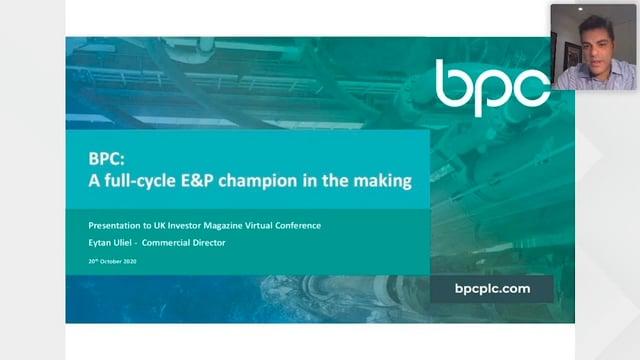
BPC is a Caribbean and Atlantic margin focused oil and gas company, with a range of exploration, appraisal, development and production assets and licences, located offshore in the waters of The Bahamas and Uruguay, and onshore in Trinidad and Tobago, and Suriname.
Download the presentation slide here
Antofagasta reduced workforce sees copper production fall by 7%
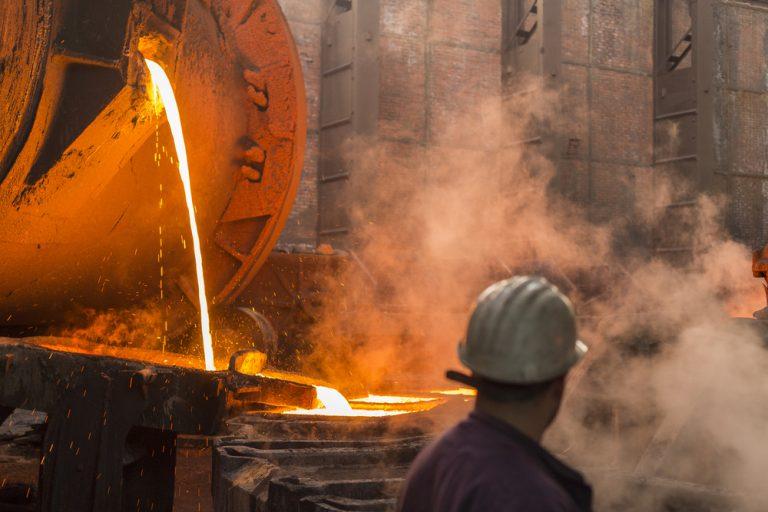
FTSE 100 listed metals mining company, Antofagasta (LON:ANTO), saw its shares dip as it reported reductions in its copper and gold production volumes during the year-to-date.
Copper production fell by 7.3% during the year-to-date, down to 541.3kt. Similarly, YTD molybdenum production fell by 4.3%, from 9.3kt, to 8.3kt. The big hit, though, came with gold, which saw volumes drop by 34.1% year-on-year for the first nine months of the year, down to 149.4koz.
These trends were pretty much mirrored in what was a disappointing third quarter, which saw copper production slide by 4.6%, down to 169.6kt, and gold production drop by 16.7%, down to 38.3koz. One positive, though, was molybdenum production rising by a notable 9.7%, up from 3.1kt, to 3.4kt.
Alongside these rather underwhelming production figures, Antofagasta also saw their overheads increase during the quarter of 2020, with net cash costs rising 5.3% from Q2, from 1.13$/lb to 1.19$/lb. However, for the year-to-date, progress is being made on costs, with net cash costs for the first three months down 2.6% year-on-year, from 1.17$/lb, to $1.14$/lb.
The company stated that while COVID numbers peaked in June in Chile, it has decided to keep pandemic protocols in place for the ‘foreseeable future’. It added that approximately two-thirds of its staff are on-site, with the rest working from home or in preventative quarantine. Further, its Los Pelambres Expansion project workforce has built up to 75% of the originally planned numbers and will remain at this level until COVID restrictions can be relaxed.
Antofagasta remains on course
Though not an ideal scenario, company CEO, Iván Arriagada, says that the company remain within guidance, He adds that:“Our copper production and cost control performance during the quarter were in line with expectations. For the year to date production was 541,300 tonnes at a net cash cost of $1.14/lb.
“We remain focused on the health and safety of our employees and contractors, and the communities near our operations. Although the rate of infections of COVID-19 in Chile fell during this quarter, we remain vigilant and continue to apply all the health protocols we have put in place. Following the temporary and precautionary suspension of the Los Pelambres Expansion project in Q2, approximately 75% of the original planned numbers are now working on site and all COVID-19 protocols are being followed. Similarly, work has also started at the Esperanza Sur and Zaldívar Chloride Leach projects.”
“For the full year 2020 we continue to expect production to be at the lower end of the original 725-755,000 tonnes guidance range, and net cash costs are now expected to be below the originally guided $1.20/lb. In 2021 we expect production to be in the range of 730-760,000 tonnes of copper, as grades increase at Centinela Concentrates, and we conservatively assume that COVID-19 health protocols will stay in place for the whole year.”
Investor notes
Following the news, the company’s shares dipped by a modest 0.38%, down to 1,042.50p a share. This price is around 12% above analysts’ target of 917.69p, but is short of its six-month high of 1,148.50p, seen in August. Analysts currently have a consensus ‘Hold’ stance on the company’s stock; its p/e ratio of 26.64 is below the basic materials average of 37.53; and the Marketbeat community currently has a 71.91% ‘Underperform’ stance on the company.William Hill: new restrictions will hit profits
William Hill (LON: WMH) has said that it expects profits to be hit by the new lockdown restrictions.
As lockdown eased, the group saw an “encouraging” third quarter and reported a 9% fall in revenue.
The 9% drop in revenue was an improvement to the 32% decrease for the first six months of the year.
Despite footfall increasing and live sport back in action, William Hill said that new restrictions would have a big impact.
“We estimate that, on average, the closure of 100 shops for four weeks would reduce EBITDA [an earnings measure] by circa £2m,” said the group.
Ulrik Bengtsson, the chief executive, commented “We are very pleased with the trading performance of the Group, which has been borne out of the commitment, resilience and hard work of our teams across the business. I could not be prouder of them.
“We have moved the company forward with our relentless focus on our customers, enhancing the competitiveness of our product, and maintaining player safety as one of our highest priorities. We have reinvigorated the leadership team and they, in turn, have empowered their teams to deliver on our plans,” he added.
William Hill is currently undergoing a £2.9bn takeover by the US casino company Caesars. Caesars is paying £2.72 per William Hill share in cash. Tom Reeg, the chief executive of Caesars, said on the deal: “William Hill’s sports betting expertise will complement Caesars’ current offering, enabling the combined group to better serve our customers in the fast-growing US sports betting and online market.” William Hill shares (LON: WMH) are steady, trading at 280,00 (1212GMT).