Whisky Casks Outperform Bitcoin, Gold And S&P 500

Sponsored by Tomoka Casks During one of the most challenging years in recent decades, whisky is one of the few investments bringing comfort and cheer both to investors’ pockets and to their glasses. Whisky is now a top-performing alternative asset, with Scotland exporting £4.9 billion-worth of this literal liquid gold each year. “According to the Knight Frank Rare Whisky Index the whisky sector has surged 586% over the last 10 years, the highest growth of any luxury asset”, explains Jass Patel, CEO of whisky investment company Tomoka Casks. “Even during the ongoing Covid-19 pandemic whisky has remained very buoyant with consistent 5% growth across the sector..” While investors may be familiar with the burgeoning market for rare whisky bottles, the most lucrative and secure part of the sector is whisky cask investment. Returns on whisky casks over the past two years have outperformed Bitcoin, gold and the S&P. “By purchasing a cask of whisky direct from a well-known distillery”, Jass elaborates, “investors are able to enter the market at the earliest possible moment. Owning your own bespoke cask of whisky not only appeals to whisky connoisseurs and collectors, it also makes very sound economic sense.” A key advantage of investing in cask whisky over bottles is the remarkable transformation that the whisky undergoes as it ages in the cask. Unlike bottled whisky, cask whisky continues to evolve and develop in the barrel. As the whisky takes on the rich, smoky character of the barrel, it becomes both more complex and more desirable, driving an average annual gain by value of at least 9%. Along with this remarkable transformation of the liquid itself, cask whisky also increases in rarity as it ages as the number of similar casks in existence dwindles. A cask of whisky is truly a unique work of art since the whisky inside will mature slightly differently in each individual cask. Purchasing a cask of whisky gives you access to something no one else on the planet has, and that rarity factor commands a premium on the secondary market if you do eventually decide to sell. Jass notes that the whisky cask market also offers investors much greater peace of mind and security. “Most of our casks are securely stored at the original distillery which ensures impeccable provenance and authenticity. This also comes with significant tax benefits as VAT only becomes payable when the whisky is actually bottled and moved from the distillery.” If you’re thinking about investing in a cask of whisky, Jass points out that another important consideration is the age of cask that you choose to invest in. “New make casks will provide a higher growth rate by percentage of around 15% per annum, whereas older casks will typically provide a larger monetary return. The caveat is that the initial investment required to acquire a more mature cask will be significantly higher compared with a younger cask.” Investors should also carefully consider the origins of their whisky cask. While Scotch remains the classic choice for many collectors and Japanese whisky has surged in value in recent years, the highest-performing casks right now actually come from the Emerald Isle. “Irish new make is providing an even better return closer to 16% as Japanese whiskey is in such short supply”, explains Jass, “so we would definitely advise spreading your bets across a range of investments to get both medium- and long-term returns.” Knowing exactly which cask to invest in to secure the highest returns can be tricky for those of us who aren’t seasoned whisky experts. Jass strongly recommends that investors speak with a trusted whisky investment company like Tomoka Casks who can guide you through every step of acquiring your very own cask. “Purchasing your own cask isn’t as simple as approaching a distillery with an offer,” Jass explains. “At Tomoka Casks our team has decades of experience in the whisky sector and we use our industry-leading network of contacts to source high-performing casks for our clients. I always recommend that investors do their homework when deciding to invest in whisky casks. That is why our door is always open to those wanting to discover more about whisky investment.” For more information about investing in whisky casks, please visit www.tomokacasks.com.  

Oil prices slump to 5-month low

0
Oil price fell to a 5-month low on Monday morning over fears of another Covid-recession. Brent crude slid by 4% this morning to $36.41 per barrel whilst US crude slumped by over 4.5% as more country’s go into lockdown. The price of Brent crude is down 45% this year. “Covid-19 cases continue to break records in the US in election week, with its impact only muted by the fact that 90 million Americans have voted early, including the President,” explained Jeffrey Halley from OANDA. “Europe continues to be of deep concern, with Britain announcing its new national lockdown lite Saturday, and by my count, Belgium, Greece, Austria and Portugal all joining them to varying degrees. The jury is still out on whether the have-your-cake-and-eat-it approach will work. The downstream effects on consumption though have manifest themselves most obviously on oil.” “Oil prices were stretchered off at the Asian open today, and are still receiving treatment on the side-lines.” Energy companies have been hit hard this year, with both BP and Shell cutting thousands of jobs. BP is axing 10,000 jobs in an attempt to save costs amid slumping demand, whilst Shell will cut between 7,000 to 9,000 jobs. Stephen Innes, Chief Global Market Strategist at Axi, said: “Traders had priced the initial downward adjustments to European road fuel demand. “I suspect their initial Eurozone 2nd wave forecast was too optimistic after France intensified the lockdown measure, forcing analysts to quickly downgrade their Q4 economic outlooks, which likely intensified the selling pressure. “OPEC+ manages the supply-side to ensure a March rollover repeat in November remains unlikely. “Nonetheless, traders appear to be setting up for a re-run of the associated price collapse we saw then, as uncertainty around the end of the month OPEC meeting has the oil complex hedging that it might be too premature for OPEC+ to make adjustments at this stage.”  

Ocado shares jump as group hikes profit forecast

1
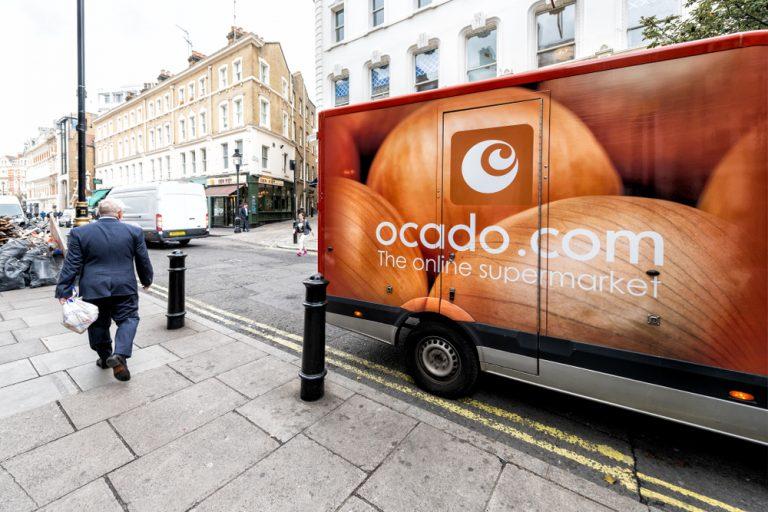
After strong trading, Ocado (LON: OCDO) has hiked its profit forecasts. Whilst many other retailers are struggling amid the pandemic, the online grocer said on Monday that trading remains strong. “Ocado continues to see high demand as consumers migrate to online grocery in record numbers. Sales are in line with the trends reported in the Third Quarter although growth rates reflect the seasonality of the quarter,” said the group. “As a result of this strong performance, Ocado Group today announces that it expects full year EBITDA for the group to be over £60m, versus previous guidance of over £40m,” it added. The firm has also announced plans to buy robotics specialist Kindred Systems and Haddington Dynamics for $262m and $25m respectively. “Given the market opportunity we want to accelerate the development of our systems, including improving their speed, accuracy, product range and economics,” said chief executive, Tim Steiner. “I am delighted to be welcoming Kindred Systems and Haddington Dynamics to the Ocado group, as we believe they have the capabilities to allow us to accelerate delivery, innovate more, and grow faster. I am also excited by the opportunity to enter new markets for robotic solutions outside of grocery that is demonstrated by Kindred Systems’ robust growth, with existing customers such as Gap and American Eagle across the general merchandise and logistics sectors.” Ocado shares (LON: OCDO) jumped 9% to 2,479p on Monday. They are currently trading 8.86% higher at 2.477,74 (0957GMT).

Primark warns of £375m sales hit amid second lockdown

1
Primark owner, Associated British Foods (LON: ABF), has warned that the second lockdown will hit sales £375m. As the retailer prepares to close stores across the UK, AB Foods said that 19% of its retail space is already closed across the UK and Europe amid Covid restrictions. “As of today, all Primark stores in the Republic of Ireland, France, Belgium, Wales, Catalonia in Spain and Slovenia are temporarily closed, which represent 19% of our total retail selling space,” said the group. “The announced period of closure varies by market. The UK Government announced its intention to close non-essential shops in England for one month from 5 November to 2 December. Assuming that this will be passed by the UK Parliament on 4 November, 57% of our total selling space will be temporarily closed from 5 November.” “Our estimated loss of sales for these stores, including the stores in England, for the announced periods of closure is £375m.” Earlier this year, the group reported the full-year update ending September 2020, with emphasis on Primark’s “strong” performance in the fourth quarter. Cumulative sales were predicted to reach £2bn by the end of the year. The group will publish full-year results on 3 November. AB Foods (LON: ABF) shares are trading 2.68% lower at 1,653.50 (0937GMT).

Ryanair swings to €200m loss and expects a worse H2

1
Ryanair (LON: RYA) has reported a €197m (£177.8m) loss in the first half of 2020. The budget airline saw 99% of its fleet grounded from mid-March to the end of June. Since the end of lockdown, Ryanair has flown just 20% of passengers compared to last year’s summer period. Revenue fell by 78% to €1.18bn as traffic fell 80% to 17.1m. Profit for the first half of the year fell from £1.2bn to the £177.8m loss. Looking forward, Ryanair warned that it could see greater losses for the second half of the year. The group said in a statement: “FY21 will continue to be a hugely challenging year for Ryanair. Given the current Covid-19 uncertainty, Ryanair cannot provide FY21 PAT guidance at this time. The Group expects to carry approx. 38m passengers in FY21, although this guidance could be further revised downwards if EU Govts continue to mismanage air travel and impose more uncoordinated travel restrictions or lock downs this winter. The Group expects to record higher losses in H2 than in H1.” Chief executive Michael O’Leary told the BBC: “We’ve already stripped out the schedule for most of November and the December, we have really just a skeleton schedule for the services between UK airports and continental European destinations.” The airline cut flights throughout September and October after a drop in bookings. Ryanair shares (LON: RYA) opened almost 3% lower on Monday morning.

Second lockdown may leave breweries flat in Q4

2
Appearing languid during the first half, the prime minister’s Halloween announcement of a second lockdown will do little to boost the balance sheets of breweries in the closing stages of 2020. Speaking on COVID challenges and the outlook for the beer industry, Mark Lynch, Partner at Oghma Partners, said:

“Results from Carlsberg, Heineken, ABInBev for the third quarter overall reflect the hiatus in the March of Covid-19 after the Q1 and Q2 hit of earlier in the year. As a result, the quarter saw generally positive volume evolution from the brewers albeit some margin impact as business switched from eat out and drink out destinations to lower margin retail business. The outlook remains mixed with a general concern about the resurgence of Covid-19 being reflected in the outlook and passed dividends (ABinBev).”

Reflecting the uncertainty facing breweries, even a summer spike in drinking activity in non-retail outlets couldn’t save Carlsberg (CPH:CARL-B) revenues, down 2.1% during Q3 and falling over 8% during the year-to-date. Carlsberg’s CEO, Cees ’t Hart, said that, “The pandemic remains a concern for us, impacting our people, our customers and our businesses in many of our markets.” Though the outlook remains shaky at best, Mr Lynch remains at least somewhat positive: “[It] seems as though with cost cutting being actioned and more coming down the pipe and with a better grasp of the likely overall sales performance, that the brewers will demonstrate the resilience in profits and sales that we would expect from the consumer staples universe for 2020 overall and looking further into 2021.” Despite this optimism, breweries will now have to contend with a return to lockdown conditions, which will undoubtedly hamper their bottom lines as we venture further into the fourth quarter of the year. France, Germany, Spain, and now the UK are in lockdown. If Biden wins the presidential election on Tuesday, the odds of the US entering a second lockdown increase greatly – though still not guaranteed. For now, breweries will be concerned by the latest round of UK lockdown measures, which are more punitive on the alcoholic beverages sector than the first time around. The government has decided to ban alcohol takeaways from pubs, and this will see alcohol sales in bars, pubs and restaurants cancelled out in England and Wales, with the situation also bleak in Scotland with eateries in higher tiers banned from selling alcohol. Similarly, fewer grants being offered by the UK government will mean consumers will have less money at their disposal, to spend on non-essential goods such as booze. Speaking to the Sun, CAMBRA‘s National Chairman, Nik Antona, said that second lockdown comes as a “devastating blow”. “Pubs across the country have already invested thousands to reopen COVID-safe environments despite facing seriously reduced incomes.” “We also need a clear route map out of lockdown which is based on evidence, otherwise we will see many pubs and breweries close their doors forever.”

Global equities likely to remain spooked well beyond Halloween

With daily COVID cases breaking the 500,000 threshold, the final bell on Friday marks the end of a week that global equities would rather forget. Unfortunately, this doesn’t seem likely, with a busy and nail-biting smorgasbord of headlines for investors to consider next week. For today, the picture was rather bleak. Despite Eurozone GDP posting 12.7% growth during the third quarter, this received little-to-no response from traders, with fears of a double-dip recession stifling the excitement of short-term achievements such as these. With this in mind, the CAC rallied by 0.54%, to 4,594 points, while the German DAX – which has led the week’s losses – fell by 0.36%, to 11,556. On the US, IG Chief Market Analyst, Chris Beauchamp notes that, “[…] declines come despite outperformance across a host of major US tech earnings last night, with Alphabet, Amazon, Apple and Facebook all beating market sales estimates.” Indeed, Amazon, Apple and Facebook all fell by more than 5% on Friday, and led wider market sentiment in moving lower. With this, the Dow Jones shed 1.11%, and fell to 26,363 points. The FTSE, meanwhile, stood largely still. Despite some data coming out from equities such as IAG and NatWest, the British index decided to watch the explosions and rubble fly about it, while it sat tight and hoped COVID headlines wouldn’t discover it hiding under its blanket. In the opinion of Mr Beauchamp, this tactic of delaying COVID policy will not avail British equities: “While the US and UK continue to hold off on a second nationwide lockdown, the feeling is that the longer you delay, the longer any lockdown will last.” Discussing next week’s jam-packed calendar, Spreadex Financial Analyst, Connor Campbell, said:

“Next week is one of those ridiculously stacked periods that sees 4 or 5 headline stories all jostle for investors’ attention. Of course, there’s the election on Tuesday, the aftermath of which will run well beyond Wednesday due to a) the way mail-in votes are being counted in certain states, and b) the potential resistance Trump will put up if he loses.”

“Alongside that there’s a likely stimulus-expanding Bank of England meeting at Thursday lunchtime, a post-election Fed statement on Thursday evening, and October’s nonfarm jobs report on Friday. And that’s not to mention the ever-present coronavirus lockdown concerns that have so wrecked the markets in the past few days.”

“That could give next week a weird feel, with pre-vote jitters and covid-19 fears dominating the first half, and the election aftermath and central bank statements taking the lead in the second. Any hopes of leaving October’s volatility behind seem highly unlikely, regardless of how things pan out.”

Mr Beauchamp adds that: “From a US-perspective, the prospect of a dramatic rise in Covid-cases should bolster Biden’s election prospects. However, with Biden seemingly more willing to lock down the US in a bid to control the virus, a victory for the Democrat leader could see markets tumble as the prospect of a nationwide lockdown overshadows stimulus optimism.”

Sainsbury’s partners with Deliveroo to meet demand

3
Sainsbury’s will be launching a partnership with Deliveroo. Starting from the convenience store in Hammersmith, shoppers will be able to purchase up to order from more than 1,000 products through the Deliveroo app and have them delivered within 20 minutes. Due to the surge in online grocery shopping amid the pandemic, Sainsbury’s is driving to develop and implement digital technologies to “improve customer experience and make sure they can shop quickly and conveniently whenever, wherever and however they want.” Clodagh Moriarty, Sainsbury’s Group Chief Digital Officer said, “With more and more shoppers looking for convenient and affordable meals delivered to their doors, our trial with Deliveroo brings our great value hot food direct to customers’ homes. We’re committed to making it as quick and easy as possible for our customers to shop with us and we’ll be listening to their feedback throughout the trial to understand how we can best serve their hot food delivery needs. We’re excited to see what our customers think before deciding if, how and where we go next with the offer.” Deliveroo has already partnered with including Waitrose, Aldi, and Morrisons this year as supermarkets hope to expand deliveries. Ajay Lakhwani, who is the vice president of new business at Deliveroo, said: “Deliveroo’s on-demand grocery partnerships have proven vital for so many people during this difficult period, allowing families to get the food and household items they need and want quickly.” Sainsbury’s shares (LON: SBRY) are trading -0.59% at 200,92 (1459GMT).  

Lekoil oil shares down as loss widens

0
Lekoil shares (LON: LEK) are down almost 18% on Friday’s opening. The oil and gas exploration and production company published interim results for the six months ended 30 June 2020. Net loss widened from $2.7m last year to $7.9m. Lekoil said that the first six months of the year were “challenging” for the oil and gas industry with the detrimental effects of the pandemic and the subsequent drop in oil price. The group “has navigated this demanding period with steady production and cashflow generation from Otakikpo in conjunction with significant cost reduction initiatives which are beginning to pay off as the wider global economy improves. We remain committed to creating value and attractive returns for our shareholders, our partners, employees and all our stakeholders.” Lekan Akinyanmi, the chief executive, commented, “Despite the challenges of the first six months of the year, we have navigated this demanding period with steady production and cashflow generation from Otakikpo while implementing a range of significant cost reduction initiatives across our operations. “We are excited and encouraged by the interest received and the progress made towards raising the requisite financing to develop our high quality portfolio of assets and delivering on our drive to unlock the significant value that exists within them. We remain committed to creating value and generating attractive returns for our shareholders, our partners, employees and all our stakeholders.” Lekoil shares (LON: LEK) are currently -17.65% at 1,75 (1027GMT).

Amazon’s Q3 profits triple amid online shopping boom

5
Amazon (NASDAQ: AMZN) has posted quarterly sales of almost $100bn (£77.4bn). In the three months to the end of September, net sales increased by 37% whilst net profit grew from $2.1bn to $6.3bn. Amazon’s founder and chief executive, Jeff Bezos, said in a statement: “Two years ago, we increased Amazon’s minimum wage to $15 for all full-time, part-time, temporary and seasonal employees across the US and challenged other large employers to do the same. Best Buy and Target have stepped up, and we hope other large employers will also make the jump to $15. Now would be a great time.”

The company is “offering jobs with industry-leading pay and great healthcare, including to entry-level and frontline employees, is even more meaningful in a time like this, and we’re proud to have created over 400,000 jobs this year alone”.

Amazon is seeing “more customers than ever shopping early for their holiday gifts, which is just one of the signs that this is going to be an unprecedented holiday season. Big thank you to our employees.”

Since the start of the year, the group has created 400,000 jobs. Earlier this week, the online retailer said it would create 100,000 seasonal jobs to the current workforce. Amazon has forecast revenue for Q4 to be between $112bn and $121bn, however, it warned that Covid-related costs could hit profits. “In total, we have incurred more than $7.5bn in incremental COVID-related costs in the first three quarters of 2020, and we expect to incur approximately $4bn in Q4,” said CFO Brian Olsavsky.