
Premier Inn owner Whitbread to cut 6,000 jobs – shares fall
Whitbread, the owner of Premier Inn, has revealed plans to cut 6,000 jobs.
The number represents 18% of the total workforce by Whitbread (LON: WTB), the group which also owns Beefeater and Brewers Fayre restaurant chains.
Sales at the group were down 77.6% in the first six months and since reopening in August, the business has remained low at Premier Inn and the restaurant chains.
“With market demand expected to remain at lower levels in the short to medium-term, we have now taken the very difficult decision to announce our intention to enter into consultation on proposals that could result in up to 6,000 redundancies for our hotel and restaurant colleagues (representing 18% of our total workforce),” said the group.
“We expect a significant proportion of these redundancies to be achieved voluntarily. Our priority now is to ensure that the process is fair and that impacted colleagues are supported throughout.”
The company added: “This is a regrettable but necessary step to ensure that we emerge from the crisis with a lower cost base, a more flexible operating model and a stronger more resilient business,” the company added.
Alison Brittain, Whitbread’s chief executive, said: “With demand for travel remaining subdued, we are now having to make some very difficult decisions, and it is with great regret that today we are announcing our intention to enter into a consultation process that could result in up to 6,000 redundancies in the UK, of which it is hoped that a significant proportion can be achieved voluntarily.”
Shares in Whitbread have lost half of their value this year.
Whitbread shares (LON: WTB) are currently trading -2.57% at 2.054,75 (0808GMT).
Global equities hit two-month low as Covid second wave anxiety takes hold

Enjoying a prolonged summer holiday, global equities have finally smelled the coffee, sat up and banged their heads on the Covid second wave reality check.
Shedding points at will on Monday morning, the European equities horror show only worsened as the afternoon progressed, as a worse-than-expected Dow Jones open did little but stoke existing anxieties.
Speaking on the open of the US index, Spreadex Financial Analyst, Connor Campbell, stated:
“Though most of the headlines have been focused on Europe, the United States is having its own nightmare. To say the country is heading into a difficult period is an understatement. There’s no bipartisan fiscal stimulus in sight, an already heated election just got all the more intense following the death of Ruth Bader Ginsburg, and covid-19-related deaths are fast approaching 200,000, while daily cases creep up towards 50k.”
“Faced with all, it’s hardly a surprise that the Dow Jones, already stalled, went into a screeching reversal. Sinking [almost] 3%, or 800 points, the Dow is now barely above 26,800, its worst price since the first few days of August and around 2400 points adrift of its early-Septembers highs.”
In a percentage comparison, however, these losses appeared manageable versus those posted by Eurozone equities. For instance, the FTSE fell by 3.38%, down to 5,800, its joint lowest level in the past four months. This drop was upstaged, though, by the CAC, shedding 3.74% and falling to 4,792 points – its lowest level since the end of July. Even this notable fall however, could not match the DAX’s plummet, with the German index dropping 4.37% to 12,542, also a low-point since the end of July. While these falls may just be the markets pricing in the expected effects of a Covid second wave – and ensuing lockdown – they could also be indicative of the forward direction of travel, which may well feature a largely downward trajectory. Should this be the case, we might position ourselves to take advantage of cut-price stocks as they appear (as they did in March), and watch for a potential big tech renaissance. We can also pray that a second lockdown isn’t required, as this would kill off any hope of a Christmas rally in hospitality, travel and retail sectors.Zobi looks to raise funds to become market leader in home digital security

Cyber security specialists, Zobi, announced they would be launching a fundraising campaign on the equity crowdfunding site, Seedrs. The company is looking to raise funds as part of an investment drive which it says it will use to try and make its brand the market leader in home security and Wi-Fi.
The fundraiser coincides with the company’s plans to ship its first consumer product, Hedgehog, in 2021. The product uses AI and human heuristics to seek out and block suspicious activity and devices on a home Wi-Fi network.
According to Zobi, the Hedgehog allows guests to tap their gadgets onto the security device and gain immediate access to safe Wi-Fi, that prevents any of their personal details from being at risk.
With the funds it hopes to raise on its upcoming Seedrs round, Zobi aims to hire a partnerships and development team, a CTO and a Chair. It also hopes to scale up its marketing and PR activity, expand across different regions and fund prototype and additional feature development.
Speaking on the company’s outlook and growth potential, Founder, Scott Lever, stated:
“Our mission is to keep homes across the country digitally protected and we are looking for new investors who share in our vision to join us on this journey. We are delighted to have already been recognised by tech and business experts alike through several award wins, and we hope this latest round will enable us to make the next step as a brand.”
The company’s statement also boasted that within the last year, Zobi had won the Start-Up Series competition; been selected by Google out of 12,000 start-ups for its Start-Up Grind Global Conference; been invited to join KPMG as one of 11 cyber start-ups for its expert arena and venture matching programme; and even reached the semi-final of The Pitch 2020.Various Eateries confirms AIM admission and placing to commence on Friday

Further to its previous announcement – that it was seeking AIM admission – restaurant operator, Various Eateries, confirmed on Monday that it would be admitted to trading on the AIM and commence its share placing on Friday the 25th of September.
The company stated that the placing would consist, “of 34,246,576 Ordinary Shares of 1 pence each (“New Shares”), at a price of 73 pence per share (the “Placing Price”).”
And that, “The Placing of the New Shares will raise c.£25 million (before expenses). WH Ireland Limited (“WH Ireland”) is acting as Sole Broker and Nominated Adviser in relation to the Admission.”
It added, that based on the placing price, it expects its market cap on admission to be approximately £65 million, and stated that it will have 89,008,477 Ordinary Shares in issue and a free float of around 21.6%.
Speaking on its plans for the capital raised, Various Eateries stated that it plans to use the net proceeds to; advance its plans to roll out its Coppa Club and Tavolino brands; facilitate recruitment; raise the profile and reputation of the Group within the industry; and provide working capital, with the option of funding future activities and acquisitions. The company finished by saying that admission and commencement of dealings on AIM are expected to begin at 8:00am on Firday, with Various Eateries trading under the ticker (AIM:VARE).Augean shares down in the dumps as profits slide 11%
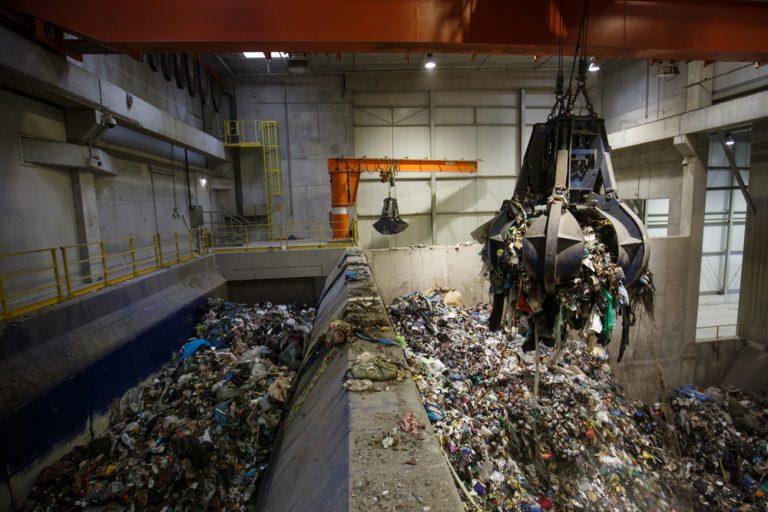
Hazardous waste and disposal company, Augean (AIM:AUG) saw its share price drop on Monday morning, following the publication of its results for a difficult half year of trading.
The company stated that while all of its sites remained fully operational during the first half, Covid negatively impacted all its segments, with the exception of its EfW ash segment. The worst-hit were its radioactive, biomass EfW and construction sectors, all of which were placed on hold due to lockdown restrictions.
The company added that:
“The North Sea service business has been heavily impacted both by the Covid-19 effect on activity levels as well as an unprecedented significant decline in the oil price as a result of Covid-19. The first quarter generated more than two thirds of the half year profits with the second quarter heavily impacted by Covid-19.”
This difficult trading was reflected in its results, with adjusted revenues down 6% year-on-year, to £41.4 million.
This led an 11% dip in adjusted profits, down from £9.6 million to £8.5 million, and a fall in adjusted EBITDA of 6%, from £14.2 million to £13.3 million.
The situation was equally bleak for the company’s shareholders, with the company once again deciding not to declare a dividend, and adjusted basic earnings falling by 12%, to 6.70p.
Augean response
Commenting on the company’s performance, Executive Chairman, Jim Meredith, commented:“The Group has delivered a robust performance across all areas of the business despite significant headwinds in quarter two. We are working hard to recoup the impact of the lower oil price and Covid-19 over the second half and, assuming no further Covid-19 lockdowns, we anticipate that full year results will be broadly in line with market expectations.”
“The Group’s performance in difficult circumstances (Covid-19 and oil price reduction) demonstrated the resilience of our current portfolio of activities and so maintaining our growth profile”.
Investor notes
Following the update, Augean shares fell 15.26% or 29.00p, to 161.00p apiece 21/09/20 12:30 GMT. Hargreaves Lansdown currently quotes the company’s p.e ratio at being 12.39, while Marketbeat’s community currently votes 64.55% in favour of Augean being given an ‘underperform’ sentiment.Even at a 36% discount, Warren Buffett suggests IAG shares aren’t worth it

Heading up the FTSE 100 losses with a 25% dip in early morning trading, BA owner IAG (LON:IAG) continued the tailspin it began at the end of the previous week.
The drop began after the company announced a rights issue last week, in hopes of raising £2.5 billion in exchange for increasing its share count by 60%. While this was enough to see its share price dilute by 36%, and lose its footing at 134.00p, the looming Covid second wave has hit travel and hospitality equities hardest, and triggered further concessions in IAG shares on Monday morning.
After recovering slightly, the company’s shares now stand at 94.32p, down 14.68% since the opening bell 21/09/20 11:15 BST.
Why was IAG prepared to cause so much upset to raise capital?
Put simply, the BA boss said the company was “fighting for survival” in a statement last week, with the company seriously short of sales and not lacking in debt. The funds will allow IAG to reduce its debts and bolster its cash position – both improving its balance sheet, and, supposedly, giving it the flexibility to take advantage of any recovery in air travel demand in 2021. The company’s directors added that, based on the company’s own downside scenario planning, the improved liquidity the rights issue offers, might help it withstand the oncoming and likely prolonged downturn in air travel, should a Covid second wave transpire.Warren Buffet says blue sky thinking and cut price shares are a trap
Despite the seeming optimism IAG reserves for future demand, investment icon Warren Buffett says the future of the airline industry is entirely unclear. Indeed, it’s likely that air travel will never recover to pre-Covid levels, and even if it does, a second lockdown will wipe out any hope of a recovery for a few months, and the period leading up to this potential second lockdown will be stifled by fears of the lockdown being brought about. Even though IAG shares will be capable of a bounce-back due to refinancing, Buffet says that the poor qualities of the airline industry as a whole mean people should avoid investing at all costs. Having sold up all his shares in airlines at the start of the pandemic, Buffett stated that investing in airline stocks were one of his many mistakes. With an investment strategy focused on the underlying quality of a company – and then buying when shares hit a reasonable price – Buffett has said on many occasions that airlines make for bad-quality and cyclical businesses, and it is therefore not worth taking advantage of the IAG price slump.Billington shares bounce 10% on £21m worth of new contracts

Structural steel and construction safety specialists Billington Holdings (AIM:BILN) saw its shares rally 10% on Monday morning, on news that it had been awarded three new contracts with a combined value of £21 million.
These contracts were awarded to its structural steel division, Billington Structures, with one of the three contracts having been signed with a ‘global multi-national corporation for a value of £12 million.
The company added that the contracts are in the power, manufacturing and commercial office sectors respectively, and that they are set to be delivered between Q4 2020 and throughout 2021.
Responding to the update, company CEO, Mark Smith, commented:
“The award of these three contracts is great news for Billington and is a testament to our team in a continued difficult trading environment. We look forward to working closely with the clients to successfully deliver these projects.”
Following the news, Billington shares are now up 9.71% or 29.60p, rallying to 336.80p per share 21/09/20 10:09 BST. It currently has a 59.28% ‘outperform’ rating set by a poll of Marketbeat‘s community, with 115 votes for ‘outperform’ and 79 for ‘underperform’. It has a p/e ratio of 7.71, which means it is trading at a less expensive rate than most of its industrial sector products peers, who have an average p/e ratio of 21.06. Similarly, Marketbeat report that Billington has a dividend yield of 8.03%, and a payout ratio of 0.60%.Informa shares down as group swings into loss

Informa (LON: INF) has reported a pre-tax loss of almost £740m on Monday as the group was hit by the impacts of the Coronavirus pandemic.
The exhibition group has said it will carry out a cost-cutting plan to save £600m and cut jobs across the world.
Over the last six months, the group revealed £814.4m, compared to the same period a year earlier where revenue reached £1.4bn.
Since March, shares in the group have fallen 45%.
“The combination of our resilient subscriptions-led businesses and the actions we are taking position Informa securely through to the end of 2021,” said chief executive Stephen Carter.
“We remain confident that Informa will emerge from the pandemic with stability and security, delivering long-term sustainable growth and shareholder value.”
The company, which is the world’s largest exhibition group, has cancelled its dividend as well as raise £1bn pounds in equity.
Informa shares (LON: INF) are currently trading -2.94% at 369,40 (0933GMT).
Furlough: £215m voluntarily repaid by employers
New figures from the HMRC has revealed that 80,433 employers have returned money from the furlough scheme to the government.
Over £215m has been returned by employers who took payments either in error or that they did not need.
HMRC welcomes those employers who have voluntarily returned CJRS grants to HMRC because they no longer need the grant, or have realised they’ve made errors and followed our guidance on putting things right,” said the HMRC.
Companies including Redrow, Barratt and Taylor Wimpey have returned money that they claimed under the furlough scheme.
The HMRC said that an estimated £3.5bn of the furlough scheme could have been paid to fraudsters.
HMRC’s permanent secretary, Jim Harra, said: “We have made an assumption for the purposes of our planning that the error and fraud rate in this scheme could be between 5% and 10%. That will range from deliberate fraud through to error.”
“What we have said in our risk assessment is we are not going to set out to try to find employers who have made legitimate mistakes in compiling their claims, because this is obviously something new that everybody had to get to grips with in a very difficult time,” he said.
“Although we will expect employers to check their claims and repay any excess amount, what we will be focusing on is tackling abuse and fraud.”
Despite warnings of widespread job cuts that will follow the end of the furlough scheme, the UK government has rejected plans to extend the scheme.
Boris Johnson has said that extending the scheme will only keep people “in suspended animation”.
“The Coronavirus Job Retention Scheme will have been open for eight months from start to finish – with the government helping to pay the wages of over 9.6 million jobs so far,” said a spokesperson from the Treasury.
“But we’ve been clear that that we can’t sustain this situation indefinitely and must now focus on providing fresh work opportunities for those in need across the UK.”
FTSE 100 slides on second wave warnings
The FTSE 100 fell sharply on Monday morning as growing warnings from scientists caused shares across travel, hotel and pubs to slide.
London’s blue-chip index fell over 90 points, or 1.6%, at the open as scientists warn that Coronavirus in the UK has reached a tipping point.
Chief medical officer Chris Whitty has said: “The trend in UK is heading in the wrong direction and we are at a critical point in the pandemic. We are looking at the data to see how to manage the spread of the virus ahead of a very challenging winter period.”
On Sunday, the UK saw 3,899 new cases.
The FTSE 100 was dragged down by shares in Rolls Royce and IAG, which both fell over 10% whilst shares in JD Wetherspoons plummeted by 7%.
Shares in banks also fell on Monday. Barclays, Lloyds and NatWest have all fell over 5%.
Richard Hunter, Head of Markets at interactive investor, said: “With no confirmed vaccine for the coronavirus as autumn approaches, there is likely to be additional strain on government resources as they attempt to stave off a second wave, as the colder weather inevitably brings further cases to contend with.”
“Prospects for a sharp economic recovery have all but disappeared, as global growth receives the new threat of a resurgent pandemic. In addition, with talks for a further fiscal stimulus in the US seemingly in deadlock, investors have been choosing to vote with their feet over recent trading sessions given the deteriorating outlook.”
“In the UK, the pandemic also continues to add to concerns for general economic health, including the hospitality sector where further lockdowns would pile on additional pressure. The end of the furlough scheme will likely lead to another spike in unemployment and Brexit negotiations are at a critical point. The FTSE100 is now down 22% in the year to date,” he added.