The FTSE 100 halted a two-day decline on Friday as share rose tentatively as markets moves toward the end of choppy week for markets.
The FTSE 100 fell sharply on Thursday as investors became sceptical about the validity of a market rally during one of the worst recessions in history.
The scale of the economic downturn was again visible in the US weekly jobless claims released on Thursday as nearly 3 million people lost their jobs in the last week.
However, China produced more promising data over night casting a wave of optimism in equity markets on Friday.
Chinese industrial production rose 3.9% year-on-year in the month of April as factories reopened following months of lockdowns.
“News that China came out relatively okay in industrial production, that’s a big part of it. China resuming business even though it might be slow has given some confidence,” said Per Hammarlund, chief Emerging Market strategist at SEB.
The news helped buoy commodity prices and equities followed with miners Glencore, Rio Tinto, Anglo American and BHP Group all stronger on the day.
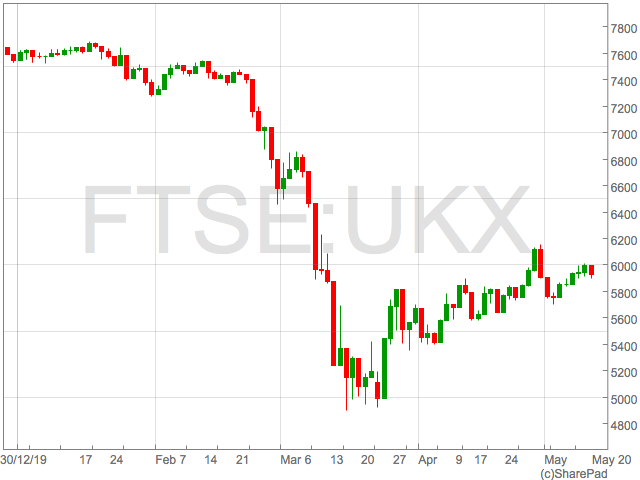
The FTSE 100 was 0.8% higher at 5,790 just after midday in London whilst the German Dax was up 0.9% to 10,430.
Hargreaves Lansdown was also one of the top risers, up over 4%, a day after the wealth management company released a jump in activity throughout the coronavirus crisis volatility.
BT was top of the pile on Friday lunchtime after the FT reported the embattled telecoms group said it was in talks to dispose of a stake in Openreach. BT Group have recently scrapped their dividend as part of a strategic move to focus on 5G and Fibre.
There was also good news in the fight against COVID-19 from the UK’s small caps as Avacta announced progress in the development of a potential treatment. Their Affirmer technology has been found to show promising signs in blocking the path of the COVID-19 infection.
Shares in London-listed biotech company Avacta (LON:AVCT) surged on Friday after the group announced progress in their development of a treatment for COVID-19.
Avacta said that they had discovered their Affrimer technology had blocked the interaction of the coronavirus infection with human cells which is a key pathway for the virus.
The Avacta share price had leapt over 30% by mid morning on Friday to trade at 140p. Avacta shares are up 700% in 2020, making them one of the best performers on London exchanges so far in 2020.
The company’s Affirmer technology has been the driving force behind the rise with initial applications in COVID-19 testing now potentially providing a vitally important treatment.
Analysts also noted the possibility for a deal with large pharmaceutical companies could be a material development for the treatment and Avacta themselves.
“Beyond the obvious reputational and commercial, albeit presently wholly unquantifiable, short and longer-term opportunities that could emerge from Avacta’s partnerships with Cytiva and Adeptrix, potential now to also partner with Big Pharma in an effort to develop a globally significant coronavirus neutralising technology, suggests a further major inflection point and opportunity for the creation of significant near-term value for shareholders,” noted Barry Gibb, Research Analyst of Tuner Pope Investments to the UK Investor Magazine.
“Alongside this, the Group also continues to forward its other exciting developments and partnered programmes plus licensing relationships for its diagnostics reagents,” Mr Gibb concluded.
The Avacta CEO outlined the progress Avacta had made with the treatment that seeks the block interaction with the virus.
“This is a very exciting development in the COVID-19 programme. It only took four weeks to generate more than fifty Affimer reagents that bind the SARS-COV-2 virus spike protein and amongst those we now know that there are neutralising Affimers that block the interaction with a key human cell surface receptor, raising the potential for a therapy to prevent infection,” said Dr Alastair Smith, Chief Executive Officer of Avacta Group.
He continued to explain the attention the wider industry was paying to this particular type of COVID-19 therapy.
“Recently GSK invested $250 million in Vir Biotechnology Inc3 to develop potential antibody treatments for COVID-19 by selecting antibodies from recovered patients, and AstraZeneca also recently announced that it would start a programme to find new monoclonal antibodies that block the spike/ACE2 interaction4.”
“There is significant potential for a therapy that could help prevent infection and limit the progression of the disease, providing immediate benefit to patients. With a large and well-resourced partner, a neutralising Affimer therapy could potentially be developed more quickly than a vaccine and we believe that the likelihood of success would be high.”
“I look forward to updating the market further on this and on the development of a COVID-19 antigen rapid saliva test with Cytiva which continues apace.”
Novacyt (LON:NYCT) shares fell on Thursday after the clinical diagnostics company provided outlook for 2020 and reported a strong increase in cash levels through 2020.
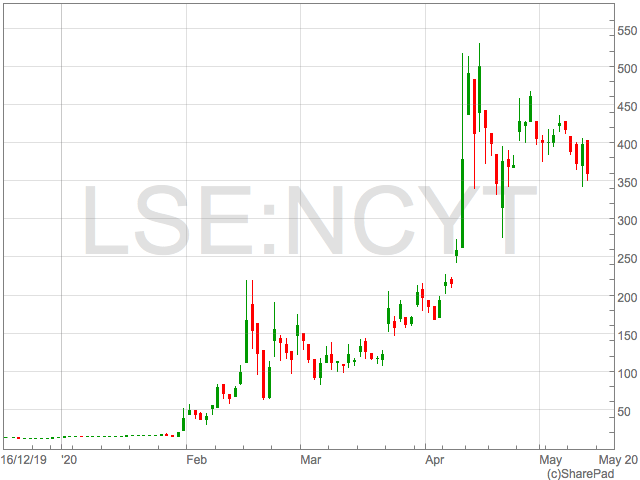
Novacyt shares were down 11% on Thursday but are up over 2,600% in 2020.
The Novacyt share price closed out 2019 trading at just 12p and have reached intraday highs above 500p in the last month.
The astronomical rise was sparked by Novacyt’s provision of testing kits for COVID-19, having won approval from the FDA and secured orders from Public Health England.
The outlook for 2020 was included in the full year results which highlighted a £6.5m loss for 2019. However, the loss was for the 12 months to 31st December, and doesn’t represent any activity from COVID-19 testing.
Investors may have been disappointed with the outlook as there wasn’t any guidance on potential sales in revenue terms, although the company did say they expected to be producing at an ‘output rate of more than ten million tests per month’ from June 2020.
As an indication of the impact of the COVID-19 testing kits on Novacyt’s business so far in 2020, cash had increased from €1.8 million at the end of 2019 to €9.2 million at the end of April 2020.
“2019 was a year of consolidation as we completed the refinancing and restructure of the business, positioning Novacyt to resume its three-pillar growth strategy of organic, R&D and acquisitive growth,” said Graham Mullis, Group CEO of Novacyt.
“Following the rapid development and successful launch of one of the world’s first molecular tests for COVID-19, we expect 2020 to be transformational for the business in almost every way based upon visibility of current sales and continued significant demand for the test,” Mullis continued.
“Supported by Novacyt’s core strengths of in vitro diagnostics product development, commercialisation and contract manufacturing, we believe the Company’s stronger financial position and enhanced reputation will be the catalyst in creating a leading global clinical diagnostics business in infectious diseases.”
“I would like to extend my sincere gratitude to all of our employees for their ongoing hard work and dedication, as well as our partners and suppliers for their loyalty throughout 2019 and so far in 2020 in the fight against COVID-19. Finally, I would like to thank our shareholders, long- standing and new, who continue to support Novacyt.”
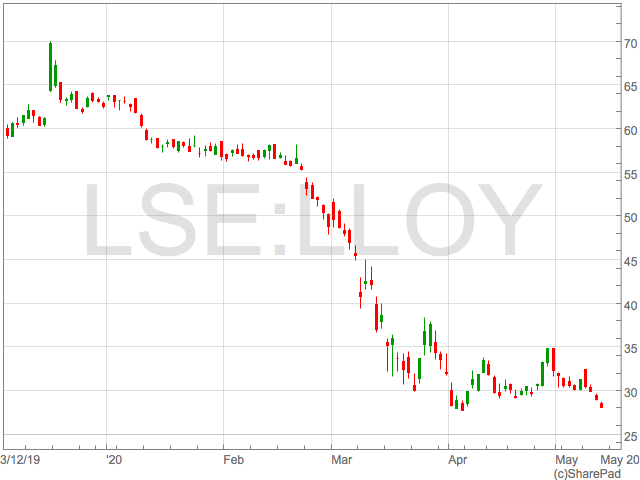
The Lloyds share price (LON:LLOY) was fully involved in the rebound rally from the low point in March, having rallied from 27.9p to 34.6p, a gain of over 20%.
The rally in Lloyds and other UK banks was sparked by optimism surrounding the reopening of economies and a consistent drop in the number of new coronavirus cases, which brought the pandemic under control.
However, Lloyds shares have since resumed their decline as investors digest the economic impact of coronavirus in the first quarter and what it could mean for second quarter activity.
There was an initial consensus the global economy would experience a V-shaped recovery, but with UK GDP falling 5.8% in April alone, a sharp rebound looks unlikely in the short term.
There is also the risk of a second wave of coronavirus that could lead to a return to strict lockdown measures.
“Talk of a V-shaped recovery feels like wishful thinking, and we expect prolonged periods of depressed growth across the majority of the economy. A flatter, U-shaped recovery is more likely,” said Stefan Koopman an economist at Rabobank.
The acceptance of a longer, flatter, economic recovery can be attributed as reason for the recent drop in stocks that has seen the FTSE 100 drop from intraday highs around 6,200 to 5,760.
Lloyds share price
The drop in the wider FTSE 100 benchmark saw Lloyds shares dragged down with it as they headed back down to 28p, and the March low.
The prospect of a slow recovery in the economy will ultimately mean Lloyds profitability will take longer to return to pre-crisis levels.
The approval of mortgages is likely to be severely impaired through 2020 and generally reduced consumer confidence will impact Lloyds banking activity.
However, this is not to say that the lower levels of activity will last forever, and investors could see the current drop in Lloyds shares as an opportunity to pick some up, if they missed the initial sell off below 30p.
The unprecedented support from the UK government has averted a complete collaspse in the economy and ensured many in the UK have the income to support activity.
In addition, many households would have saved during the lockdown and created pent up demand which is likely to be unleashed on the economy as restrictions lift further.
This may come in the form of increased consumer spending, business activity and housing transactions, all of which benefit Lloyds.
Whether this take place in the third quarter of 2020 or first quarter of 2021, economic activity will return and provide upside pressure for Lloyds share price.
There is also the prospect for a return to dividends in 2021 which will be highly anticipated by the market.
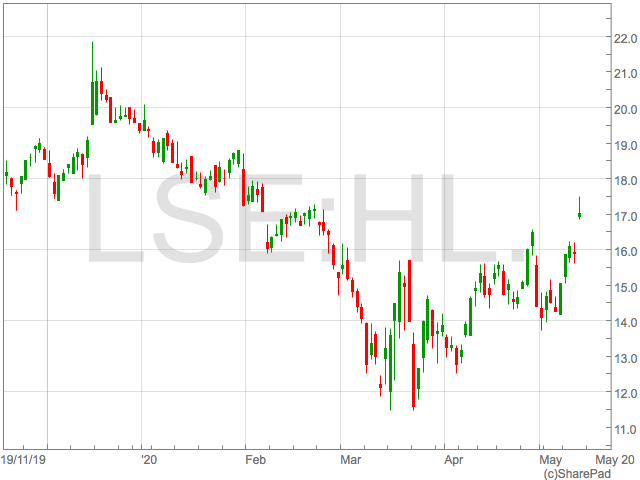
Hargreaves Lansdown (LON:HL) shares jump on Thursday as the wealth management platform said they had experienced recorded dealing figures through the coronavirus crisis.
Hargreaves Lansdown announced clients numbers grew by 94,000 to 1,386,000 active clients.
The increase in new clients brought in £4 billion in net new business which was up from £2.9 billion in the same period a year ago.
The increase in clients activity at Hargreaves Lansdown echoed performance from other online trading and investment platforms such as IG Group, who also recorded record activity through the spread of the pandemic.
Hargreaves Lansdown share were up over 8% in early trade on Thursday before falling back and are still down over 11% in 2020.
“During this exceptionally volatile and challenging period, Hargreaves Lansdown has performed strongly, adding 94,000 net new clients and £4.0 billion of net new business,” said Chris Hill, Chief Executive Officer of Hargreaves Lansdown.
He continued to highlight the investment Hargreaves had made into the business and the impact it was now having.
“The investment that we have deliberately undertaken over the past three years into our service, its scalability, our marketing and our technology has enabled us to support and protect the interests of our clients throughout the COVID-19 crisis.”
“In these challenging times, it is critical we can support people in managing their investments and savings according to their desired outcomes.”
However, Mr Hill cautioned on the outlook for markets as the prospect much touted V-shaped recovery in economies and stock markets fades.
“There remains much uncertainty in the coming months and hence, like many businesses, we cannot predict levels of new business or client activity. However, we are confident that the strategy we have invested in, with our focus on the needs of UK investors and savers and delivering the highest level of client service, means that we are well positioned to deliver continued attractive long-term growth.”
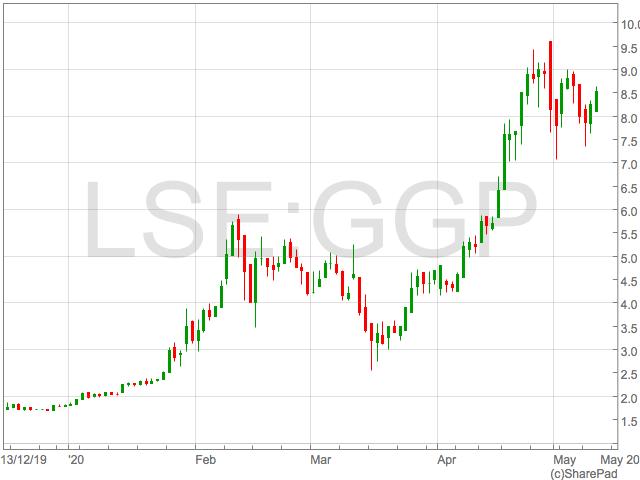
Greatland Gold (LON:GGP) have been one of the true success stories of 2020 with share rising over 370% since the beginning of the year.
The main factor behind the meteoric rise is the success of the Havieron drilling programme in Western Australia which has yielded a string of successful results.
Greatland Gold have a farm-in agreement with Newcrest and there are plans for further drilling over the next 12 months and investors are awaiting the next set of results from the project which may provide the catalyst for upside in the share price.
With shares falling back from highs of 9.6p and building a base around 7p-7.5p , it appears profit taking is diminishing and the market has agreed on a fair value as it awaits further updates.
With the company not yet receiving revenue, projects are being funded by existing cash reserves which have been boosted since 31st December when the company recorded £4m in cash.
This appears ample cash given operating loss was just £2.6m in 2019.
Subsequent to the last set of drill results, the CEO of Greatland Gold commented:
“We are delighted by the seventh consecutive set of excellent results from Newcrest’s drilling campaign, further demonstrating the robustness and continuity of high-grade mineralisation at Havieron, which remains open to the north west and at depth,” said Gervaise Heddle, Chief Executive Officer of Greatland Gold.
“These results represent another important step towards our near-term objective of a maiden resource at Havieron, and further reinforce the potential to accelerate the timetable for commercial production.”
Heddle continued to outline the steps taken by Newcrest to ensure the safety of staff but pointed to a possible commencement of testing again in the short term.
“We are pleased by the extensive steps taken by Newcrest to mitigate the risks of the COVID-19 pandemic at site, whilst maintaining their ongoing commitment to Havieron with nine drill rigs currently operational. We expect step out drilling along strike and at depth to commence in the near term, which will begin to provide us with a clearer picture of the potential to further extend the zone of high-grade mineralisation at Havieron.”
The CEO and Commerical Director of AIM-listed EQTEC will cover the company’s latest developments as well as the opportunity in the Waste-to-Energy market, and wider Circular Economy.
A study has found 70% of retail investor saw the sharp sell of in the FTSE 100 as a strong investment opportunity.
The study by GraniteShares accessed retail investors behaviour and attitude during the recent market volatility.
However, despite the large majority seeing opportunity in the lower prices, just 22% of this surveyed had taken any action.
The survey took the views of 1,025 people between 27th and 30th March, which was just days after the FTSE 100.
“Since the Coronavirus crisis started, we have seen huge volatility in the FTSE 100 and other stock markets around the world. Our research shows that while some investors have responded by adjusting their portfolios, most are just sitting on their hands through this roller-coaster ride of volatility,” said Will Rhind, Founder and CEO at GraniteShares.
The FTSE 100 has rallied sharply since this research was conducted and it is likely a greater number of investors have taken action since.
Indeed, evidence from other trading platforms highly contradicts the assessment of investor activity by GraniteShares.
UK-based online trading company IG Markets has seen record trading activity through the coronavirus crisis as traders take advantage of the heightened volatility. IG Group had 22,500 new clients trade with them in the first 36 trading days of their fourth quarter.
Data from American trading platform Charles Schwab also completely discredits GraniteShares findings as it added 605,000 new brokerage accounts and the first quarter had 27 of the companies 30 highest trading days.
Millennial American investors were also extremely active during the volatility with RobinHood recording the opening of a whopping 3 million new accounts. RobinHood is a favourite among young American investors as it offers low dealing size functionality.
Notwithstanding the findings of GraniteShares research being way off activity at other brokers, the 70% of retail investors who saw a strong opportunity at the end of March have bene proved right.
The FTSE 100 sank on Wednesday, reversing much of the gains enjoyed in a two-day rally driven by the reopening of global economies.
The FTSE 100 traded as low as 5,904 in the first hour of trade on Wednesday as the market digested the latest economic data from the UK and Europe.
The UK economy shrank 2% in the first quarter but a relatively buoyant manufacturing sector before the lockdown meant the UK avoided a complete collapse.
“That actually means the UK avoided the kind of Q1 contraction seen by its peers – France fell 5.8%, Italy 4.7% and Spain 5.2%. However, and it is a sledgehammer of a however, that is almost purely down to when lockdown was implemented rather than any actual outperformance, meaning even more pain is going to be felt in Q2,” said Connor Campbell, analyst at Spreadex.
“Nevertheless, those numbers were better than expected, allowing the FTSE to keep its losses at the lower end of what was seen in the Eurozone. That still meant the UK index fell 1.3%, dragging it back below the 6000 mark it hit following Rishi Sunak’s furlough scheme extension on Tuesday.”
UK bond yields turned negative inline with European bonds as the market priced in the possibility of negative interest rates.
Negative rates aren’t something that have been discussed publicly by the Bank of England, but could become a reality if the economic downturn persists.
With interest rates at 0.1% the BoE has little left in terms of option to fight a persistently low inflation and may be forced to follow the European Central Bank in taking rates negative.
Taylor Wimpey was one of the few FTSE 100 risers after the housebuilder announced it would reopen sales operation next week. Taylor Wimpey was one of the first listed house builders to outline plans for reopening sites and their sales operations will now allow for revenue generation once again.
Berkeley Group and Barratt Developments were also among the early risers.
Land Securities (LON:LAND) shares fell on Tuesday after the company reported increased losses and scrapped the final dividend.
Full year losses before tax increased to £837m, up from a loss of £123m in 2019.
The impact if COVID-19 meant the Real Estate Investment Trust had to set aside provisions for disruption to rental income in the coming year.
Land Securities also had to record an 8.8% drop in the valuation of their property portfolio, amounting to £1,178m.
The company said it had experience an increase level of rent deferrals and expected rent payments to decline over the coming year.
The disappointing outlook drove the board to scrap the final dividend in an effort to conserve cash through the crisis.
A lot of the attractiveness of Land Securities and other REITs was the dividend paid from rental income earned from the underlying property portfolio.
Land Securities operates a diverse UK-focused property portfolio comprising of retail, leisure and workspace.
“I join Landsec at an extraordinary time,” said Mark Allan, Chief Executive of Land Securities.
“The effects of Covid-19 are accelerating ongoing structural trends across the real estate sector, while its longer-term societal and economic consequences are yet to be determined. Landsec’s strong balance sheet and resilient operational performance have enabled us to respond to immediate challenges posed by Covid-19 with speed and decisiveness.
“Our £80m rent relief fund has offered targeted support to occupiers, alongside broader options of rent deferrals and monthly payments, and our £500,000 of community grants is providing financial assistance to our charity partners.”
“I am confident Landsec is approaching the future from a position of strength. We are prepared to be bold in our thinking as we navigate both the challenges and opportunities arising in the long term from changing market trends and will not lose sight of our wider sustainability objectives. We will continue to lead the sector on major issues such as climate change and remain committed to acting as a force for good in the communities in which we operate.”

 Chinese industrial production rose 3.9% year-on-year in the month of April as factories reopened following months of lockdowns.
“News that China came out relatively okay in industrial production, that’s a big part of it. China resuming business even though it might be slow has given some confidence,” said Per Hammarlund, chief Emerging Market strategist at SEB.
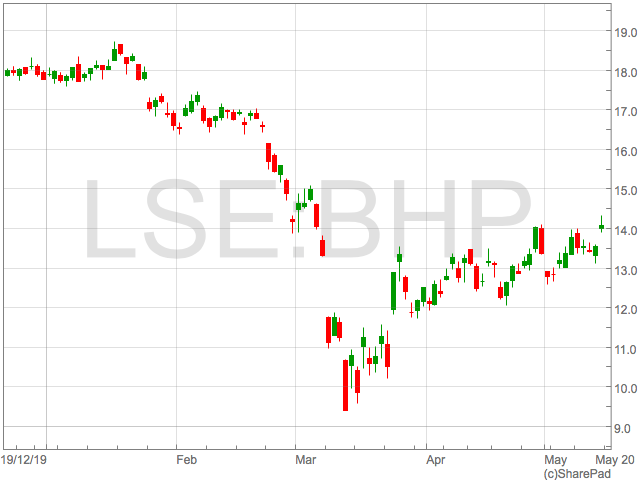
The news helped buoy commodity prices and equities followed with miners Glencore, Rio Tinto, Anglo American and BHP Group all stronger on the day.
The FTSE 100 was 0.8% higher at 5,790 just after midday in London whilst the German Dax was up 0.9% to 10,430.
Chinese industrial production rose 3.9% year-on-year in the month of April as factories reopened following months of lockdowns.
“News that China came out relatively okay in industrial production, that’s a big part of it. China resuming business even though it might be slow has given some confidence,” said Per Hammarlund, chief Emerging Market strategist at SEB.
The news helped buoy commodity prices and equities followed with miners Glencore, Rio Tinto, Anglo American and BHP Group all stronger on the day.
The FTSE 100 was 0.8% higher at 5,790 just after midday in London whilst the German Dax was up 0.9% to 10,430.
 Hargreaves Lansdown was also one of the top risers, up over 4%, a day after the wealth management company released a jump in activity throughout the coronavirus crisis volatility.
BT was top of the pile on Friday lunchtime after the FT reported the embattled telecoms group said it was in talks to dispose of a stake in Openreach. BT Group have recently scrapped their dividend as part of a strategic move to focus on 5G and Fibre.
There was also good news in the fight against COVID-19 from the UK’s small caps as Avacta announced progress in the development of a potential treatment. Their Affirmer technology has been found to show promising signs in blocking the path of the COVID-19 infection.
Hargreaves Lansdown was also one of the top risers, up over 4%, a day after the wealth management company released a jump in activity throughout the coronavirus crisis volatility.
BT was top of the pile on Friday lunchtime after the FT reported the embattled telecoms group said it was in talks to dispose of a stake in Openreach. BT Group have recently scrapped their dividend as part of a strategic move to focus on 5G and Fibre.
There was also good news in the fight against COVID-19 from the UK’s small caps as Avacta announced progress in the development of a potential treatment. Their Affirmer technology has been found to show promising signs in blocking the path of the COVID-19 infection.