
JLEN reaffirms dividend

JLEN (LON:JLEN), the diversified renewable infrastructure investment trust, has reaffirmed its dividend in the face of uncertainty created by the spread of coronavirus.
The trust said it was committed to paying its quarterly dividend of 1.655p and guided on a full year dividend of 6.66p. With shares trading around 106p, JLEN provides a yield of 6.2%.
The news will increase investor confidence in the JLEN dividend as scores of Bluechip FTSE 100 companies scrap or reduce their dividends in an effort to conserve cash during the decline in economic activity caused by coronavirus.
Remote opportunities for cyber security firm ECSC

Cyber security is a growth area and the expansion of remote working due to COVID-19 is likely to highlight its importance. AIM-quoted ECSC (LON: ECSC) is set to benefit. ECSC is still losing money, albeit a reduced amount, but it has started to generate cash.
ECSC provides cyber consulting services to organisations and businesses. Some of these clients then become managed services customers, although some sign up for managed services even though they have not received consultancy.
ECSC is an interesting comparison with Novacyt (LON: NCYT) because the share price soared on the back of high-profile cyber security events and was approaching £6 at one point. The valuation was not sustainable, and the share price has not been near those levels since. Novacyt is selling tests, but the short-term boost is unlikely to be sustained and it will be difficult to justify the valuation even if it is. However, there is underlying growth.
Cyber growth
Cyber security is not something that will go away. The UK market is estimated to be worth £8.3bn and it continues to grow at around 9% a year. In 2019, ECSC revenues grew by 10% to £5.91m. Managed services revenues increased by 48% to £2.61m. Consulting revenues dipped slightly to £2.9m, although they did grow in the second half. The other revenues come from third party products and other services. There are more than 100 reseller partners and these generated 17% of new clients during the year. This partner programme enables ECSC to engage with a broader range of clients. The reported pre-tax loss declined from £1.26m to £750,000. Operating costs were maintained so most of the growth in revenues dropped through to profit. Managed services has additional capacity and as more work is won its margins are set to continue to rise. Gross margins were 68% in 2019, up from 53% the year before. Cash was generated in the second half. This offset the outflow in the first half. There was an inflow from operations of £52,000 with a further boost of £152,000 from a tax credit. There was a £634,000 operating cash outflow in 2018. Capitalised AI software development costs and other capital investment meant that cash did fall from £650,000 to £351,000, although that is an increase on the June 2019 figure. The order book was worth £2.6m at the end of 2019 and since then two three-year managed services contracts that are worth £590,000 have been won from a charity and a high street retailer. There are tax losses of £5.67m, so future profit should be covered for many years.Future
There are opportunities and challenges for the business during this period of uncertainty. Higher levels of remote working are likely to unearth problems with many organisations’ cyber security and the ECSC rapid response operation could benefit. However, longer-term decisions may be put on hold and delay new contracts, particularly in consultancy. ECSC hopes to breakeven during the COVID-19 outbreak. Forecasts are impossible for any company at the moment. ECSC has made a strong start to 2019 with a 9% increase in revenues, though, and it has cash in the bank and debt facilities of £500,000. That, and £2m of recurring revenues, means that it will be able to withstand a limited slowdown. This year’s figures may not end up as would have been hoped for – a pre-tax profit was expected for 2020 before forecasts were withdrawn. However, the underlying trend in the cyber security market will continue and ECSC will be able to progress towards a pre-tax profit even if it is not this year. Looking at a long-term graph of the share price will not provide an accurate view of the progress made by ECSC. The share price has risen 5p to 82.5p on the back of the results, compared with a low of 62.5p. This is a growing business and the increased remote working due to COVID-19 will make it clear to businesses and organisations just how crucial cyber security is to them.Talks between airlines and government “ongoing”

The British Airline Pilots Association (BALPA) released a statement on Wednesday concerning talks between airlines and the government as the COVID-19 outbreak escalates.
“Talks are ongoing with airlines and the Government to look at how best to support the aviation industry though the current coronavirus crisis,” the BALPA said in a statement.
It continued to add that claims that the government is not going to support the aviation industry are “misleading”.
Instead, the BALPA emphasised that discussions concerning unique measures for individual airlines are “ongoing”.
The aviation industry is one to have been hit particularly hard in recent weeks as many countries have imposed travel restrictions in order to contain the spread of the illness.
Italy, Europe’s worst-affected country, was put on lockdown two weeks ago.
This lead to Ryanair (LON:RYA) lowering its passenger target for 2020 as flights to and from Italy were suspended.
Last week, Ryanair noted that “Italy, Malta, Hungary, Czech Republic, Slovakia, Austria, Greece, Morocco, Spain, Portugal, Denmark, Poland, Norway and Cyprus have imposed flight bans of varying degrees”.
With travel bans of this scale occurring, it is no wonder the aviation industry has been hit particularly hard by the spread of the illness.
Elsewhere in the industry, Flybe (LON:FLYB) collapsed, with the immediate crash of the airline blamed on COVID-19 related impacts.
“I’ve said before that there is no ‘one size fits all’ solution, due to the different structures and needs of each airline,” the BALPA General Secretary, Brian Strutton, said.
“Each airline will need to be reviewed to ensure a good use of taxpayers money. The Government will be looking at areas such as the airline’s financial state, whether it could raise the cash in other ways, or if it’s crucial to the UK transport system. These deliberations still are ongoing so we should await the outcomes,” Brian Strutton added.
UK average house prices grow 1.3% in January

New data on Wednesday from the Office for National Statistics revealed that house prices grew at a slower rate in January.
Average house prices in Britain rose by 1.3% over the year to January 2020, down from the 1.7% growth seen in December 2019.
The data from the Office for National Statistics is before the COVID-19 outbreak began in the UK.
Since then, the outbreak has developed significantly in the UK, with the government accelerating measures to help contain the spread of the illness.
Earlier this week, Boris Johnson addressed the nation and delivered strict social distancing rules to ensure people stay at home.
However, before the situation escalated, average house prices increased in England to £247,000, Wales to £162,000, Scotland to £152,000 and Northern Ireland to £140,000, the Office for National Statistics said.
House prices in London continue to be the most expensive, averaging at £477,000.
“Over the past three years, there has been a general slowdown in UK house price growth, driven mainly by a slowdown in the south and east of England,” the Office for National Statistics said.
Commenting on the COVID-19 outbreak, the Office for National Statistics added: “During the coronavirus (COVID-19) outbreak, we are working to ensure that we continue to publish the UK HPI. The price collection for this publication has been largely unaffected.”
“As this situation evolves, we are developing several solutions to meet potential scenarios depending on the amount of data that is able to be collected by our data suppliers to ensure we are still able to produce the publication over the coming months,” it added.
Persimmon closes offices and construction sites

Persimmon plc (LON:PSN) posted an update on Wednesday concerning the evolving COVID-19 outbreak.
Shares in the British housebuilding company were up by over 3% during trading on Wednesday.
Since the British government announced new lockdown rules at the start of the week, Persimmon has taken “further measures”.
The housebuilding company will close all of its sales offices from Thursday onwards until further notice.
Persimmon added that all customer care site visits will stop except for emergencies, but it will continue to support existing and new customers on the phone and online.
Meanwhile, all of its regional offices will close, with only a skeleton staff to assist the wider workforce working from home.
“Construction sites are commencing an orderly shutdown with only essential work taking place which will be focused on making partly built homes safe and secure and where failure to complete the build could put customers in a vulnerable position,” Persimmon said.
Dave Jenkinson, Group Chief Executive, commented: “Our primary concern is the safety and well-being of our customers, staff, contractors and suppliers and we have today set out a number of further measures throughout the business to protect them for the duration of the pandemic. We will listen carefully to the Government’s future advice as the situation develops and will make further adjustments where necessary.”
“The Group’s long-term strategy of minimising financial risk and maintaining capital discipline over the long term through the housing cycle, ensures that we are well placed as we enter this period of uncertainty,” the Group Chief Executive continued.
“Whilst the impacts of this pandemic go beyond the normal cyclical nature of the housing market, the Group’s high quality land holdings, significant liquidity and strong balance sheet will allow us to work through these challenges and emerge in a strong position for the benefit of all our stakeholders,” the Group Chief Executive said.
As the outbreak of COVID-19 continues to develop in the UK, the government has accelerated measures to help contain the spread of the virus.
Boris Johnson addressed the nation on Monday evening and delivered stricter lockdown rules, instructing everyone to say at home.
Shares in Persimmon plc (LON:PSN) were up on Wednesday, trading at +3.52% as of 10:50 GMT.
Sterling strengthens shurgging off dismal economic data, oil moves higher

Sterling rallied against the dollar on Tuesday after an instalment of economic data from Europe which revealed one of the worst contractions in economic activity in history and the Federal Reserve unleashed unlimited stimulus.
Sterling rose to $1.1780 on Tuesday as the dollar sank against all major currency pairs.
The Euro was also up against the dollar with EUR/USD rising to 1.0810.
The rally in European currencies came as services and manufacturing data revealed some of the worst economic conditions history. If anyone was unsure about the impact of coronavirus on the European economy, today’s data gives a very clear picture.
Both the manufacturing and services sector contracted, but the services sector was the most heavily hit.
UK Services PMI plummeted to 35.7 from 53.2 previously, while Manufacturing PMI fell to 48 from 51.7. Anything below 50 represents a contraction.
With the services sector making up a large part of the UK economy, it is almost inevitable the UK economy will shrink in the first quarter.
Whether the UK enters a technical recession of two quarters of economic contraction will depend on the speed economic recovery, once the coronavirus health crisis eases.
Oil rallies
Oil was also trading higher on Tuesday in a broad risk-on rally that saw WTI and Brent both rally sharply on reports the G7 were pressuring OPEC to resolve their issues and help bring supply under control whilst the United States suggested a US-Saudi alliance. The strength in oil fed through to equity markets sending oil majors BP and Shell up over 10% and lifting the FTSE 100 in the process. Oil analysts have turned increasing bearish on oil prices recently as Saudi Arabia and Russia engage in a price war that has rocked the global oil markets. Markets fear increased supply will far outweigh current demand and both Russia and Saudi Arabia have showed no signs of reconciliation during the COVID-19 outbreak. WTI oil was trading $23.30 and Brent at $27.81 in afternoon trading on Tuesday.Social distancing: how to pass the time indoors

“You must stay at home,” Boris Johnson told the nation on Monday evening.
As COVID-19 continues to spread across the world, the British government has accelerated measures to help contain the spread of the virus.
This means that we must all stay indoors as much as possible. Whist many will rejoice at the thought of watching Netflix shows back-to-back, others will struggle and become restless.
I’ve been social distancing for almost two weeks, and though I fell into the Netflix binge-watching category at first, it became clear after a few days that I was getting very, very bored.
So I spent some time jotting down some really simple activities that I can take part in to pass the time indoors.
I’ve decided to share the list I came up with to help you overcome the boredom.
If you’re lucky to have a garden right now, make the most of it whilst social distancing. You can exercise, read and have a hot drink out there, or even just spend a few moments outdoors each day for fresh air.
Reading
I’ve accumulated a large list of books that I’ve been meaning to read “when I get the chance”. This list goes years back, right to the start of my time at university when I promised myself that once graduated I’d find the time to read all the books I wanted to read that weren’t part of my degree. Well, naturally, I graduated and still didn’t start unpicking the list of books. But now that I’m indoors, it’s time to finally sit back and start reading.Gardening
Sod’s law, the sun has come out right when we are meant to be social distancing. Social distancing doesn’t mean you can’t enjoy the nice weather; for those of you who have a garden, you can take part in a variety of outdoor activities. One that I am hoping to try is gardening. Have you neglected your garden all winter? Or just in general? Now’s the time to cut the grass and plant some vegetables and flowers. You can purchase seeds online so you don’t have to leave the house. Now might even be a good time to start growing your own vegetables, especially with all the chaos in supermarkets across the UK!
Spring cleaning
When the weather does go back to its usual gloomy self and you can no longer enjoy your garden as much, it might be a good time to deep clean your home. Not only will you create a hygienic environment during a pandemic, but you can also put away the winter items you no longer need and prepare your home for a (hopefully) warmer climate. Now might also be a good time to declutter your living space and donate items to charity or sell them online.Exercising
Whilst social distancing, we are still allowed to leave the house for one form of exercise a day, like running, walking or cycling. But if this isn’t enough for you, it’s not impossible to keep active at home. There are many, many free home workouts on YouTube that require little to no exercise equipment. You might have a few dumbbells lying around, which will make your home workouts even more intense. Personally, I’ve been doing half an hour of yoga each day to keep myself moving and stretching.Cooking
If you’re able to find the ingredients you need, now is a great time to get creative. I’ve always wanted to try making pasta from scratch, so I made my own fresh pasta last week and it didn’t turn out too bad! Plus, now’s a good time to learn how to make pasta given it’s so difficult to get your hands on a pack. You might want to try baking something fun to lighten the mood in your house, or just cooking healthier and more balanced meals; whatever it is, cooking is a great way to pass the time. This all might seem really obvious, but it’s so easy to just sit on the sofa and not do anything other than scroll endlessly on social media. These are just a few activities; you can also listen to podcasts, watch documentaries, play board games, write, paint… Scheduling time in your day to take part in these simple activities will really help pass the time whilst social distancing, and it will also help your emotional wellbeing during a time when so much emphasis is being placed on our physical health. Remember, whatever you decide to do, stay indoors. Don’t be selfish. We are simply being asked to stay indoors.Fine Wine offers good news for investors amid turbulent scenes on the global markets

Sponsored by OenoFuture
OenoFuture’s Chief Wine Analyst and Master of Wine Justin Knock explains how fine wine offers good news for investors amid turbulent scenes on the global markets.
I’m thinking a lot at the moment about Clint Eastwood, his Oscar-winning film Unforgiven, and his grizzled character William Munny. Munny is the ageing hard man of the West who has seen it all, a survivor of every gun fight in his long life including the last one in the movie. He survives not because he’s the best but because he never panics. Looking at market movements over the past two weeks we could all use a bit of William Munny’s self-control right now.
The picture looks bleak across the board. Oil is heading to record lows in the face of a burgeoning supply glut. Stocks are cratering everywhere, bonds snapping to record low yields, central banks slashing rates and pumping cash into the system, and governments are promising extraordinary fiscal stimuli. As if that wasn’t enough, perhaps the most worrying of all is the lack of clarity on forward earnings potential for almost every industry sector. So, how do we respond? Or rather, how would Clint Eastwood’s Munny assess and then act in the current market situation?
Have we hit rock bottom for stocks or is this just the beginning? US Treasuries have hit records, but where can valuations go in the face of massive stimulus from the government and QE from the Fed? Should you be buying or selling gold? They’re all great questions which no one can currently answer.
Cash is clearly king today. We’ve all seen major moves in stocks, bonds, commodities and other liquid assets over the past two weeks in efforts to raise cash. Gold is actually performing its purpose, acting as a store of value in times of duress, which explains its current liquidation and falling price. Concerns are driven around asset valuations and a potential deflationary environment leading to recession and perhaps worse. Placing cash into any of these assets right now seems frankly illogical.
Taking a wider view, it’s hard to look around the financial landscape and feel positive at the moment. But we have been through this and worse before, and a calm head can prosper. Winning this year is not necessarily about making huge returns. It’s about preserving your capital so you can stay in the game and win over the longer term.
Wine is a proven winner in difficult times. Why? Fine wine enjoys remarkably low volatility – it’s not as liquid as the assets listed above and it operates in a much smaller market overall, a sheltered cove away from the raging oceans of bonds and stocks. Not only is volatility lower, but fine wine also generates steady returns over the medium to long term. In the current environment where deflation is a legitimate concern this has real value to the wise investor.
What about consumption? On one hand, COVID-19 is currently devastating the hospitality industry globally, and we are in the middle of the largest crisis in the restaurant industry anyone has experienced. It’s a traumatic time with wine sales in both the on-trade and in tourism nose-diving across the globe.
Fortunately, that’s only half the consumption equation. In the last recession sales and consumption of fine wine rose steadily; unable to dine out people choose to eat in at home. And they could afford to eat and drink much better quality. A wine on a restaurant list at £150/bt is only around £40/bt to take home. Those with extensive wine cellars dug into their hollow logs – the preceding years of fine wine acquisition meant mature wines, ready to drink and already paid for (except for duty & VAT).
We now find ourselves at the start of the largest single home confinement period in history. Hundreds of millions of people are on or close to lockdown at home. We will all be eating and drinking at home every night for the foreseeable future. This is the moment for fine wine to come to the fore, especially given the relentless cycle of grim news encouraging us all to enjoy a glass or two of something great.
During the last recession stocks of mature fine wine were depleted, especially so-called ‘off vintages’ or ‘drinking vintages’, such as 2001 in Bordeaux, 2000 in Burgundy, 1998 in Champagne and so forth. In the years following the end of the recession these wines have excelled in the market because there is so little stock available. 2001s in Bordeaux were once 30-50% of the cost of the famous 2000s, but now trade at 60-70% of their value.
Fine wine can also offer a hedge against inflation. The past couple of weeks have been extraordinary; the Fed has slashed rates by 1% (the largest cut in their history), made $1.5 trillion available to the repo market, and announced $700bn to buy treasuries and mortgage-backed securities. These are unprecedented actions which have only furthered panic instead of reassuring investors. In the past two days we have seen enormous fiscal policy weapons unveiled – €500bn in emergency business loans from Germany, €300bn from France, €100bn from Spain and a total of €1tn from European institutions. The US government also announced a $1.2tn fiscal stimulus package. These numbers are truly mind-blowing. When we get through the current panic there will be enormous sums washing through the system, looking for a home and creating potentially massive inflationary pressure. If the US bond market begins to crack then all inflationary bets are off. Cash will be a poor place to be under this scenario.
Fine wine priced in sterling is currently trading at an 8-10% discount from last month against the USD and the EUR thanks to depreciation of GBP, yet prices have hardly moved. This is good news for investors since there is still time to acquire great wine at solid prices. In the current maelstrom of panic it’s hard to think of a safe place to invest, but if we cast our minds back to Munny I can see him sitting in the corner, on a case of the finest wine, taking steady aim at his next assault. And he’ll definitely be walking home after all the dust has settled to enjoy a well-earned drink.
Boris Johnson: “you must stay at home”
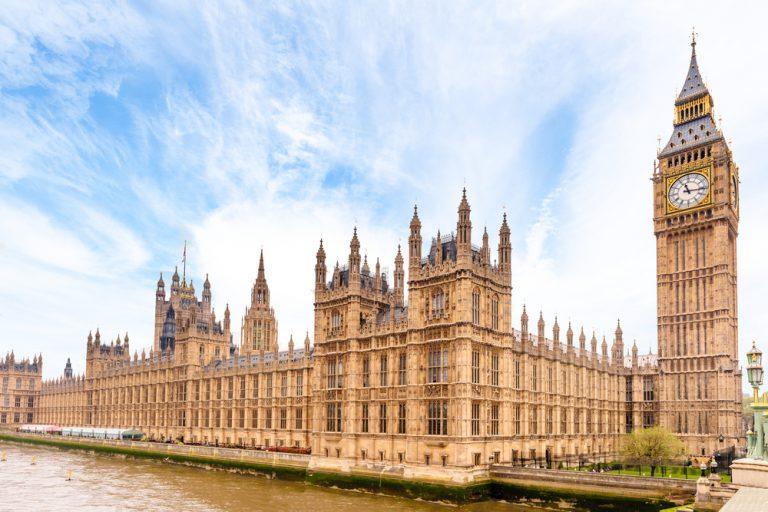
Boris Johnson addressed the nation on Monday evening to outline new rules people must follow in order to help contain the spread of COVID-19.
“All over the world we are seeing the devastating impact of this invisible killer,” the Prime Minister said. “And so tonight I want to update you on the latest steps we are taking to fight the disease and what you can do to help.” Boris Johnson continued: “To put it simply, if too many people become seriously unwell at one time, the NHS will be unable to handle it – meaning more people are likely to die, not just from coronavirus, but from other illnesses as well.” The Prime Minister explained that it is crucial we slow down the spread of the illness, as it is the only way the number of people needing hospital treatment at any one time can be reduced. The government had previously recommended people stay at home and practice social distancing, but it became clear that many were not following these instructions. “And though huge numbers are complying – and I thank you all – the time has now come for us all to do more.” “From this evening I must give the British people a very simple instruction – you must stay at home.” Boris Johnson said that it is “critical” we stop the disease from spreading between households. New guidelines have been announced revealing the limited reasons why people are now allowed to leave their homes:- Shopping for basic necessities (though this must be done as infrequently as possible)
- One form of exercise a day alone or with members of your household (running, walking, cycling)
- Any medical need, to provide care or to help a vulnerable person
- Travelling to and from work when it is absolutely necessary and cannot be done from home
FTSE 100 rallies following Federal Reserve stimulus and Italian coronavirus positivity
The FTSE 100 rallied in early trade on Tuesday after the Federal Reserve unleashed a new wave of stimulus and reports of coronavirus cases in Italy showed some signs of improvement.
On Monday, the Federal Reserve announced a huge stimulus package. In a time of unprecedented measures by central banks around the world, the most recent Federal Reserve package stands out due to the sheer size and scope of the measures.
The Fed said they would purchase and unlimited amount of assets and securities to help avoid a credit crunch. While the measures are designed to help the wider population, the initial impact was enjoyed by markets who cheered the additional liquidity.
Whilst the Federal Reserve moved to support markets and the economy, the US Senate again failed to agree a deal to provide fiscal stimulus to the US economy.
Adding to the positive mood on Tuesday and helping risk-on optimism was news from Italy that the number of news cases of coronavirus was falling in regions most heavily hit.The Federal Reserve is now the chief financial policymaker in the United States. That’s because our political branches are apparently utterly incapable of shoring up markets without also attempting to take over businesses.
— Ben Shapiro (@benshapiro) March 23, 2020
FTSE 100 rally
The injection of optimism in the market saw the FTSE 100 rise as high as 5,282, up over 5.5% on the day, before drifting back. Oil prices also rose, providing further support for oil companies that were among the top riser on Tuesday. FTSE 100 oil heavyweights BP and Shell were both up over 10% within the first hour of trading adding a significant number of points to the FTSE 100. Not every stock joined the rally, however, as ITV remained in the red a day after cutting their dividend and DIY outlet Kingfisher gave investors a cause for concern.Economic Data
There was raft of economic data from Europe on Tuesday morning that highlighted the impact of coronavirus on European economies. Market Eurozone PMI Services plummeted to 28.4, missing estimates of 39. A reading below 50 represents a contraction. The prior reading was 52.6. UK Services PMI fell to 35.7, representing a huge decline in the services sector before the UK lockdown was brought into effect.The poor data hardly impacted markets, suggesting a large degree of the negative economic data was already priced into markets.Blimey. Britain’s services sector, the engine of the UK economy, contracted more than ever in March. Purchasing Manager’s Index down from 53.2 points to 35.7. Anything below 50 points is a contraction. Worst since the data series began in 1998 pic.twitter.com/tRcuTcOALm
— Ed Conway (@EdConwaySky) March 24, 2020