
Flutter Entertainment face £110 million hit as global sporting events are cancelled

Flutter Entertainment PLC (LON:FLTR) have told the market that its’ full year earnings could be affected by the outbreak of the coronavirus, which has seen shares dive into red.
Shares in Flutter Entertainment trade at 5,748p (-11.24%). 16/3/20 10:30BST.
The firm noted that it could face a £110 million hit – if global governments continue to cancel events until the end of August due to the outbreak of COVID-19.
The firm said: ‘In recent days, many national governments and sports authorities around the world have made the decision to postpone/cancel high attendance sports events in an effort to delay the spread of the COVID-19 virus. This will obviously have a material impact on the revenue and earnings of the Group which, in 2019, generated approximately 78% of its revenues through bets placed on global sporting events.
Quantifying the precise earnings impact on the Group is difficult at this point as we do not have visibility on the duration of restrictions on sporting events. While most major global sports have been suspended/cancelled, there are some exceptions where events are now being scheduled to take place behind closed doors.’
Sporting associations across the globe have made the move to cancel fixtures and games until the outbreak settles down. Notably, fans of the Premier League will not see their teams in action until two weeks time, whilst Champions League fixtures have been postponed until further notice.
Flutter said that in 2019, 78% of its’ revenue was accounted from global sporting events – which have now been placed on hold.
The firm said that it is expecting to continue trading across its’ UK and Irish stores – as horse racing events such as Cheltenham Festival continue to run. If these events are cancelled then the firm could take a further bruising of £30 million each month.
Peter Jackson, Chief Executive noted: “The challenge currently facing our business and the industry more widely is unprecedented in modern times. Our focus, first and foremost, is on protecting the welfare of our employees and our customers and we will leave nothing to chance in this regard. While our near-term profitability will be impacted by the essential measures being taken globally, the Board will remain focused on protecting shareholder value and managing the business through these turbulent times.”
Associated British Foods feel coronavirus effect, as Primark sales stumble

Associated British Foods PLC (LON:ABF) have told shareholders that their Primark retail business could face significant bruising from the ongoing coronavirus pandemic – in an update published this morning.
“Our priority continues to be the health and safety of our colleagues, customers and partners. Each of our businesses are closely monitoring the current and potential effects of the outbreak on their operations” – the firm noted.
The firm noted that due to the recent outbreak of COVID-19, this could lead to a £190 million loss in sales over the next month – mainly due to store closures.
Associated British Foods mentioned that due to government lockdown’s in France, Spain, Austria and Italy, stores have been forced to close.
Looking at their UK business, Primark sales have declined over the last two weeks due to less foot fall and a challenging trading environment.
The firm said that for the first half, adjusted operating profit will be ahead of expectations – mainly due to higher margins for Primark and Grocery. As a result, adjusted earnings per share for the first half will now be ahead of last year on both a lease-adjusted and a reported basis.
The firm commented today: “In our February trading statement we described the risk to supply of goods from our suppliers in China. Since then, the situation in China has improved, with most factories supplying Primark having re-opened. As a result, supply shortages from that country are now expected to be minimal.
However, with developments over the last week in Italy and, more materially, over the weekend in France, Spain and Austria, stores accounting for 20 percent of Primark’s selling space are now closed until the respective governments permit them to re-open.
Importantly, in aggregate we have not seen a material impact in our sugar, grocery, ingredients and agriculture businesses.
Given the effect of COVID-19 on Primark’s sales, it is too early to provide earnings guidance for the remainder of the current financial year”.
Associated British Foods try to limit impact
Roughly three weeks back, the firm noted that the coronavirus could affect interim results – which gave shareholders a pre warning. The multinational firm have said that they expect to announce their interim results at the end of April – however the recent outbreak of the coronavirus may dampen these. Primark sales and performance remained strong – the firm said, and that this retail business is yet to be impacted by the coronavirus. The first half ends on February 29 for AB, and the firm said that expects growth in sales and adjusted operating profit to rise from £639 million from a year ago. Looking at the performance of their retail brand Primark, AB Foods have said that they expect first half sales to be 2.5% higher year on year, and 4.2% at constant currency. On a reported basis, Primark’s first half operating profit will be ahead of the prior year – with UK sales expected to be 3% higher and EU sales rising 5.3% at constant currency, helped by growth in France, Belgium and Italy. Shares in AB Foods trade at 1,629p (-11.17%). 16/3/20 10:20BST.Old Mutual meet expectations across 2019, however shares drop

Old Mutual Ltd (LON:OMU) have seen their shares dive on Monday morning, as the firm gave shareholder’s a mixed update.
Ian Williamson, Interim CEO commented: “Our business was resilient against significant headwinds in 2019. We faced challenging macroeconomic conditions in South Africa, our largest market, and many of our operating countries in the Rest of Africa. This put pressure on the disposable income levels of our customers and on the ability of our businesses to grow value for our customers and investors. We remain confident that our diversified business allows us to protect value for stakeholders in tough economic times.
The Board remains confident that the decision made was in the best interests of our stakeholders and that their duties were discharged in line with the high standard of governance and ethics expected of an established and respected organization like ours.”
The firm noted that its’ total annual profits had dipped, however profit increased after excluding the distribution of Quilter PLC (LON:QLT) and other factors.
Looking at the figures for Old Mutual’s 2019 trading, the firm noted that pretax profit from continuing operating surged 63% to ZAR13.80 billion from ZAR8.45 billion in 2018.
Old Mutual said that this was due to an increase in non-banking investment return to ZAR86.70 billion from ZAR20.51 billion, increasing total revenue and other income up 60% to ZAR176.12 billion from ZAR109.88 billion.
Looking at its’ profit after tax however, the firm saw this metric slump from ZAR42.71 billion the year before to ZAR9.66 billion. Profit after tax attributable to equity holders of the parent fell 74% to ZAR9.39 billion from ZAR36.57 billion – which met expectations in the fall between 74% and 76%.
Old Mutual decided to declare a final dividend of 5 rand cents per share dividend, up 4.2% from 72 cents the year before.
The firm also tried to best reassure shareholders on the current coronavirus pandemic, which has been affecting global businesses for a few months.
William added: “On 11 March 2020, COVID-19 (Coronavirus) was declared as a pandemic due to the rising rate and scale of infection observed. The rapid spread of virus since the start of 2020, and particularly in recent weeks, has caused significant disruption in global equity markets.
We are monitoring this situation on a daily basis. We have established a special committee to ensure that our employees in all of our locations can continue to work safely, whether that is from our premises or from their homes. We have placed restrictions on all cross border business and personal travel to ensure we limit the risk of infection to our employees and customers. We also regularly model the impact of ‘perfect storm’ scenarios on our solvency capital and liquidity levels. These stress tests have shown we remain sufficiently capitalized with appropriate liquidity levels through these scenarios”.
Shares in Old Mutual Ltd trade at 59p (-14.80%). 16/3/20 10:05BST.
Eqtec announces collaboration with German EPC company ewerGy
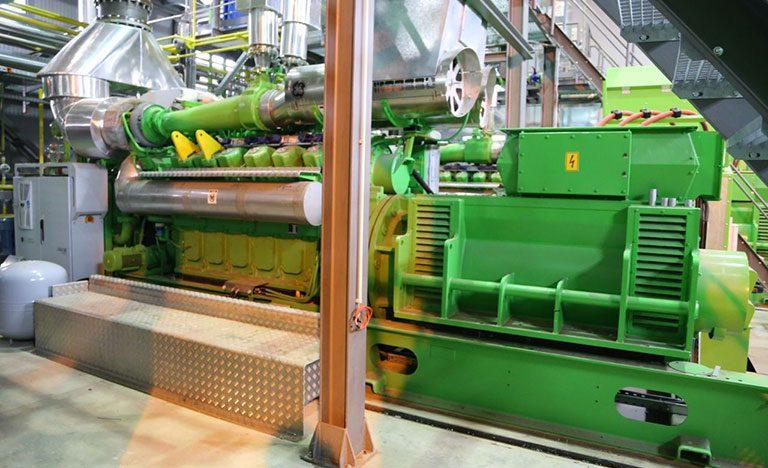
Eqtec plc (LON:EQT), the waste-to-energy and gasification technology company, has announced a collaboration framework agreement with ewerGy, a German EPC company.
The agreement will focus on the development of a portfolio of projects in Greece and the Balkans and utilise Eqtec’s advanced gasification technology.
The partnership will harness Eqtec’s waste-to-energy model to produce electricity and syngas for chemicals. The initial two projects will process feedstock sourced from local farmers including straw, corn and cotton stalks.
Under the arrangement, ewerGy will act as the EPC and O&M partner in Greece whilst engaging in business development across the portfolio. Consistent with prior Eqtec deals, Eqtec will provide the technology, equipment and engineering support.
The partnership has identified 11 potential projects of which two are currently under development. The first two in development are of 0.5MWe and 1MWe.
David Palumbo, CEO fo Eqtec PLC, commented:
“Since January, we have been working with ewerGy and its local partner, ECO Hellas, on the development of the first advanced gasification plant in Greece, for which we recently announced an MOU. This collaboration has already been very productive, and the expertise, professionalism and local know-how of ewerGy and ECO Hellas have made clear to us the value of a wider collaboration with them. We are looking forward to opening up Greece and neighbouring countries for advanced gasification plants, and we are convinced ewerGy and ECO Hellas are the right partners to do so and have, already inside their network, access to an interesting prospective pipeline of projects.”
Today’s announcement further cements Eqtec’s progress in establishing strategic partnerships. Earlier in the year Eqtec completed a deal with Californian Pheonix Energy which saw Eqtec receive a 20% stake in the operation in return for supply of equipment and engineering services.
As well as operations in Europe and US, Eqtec operates UK RDF, anaerobic digestion and waste gasification projects.
The Federal Reserve fails to inspire confidence with massive stimulus, shares sink

The Federal Reserve unveiled a significant stimulus package on Sunday, including a rate cut and the restarting of quantitative easing in reaction to the economic slow down caused by COVID-19.
The Fed announced it would cut rates by 100 bps to 0.00%-0.25% and would begin asset purchases of $700 billion.
Just a couple of weeks ago such a large stimulus package would have unleashed a wave of buying throughout markets, but with a back drop of coronavirus induced fear, markets sank overnight.
European markets opened on Monday deep in the red with many markets facing issues with price matching in initial trade. The FTSE 100 was down over 5%, as were the German DAX and French CAC 40.
Futures in the S&P 500 and Dow Jones triggered circuit breakers overnight while Asian sank.
The drop in equities was attributed to scepticism around the Federal Reserves motives and whether the package would actually provide any reprieve for the real economy.
There is also a concerns growing that the Federal Reserve has spent all of its monetary policy ammunition and has very little it can now do if economic conditions deteriorate further.Powell basically admitting that the volatility and drop in stock markets is causing them to act the way just did.
It’s all about the stock market and calming things down. So far it’s not working. At all. — Sven Henrich (@NorthmanTrader) March 15, 2020
Global rate cuts
The Federal Reserve were joined by a raft of other central banks in cutting rates to help ease stress on financial systems. The Bank of Canada cut rates by 50 bps to 0.75% while the Reserve Bank of New Zealand lowered by 75bps to 0.25%. The Bank of Japan decided to keep rates on hold but instead opted to increase purchases of ETFS and J-REITS. This type of security buying is a much speculated next step for the Fed if the most recent package fails.Airlines & Travel shares destroyed
Airline shares were again amongst the most heavily stocks as flights were grounded by government attempting to limit move to contain corona virus. easyJet was down over 20% to levels that had not been seen since 2012, Air France, IAG and Lufthansa were also heavily hit. Shares in Tui travel sank as much as 34% after it said it may have to seek state aid to survive. Other airlines have said that if things don’t improve by May they also face bankruptcy.

FTSE 100 rebounds from worst day in over 30 years
The FTSE 100 has rallied to provide mild positivity at the end of one the of worst weeks in the indices’ history.
London’s leading the index had a strong start to the day, rebounding from the worst day since Black Monday in 1987 and reacting to cues from Asian easing overnight.
“Having suffered its worst day of trading in more than 30 years the FTSE 100 at least started Friday 13th in positive territory,” said AJ Bell investment director Russ Mould.
The FTSE 100 closed up 2.4% or 128 points in what was a volatility session with the market making wild swings that saw the market up over 450 points before giving up nearly all the gains by the close of play.
News that the US would declare a state of emergency sucked the optimism out of markets after central banks had sparked a rally by unveiling a raft of monetary policy easing measures.
China cut the amount of capital banks had to keep in reserve which would flood the economy with an additional $79 billion while Australia said it planned to pump $17 billion into the economy.
There were also hopes of further easing from the US who are set to make a decision on rates next week having already made a 50 bps rate cut. There has been a wave of easing by central bank action in the last week to soften the blow of coronavirus, including a emergency cut by the Bank of England.
However, some may label today’s rally a ‘dead cat bounce’ that fools investors into thinking the selloff is over.
Shares were in heavily oversold territory today and were due a rebound but the economic impact of COVID-19 is still to be properly accessed and many analysts see sharp declines in corporate earnings.
This may have already been priced into markets and due to the clear path to recovery when infection subside, there is a strong chance of a V-shaped recovery in markets and the economy as activity picks up.
The FTSE 100 closed at 5,366 having given up more than 1,000 points in the last week.

Coronavirus crash continues: FTSE books worst session since 1987

Buckle up! Normally we dole out quaint titles like ‘Black Monday’ to mark the pinnacle of a market peak or trough, before some sort of consolidation. Well, in that case, we’ve thrown out convention. Thursday marked the most drastic losses for the FTSE since 1987, bringing it down 9.3%.
The index now clings on for dear life at 5,300 points, a level last seen in mid-2012. Some 2,000 points shy of its February highs, the index has been crippled by a complete collapse of consumer interest in non-essential items, and a capitulation of its commodities equities such as Tullow Oil (LON:TLW), which booked a $1.7 billion full-year loss.
The shocking start to the session was only compounded by the US open, whose equally brutal start was led by maniacal Trump’s Europe travel ban.
As the ECB extended its programme of QE and dug itself deeper into its monetary hole, investors desperately searched for any safe haven willing to offer them shelter, with many opting for the ‘ ‘good ol’ reliable’ dollar.
Speaking on the Coronavirus led collapse of equities and quivering investor sentiment, Spreadex Financial Analyst Connor Campbell stated,“The Dow Jones, already down close to 1500 points on Wednesday night, shed 1850 points as the bell rang on Wall Street, tanking all the way to 21700. This following Donald Trump’s bungled, widely derided and potentially economically catastrophic decision to ban travel from the 26 states that make up Europe’s Schengen Area.”
“The ECB’s stimulus package seemingly only made matters worse. Withstanding the pressure to cut rates to a fresh record low, the central bank announced an €120 billion expansion to its ongoing quantitative easing program, alongside new longer-term refinancing operations and cheap loans for banks to encourage lending to ’those affected most by the spread of the coronavirus’.”
“Firmly on the leash of the US indices, the European markets practically doubled their losses once trading got underway across the pond – and when you’re already down as much as 5% that takes you into pretty scary territory.”
“The CAC shed 10.2% as it tumbled to 4130, while the DAX plunged almost 1000 points to sink towards 9400, leaving it 4400 points off the all-time high struck exactly 3-weeks ago.”
“Trying to find something worth buying, investors seemingly settled on the dollar. This left cable down 1.6%, forcing it back to a 5-month low $1.2607. Against the euro, meanwhile, the greenback rose 1.2%, forcing the single currency to a 10-day nadir of €1.1135.”
Boris & Sunak big-spend budget: 3 missed opportunities
Few would venture to deny the momentous nature of the new government’s maiden budget. Boris Johnson and Rishi Sunak employed an undeniably Keynesian approach to spending, with handouts to increase business cash flows and infrastructure investment emblematic of an ambitious vision for the future.
Some questions that we need to ask ourselves now: is this the end of the monetarist era of tight spending and fiscal retrenchment? With plans to take back some economic control from market forces, and to ‘rearrange the economic geography’ of the UK, will this Conservative budget incur an identity crisis within the Labour party?
To the latter, the answer doesn’t necessarily have to be a ‘yes’. Though promises were kept on infrastructure spending, Coronavirus received the requisite attention and there was sufficient virtue signalling towards hot topics such as the NHS, there were certainly a number of notable omissions.
In a somewhat shaky performance on the Andrew Neil show, John McDonnell pointed to the social care crisis and climate change as major issues which had been snubbed by the Boris-Sunak budget. Others also criticised the unsophisticated handling of business rates, as well as unsuitably low sick pay for workers told to self-isolate, and perhaps most notably, a backtrack on Boris’s 2016 promise to pump an additional £350 million into the NHS every week.
So, while Labour may opt to stand firm on some of the territory it now shares with the Johnson agenda, there are certainly openings for it to set itself apart.
What I found most interesting, though, is that in a budget designed to invest big in the Britain of tomorrow, there were a few missed chances to lay good foundations for the future.