
Dignity 2018 profits fall, shares slide

Dignity reported a fall in annual profits for the year on Wednesday causing shares to slide downwards.
The funeral operator said that during the 52 week period ended 28 December 2018, underlying operating profits fell 23% to £80.2 million, with revenue also down 3% to £315.6 million.
Despite the fall, profits remained ahead of expectations, with the company having previously forecast underlying profits of £79 million at the start of the year.
Dignity also said it performed 72,300 funerals during the period, compared to 68,800 the year before.
Deaths during the year were ahead of the previous year, rising 2% from 590,000 in 2017 to 599,000.
The company proposed a final dividend of 15.74, remaining unchanged from the previous year.
Dignity chief executive Mark McCollum commented on the results:
“2018 marked the beginning of a period of radical change for Dignity. We reduced our funeral prices, created a broader range of choices for clients and embarked on plans to transform the business by the end of 2021.
Our vision is to lead the funeral sector in terms of quality, standards and value-for-money. To achieve this we are building a more coherent, cohesive and technology-enabled business, one geared to meeting the changing needs of our customers. I am pleased with the progress we made during the year, we built momentum and our Transformation Plan is on track. A lot of work remains to be done, but I am confident that with our highly experienced staff and the new transformation expertise we have brought in, we will achieve our goals.”
He also added that he expected the competitions and markets authority (CMA) to also begin its investigation in the industry in 2019.
Dignity is one of the largest funeral operators in the UK. It is listed on the London Stock Exchange. It has been a publicly traded company since 2004.
Its headquarters are in Sutton Coldfield, Birmingham UK.
Shares in Dignity (LON:DTY) are currently trading -0.94% as of 11:46AM (GMT).
Everyman Media Group profits up on the back of new openings

Everyman Media Group reported its preliminary results for the 53 week period ending 3 January 2019.
According to the company, revenue for the year was up 27.7% to £51.9 million, compared to £40.6 million back in 2017.
Meanwhile, adjusted earnings before interest, tax, depreciation and amortisation rose 38.2% to £9.2 million, an improvement from the £6.6 million reported a year ago.
During the period, Everyman Media Group said it opened five new venues, including locations in York, Glasgow and Liverpool, taking its estate to 26 sites and 84 screens as of March 12.
In addition, the group have plans to open an additional 14 sites, with seven set to open during the course of this year.
Paul Wise, Chairman of Everyman Media Group, commented on the results:
“I am pleased to report on the Group’s results for the 53 weeks ended 3 January 2019.
With 5 new openings in the year in York, Glasgow, Altrincham, Crystal Palace and Liverpool, 2018 marked another year of strong growth. The business delivered performance in line with the Board’s expectations across all key areas.
The Group now operates 26 venues (84 screens) as at 12 March 2019, up from 21 (65 screens) at the beginning of 2018.”
Everyman Cinema Group operate cinemas across the UK. The firm was originally founded back in 2000 by Daniel Broch, who opened the group’s first location in Hampstead in London.
The company has listed on the AIM market of the London Stock Exchange as of 2013.
Shares (LON:EMAN) are currently trading +4.97% as of 11:07AM (GMT), as the market reacts to the results.
Sirius Minerals shares rally amid alternative financing proposal

Sirius Minerals announced it has received an alternative financing proposal, sending shares upwards during Tuesday trading.
The London-listed fertiliser development company said it had paused debt financing talks with prospective lenders after it received an alternative proposal.
Sirius Minerals the proposal would replace a $3 billion multi-tranche structure that was changed on the 22nd January of this year.
The statement added:
“The Company believes that the Alternative Proposal potentially offers a more flexible and attractive solution to its stage 2 financing requirements and therefore it is pausing discussions with its existing prospective lenders to pursue the Alternative Proposal.
A number of options for the additional non-senior debt financing requirement, as previously outlined in the Company’s announcement of 6 September 2018, continue to be progressed.”
Sirius Minerals added that the alternative proposal is subject to the finalisation of due diligence and further internal approvals.
Back in January, the company updated the market on progress during its fourth quarter. Alongside progressing talks with lenders, highlights included ‘significant construction progress’ during the period, the competition of procurement for major construction packages, as well as completion of the Cibra strategic investment.
At the time of the trading update, Chris Fraser, CEO of Sirius Minerals, commented on progress:
“2018 was a year of significant progress for the Company. Completion of procurement to support the stage 2 financing and the signing of an additional 4.8 Mtpa of take-or-pay supply agreements, have been substantial achievements. Considerable progress has been made across all our construction sites and development activities are advancing at pace. More than 800 people are now employed on the Project, demonstrating the transformational potential for jobs and growth in the local area.
“Executing our stage 2 financing plan remains our priority. We continue to make progress towards obtaining stage 2 financing commitments and are working constructively with all relevant parties to achieve this. The process with the lenders is continuing this quarter as we work through the due diligence reports with the lending group and progress discussions on the revised debt structure.”
Sirius Minerals operations are focused at its Woodsmith mine in North Yorkshire. Shares in the FTSE-250 company (LON:SSX) are currently +9.15% as of 13:08PM (GMT).Greatland Gold shares rise after announcing £65m farm-in agreement

Greatland Gold shares (LON:GGP) ticked up on Tuesday after the company announced it had secured a £65 million farm-in agreement.
The natural resources exploration company said it had reached a farm-in agreement with Newcrest to advance its Havieron project in the Paterson region of Western Australia.
Greatland Gold also said that during the farm-in period, Newcrest will have a first right of refusal over the remainder of its Paterson project.
According to the agreement, Newcrest now can acquire up to a 70% interest in Havieron by spending up to $65 million, alongside ‘completing a series of exploration and development milestones in a four-stage farm-in’ over the course of six years.
Following this, Newcrest will also have the opportunity to acquire an additional 5% interest ‘at fair market value’, which would result in Newcrest’s interest rising to 75%.
Newcrest is set to assume the role as Manager during the Farm-in period. Meanwhile drilling is expected to start again in April 2019.
Gervaise Heddle, Chief Executive Officer of Greatland Gold, commented: “We are delighted to welcome Newcrest as our chosen partner for accelerating the exploration and development of Havieron. Greatland will receive tremendous benefit from Newcrest’s experience as a developer and producer at Telfer and Newcrest’s broader understanding of the geology of the Paterson region.
He added: We believe that this deal represents a win-win for both parties due to the potential for significantly reduced capital costs and increased efficiency resulting from ore being toll processed at Newcrest’s nearby Telfer mine. Moreover, Newcrest’s expertise should help fast track Havieron through to a completed Feasibility Study and, subject to positive outcomes, into production and positive cash flow.”
Last month, Greatland Gold shares soared after the firm confirmed “excellent results” from its Haiveron drilling campaign.
At the time, the firm said that the results indicate that the site exhibits the potential ‘to become a large, multi-commodity, bulk tonnage, underground mining operation’.
Shares in the AIM-listed firm are currently trading +20.44% as of 12:33PM (GMT).
French Connection sales fall amid “difficult” trading environment
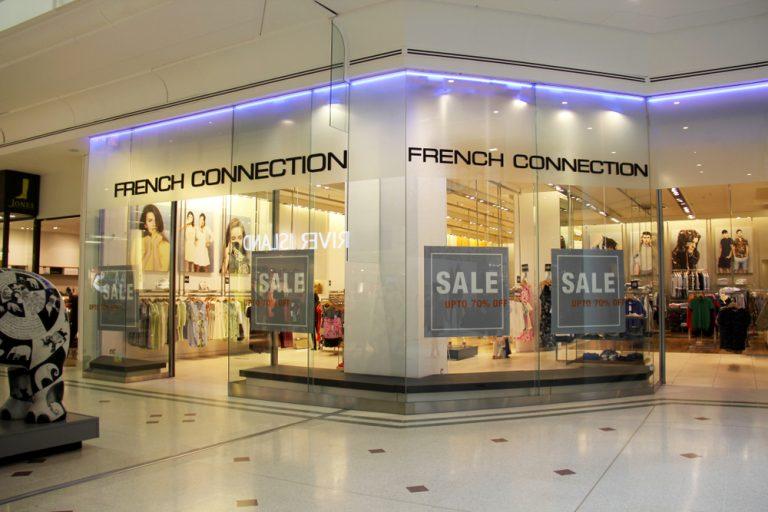
French Connection sales fell for the year, despite returning to a modest profit of £100,000, according to the company’s preliminary annual results.
The struggling high-street retailer said like-for-like sales fell by 6.8% in the year ending 31st January 2019, compared to a year ago, amid declines in sales both in store and online.
French Connection also reported a profit of £100,000, against a loss of £2.1 million, and also marking its first profit in seven years.
Despite the modest return to profit, French Connection listed itself up for sale last year, as it continues to struggle amid a ‘difficult trading environment’.
As a result, the retailer closed 10 underperforming sites and concessions last year.
Founder Stephen Marks, who is currently Chairman and Chief Executive, commented:
“I am pleased to report that we have achieved our target of returning the Group to underlying profitability this financial year.
This is only part of our overall journey, however it represents a significant achievement given the results over recent years.
This has been achieved despite the ongoing difficult retail trading environment in the UK and is the result of the changes we have made in all areas of the business to adapt to the ever evolving markets in which we operate.
While we still have a way to go to return the business to an appropriate level of profitability, I believe that we have made and continue to make significant progress.”
Shares in the company (LON:FCCN) are currently +3.77% as of 11:42AM (GMT).
Boeing shares dive after fatal 737 max crash
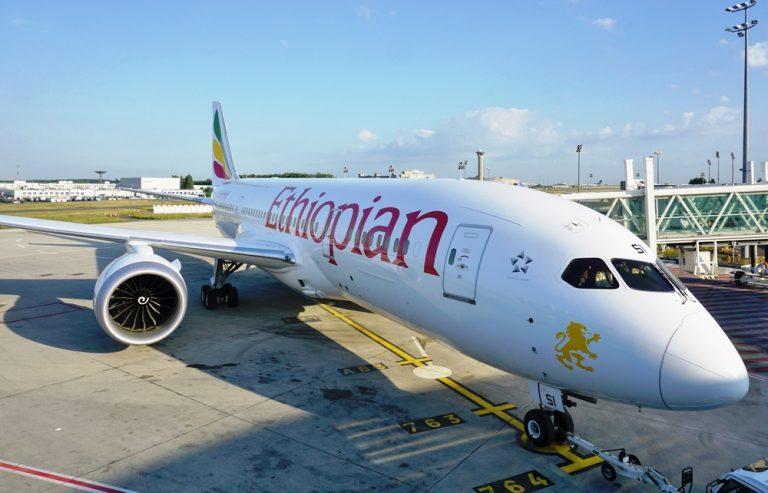
Boeing shares fell during Tuesday morning trading amid renewed safety concerns over its 737 max jet after a second deadly crash.
On Sunday an Ethiopian airlines Boeing 737 max crashed, killing all 157 people on board the flight.
This follows a similar incident involving another of the company’s 737 max planes back in October last year, in which a Lion air flight crashed only 12 minutes after taking flight.
Both Singapore and Australia’s aviation authorities have since taken the decision to suspend any Boeing 737 max from flying to or from their countries.
As it stands, the aeroplane manufacturer has received 5,000 orders for the 737 Max, having already completed 300 737 Max aircraft orders since March 2018.
Boeing have issued the following statement regarding Sunday’s crash:
“Boeing is deeply saddened to learn of the passing of the passengers and crew on Ethiopian Airlines Flight 302, a 737 MAX 8 airplane. We extend our heartfelt sympathies to the families and loved ones of the passengers and crew on board and stand ready to support the Ethiopian Airlines team. A Boeing technical team will be travelling to the crash site to provide technical assistance under the direction of the Ethiopia Accident Investigation Bureau and U.S. National Transportation Safety Board.”
Shares in the American firm (NYSE:BA) are currently down -5.33% as of 10:36AM (GMT).


Brexit: no-deal could cost UK luxury sector £6.8 billion

Research commissioned by the UK’s luxury sector has revealed that it could lose up to £6.8 billion in exports a year in the event of a no-deal brexit.
Names such as Burberry, Bentley, Rolls-Royce and Harrods are at risk.
The UK is home to the world’s fifth largest economy, and with weeks left until the departure date, a no-deal Brexit looks more and more likely.
The study was commissioned by Walpole. With a membership of 250 luxury brands, the lobby group for the luxury industry said that up to a fifth of luxury exports is in danger if the nation fails to reach an agreement on the terms of its departure.
According to Reuters, CEO of Walpole Helen Brocklebank said that the “British luxury businesses are committed to staying in Britain, but we are losing patience with the government taking us to the knife edge of no-deal.”
“The cost to the UK economy in lost exports from British luxury will be nearly £7 billion and we believe that money should be used to strengthen the country not diminish it. We urge the government categorically to rule out no-deal exit,” the CEO continued.
Roughly 80% of the nation’s luxury goods are exported, with Europe being its largest market.
Just weeks away from the official departure date and Brexit talks have been described as “deadlocked” in Brussels following a weekend of negotiations.
The automobile sector is bracing itself for the impacts of a no-deal Brexit, with Aston Martin announcing that it will reserve up to £30 million as part of a no-deal Brexit contingency plan. This is just one of a string of actions by the car sector ahead of the official departure date.
Elsewhere, in the insurance sector Aviva and Admiral recently made headlines waning of the impacts Brexit could have on their businesses.
Car insurance specialist Admiral said that market volatility, free movement of people between the UK and EU, impacts on the import of car parts, capital position and future dividend payments were all potential Brexit risks.
Will May be able to secure a deal in the next two-and-a-half weeks?
Superdry pleads shareholders vote against founders’ return
Fashion brand Superdry (LON:SDRY) has announced that it will hold a shareholder meeting on 2 April in London following the demands of its founders.
Julian Dunkerton and James Holder founded the company in 2003.
Superdry is asking its shareholders to reject Julian Dunkerton’s pledge for a seat on the company’s board. He stepped back from the fashion brand a year ago.
Julian Dunkerton’s desire to get back onto the company’s board is followed by a plan to appoint Peter Williams as a non-executive director, currently the chairman of the online fashion brand Boohoo.
“Your board recommends you vote against both resolutions at the forthcoming general meeting,” Superdry urged its shareholders in a statement.
The statement continued to read that the return of Julian Dunkerton to the business “would be extremely damaging to the company and its prospects”.
Superdry believes that his return would cause the business to pursue a strategy that would fundamentally fail. Additionally, Superdry said that his return would distract the business from its current global digital brand strategy and introduce a leadership style that would clash with the culture of the business and the management team.
The strongly worded statement affirms that Julian Dunkerton will “damage morale across the business and cause departures of key personnel, including from within the board.”
Struggling amid a difficult trading climate, Superdry saw its half-year profits fall 49% in December.
It issued a profit warning in October citing “unseasonably hot weather conditions in the UK, continental Europe and the USA” as reasons for its disappointing sales figures, causing shares to plunge almost 30%.
Its third quarter results saw a 1.5% year on year decrease in revenue, anticipated by October’s profit warning.
Superdry is not the only fashion retailer struggling amid a tough trading climate. Over the Christmas shopping season, online retailer ASOS (LON:ASC) released a shock profit warning, causing its shares to tumble.
At 14:25 GMT Monday, shares in Superdry plc (LON:SDRY) were trading at -1.53%, whilst shares in ASOS (LON:ASC) were trading at -2.12%.