
European Central Bank: Peter Praet’s speech

Peter Praet, Member of the Executive Board of the European Central Bank, has given his speech on Tuesday morning in London. Peter Praet has outlined the Eurozone’s economic slowdown since the beginning of 2018, a reflection of loss of momentum globally.
“In the aftermath of the global financial crisis, central banks have successfully fended off deflationary forces and supported economic recovery. They have brought down policy rates to their effective lower bound and, importantly, have made use of a broad set of unconventional monetary policy measures in pursuit of their statutory objectives.”
“Following more than five years of increasingly broad-based economic expansion in the euro area, recent developments point to some slowdown in the pace of economic growth. Preliminary data show that euro area real GDP expanded by 1.7% year on year in the third quarter of 2018, down from 2.2% in the second quarter.”
Peter Praet continues to outline that the economic slowdown in the Eurozone since the start of 2018, is a reflection of the loss of momentum in global activity. Indeed, it underscores the tighter financial conditions across the globe.
“While some retreat from the strong growth of 2017 was to be expected, it was compounded by short-term country-specific or sector-specific factors in the euro area. Euro area domestic demand has however remained resilient. Sentiment indicators, despite softening, remain in expansionary territory and are still above long-term averages for most sectors and countries. Moreover, domestic demand continues to be supported by favourable financing conditions, a robust labour market and steady income and profit growth.”
Vodafone reveals €7.83 billion loss
Vodafone Group has published its first-half year results on Tuesday morning.
The results show that net losses for the six months equated to €7.83 billion, comparing to a €1.24 billion profit on-year. The results also reveal the group revenue amounted to €21.8 billion, a 5.5% drop that was exacerbated by exchange rates.
Additionally, the group has offered an explanation for its €7.83 billion net loss. It has said that this was partly as a result of the disposal of Vodafone India, which recently merged with Idea Cellular (NSE:IDEA).
Vodafone reported a stable interim dividend per share of 4.84 cents, and its full year dividend per share is set to align with FY18.
Free cash-flow (pre-spectrum) was raised to €5.4 billion, which is an increase from the €5.2 billion guidance of the previous year. Group Chief Executive, Nick Read, commented on the results: “Our performance in the majority of our markets has been good during the first half of the year, and we have taken decisive commercial and operational actions to respond to challenging competitive conditions in Italy and Spain. We are on track to reduce net operating expenses for the third year running, and we are confirming the mid-point of our EBITDA guidance range, with an increased outlook for free cash flow generation.” “Looking ahead, my new strategic priorities focus on driving greater consistency of commercial execution, accelerating digital transformation, radically simplifying our operating model and generating better returns from our infrastructure assets. Our goal is to deepen customer engagement through a broader offering of products and services and to deliver the best digital customer experience, supported by consistent investment in our leading Gigabit networks.”In addition, Vodafone Group is also reportedly in talks with Telecom Italia to establish a 5G Italian wireless network.
Nick Read continued: “We expect that this will drive revenue growth, reduce churn and lower our European net operating expenses by at least €1.2 billion by FY2021. As part of our effort to improve returns, we are creating a virtual internal tower company across our European operations, and we are reviewing the best strategic and financial direction for these assets.” “Our focus on organic growth along with the strategic and financial benefits of the proposed acquisition of Liberty Global’s assets give confidence in the Group’s ability to grow free cash flow, which underpins our dividend.” A difficult challenge that Nick Read is set to face is Vodafone’s debt pile, a primary concern for shareholders. Earlier in July, we reported that Vodafone revenue was hit by a weak performance in Italy and Spain. Indeed, it reported a falling revenue growth in the first quarter as a result of poor performance in these areas. At 08:46 GMT today, shares in Vodafone Group plc (LON:VOD) were up by 7.3%.AstraZeneca sells US rights to Sobi
AstraZeneca announced that it will sell the US rights to its respiratory tract infection treatment to a Swedish company. Indeed, it will sell the US rights to Synagis to Swedish Orphan Biovitrum AB (Sobi) for an initial $1.5 billion.
Under the deal, AstraZeneca will receive $1.5 billion which will be made up of $1 billion cash and $500 million in ordinary Sobi shares. Based on the current Sobi share price, this figure equates to ownership of 8% of the company.
Sobi will commercialise the treatment in the US. Additionally, roughly 130 AstraZeneca employees will move to Sobi as part of the deal.
Sobi will also be given a proportion of AstraZeneca’s share of US profits and losses of a potential new medicine.
The new medicine is currently being developed by the biopharmaceutical company alongside Sanofi Pasteur. Chief Executive Officer of AstraZeneca, Pascal Soriot, commented: “We continue to streamline our portfolio, allowing AstraZeneca to allocate resources more effectively, while Sobi’s focus on Synagis will enable infants in the US to continue benefiting from this important treatment. Meanwhile, the successful development and commercialisation of MEDI8897 remains important for AstraZeneca.” Guido Oelkers, Sobi President and CEO, also commented on the deal: “I am excited about adding Synagis to our portfolio as it remains the only product preventing RSV infection in this vulnerable patient group with a great medical need. The addition of Synagis will become an important catalyst for Sobi’s future development and will form a powerful platform for growth in rare diseases.” Sobi focuses on rare diseases and specialist healthcare products, with its head office in Solna, Sweden. The company has roughly 800 employees and operates in over 20 countries. Likewise, AstraZeneca is a global biopharmaceutical company that specialises in oncology, cardiovascular, renal and metabolism and respiratory treatments. It currently operates in over 100 countries world wide. Sobi isn’t the only company AstraZeneca has recently sold rights to. At the end of October, the biopharmaceutical company also sold rights to its acid-reflux medicine to Grunenthal. Furthermore, it recently published its third quarter earnings and outlined a contingency plan for Brexit. In addition, it also had its cell leukaemia treatment approved by the US FDA and its new diabetes formula by the European Commission. At 08:22 today, shares in AstraZeneca plc (LON:AZN) were trading at +0.71%. At 09:23 CET today, shares in Swedish Orphan Biovitrum AB (STO:SOBI) were trading at +7.77%.FTSE 100: Market remains in the red
The FTSE 100 is trading down 36.71 points on Monday afternoon at 7,078.63 (1511GMT).
Fall in Pound
Following a weekend of Brexit related headlines, with the resignation of transport minister Jo Johnson, the pound fell to an 11-day low. “We expect the pound to be in for a rough ride, especially if Theresa May attempts to force her Brexit plan through. For there is growing opposition within her own government. There is a good chance that she may not come out the other side,” said Jasper Lawler, who is the head of research at London Capital Group.British American Tobacco
Shares in British American Tobacco (LON: BATS) and Imperial Brands (LON: IMB) slid 11% and 3% respectively after US regulators announced plans to crack down on e-cigarette and menthol sales. The fall in shares price wiped £7 billion from British American Tobacco’s market value. Shares in the group have plunged almost 40% over the past year. Michael Hewson, who is the chief market analyst at CMC Markets UK, “Against that backdrop the company has warned that revenues from its smoking alternative products are likely to miss expectations for this year, due to a slowdown in Japan for vaping products.” “Despite this slowdown, revenue from vaping is still expected to rise by more than 10%, however, the company has warned that adverse currency shifts will hurt its full-year numbers by about 7%, as management look to justify falling short of expectations. This seems a rather high number given how stable currencies have been the past few months.” Shares in British American Tobacco are currently trading -9.70%, shares in Imperial Brands are trading -2.96% (1504GMT).Anglo African Agriculture
Helping to boost the Small cap index on Tuesday was Anglo African Agriculture (LON: AAAP), where shares rallied over 60% on Monday morning following the group’s trading update. “I am delighted that we have completed our due diligence and decided to advance this loan to Comarco. This transaction and funding will allow them to fully capture the recent upswing in its port activities and for AAA to develop our relationship,” said David Lenigas, who is the group’s Non-Executive Chairman. “Since our announcement that we intended entering into this loan, we have been approached by numerous parties expressing their interest to cooperate with us in various forms. This is significant, as this clearly demonstrates that we have managed to find a very valuable and uniquely positioned asset with potentially very large upside potential,” he added. Shares in the group are currently trading 22.96% (1504GMT).Carr’s Group reports 45% jump in profits, shares rise
Carr’s Group, the agriculture and engineering firm, reported strong results on Monday.
Shares in the group increased by 5% on the back of a 45.2% increase in profits and 16.5% growth in revenues.
Pre-tax profits soared to £16.6 million, whilst revenues increased to £403.2 million.
The results are a significant improvement from last year, highlighting in the agriculture and engineering industries amid Brexit uncertainty.
Carr’s chairman Chris Holmes said: “We are very pleased to announce a significant improvement in the group’s financial performance for the year, exceeding the board’s expectations, across both the agriculture and engineering divisions. This performance was largely as a result of investments we made across the business in recent years, in addition to a recovery in our underlying markets.”
“UK agriculture continued to perform well reflecting the sustained recovery in farm incomes. Our USA feed blocks business continued to benefit from the recovery in USA cattle prices and we made further progress on growing our international feed blocks business. Our engineering division also delivered a significantly improved performance during the year.”
“Trading for the new financial year has started in line with the board’s expectations. We made further progress during the year on our strategic objectives and continue to believe the breadth of our product offering, investments in acquisitions and research, and our international footprint leaves us well positioned for further growth across both our divisions in the medium term,” he added.
Shares in Carr’s (LON: CARR) are currently trading +4.49% at 163.00 (1332GMT).
Oil prices up after Saudi Arabia pledges to limit production

Oil prices rebounded on Monday morning after Saudi Arabia pledged to cut oil production in December.
Khalid al-Falih, The minister for Energy, announced that Saudi Arabia would cut production by 500,000 barrels per day in December.
Commenting on the pledge, Khalid al-Falih, said: “If all things remain equal, and they almost certainly will not as things will change – it is a dynamic market – then the technical analysis we saw yesterday …. tells us that there will need to be a reduction of supply from October levels approaching a million barrels.”
“The consensus is that we need to do whatever it takes to balance the market. If that means trimming supplies by a million [barrels per day], we will.”
The news comes ahead of OPEC’s oil update, due later this week.
Meanwhile, OPEC’s next meeting is due to happen on December 6th in Vienna, Austria.
In December, the member nations will decide upon their next policy decision.
OPEC, of which Saudi Arabia is a member, also includes 14 other oil producing nations.
Saudi Arabia is the organisations largest crude oil producer and exporter.
Nevertheless, globally, the US leads oil production, with estimates suggesting it is set to surpass 12.1 million bpd.
Zizzi owner reports growth in sales, profits remain flat
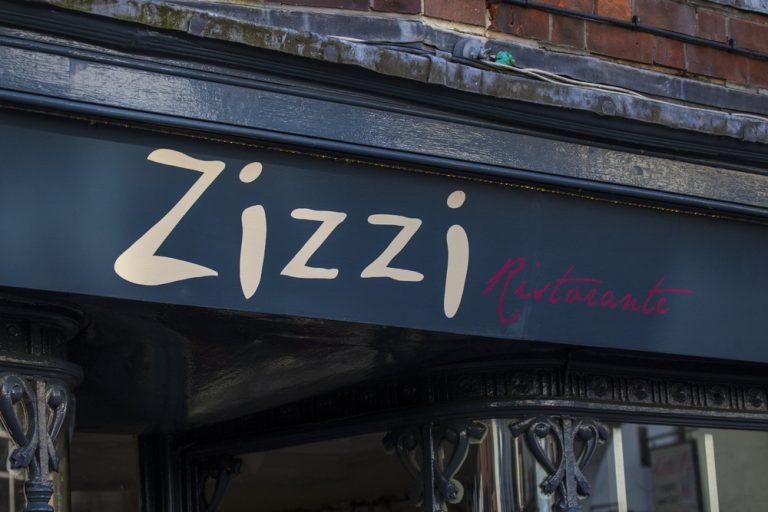
Azzurri Group has posted an 8.5% increase in sales in the year to July.
The owner of the Zizzi and ASK restaurants revealed a growth in sales but profits remain flat as the group accounts for higher costs.
Sales grew by 8.5% to £279.8 million following the opening of new restaurants and earnings were £37 million.
The chief executive of Azzurri Group, Steve Holmes, said the year had been “very challenging from a cost perspective”.
“Today the consumer is looking for great value. So we’ve been very cautious about putting prices up and worked hard to offset a lot of those costs,” he said.
Azzurri Group has opened 15 new restaurants over the past year.
Whilst sales are on the up, increasing costs come in the form of food inflation, rising rents, increasing competition, rising minimum wage and business rates.
Commenting on the market, Holmes said: “My view is that the market fundamentals are quite strong, millennials are eating out a bit more, especially at places that provide experiences.”
“There are winners and losers. The winners are the ones that are providing interesting, relevant and different propositions.”
The tough retail market has led to the closure of many casual dining restaurants including Byron Burger and Jamie Oliver’s restaurants.
Peter Harden, the editor of Harden’s London Restaurants, said that UK restaurants are struggling amid the current competition.
“It used to be the case that good restaurants as a rule did not close. But last year has seen losses at the top end such as Marianne, landmarks such as The Gay Hussar and highly rated start-ups like Killer Tomato which should have been a success story but which came and went almost as quickly as it began,” he said.
“In 2003, the previous peak for closures, it was different: the hit to the market came from a slump in demand due to the second Gulf War, Sars and the lowest hotel occupancy rates of recent decades.”
“This time the problem is purely and simply a case of over-supply: too many restaurants chasing a level of demand that although it continues to rise is doing so only slowly.”
Dignity shares fall as price war hits profits

Dignity has reported a fall in third-year profits as the funeral provider has been hit by the market competition.
In the three weeks to September 29, profits for the group took a 27% hit to £11.1 million.
Market share for Dignity increased by 12.1% as the group performed an increase of 3,600 funerals so far this year to date.
The group’s chief executive Mike McCollum said: “We are pleased with how the group has performed in the period and following these results our expectations for the full year remain unchanged.”
“Our work on the transformation plan is critical and we are encouraged by the progress that has been made in the initial weeks.”
“Alongside the expansion of our digital offerings, we continue to provide a greater choice for consumers and our focus on high standards and excellent client service remains central to our plans for the future,” he added.
The funeral provided recently introduced the new no-frills cremation package, which costs £1,895.
Dignity and Co-op have been taking part in an intense price war that has been affecting profits.
In January this year, the price war led Dignity to issue a profit warning, wiping almost £500 million off the market value.
Analysts at Peel Hunt said: “The shift could be a result of marketing efforts and thus reverse in future periods or become more pronounced as having a low-cost funeral becomes more ‘fashionable’,”
“Bear in mind that most people choose funerals on personal recommendations, so the more that use a simple funeral (and like it) the more are likely to do so in future.”
Shares in Dignity (LON: DTY) are trading -6.32% at 978.00 (1127GMT).
Amur Minerals shares fall amid Kun-Manie delay

Amur Minerals shares fell over 9% on Monday after the company announced a delay to its Kun-Manie study.
The mineral exploration company said that results from the Pre-Feasibility Study for its Kun-Manie nickel copper sulphide project would take longer than initially expected.
Despite the delay, Amur Minerals confirmed that it continued to hold talks with potential strategic partners.
The firm said it now anticipated the PFS results in the first quarter of 2019.
Robin Young, CEO of Amur Minerals, commented:
“The completion of the PFS has taken longer than initially expected and it is understandable that this delay has caused concern. We want to ensure that the standard of the PFS meets with the expectations of the multiple intended audiences and therefore provides a more encompassing strategic long-term plan. It is envisaged that the additional time spent on the PFS, in association with the strategic plan, will establish a valuable and more fully encompassing assessment of Kun-Manie in line with our corporate development plan and potential.
He added: “The long-term nickel market remains very positive and it is our belief that the Kun-Maine project remains well positioned to capitalise on that market given its size, quality and location. I look forward to updating the market on the Company’s strategic plan in the coming weeks.”
Shares in Amur Minerals (LON:AMC) are now trading -4.70% as of 11.27AM (GMT), as investors react to the company update.
Elsewhere across the markets, Anglo African Agriculture shares soared on Monday, after the company issued a trading update.
Meanwhile in the media sector, Johnston shares rallied 20% on the back of speculation that Daily Mail owner DMGT is planning to make an offer on the I Newspaper.
Pound falls to 11-day low amid Brexit uncertainty

As Brexit uncertainty continues, the pound fell to an 11-day low against the dollar.
The pound slumped down almost 1% to $1.2845 on Monday’s early trading.
The pound is taking a hit after transport minister Jo Johnson resigned last week, blaming Theresa May and her “terrible mistake” of a Brexit deal.
Johnson said that the UK is “on the brink of the greatest crisis” since the second world war.
“Inflicting such serious economic and political harm on the country will leave an indelible impression of incompetence in the minds of the public,” he added on his resignation.
The head of research at London Capital Group, Jasper Lawler, said: “We expect the pound to be in for a rough ride, especially if Theresa May attempts to force her Brexit plan through. For there is growing opposition within her own government. There is a good chance that she may not come out the other side.”
“The chances of a Brexit deal are diminishing rather than increasing as we approach the finishing line. There is no high impacting UK data to be released today, domestic political risk combined with Brexit fears will weigh heavily on the pound.”
“Going forwards there are some data points which could steal trader’s attention in the week, such as the UK jobs figures, inflation data and retail sales later in the week. However, concrete progress in Brexit negotiations will be needed, otherwise the pound could quickly target $1.28,” he added.
The final deal is expected to be finalised by November 21, according to Brexit secretary Dominic Raab.