
Dyson to manufacture electric car in Singapore
Dyson said on Tuesday that it will build its new electric car in Singapore.
The group will start working in the plant in 2020, with plans for the first car to be launched in 2021.
In a memo to staff the chief executive, Jim Rowan, said that Singapore was chosen due to the “high-growth markets” and the decision was “complex, based on supply chains, access to markets, and the availability of the expertise that will help us achieve our ambitions”.
He added that despite Singapore’s “comparatively high-cost base”, there is the availability of engineering talent.
The company, which was founded by the billionaire inventor Sir James Dyson, plans for invest £2 billion into the project, including £200 million on research and development in the UK.
Dyson has said the decision to move electric car production to Singapore was nothing to do with Brexit.
James Dyson is a prominent advocate for leaving the EU and has said that leaving without a deal would “make no difference”.
This is unlike other manufacturers, who have recently warned of the negative impacts that will be caused by Brexit. BMW (ETR: BMW), Airbus (EPA: AIR) and Jaguar Land Rover have all warned against Brexit.
Jaguar boss, Ralf Speth, said that a no-deal Brexit was “horrifying”.
“Any friction at the border puts business at jeopardy,” said Speth in September.
We are absolutely firmly committed to the UK, it’s our home. But a hard Brexit will cost Jaguar Land Rover more than £1.2bn a year – it’s horrifying, wiping our profit, destroying investment in the autonomous, zero-emissions, we want to share.”
Likewise, Toyota (TYO: 7203) UK has said that a no-deal Brexit would temporarily halt output at its plant in Burnaston.
Marvin Cooke, managing director at Burnaston, said: “My view is that if Britain crashes out of the EU at the end of March we will see production stops in our factory.”
Legoland ranks among unhealthiest tourist attractions, study finds
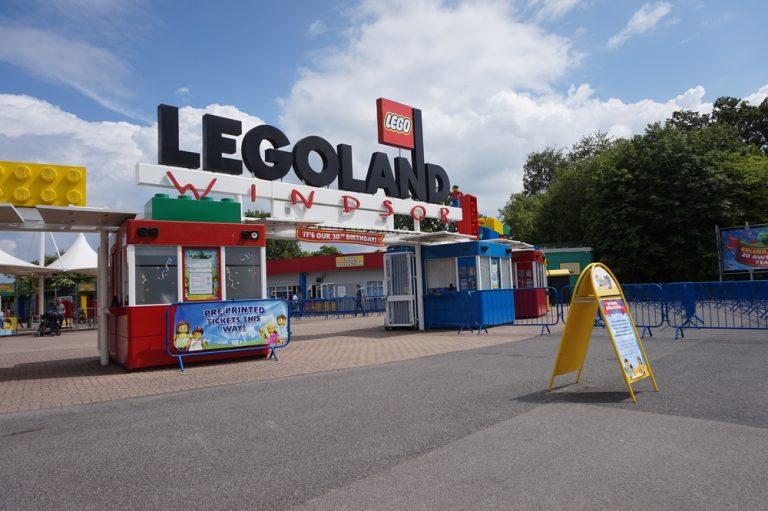
Legoland has received a negative review following the examination of the food it sells for children by researchers. The theme park was ranked second-to-last in a league table. This league table ranks attractions based on the nutritional quality of the food and drink they offer.
The research was conducted by the Soil Association, a charity that promoted healthy and nutritional eating. It sent undercover diner parents to 22 of Britain’s top attraction and found that adult meals were often heathier than child meals.
Coming first in the rankings was Edinburgh’s Royal Botanical Garden. It offers children a wide range of organic options grown in its own garden as well as locally sourced ingredients. Legoland was ranked second to last.
Soil Association’s campaign manager, Rob Percival, has commented:
“It’s unacceptable that popular attractions are denying children healthy choices.”
“The attractions at the top of the league table are showing that healthy and high-quality food can be fun and affordable. The attractions at the bottom are not giving families the opportunity to enjoy a balanced meal.”
“Some of the food on offer is simply junk. Legoland should be renamed ‘Deep Fried Crap Land’.”
Legoland currently offers an all-inclusive entry ticket that provides children with bottomless fizzy drinks and lunch at one of the park’s restaurants.
All of its food outlets offer burgers, fried chicken and chips. None provide children with nutritional vegetables, despite appearing on the adult menu. Legoland has responded to the survey. It told Sky News: “We recognise the importance of offering healthy eating options, along with the fun treats that you would expect to enjoy during a visit to a theme park.” “We are committed to providing healthy options for our guests and when we reopen for our 2019 season, we will be enhancing our children’s meals with a vegetable or salad option in each restaurant.” Earlier in October, Legoland’s operator, Merlin Entertainments, suffered a sell-off after a disappointing summer. This is as a result of Legoland’s like-for-like sales falling short of expectations over the summer period. At 09:35 BST today, shares in Merlin Entertainments PLC (LON:MERL) were trading at -1.75%.Britvic CFO leaves for Asos, shares fall
Britvic’s Mathew Dunn has handed in his resignation and will be joining Asos as the new chief financial officer.
Dunn joined Britvic three years ago but will be moving onto the online retailer next spring, replacing Helen Ashton.
“I’m very much looking forward to working with the ASOS team. I’m motivated by their ambitious plans to realise the significant potential still ahead for the company,” Dunn said.
Nick Beighton, the Asos boss said: “I’m looking forward to working with Mathew. He brings us a totally relevant mix of operational experience together with a history of implementing and overseeing finance systems at an international level.”
Dunn’s resignation from Britvic comes after Ashton made a surprise departure from Asos.
On her resignation, Beighton said he would cover Ashton’s role until her replacement was identified.
Sales at the online fashion retailer have soared over the year.
Hargreaves Lansdown (LON: HL) analyst Laith Khalaf said earlier this year: “While clothing sales at M&S went backwards over the festive period, and Next was applauded by the market for eeking out 1.5% growth, ASOS is making retail look easy by turning over almost a third more sales than last year.”
“The online fashion retailer has proved very successful at attracting new customers, while at the same time increasing the amount existing customers are spending.”
“ASOS earns its crust from millennials, and has over 80 content producers tasked with showcasing its wares on social media, because it knows this is a key battleground for the attention of its young target audience,” he added.
Britvic (LON: BVIC) shares dropped 1.2% on Tuesday morning. ASOS (LON: ASC) shares also fell 1.6%.
Trustpilot hires Morgan Stanley ahead of stock market floatation
Trustpilot has hired Morgan Stanley to assist in raising funds ahead of its stock market floatation. Indeed, one of Europe’s fastest-growing internet start-ups has hired the bankers to secure new funding.
The online review website for consumers and businesses alike hopes to raise tens of millions of pounds from investors.
So far Trustpilot has raised about $140 million from investors. Additionally, sources have said that the latest round of funding could boost its valuation to over £1 billion.
It has not been made clear the exact amount Trustpilot hopes to raise in its latest round of funding.
Likewise, the timing or place of the eventual initial public offering has also not been specified. The company’s current portfolio of investors includes Index Ventures, Northzone and Vitruvian Partners. Trustpilot was founded in 2007 by Danish entrepreneur Peter Muhlmann. Today, the review platform may be one of the biggest names in Europe’s online economy. It employs roughly 700 people and an estimated 1,000,000 new reviews are posted each month. The company last raised money last year. At that time, it has reported a recurring revenue run rate of £39 million. In addition, it had 34 million reviews of 180,000 businesses which were being viewed at almost two billion times a month. Trustpilot generates revenue by selling software as a service to companies. These companies pay for premium services relating to data insight. Equally, they pay for their reviews to be posted on Trustpilot’s website. Trustpilot have not released a comment. Last week, consumer group Which? found that various online sellers were offering free goods in return for positive product reviews. Additionally, earlier in April a BBC 5 live investigation revealed it was able to purchase a false, five-star recommendation on Trustpilot’s website. Trustpilot is not the only company with an anticipated IPO. Indeed, last week Uber revealed it may be targeting a $120 billion (£91 billion) valuation. At 19:57 GMT -4 yesterday, shares in Morgan Stanley (NYSE:MS) were trading at -2.84%.Netflix to raise further $2bn in debt

Netflix announced on Monday that it plans to raise a further $2 billion in debt, totalling $30 billion.
The US streaming giant is heavily investing in new content as it keeps rivals including Amazon (NASDAQ: AMZN) and Apple (NASDAQ: AAPL) at bay.
The money will be used for “general corporate purposes”.
Netflix is one of the Faangs (with Facebook, Apple, Amazon and Google) thanks to its impressive results and high growth rate.
The group operates across 190 countries across the world and has 130 million subscribers. Its stock market capitalisation is over $145 billion.
Richard Miller, who is the managing partner at Gullane Capital, “This is further proof of Netflix’s need for capital to fund short-term operations and content.”
This is the third time Netflix has raised money in this way. It carried out $1.9 billion fundraising in April, after fundraising $1.6 billion a year ago.
The group expects to spend $8 billion this year on content, alongside $2 billion on marketing. It also plans to invest around $1.3 billion in technology and development.
The group hope to create 700 original TV shows and 80 movies this year alone. Earlier this year, the streaming giant signed up Barack and Michelle Obama to produce films and documentaries.
Netflix has released strong third-quarter results of the year. It added just under seven million new subscribers in the three months ending in September.
Tom Harrington, an analyst at Enders, said: “They need to keep on borrowing as they are investing so much so quickly in content and have to stay ahead, there’s nothing else they can do.”
“They have to stay ahead of Amazon and Apple, and soon Disney. They are at the moment but there are very well funded, larger, competitors starting to get their act together.”
Netflix (NASDAQ: NFLX) shares are up 78% this year. Shares closed on October 22 at 329,54.
O2 delays flotation amid Brexit concerns
According to reports, O2 is planning to delay its stock flotation until after Brexit.
The mobile operator was due to float on the London Stock Exchange in 2018 but the Press Association reported a delay due to Brexit uncertainty.
O2 is owned by Spanish parent Telefonica, which has declined to comment.
Analysts have valued the company at between £9 billion and £10 billion.
Telefonica chief executive Jose Maria Álvarez-Pallete said in August that he was “under no pressure” to sell O2 in an initial public offering but would monitor the stock market.
“It would be a sizeable IPO, [which] would need attractive conditions, but it doesn’t look like the financial markets are ready,” he said at the time.
Earlier this month, Funding Circle (LON: FCIF) and Aston Martin floated on the stock market and shares sank.
The luxury carmaker saw its initial offer price fail to hit the top end of the £17.50 to £22.50 valuation range that it put forward in September.
When Funding Circle floated, the initial share price fell by almost a quarter, before regaining to 17% below the 440p opening price.
Premier Inn owner to launch new no-frill hotel brand
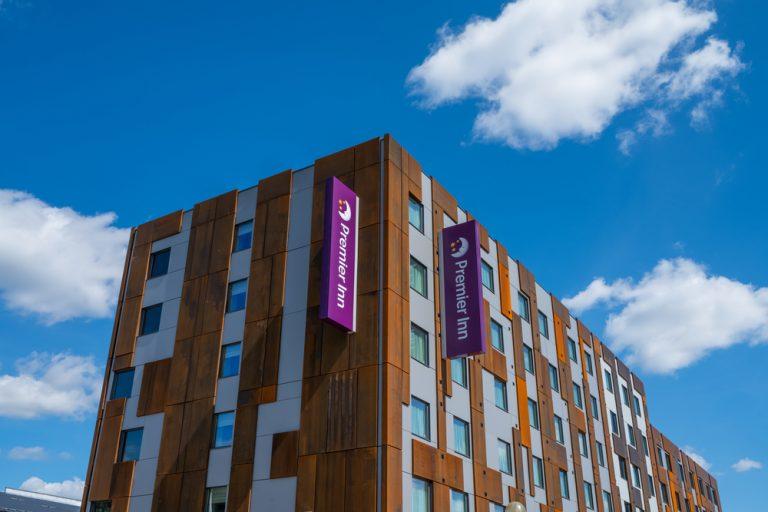
Premier Inn owner, Whitbread (LON: WTB), is to launch a new “no-frills” hotel chain.
Having sold cafe chain Costa Coffee to Coca-Cola (NYSE: KO), the group is hoping to boost sales with Zip by Premier Inn for the “ultra-price-sensitive customer”.
A room will cost £19 and contain lightboxes, en-suite power showers, 24-inch televisions and twin single beds. The average price of a standard Premier Inn room is £57.
The hotels will be located on the outskirts of major towns and cities, the first opening in Cardiff in 2019 with 138 rooms.
The second location will be in Southampton, with 140 rooms.
“We have undertaken considerable research, including having had six Zip rooms on sale to customers for many months,” said Premier Inn’s managing director, Simon Jones.
“It’s clear through the research that people want the basics done brilliantly, such as a comfy bed and a power shower, but they are happy to compromise on location or some extras if they are paying a fantastic price for their room,” he added.
The rooms have been designed by Priestmangoode, which is a design consultancy that works on first-class cabins for airlines such as Air France, Lufthansa and Swiss.
The hotel will have communal areas that will serve breakfast and turn into a bar in the evenings.
Optional extras at Zip include additional cleaning, which will be purchased for £5 per day.
Whitbread is in the process of selling Costa Coffee to Coca-Cola in a £3.9 billion deal.
Angus Grierson, the managing director of the advisory firm LGB Corporate Finance, said on the deal: “The deal is an attempt to adapt quickly to changing tastes, notably the continuing rise in popularity of coffee, particularly among millennial consumers.”
“Customers are choosing lower-sugar varieties of soft drinks more than they ever have, with sales of sugary drinks declining rapidly, down 11% in 2018, thanks in part to the introduction of the UK’s first-ever sugar tax.”
Safestyle UK shares rise following commercial agreement

Safestyle UK shares rose on Monday morning after the company announced it had entered into a commercial agreement with co-founder Mitu Misra.
The company said in a statement on Monday that it had entered a five-year non-compete Misra, who was a party to the firm’s dispute involving Niamac Developments Ltd, trading as Safesglaze.
As part of the agreement, Mr Misra will receive 4 million ordinary shares of 1 pence, alongside a potential cash payment of £2 million.
The company confirmed that the allotment of the shares and and payment of the sum, would be made in the fourth quarter of 2020.
Mike Gallacher, Chief Executive of Safestyle UK plc, commented:
“The three phase turnaround plan that was outlined in our Interim Results is underway and is already helping to stabilise the Group before returning it to profitability and then accelerating growth. The focus of the whole Group remains on delivering this plan quickly and effectively.”
Shares in the company rallied earlier this month after it announced it was considering “certain agreements” with shareholders of NIAMAC Developments Ltd, which would provide a boost the business.
Nevertheless, the firm denied speculation of a takeover approach, after shares bounced more than 12%.
Safestyle UK specialises in providing double glazed windows, French doors and conservatories.
The firm was founded back in 1992 and is headquartered in Bradford, UK.
Back in 2003, the company was floated on the AIM-market of the London Stock Exchange, valuing the company at £70 million.
Shares in Safestyle UK (LON:SFE) are currently trading +30.92 % as of 12.31PM (GMT).
Elsewhere in the markets, shares in Ryanair (LON:RYA) ticked up on Monday morning, despite the low-cost airline posting a fall in profits for the year.
In the retail sector, Dr. Martens said earnings grew 33% to £50m in the year to March.
Philips CEO warns on Brexit impacts
The chief executive of Philips has shared his Brexit concerns, saying the lack of progress could force the firm to rethink UK operations.
Frans van Houten warned that the Dutch health-technology manufacturer said it might have to change the entire supply chain to limit impacts from when the UK crashes out of the EU.
“As time passes and there is no solution I get increasingly worried that hereafter frictionless trade between the United Kingdom and European mainland could be at risk,” he said.
“Basically the UK as a manufacturing hub for the world would be at risk.”
On Monday, Philips released disappointing quarterly results. The group posted €4.3 billion (£3.8 billion) in sales, a 4% growth.
Shares fell 8% to €31.30, the lowest point since April.
The boss said that a no-deal or hard Brexit would affect production at the Philips’ main UK exporting plant, which is in Glemsford.
“We are looking at a customs union as a minimum (requirement),” he told reporters. “If that were not to happen we would need to rethink our manufacturing footprint.”
Van Houten also expressed concerns surrounding the trade war, which has the potential to knock €60 million off profits next year.
“We will redesign some of our supply chains,” he said.
“We are in the good position of having factories in the United States, in Europe and in Asia. We can rebalance those going forward in order to avoid some of the duty impact.”
Dr Martens puts its best foot forward as profits rise 33%

Profits at Dr Martens’ grew 33% for the year, as the company enjoyed strong sales in Europe and the Middle East.
Revenue rose 33% to £50 million the year to March, with sales rising 20% to £348.6 million.
Like-for-like retail sales grew 7%, while wholesale sales rose 16% to £208 million for the year to March-end.
Moreover, the company continued to enjoy a strong online presence, with online sales up 35 per cent to £44 million.
Direct sales to customers online and in-store rose by 15%.
Paul Mason, chairman of Dr Martens, said: “This has been a fantastic year for Dr Martens.”
He also remained optimistic for the potential of “significant scope for growth across our markets, particularly via our Direct to Consumer channels, and this will remain a strategic priority in the years ahead”.
The results suggest that the brand is managing to buck the trend of the high street, which has been experiencing a downturn in recent years.
The brand was also recently named as having the most effective Instagram in UK retail, according to Red Hot Penny’s Social Scorecard study.
Maintaining a strong online presence on social media platforms has become increasingly necessary for retailers, particularly in light of falling foot-fall and changing consumer habits.
Dr Martens is well-known for its boots, which became synonymous with British punk and grunge culture.
Its boots were originally manufactured in Northamptonshire, UK. However, now most of its products are made overseas.
Over the course of this year, Dr Martens have opened 25 new stores, nine of which are in the UK. It now operates 94 locations around the world.
Dr Martens is owned by Permira, a European private equity firm. It acquired the iconic shoewear brand back in 2014.