
Tower Resources shares rally amid gas discovery

Tower Resources shares (LON:TWR) rallied on Friday after the company updated the market on its Brulpadda well.
The oil and gas exploration company said it “reported a significant gas condensate discovery” located in the Outeniqua basin, offshore South Africa, neighbouring its Brulpadda well.
According to the company statement, the company said that:
‘Total have stated that they believe the new discovery could hold between 500 million to over one billion barrels of oil equivalent and they now intend to drill several further exploration wells on Block 11B/12B to test additional prospects.’
At the start of the year, Tower Resources announced its intention to raise £1.7 million in capital for its Cameroon project.
The company said it would raise the funds through the placing 170 million new ordinary shares at 1p each, with the listing set to take place at the end of January.
Tower resources is an AIM-listed company. It was admitted to the London Stock Exchange in 2005.
The firm has projects in Cameroon, Namibia, South Africa and Western Sahara.
Shares in Tower Resources are currently trading +16.67% as of 10:41AM (GMT).
Shaftesbury: footfall was “robust” over Christmas

Shaftesbury (LON:SHB), the London West End property investor, announced a trading and finance update on Friday for the period 1 October 2018 to 7 February 2019. The company has said that footfall and trading was “robust” over the period.
Shares in the property investor dropped slightly during early trading on Friday.
Shaftesbury is a real estate investment trust with a portfolio that extends across 15 acres in London’s West End. It focuses on retail, restaurants and leisure in the highly popular locations around Carnaby, Seven Dials and Chinatown. Moreover, its portfolio includes substantial ownership in East and West Covent Garden, Soho and Fitzrovia.
Over the Christmas and New Year festivities, footfall in Shaftesbury’s locations was “robust”. Indeed, its occupiers generally reported a turnover growth when compared to the year prior. This seems to differ from the national reports of a tough trading climate as Shaftesbury’s restaurants, cafes, pubs and bars were all particularly busy over the holidays.
Tough trading conditions have been well publicised throughout 2018, perhaps contributing to a growing consumer anxiety in spending. Shaftesbury’s properties, however, seem to have not suffered as profoundly as other retailers.
On Boxing Day, average footfall across the UK dropped by 3.1%, and reports of decreasing footfall were also evident earlier on in 2018.
Chief Executive Brian Bickell commented on the announcement:
“During the important trading season leading up to and including the Christmas and the New Year holidays, footfall in our locations has been robust and our occupiers generally reported growth in turnover compared with the same period in 2017. In contrast to reports of subdued leisure spending nationally, our restaurants, cafes, pubs and bars were particularly busy throughout the festive period.”
Additionally, the company reported a resilient demand for its regular space as occupancy remains high. Equally, it has made progress on larger schemes such as the let of Thomas Neal’s Warehouse and the submission of a planning application for 72 Broadwick Street.
At 09:47 GMT Friday, shares in Shaftesbury plc (LON:SHB) were trading at -0.34%.
Thomas Cook outlook unchanged amid turbulent summer bookings
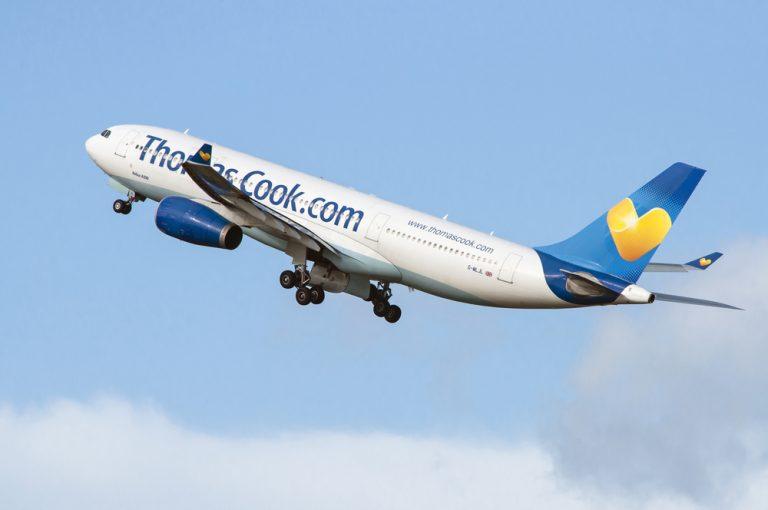
Thomas Cook released a first-quarter trading statement on Thursday for the three months ended 31 December. The company has said that the financial year has begun in line with expectations, making no changes to its full-year expectations outlined last November. However, the company said it had been hit by a reduced demand for winter sun and British consumer uncertainty.
First-quarter revenue was up 1% to £1,656 million. Underlying operating loss increased by £14 million to £60 million against a strong period the year earlier.
Thomas Cook’s announcement comes hours after its rival TUI issued an unscheduled update, warning of a UK profit squeeze.
Chief Executive of Thomas Cook, Peter Frankhauser, said: “Where Summer 2018 bookings started very strongly, bookings for Summer 2019 reflect some consumer uncertainty, particularly in the UK, and our decision to reduce capacity which will both mitigate risk in our tour operator business and help our airline to consolidate the strong growth achieved last year.” This consumer uncertainty could reflect the wider unpredictability of consumer spending patterns as the UK Brexit date looms. “As expected, the knock-on effect from the prolonged summer heatwave and high prices in the Canaries have impacted customer demand for winter sun,” he continued. “We’ve made further good progress in transforming our business with a rigorous focus on managing our cost base while innovating to deliver high-quality holidays for our customers. Our strategic alliance with Expedia is now live in all our key markets. In addition, we are set to open 20 new own brand hotels this summer, including three Casa Cooks and eight Cook’s Clubs, and have announced two new hotel projects with Fosun in China.” In November, Thomas Cook announced a second profit warning in two months. It warned that profits were set to be £30 million lower than expected. By the end of the year, however, the CEO of Thomas Cook said that bookings seemed more promising for 2019. For the UK, this increase in bookings does not seem so optimistic. At 15:19 GMT today, shares in Thomas Cook Group plc (LON:TCG) were trading at +4.31%.Snoop Dogg’s venture capital firm: a closer look

Last month, Snoop Dogg (whose real name is Calvin Cordozar Broadus Jr.) announced that he had invested in a Swedish fintech company. The American singer, rapper, record producer, television personality, entrepreneur and actor purchased a stake in Klarna Bank, in order to expand his tech investment portfolio.
Snoop Dogg’s venture capital firm, Casa Verde, is best known for adding cannabis companies to its portfolio. As countries around the world begin to change their perception of the drug, cannabis is proving to be one of the hottest sectors to invest in.
Several European countries have decriminalised the use of the drug for recreational purposes. Though not legalised in the UK for recreational use, the British government has made certain exemptions that allow specialist GPs to prescribe cannabis for medicinal purposes.
Legislators across the pond, however, seem to have gotten there earlier. In Canada, the use of medical cannabis has been permitted since 1999. Whereas in the United States, cannabis for medicinal purposes is legal in 29 states.
Snoop Dogg’s firm Casa Verde boasts a variety of companies that are active in the cannabis sector.
Metrc is a company first deployed in December 2013 for the State of Colorado’s Marijuana Enforcement Division. It is a track and trace system that provides end to end tracking and tracing of marijuana plants and products. This allows production to maintain compliance with applicable laws. The next company, Dutchie, advertises itself as “the easiest way to order cannabis products from the best dispensaries near you”. Operating as an on-demand cannabis delivery service, the platform allows users to place an online order of the highest cannabis products, pick it up or have it delivered within an hour. Following on is the biopharmaceutical company, Oxford Cannabinoid Technologies. The company aims to combine cannabinoid medicine with scientific research and drug development. By searching for a deeper understanding of how the drug works, Oxford Cannabinoid Technologies hopes to investigate further the medical potential of cannabis to apply to a range of different therapeutic areas. Next is Green Bits, a company that merges cannabis with fintech. Green Bits aims to provide cannabis retailers with an easy-to-manage platform through its development of a point-of-sale product. Moreover, Trellis is a seed-to-sale management software that assists in the cultivation process of cannabis production. The inventory management software allows producers to maintain compliance. Moving into the cannabis media sector Merry Jane is a media platform that advertises all things cannabis. It allows users to locate their closest dispensaries, whilst updating them on the latest sector news. Additionally, another cannabis media company that has a place in Casa Verde’s portfolio is Miss Grass. Miss Grass has an online magazine section and an online shop that allows users to purchase a range of CBD products. The Casa Verde portfolio isn’t limited there. Green Tank is a company that offers vaporizer hardware, purpose-built for cannabis oils. Equally, Vangsters has a presence on the portfolio, the cannabis industry’s largest hiring platform. Cannalysis, the accredited analytical cannabis laboratory that services Southern California, is also present. As is the largest online marketplace for wholesale cannabis, Leaflink, and Eaze, the cannabis e-commerce and delivery platform. According to Crowdcube, Cannabis firms are one of the most likely to be funded in 2019. Can you see yourself investing in the sector?Jaguar Land Rover reports £3.4bn quarterly loss
Jaguar Land Rover (JLR) reported a record £3.4 billion quarterly loss in its latest results, as car sales and demand in China continues to fall.
The British carmaker, which is owned by India’s Tata Motors, posted the loss for the final quarter of 2018.
Jaguar Land Rover attributed the disappointing quarter to a slowdown in China.
With regards to outlook for the upcoming year, the company said it expects a loss.
As a result, JLR said it is looking to cut 4,500 jobs, as it looks to mitigate falling car sales.
Ultimately, car sales were down almost 10,000 during the quarter.
Ralf Speth, JLR’s chief executive, said: “Jaguar Land Rover reported strong third-quarter sales in the UK and North America but our overall performance continued to be impacted by challenging market conditions in China.”
Back in November of last year, the car manufacturer posted a loss for the third quarter, reporting a fall in sales of 13.2%.
The company revealed pre-tax losses of £90 million, again flagging falling demand in China.
Earlier in 2018, the firm announced the termination of 1,500 temporary contract jobs at its West Midland base, citing challenges relating the diesel car taxes and Brexit uncertainty.
Jaguar Land Rover was formed as part of a merger between Jaguar and Land Rover back in 2013. It was previously owned by American automative giant Ford.
Shares in Tata Motors (NSE:TATAMOTORS) are currently trading +2.63% as of 14:19PM (GMT).
Bank of England warns on economy growth amid Brexit uncertainty

The Bank of England has predicted that the economy will grow by 1.2% in 2019. This would be the economy’s weakest performance since the recession in 2009.
Its latest forecasts for the UK economy suggest that there is a one in four chance that it will slip into a recession.
Sky News reported that Mark Carney said the “fog of Brexit”, has increased tensions for businesses, households and the financial market.
“In the context of Brexit, uncertainty itself is one of the factors driving the outlook for growth and inflation,” Mark Carney said. He continued to add that there were still “almost as wide a range of possibilities as there were the morning after the referendum.”
“That level of uncertainty and the proximity of the Brexit date is having a much bigger effect on business decisions which is cascading down through the economy.”
The Bank of England announced in its minutes:
“Since the committee’s previous meeting, key parts of the EU withdrawal process had remained unresolved and uncertainty had intensified.”
“Businesses had appeared increasingly to be responding to Brexit-related uncertainties, and there were some signs that those uncertainties might also be affecting households’ spending and saving decisions.”
In response to the Brexit uncertainty, businesses have begun stockpiling products in order to prepare for production line complications.
Unliever is the latest to announce its stockpiling plans as it stockpiles Ben & Jerry’s and Magnum ice-creams ahead of the departure. In addition to the ice-cream brands, the company has said it will also be stockpiling its deodorant brands including Sure, Lynx and Dove. Moreover, dairy company Ornua began to stockpile cheddar in the UK to avoid the impacts of price-hikes after the eventual departure.
Nestle has struggled to stockpile any further ahead of Brexit as its warehouses were almost entirely full of products. Equally, leading snack company Mondelez International announced it will be stockpiling ingredients and products in fear of a Brexit product flow shutdown.
As the Brexit date approaches, British business, and the wider economy, find themselves trapped on the edge of a no-deal Brexit void.
UK house prices fall in January, as Brexit uncertainty looms large

UK house prices fell again in January, down 2.9% according to the latest monthly figures from Halifax.
Halifax, which is the nation’s largest mortgage lender, said this marked the second time since 2017 that the UK house prices fell at the start of the year.
The bank’s house price index figures revealed that the average house price fell to £223,691 following a 2.5% rise in December.
Ultimately, this marked the largest monthly fall since last April, when prices dipped 3.1%.
“This could either be viewed as a story of resilience, as prices have held up well in the face of significant economic uncertainty, or as a continuation of the slow growth we have witnessed over recent years,” said Russell Galley, Halifax managing director.
“There is no doubt that the next year will be important for the housing market with much of the immediate focus on what impact Brexit may have. However, more fundamentally it is key underlying factors of supply and demand that will ultimately shape the market.”
The figures follow similar downbeat numbers from the Office for National Statistics (ONS) in January.
Whilst the ONS said that UK house price growth rose to 2.8% in November, stagnation in the London property market dragged down numbers.
Specifically, London house prices fell 1.2 per cent month-on-month during the month, with the capital particularly affected by economic uncertainty and weak demand.
It is thought that many buyers have been deterred by ongoing Brexit-related uncertainty, stamp duty charges as well as expensive prices.
Cranswick Christmas revenue falls 2%, 2019 outlook subdued
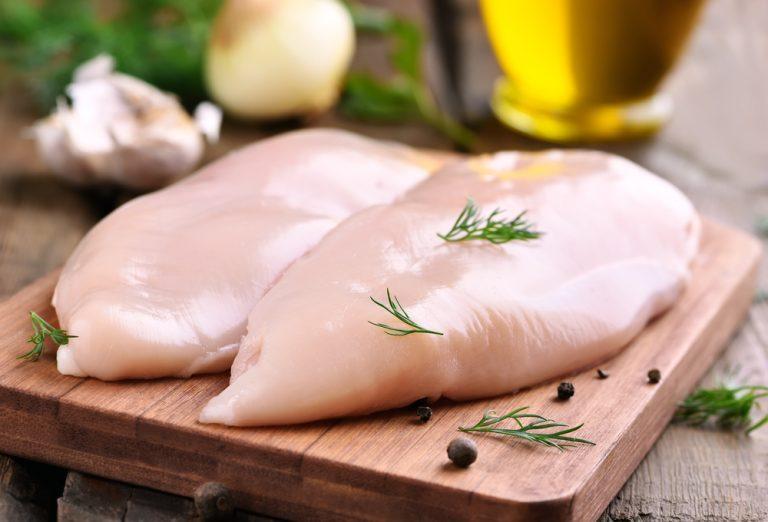
Cranswick reported its results for three months to 31 December 2018, posting a 2% fall in revenue for the period.
The UK food producer said that lower sales in pork related produce were offset by more growth in its poultry and continental products.
In addition, Cranswick said it intends to invest further in its facilities to improve efficiency and increase capacities.
It said construction of its new poultry processing facility in Eye, Suffolk was on track, and expected to be completed by the end of the financial year.
The group also announced the securing of a new long-term contract with Wm Morrison Supermarkets plc to supply its poultry.
Future Outlook
Looking ahead, Cranswick said that its operating margin is likely to decline, due to a “potentially challenging commercial landscape”.
Alongside difficult trading climate, the company said that costs relating to its new facility in Eye would also impact profitability during the course of the year.
The statement added:
“Notwithstanding these short-term challenges, our new Eye and existing added value, poultry facilities and our broadening customer base, provide a solid platform to further develop our poultry business and drive future growth in this attractive and expanding protein category.”
Cranswick (LON:CWK) is listed on the London Stock Exchange. It is a constituent of the FTSE-250 Index.
Shares in the food producer are currently -15.52% as of 11:59AM (GMT).
Anglo Asian Mining gold output to fall, shares plunge

Anglo Asian Mining shares fell during Thursday morning trading after the company updated the market on its 2019 production guidance.
The gold, copper and silver miner said that it was set for “another year of delivery” in 2019, with increased copper output expected.
Anglo Asian Mining forecast metal production for the fuel year to be between 82,000 to 86,000 gold equivalent ounces (GEOs), a potential increase from the 83,736 GEOs produced in 2018.
Nevertheless, the Azerbaijan-focused company said that it expects gold production to fall between 65,000 ounces to 67,500 ounces, down from 72,798 ounces in 2018, sending shares downwards.
Anglo Asian Mining Chief Executive Reza Vaziri commented, “2019 will be another year of delivery for Anglo Asian with total metal production of between 82,000 to 86,000 gold equivalent ounces planned by our operations team. This demonstrates the sustainability of our business and builds on our record production of 83,736 gold equivalent ounces in 2018. The increasing proportion of our production as copper and gold in concentrate also highlights the versatility of our processing operations.
“One critical pillar underpinning the future growth of the Company is our ongoing exploration and development programme. Two important elements of this programme are the results of the helicopter survey and the publication of the JORC mineral resource for Gardir, our underground mine which is already in production. These are both expected to be announced in this current quarter and should further demonstrate the expansion potential of the Gedabek Contract Area.”
Anglo Asian Mining is an AIM-listed company with a 1,926 square kilometre portfolio of gold, silver and copper properties in Azerbaijan.
Elsewhere in the mining sector, Shefa Yamim shares (LON:SEFA) ticked up on Wednesday after the company updated investors on findings from a technical economic evaluation.
Conversely, Regency Mines shares (LON:RGM) fell after the company said its incoming chief executive would no longer be taking up the role.
Shares in the Anglo Asian Mining (LON:AAZ) are currently -5.81% as of 11:28AM (GMT).
Superdry blames warmer weather for weaker q3 sales
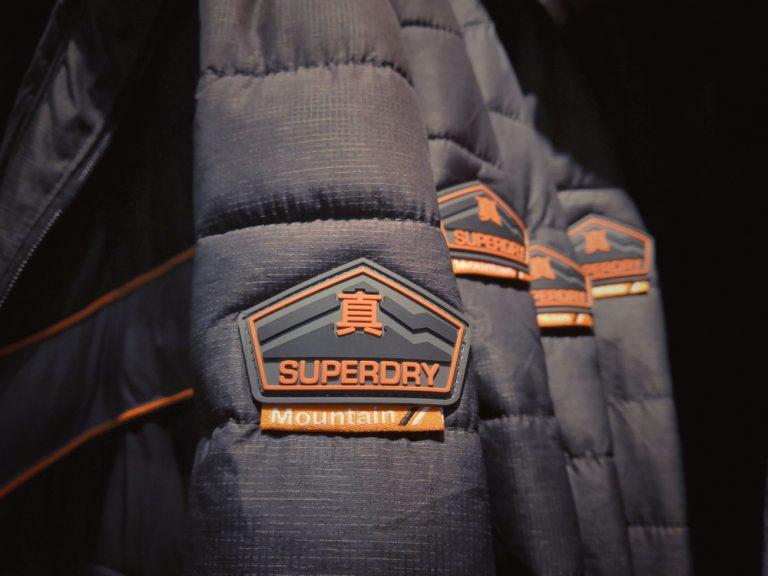
Superdry (LON:SDRY) reported its third quarter results on Thursday, blaming warmer weather for weaker sales across the period.
The retailer reported its results for the 13-week period from 28 October 2018 to 26 January 2019, noting a fall in sales.
The brand said that global revenue of £479.6 million rose by 5.4% year on year, largely due to by strong whole-sale performance.
However, group revenue was down 1.5% year on year. Superdry attributed this fall to ‘unseasonably warm weather’ throughout the quarter.
A large portion of Superdry sales are derived from its jackets, coats and hoodies, thus explaining the effect of milder weather upon profitability.
Wholesale revenue was up 12.7% to £73.5 million, compared to £65.2 million during the same period last year.
This was as a result of by forward order despatches and continued strong growth in U.S markets.
Euan Sutherland, Chief Executive Officer, commented on the results:
“Superdry’s performance has remained subdued during quarter three. We continued to be impacted by the ongoing product mix and relevance issues we have previously highlighted and by the lack, until the end of quarter three and the start of quarter four, of any prolonged period of cold weather in our key markets.
“We are pleased with the early progress being made with our transformation programme, designed to reset the business and deliver a return to higher levels of growth and profitability.”
Last year, Superdry shares took a hit after the retailer posted a 49% fall in profits for the half-year.
Once again, the brand blamed unseasonably warmer weather for the disappointing performance.
The Cheltenham-based retailer has since said it intends to shift its reliance away from winter wear as well as improving its digital presence, as it looks to revive profits in 2019.
Shares in Superdry are currently trading +0.39% as of 10:47AM (GMT).