
Chancellor Philip Hammond said in 2017 that he wanted to have “fully driverless cars” without a safety attendant on board in use by 2021.
Ryanair shares rise despite weaker half-year profits

Ryanair (LON:RYA) reported a 7% fall in half-year profits, blaming strike action and higher fuel costs.
The low-cost airline posted a fall in profits to €1.2 billion (£1.06 billion) for the six months to 30 September.
Ryanair attributed the decline to industrial action across the period, as well as rising fuel prices.
Back in October, Ryanair pilots across Germany, Spain, Italy, Portugal and Belgium announced plans to coordinate strike action for 24 hours.
The action led to the airline cancelling as many as 250 flights, affecting some 40,000 customers.
As a result, Ryanair said it had seen a spike in cancellations across the period, with customers increasingly deterred amid concerns of flight disruptions.
Traffic increased 6%, with planes at 96% capacity. However, average fares slipped 3% to €46.
Whilst ancillary revenues, such as luggage and seat reservation fees, were up 27%, this was offset by compensation costs and higher fuel prices.
Chief Executive Michael O’Leary said:
“As recently guided, H1 average fares fell by three per cent. While ancillary revenues performed strongly, up 27 per cent, these were offset by higher fuel, staff and EU261 [flight compensation] costs. Our traffic, which was repeatedly impacted by the worst summer of ATC disruptions on record, grew six per cent at an unchanged 96 per cent load factor.”
It has proved a turbulent year for many airlines, as volatile oil prices and currency movements have impacted profits.
Last week, Flybe shares (LON:FLYB) plunged over 30% after the budget airline warned on profits for the year.
Shares in Ryanair are currently trading +4.54% as of 10.40AM (GMT).
Addison Lee to deploy self-driving taxis in London by 2021

Addison Lee has announced plans to have self-driving taxis on the streets of London by 2021.
The taxi firm has partnered with the self-driving software specialist Oxboticasigned, signing a deal to deploy autonomous vehicles in the capital.
The group has said that its 5,000 taxi drivers will remain employed and the first development will focus on shuttle buses around airports or campuses.
Whilst London is set for driverless taxis by 2021, Tokyo has plans to have a full service in the city in time for the 2020 Olympics.
Car manufacturers including Ford (NYSE: F), General Motors (NYSE: GM) and Daimler are also investing in self-driving vehicles.
Toyota has said that it will invest $500 million (£388 million) to develop an autonomous fleet for Uber.
Michael Hurwitz, who is the director of transport innovation, said London was committed to working with firms developing driverless vehicles.
“All cities across the UK, including London, need to understand the opportunities, risks and challenges they face when considering how transport will operate in the future,” he said.
Are you properly diversified?

Be diversified. Don’t put all your eggs in one basket. This is Rule 101, according to most investors.
What, however, is a suitable level of diversification? To answer this question, one must first ask why you would you want to be diversified in the first place?
In layman’s terms you must diversify to avoid the failure of anyone share having a large impact on your overall portfolio. This is also known as the removal of unsystematic risk presented by single stock volatility.
A portfolio that is not effectively positioned to remove unsystematic risk is vulnerable to a single share wiping out a large proportion of a portfolios value. A portfolio that is suitably positioned to remove unsystematic risk then only leaves an investor exposed to systematic risk, or market risk. This is the risk of equity market volatility and can’t be diversified away and is inherent to all portfolios.
When focusing on the removal of unsystematic risk one should refer to the Capital Asset Pricing Model (CAPM). The model was first introduced in the mid 1950’s by economist Harry Markowitz and later developed by Jack Treynor and William Sharpe who both went on to invent their namesake ratios commonly used in investment management today.
The CAPM formula can be used to judge the required return of an asset for the level of risk taken. All equity will assume a risk and the measure of risk in the Capital Asset Pricing Model is Beta.
Beta measures how risky a particular share is when compared to the underlying market. A Beta rating of 1 is the same as the market and a Beta rating of 2 means it moves twice as quickly as the market.
A Beta rating of less than 0 is a negative Beta, meaning the asset is negatively correlated to market, so if the overall market went up, you’d expect that asset to fall and visa versa.
As Beta is a key input to CAPM, this measure of volatility or risk should be at the forefront of building a balanced diversified portfolio. A mix of shares with different Beta ratings will reduce the correlation of the shares in the portfolio and provide protection against any sharp moves in the underlying benchmark.
Another key factor in diversifying is the number of shares in the portfolio.
Having few shares means sharp moves in one stock can cause significant divergence of the portfolio’s returns from the underlying benchmark where as having too many shares means the portfolio will simply track the underlying index.
According to Capital Asset Pricing Model having around 25-35 shares statistically means you have reduced unsystematic risk. Any more shares than this doesn’t reduce stock specific risk assuming equal amount allocated to each share.
So that, according to CAPM, is how many shares you need to diversify you portfolio.
However, those that follow Billionaire investor Warren Buffett will know he once famously said “Diversification is protection against ignorance. It makes little sense if you know what you are doing.”
Is Cannabis the next hot UK investment sector?
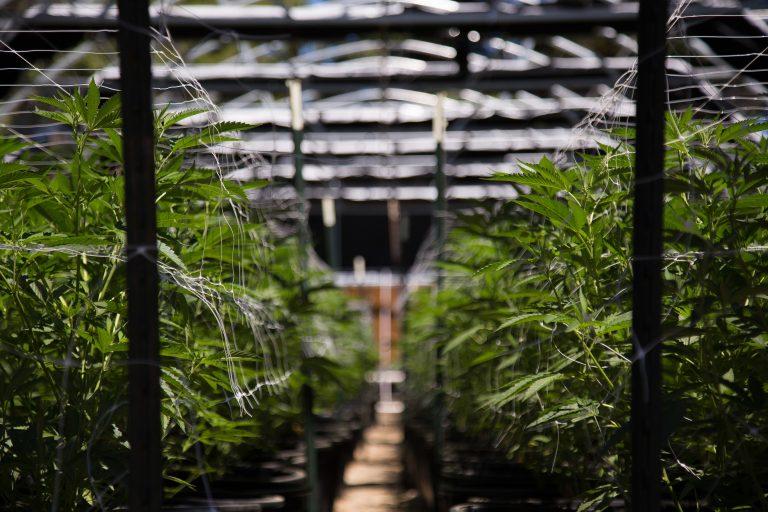
After decades of sporadic background rumbling, the issue of cannabis legalisation is back at the forefront of conversation as authorities around the world begin to change their stance on the drug.
We may be a long way from full legalisation of the drug for recreational use in the UK, but medical use has seen several big breakthroughs; not least the recent case of Billy Caldwell, who was very publicly granted exceptional permission to use the drug in the UK to control his severe epilepsy. The upshot was the UK government allowing specialist GPs to prescribe medicinal cannabis.
This unprecedented decision from the UK government has sparked debate, both on the streets and in parliament, as to whether medical cannabis should be fully legalised. Health secretary Jeremy Hunt has admitted the government may be wrong on the issue, with a police chief calling for the creation of ‘cannabis clubs’.
As we will explore, despite the UK being the world’s largest exporter of medicinal cannabis, our domestic stance has fallen behind other countries. Canada has allowed cannabis for medical use since 1999, in the US it is legal for medical use in 29 states and some European countries have decriminalised recreational use – it appears the tide is turning in favour of medicinal cannabis.
 Alongside this are its anaesthetic qualities. It has been used for chronic, especially neuropathic pain, spasticity in multiple sclerosis and spinal cord injury, pain in rheumatoid arthritis, cancer pain, headache, menstrual pain, chronic bowel inflammation and neuralgias. Equally, its positive effects on epileptic siezures are some of the oldest recorded benefits.
There have also been some studies that suggest medical marijuana could be used to ween patients off prescription opiod use and prevent overdose deaths, but researchers don’t have enough evidence yet to confirm this finding. For example, one study found that Medicare Part D prescriptions filled for all opioids decreased in states with medical marijuana laws.
What’s in medical marijuana drugs?
The two main cannabinoids from the marijuana plant that are of medical interest are THC and CBD. THC can increase appetite and reduce nausea, as well as pain, inflammation and muscle control problems. Unlike THC, CBD is a cannabinoid that doesn’t make people “high.”
Two FDA-approved drugs, dronabinol and nabilone, contain THC. They treat nausea caused by chemotherapy and increase appetite in patients with extreme weight loss caused by AIDS. However, the FDA have not approved the use of the plant as a whole, but only the basic extracts.
Despite the United Nations revealing back in June that Britain is the world’s largest producer of legal cannabis, it is currently illegal for recreational use in the UK. However, the UK government has approved the prescription of medicines using cannabis derivatives following a debate this summer and subsequent easing on restrictions. Though it is still unclear what forms are legal and which are prohibited.
There have been two licenced cannabis-based medicine in Britain. Sativex is a mouth spray designed to reduce muscle spasms in people with multiple sclerosis (MS), and contains two chemical extracts taken from the cannabis plant. It was licenced for use in the UK in 2010, but is not usually available on the NHS in England as it is deemed too expensive.
There is also the THC-based Nabilone, which was licensed in 1982 for prescription-only hospital-only use against nausea arising from chemotherapy and unresponsive to other treatment.
Both have been provided in controlled and exceptional circumstances and more drugs are likely to be approved after the softening in stance by the government.
While the government has adopted a global trend of medicinal use of cannabis, it has been slow in comparison to countries such as Canada and the US and despite being the world’s largest producer of medicinal cannabis, recreational use is still illegal.
According to the UN’s International Narcotics Control Board, 95 tonnes of medical marijuana were produced in the UK in 2016, accounting for 44.9 per cent of the world total – but possession in the UK can still lead to a spell in jail.
The UK downgraded recreational cannabis to a Class C drug in 2002, with possession of small quantities no longer an arrestable offence, but it was moved back up to a Class B drug by Gordon Brown in 2008. Since then, the penalty for possession can be as much as five years in prison.
Who is pushing for UK adoption
The majority of assembly members in Wales, the SNP and all parties in Northern Ireland except the DUP have backed medical legalisation of cannabis, with the Liberal Democrat party pledging to legalise selling and growing cannabis as part of its election manifesto last year.
The Royal College of Nursing also voted overwhelmingly in favour of lobbying the government to make it legal for medical in May, with The Royal College of Psychiatrists saying legalisation for recreational and medicinal use should be considered as distinct.
Whilst it admitted that cannabis may carry significant mental health risks, it said it supports the medicinal use of approved cannabis products.
Home Secretary Sajid Javid made an unprecedented move in June when he intervened to allow Billy Caldwell continued access to cannabis-based life-saving treatment for severe epileptic seizures, after the drugs were confiscated on their return home from Canada.
The government since announced a review into the use of cannabis-based medicines in the UK and legalised medicinal uses in special cases.
Canada Legalisation
Canada’s Senate recently voted to legalise cannabis, becoming the first G7 nation to do so.
Whilst its medicinal use had been legal since 2001, cannabis had yet to be approved recreationally until earlier this year.
Canada and Prime Minister Justin Trudeau has lead the way in becoming the second country after Uruguay to officially legalise recreational cannabis.
Canadians are allowed to grow up to four plants in their home and carry up to 30 grams of dried cannabis for personal consumption.
Minimum age restrictions will vary between 18 to 19 years old, depending upon province, and those caught supplying minors or carrying in excess of 30 grams will still be heavily penalised.
The landmark decision has since prompted reassessment from other developed nations over whether to follow suit.
Indeed efforts to review the classification of the drug are beginning to gain momentum, particularly in light of its potentially transformative medicinal benefits, and the potential boost to the economy it may provide.
In fact, Canada’s total legalised market is set to be worth as much as $22.6 billion (£16.9 billon) a year, according to Deloitte.
Companies such as Aphria and Canopy Growth have been fast growing in popularity on the stock market as a result of their investment into marijuana.
A divided United States
However, the most lucrative location for cannabis production is in fact California, which also happens to be the largest state in the U.S.
Nine states alongside Washington DC have also legalised the recreational use of marijuana for adults over the age of 21. An additional 21 states permit the use of a form of medicinal cannabis.
Public support for the legalisation of marijuana has been gradually strengthening over the course of the last four decades.
A broad 64% of Americans say they support the legalization of marijuana, according to a Gallup Poll conducted in October 2017.
The record percentage marks a significant shift in public perception of the drug, with a mere 12 per cent supporting legalisation when Gallup first poised the question to adults back in 1969.
It has been estimated that the U.S market is worth around $9.2 billion in 2017, and it only looks set to increase. Forbes has projected it may reach $47.3 billion by 2027.
Earlier this year, a treatment for childhood epilepsy received approval from the US drug regulator.
The drug became the first cannabis-based medicine on the American market, signalling potential for other pharmaceutical firms to tap into the potentially lucrative market too.
How to invest in Cannabis?
Despite the UK being the world’s largest exporter of cannabis, investment opportunities in domestic stock markets are limited.
Earlier this year Sativa Investments listed on the NEX Exchange to provide a vehicle for investors based in the UK to invest in the industry. However, while the shares trade in the UK, the underlying companies Sativa have invested in are based in North America.
To obtain exposure to companies operating in the UK, one may look to GW Pharma. The stock trades on the NASDAQ but benefits from the UK’s largest cannabis production facilities, operated by British Sugar.
British Sugar, a subsidiary of Associated British Foods, dumped growing tomatoes in 2016 and set up one of the world’s largest cannabis producing greenhouses near the East Anglian town of Wissington.
The 18-hectare site produces the plant for GW Pharmaceuticals in the use of Sativex and is developing a number of other applications.
Of course there is exposure through AB Foods listed in London and in the FTSE 100, but the contribution to earnings is minimal.
Alongside this are its anaesthetic qualities. It has been used for chronic, especially neuropathic pain, spasticity in multiple sclerosis and spinal cord injury, pain in rheumatoid arthritis, cancer pain, headache, menstrual pain, chronic bowel inflammation and neuralgias. Equally, its positive effects on epileptic siezures are some of the oldest recorded benefits.
There have also been some studies that suggest medical marijuana could be used to ween patients off prescription opiod use and prevent overdose deaths, but researchers don’t have enough evidence yet to confirm this finding. For example, one study found that Medicare Part D prescriptions filled for all opioids decreased in states with medical marijuana laws.
What’s in medical marijuana drugs?
The two main cannabinoids from the marijuana plant that are of medical interest are THC and CBD. THC can increase appetite and reduce nausea, as well as pain, inflammation and muscle control problems. Unlike THC, CBD is a cannabinoid that doesn’t make people “high.”
Two FDA-approved drugs, dronabinol and nabilone, contain THC. They treat nausea caused by chemotherapy and increase appetite in patients with extreme weight loss caused by AIDS. However, the FDA have not approved the use of the plant as a whole, but only the basic extracts.
Despite the United Nations revealing back in June that Britain is the world’s largest producer of legal cannabis, it is currently illegal for recreational use in the UK. However, the UK government has approved the prescription of medicines using cannabis derivatives following a debate this summer and subsequent easing on restrictions. Though it is still unclear what forms are legal and which are prohibited.
There have been two licenced cannabis-based medicine in Britain. Sativex is a mouth spray designed to reduce muscle spasms in people with multiple sclerosis (MS), and contains two chemical extracts taken from the cannabis plant. It was licenced for use in the UK in 2010, but is not usually available on the NHS in England as it is deemed too expensive.
There is also the THC-based Nabilone, which was licensed in 1982 for prescription-only hospital-only use against nausea arising from chemotherapy and unresponsive to other treatment.
Both have been provided in controlled and exceptional circumstances and more drugs are likely to be approved after the softening in stance by the government.
While the government has adopted a global trend of medicinal use of cannabis, it has been slow in comparison to countries such as Canada and the US and despite being the world’s largest producer of medicinal cannabis, recreational use is still illegal.
According to the UN’s International Narcotics Control Board, 95 tonnes of medical marijuana were produced in the UK in 2016, accounting for 44.9 per cent of the world total – but possession in the UK can still lead to a spell in jail.
The UK downgraded recreational cannabis to a Class C drug in 2002, with possession of small quantities no longer an arrestable offence, but it was moved back up to a Class B drug by Gordon Brown in 2008. Since then, the penalty for possession can be as much as five years in prison.
Who is pushing for UK adoption
The majority of assembly members in Wales, the SNP and all parties in Northern Ireland except the DUP have backed medical legalisation of cannabis, with the Liberal Democrat party pledging to legalise selling and growing cannabis as part of its election manifesto last year.
The Royal College of Nursing also voted overwhelmingly in favour of lobbying the government to make it legal for medical in May, with The Royal College of Psychiatrists saying legalisation for recreational and medicinal use should be considered as distinct.
Whilst it admitted that cannabis may carry significant mental health risks, it said it supports the medicinal use of approved cannabis products.
Home Secretary Sajid Javid made an unprecedented move in June when he intervened to allow Billy Caldwell continued access to cannabis-based life-saving treatment for severe epileptic seizures, after the drugs were confiscated on their return home from Canada.
The government since announced a review into the use of cannabis-based medicines in the UK and legalised medicinal uses in special cases.
Canada Legalisation
Canada’s Senate recently voted to legalise cannabis, becoming the first G7 nation to do so.
Whilst its medicinal use had been legal since 2001, cannabis had yet to be approved recreationally until earlier this year.
Canada and Prime Minister Justin Trudeau has lead the way in becoming the second country after Uruguay to officially legalise recreational cannabis.
Canadians are allowed to grow up to four plants in their home and carry up to 30 grams of dried cannabis for personal consumption.
Minimum age restrictions will vary between 18 to 19 years old, depending upon province, and those caught supplying minors or carrying in excess of 30 grams will still be heavily penalised.
The landmark decision has since prompted reassessment from other developed nations over whether to follow suit.
Indeed efforts to review the classification of the drug are beginning to gain momentum, particularly in light of its potentially transformative medicinal benefits, and the potential boost to the economy it may provide.
In fact, Canada’s total legalised market is set to be worth as much as $22.6 billion (£16.9 billon) a year, according to Deloitte.
Companies such as Aphria and Canopy Growth have been fast growing in popularity on the stock market as a result of their investment into marijuana.
A divided United States
However, the most lucrative location for cannabis production is in fact California, which also happens to be the largest state in the U.S.
Nine states alongside Washington DC have also legalised the recreational use of marijuana for adults over the age of 21. An additional 21 states permit the use of a form of medicinal cannabis.
Public support for the legalisation of marijuana has been gradually strengthening over the course of the last four decades.
A broad 64% of Americans say they support the legalization of marijuana, according to a Gallup Poll conducted in October 2017.
The record percentage marks a significant shift in public perception of the drug, with a mere 12 per cent supporting legalisation when Gallup first poised the question to adults back in 1969.
It has been estimated that the U.S market is worth around $9.2 billion in 2017, and it only looks set to increase. Forbes has projected it may reach $47.3 billion by 2027.
Earlier this year, a treatment for childhood epilepsy received approval from the US drug regulator.
The drug became the first cannabis-based medicine on the American market, signalling potential for other pharmaceutical firms to tap into the potentially lucrative market too.
How to invest in Cannabis?
Despite the UK being the world’s largest exporter of cannabis, investment opportunities in domestic stock markets are limited.
Earlier this year Sativa Investments listed on the NEX Exchange to provide a vehicle for investors based in the UK to invest in the industry. However, while the shares trade in the UK, the underlying companies Sativa have invested in are based in North America.
To obtain exposure to companies operating in the UK, one may look to GW Pharma. The stock trades on the NASDAQ but benefits from the UK’s largest cannabis production facilities, operated by British Sugar.
British Sugar, a subsidiary of Associated British Foods, dumped growing tomatoes in 2016 and set up one of the world’s largest cannabis producing greenhouses near the East Anglian town of Wissington.
The 18-hectare site produces the plant for GW Pharmaceuticals in the use of Sativex and is developing a number of other applications.
Of course there is exposure through AB Foods listed in London and in the FTSE 100, but the contribution to earnings is minimal.
What are the medical benefits of Cannabis?
The real effects of medicinal cannabis remain uncertain, given the lack of medical trials taking place with the drug, the real effects of medicinal cannabis remain uncertain. However, however a number of recent trails point to benefits for patients suffering with MS, cancer and epilepsy. There is evidence that medicinal cannabis can help with the nausea and vomiting associated with cancer chemotherapy, highlighted by the fact a drug has been FDA-approved for this purpose. It is also said to help with illnesses in which patients find it difficult to eat, including anorexia and cachexia in HIV/ AIDS. The appetite-stimulating effects of cannabis have a positive effect in these cases; in a long-term study of 94 AIDS patients, the appetite-stimulating effect of THC continued for months, confirming the appetite enhancement noted in a shorter 6 week study. A positive influence on body weight was also reported in 15 patients with Alzheimer’s disease who were previously refusing food.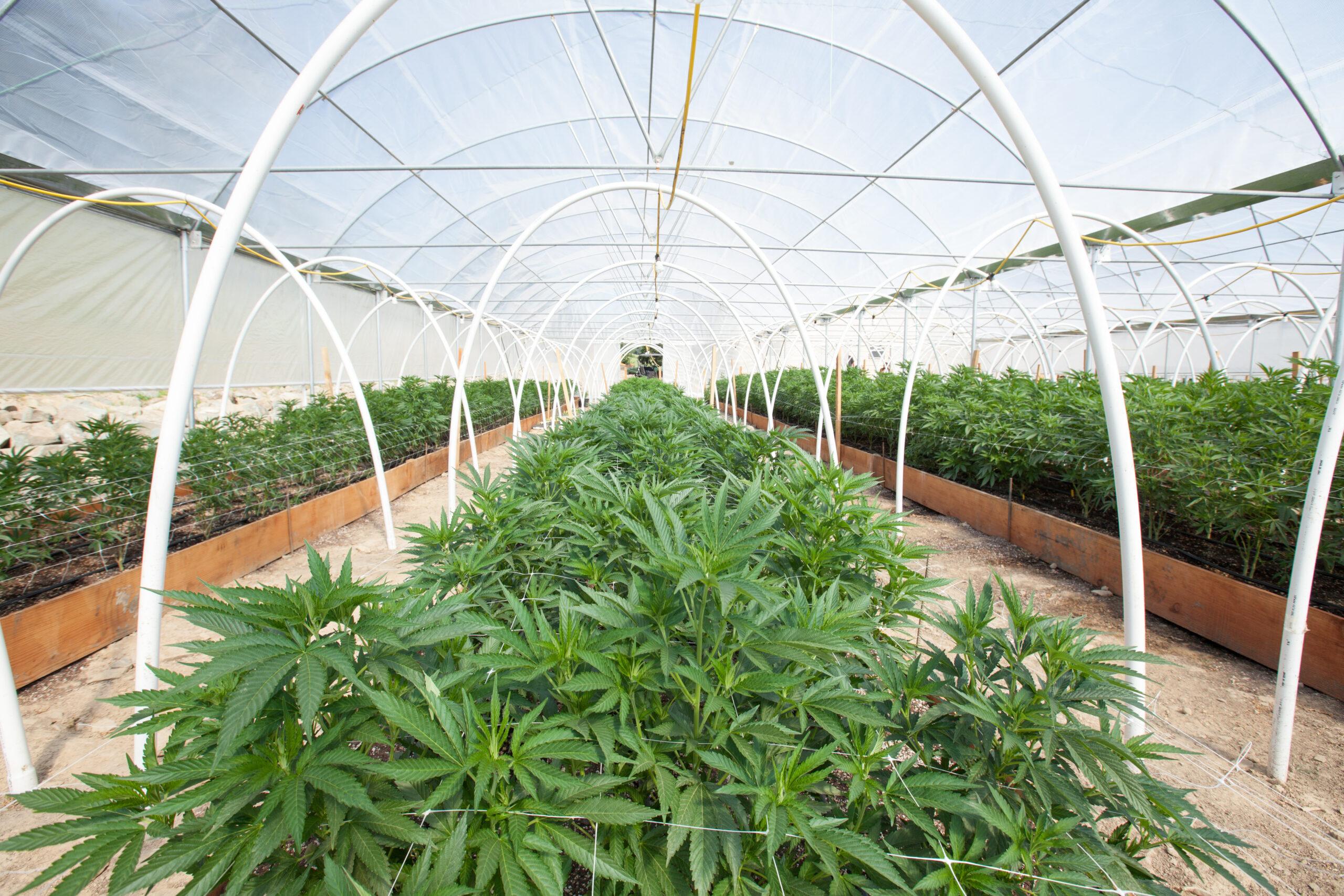 Alongside this are its anaesthetic qualities. It has been used for chronic, especially neuropathic pain, spasticity in multiple sclerosis and spinal cord injury, pain in rheumatoid arthritis, cancer pain, headache, menstrual pain, chronic bowel inflammation and neuralgias. Equally, its positive effects on epileptic siezures are some of the oldest recorded benefits.
There have also been some studies that suggest medical marijuana could be used to ween patients off prescription opiod use and prevent overdose deaths, but researchers don’t have enough evidence yet to confirm this finding. For example, one study found that Medicare Part D prescriptions filled for all opioids decreased in states with medical marijuana laws.
What’s in medical marijuana drugs?
The two main cannabinoids from the marijuana plant that are of medical interest are THC and CBD. THC can increase appetite and reduce nausea, as well as pain, inflammation and muscle control problems. Unlike THC, CBD is a cannabinoid that doesn’t make people “high.”
Two FDA-approved drugs, dronabinol and nabilone, contain THC. They treat nausea caused by chemotherapy and increase appetite in patients with extreme weight loss caused by AIDS. However, the FDA have not approved the use of the plant as a whole, but only the basic extracts.
Despite the United Nations revealing back in June that Britain is the world’s largest producer of legal cannabis, it is currently illegal for recreational use in the UK. However, the UK government has approved the prescription of medicines using cannabis derivatives following a debate this summer and subsequent easing on restrictions. Though it is still unclear what forms are legal and which are prohibited.
There have been two licenced cannabis-based medicine in Britain. Sativex is a mouth spray designed to reduce muscle spasms in people with multiple sclerosis (MS), and contains two chemical extracts taken from the cannabis plant. It was licenced for use in the UK in 2010, but is not usually available on the NHS in England as it is deemed too expensive.
There is also the THC-based Nabilone, which was licensed in 1982 for prescription-only hospital-only use against nausea arising from chemotherapy and unresponsive to other treatment.
Both have been provided in controlled and exceptional circumstances and more drugs are likely to be approved after the softening in stance by the government.
While the government has adopted a global trend of medicinal use of cannabis, it has been slow in comparison to countries such as Canada and the US and despite being the world’s largest producer of medicinal cannabis, recreational use is still illegal.
According to the UN’s International Narcotics Control Board, 95 tonnes of medical marijuana were produced in the UK in 2016, accounting for 44.9 per cent of the world total – but possession in the UK can still lead to a spell in jail.
The UK downgraded recreational cannabis to a Class C drug in 2002, with possession of small quantities no longer an arrestable offence, but it was moved back up to a Class B drug by Gordon Brown in 2008. Since then, the penalty for possession can be as much as five years in prison.
Who is pushing for UK adoption
The majority of assembly members in Wales, the SNP and all parties in Northern Ireland except the DUP have backed medical legalisation of cannabis, with the Liberal Democrat party pledging to legalise selling and growing cannabis as part of its election manifesto last year.
The Royal College of Nursing also voted overwhelmingly in favour of lobbying the government to make it legal for medical in May, with The Royal College of Psychiatrists saying legalisation for recreational and medicinal use should be considered as distinct.
Whilst it admitted that cannabis may carry significant mental health risks, it said it supports the medicinal use of approved cannabis products.
Home Secretary Sajid Javid made an unprecedented move in June when he intervened to allow Billy Caldwell continued access to cannabis-based life-saving treatment for severe epileptic seizures, after the drugs were confiscated on their return home from Canada.
The government since announced a review into the use of cannabis-based medicines in the UK and legalised medicinal uses in special cases.
Canada Legalisation
Canada’s Senate recently voted to legalise cannabis, becoming the first G7 nation to do so.
Whilst its medicinal use had been legal since 2001, cannabis had yet to be approved recreationally until earlier this year.
Canada and Prime Minister Justin Trudeau has lead the way in becoming the second country after Uruguay to officially legalise recreational cannabis.
Canadians are allowed to grow up to four plants in their home and carry up to 30 grams of dried cannabis for personal consumption.
Minimum age restrictions will vary between 18 to 19 years old, depending upon province, and those caught supplying minors or carrying in excess of 30 grams will still be heavily penalised.
The landmark decision has since prompted reassessment from other developed nations over whether to follow suit.
Indeed efforts to review the classification of the drug are beginning to gain momentum, particularly in light of its potentially transformative medicinal benefits, and the potential boost to the economy it may provide.
In fact, Canada’s total legalised market is set to be worth as much as $22.6 billion (£16.9 billon) a year, according to Deloitte.
Companies such as Aphria and Canopy Growth have been fast growing in popularity on the stock market as a result of their investment into marijuana.
A divided United States
However, the most lucrative location for cannabis production is in fact California, which also happens to be the largest state in the U.S.
Nine states alongside Washington DC have also legalised the recreational use of marijuana for adults over the age of 21. An additional 21 states permit the use of a form of medicinal cannabis.
Public support for the legalisation of marijuana has been gradually strengthening over the course of the last four decades.
A broad 64% of Americans say they support the legalization of marijuana, according to a Gallup Poll conducted in October 2017.
The record percentage marks a significant shift in public perception of the drug, with a mere 12 per cent supporting legalisation when Gallup first poised the question to adults back in 1969.
It has been estimated that the U.S market is worth around $9.2 billion in 2017, and it only looks set to increase. Forbes has projected it may reach $47.3 billion by 2027.
Earlier this year, a treatment for childhood epilepsy received approval from the US drug regulator.
The drug became the first cannabis-based medicine on the American market, signalling potential for other pharmaceutical firms to tap into the potentially lucrative market too.
How to invest in Cannabis?
Despite the UK being the world’s largest exporter of cannabis, investment opportunities in domestic stock markets are limited.
Earlier this year Sativa Investments listed on the NEX Exchange to provide a vehicle for investors based in the UK to invest in the industry. However, while the shares trade in the UK, the underlying companies Sativa have invested in are based in North America.
To obtain exposure to companies operating in the UK, one may look to GW Pharma. The stock trades on the NASDAQ but benefits from the UK’s largest cannabis production facilities, operated by British Sugar.
British Sugar, a subsidiary of Associated British Foods, dumped growing tomatoes in 2016 and set up one of the world’s largest cannabis producing greenhouses near the East Anglian town of Wissington.
The 18-hectare site produces the plant for GW Pharmaceuticals in the use of Sativex and is developing a number of other applications.
Of course there is exposure through AB Foods listed in London and in the FTSE 100, but the contribution to earnings is minimal.
Alongside this are its anaesthetic qualities. It has been used for chronic, especially neuropathic pain, spasticity in multiple sclerosis and spinal cord injury, pain in rheumatoid arthritis, cancer pain, headache, menstrual pain, chronic bowel inflammation and neuralgias. Equally, its positive effects on epileptic siezures are some of the oldest recorded benefits.
There have also been some studies that suggest medical marijuana could be used to ween patients off prescription opiod use and prevent overdose deaths, but researchers don’t have enough evidence yet to confirm this finding. For example, one study found that Medicare Part D prescriptions filled for all opioids decreased in states with medical marijuana laws.
What’s in medical marijuana drugs?
The two main cannabinoids from the marijuana plant that are of medical interest are THC and CBD. THC can increase appetite and reduce nausea, as well as pain, inflammation and muscle control problems. Unlike THC, CBD is a cannabinoid that doesn’t make people “high.”
Two FDA-approved drugs, dronabinol and nabilone, contain THC. They treat nausea caused by chemotherapy and increase appetite in patients with extreme weight loss caused by AIDS. However, the FDA have not approved the use of the plant as a whole, but only the basic extracts.
Despite the United Nations revealing back in June that Britain is the world’s largest producer of legal cannabis, it is currently illegal for recreational use in the UK. However, the UK government has approved the prescription of medicines using cannabis derivatives following a debate this summer and subsequent easing on restrictions. Though it is still unclear what forms are legal and which are prohibited.
There have been two licenced cannabis-based medicine in Britain. Sativex is a mouth spray designed to reduce muscle spasms in people with multiple sclerosis (MS), and contains two chemical extracts taken from the cannabis plant. It was licenced for use in the UK in 2010, but is not usually available on the NHS in England as it is deemed too expensive.
There is also the THC-based Nabilone, which was licensed in 1982 for prescription-only hospital-only use against nausea arising from chemotherapy and unresponsive to other treatment.
Both have been provided in controlled and exceptional circumstances and more drugs are likely to be approved after the softening in stance by the government.
While the government has adopted a global trend of medicinal use of cannabis, it has been slow in comparison to countries such as Canada and the US and despite being the world’s largest producer of medicinal cannabis, recreational use is still illegal.
According to the UN’s International Narcotics Control Board, 95 tonnes of medical marijuana were produced in the UK in 2016, accounting for 44.9 per cent of the world total – but possession in the UK can still lead to a spell in jail.
The UK downgraded recreational cannabis to a Class C drug in 2002, with possession of small quantities no longer an arrestable offence, but it was moved back up to a Class B drug by Gordon Brown in 2008. Since then, the penalty for possession can be as much as five years in prison.
Who is pushing for UK adoption
The majority of assembly members in Wales, the SNP and all parties in Northern Ireland except the DUP have backed medical legalisation of cannabis, with the Liberal Democrat party pledging to legalise selling and growing cannabis as part of its election manifesto last year.
The Royal College of Nursing also voted overwhelmingly in favour of lobbying the government to make it legal for medical in May, with The Royal College of Psychiatrists saying legalisation for recreational and medicinal use should be considered as distinct.
Whilst it admitted that cannabis may carry significant mental health risks, it said it supports the medicinal use of approved cannabis products.
Home Secretary Sajid Javid made an unprecedented move in June when he intervened to allow Billy Caldwell continued access to cannabis-based life-saving treatment for severe epileptic seizures, after the drugs were confiscated on their return home from Canada.
The government since announced a review into the use of cannabis-based medicines in the UK and legalised medicinal uses in special cases.
Canada Legalisation
Canada’s Senate recently voted to legalise cannabis, becoming the first G7 nation to do so.
Whilst its medicinal use had been legal since 2001, cannabis had yet to be approved recreationally until earlier this year.
Canada and Prime Minister Justin Trudeau has lead the way in becoming the second country after Uruguay to officially legalise recreational cannabis.
Canadians are allowed to grow up to four plants in their home and carry up to 30 grams of dried cannabis for personal consumption.
Minimum age restrictions will vary between 18 to 19 years old, depending upon province, and those caught supplying minors or carrying in excess of 30 grams will still be heavily penalised.
The landmark decision has since prompted reassessment from other developed nations over whether to follow suit.
Indeed efforts to review the classification of the drug are beginning to gain momentum, particularly in light of its potentially transformative medicinal benefits, and the potential boost to the economy it may provide.
In fact, Canada’s total legalised market is set to be worth as much as $22.6 billion (£16.9 billon) a year, according to Deloitte.
Companies such as Aphria and Canopy Growth have been fast growing in popularity on the stock market as a result of their investment into marijuana.
A divided United States
However, the most lucrative location for cannabis production is in fact California, which also happens to be the largest state in the U.S.
Nine states alongside Washington DC have also legalised the recreational use of marijuana for adults over the age of 21. An additional 21 states permit the use of a form of medicinal cannabis.
Public support for the legalisation of marijuana has been gradually strengthening over the course of the last four decades.
A broad 64% of Americans say they support the legalization of marijuana, according to a Gallup Poll conducted in October 2017.
The record percentage marks a significant shift in public perception of the drug, with a mere 12 per cent supporting legalisation when Gallup first poised the question to adults back in 1969.
It has been estimated that the U.S market is worth around $9.2 billion in 2017, and it only looks set to increase. Forbes has projected it may reach $47.3 billion by 2027.
Earlier this year, a treatment for childhood epilepsy received approval from the US drug regulator.
The drug became the first cannabis-based medicine on the American market, signalling potential for other pharmaceutical firms to tap into the potentially lucrative market too.
How to invest in Cannabis?
Despite the UK being the world’s largest exporter of cannabis, investment opportunities in domestic stock markets are limited.
Earlier this year Sativa Investments listed on the NEX Exchange to provide a vehicle for investors based in the UK to invest in the industry. However, while the shares trade in the UK, the underlying companies Sativa have invested in are based in North America.
To obtain exposure to companies operating in the UK, one may look to GW Pharma. The stock trades on the NASDAQ but benefits from the UK’s largest cannabis production facilities, operated by British Sugar.
British Sugar, a subsidiary of Associated British Foods, dumped growing tomatoes in 2016 and set up one of the world’s largest cannabis producing greenhouses near the East Anglian town of Wissington.
The 18-hectare site produces the plant for GW Pharmaceuticals in the use of Sativex and is developing a number of other applications.
Of course there is exposure through AB Foods listed in London and in the FTSE 100, but the contribution to earnings is minimal.
Toyota boss says UK should avoid no-deal Brexit “at all costs”
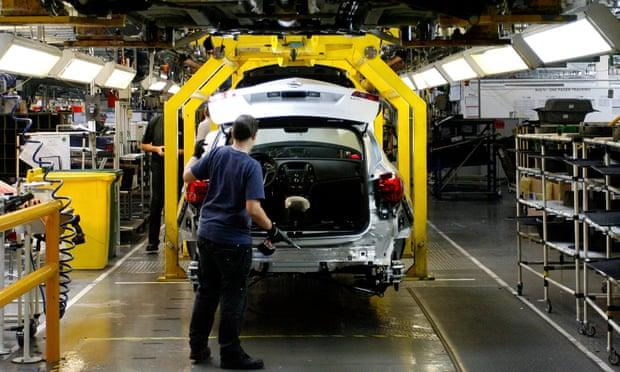
The Toyota (TYO: 7203) President has become the latest to warn over a no-deal Brexit, saying it should be avoided “at all costs”.
Akio Toyoda said that British and EU leaders had failed to reach an agreement, which was leading to apprehension among businesses.
“Apprehension is, therefore, growing that a withdrawal without agreement may become a reality,” said the Toyota boss.
For the automobile industry in Japan to continue contributing to the economies in the UK and EU, “it is necessary that an unimpaired trade environment between the United Kingdom and the European Union be maintained and that the automobile industry’s activities remain predicated on shared standards, including those regulating vehicle certification”.
He added that if the UK crashes out of the EU without a deal, it would negatively affect Toyoto due to “suspended production activities resulting from failed just-in-time logistics operations, declines in revenue and revised vehicle sales prices caused by spiralling logistics and production costs”.
“We hope that both the UK and EU governments will continue to make maximum efforts to reach a satisfactory settlement and that a withdrawal without agreement is avoided at all costs,” he added.
Earlier this week, Ford’s (NYSE: F) European boss warned that a no-deal Brexit “would be pretty disastrous” for British industry.
“While we think this is a worst-case scenario and that a UK-EU deal will be reached, we will take whatever action is necessary to protect our business in the event of a hard Brexit,” added Steven Armstrong.
In contrast, British inventor James Dyson has said that a no-deal Brexit “will not change anything”.
Responding to numerous car manufacturers who have voiced Brexit concerns, the Brexit advocate said: “Taxes or delays at the customs, it is not important compared to the manufacturing costs. Car manufacturers complain all the time. But there is no problem without [a] solution.”
Pendragon shares plummet on profit warning

Shares in Pendragon tumbled 20% in morning trading after the car manufacturer issued a profit warning.
In a trading update for the third quarter, the group expects underlying profit for the year to reach £50 million. This is a 17% fall in profits last year, which were £60.4 million.
Pendragon said the fall in profits was due to the introduction of Worldwide Harmonised Light Vehicle Test Procedure, which disrupted sales.
“This has caused significant new vehicle supply disruption which gives us cause for concern over the coming months for new vehicle sales and profitability. This will clearly have an effect on the group,” said the company.
According to the Society of Motor Manufacturers and Traders (SMMT), car sales in the UK fell by a fifth in September.
A total of 338,834 new cars were sold in September. This is down 20.5% compared with the same month last year.
Analysts at Jefferies said the trend would continue into next year.
“We understand that new car sales are following similar trends in October as the disruption remains, and subsequently new car registrations for the UK could again be down double digits,” they said.
“While we expect into 2019 that the issues are worked through, there is an element of new car sales that will be lost as consumers and businesses make other arrangements.”
In other motor news, MPs are calling for a ban on new petrol and diesel car sales by eight years to 2032.
A government spokesperson said: “Our Road to Zero strategy outlined our ambition for the UK to be the best place in the world to build and own an electric vehicle.”
Shares in Pendragon (LON: PDG) are currently trading down 9.49% at 23,85 (0847GMT).
Stena Line: no-deal Brexit could hit food supplies
Stena Line has warned that a no-deal Brexit could hit food supplies to the UK.
The firm is the largest ferry firm on the Irish seas, with three UK ports. The group has said that “anxiety is high” on ports.
Ian Hampton, the senior executive of Stena Line, told BBC Radio 4’s Today Programme: “We can’t plan on the basis of what we don’t know, so we’re very anxious about the outcome.”
The friction following a no-deal Brexit was likely to have an impact on trade flows, which could mean traders bypass the UK altogether.
Hampton also expressed concern whether a new computer system to handle customs declarations could handle the increase in volumes following a no-deal Brexit.
“I’m not sure it can. This is a system that was not written for the purpose we’re now asking of it and I think that would [create] huge concerns.”
An EU spokesperson has said it was engaging with ports throughout the Brexit transition.
“It is crucial to keep trade flowing when we leave the EU,” the spokesman said.
“That is why we are proposing a pragmatic and ambitious future economic relationship with the EU, and we remain committed to reaching agreement on the Withdrawal Agreement and future framework this autumn.”
On Thursday, Theresa May said that there was a possibility of increasing the Brexit transition period.
“It was mentioned – both sides mentioned the idea of an extension of a transition period as one possibility that is on the table and would be looked into,” said the European Parliament President Antonio Tajani.
“Theresa May during her speech said it’s possible to achieve an agreement also on a transition period, but not with a clear position on the timing,” he added.
In further news, a source has said that there will be no special Brexit summit in November due to sufficient progress already being made.
Amazon to create 600 jobs in Manchester

Amazon (NASDAQ: AMZN) has announced plans to open its first Manchester office, creating 600 jobs.
The office will be in the Hanover Building in the city’s Northern Quarter and the team will work on research and development.
UK manager for Amazon, Doug Gurr, has said the UK is “taking a leading role in our global innovation”.
“These are Silicon Valley jobs in Britain, and further cement our long-term commitment to the UK,” he continued.
“Manchester was at the heart of the industrial revolution and has a fantastic history of innovation. The city offers an incredibly talented workforce and a budding tech scene with some of the most exciting, fast-growing tech companies in the UK situated here.”
The tech giant also plans to expand in Edinburgh and Cambridge, where it will be creating 250 and 180 roles respectively.
In Cambridge, employees are working on the Alexa digital personal assistant system and drone development.
Andy Burnham, who is the mayor of Greater Manchester, said: “Amazon opening their new office in Manchester is another vote of confidence in our city-region as a global digital leader.”
Liam Fox, the British secretary of state for International Trade, also welcomed the news and said: “Amazon’s decision to create hundreds of highly-skilled jobs in Manchester, Edinburgh and Cambridge is an enormous vote of confidence in the UK and a signal to the world that the UK is very much open for business.”
The group has said it has invested £9.3 billion in the UK since 2010.
By the end of the year, it hopes to employ 27,500 staff.
Earlier this month, Amazon announced it would raise the company’s minimum wage to £10.50 an hour in London and £9.50 across the rest of the country.
It later said the rise in minimum wage would result in cutting share bonuses for employees, offsetting at least half of the pay increase.
Addison Lee plans £300 million refinance
Addison Lee is planning to refinance by £300 million in order to strengthen itself against its rivals. Indeed, Addison Lee Group has begun negotiating a deal with investment banks to replace existing debt facilities.
The negotiations follow as two of its competitors, Uber and Lyft, plan to launch flotations on the US stock market. On 17 October, Uber announced a $120 billion (£91 million) valuation in a stock market flotation planned for next year. In fact, the company’s float is predicted to be the most highly anticipated listing of 2019. If Uber does receive a high valuation, it will be worth three times more than Ford. Equally, it will be valued over twice as much as the electric car firm Tesla.
Addison Lee must compete with the popularity of other market giants.
The company is owned by the private equity investor Carlyle. Carlyle has owned what once was London’s largest cab operator since 2013. Addison Lee is run by chief executive Andy Boland. It has roughly 5,000 cars in London and has about a 10% share of the market. It falls behind London’s iconic traditional black cabs and cab-hailing mobile app Uber. Today, there are a variety of cab-hailing mobile apps. In addition to Uber and Addison Lee, smartphone users can download Gett, Kabbee, MyTaxi, BlaBlaCar and Taxify. Addison Lee said it was set to transform “from a London private hire business to a global premium ground transport provider”. This was announced in its results for the year to August 2017. Revenues increased by 31% to £346 million, and the figure is predicted to exceed £400 million next year. More and more apps are becoming available to smartphone users, each designed to streamline the cab experience. As a result, Addison Lee has experienced strong competition for a share in the market. As a result, it has made a series of purchases to ignite its popularity.Gatwick announces plans to use second runway

Gatwick has announced that it will be utilising its standby runway by the mid-2020s. Indeed, the runway that is currently on standby will be used for departing flights by the mid of the next decade.
Currently, the runway on standby can only be operated when Gatwick’s primary runway undergoes maintenance. Equally, the planning agreement it currently operates under allows the standby runway to also be used for emergencies. However, this agreement, which has been in place for 40 years and signed with the West Sussex county, is set to end in 2019.
In addition, the airport is proposing to spend £500 million to widen the runway. It may be widened by 12 meters to align with safety requirements, allowing 10-15 short-haul flights to depart each hour. This operates as part of a plan to see over 100,000 extra flights a year to the airport by 2032.
The airport said it was researching a master plan which “sets out how Gatwick can grow and do more for Britain”.