
Mediclinic shares fall on profit warning

Shares in Mediclinic (LON:MDC) fell on Wednesday, after the company issued a trading update on its interim results.
The firm, which specialises in providing private healthcare, warned of weaker-than-expeceted performance in Switzerland.
The South African company said it expects to report a 2% increase in sales for the first half the year to September-end, alongside a 4% decline in adjusted profits.
Commenting today, Dr Ronnie van der Merwe, CEO, said:
“Trading in the first half of the year experienced the customary seasonality in Switzerland and the Middle East. In the Middle East, we delivered a gradual improvement in revenue and margin expansion ahead of the anticipated stronger growth in the second half of the year. In Switzerland, the business continues to adapt to recent regulatory changes in the outpatient environment, which in the period had a greater than expected impact on admissions and the insurance mix.”
“In Southern Africa, margins were maintained on lower volumes due to weakness in the second quarter from fewer pneumonia and bronchitis related cases during the winter.
He added: “For the full year, our performance in Southern Africa remains in line with guidance. In the Middle East, full year EBITDA delivery remains on track with revenue growth lower than previously expected. In Switzerland, we now expect to deliver modest revenue growth in the full year including contribution from Clinique des Grangettes, with an adjusted EBITDA margin of around 16%.”
Alongside locations in Switzerland, the firm operates in South Africa, Namibia, and the United Arab Emirates.
As well as the South African Securities Exchange (JSE), Mediclinic is also listed on the London Stock Exchange and is a constituent of the FTSE-250 Index.
As of currently, the company also holds a 29.9% stake in Spire Healthcare, a UK-based private healthcare provider.
Shares in Mediclinic are currently trading -17.53% as of 12.52AM (GMT).
Elsewhere across the markets, online clothing retailer Asos shares (LON:ASC) rallied on Wednesday on boosted profits.
Conversely, shares in low-cost airline Flybe fell during early morning trading, after the company warned on profits.
Crest Nicholson issues profit warning, shares fall 14pc

The housebuilder Crest Nicholson issued its third profit warning in two years on Wednesday.
The company expects pre-tax profits to be between £170-190 million for the year to 31 October, which is below market expectations of £205 million.
“The usual autumn pick up in sales volumes has not been evident during September and October, with many customers put off decisions to buy whilst current political and economic uncertainties persist,” said Stephen Stone, Crest Nicholson’s executive chairman.
Shares fell by 14% in early trading.
The group have warned that demand is low amid Brexit uncertainties, with shares also falling at rival groups such as Berkeley (LON: BKG) and Persimmon (LON: PSN).
Demand has fallen so much that Crest Nicholson has closed its London office.
Demand for homes targeted at “aspirational” buyers have “suffered from a lack of confidence among discretionary buyers, who cite economic and political uncertainty as a disincentive to transact”.
The group’s board asked Stone to lead a new strategy which will “focus on shareholder returns by prioritising cash flow and dividends, maximising value in the land and development portfolio and improving operational efficiencies”.
The group’s finance director, Robert Allen, plans to leave the company after a short handover period.
Housebuilder Barratt (LON: BDEV) has seen a more positive set of results, with a strong start to its financial year.
David Thomas, Barratt’s chief executive, said: “The group has started the new financial year in a strong position, with a good sales rate, healthy forward order book and customer demand supported by an attractive lending environment.”
Shares in Crest Nicholson (LON: CRST) are trading down 4.84% at 307,40 (1253GMT).
Brexit £36bn divorce bill hangs upon Irish backstop
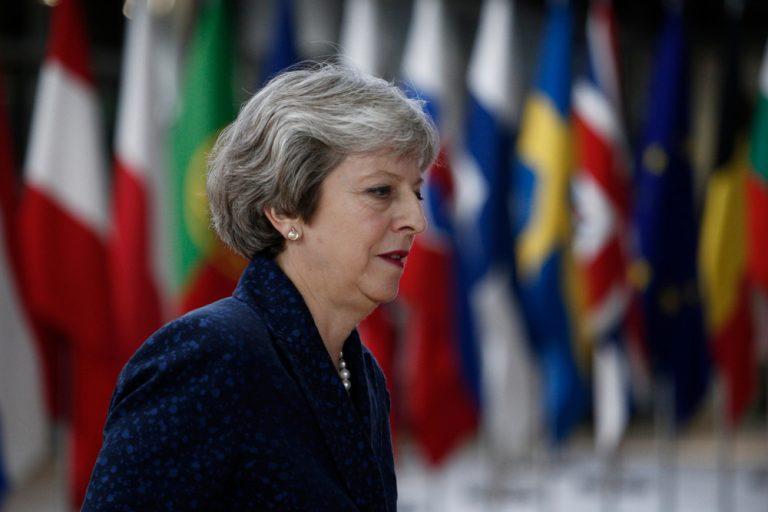
With conflicting rhetoric on how close the UK are to reaching a Brexit deal with the EU, Chancellor Philip Hammond delivered a solemn warning on the morning of the prime minister’s meeting with the EU27.
Hammond has warned that should a deal fail to be brought to fruition, the resulting ‘divorce bill’ could mount to anywhere between £30-36 billion, only some £3-9 billion less than the initial cost of striking a deal.
As stated by a cabinet source, “the Treasury’s legal advice was that if we left without a deal we would still have to pay the EU £30-36 billion because we would be unlikely to win any case that went to international arbitration,”
Theresa May will meet the EU27 leaders this evening, with the goal of making progress on talks prior to the meeting with the European Council in December, as hopes of a November summit dwindle. The progression of talks remain hinged on the idea that some form of backstop for the Irish border will be put in place upon the UK’s exit from the EU bloc next March. The backstop will act as a form of short-term customs safety net, and while May has categorically ruled out the possibility of a backstop in talks with her cabinet on Tuesday, EU negotiators have stated that any extension on a Brexit transition would be contingent on some form of backstop being put in place.
Number 10 commented that some progress had been made on future trade frameworks and the idea of a backstop for trade and customs covering the UK as a whole. However, negotiator Michael Barnier stated that a one-year extension on negotiations would be subject to the UK accepting the terms of a two-tier backstop.
French finance minister Bruno La Maire has said on the morning of the talks, that we “are not far from a deal”.
Similarly, May’s spokesman added, “We want to secure a deal as quickly as possible. We think it is in the best interests of the UK and European Union to forge that deep future partnership”.
However, May faces the monumental tasks of quelling domestic antagonism and the Autumn budget, before she can even venture to think about reaching a deal for Brexit. The Irish backstop issue appears to be the deciding factor, with Brexiteers and DUP members threatening to vote down the budget should she compromise and pander to EU demands. At the same time, the December summit could well be the prime minister’s last chance to agree on a deal with the EU in time for it to be ratified by EU parliaments and Commons, before March 2019.
In the words of one EU diplomat, “The clock is ticking – the ball is in the UK court. The British have a political problem, they have to come back to us when they’ve solved it.”
The question hangs in the air, should we prepare for a no deal, should we push for a Canada plus scenario, or is there a chance the UK will not leave at all?
Flybe shares plummet after profit warning
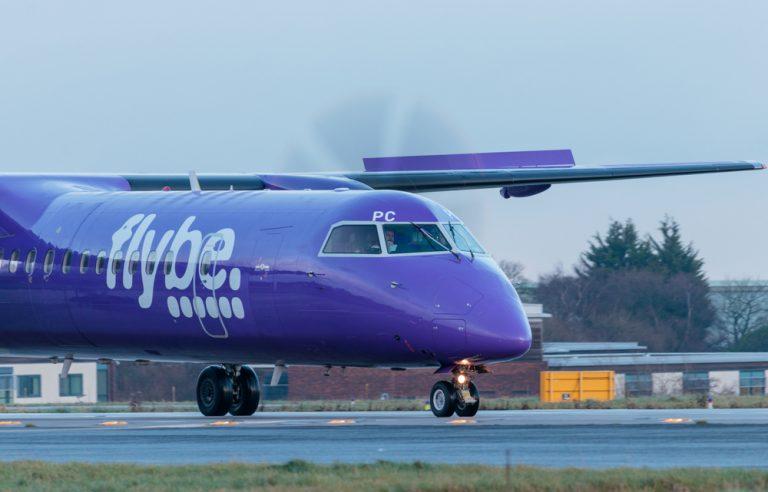
Flybe (LON:FLYB) shares plunged on Wednesday morning, after the company issued a profit warning for the year.
The low-cost airline warned that amid softer trading, it now expects second half revenue to be behind market expectations.
Flybe attributed the disappointing performance to higher fuel costs, carbon prices as well as pound volatility for further denting profits.
Specifically, the company said it now expects full year pre-tax loss of £12 million, significantly higher than anticipated. The company also said the sum includes the benefit of £10 million from an onerous lease provision release.
This includes an estimated GBP29m of adverse year-on-year impact from weaker sterling, fuel and carbon prices.
Looking ahead, the budget airline said it was looking into ways to reduce costs.
Christine Ourmières-Widener, Chief Executive Officer of Flybe, said:
“We have made progress in driving our unit revenues across the Summer season, but we are now seeing a softening in the market. We are reviewing further capacity and cost saving measures while continuing to focus on delivering our Sustainable Business Improvement Plan. Stronger cost discipline is starting to have a positive impact across the business, but we aim to do more in the coming months, particularly against the headwinds of currency and fuel costs. We continue to strengthen the underlying business and remain confident that our strategy will improve performance.”
Flybe is set to announce its interim results next month.
The last few years have been particularly turbulent for many airlines, with Monarch collapsing into administration towards the end of 2017.
Moreover, rival airlines such as Ryanair recently warned on profits, as strike action impacted profits.
Flybe is based in Exeter, England and is the largest independent regional airline in Europe.
The airline was founded back in 1979 as Jersey European Airways.
Shares in Flybe are currently -38.53 % as of 11.37AM (GMT) on the warning.
UK inflation falls to 2.4% in September

UK inflation levels fell to 2.4% in September, driven in part by lower food prices.
The Office For National Statistics (ONS) said inflation in September fell to 2.4%, compared to 2.7% back in August.
This was attributed to lower prices for both food and non-alcoholic drinks.
Moreover, the ONS said that transport also had a marked impact upon the dip, with passenger fares showing larger price falls between August and September than a year ago.
Mike Hardie, head of inflation at the ONS, said: “Food was the main downward pull on inflation as last year’s September price rises failed to reappear, while ferry prices dropped after their surprisingly high summer peak.
“However, it wasn’t all one-way traffic with energy suppliers pushing up their prices.”
These statistics follow recently released official figures, which revealed that wages rose on average 3.1%. This marked the fastest pace of wage growth in a decade.
Specifically, the ONS said unemployment fell by 47,000 to 1.36 million. Meanwhile, unemployment rate remained at a 43-year low of 4%.
Pay growth – excluding bonuses – was up from 2.9% from the previous period.
The Chancellor is set to deliver his highly-anticipated Autumn budget on the 29th of October, which will no doubt tackle inflation.
Ahead of the budget, The British Retail Consortium (BRC) have called upon the government to take action on business rates.
Helen Dickinson, chief executive of the BRC, said: “Retailers need the forthcoming Budget to reduce the cost burden on retail businesses. This will incentivise innovation and support the industry in creating quality jobs and providing great choice for consumers at competitive prices – future-proofing retail to ensure the best is made of the opportunities and challenges thrown up by transformation.
“The business taxation system is in urgent need of reform but any shift to an online sales tax would represent a double jeopardy for many retailers who are responding to customer demand and investing in online retailing. Eight out of the top 10 online retailers also have physical stores.”
The high-street has been particularly struggling as of late, with 2017 marking the worst start for the year for retail in five years.
Asos shares bounce 14% amid soaring profits
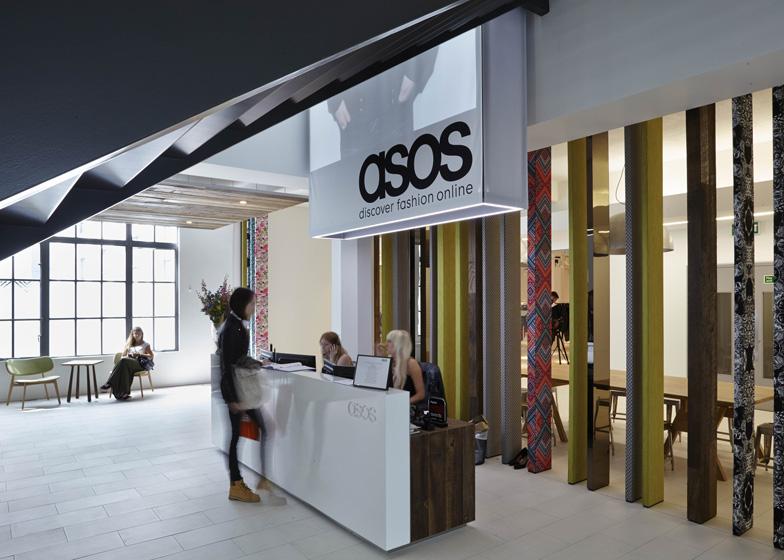
Asos shares (LON:ASC) ticked up as much as 14% on Wednesday after the company posted a strong set of results for the year.
The online fashion retailer posted a £500 million rise in revenue to £2.4 billion for the year to 31 August.
Profit also rose 28% to £102 million, slightly above expectations.
Back in July, Asos issued a sales warning, sending shares 10% lower.
The fast fashion retailer said that whilst it remained on track to reach profit targets, sales growth would be “likely towards the lower end” of the expected 25 – 30% range.
Chief Executive, Nick Beighton commented on the results:
“Our reported profit increase was achieved despite bearing material transition costs due to our investment programme,”
“All our financial and customer key metrics have shown positive growth. Our guidance remains unchanged both for the current year and the medium term, despite our record levels of investment.”
Regarding future growth, Beighton remained upbeat:
“The potential for our business is huge and we remain focused on building Asos into the world’s number one destination for fashion-loving twentysomethings.”
Online retailers such as ASOS and Amazon have continued to outperform the more traditional high-street stores, as consumers increasingly turn to the ease of the Internet to shop.
Earlier this week, fashion chain Coast announced its collapse into administration becoming the latest victim of the high-street crisis.
Shares in ASOS are currently trading +14.20% as of 10.38AM (GMT).
Canada is second country to legalise recreational cannabis
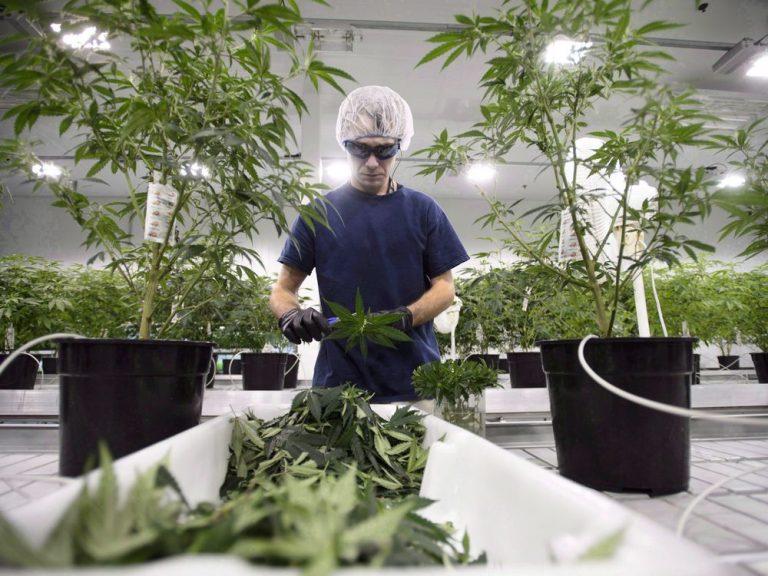
Canada has become the world’s second country to legalise the possession and recreational use cannabis.
Whilst medical marijuana has been legal in the country since 2001, Justin Trudeau’s government have been working towards this including recreational marijuana.
According to an Associated Press survey of the province, 111 legal cannabis shops are planning to open across the country on the first day of legalisation.
The first country to legalise marijuana was Uruguay in 2013.
It will be illegal to possess over 30 grams in public, grow more than four plants per household and to buy from an unlicensed dealer.
In 2015, Canadians were estimated to have spent about C$6 billion (£3.4 billion) on cannabis – this al almost as much as was spent on wine.
Tom Clarke, 43, opened his shop in Canada at midnight to start selling cannabis as soon as possible.
“I am living my dream. Teenage Tom Clarke is loving what I am doing with my life right now,” he said.
The Canadian Medical Association Journal published an editorial on Monday, which called legalisation “a national, uncontrolled experiment in which the profits of cannabis producers and tax revenues are squarely pitched against the health of Canadians”.
Trudeau said: “We’re not legalising cannabis because we think it’s good for our health. We’re doing it because we know it’s not good for our children.”
“We know we need to do a better job to protect our children and to eliminate or massively reduce the profits that go to organized crime,” he added on the eve of the reform.
A senior government official said that people with a record will be allowed to apply for a pardon.
Uber targets $120bn valuation

Uber may be targeting a $120 billion (£91 billion) valuation in a stock market flotation planned for next year.
According to the Wall Street Journal, banks who are hoping to run the float have told the ride-hailing app to aim for this high valuation.
Uber’s float is likely to be the most highly anticipated listing of next year.
If it is valued to highly, it will be worth three times more than Ford (NYSE: F) and over twice as much as the electric car firm Tesla (NASDAQ: TSLA).
In April, Uber was valued at $72 billion. This was after the Toyota (TYO: 7203) invested $500 million into the group and teamed up on developing driverless cars.
If Uber does debut at $120 billion, it will be the biggest since the Alibaba Group of China began trading back in 2014.
Uber and Lyft are both planning flotations for 2019.
Kathleen Smith, a principal at Renaissance Capital, said: “The first ride-sharing I.P.O. will get a lot of attention, so I think there’s some marketing value to being the first one out of the gate.”
Lyft recently picked JPMorgan Chase (LON: JMC) to lead its own initial public offering.
Earlier this year Apple and Amazon both reached trillion-dollar valuations.
Netflix shares soar on subscriber growth

Netflix (NASDAQ: NFLX) has announced a higher than expected growth in subscribers, sending shares up 13.5% in after-hours trading.
The streaming platform added 6.96 million new members in the last three months and now has a total of 137 million subscribers.
The group are expecting another 9.4 million subscribers during the fourth quarter, which is a 13% increase from a year ago.
Netflix has gone strength to strength as shares have increased 78% this year alone. It is valued more than 21st Century Fox and almost as much as Disney at $153 billion.
“Our broad slate of original programming helped drive a solid quarter of growth with streaming revenue increasing 36% year over year and global membership surpassing 130 million paid and 137 million total. We’re thrilled to be growing internet entertainment across the globe,” said Netflix in a statement.
The company have said it plans to spend $8 billion on content this year as a way to lure more customers in. In 2018, the group have released new seasons of Orange is the New Black, Marvel’s Luke Cage, Ozark and Bojack Horseman.
Jim Nail, who is an analyst at Forrester Research, said the most recent figures suggest that the second quarter result had been an “aberration, likely the results of a somewhat low volume of new content”.
Netflix is one of the Faang companies (Facebook (NASDAQ: FB), Apple (NASDAQ: AAPL), Amazon (NASDAQ: AMZN), Netflix and Google (NASDAQ: GOOG)) and is the first to report this quarter.
Shares in the group are currently trading +3.98% at 346,40 (0826GMT).
British American Tobacco warns of hit to revenue, shares fall

British American Tobacco (LON: BATS) has warned that its full-year earnings growth has fallen 7%.
In a trading update released on Tuesday, the FTSE 100 company said blamed the fall in earnings on currency headwinds.
expected revenue from products including e-cigarettes and tobacco-heating devices is down from £1 billion to £900 million.
Chief executive Nicandro Durante said: “I am delighted with the progress we are making with our Potentially Reduced Risk Products business and we have a great pipeline of new product launches over the coming months which will build on this success.”
“At the same time, our combustible tobacco business continues to perform well. We remain on track for a strong performance in 2018,” he added.
Graham Spooner, investment research analyst at The Share Centre, said: “BAT is a share with an excellent long-term track record but it has come under pressure this year and hit a four-year low last week.”
“But overall the group stated that it continues to perform well and is still is confident to achieve good adjusted revenue growth mainly as a result of its strategic brand portfolio,” he added.
Shares fell 1.4% to 3,283p in morning trading. They are currently trading down 3.17% at 3,225p.