
Amazon experiences over 440 health and safety incidents

Since 2015, Amazon has experienced over 440 health and safety incidents at its UK warehouses. This is according to Freedom of Information (FoI) requests.
It has been revealed that workers suffered fractures, head injuries, contusions, and collisions with heavy equipment. This is following the GMB union’s request of data from local authorities.
Earlier this year, Amazon raised its minimum wage for US and UK employees.
But, as the data collected reveals, in 2015-2016 there were 80 health and safety incidents. This increased to 114 in 2016-2017 and then to 149 in 2017-2018. Up until now in 2018-2019, 99 health and safety incidents have been reported.
The data reveals a variety of injuries sustained by warehouse workers. For example, staff worked in extremely low temperatures of 3 degrees Celsius at a warehouse in Dundee. Moreover, one worker was injured using their hand to remove a label that was trapped in a conveyor belt. Equally, another worker was injured after being knocked over and trapped underneath a reversing heavy goods vehicle. Not to mention a forklift driver who crashed into a column at a warehouse, almost causing a floor to collapse.
FTSE 100 hits 6-month lows as Italian budget pressure builds

The FTSE 100 (INDEXFTSE: UKX) hit the lowest levels for six months on Tuesday as fears over the Italian budget stand-off sucked the confidence out of European equity markets.
The FTSE 100 fell beneath 7,200 on Tuesday, the lowest level since mid-April.
Italy has set out a budget plan that equates to 2.4% of GDP, something that has been met by fierce resistance from Brussels and raised concerns among investors about the long term financial health of Europe’s 4th largest economy.
Despite pressure in Italian bonds and condemnation from European leaders, Italy have been unwavering in there commitment to the plan.
“We go ahead calm and responsible.”
“There are no plan B or backtracks. We are convinced that the planned budget measures will create jobs and wealth,” said Italian deputy Prime Minister Matteo Salvini.
The market has met the Italian resistance with the selling of Italian bonds. Yields in 10-year Italian bonds closed at their highest level since 2014 yesterday, yet the Italian administration seems unperturbed, heightening the risk of a financial shock.
“A spread at 400, 500? We are committed to making the spread reflect the fundamentals. If it goes to 500, the government will do what it needs to do.”
“If everyone sells, we will have capital outflows and we will have to face the situation. Faced with a financial crisis, the government will do what it must do, as Draghi did,” said economy minister Giovanni Tria.
Global rates are rising
Italy and their rising rates are not the only country causing angst among investors. US rates have soared above 3% in recent weeks leading to volatility in global equities, particularly emerging markets who are suffering capital outflows as investor reallocate to US treasuries. In the UK, gilts are at the highest level for a year after recent BoE rate hikes and the promise of the UK government to halt years of austerity.Italy’s budget: shares suffer as EU clash prevails
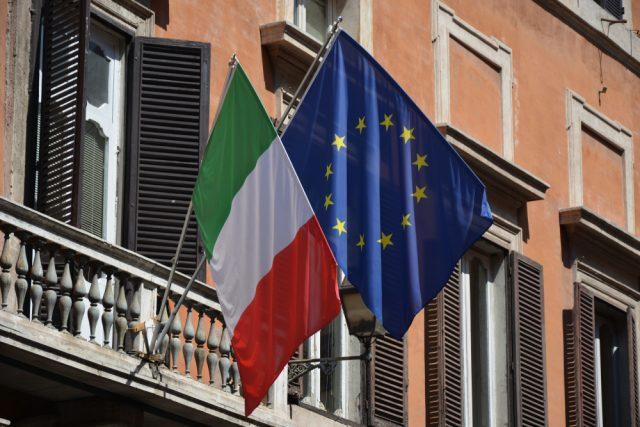
Italy’s budget has prompted EU backlash because its three year deficit plans breach rules on government borrowing. As a result, Italian shares and bonds have experienced a sharp sell-off. This has been caused by the concerns of investors regarding the deepening tensions between the Italian government and the European Union.
At the end of September, the Italian government set a budget deficit next year equaling 2.4% of Italian GDP.
Despite this figure being below the EU’s deficit limit of 3% of GDP, the news was not well received. This is because Italy is the third-largest economy in the Euro zone, and yet has a debt second to Greece. Equally, under the current budget plan the structural deficit would rise which goes against EU regulations.
But, the Italian government’s initial response was to not back down. They refused to revise Italy’s budget despite growing pressure from Brussels and Italy’s Euro zone partners. Italy’s economy minister, Giovanni Tria, attempted to ease tensions by claiming the country will try to cut its deficit in 2020 and 2021.
But, Italy’s budget is still harming the financial markets.
The euro reached a seven-week low against the US dollar. This is following Italy’s deputy prime minister’s, Matteo Salvini’s, claim that EU leaders were “enemies of Europe”. Milan’s FTSE MIB was at its weakest level in 18 months at 2.4%. Equally, yields on ten-year Italian bonds rose to the highest they have been in four and a half years. As a result, it has become even more expensive for Rome to borrow money. Yesterday, Matteo Salvini continued to criticise the European Commission President Jean-Claude Juncker and European Commissioner Pierre Moscovici. “The enemies of Europe are those sealed in the bunker of Brussels.” “It’s Juncker and Moscovici who have brought fear and job insecurity to Europe.” Bannockburn Global Forex’s chief market strategist, Marc Chandler, has expressed the fears of many investors. “This confrontation is set to escalate, and this is hurting Italian assets”, he said.Uber drivers to take part in strike action

Uber drivers will strike from 1 pm across UK cities today.
Protesting over pay and working conditions, hundreds of drivers will turn off their apps this afternoon.
Organised by The United Private Hire Drivers (UPHD) branch of the Independent Workers Union of Great Britain (IWGB), there will also be protests outside the offices in London, Nottingham and Birmingham.
James Farrar, who is the head of the UPHD branch, said “hundreds” are expected to join the strikes on Tuesday.
“If you look at social media feeds its viral at the moment. In the history of our union, I’ve never seen anything quite like it,” he said.
The unions are demanding an end to what it describes as the unfair deactivation of drivers. There is also a push for the increase in fares from £1.25 per mile to £2 per mile and a 10% reduction in commissions paid by drivers.
Labour deputy leader John McDonnell has supported the strike. He retweeted the UPHD’s announcement of the strike and protests and wrote: “I support this strike for better employment rights and urge others to respect the app picket line.”
Uber said: “We are always looking to make improvements to ensure drivers have the best possible experience and can make the most of their time driving on the app.”
“That’s why over the last few months we’ve introduced dozens of new features, including sickness, injury, maternity and paternity protections. An academic study last month found that drivers in London make an average of £11 an hour, after accounting for all of their costs and Uber’s service fee.”
“We continue to look at ways to help drivers increase their earnings and our door is always open if anyone wants to speak to us about any issues they’re having.”
This is the latest action taken by employees in the gig economy. Last week, employees from McDonald’s (NYSE: MCD), Wetherspoons (LON: JDW) and TGI Fridays (CNSX: TGIF) took part in a joint national strike.
Norwegian Air Shuttle becomes biggest non-U.S. airline to New York

Norwegian Air Shuttle has surpassed British Airways as the biggest non-U.S. airline on transatlantic flights to and from New York, Reuters reports.
It has been reported that Norwegian Air Shuttle took 1.67 million flyers to or from airports around New York. This figure is just above that of British Airways, which comes in at 1.63 million passengers. Indeed, Norwegian Air Shuttle has surpassed British Airways in the year long period from July 2017 to July 2018.
Over the last five years, Norwegian Air Shuttle has rapidly expanded in the transatlantic market.
In fact, the owner of British Airways was prompted to buy the company earlier this year. The data has emerged from the Port Authority of New York and New Jersey. Additionally, four U.S airlines are the largest to fly international passengers out of New York. The New York airports include John F. Kennedy International, Newark Liberty International and LaGuardia. But, the biggest non-U.S. flyer of international passengers is Air Canada. The majority of these flights are, however, between the US and Canada. As for Europe’s long haul flight market, new contenders have disrupted the market. Norwegian Air Shuttle and Wow Air are just a few companies revolutionising low-cost long haul travel. A British Airways spokeswoman commented: “Our commitment to New York is as strong as ever,” “We fly up to 70 times a week from all three of our London airports,” “We recently announced a $55 million (£49.7 million) investment on new lounges, improved food, seating and shops at JFK Terminal 7”. Moreover, a spokesman from Norwegian Air Shuttle said: “Transatlantic routes have been long dominated by carriers with outdated legacies running on fumes,” “Norwegian will continue to spread its wings to the Big Apple with a third-daily service between London and New York JFK”. Last month, British Airways reported that its customer data had been stolen. At 12:26 GMT +1 today, shares in British Airways Owner IAG (LON:IAG) were trading at +0.23%. At 16:00 GMT -4 yesterday, shares in Norwegian Air Shuttle (OTCMKTS:NWARF) were trading at -4.24%Wealthsimple: Investing on AutoPilot

Sponsored content
Wealthsimple is latest company to establish itself in the UK and join the digital revolution in investment advice.
The company was founded in Canada in 2014 and now operates in Canada, the United States and the UK.
Founded by a group of experts in wealth management and technology entrepreneurs, the service has 100,000 clients and manages over £1.5 billion in assets.
According to Wealthsimple’s digital investment returns forecaster, somebody investing £15,500 today with monthly contributions of £125 could have a pot worth between £53,600-£108,200 in 15 years, when investing in their balanced portfolio.
Investor are able to choose from three types of investment strategy depending on their attitude to risk; conservative, balanced and growth.
Find out more about Wealthsimple’s investment accounts here
 When you invest with Wealthsimple, your funds will be invested in a selection of ETFs. Depending on the strategy you decide to invest in, your investment will be spread among a mixture of government issued and corporate fixed income and global equities .
Those choosing for a conservative approach can expect around 46% to be allocated to UK gilts where as those selecting the more equity heavy growth portfolio can expect just 3% to be allocated to UK gilts with 35% allocated to UK equities.
As well as UK equities and gilts, Wealthsimple will invest in US equities, emerging market bonds and equities, and European equities.
Find out more about Wealthsimple’s investment strategies here
Wealthsimple allows you to invest through a range of accounts depending on your requirements. Those seeking a standard investment account can invest through a general account whereas those saving for retirement will soon be able to invest through the Wealthsimple SIPP.
The Wealthsimple ISA and Junior ISA also provides investors with a home for their annual ISA allowance.
Unlike some other digital advisors, Wealthsimple provides a free portfolio evaluation service for new clients. To get a free review all you have to do is simply upload a copy of your portfolio and one their investment advisors will conduct a review and personally relay the results.
Investors using Wealthsimple will also benefit from a simple and transparent fee structure.
Those investing under £100,000 will be charged 0.7% and for portfolios over £100,000 the fee drops to 0.5%.
In addition, readers of UK Investor Magazine will enjoy a promotional bonus for taking up Wealthsimple’s service.
UK Investor Magazine readers get their first £10,000 of investments with no management fees for a year when they sign up for their first account at Wealthsimple.
Sign-up now to add this offer to your account.
When you invest with Wealthsimple, your funds will be invested in a selection of ETFs. Depending on the strategy you decide to invest in, your investment will be spread among a mixture of government issued and corporate fixed income and global equities .
Those choosing for a conservative approach can expect around 46% to be allocated to UK gilts where as those selecting the more equity heavy growth portfolio can expect just 3% to be allocated to UK gilts with 35% allocated to UK equities.
As well as UK equities and gilts, Wealthsimple will invest in US equities, emerging market bonds and equities, and European equities.
Find out more about Wealthsimple’s investment strategies here
Wealthsimple allows you to invest through a range of accounts depending on your requirements. Those seeking a standard investment account can invest through a general account whereas those saving for retirement will soon be able to invest through the Wealthsimple SIPP.
The Wealthsimple ISA and Junior ISA also provides investors with a home for their annual ISA allowance.
Unlike some other digital advisors, Wealthsimple provides a free portfolio evaluation service for new clients. To get a free review all you have to do is simply upload a copy of your portfolio and one their investment advisors will conduct a review and personally relay the results.
Investors using Wealthsimple will also benefit from a simple and transparent fee structure.
Those investing under £100,000 will be charged 0.7% and for portfolios over £100,000 the fee drops to 0.5%.
In addition, readers of UK Investor Magazine will enjoy a promotional bonus for taking up Wealthsimple’s service.
UK Investor Magazine readers get their first £10,000 of investments with no management fees for a year when they sign up for their first account at Wealthsimple.
Sign-up now to add this offer to your account.
 When you invest with Wealthsimple, your funds will be invested in a selection of ETFs. Depending on the strategy you decide to invest in, your investment will be spread among a mixture of government issued and corporate fixed income and global equities .
Those choosing for a conservative approach can expect around 46% to be allocated to UK gilts where as those selecting the more equity heavy growth portfolio can expect just 3% to be allocated to UK gilts with 35% allocated to UK equities.
As well as UK equities and gilts, Wealthsimple will invest in US equities, emerging market bonds and equities, and European equities.
Find out more about Wealthsimple’s investment strategies here
Wealthsimple allows you to invest through a range of accounts depending on your requirements. Those seeking a standard investment account can invest through a general account whereas those saving for retirement will soon be able to invest through the Wealthsimple SIPP.
When you invest with Wealthsimple, your funds will be invested in a selection of ETFs. Depending on the strategy you decide to invest in, your investment will be spread among a mixture of government issued and corporate fixed income and global equities .
Those choosing for a conservative approach can expect around 46% to be allocated to UK gilts where as those selecting the more equity heavy growth portfolio can expect just 3% to be allocated to UK gilts with 35% allocated to UK equities.
As well as UK equities and gilts, Wealthsimple will invest in US equities, emerging market bonds and equities, and European equities.
Find out more about Wealthsimple’s investment strategies here
Wealthsimple allows you to invest through a range of accounts depending on your requirements. Those seeking a standard investment account can invest through a general account whereas those saving for retirement will soon be able to invest through the Wealthsimple SIPP.
 The Wealthsimple ISA and Junior ISA also provides investors with a home for their annual ISA allowance.
Unlike some other digital advisors, Wealthsimple provides a free portfolio evaluation service for new clients. To get a free review all you have to do is simply upload a copy of your portfolio and one their investment advisors will conduct a review and personally relay the results.
Investors using Wealthsimple will also benefit from a simple and transparent fee structure.
Those investing under £100,000 will be charged 0.7% and for portfolios over £100,000 the fee drops to 0.5%.
In addition, readers of UK Investor Magazine will enjoy a promotional bonus for taking up Wealthsimple’s service.
UK Investor Magazine readers get their first £10,000 of investments with no management fees for a year when they sign up for their first account at Wealthsimple.
Sign-up now to add this offer to your account.
The Wealthsimple ISA and Junior ISA also provides investors with a home for their annual ISA allowance.
Unlike some other digital advisors, Wealthsimple provides a free portfolio evaluation service for new clients. To get a free review all you have to do is simply upload a copy of your portfolio and one their investment advisors will conduct a review and personally relay the results.
Investors using Wealthsimple will also benefit from a simple and transparent fee structure.
Those investing under £100,000 will be charged 0.7% and for portfolios over £100,000 the fee drops to 0.5%.
In addition, readers of UK Investor Magazine will enjoy a promotional bonus for taking up Wealthsimple’s service.
UK Investor Magazine readers get their first £10,000 of investments with no management fees for a year when they sign up for their first account at Wealthsimple.
Sign-up now to add this offer to your account. 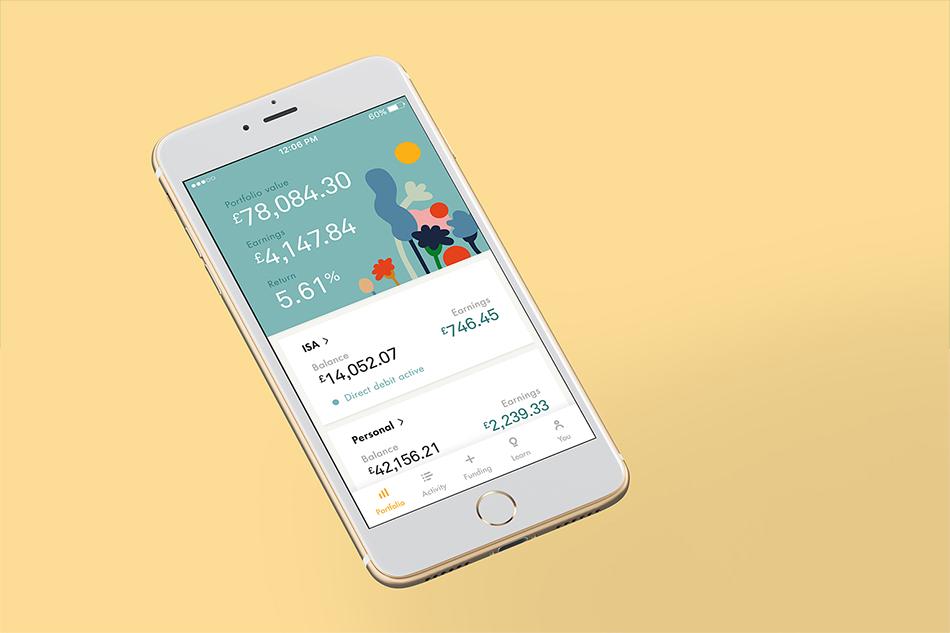
Dutch King shares Brexit concerns before UK trip
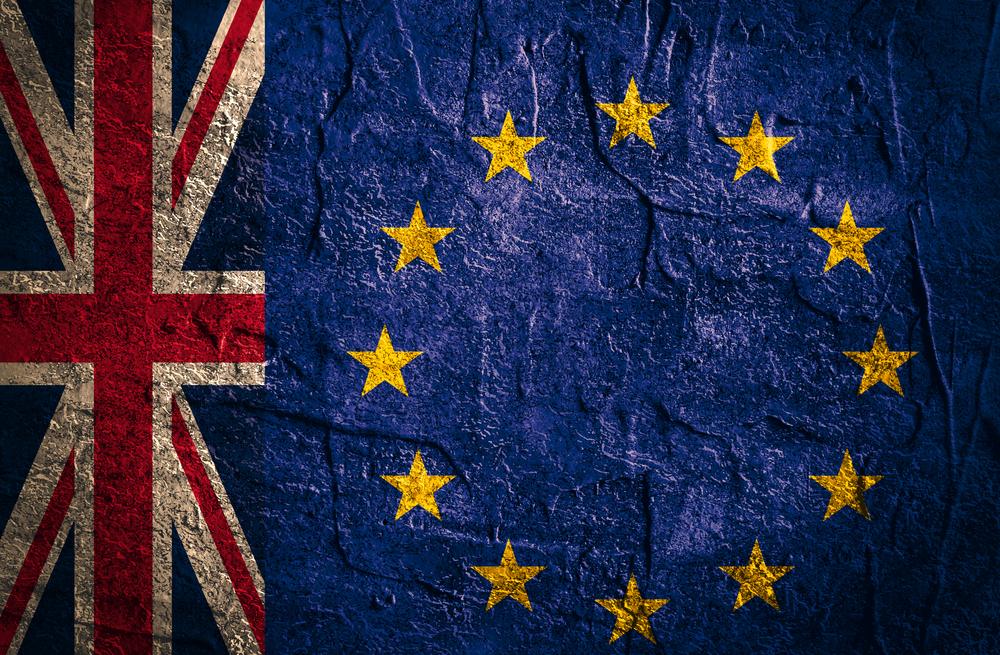
The Dutch King has disapproved the UK’s departure for the EU on Monday.
Speaking from the Hague, King Willem-Alexander of the Netherlands said that whilst the Dutch/UK trading relationship would survive Brexit, it would have been better for the UK to remain in the EU.
Speaking ahead of his state visit to the UK, the Dutch King said he had not seen any evidence of success by the UK government in its attempts to seek a better deal from member states.
However, he said the trading partnership between the countries would remain strong, with agreements becoming more bi-lateral following Brexit.
Trade between the UK and the Netherlands is worth over €60 billion.
During the state trip, King Willem-Alexander will meet the Lord Mayor of the City of London. They will discuss Dutch-British co-operation on sustainable production.
The Dutch King and Queen will also meet Dutch citizens in the UK, who are concerned about their business prospects in the UK.
A Dutch palace official said: “They will talk with Dutch entrepreneurs, academics and creatives, volunteers from the Dutch community, and Dutch nationals who are concerned about the consequences of Brexit.”
Whilst the Netherlands have said trading remaining positive post-Brexit, earlier this year the chief executive of the Port of Rotterdam, Allard Castelein, said the trading hub was “preparing for the worst” in regards to a no-deal scenario.
Until recently, the Dutch king co-piloted commercial KLM flights twice a month, many of these flying to the UK.
Greggs sales increase over summer, shares jump

The heatwave failed to dampen our appetite for Greggs, where total sales increased by 7.3%.
Sales were not as high as the same period a year earlier, where they increased by 8.6%, however, due to the “particularly hot weather”, sales patterns were more difficult to predict.
In the year to date, total sales soared by 5.9% year-on-year. Like-for-likes increased by 2.1%.
Despite the difficult trading conditions, which has led to the closure of many retailers, Greggs expects around 100 net openings by the end of the year.
Tuesday’s trading update read:
“We were pleased with our trading performance during a period that included a long spell of hot weather, which made sales patterns more difficult to predict.”
“This, and the resulting mix of sales led to a lower-than-normal trading margin in the first part of the quarter, offset by improved trading as we came into September. Overall our expectations for the full year outturn remain unchanged.”
Shares jumped 5.1% on Tuesday morning.
Emma-Lou Montgomery, from Fidelity Personal Investing, said: “Just 10 years ago if someone had suggested bakery chain Greggs would one day win an award for the ‘Best vegan sandwich’ for its Mexican Bean Wrap at the PETA 2018 Vegan Food Awards you’d have choked on your sausage roll. But today Greggs has shown how businesses have to adapt or die.”
Paul Hickman, an analyst at Edison Investment Research, said: “Gross margin came under some pressure during the hot weather because cold drinks and products such as pasta salads are bought-in, and therefore earn lower margins, and also because there was more wastage on traditional products.”
“However, we anticipate that the strong volumes will have supported the contribution to operating profit, leaving the company on course for full-year pre-tax profit consensus of around £81 million.”
Shares in the group (LON: GRG) are currently trading +7.11% at 1.077,48 (0913GMT).
Google drops out of bidding for $10 billion cloud computing contract

Google has said it will drop out of bidding for a $10 billion cloud computing contract with the U.S. Defence Department. This is as a result of Google’s new ethical guidelines not aligning with the project. But, Google has not elaborated further on the conflict with corporate values.
The project is known as the Joint Enterprise Defence Infrastructure cloud, or JEDI. It involves transitioning a large amount of Defence Department data to a commercially operated cloud system. On 12 October companies are due to submit their bids for the contract that could last up to 10 years.
The announcement has come just months following the company’s decision not to renew an agreement with an artificial intelligence program. This was caused by protests from the company’s employees over collaborating with the military. As a result, a set of ethical principles were released to assist the company in deciding what projects to pursue in the future.
In a statement, a spokesman from Google said:
“We are not bidding on the JEDI contract because first, we couldn’t be assured that it would align with our AI principles.”
“And second, we determined that there were portions of the contract that were out of scope with our current government certifications.”
According to the Tech Workers Coalition, Google employees “have significant power, and are willing to use it”.
It is the extensive pressure from its employees that caused the decision to withdraw from the bidding competition. Moreover, a spokesman continued in a statement: “Had the JEDI contract been open to multiple vendors, we would have submitted a compelling solution for portions of it”. “Google Cloud believes that a multi-cloud approach is in the best interest of government agencies. It allows them to choose the right cloud for the right workload”. At 19:58 GMT-4 yesterday, shares in Google (NASDAQ:GOOGL) were trading at -1.02%.IMF: US/China trade war will hit global growth
The International Monetary Fund has warned that the US/China trade war will hit global growth.
In the IMF’s latest health check on the global economy, there are warnings that Donald Trump’s new policies are dragging down growth forecast, which will affect countries including the US, France, Germany and China.
“Trade policy reflects politics and politics remain unsettled in several countries, posing further risks,” said Maurice Obstfeld, the IMF chief economist.
Obstfeld went on to say that the world would become a “poorer and more dangerous place” unless world leaders worked together to increase living standards, improve education and reduce inequality.
The latest round of tariffs in the trade war between China and the US were $60 billion worth of tariffs on US goods.
Last month, US tariffs on $200 billion of Chinese imports came into effect.
The IMF said: “Escalating trade tensions and the potential shift away from a multilateral, rules-based trading system are key threats to the global outlook. Since the April 2018 forecast, protectionist rhetoric has increasingly turned into action, with the United States imposing tariffs on a variety of imports, including on $200 billion of imports from China, and trading partners undertaking or promising retaliatory and other protective measures.
“An intensification of trade tensions, and the associated rise in policy uncertainty, could dent business and financial market sentiment, trigger financial market volatility, and slow investment and trade.”
In terms of the UK and Brexit, the IMF said that a “no-deal” Brexit remains a risk to the UK economy.
The IMF has said that the government needs to do more to retrain or relocate workers in those industries that are “likely to be more affected by higher trade barriers after Brexit”.
The UK economy is expected to expand by 1.4 percent this year and 1.5 percent next year.