
Scammers steal £500m from bank customers in first 6 months of 2018
New figures have found that scammers have stolen £500 million from UK bank customers in the first half of 2018.
The trade body UK Finance found that the total figure was lost through authorised push payment (APP) scams and unauthorised fraud.
The trade body said that only £30.9 million of the £145 million that was lost through APP scams was returned to customers.
The current legislation means that the customers that are liable for the losses incurred if they authorise a payment themselves.
The managing director of economic crime at UK Finance, Katy Worobec, said: “The criminals behind it target their victims indiscriminately and the proceeds go on to fund terrorism, people smuggling and drug trafficking, whether or not the individual is refunded.”
Through major investment in security systems and cyber-defences, the industry has managed to prevent two-thirds of unauthorised fraud for the first half of the year.
Gareth Shaw, a money expert at the consumer group Which?, has said that the efforts made by banks has been “woefully insufficient”.
“It’s now two years since our super-complaint highlighted the lack of protection for victims of bank transfer scams, but these shocking figures show just how widespread the problem still is,” he said.
“Banks … have not done enough to protect their customers, who continue to lose life-changing sums of money to ever-more sophisticated crooks.”
“The Payment Systems Regulator has rightly committed to introducing a reimbursement scheme for victims. It’s about time that banks step up and properly compensate customers who have lost money through no fault of their own.”
The first six months of 2018 has seen an increase in money lost to scammers. The same period last year totalled £101 million for losses by APP, compared to this year’s £145 million.
The UK Finance said this year’s increase is partly down to banks reporting more data.
Tesco Bank hit by record penalty from FCA
Tesco Bank has been fined a record penalty of more than £30 million over a cyberattack back in 2016.
The fine, which has been imposed by the Financial Conduct Authority (FCA), was a result of an incident dating back to November of 2016.
As a result of the cyber attack, Tesco’s banking division said at the time that £2.5 million had been stolen from 9,000 customers.
The decision comes amid recent research which indicated that UK bank customers have lost a total of £500 million in the first half of 2018 as a result of such scams, according to trade body, UK finance.
Specifically, £145 million was lost due to authorised push payment (APP) related scams, where customers were conned into making payments to different accounts.
Moreover, £358 million was also lost from unauthorised fraud from third parties, UK finance said.
Whilst banks will refund customers who have been victims of fraud, there are limited protections in place to protect those affected by APP schemes.
UK finance said that only £30.9 million of the £145 million lost through APP scams this year had been returned to victims.
Katy Worobec, managing director of economic crime at UK Finance, warned that the figures revealed that cyber crime continues to be a significant threat.
“The criminals behind it target their victims indiscriminately and the proceeds go on to fund terrorism, people smuggling and drug trafficking, whether or not the individual is refunded,” she commented.
Tesco’s banking arm is still in negotiations with the FCA regarding the penalty, indicating that a lower figure could be agreed upon in the coming weeks.
Nevertheless, the record fine will no doubt be a warning signal to larger banks, as the FCA continues to crackdown on cyberattacks in the banking industry.
Shares in Tesco (LON:TSCO) are currently trading +0.38 percent as of 11.05AM (GMT).
Learning Technologies raise full-year profit guidance, shares rise

Shares in Learning Technologies surged 14.7 percent in early trading.
The company revealed its full-year outcome to be significantly ahead of expectations following its acquisition of PeopleFluent in May.
Learning Technologies acquired PeopleFluent in April for $150 million. The deal was partly funded through a share placing that raised £85 million.
The first half of 2018 saw revenue rise 60 percent from £21.1 million the year before to £33.8 million.
The board of the company are now expecting the earnings before interest and tax to increase by at least 25 percent in 2019.
Jonathan Satchell, the chief executive officer of Learning Technologies, said: “The first half of 2018 has been pivotal for LTG with the PeopleFluent acquisition confirming our shift towards recurring software revenues, and significantly increasing our US presence. Together with NetDimensions, PeopleFluent demonstrates our ability to successfully integrate businesses and drive growth and margin progression through operating model improvements.”
“Alongside our track record of delivering organic growth and substantial margin improvements, LTG has a strong balance sheet and acquisition pipeline and is well placed to continue its strategy of consolidating the high growth corporate e-learning market. A robust performance from our core business and the successful integration of PeopleFluent underpins our confidence that full-year profit will be significantly ahead of the board’s expectations,” he added.
Shares (LON: LTG) increased 14.7 percent at 144.5p.
Instagram co-founders announce resignation
The co-founders of Instagram have announced their resignation from the group.
Kevin Systrom and Mike Krieger have said they are leaving the Facebook-owned company to “explore our curiosity and creativity again”.
It was reported in Bloomberg that the chief executive officer and chief technical officer are leaving Instagram amid growing tensions with Facebook (NASDAQ: FB) founder Mark Zuckerberg.
In a statement on Monday, Systrom said the pair were grateful for “the last eight years at Instagram and six years with the Facebook team”.
“We’ve grown from 13 people to over a thousand with offices around the world, all while building products used and loved by a community of over one billion. We’re now ready for our next chapter.”
“We remain excited for the future of Instagram and Facebook in the coming years as we transition from leaders to two users in a billion. We look forward to watching what these innovative and extraordinary companies do next,” he added.
The pair met while studying at Stanford University.
Instagram was purchased by Facebook in 2012 for $1 billion (£760 million) in cash and stock and now has more than one billion active monthly users.
Zuckerberg released a public statement about Systrom and Krieger’s departure, saying: “Kevin and Mike are extraordinary product leaders and Instagram reflects their combined creative talents. I’ve learned a lot working with them for the past six years and have really enjoyed it. I wish them all the best and I’m looking forward to seeing what they build next.”
The co-founders’ resignation from the group comes months after the WhatsApp chief executive and co-founder Jan Koum resigned. Whatsapp was sold to Facebook in 2014.
Next reports rise in sales and outlines Brexit plans
After a better-than-expected summer of sales, Next (LON: NXT) has raised its annual profit expectations.
The retailer has also said that the biggest threat of a no-deal Brexit would be the queues and delays at ports.
Despite this, the group’s boss Lord Wolfson, who has backed Brexit, does not think a no-deal Brexit will be a “material threat”.
“It is not yet clear how well prepared HMRC systems, customs and other relevant personnel will be for the upcoming potential increase in workload and data capture,” he said.
“We believe that the biggest risk to our business is the external risk of UK ports not coping with the additional volume of customs work they would be required to undertake if no changes are made to the UK’s current procedures… We believe that it remains open to the government to initiate changes in the way customs procedures operate and that such measures could eliminate much of the risk to our ports.”
“There are significant challenges involved in preparing for a no-deal outcome and we would not want to understate the work we are doing to prepare for this eventuality. However, we do not believe that the direct risks of a no-deal Brexit pose a material threat to the ongoing operations and profitability of NEXT’s business here in the UK or to our £190m turnover business in the EU,” he added.
Sales in Next increased 4.5 percent during the six months to July and the group reported half-year pre-tax profits of £311.1 million compared to the £309 million in the same period the year previously.
Full-year profits are expected to be similar to last year of £727 million, despite the volatile high street.
Last week, Moss Bros sales had suffered because of the hot summer.
The retailer warned of the conditions faced on the high street.
“The UK retail market remains volatile, subject to powerful structural and cyclical changes. Many of these headwinds have not abated. As expected, sales in our stores (which now account for just under half of our turnover) continue to be challenging.”
“We believe the over-performance in the first half was flattered by the unusually warm summer and we remain cautious in our outlook for the rest of the year.”
Versace to be sold to Michael Kors in $2bn deal
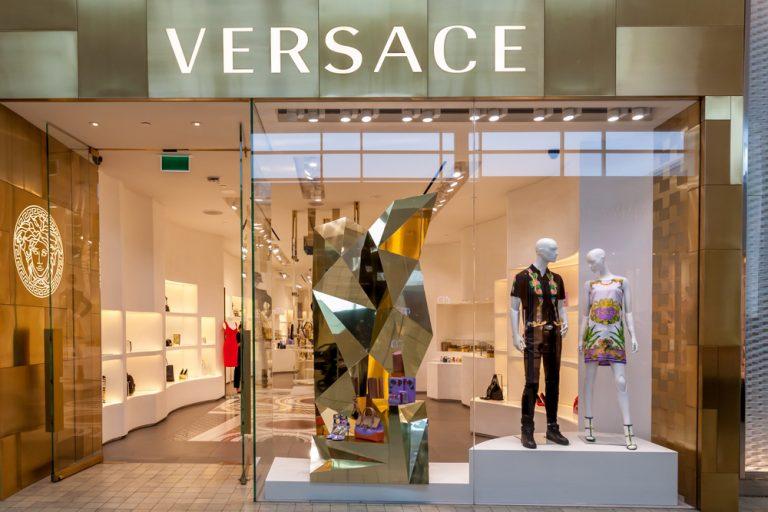
Michael Kors (NYSE: KORS) is to buy Versace in a $2 billion deal.
The Italian newspaper Corriere della Sera has reported that the US luxury brand is expected to announce the deal with the Milanese fashion house on Tuesday.
US private equity firm Blackstone took a 20 percent stake in Versace in 2014, which will also be sold onto Michael Kors.
Blackstone injected €150 million of capital into Versace and acquired €60 million in stock in Versace at the time of purchase.
A source told Reuters: “They gradually persuaded the family to look into a possible sale and introduced them to a series of buyers, including Michael Kors.”
“Blackstone wasn’t going to put any more money into it. They needed a buyer who could make heavy investments.”
Michael Kors bought Jimmy Choo, the luxury shoemaker founded in London, for almost £900 million.
Michael Kors said the acquisition was expected to deliver “the opportunity to grow Jimmy Choo sales to one billion dollars” and allow “a more balanced portfolio with greater product diversification”.
Versace reported sales of €686 million in 2016.
The group’s chief executive, Jonathan Akeroyd, said earlier this year that annual turnover was soon expected to be over €1 billion.
Shares in Sky soar on Comcast offer

Sky has recommended its shareholders accept Comcast’s (NASDAQ: CMCSA) $40 billion takeover offer.
In a statement released on Monday, the UK broadcaster advised shareholders to accept the offer by the October 11 deadline.
“As the price of the Comcast Offer is materially superior, it is in the best interests of all Sky shareholders to accept the Comcast Offer,” the company said.
“Accordingly, the Independent Committee unanimously recommends that Sky shareholders accept the Comcast Offer, and in order to ensure the successful closing of the Comcast Offer, and given the possibility of a delisting of Sky in the near future, urges shareholders to accept immediately.”
Comcast outbid Twenty-First Century Fox (NASDAQ: FOXA) for Sky on Saturday by $3.6 billion. The deal is worth £17.28 per share, higher than Fox’s of £15.67 per share.
Martin Gilbert, chairman of the Independent Committee of Sky, said: “We consider the Comcast Offer to be an excellent outcome for Sky shareholders, and we are recommending it as it represents materially superior value. We are focused on drawing this process to a successful and swift close and therefore urge shareholders to accept the recommended Comcast Offer,”
Fox now has to decide what to do with the 39 percent of Sky it owns, which it agreed to sell to Disney (NYSE: DIS) along with its entertainment assets in a deal that was approved by both sides in July.
The group said it would “make a further announcement in due course.”
Shares in Sky (LON: SKY) jumped nine percent to £17.22 in Monday’s early trading. Shares are currently trading up 8.74 percent 1141GMT).
Randgold & Barrick confirm $18bn merger

Randgold Resources (LON: RRS) and Barrick Gold Corporation (NYSE: ABX) confirmed on Monday an $18 billion (£14 billion) merger.
The gold mining companies will combine to create the world’s largest group, with Barrick shareholders owning 66.6 percent of the new group and Randgold shareholders owning 33.4 percent.
Randgold Resources is based in London and operates mines in Africa whilst Barrick, based in Canada, has mines in the US, Peru, Chile and Argentina.
Mark Bristow, the chief executive officer of Randgold, said: “Our industry has been criticised for its short-term focus, undisciplined growth and poor returns on invested capital.”
“The merged company will be very different. Its goal will be to deliver sector leading returns, and in order to achieve this, we will need to take a very critical view of our asset base and how we run our business, and be prepared to make tough decisions.”
“By employing a strategy similar to the one that proved very successful at Randgold, but on a larger scale, the New Barrick Group will leverage some of the world’s best mines and talent to create real value for all stakeholders.”
John L. Thornton, executive chairman of Barrick, said: “Our overriding measure of success will be the returns we generate and not the number of ounces we produce, balancing boldness and prudence to deliver consistent and growing returns to our fellow owners, a truly simple but radical and achievable concept.”
“There are no premiums in the merger because we strongly believe in the opportunity to add significant value for our shareholders from the disciplined management of our combined asset base and a focus on truly profitable growth.”
The new group will be listed in Toronto and New York, whilst being delisted from the London Stock Exchange.
As part of the deal, China’s Shandong Gold (SHA: 600547) has agreed to buy $300 million of shares in Barrick.
Thomas Cook shares plunge following profit warning
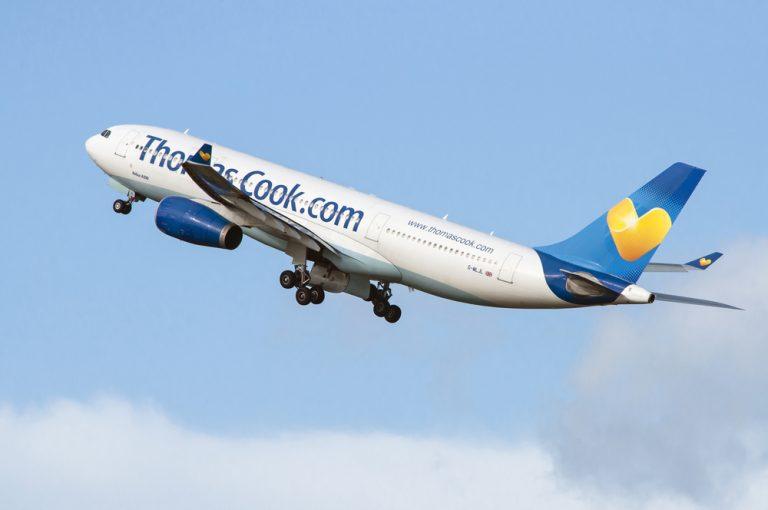
Shares in Thomas Cook plunged as the holiday firm downgraded annual profit forecasts.
The company has blamed the heatwave for the drop in full-year profit forecast, as many customers put off holiday bookings to enjoy the warmer weather in the UK.
“Summer 2018 has seen a return to popularity of destinations such as Turkey and Tunisia,” said Peter Fankhauser, Thomas Cook’s chief executive.
“However, it has also been marked by a prolonged period of hot weather across Europe. This meant many customers spent June and July enjoying the sunshine at home and put off booking their holidays abroad, leading to even tougher competition and higher than usual levels of discounting in the ‘lates’ market of August and September.”
“Our recent trading performance is clearly disappointing. However, despite the recent challenges, we continue to make good strategic progress which positions us well to drive further performance improvement; this includes the launch of our Expedia alliance in the UK and Scandinavia, signing our first own-brand hotel in China and lining up a pipeline of 10 new Cook’s Clubs in some of our key destinations for Summer 2019.”
The group is now expecting full-year earnings of £280 million, below the previous forecast of £323 million, which the company made in July.
The warmer than usual temperatures are also expected to hurt bookings over winter.
In a separate statement, the group said its chief financial officer Bill Scott would leave the company at the end of November.
Shares fell 18 percent after the warning to 64p.
Thomas Cook will report its full-year results on 29 November.
Shares in the group (LON: TCG) are currently trading down 23.15 percent at 59,82p (0852GMT).
China/US trade war: latest tariffs take effect

The new tariffs imposed by the US and China have gone into effect.
The US has imposed tariffs on $200 billion (£152 billion) worth of Chinese goods, whilst China retaliated with $60 billion of US goods.
Soon after the tariffs went into effect, Beijing accused Washington of engaging in “trade bullyism”.
Beijing also said it could restart trade negotiations if the talks are “based on mutual respect and equality”.
Matthew Goodman, senior vice president at the Asian economics at The Center for Strategic and International Studies, said: “It’s hardly surprising the Chinese have called off these talks, they don’t really know who to talk to or what to talk about since the Trump administration has sent very mixed signals about what they want.”
In total, the US has introduced three rounds of tariffs on Chinese products this year, which totals $250 billion worth of goods. This is half of all Chinese imports to the US.
The new taxes will affect handbags, rice and textiles. Some items including smart watches and high chairs are exempt.
Donald Trump has threatened further tariffs on Chinese goods. He said that taxes on another $267 billion of goods were “ready to go on short notice”
Steven Yue, the sales manager at Hebei Huayang Steel Pipe (HHSP), told the BBC: “The Chinese government will not just sit back.”
“The US has many big enterprises with a lot of vested interests and investments in China. If the US begins to attack the Chinese, then it will have a big impact on American businesses operating here – not just against China.”
“Whoever has the will win. But for now, I still believe China has the ability to keep things under control,” he added.