
Rail chaos is “unacceptable”, transport secretary says

The Transport Secretary, Chris Grayling, has announced that the entire rail chaos is “unacceptable”.
Since 20 May, UK rail passengers faced severe delays and cancellations. This was as a result of the rail industry’s attempt to implement the biggest timetable change in a generation.
The changes mainly affected Northern Trains and GTR routes into London. In fact, the upgrade expected to change up to 46% of train times.
Moreover, over several weeks GTR cancelled 470 scheduled trains each weekday. Likewise, Northern Trains cancelled 310 each weekday.
Earlier in June, the Office of Rail and Road launched an inquiry into the disruption following the timetable changes.
Today, the Transport Secretary has announced a review designed to transform the rail industry.
This review follows the official report that blames lack of leadership in the rail industry.
Sky reports that Grayling said:
“The whole situation was entirely unacceptable,”
“We were clearly wrong to trust what the industry said to us, that it was going to be ready for the changes due in May.”
“My conclusion is that we’ve got an industry today where decision-making is too fragmented,”
“We need a more joined up industry, we need an industry that moves on from the model set up at the time of privatisation.”
“I believe that the divide between running the track and running the trains no longer works on our railway.”
Chris Grayling previously insisted “I don’t run the railways”. However, he now accepts that it is his job to prevent the same happening again.
Interestingly, a former commuter expressed his extreme frustration with his commute by creating an app. His ‘Northern Fail’ is designed to mock Northern Rail, it also lists the network’s delays and cancellations.
Rio Tinto announces new share buy-back programme
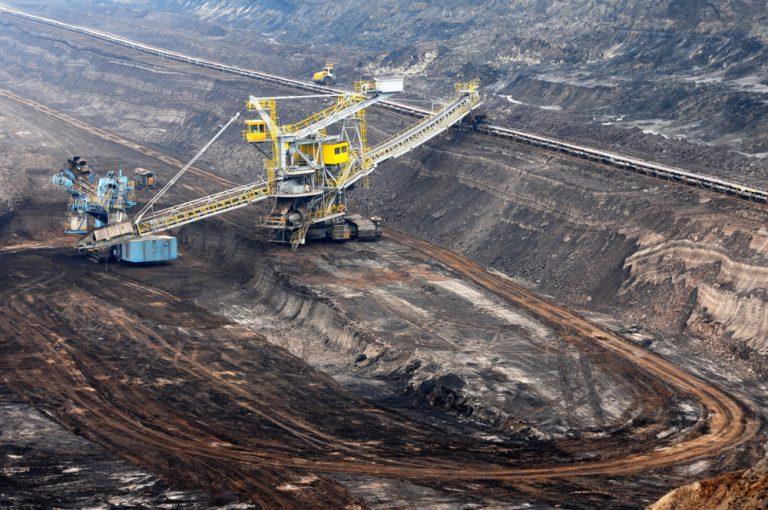
Rio Tinto (LON:RIO) has released the details of its new share buy-back programme. It intends to return roughly $3.2 billion of post-tax coal disposal proceeds to its shareholders.
The proceeds will be returned through a $3.2 billion share buy-back initiative. Moreover, the programme will combine an off-market buy-back tender targeting up to 41.2 million Rio Tinto Limited shares ($1.9 billion). Additionally, it will also include further on-market purchases of Rio Tinto shares. However, the programme remains subject to market conditions and compliance with all laws and regulations.
J-S Jacques, Rio Tinto’s Chief Executive, has commented:
“Returning $3.2 billion of coal disposal proceeds demonstrates our commitment to capital discipline and providing sector leading shareholder returns.”
“We continue to focus our portfolio on those assets which provide the highest returns and growth”
Moreover, this “will ensure that we continue to deliver superior value to our shareholders in the short, medium and long term”.
Founded almost 150 years ago, Rio Tinto remains one of the world’s largest producers of essential materials. Today, the company is one of the world’s largest metals and mining corporations.
At 10:11 BST today, shares in Rio Tinto plc were trading at +1.96%.
Earlier this July, we reported that Rio Tinto was ahead of targets for iron ore exports.
Equifax fined £500,000 for data breach

After 15 million people in the UK had their private details lost, Equifax (NYSE:EFX) has been fined £500,000.
Equifax is a US based consumer credit reporting agency. It collects the information of over 800 million individuals and over 88 million businesses globally.
Between 13 May and 30 July 2017, Equifax lost the personal information of roughly 145.5 million during a cyber attack. 15 million of these people were British.
Equifax’s systems used to handle the personal information were inadequate and ineffective, the Information Commissioner’s Office (ICO) found.
Additionally, the investigation also showed that the company’s systems had previously been warned of their “critical vulnerability”. The US Department of Homeland Security issued this warning just two months before the cyber attack.
A £500,000 fine has been issued to Equifax’s UK operation. This figure is the highest possible under the Data Protection Act 1998. But, had the data breach taken place under the new GDPR, the fine could have reached up to £17.7 million.
A spokesperson for Equifax has commented:
“Equifax has co-operated fully with the ICO throughout its investigation, and we are disappointed in the findings and the penalty.”
“Equifax has successfully implemented a broad range of measures to prevent the recurrence of such criminal incidents.”
“The criminal cyber attack against our US parent company last year was a pivotal moment for our company. We apologise again to any consumers who were put at risk.”
Ryanair to face backlash at AGM

Ryanair is set to face a backlash from investors at the annual shareholder meeting on Thursday.
Royal London Asset Management is an investor in the group that has announced plans to vote against the re-election of the airline’s chairman.
As well as the group’s chairman, the RLAM also plans to vote against the senior independent director and the chairman of the audit committee.
Ashley Hamilton Claxton, head of responsible investment at RLAM, said: “We are also concerned with Ryanair’s corporate governance and poor stakeholder management, which could have an impact on the long-term future of the company.”
“We have had long-standing issues with the independence of Ryanair’s board and with the extent to which the board can provide effective challenge to management decisions.”
“While we recognise that Ryanair has taken some steps towards improving the level of independence in its boardroom in the last year, this has not sufficiently mitigated our overall negative view of governance and oversight at the company.”
Shareholder advisory firms Glass Lewis and ISS are also advising investors to vote against the chairman, David Bonderman.
The budget airline has said it is confident that shareholders will back the airline at the meeting on Thursday.
“Ryanair shareholders will pass all AGM resolutions by a large majority this year, including the nomination of directors and chairman, as they have done in all previous years,” said a spokesperson for the group.
“They appreciate how fortunate we are to have an outstanding chairman like David Bonderman guide the board and the airline.”
The airline has faced several strikes over the summer, forcing the group to cancel flights to major holiday destinations including Italy, Portugal and Spain.
The group has agreed to a deal with Irish pilots but yet to agree with pilots based in other destinations.
Shares in Ryanair (LON: RYA) are trading down 1.45 percent at 13,55 (0935GMT).
Aston Martin reveals details for IPO

Aston Martin has revealed further details of its stock market flotation.
The luxury carmaker plans to value itself at between £4.02 billion and £5.07 billion on the London Stock Exchange.
“By becoming the only automotive company listed on the London Stock Exchange, Aston Martin Lagonda will provide investors with a fitting opportunity to participate in our future success,” said Andy Palmer, the chief executive.
“Our Second Century Plan gives prospective investors deep insight into how we have executed our turnaround and how we are positioned for growth.”
“Over the past four years the benefits of the Aston Martin turnaround to the UK economy have been profound. We have secured and created thousands of jobs in the West Midlands and South Wales, boosted our investments in manufacturing and engineering and increased our spend with local suppliers.”
“This track record has created significant interest in the Aston Martin Lagonda offer, and we are pleased to offer shares not only to institutional investors but also to our eligible UK resident employees, customers and members of the Aston Martin Owners Club,” he added.
Shares will be sold between £17.50 to £22.50 and approximately 56,775,792 shares will be floated, equating to a 25 percent stake in the business.
Trading will start on or around October 8.
The IPO is a significant step for a business that has gone bankrupt a total of seven times.
Unlike many other car manufacturers, Aston Martin has said it is not concerned about Brexit and trade wars but has said that it does not want tariffs following the UK’s departure from the EU.
The group appointed Penny Hughes, a former Coca-Cola executive, as its chair last week.
French Connection report 7pc fall in sales, shares slide
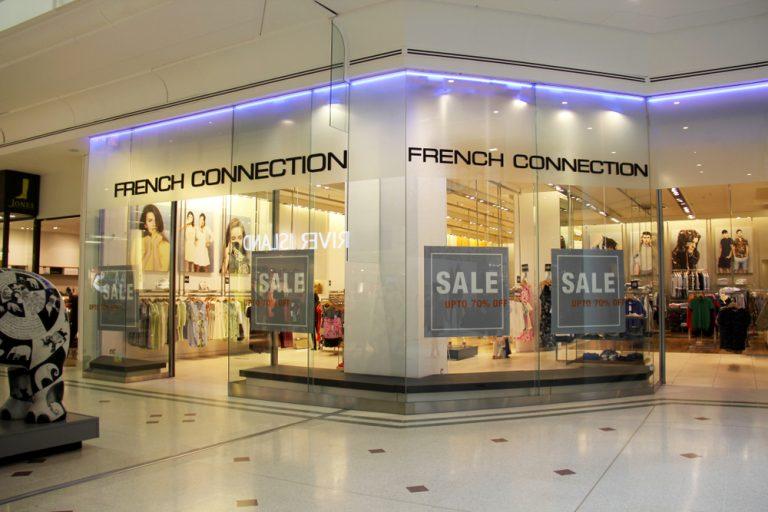
French Connection has announced a seven percent fall in sales for the six months to 31 July.
Overall revenue for the group fell 10.5 percent to £27.3 million and the fashion retailer is planning to close eight stores this year.
Chief Executive Stephen Marks said: “There is no doubt that progress has not been helped by the trading conditions in which we operate in the UK.”
“Given the continued deterioration of trading conditions on the UK high street, we have reviewed the underlying lease contracts of a number of loss-making stores that we are actively looking to exit but are currently unable to and have made a one-off provision for the onerous nature of those contracts,” he added.
“The retail business benefitted from the reduction in stores we have seen over the last year, however our remaining stores saw a seven percent reduction in like for like sales across the period reflecting the difficult trading conditions in the UK.”
“We continue to actively review our retail portfolio and expect eight stores to close this year, with two having already closed in the first half. In addition given the continued deterioration of trading conditions on the UK high street, we have reviewed the underlying lease contracts of a number of loss-making stores that we are actively looking to exit but are currently unable to and have made a one-off provision for the onerous nature of those contracts.”
French Connection has hired new management and design teams as the retailer hopes to compete with rivals such as Asos (LON: ASC) and Zara (BME: ITX).
The group maintains that it remains on track to be profitable by the end of the year and would consider restarting dividend payments.
In April, French Connection sold its 75 percent stake in clothing brand Toast to the Dutch firm Bestseller United A/S.
Shares in the group (LON: FCCN) are currently trading 6.19 percent at 47,00 (0846GMT).
Orla Kiely latest retailer to fall into administration

Retailer Orla Kiely has closed its UK stores and website and called in administrators.
The fashion retailer is known for its 1970s-inspired prints and ceased trading on Monday following the collapse of the parent company, Kiely Rowan.
Kiely said the group was entering liquidation “following various challenges that have faced the company over the past few years, both in the UK and abroad”.
A spokesperson added: “Orla Kiely’s home and design licensing business will not be affected, and its selection of accessories and homewares will continue to be sold through its distribution partners.”
Orla Kiely is the latest retailer that has struggled amid the difficult trading conditions affecting the high street.
UK retailers have been affected by weak sales, online competition and rising costs, which has, in turn, affected 22,000 jobs this year.
Retailers including House of Fraser and Toys R Us have fallen into administration. House of Fraser was purchased by Sports Direct (LON: SPD) in a £90 million deal.
New Look, Carpetright (LON: CPR) and Mothercare (LON: MTC) have also embarked on a series of store closures.
Royal Mail boss steps down to focus on Countrywide
The chairman of Royal Mail (LON: RMG) is stepping down to focus on at the estate agent Countrywide (LON: CWD).
Peter Long announced that it was not possible to continue his role of chairman for both group’s and will be replaced by Royal Mail board member Les Owen.
The Royal Mail said in a statement: “Peter has reviewed his board appointments and concluded it is no longer possible for him to remain executive chairman of Countrywide and non-executive chairman of Royal Mail.”
Countrywide has been struggling amid the slower housing market and increased competition from online competitors, such as Purplebricks. The group’s share price has plunged 90 percent over the past two years.
Long said: “It is with a heavy heart that I step down from the Royal Mail board. Over my three years as chairman, I have taken great pride in what has been achieved by the group.”
On the appointment of Own, Royal Mail said: “Les’s deep knowledge of our business means he is very well-placed to be our chairman. He brings continuity to the role. Of course, we are aware of the requirements of the UK corporate governance code. At present the board envisages Les remaining as chair for 12 to 18 months, which will give us plenty of time to refresh skills on the board and line up Les’s successor.”
Shares in the group dipped on the news by 1.2 percent and are currently trading down 1.92 percent at 476,30 (1554GMT).
Shares in Countrywide are trading down 0.37 percent at 10,90 (1554GMT).
Will the UK’s financial services survive Brexit?
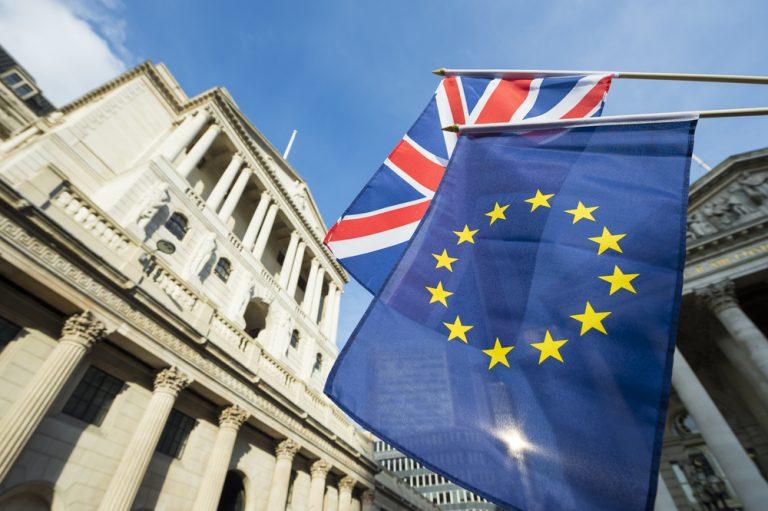
For over two years, Brexit has been the talk of the nation. Since British citizens voted to leave the EU back in 2016, many have speculated and attempted to predict the nation’s future.
Today, Theresa May is in the middle of negotiating the UK’s exit deal. Whilst uncertainty prevails, UK citizens are being left waiting anxiously as the PM negotiates their future.
The future of some sectors are far easier to predict than others. That said, one sector that remains truly difficult to predict is the financial services.
Mark Carney has already warned the harrowing economic impacts of a no-deal Brexit. Last week, he told May that a no-deal Brexit may have an equally disastrous impact as the 2008 financial crisis. With house prices potentially dropping by as much as 35%, Carney set forth the worst possible scenario.
Though this remains a ‘worst-case’ scenario, it is a scenario that the UK must prepare for.
Indeed, companies already have. Businesses have already been impacted before the UK has even left. More and more companies have made the decision to leave London and move their European headquarters elsewhere. Panasonic, Airbus, JP Morgan, Moneygram, European Medicines Agency, MUFG, Nomura Holdings, Barclays, Bank of America, the list keeps growing. These companies have relocated their European headquarters, taking thousands of jobs with them. In fact, the CFA Institute has released its 2018 Brexit barometer survey. The survey reveals that 76% of EU respondents are likely to expect their firms to reduce their UK presence. This is followed by 67% of UK respondents and 54% of respondents from the rest of the world. Will London continue its reign as the financial capital of Europe? Or will other economic hubs such as Frankfurt, Paris, Brussels or Milan step up? Additionally, the survey results reveal yet another noteworthy statistic.The majority of UK respondents expect Brexit to reduce the ability of their firms to hire the best talent.
Whereas only 9% of European respondents share this worry. The inability to hire the best talent is a crucial setback for the UK’s financial services. In order to communicate with foreign markets, firms need employees who possess the relevant language skills. But, Brexit is bound to make it difficult for EU nationals to migrate to the UK. Furthermore, it is no secret that the British teaching syllabus neglects modern languages. With less and less British students graduating without the ability to speak a European language at business level, this could be a problem. And yet, it is not only the decreased influx of EU professionals that could be a problem for the UK’s financial services. But, the CFA has also revealed that 1 in 9 investment professionals plan to leave the UK after Brexit. CEO of IW Capital, Luke Davis, has provided a commentary on the impacts of this: “The UK, but particularly London, rely heavily on the financial services industry, and if 11% of employees in this sector did leave the UK after Brexit, it would have wider implications on the economy than just a loss of resource. Financial services is a major party of our economy, and to lose over 10% of the workforce in this area would have extreme effects on our economic prospects today, and in the future. Sectorial leaders need to continue to make the UK financial industry attractive to employees to minimise the potential fallout that Brexit may cause.” For now, all the UK can do is wait. But the contingency plans set in place by various businesses underscore the UK’s economic uncertainty.SMMT says no-deal Brexit is “not an option”

The Society of Motor Manufacturers and Traders has warned that a no-deal Brexit could increase the average cost of a car by £1,500.
The automotive trade body has told the UK government that leaving the UK without a deal is “not an option” for the sector, which employs 800,000 people in the UK.
“Tariffs alone should be enough to focus minds on sealing a withdrawal agreement between the EU and UK but the potential impact of ‘no-deal’ means the stakes for the automotive sector are far higher,” said Mike Hawes, the SMMT’s chief executive.
“Without a deal, there can be no transition period and the complex issues surrounding tariffs and trade, customs, regulation and access to talent, will remain unresolved.”
“Our industry is deeply integrated across both sides of the Channel so we look to negotiators to recognise the needs of the whole European automotive industry and act swiftly to avoid disruption and damage to one of our most valuable shared economic assets,” he added.
The SMMT will tell EU representatives on Wednesday in Brussels that leaving the EU without a deal will result in £5 billion in annual tariffs, with prices of cars significantly increasing for consumers.
The trade body has frequently warned against the consequences of a no-deal Brexit and the impacts it will have on the automotive sector.
Car manufacturers have not taken the Brexit negotiations lightly, warning the government of plans to move operations to elsewhere in the EU.
Honda (TYO: 7267) warned that a no-deal Brexit will cost the group tens of millions of pounds a year. BMW (ETR: BMW) has also announced plans to shut down its Mini plant in Oxford following the UK’s official departure date from the EU in March 2019.
Jaguar Land Rover also announced earlier this week that 2,000 staff will move to a three-day week at its Castle Bromwich plant.