
Barclays launches new tool to block spending
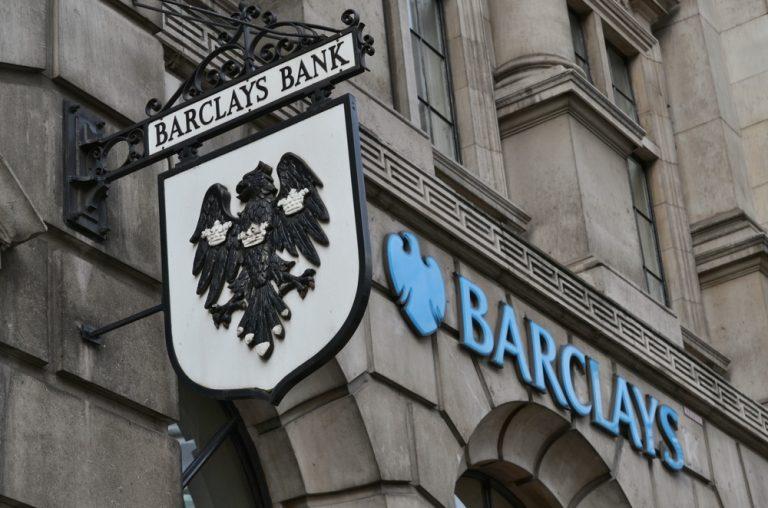
Barclays has a new feature on its mobile banking app that can block payments to particular retailers.
Launching on Tuesday, the new tool hopes to help “customers in vulnerable circumstances in mind” by blocking spending in pubs, supermarkets and gambling websites/shops.
“We are always looking for new ways to support our customers and make it easier for them to manage their finances,” said the Barclays managing director, Catherine McGrath.
“We work with a range of advisors and partners, as well as consulting with our customers, to identify how our customers’ needs are changing and what works for them.”
“This new control feature is the latest new service that we have introduced in the Barclays Mobile Banking app that aims to give all of our customers a better way to manage their money in a simple, secure and effective way,” she added.
The bank used research from the Money and Mental Health Policy Institute to work on the new feature.
Monzo introduced a similar feature in June and has reported a 70% plummet on gambling spending.
Marc Etches, the chief executive of GambleAware, said: “GambleAware welcomes this initiative by Barclays, which we hope will encourage other banks to do the same.
“There are 340,000 problem gamblers in Britain and a further 1.7 million at risk, and initiatives like this can play an important role in helping to reduce gambling-related harms,” he added.
The categories that customers can block spending on are groceries and supermarkets, restaurants, takeaways, pubs and bars, petrol and diesel, gambling, and premium rate websites and phone lines.
Martin Lewis, the founder of MoneySavingExpert, welcomed the move and hopes other banks will adopt similar banks.
Shares in Barclays (LON: BARC) are trading -0.12% at 153,18 (0953GMT).
WPP shares jump on new turnaround strategy
The new WPP boss has unveiled a new strategy that will return the advertising agency to growth.
Mark Read said the plan will reduce the number of agencies they work with and use the savings to hire more talent in New York and invest in technology.
The turnaround strategy will cost the group £300 million over the next three years.
WPP has lost 40% of its value in the last year.
Read said: “The restructuring of our business will enable increased investment in creativity, technology and talent, enhancing our capabilities in the categories with the greatest potential for future growth.”
“As well as improving our offer and creating opportunities for clients, this investment will drive sustainable, profitable growth for our shareholders.”
The advertising group’s previous boss, Martin Sorrell leave amid allegations of personal misconduct and is now running his own advertising agency, S4 Capital.
On the news of the strategy, analysts at Liberium said they were giving it a “cautious welcome”.
“We will hear more at the (capital markets day) later today but our initial view is that WPP is taking the approach RELX took post its problems in 2008/2009, namely recognise the share price will not see much of a recovery short term, focus on running the business and accept the need to deliver to re-rate,” said the stockbroker.
“Therefore, we do not see much of a catalyst for the shares short-term.”
Shares (LON: WPP) jumped over 5% in morning trading and are currently up 3.89% (0925GMT).
Carpetright shares rise despite widening losses
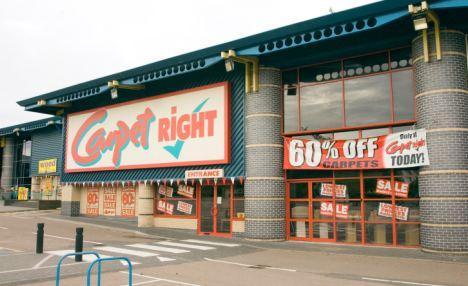
Half-year losses at the retailer Carpetright have increased from £0.6 million to £11.7 million as the group carries out store closures.
In the six months to the end of October, pre-tax losses widened, with revenue also falling from £226 million last year to £191 million.
The struggling retailer agreed on a rescue plan earlier this year, which included the closure of 81 stores.
“This is a transitional year for Carpetright as we work through our restructuring plan,” said Wilf Walsh, the chief executive of Carpetright.
“We remain on schedule and are confident that this activity is already starting to yield benefits. This is the first stage in returning the group to sustainable long-term profitability.”
The higher losses and lower revenue did not shock investors and were to be expected. Instead, analysts were encouraged by the results and shares were up 4% in early trading.
Analysts from Shore Capital said: “In terms of the outlook, the restructure unfortunately comes at a time of increased uncertainty for the UK consumer with the process around the exit from the EU ongoing. This is especially unhelpful in what was already a challenging market. However, the transition plan is on track and management see itself as well-placed to deal with the challenges ahead.”
Carpetright sells headboards, flooring, tiles and mattresses. The group is hoping to invest in digital technology to improve the online and in-store experience for customers.
Shares in the group (LON: CPR) are currently trading +8.72% (0907GMT).
Hollywood Bowl profits up 12%, shares rise

Shares in Hollywood Bowl soared over 14% on Monday after the group revealed strong results and hiked its full-year results.
In the year to September 30, pre-tax profits rose 12% to £24.9 million whilst sales rose to £120 million.
“I am very pleased with the Group’s full year performance. Operating our business in line with our customer-led strategy has delivered another strong revenue performance which, combined with our continued focus on cost management, has resulted in a year of record profits and significant operating cash generation,” said Stephen Burns, the group’s Chief Executive.
“The investment into our high-quality portfolio of 58 profitable centres continues to deliver significant, above target, returns. Our new centres are performing very well and we have secured a strong pipeline of new openings that will further enhance the quality of our portfolio.”
“We will continue to invest in the overall quality of our estate, in technology initiatives that enhance our industry-leading proposition and in initiatives to attract and retain only the very best talent, all with a view to continually improving the experience for our customers,” he added.
This year, the group opened two new sites at Dagenham and Yeovil. Hollywood Bowl will open two news sites later this year in Watford and Lakeside, Essex. Sites will open in Liverpool, Southend and Swindon during 2020 and 2021.
Average spend per game by customers, rose 6% to £9.22 and like-for-like sales were up 1.8%.
Analysts at City broker Peel Hunt said that Hollywood Bowl and rival Ten Entertainment Group PLC (LON:TEG), “have substantial scope to grow through self-help, increasing their dominance of the bowling sector… They both have attractive demand-supply dynamics, limited cost pressure (labour costs equate to under 20% of revenue), and great scope to benefit from innovation”.
Shares in the group (LON: BOWL) are currently trading +14.44% (1712GMT).
Apple shares dip on result of Qualcomm court case

Shares in Apple fell 2% on Monday’s opening after Qualcomm won a court case that temporarily stops the import of some iPhones.
China has now banned the import and sale of nearly all iPhone models, according to a statement released by Qualcomm.
Apple said in a statement: “Qualcomm’s effort to ban our products is another desperate move by a company whose illegal practices are under investigation by regulators around the world.”
“All iPhone models remain available for our customers in China. Qualcomm is asserting three patents they had never raised before, including one which has already been invalidated. We will pursue all our legal options through the courts.”
Qualcomm said in a statement: “We deeply value our relationships with customers, rarely resorting to the courts for assistance, but we also have an abiding belief in the need to protect intellectual property rights.”
Shares in Qualcomm rose 3%.
Apple shares have fallen 26% over this quarter.
The specific iPhone models affected by ruling in China will be the iPhone 6S, iPhone 6S Plus, iPhone 7, iPhone 7 Plus, iPhone 8, iPhone 8 Plus and iPhone X.
The iPhone XS, XR and XS Max are not covered by the ban.
In August, Apple won the race to become the world’s first trillion-dollar company.
Apple shares (NASDAQ: AAPL) are currently trading -1.98%, whilst Qualcomm shares are trading +3.62% (1652GMT).
October car sales fall, economy slows

Growth in the UK economy has slowed in the three months to October, falling to 0.4% from the 0.6% in the three months to September.
The Office for National Statistics (ONS) revealed the slowed growth as car sales fell amid Brexit uncertainty.
Rob Kent-Smith, head of national accounts at the ONS, said: “GDP growth slowed going into the autumn after a strong summer, with a softening in services sector growth mainly due to a fall in car sales.”
“This was offset by a strong showing from IT and accountancy.”
“Manufacturing saw no growth at all in the latest three months, mainly due to a decline in the often-erratic pharmaceutical industry.”
“Construction, while slowing slightly, continued its recent solid performance with growth in housebuilding and infrastructure,” he added.
The dip in car sales reflects the worst period for car sales since the financial crisis.
The monthly GDP growth rate picked up from no growth in September to 0.1% in October. Manufacturing growth fell 0.9%. Output in the construction industry fell 0.2%.
October also saw the trade deficit increase to £3.1 billion.
The figures “come on the heels of more up-to-date survey evidence which suggests the economy is approaching stall speed and could even contract as we move into 2019 unless demand revives,” said Chris Williamson, the chief business economist at IHS Markit.
“The outlook for growth… very much depends on Brexit developments over the coming days, weeks and months, and the surrounding uncertainty makes forecasting extremely difficult.”
“However, what’s clearly evident is that the widely-expected slowing of the economy in the lead-up to the UK’s separation from the EU is now upon us, leaving the big question of whether the economy will bounce back alongside a smooth Brexit process or slide into decline,” he added.
Monday also saw the pound fall to an 18-month low.
Interserve shares crash 75% as group seeks rescue plan
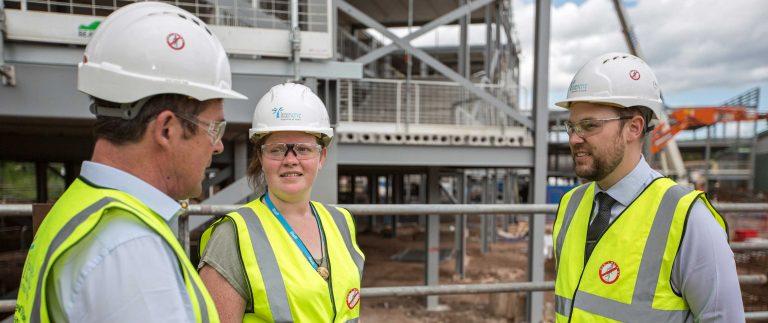
Shares in Interserve plunged by over 75% on Monday after news emerged that the outsourcing firm was seeking a rescue deal.
In early trading, shares fell to just 6p, down from their 700p peak in 2014.
Interserve £500 million of debts but the group said over the weekend that it was “making good progress” on a recovery plan.
The group employs 45,000 people in the UK and a total of 75,000 people globally
On Monday morning, the group announced a new £25 million Welsh public sector contract for the redevelopment of Prince Charles Hospital in Merthyr. Work will start this month and continue till 2021.
Chief executive Debbie White said: “The fundamentals of our business remain strong.”
“The deleveraging plan will give Interserve a strong long-term capital structure and provide a solid foundation on which to build the future success of the group.”
The firm said in a statement: “Although the form of the deleveraging plan remains to be finalised, it is likely to involve the conversion of a substantial proportion of the group’s external borrowings into new equity, an element of which may be sold to existing shareholders and potentially other investors.”
When shares crashed in early trading, the value of Interserve fell less than £9 million.
Unite, the UK’s biggest union, has called on ministers to carry out contingency plans and ban new contracts between the outsourcing firm and the public sector.
“The financial difficulties that Interserve finds itself in is another dire warning of the dangers of outsourcing public services for private profit. We could be facing Carillion mark two,” said Unite assistant general secretary Gail Cartmail.
“The mistakes made before the collapse of Carillon in January 2018 appear in danger of being repeated – if so, this could see the hard-pressed taxpayer picking up the tab – yet again.”
Shares (LON: IRV) have slightly recovered and are trading -50.6% (1619GMT).
Brexit vote delayed, pound falls to 18-month low

Monday saw the pound fall to an 18-month low following reports of Theresa May’s plans to delay her Brexit vote.
The sterling fell to its lowest rate since June 2017 against the dollar, down to $1.2656. It fell to less than €1.11 against the euro.
David Cheetham, who is the chief market analyst at xtb, said: “The negative reaction in the markets is more likely due to what it means for her position rather than the failure to win the vote – with even her staunchest supporters already highly sceptical as to whether the bill would pass.”
The FTSE 100 was less badly hit, however shares in the housing sector are trading down. Shares in Baratt Developments (LON: BDEV) and Taylor Wimpey (LON: TW) are trading down by about 4%, whilst shares in Persimmon (LON: PSN) are down 3%.
On the news that the prime minister will delay the vote that was scheduled for Tuesday, Jeremy Corbyn said: “The government has decided Theresa May’s Brexit deal is so disastrous that it has taken the desperate step of delaying its own vote at the eleventh hour.”
“We have known for at least two weeks that Theresa May’s worst of all worlds deal was going to be rejected by parliament because it is damaging for Britain.”
“Instead, she ploughed ahead when she should have gone back to Brussels to renegotiate or called an election so the public could elect a new government that could do so.”
May will make a statement to MPs on Monday over her decision to delay the vote. Her statement will be followed by a statement from Commons leader Andrea Leadsom and from the Brexit secretary Stephen Barclay.
Nigel Dodds, the DUP deputy leader, has said the current Brexit situation is “quite frankly a bit of a shambles”.
Scottish First Minister Nicola Sturgeon said: “Yet again the interests of the Tory party are a higher priority for her than anything else.”
Lloyds share price falls to fresh 2-year low as PM May delays meaningful vote
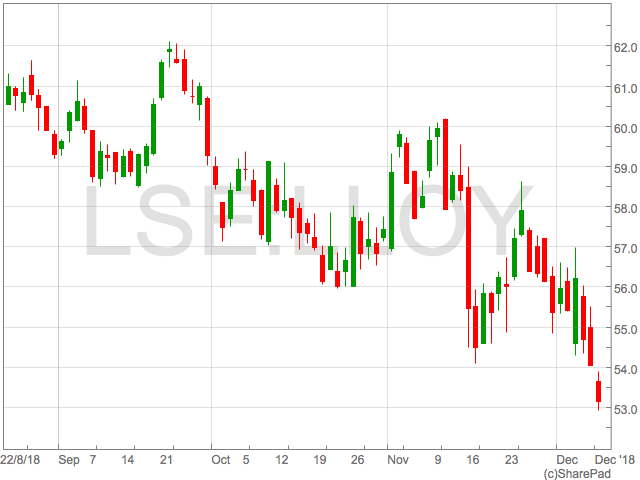
The Lloyds share price (LON:LLOY) fell to fresh 2-year lows on Monday as the UK government was plunged into chaos as reports broke Theresa May was going to pull the meaningful vote scheduled for Tuesday.
The drop in the Lloyds’ share price was accompanied by a decline in the FTSE 100 and peers in the banking sector.
Lloyds shares fell as low as 52.96p on Monday morning, a level not touched since October 2016.
Ongoing uncertainty surrounding the UK exit of the EU is raising fears over the long-term health of the UK economy on which Lloyds is almost exclusively reliant on.
Theresa May failed to win enough support for her Brexit deal with the numbers stacked against her in the meaningful vote in parliament.
The UK Prime Minister has been under pressure from sections of her own party who have vocally condemned a deal that only scrapped through her cabinet with the resignation of two ministers.
The concern for investors in Lloyds and the rest of the banking sector is the possibility of the UK leaving the EU with no deal and the potential negative impact on the UK economy.
The Bank of England has made dramatic predictions for the UK economy in the case of a no deal including a 30% drop in house prices and sharp declines in overall GDP. Both of these scenarios would ravage the profitability of Lloyds who is reliant on lending to businesses and individuals in the UK.
 Theresa May failure
Theresa May failed to win enough support for her Brexit deal with the numbers stacked against her in the meaningful vote in parliament.
The UK Prime Minister has been under pressure from sections of her own party who have vocally condemned a deal that only scrapped through her cabinet with the resignation of two ministers.
The concern for investors in Lloyds and the rest of the banking sector is the possibility of the UK leaving the EU with no deal and the potential negative impact on the UK economy.
The Bank of England has made dramatic predictions for the UK economy in the case of a no deal including a 30% drop in house prices and sharp declines in overall GDP. Both of these scenarios would ravage the profitability of Lloyds who is reliant on lending to businesses and individuals in the UK.
Strategic Partnership
The ongoing uncertainty created by Brexit hasn’t held Lloyds back from forging strategic partnerships in the form of a wealth management tie up with Schroders to harness Lloyds existing channels and customer base to provide fresh revenue streams. António Horta-Osório, Group CEO of Lloyds, commented: “I am delighted to be announcing this exciting partnership with Schroders and the creation of a new market leading wealth management proposition. This provides a strong platform for growth and is a further step in the delivery of our strategic objectives.” The move highlights Lloyds forward thinking strategy so while Brexit may cause short term volatility for investors in Lloyds shares, the future past Brexit promises increased revenue channels.Frontera Resources share price slides as investors await legal update

Frontera Resources (LON:FRR) shares continued to slide on Monday as the company awaits the next stage in crucial legal proceedings.
The Frontera Resources shares price has been dogged in 2018 by legal proceedings with a non-exec director Stephen Hope, arbitration with the Georgian state over a supply sharing agreement and the ongoing restructuring of debt and capital raising.
The most pressing of these matters is the Cayman Grand Court case for which defendant Hope has until December 18th to file a defence.
Frontera’s fully-owned subsidiary, Frontera International Corporation, has filled a case with the Grand Court of the Cayman Islands against Frontera non-exec director Stephen Hope and Outrider Management, the Californian-based Investment Advisor Hope himself founded.
Frontera Resources allege Hope broke his fiduciary duties as company director and conspired with Outrider for his own personal gain.
Frontera have filed damages amounting to $56.3 million against Hope and Outrider Management LLC.
For a company producing just $1.8m in revenue from oil & gas sales over a 6-month period, the near-term fortunes of Frontera and their investors are likely to be dictated by the outcome of the Cayman case against Outrider.
The case relates to the issuing of loan notes in 2016 in a restructuring of debt that involved 10% notes issued in 2011 being reissued as non-convertible notes to Outrider Master Fund. Stephen Hope, a non-exec director of Frontera Resources, has an interest in excess of 75% in Outrider Management.
The restructuring was imperative for any semblance of shareholder value as the prior agreement was causing ongoing dilution to the share price.
Despite undergoing debt restructuring, Frontera have a long-term debt pile of $35m.