
Biome Technologies receives additional grant funding, shares jump

Biome Technologies has announced on Thursday that it has been awarded an additional £0.6 million of grant funding. Indeed, the leading bioplastics and radio frequency technology business has been awarded additional funding to support a project focused on the production of a novel bioplastic building block. Shares in the group increased by almost 6.5% on the announcement.
Biome Technologies is a commercially driven technologies group with two divisions; Biome Bioplastics Limited and Stanelco RF Technologies Limited. Biome Bioplastics Limited is a market-leading developer of bio-based and biodegradable plastics.
CEO of Biome Technologies, Paul Mines, commented on the announcement:
“The UK government has set a target of eliminating all avoidable plastic waste by 2042. Bioplastics will play a crucial role in achieving this target by reducing waste. However, current bioplastic technology is limited by price and performance in some applications. Our development programme is intended to change that position by preparing a new generation of polymers with improved functionality.”
Ted Baker faces “challenging external trading conditions”
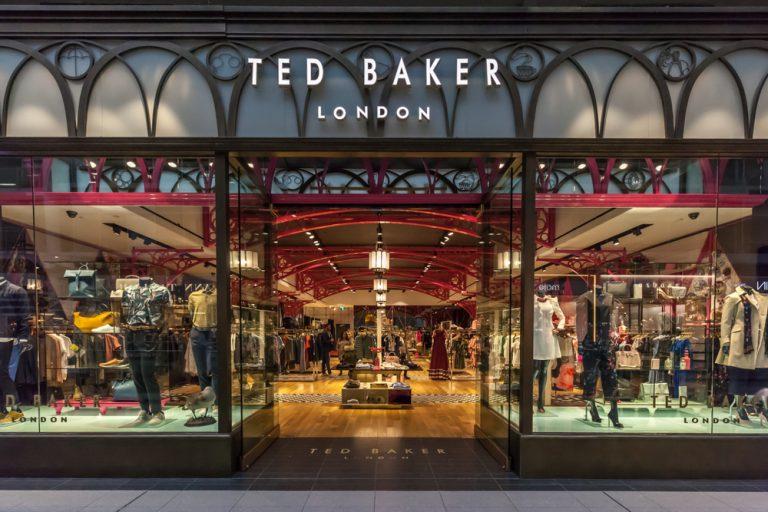
Ted Baker has released a trading update on Thursday for the 16-week period from 11 August to 1 December. The global life style brand has outlined its “resilient performance despite challenging external trading conditions” during the period.
Group revenue decreased by 0.2% during the period when compared to last year’s results. The company has said that this figure reflects the anticipated decline in wholesale sales as a result of the timing of delivers. Indeed, the company insists that poor delivery timing has largely impacted its retail sales performance.
Wholesale sales for the period dropped by 6.5%. This result was anticipated because of the timing of wholesale deliveries in the first half of the year.
Ted Baker has also outlined the challenging external trading conditions that impacted a variety of its markets.
Trade in the UK, Europe and the East Coast of America was affected by “unseasonal weather”. Moreover, the group was also hit by the “well-publicised” challenges faced across the UK high street. One leading high street name who has been hit by the challenging trading climate is John Lewis, reporting a 99% fall in its profits. In fact, the UK high street is currently facing the toughest conditions in the past five years. Following the UK’s scorching summer of World Cup success, retail sales dropped by 0.8%, a much larger drop than anticipated. Total retail sales including e-commerce increased by 2.3% across the period. Additionally, e-commerce sales increased by 18.0%. These sales are a significantly important component of the group’s retail channel. Indeed, e-commerce represents 30.3% of total retail sales for the period. CBE, Founder and Chief Executive of Ted Baker, Ray Kelvin, commented on the results: “We are pleased with the brand’s continued expansion, which is a reflection of the strength of the Ted Baker brand and the design and quality of our collections.” “The investment in our flexible business model ensures that the Ted customer has multiple channels to engage with the brand and underpins our long term development. Our global e-commerce business continues to grow well and is complemented by our digital marketing strategy and unique stores that showcase the brand.” Earlier this week, shares in the group fell 13% following a petition accusing Ted Baker’s owner of inappropriate comments and behavior. At 12:33 GMT today, shares in Ted Baker plc (LON:TED) were trading at +1.02%.Euromoney acquires BoardEx and The Deal for $87.3 million

Euromoney Institutional Investor plc has announced on Thursday that it will acquire BoardEx and The Deal. Indeed, the global business information and events group will acquire 100% of the equity of the two companies from its parent company TheStreet. Following the announcement, shares in Euromoney dropped 4% this morning.
By combining the two platforms and integrating them with Euromoney’s existing portfolio, the company aims to create a powerful workflow tool to serve multiple industries.
Euromoney Institutional Investor is a global, multi-brand information business. Moreover, it provides critical data, price reporting, insight, analysis to different markets. The company is a member of the FTSE 250.
Euromoney will acquire BoardEx and The Deal for $87.3 million, funded from its existing facilities.
BoardEx is an executive periling and relationship mapping platform. It provides its users with detailed profiles of over one million of the world’s business leaders. Equally, The Deal is a “trusted” source of information, data and intelligence. In the US, its digital subscription is one of the leading brands on the market in deal-driven intelligence.
Both products acquired by Euromoney are well suited to its current portfolio. In fact, all three serve a variety of shared customer groups, including investors, banks and professional services firms.
CEO of Euromoney, Andrew Rashbass, commented on the acquisition:
“I am excited by the acquisition of BoardEx and The Deal, which brings two additional high-quality assets into Euromoney’s portfolio and supports our transition towards a next generation 3.0 business model. The businesses are perfectly placed to grow further under Euromoney ownership, with the Group’s existing data expected to enhance the BoardEx platform. We look forward to working with the management team and our new colleagues around the world to develop these leading brands and take advantage of the compelling growth opportunities they offer.”
Other market news also includes ContourGlobal’s announcement that it will sell its stake in MW concentrated solar power facilities. Elsewhere, the FTSE 100 has slumped to a two-year low with Melrose, Glencore and Antofagasta taking the biggest hit. Additionally, Thames Water reported a 60% plunge in its profits as a result of extreme weather and regulatory penalties.
At 12:02 GMT today, shares in Euromoney Institutional Investor plc (LON:ERM) were trading at -4.06%.
Lewisham tackles housing shortage through prefab villages
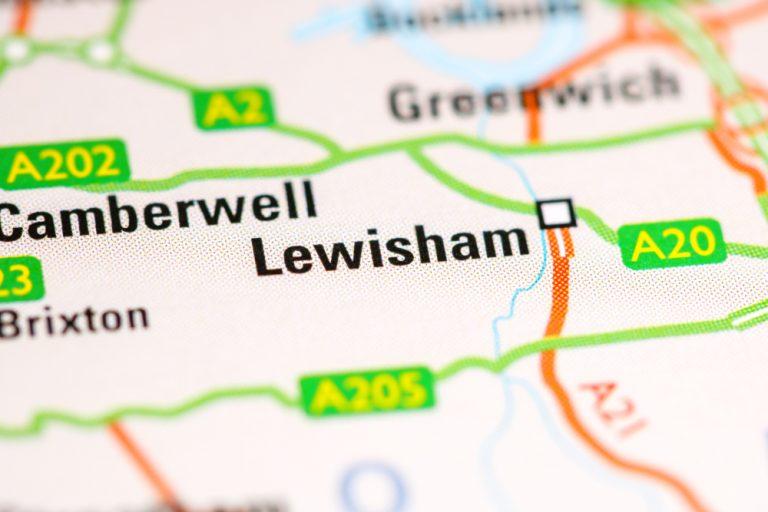
The London borough of Lewisham has announced to cut housing waiting list through building ‘prefab villages’.
Planners working in the borough have approved 34 homes that will be built within a new seven-storey timber-framed building in south-east London.
The accommodation will be provided on a temporary basis to homeless families and will be completed in 2020 with windows, cladding, electrics, plumbing, ready-fit kitchens and bathrooms.
Damien Egan, the Mayor of Lewisham, said: “We are committed to delivering 1,000 new social homes over the next four years, which is the biggest social housing programme in the borough for decades.”
“This highly innovative project will provide 34 homes for homeless families from the borough, and a community nursery,” he added.
Lewisham has a severe shortage of housing. The borough has 10,000 people on waiting lists for housing and over 2,000 families in temporary accommodation.
“Here in Lewisham, our aim is to make a real difference to people’s lives. We can and we will build more genuinely affordable homes, improve living standards in our existing properties and help our residents reduce the cost of running their homes through energy efficiency improvements. We will also continue to reach out to support residents who find themselves in genuine difficulty and faced with unavoidable homelessness,” said Cllr Egan in the borough’s housing strategy.
Gambling firms to stop advertising during live sports broadcasts

The UK’s biggest gambling firms have agreed to stop advertising during live sports broadcasts.
Companies that are part of the Remote Gambling Association (RGA) are taking part in a voluntary ban following increasing political pressure.
Betting firms included are Paddy Power, Ladbrokes and Bet365.
Labour’s Shadow Secretary of State for Digital, Culture, Media and Sport, Tom Watson, said he was “delighted” by the decision.
“There was clear public support for these restrictions and I’m glad that the Remote Gambling Association has taken its responsibilities seriously and listened.”
During the World Cup, over 90 minutes of adverts for betting firms were shown, which MPs said were “normalising” betting money.
“One of the only downsides to this brilliant World Cup has been the bombardment of gambling advertising on TV and social media that thousands of children will have been exposed to,” said Watson.
Following the news, shares in Paddy Power (OTCMKTS: PDYPY) are trading down 6.22% (1027GMT).
In other market-related news, the FTSE 100 is trading down to a two-year low on Thursday morning after markets were rocked by the arrest of Huawei’s Meng Wanzhou.
FTSE slumps to 2-year low
The FTSE 100 fell over 240 points on Thursday, dropping to 6674, a two-year low by the close
The blue-chip index was trading -3.1% (1559GMT) with most FTSE 100 stocks down after the arrest of Huawei’s Meng Wanzhou.
The global chief financial officer of Huawei was arrested rocked Asia-Pacific markets spilling over into the European sessions and caused the FTSE 100 to drop on the open.
Connor Campbell from SpreadEx commented: “Jeez it has been an intense week for US-China relations. The post-G20 trade truce is starting to feel like a distant memory, with Tariff Man Donald Trump, and now the arrest of Huawei’s Meng Wanzhou, serving to undermine whatever (naïve) hopes of progress had built up on Monday.”
“Wanzhou, global chief financial officer of telecoms equipment at the Shenzen-based smartphone firm and daughter of its founder, was detained in Canada last Saturday and is now facing extradition to the USA, relating to an investigation into whether or not she violated sanctions against Iran.”
“China has, obviously, been quick to criticise the arrest, while Huawei is demanding her release. It is yet another huge blow to what was already looking like a fragile and inchoate ceasefire, and has sent the markets into another value-eroding funk.”
“The FTSE, which is really feeling the weight of its commodity stocks at the moment, dropped 1.5%, slipping to 6830 for the first time in 2 years. The DAX, meanwhile, lost 170 points as it strained to keep above 11000, with the CAC back at 4860 as it fell 1.6%,” he added. The biggest faller of the morning is Melrose (LON: MRO), which is down by 6.73%. This is closely followed by Glencore (LON: GLEN) and Antofagasta (LON: ANTO) (1008GMT). Commodity companies are particularly vulnerable to the US-China trade and are big constituents of the FTSE 100. Betting firms are also down following news this morning that gambling firms have agreed to stop adverts during live sports broadcasts. This was a voluntary move in the face of ongoing pressure from MPs on the gambling industry. Paddy Power Betfair (LON:PPB) is trading -1.85% (1537GMT). Global equity markets have also been unnerved by the inversion of the US yield curve. An inverting yield has historically signalled an upcoming recession. However, the timing can range from between 1-5 years and with such a strong US jobs market, the recent declines in equity markets may be somewhat premature.ContourGlobal to sell solar power stake
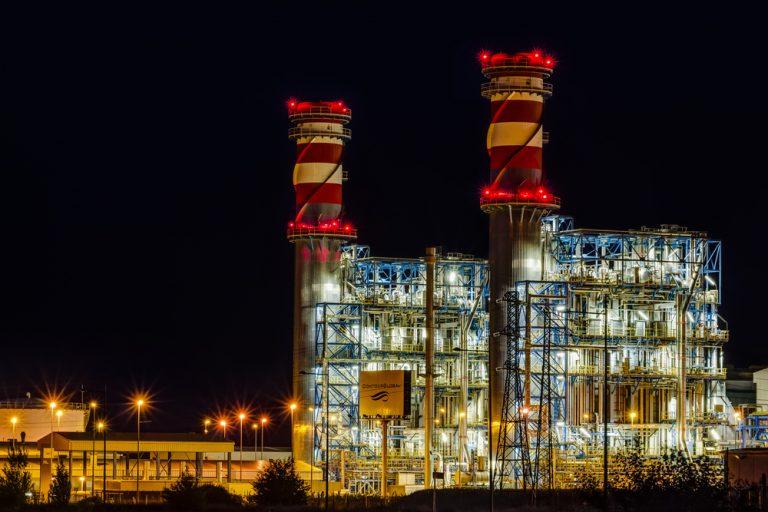
FTSE 250 and LSE-listed power generation firm ContourGlobal Plc (LON:GLO) have reported that they will be maintaining their full-year guidance, as well as selling their stake in MW concentrated solar power facilities.
The firm is set to sell their stake in the solar power facility to Energy Infrastructure Partners, a fund advised by Credit Suisse, for €134 million.
This investment represents a positive margin of €65 million, as per their original investment for the 49% stake, worth €69 million. The transaction is expected to be complete by the end of H1 2019.
In a statement, the company said that they were on track to achieve their guidance range for 2018, of an adjusted EBITDA of $600-630 million.
“We are very pleased to expand our partnership with CSEIP in Europe with our second sale of minority interests this year. CSEIP is a committed long-term partner and leading investor in the infrastructure field, combining deep industry expertise with unique sourcing and distribution capabilities. We look forward to extending our partnership into new markets,” said Joseph C. Brandt, President and Chief Executive Officer of ContourGlobal.
“We continue to see opportunities to enhance shareholder returns and redeploy capital into our significant growth pipeline by selling minority stakes in our global portfolio of businesses to dedicated infrastructure investors looking to invest long-term with strategic operating partners.”
As of 06/12/18 09:40 GMT, ContourGlobal shares are trading at 179.9p.
Extreme weather and fines hit Thames Water profits
Profits at Thames Water have plunged 60% after regulatory penalties and extreme weather hit the group.
Pre-tax profits fell from £129 million last year to £67.7 million in the six months to the end of this September.
The private utility company said that the summer heatwave combined with the “beast from the east” in spring delayed ability to fix leaks.
Following the failure to tackle leaks, Thames Water was fined £120 million by the regulator Ofwat. Of this penalty, £65 million was paid back to customers.
During the same period, Thames Water received 11,000 written complaints about supply interruptions. In the same period last year, the group received 8,000 complaints.
“During the intense summer heatwave we worked tirelessly to protect our customers from supply restrictions,” said chief executive Steve Robertson.
“However, along with the impact of the ‘Beast from the East’, it has delayed our progress on leakage and other performance measures. We remain focused on building a better future for our customers and the environment.”
“Our profit decreased over the period as we brought forward regulatory penalties, to benefit customers, and hired more employees to improve customer service and tackle leakage. Our capital investment increased, with £554 million spent on improving our water and waste networks.”
“Our long-term investors are committed to the high investment levels required to face the challenges created by climate change and population growth, and continue to not take any dividends. Our record £11.7 billion business plan for 2020-25 will help to further transform our infrastructure and customer service, as well as provide the necessary extra support for people in vulnerable circumstances,” he added.
Last year, the group was fined £20.3 million after untreated water was found to be leaking onto land and killing wildlife.
AT&T Anti-Trust Case on Merger Continues
Round two of the AT&T Co.’s (NYSE:T) anti-trust case ensues against their prolific merger deal with Time Warner. The next round of talks begins with the telecom giant, as the Department of Justice contends the verdict of the presiding Judge Leon.
Judge Richard Leon was appointed by George W Bush, and six months after the verdict was delivered to allow the merger worth in excess of $80 billion, the Justice Department are appealing the decision on grounds that Judge Leon lacked an understanding of how pay-TV and content providers bargain over contracts, and that he had ignored “fundamental principles of economics and common sense”.
In contrast, AT&T have spoken out in defence of Judge Leon, stating that he had a clear understanding of the economics of the industry, and arguing that the government’s evidence was “narrow and fragile” in regard to claims that the merger would give AT&T an anti-competitive monopoly – and ultimately the ability to dictate prices.
In regard to the subsidiaries HBO and Cinemax, who were bought as part of the Time Warner deal, both have had media silence on DIsh Network Corp’s satellite system with both sides failing to reach an agreemnet on contract terms – both blamed the exacting demands of the opposite party.
A new panel will hear oral arguments at the Court of Appeals for the District of Columbia Circuit, with the three judges presiding having been appointed by Presidents Ronald Reagan, Bill Clinton and Barack Obama respectively. Denying political motivation and attributing the appeal to substantive issues and discrepancies in the AT&T’s CEO’s public testimony, the appeal represents the first anti-trust litigation led by the government in the Trump administration, and the first government block of a vertical merger in four decades.
AT&T have argued that the deal would not grant them any extra leverage on the market as they argue they would be set to lose money if Turner didn’t become a regular presence on US TV, and Judge Leon compounded these claims by stating that rivals could still compete fro subscribers and ultimately that Turner didn’t provide extra bargaining power.
Whatever happens, the unwinding clause on Judge Leon’s verdict expires in February, so any counter measures will have to be taken and ratified in that short time period. The current deal for the Time Warner merger includes the companies CNN, Warner Brothers, HBO and Cinemax.
AT&T shares are currently trading down 3.09% or $0.98, at $30.73 06/12/18 04:28 GMT.
C4X Discovery and E-Therapeutics Parkinson’s treatment development, shares rise

C4X Discovery Holdings and E-Therapeutics have announced the developments of a potential treatment of Parkinson’s Disease.
The companies have identified new approaches to drug targets for the potential treatment of the disease. On the announcement, shares in E-Therapeutics edged up by 4%.
The collaboration of the two companies was first announced on 1 May 2018. Today, they have identified novel intervention strategies for the potential treatment of Parkinson’s.
C4X Discovery is a pharmaceutical company that aims to be one of the world’s most productive drug discovery and development companies. Equally, E-Therapeutics seeks to accelerate drug discovery with an innovative view of disease networks.