
Mitie reports dip in profits, shares fall
Mitie has reported a fall in profits over the past six months.
The outsourcing firm said that it expects to see “modest” growth for the full year as it feels the effects of Carillion’s collapse.
Despite selling several of its divisions and reporting a 4% rise in revenue to £1.04 billion, adjusted operating profit fell over 4% to £38.4 million.
Over the past six months, the group has offloaded its pest control business in a £40 million deal to Rentokil Initial (LON: RTO). The group has also sold its social housing business to Mears (LON: MER) in a £36 million deal.
Chief executive Phil Bentley said: “We continue our strategic focus on our core businesses and core clients. We are enhancing service delivery and margin by reducing our cost base, investing in customer services and deploying the distinctive technology our clients increasingly demand from their ‘Connected Workspace’.”
“We are making steady progress on all fronts. With recent disposals and acquisitions, we have begun the process of sharpening our focus on those business lines where we can secure a leading market position, underpinned by technology. This approach is already gaining traction.”
“Our industry remains competitive and challenging, but with the actions we are taking, we see improving prospects for growth ahead of us,” he added.
Shares in Mitie (LON: MTO) fell over 3% as markets opened on Thursday. Shares are currently trading -2.42% at 153,10 (0832GMT).
Theresa May heads to Brussels to finalise deal
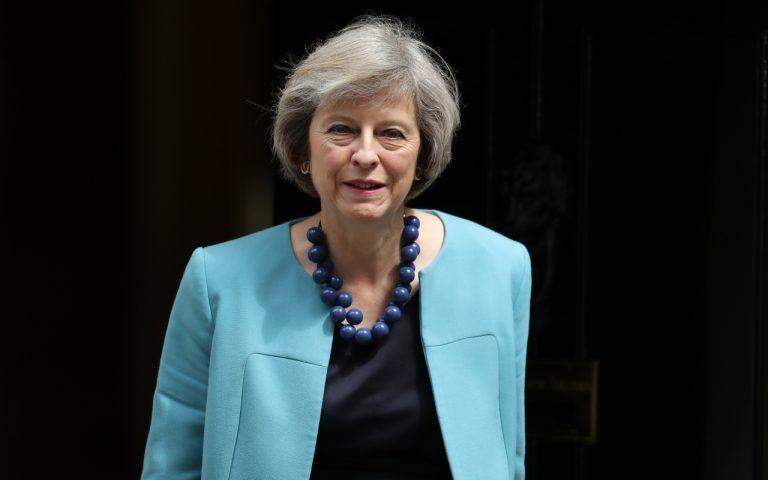
Theresa May will be going to Brussels on Saturday in an attempt to complete Brexit negotiations.
After meeting with the European Commission president, Jean-Claude Juncker, for almost two hours, the leaders said there were still some major issues to resolve.
“We have had a very good meeting this evening. We have made further progress and as a result, we have given sufficient direction to our negotiators,” said May on Wednesday.
“I hope for them to be able to resolve the remaining issues and that work will start immediately. I now plan to return for further meetings, including with President Junker, on Saturday to discuss how we can bring to a conclusion this process and bring it to a conclusion in the interests of all our people.”
German Chancellor Angela Merkel has suggested that she may not attend the leaders’ summit on Sunday. Merkel had said that she required a finalised agreement to be agreed on well before the meeting.
When the prime minister was asked why negotiations had not yet been completed, she said: “Well, there are some further issues that need resolution.”
“We have given direction to our negotiators this evening. The work on those issues will now start immediately. I believe we have been able to given sufficient direction for them to be able to resolve those remaining issues.”
The withdrawal agreement is 585-pages that covers themes including citizens’ rights and the Irish border issue.
The prime minister’s Brexit plan has been criticized by many MPs from all parties, including Scotland’s first minister, Nicola Sturgeon.
Sturgeon wrote in the Guardian, there was, “an emerging cross-party consensus that can lead to a much better outcome, with broad agreement between the SNP, Labour, the Lib Dems, Plaid Cymru, the Greens – and indeed some Conservatives – that parliament must reject both the current proposal and a no-deal outcome”.
FTSE 100 closes higher amid EU tension

The FTSE 100 closed 102 points higher on Wednesday, despite EU tensions.
European Tensions
MPs have criticised Theresa May’s Brexit deal as she prepares to meet with Brussels later this week. Wednesday also saw the rejection of Italy’s proposed budget for 2018/19. Italy’s debt is second only to Greece, at 131% of national output. David Madden, an analyst at CMC Markets, said: “European stock markets have gained ground today even though the tension between the Italian government and the EU has risen.” “The EU announced that Italy will be disciplined for their budget, and this could cause massive instability in the region.” “Brexit is still doing the rounds in the news, but traders are unlikely to take any notice until there are new developments,” he added.Fallers
Wednesday’s fallers included Sage Group (LON: SGE) and Kingfisher (LON: KGF), whose shares fell 4.1% and 2.7% respectively. Sage Group warned a sharp fall in margins this year whilst Kingfisher reported a 1.3% drop in third-quarter like-for-like sales. Kingfisher revealed plans to exit the smaller markets in Russia, Spain and Portugal. “We are committed to our plan and to building a strong business for the long-term. As part of this commitment, we have taken the decision to exit Russia, Spain and Portugal,” said Véronique Laury, the chief executive. “This will allow us to apply our strategy with more focus and efficiency in our main markets.” Shares also slid in Babcock (LON: BAB), which revealed a one-off £120 million hit to reshape its oil and gas business. Pre-tax profits fell to £65.1 million – down by almost two-thirds. Revenue in the group fell by 2.7% to £2.25 billion. Shares fell 12% on opening. “We had a solid first half with underlying results in line with our expectations and we have confirmed guidance for the full year. We are taking decisive actions to further strengthen the group which will deliver benefits next year and beyond,” said the chief executive, Archie Bethel.Victoria’s Secret announce new CEO, shares increase

The CEO of Victoria’s Secret has resigned and will be replaced by John Mehas, the former president of fashion brand Tory Burch.
The parent group of the retail brand, L Brands (NYSE: LB), announced the departure of Jan Singer amid the quarterly earnings report.
Leslie Wexner, the chairman and CEO of L Brands, said: “Our number one priority is improving performance at Victoria’s Secret Lingerie and PINK. We could not be more excited for [Mehas] to lead Victoria’s Secret Lingerie to a new phase of success.”
“I am confident that, under John’s leadership, Victoria’s Secret Lingerie, the world’s leading lingerie brand, will continue to be a powerhouse and will deliver products and experiences that resonate with women around the globe,” he added.
The lingerie brand has struggled over recent years. In-store sales dropped 6% last quarter. Revenue is expected to grow by just 1% over the next five years.
The brand has been struggling to compete against newer competitors in the lingerie market.
Claire O’Connor, a lead analyst at Ibisworld, said: “These small niche operators are only going to continue growing and only going to continue to populate the industry. They have a real shot at competing with Victoria’s Secret.”
November saw the brand’s famous fashion show in New York, which reportedly costs $2 million to put on.
Shares in L Brands have fallen over 40% over the past 12 months.
They are currently trading +7.51% at 29,92 (1652GMT).
Sosandar losses weighted down by costs

In the latest round of results, women’s online fashion retailer Sosandar Plc (LON:SOS) revealed that its increased revenues had been offset by costs, which had deepened its first half losses.
H1 losses were headed by expansion of administrative and operating costs, which saw Sosandar’s pre-tax losses worsen on-year, from £1.1 million to £2 million. This news came shortly after Sosandar’s fashion retail counterpart, Mulberry Group Plc (LON:MUL) announced an even more disappointing set of results earlier this month.
The firm’s gross margin was up 9% – to 55% – while revenue also spiked to £1.8 million, compared to £0.4 million for H1 2017.
“The exceptional growth in revenue, increased average order values and surge in repeat orders is evidence of how well we are engaging with an under-served market of women,” joint chief executives Ali Hall and Julie Lavington said.
“Trading continues to be in line with management’s expectations and sales momentum has continued post period, with strong trading in the autumn across all product categories including partywear.”
“September and October delivered consecutive record months for revenue, as well as orders, traffic and conversion rate”
Hope for the future of Sosandar?
Recent figures show promise for forward-looking revenues, and sit in line with the optimistic outlook of other UK manufacturers this month, in spite of market and political turbulence. Sosandar shares are currently trading up 8.84% or 3.01p at 37p 15:51 GMT 21/11/18.Single-use plastics: UK government should tax ‘virgin packaging’, report recommends

The UK government should introduce a tax on ‘virgin packaging’ to further kickstart recycling efforts against the use of single-use plastics, a new report has recommended.
The study, which was commissioned by The WWF and the Resource Association and produced by Eunomia, recommended that the tax be introduced to combat our reliance upon single-use plastics.
It recommended the introduction of a “new materials levy” against companies using plastic packaging, as well as a rebate for firms that recycled these materials.
The latest recommendations from the WWF-Eunomia report was presented to MP’s on Tuesday evening.
Dr Lyndsey Dodd, head of marine policy at WWF UK, said: “Our oceans are choking on plastic, 90% of the world’s sea birds have fragments of plastic in their stomach. Despite the public outcry, more products are being made with virgin, or new, plastic than with recycled plastic.
The report follows news that the ‘single-use’ has been named as the word of the year for 2018 by Collins Dictionary, amid increased public awareness about the ongoing plastic crisis facing the environment.
The EU recently ramped up efforts to combat plastic waste, introducing a ban upon single-use plastics. The ban is set to come into action by 2021.
Following suit, the UK is also expected to introduce a similar initiative in the coming years, after the Chancellor announced plans to consult on a potential plastic tax to be implemented in the future.
The proposed single-use tax however, is not to set to come into force until 2020, a year later than the EU initiative.
The UK has been comparatively slow to adopt greener policies, despite once being renowned as a world leader in wind power generation.
Click here for a breakdown of some of the countries leading the green, renewables revolution.
Ikea set to cut 7,500 jobs in bid to “remain relevant”
Ikea announced plans to cut 7,500 jobs over the course of the next two years, as the retailer adjusts to changing consumer habits.
The Swedish furniture giant is set to instead create smaller shopping locations, in turn creating 11,500 new roles.
However, the move will also see the company shed thousands of employees, with many as 350 jobs set to go in the UK.
Javier Quinones, the boss of Ikea UK and Ireland said, “We recently announced our city centre approach, starting with London, and we will continue to invest in being more convenient through our enhanced service offer and digitalisation.
“While the opportunities ahead of us are exciting, we know that some of the changes won’t always be easy and in some cases, we will have to make difficult decisions.”
Ikea is in the process of opening a new location in London’s Greenwich area, which is set to open next year, creating 500 new jobs in the process.
Whilst Ikea recently reported its sixth consecutive year of growth, the retailer has been slow to adapt to online platforms, despite growing demand. Instead, Ikea has become globally known for its large warehouse locations.
In 2016 alone, Ikea welcomed 2.1 billion visitors to its website, a figure it no doubt will target as it continues to make changes to its business model.
Whilst Ikea has been the world’s largest furniture retailer since 2008, it remains a privately owned company.
The furniture firm has been heavily criticised by the European Parliament in recent years for its alleged tax evasion.
As a result, the EU launched an extensive investigation into IKEA’s tax affairs back in December 2017.
Commenting at the time of the investigation launch, Commissioner Margrethe Vestager who heads the EU competition policy:
“All companies, big or small, multinational or not, should pay their fair share of tax. Member States cannot let selected companies pay less tax by allowing them to artificially shift their profits elsewhere. We will now carefully investigate the Netherlands’ tax treatment of Inter IKEA.”
Patisserie Valerie auditor faces fraud probe

In what seems like an eclectic nightmare, Patisserie Holdings Plc (LON:CAKE) face yet another complication in their saga of mismanagement and alleged fraud.
The Financial Reporting Council (FRC) have announced they will be examining Patisserie audits carried out by Grant Thornton between 2015 and 2017.
This news comes shortly after Patisserie Valerie called an emergency shareholder meeting, and survived a winding-up petition for its subsidiary (courtesy of HMRC), the former leaving the firm only hours from bankruptcy.
Today’s news follows ongoing fraud investigations by the FRC and Serious Fraud Office, over ‘black holes’ in the Patisserie’s accounts, With action already taken to suspend the company’s finance officer Chris Marsh – who has since resigned – a full investigation is now taking place of Grant Thornton, and alleged mismanagement of Patisserie’s audits.
It is the first time Grant Thornton have had three years worth of accounts under investigation. A spokesperson has said,
“We will, of course, fully cooperate in this matter”
Grant Thornton has been fined £3 million for misconduct regarding audits of Patisserie accounts, and an industry-wide probe is now under way, with the Competition and Markets Authority hoping to establish whether a lack of competition between the four main players – Deloitte, KPMG, EY and PwC – is hampering the overall quality of audits.
Patisserie’s share price closed at 429.5p, with Peel Hunt analysts putting their previous ‘Buy’ stance on Patisserie stock ‘under review’.
Italy budget: EU rejects budget, moves towards disciplinary action

Italy budget: the EU have rejected Italy’s proposed budget for 2018/19 once again, threatening to begin disciplinary procedures against the nation.
After rejecting the budget proposal once again, The European Commission (EC) concluded that Rome had “seriously violated” its debt rules.
The EU and Italy are at odds over the country’s deficit targets, in particular.
EU rules dictate that member countries must maintain deficit that is 3 percent of GDP, with debt below 60% of GDP.
Specifically, the Italian government, which is a coalition between the anti-establishment Five Star Movement and the far-right League, proposed a budget deficit of 2.4%.
Whilst this remains below the 3% stipulated by EU regulations, the figure remains concerning in light of Italy’s mounting deficit.
As it stands, Italy’s debt is second only to Greece, at 131% of national output.
In a statement, the EC said:
“With regret, that today we confirm our assessment that Italy’s draft budget plan is in particularly serious non-compliance with the Council recommendation of 13 July.”
Given that Rome made minimal revisions to the previously rejected budget proposal, the latest move towards disciplinary action is not particularly surprising.
Nevertheless, it is undoubtedly a blow to the Italian government, who have promised Italian citizens that it will make considerable efforts to “abolish poverty” and improve welfare.
Following the rejection of the budget proposal, the EC will recommend that the European council commences “Excessive Deficit Procedure” against the nation.
Should the Italian government not provide evidence of appropriate corrective action, Italy could face substantial fines.
CBI Industrial Trends Orders inspire optimism

The Confederation fro British Industry (CBI) release a monthly data set, which lays out findings from their survey of UK manufacturers for projected volume of orders for the coming three months – with figures for November being markedly more optimistic than prior expectations.
In the midst of Brexit uncertainty, and following October and its two-year-low rating of -6.00, it was expected that this month would see the trend continue with manufacturer order volumes continuing to fall to about -7.00.
However, the CBI’s figures on Tuesday afternoon revealed that manufacturers were performing ahead of expectations, at a level of +10.00 – and with scores above 0.00 representing optimism, this figure certainly took pundits by surprise.
Since the figures were released, commentators have pointed out that the trend displayed seems to betray market forces which would normally inspire pessimism, though there is no denying that UK manufacturing has enjoyed success in recent weeks.
Export order books were up to 0.00 against forecasts of -4.00, output growth expectations stand at +8.00 against -3.00 previously, and stocks of finished goods were up to +5.00 versus 0.00.
According to Trading Economics macro model, Factory Orders are expected to stand at +5.00 Net Balance at the end of the quarter, and down to +1.00 in a year’s time. The downward trend is set to continue in the long-term, with the CBI ITOs expected to trend at -2.00 by 2020; though this figure is speculative and highly subject to changes in the international and domestic politico-economic landscape.