
Virgin Atlantic in talks to buy Flybe, shares soar
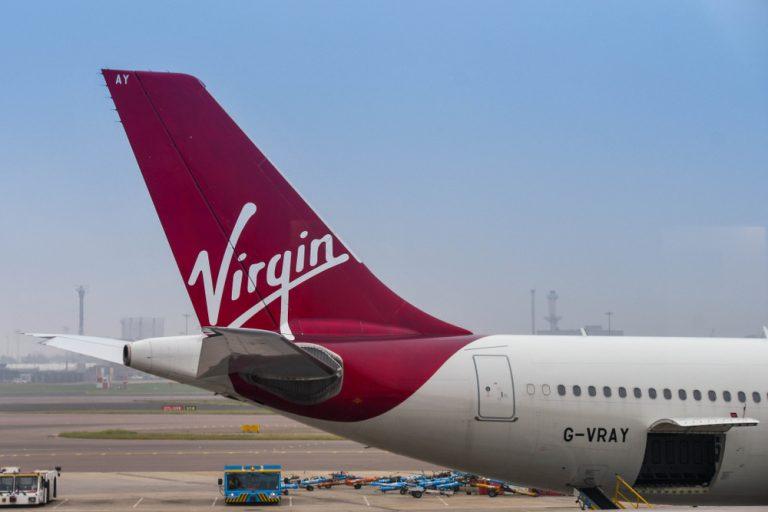
Virgin Atlantic in talks with FlyBe, the regional airline that put itself up for sale last week.
In a surprise move, Virgin Atlantic has become a surprise potential buyer for the London-listed company.
The airline that is partly owned by Richard Branson. The group closed its domestic flight subsidiary Little Red four year ago after trying and failing to crack the internal flight market.
FlyBe announced that it had put itself up for sale earlier this month after higher fuel prices, falling demand and a lower pound hit the airline.
In the six months to the end of September, FlyBe’s profits plunged 54%.
At the time, the group told investors that it was working on a strategy to “further capacity and cost-saving measures”.
“Stronger cost discipline is starting to have a positive impact across the business, but we aim to do more in the coming months, particularly against the headwinds of currency and fuel costs,” chief executive, Christine Ourmieres-Widener said at the time.
Other airlines have also taken a hit. Last year, Monarch Airlines collapsed. Earlier this year, Primera Air also filed for administration.
Flybe and Virgin Atlantic have not commented.
Shares in FlyBe (LON: FLYB) have soared 25% on Friday’s opening.
Black Friday: UK shoppers expected to spend £2.44bn

Retailers are hoping for a boost, as shoppers prepare to spend a record £2.44 billion on Black Friday.
Friday will see one of the biggest shopping days of the year as people do early Christmas shopping.
Despite the lull in sales over the year, £1.5 billion is expected to be spent online.
“Black Friday is now well established as one of the prime pre-Christmas shopping days with millions being spent and made in minutes, both on and offline,” said Jimmy New, who is the marketing director at Vouchercodes.co.uk.
“The date provides a real opportunity for retailers to boost sales with strategic discounting and offers but it’s vital to ensure online channels and bricks and mortar stores are prepared for the influx of additional traffic and footfall.”
“Planning ahead for the day will ensure that retailers can truly capitalise on the date and won’t fall foul of the mistakes made in 2014 – the year where Black Friday really took off, retailers’ websites crashed and traditional bricks and mortar stores saw massive overcrowding.”
Across the whole event, which can last up to two weeks for some retailers, Britons are expected to spend £10.4 billion in total.
Of this £10.4 billion, 24% is expected to be spent on clothing, 23% on personal electronics and 23% on home electronics.
Shoppers are warned to make sure that they are actually making savings during the US-inspired event.
“Black Friday plays on the excitement of spending while frictionless finance and cheap credit puts that buying buzz within everyone’s grasp,” warned Jon Holt, who is the head of financial services at KPMG.
“Our poll found that 51% of respondents didn’t even think the discounts they’re offered on Black Friday are a genuine saving! Having an economy disproportionately built on debt is not sustainable for consumers, retailers or financial services.”
Theresa May’s Brexit plan is “26 pages of waffle”
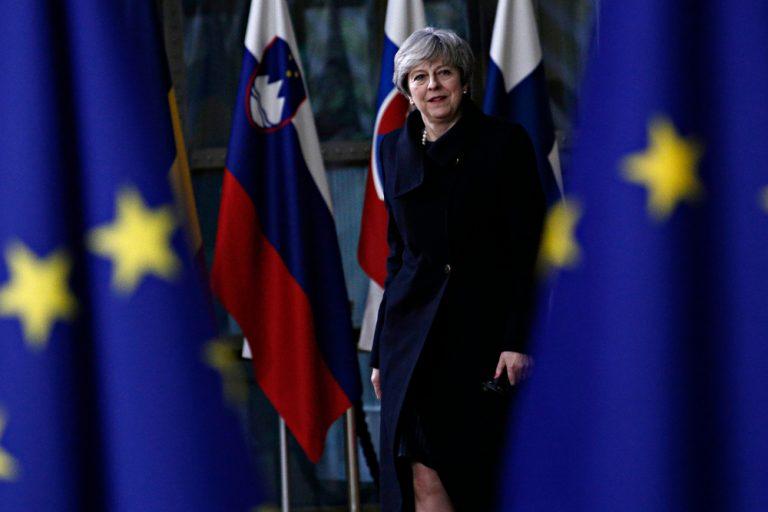
Theresa May addressed the House of Commons on Thursday afternoon following negotiations of her Brexit plan. She must now work to persuade her MPs to support her draft deal and push it through parliament. This is despite strong opposition within the Commons from both MPs in favour to leave and remain in the European Union.
With the news that a Brexit deal had been reached, the GBP against the USD was boosted, trading as high as 1.2928. This is despite no exact details of the agreement being released as of yet. The GBP/USD is currently trading around 1.2860, which is up by 0.7%.
Theresa May’s Brexit plan has been criticised by many MPs from all parties.
The prime minister said:
“The text has now been agreed between the US and the European Commission.”
“The draft text agreed is a good deal, it honours the vote of the British people by taking back control of our borders, law and money.”
“It ends free movement once and for all, instead we will introduce a new skill-based immigration system.”
“It ends jurisdiction of the European Court of Justice in the UK. It also means an end of sending vast amounts of money to the EU.”
Moreover, the PM announced that she had agreed on a deal which will create a free trade area with the EU. Indeed, she told MPs that she would be able to negotiate and implement trade deals. With regards to the fishing industry, she announced that Britain would be an independent coastal state.
However, Theresa May faced a strong backlash from Labour party leader Jeremy Corbyn who branded the draft deal “26 pages of waffle”.
“It’s clear nothing has been agreed,” he added. “This empty document could have been written two years ago.” “19 extra pages but nothing has changed. The only certainty contained within these pages is that the transition period will have to be extended or we will end up with a backstop and no exit.” “It represents the worst of all worlds, no say over the rules that will continue to apply and no certainty to the future.” However, the PM insisted it “delivers for the British people”. May added: “The negotiations are now at a critical moment and all our efforts must be focused on working with our European partners to bring this process to a final conclusion in the interests of all our people.” “The British people want Brexit to be settled, they want a good deal that sets us on a course for a brighter future, and they want us to come together as a country and to move on to focus on the big issues at home, like our NHS.” “The deal that will enable us to do this is now within our grasp. In these crucial 72 hours ahead, I will do everything possible to deliver it for the British people.” Theresa May will return to Brussels on the weekend to continue talks with Juncker.Severn Trent 4.3% profit increase despite difficult summer

Severn Trent has announced its half-year results on Thursday. The water and waste utility company has seen an increase of over 4% in its half-year underlying profit.
Group turnover was recorded as £881.5 million, which is up by £30.5 million year-on-year. Additionally, the company has an underlying profit of £299.1 million, which is a 4.3% increase of £4.1 million year-on-year.
The proposed interim dividend was increased by 7.9% to 37.35p, in line with its Asset Management policy.
Long-term, Severn Trent has made significant progress on its capital programme.
Moreover, it is investing in renewable energy with the acquisition of Agrivert food waste plants adding an additional 106GWh per year to its current portfolio. Chief Executive of Severn Trent Liv Garfield, who recently commented on Theresa May’s Brexit plan, said: “Our job is to deliver for all of our stakeholders – our customers, colleagues and investors – and by that we don’t just mean delivering high-quality waste and water services. We want to make a fundamental difference in society and in the communities we serve. As such, we’re delighted to be one of a handful of companies, and the only utility, to be acknowledged as a Pathfinder Company by the Purposeful Company organisation and we look forward to developing our approach to this further in the future.” “I’m pleased to be sharing a good set of financial and operational results in what has been a very busy first half of the year. The performance culture we have embedded into the organisation continues to deliver strong performance for our customers, also providing a great platform as we head into AMP7. As we plan and invest for the future, we are on track for our biggest year of capital spend in a decade, with more than £300 million invested in the first six months to improve performance for our customers today and for generations to come.” “Building a lasting legacy is a key priority for us and we believe our PR19 plans will deliver what our customers have asked for while maintaining the right balance of affordability and future investment”The report highlights the summer period between June and July as one of a considerable operational challenge.
As a result of the scorching summer, which saw UK spending soar, significantly strained the company’s assets. Despite this, the company was able to respond to the 22% increase in demand for water by customers. Shares in Severn Trent Plc (LON:SVT) were trading at -0.26% (1555GMT).GVC strengthens position in Australian sport betting market

GVC Holdings PLC has announced its acquisition of Neds International. Indeed, the multinational sports betting and gaming group will acquire Neds for an initial $68 million. Total maximum consideration is expected to be $95 million.
New to the Australian digital sports betting market, Ned International launched in 2017. The proprietary technology that Neds offers is said to compliment GVC’s operations in Australia. Through effective marketing, proprietary technology and the experience of its management team, Neds has seen rapid growth since it launched.
GVC is one of the world’s leading sports betting and gaming groups and it operates both online and in the retail sector.
The group owns a range of established sports and gaming brands. These include bwin, Coral, Eurobet, Ladbrokes, Casino Club, Foxy Bingo, Gala, PartyPoker and PartyCasino. Yet, the Australian market remains a core market for the group and continues to exhibit strong growth. The acquisition of Neds will allow the group to continue its expansion within the Australian market. Earlier this month, GVC brand Ladbrokes agreed to pay out in full on a cancelled bet following threats by a customer to sue. Equally, shareholders recently dodged a £700 million payout regarding fixed-odds betting machines CEO Kenneth Alexander commented on the acquisition: “Australia is a core market for the Group and today’s acquisition further strengthens our position. Neds is an exciting business, with talented people and enables us to further grow market share through two differentiated brands.” Additionally, Dean Shannon, Executive Chair of Neds, commented: “GVC is a natural fit for the Neds business, we share the same entrepreneurial ideals, whilst delivering market leading products and service to our customers.” Equally, Australian CEO of Ladbrokes, Jason Scott, added: “I am thrilled to lead the Ladbrokes and Neds businesses. The transaction proves beyond all doubt that GVC is here to stay in the Australian market.” Earlier this year, GVC faced a backlash from shareholders over £67 million paid to two bosses. At 15:14 GMT today, shares in GVC Holdings plc (LON:GVC) were trading at +1.68%.Centrica maintains full-year guidance but shares plummet

Centrica released a trading announcement on Thursday, revealing that it has maintained its full-year guidance.
The group held its focus on performance delivery and financial discipline. This is despite unforeseen outages and operation issues in E&P and Nuclear activates. Despite this, shares in the company (LON:CAN) plummeted over 7% today.
The company has stated that it expects to achieve an adjusted operating cash flow for the year in the £2.1-£2.3 billion bracket. Additionally, it expects net debt to remain within the £2.5-£3 billion range and an in-year efficiency delivery of over £200 million.
Moreover, the company has predicted it will maintain the full year dividend at 12p per share. This figure is said to be consistent with the delivery of a £2.1-£2.3 billion per annum of adjusted operating cash flow. Likewise, the dividend per share predictions remains conditioned on the net debt targets outlined above.
Centrica Group Chief Executive, Iain Conn, has commented on the results:
“As we have done over the last four years, we are focused on driving significant underlying improvements in performance and delivering attractive returns while re-positioning the portfolio towards the customer.”
“Our efficiency delivery and new customer propositions are helping to offset the effects of strong competition and regulation in energy supply. Our financial performance has remained resilient despite weaker than planned volumes from our E&P and Nuclear activities and cash generation remains strong.”
“Maintaining a focus on performance delivery and financial discipline and demonstrating resilient cash flows remain our objectives for 2019 and beyond, as we deal with the impact of the UK energy supply default tariff cap.”
Ofgem’s energy supply cap tariff will considerably impact Centrica and other big-six energy suppliers.
The trading announcement also addressed the UK energy supply price cap, introduced by Ofgem at the beginning of November. The company has said that it currently has 3.1 million customers on the Standard Variable Tariff. This is a decrease from the 4.3 million figure at the start of the year. Additionally, Centrica expects to reduce this figure even further to below 3 million customers by the end of the year. The price cap is expected to cost Centrica £70 million in the first quarter of 2019 alone. In E&P, Spirit Energy production for 2019 is expected to remain similar to levels in 2018. However, performance in the Centrica’s nuclear division has been affected by extended inspections and outages of its power stations. At 14:53 GMT today, shares in Centrica plc (LON:CAN) were trading at -7.29%.Mothercare reveals £6.2 million loss, shares slide
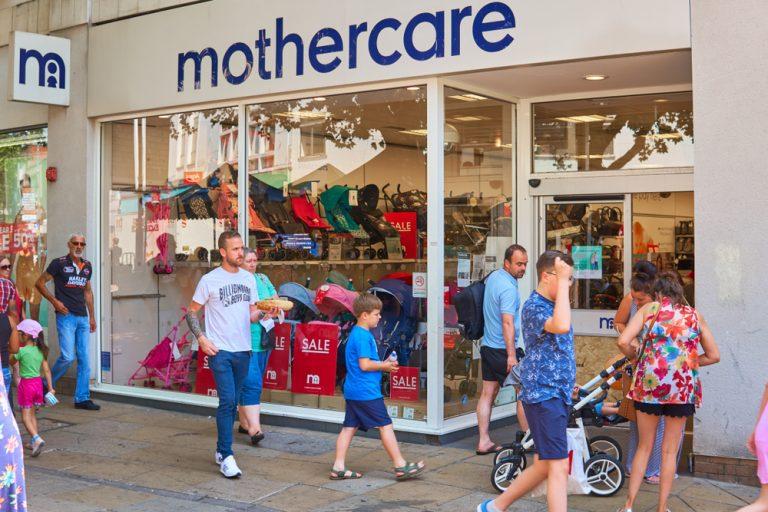
Mothercare has released its half-year results on Thursday morning. The report warns that trading conditions may remain “volatile” for the remainder of the financial year.
Following the announcement, shares in the group (LON:MTC) slid over 5.5%.
The group announced its pre-tax loss of £6.2 million in the six months to 6 October. In the same period last year, the figure was recorded as £2.6 million.
Additionally, the results reveal that net debt is at £21.5 million. Meanwhile, worldwide sales were recorded at £566.1 million, which remains 9.8% below the levels of this time last year.
In the report, Mothercare stated that international business does show signs of recovery.
Moreover, the group remains on track to deliver at least £19 million of cost savings, sticking to its strategic transformation plan. Despite this, the group has blamed the continuation of difficult trading conditions for its weak results. Indeed, UK like-for-like sales dropped by 11% which, according to the group, reflects the wider market uncertainty. Likewise, negative brand coverage concerning the group’s refinancing has also driven decline. CEO of Mothercare, Mark Newton-Jones, commented on the results: “Over this period, we have continued our relentless focus to transform Mothercare into a business that has a sustainable and relevant future for its global customer base.” “We have completed the capital restructuring of the business, the UK store closure programme is well underway and due for completion earlier than planned, we are making our sourcing operations more efficient and our cost-saving initiatives are well on schedule.” “This momentum has allowed us to focus on revising the overall structure of the Group, something which will help drive a greater focus on becoming a stronger global brand, with improved product design, marketing and distribution of Mothercare products around the world. At the same time, in the UK, the team will be singularly focused on managing trading and operations, as a typical franchisee would, with the objective of bringing the UK business back to profitability.” “Our International business is showing signs of recovery after a difficult few years and some core markets, including Russia, China and Indonesia, have moved into growth. The UK retail environment, however, remains very challenging and given the ongoing uncertainty with consumer confidence, alongside the short-term impacts of our operational changes and restructuring programme, we expect performance in the remainder of our financial year to remain volatile.” “Thereafter we are confident that our strategy will ultimately reinvigorate the business and restore Mothercare as a leading global specialist for parents and young children.” During the period, the group saw its subsidiary Children’s World fall into administration. Equally, its rescue plan was disrupted, putting an additional 300 jobs at risk. At 14:20 GMT today, shares in Mothercare plc (LON:MTC) dropped by 5.58%.Stamp duty revenue falls 10% in Q3

HM Revenue and Customs have said that government revenue from stamp duty has fallen 10% from this time last year.
In 2017, total revenue generated totalled £2.605 billion and has fallen in the third quarter of 2018 to £2.347 billion.
Phillip Hammond announced the immediate abolition of stamp duty for all properties up to £300,000 for first-time buyers in November 2017. He also promised a rate of just 5% on the portion of a property price up to £500,000.
The new stamp duty has seen to be a big help for first-time buyers in the UK. In the third quarter of 2018, 58,000 first-time buyers saved £142 million according to HMRC.
“The stamp duty exemption has arguably been one of the most successful initiatives to get more buyers onto the housing ladder, providing a financial lifeline to almost 200,000 first-time buyers and helping them save a staggering £400 million to date,” said Shaun Church, from the mortgage brokers Private Finance.
Ben Hudson from the estate agents Hudson Moody in York said: “Since they changed the stamp duty levels, it has certainly helped first-time buyers and at the lower end of the market it has made things a bit cheaper. But in the second home and investment market, the 3% additional rate has had quite an impact.”
According to a report by the London School of Economics in 2017, the tax was “gumming up” the market and deterred older people from downsizing.
Pound jumps on Brexit agreement

The UK and EU agreed to a draft Brexit agreement on Thursday, causing the pound to jump.
After London and Brussels confirmed they will both have “a trading relationship on goods that is as close as possible”, the pound rose almost 1% to $1.2893.
The European Council said that political declaration had been “agreed in principle”.
European Council, President Donald Tusk, tweeted: “I have just sent to EU27 a draft Political Declaration on the Future Relationship between EU and UK. The Commission President has informed me that it has been agreed at negotiators’ level and agreed in principle at political level, subject to the endorsement of the leaders.”
The 585-page document covers issues including the divorce bill, the transition period and citizens’ rights.
The draft document reads: “The future relationship will be based on a balance of rights and obligations, taking into account the principles of each party.”
“This balance must ensure the autonomy of the union’s decision-making and be consistent with the union’s principles, in particular with respect to the integrity of the single market and the customs union and the indivisibility of the four freedoms.”
“It must also ensure the sovereignty of the United Kingdom and the protection of its internal market, while respecting the result of the 2016 referendum including with regard to the development of its independent trade policy and the ending of free movement of people between the Union and the United Kingdom.”
The prime minister will return to Brussels on the weekend for further Brexit talks with Juncker.
She said in a statement on Thursday: “The text has now been agreed between the US and the European Commission. The draft text agreed is a good deal, it honours the vote of the British people by taking back control of our borders, law and money.”
“It ends free movement once and for all, instead we will introduce a new skill-based immigration system.”
“It ends jurisdiction of the European Court of Justice in the UK. It also means an end of sending vast amounts of money to the EU,” she added.
Nationwide takes dent to profits following technology investment
Nationwide has reported a fall in profits in its half-year results on Thursday.
In the six months to September 30, the building society reported a 17.8% fall in pre-tax profits to £516 million compared to the same period last year.
Nationwide has put the fall in profits downs to a £135 million cost for asset write-offs and technology investments.
Investments in technology have been in order to fend off competition from rival Monzo and are expected to save the group £200 million a year from 2023.
The lender has said that it is on track to save £100 million for the full year.
“Our first-half profits were lower than last year because we have chosen to increase our investment in the future of our Society. As a mutual, we do not judge our success by profit growth alone, but by how we manage our profits to serve our members’ interests,” said Joe Garner, Nationwide’s chief executive.
“We do that by maintaining the high-quality service and excellent value products our members prize today, while also investing in building new propositions, services, and skills, so we can meet members’ future needs.”
“The strength of our business means we are well placed to invest confidently in the future of the Society, and we have committed to invest an additional £1.3 billion over the next five years to transform our technology estate and capabilities. This will take our total investment over the next five years to £4.1 billion and will ensure the Society makes the most of the opportunities ahead. We will develop new propositions, further enhance our service, simplify our operations and build new skills for the future.”
“We continue to lead our high street peer group for customer satisfaction by a significant margin. We protected savers and rewarded loyal members, delivering £330 million in member financial benefit through better rates, fees and incentives than the market average over the half year.”
“The special rate ISA, available exclusively to our loyal members, contributed to a £5.1 billion rise in deposits. We continued to support first time buyers, helping a record 40,500 into a home of their own – one in five of all first-time homeowners. And more people are choosing Nationwide for their everyday finances, with almost 400,000 current accounts opened with us so far this year,” he added.
Notes issued by the group (LON: NBS) are trading -10.82% (0854GMT).