UK inflation rises to 2.5 percent in July

2
UK inflation rose to 2.5 percent in July, marking the first increase since November. The Office for National Statistics (ONS) said that the Consumer Priced Index rose by 2.4 per cent year on year in June, in line with analyst expectations. After holding steady for the start of 2018, July’s figures reveal that UK inflation rose once again. However, the Retail Prices Index (RPI) measure of inflation fell to 3.2 percent. This figures is used by the Department for Transport uses the measure to set the annual maximum increase for rail fares. Wednesday’s figures show that increases in computer games and transport were slightly mitigated by a fall in the price of clothing. Inflation was particularly impacted by rises in oil prices, which rose more than 50 percent across the period. Commenting the figures, Ed Monk, Associate Director for Personal Investing at Fidelity International, said: “Only four months ago we were celebrating the first increase in real wages for a year, yet sadly the party has been all too brief. With inflation creeping up to 2.5% and yesterday’s data showing a dip in wage growth, UK workers must once again stand by and watch their income diminish in real terms.” Moreover, Mr Monk emphasised that adverse impact on savers of the Bank of England’s move to raise interest rates. He added: “To make matters worse for households, the Bank of England’s decision to raise interest rates this month will already be hitting the pockets of millions through increased mortgage rates, while at the same time, many banks have yet to pass the rate hike onto savers.”
Similarly, Calum Bennie, savings specialist at Scottish Friendly, said of the figures:
“After a brief period of respite, Britain is back to a cost of living squeeze where price increases are outpacing wage rises. Households up and down the country are wondering how they will make ends meet, particularly when essentials such as rail fares are set to spiral higher.”

UK unemployment falls to record low

0
According to newfigures from the Office for National Statistics (ONS), UK unemployment has hit the lowest figure in 40 years. Between April and June this year unemployment in the UK fell by 65,000 to 1.36 million, reaching just four percent. The figures have also shown a record fall in the number of EU nationals working in the EU, which has fallen since the 2016 Brexit vote. Matthew Percival, CBI head of employment, has said that the government needs to guarantee the protection of EU workers in the UK in the event of whatever Brexit scenario may occur. A senior ONS statistician Matt Hughes said in a statement: “The number of people in work has continued to edge ahead, though the employment rate was unchanged on the quarter.” “However, the number of vacancies is a new record high, while the unemployment rate is now at its lowest since the winter of 1974-75,” he added. Wages were also seen to grow in the three months to June by 2.7 percent. “Average weekly earnings for employees in Great Britain in real terms (that is, adjusted for price inflation) increased by 0.4 percent excluding bonuses, and by 0.1 percent including bonuses, compared with a year earlier,” the ONS said. Productivity also increased and the output per hour worked was up by 1.5 percent, which is the biggest increase since 2016. Earlier this year, the Bank of England raised interest rates, which according to Suren Thiru, the head of economics at the British Chambers of Commerce, was a premature move. “Achieving sustained increases in wage growth remains a key challenge, with sluggish productivity, underemployment and the myriad of high upfront business costs weighing down on pay settlements,” he said. “As such, there remains precious little sign that wage growth is set to take off – undermining a key assumption behind the Monetary Policy Committee’s recent decision to raise rates.”


Homebase to close 42 stores, risking 15,000 jobs

0
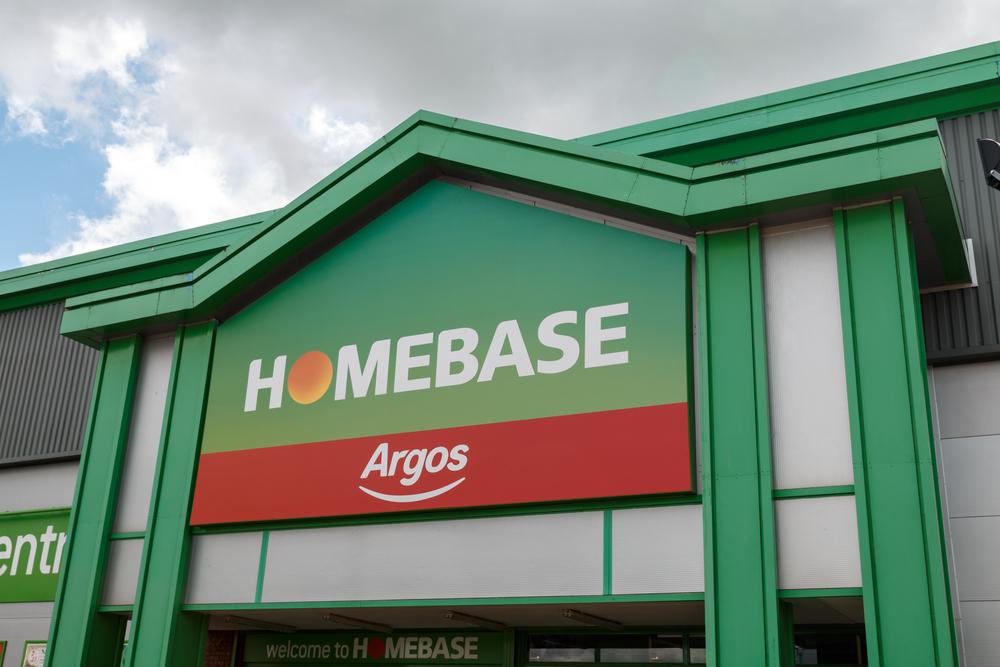
Homebase has announced plans to close 42 stores by early 2019 resulting in 1,500 job losses. The amount of store closures is less than feared last week, however, the DIY retailer will ask for rent cuts for 90 percent on a further 18 more stores. “Launching a CVA has been a difficult decision and one that we have not taken lightly,” said Damian McGloughlin, the chief executive of Homebase. “Homebase has been one of the most recognisable retail brands for almost 40 years, but the reality is we need to continue to take decisive action to address the underperformance of the business and deal with the burden of our cost base, as well as to protect thousands of jobs.” “The CVA is therefore an essential measure for the business to take and will enable us to refocus our operations and rebuild our offer for the years ahead,” he added. Hilco, the company that Homebase for £1 earlier this year, confirmed plans to carry out a Company Voluntary Arrangement (CVA). The CVA will require the vote of the landlords, which will take place on August 31. Homebase has already closed 17 stores this year and a total of 303 jobs have been cut at the head office in Milton Keynes. CVAs have been carried out by a number of retailers this year including Carpetright (LON: CPR) and Mothercare (LON: MTC). “These situations are never easy, as property owners need to take into consideration the impact on their investors, including those protecting pensioners’ savings, as they vote on the CVA proposal,” said Stephanie Pollitt from the British Property Federation (BPF). “Ultimately, it will be for individual property owners to decide how they will vote on the CVA, but the proposal has sought to find a solution that provides a sustainable future for Homebase,” she added.  

Mike Ashley on House of Fraser: “will try to keep as many open”

0
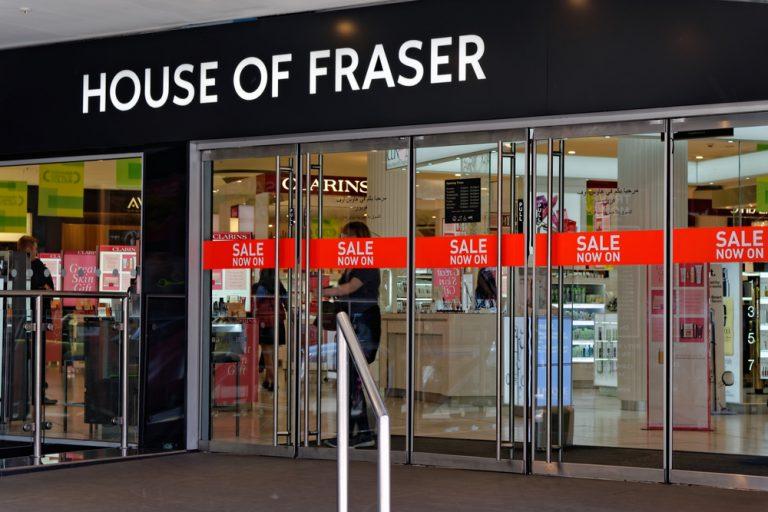
Mike Ashley has vowed to keep most of the 59 House of Fraser stores he purchased last week in a £90 million deal. The Sports Direct (LON: SPD) owner said that he plans on keeping 47 of 59 House of Fraser stores open by converting larger stores into Sports Direct. “In a year’s time you can hold my feet to the fire on that,” said Ashley in an interview with the Sun. “Give us a chance and we will try to keep as many open as we can. We are here to get House of Fraser back to where it once was.” Ashley shared plans to bring in “cool brands of the moment” to the House of Fraser stores. “We think the biggest and most important thing House of Fraser is missing is luxury brands. We think it will make a big difference,” he said. House of Fraser fell into administration last week before being bought by Ashley in a £90 million deal soon after. The department store employs 17,000 people in the UK. Following the deal, there is growing speculation that Ashley will carry out a merger between Debenhams (LON: DEB) and House of Fraser. He has a 29.7 percent stake in the Debenhams.

Tuk Tuk Chai turns down Dragon Peter Jones for Crowdcube

Cold drinks company Tuk Tuk Chai has walked away from a deal with Peter Jones of Dragon’s Den in order to pursue a crowdfunding campaign on Crowdcube. Viewers of Dragon’s Den on Sunday night would have seen enthusiastic entrepreneurs Rupesh Thomas and Alexandra Thomas enter the den on a Tuk Tuk a pitch their milky iced tea to the dragons. After facing questions over the businesses model, they eventually secured investment from Peter Jones to help expand their business. Although she didn’t invest, Deborah Meaden was impressed with the product. However, despite securing investment from the dragon who famously backed the enormously successful Reggae Reggae sauce, the firm has decided to walk away from the deal and have instead opted to push their business forward with a crowdfunding round on Crowdcube. Mr Thomas commented on the relationship with Peter Jones to question from an investor: “In the end we mutually decided not to go ahead with the offer from Peter in the den and instead decided to do crowdfunding, so no Peter doesn’t own any stake in our business. We need more money than we were asking in the Den and hence decided the best route for us was crowdfunding as our lawyers too were pushing for this from the beginning.” Tuk Tuk Chai is offering potential investors a 7.5% stake in the business for £150,000 of investment. The company has also applied for the Seed Enterprise Investment Scheme and Enterprise Investment Scheme which would provide investors with between 30%-50% income tax relief and exemption from capital gains.  

Royal Mail fined record £50m

0
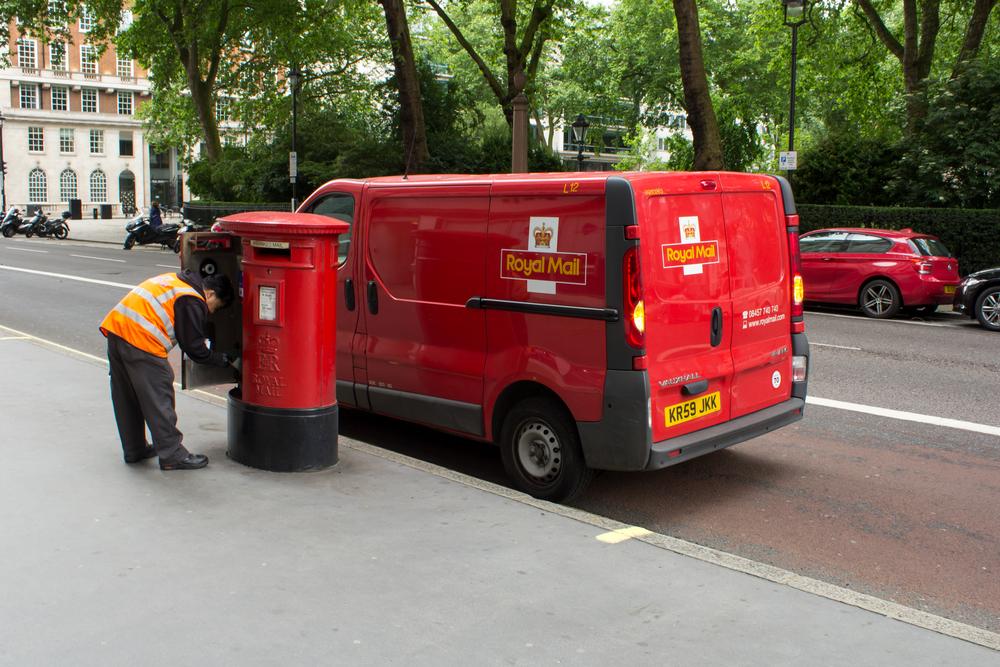
Royal Mail (LON: RMG) has been fined a record £50 million for breaching competition laws. Ofcom, the communications watchdog, handed out its largest-ever fine on Tuesday following an investigation into a complaint made by Whistl over the increases to wholesale prices. Ofgem said that the group’s actions “amounted to anti-competitive discrimination against customers, such as Whistl, who sought to deliver bulk mail”. Ofcom’s Competition Group Director, Jonathan Oxley, said: “Royal Mail broke the law by abusing its dominant position in bulk mail delivery.” “All companies must play by the rules. Royal Mail’s behaviour was unacceptable, and it denied postal users the potential benefits that come from effective competition,” he added. Royal Mail plans to challenge the fine, saying that it “strongly refutes that it has acted in breach of the Competition Act”. “For an allegation of abusive price discrimination to be established, the law is very clear. The relevant prices must be actually paid. And, the party paying such prices must be placed at a competitive disadvantage as a result. In this case neither of these essential elements exist,” the group added. Whistl has said that it may seek compensation from the firm. Royal Mail received a fine in April this year £12,000 for sending 327,000 nuisance emails to customers who opted out of receiving the emails. “We take the privacy of our customers extremely seriously,” said the group. “We are very sorry that we let some of our customers down on this occasion. Following this incident, we have tightened up our processes and governance measures still further.” Royal Mail’s former boss, Moya Greene, stepped down in June.

Is a Debenhams/House of Fraser merger on the cards?

2
After Mike Ashley’s £90 million purchase of House of Fraser on Friday, there has been much speculation over his plans for the department store. One option includes a merger with Debenhams (LON: DEB), given Ashley’s 29.7 percent stake in the group which is close to the level at which he must make a takeover bid. The vice-president of retail and e-commerce at Kantar, Malcolm Pinkerton, said a merger could be likely, “if you look at the state of the high street and if you factor in that Mike Ashley owns 30 per cent of Debenhams”. “It’s not just his capabilities but the investment that will allow House of Fraser management to implement the rescue plan,” he added. Ashley has said he plans to turn House of Fraser into the “Harrods of the High Street”. Unite regional officer Scott Lennon said: “Sports Direct is a leopard that has not changed its spots and we hope that its poor record on pay and employment practices are not transferred to the House of Fraser.” Sports Direct (LON: SPD) said in a statement: “The group has acquired all of the UK stores of House of Fraser, the House of Fraser brand and all of the stock in the business.” Mike Ashley has said he hopes to preserve the 16,000 jobs at House of Fraser. Phillip Day also wanted to purchase the collapsed department store chain and called on the group’s new owner to pay suppliers in full, which is the “honourable thing”. “Mr Ashley has said that relationships with brands and partners are vital to the future of House of Fraser, and ensuring that bills are settled with concessionaires will be critical to maintaining those relationships,” said his spokesperson. “The concessionaries have helped keep House of Fraser trading over the last year and the industry is now looking to Mr Ashley to do the right thing”.  

Musk confirms Saudi offer to take Tesla private

0
Elon Musk has announced that Saudi Arabia’s sovereign wealth fund has made an offer to help make Tesla a private company. The Tesla founder wrote in a blog post how the investment fund had made several approaches to the struggling electric car company. Musk said that the fund’s managing director “expressed regret that I had not moved forward previously on a going private transaction with them, and he strongly expressed his support for funding a going private transaction for Tesla at this time.” Last week, Musk said he considered taking Tesla private for $420 a share, valuing the company at about $72 billion. His statement shocked investors and Musk is now facing legal action from investors. Musk used the blog post to explain his decision, saying: “The only way I could have meaningful discussions with our largest shareholders was to be completely forthcoming with them about my desire to take the company private.” “However, it wouldn’t be right to share information about going private with just our largest investors without sharing the same information with all investors at the same time,” he added. Tesla went public eight years ago and has only had two profitable quarters since. Last year, the company lost around $2 billion. The founder of Tesla wrote a letter to his employees about going private. The letter said that the company was “the most shorted stock in the history of the stock market”. He told employees that “being public means that there are large numbers of people who have the incentive to attack the company”. Musk has had a rocky relationship with investors. In May during a call with analysts, he said: “Boring, boneheaded questions are not cool,” sending shares down. Tesla shares (NASDAQ: TSLA) closed up 0.26 percent at 356.41.    

Chemring shares plummet 20pc following fatal explosion

1
Following a fatal accident near its site at Salisbury, Chemring (LON: CHG) shares have plummeted 20 percent. An explosion on Friday led to the death of a 29-year-old man from Southhampton and the serious injury of a 26-year-old from Pewsey. The weapons maker, who is carrying out an investigation, said: “A full and immediate investigation into the cause of the incident has been launched in co-operation with the local regulatory authorities.” Following the accident, the company said that the full-year underlying operating profit will be around £10 million to £20 million lower than previous expectations due the halt in productions. “The impact on our 2018 and 2019 financial years cannot be accurately quantified at this stage as it will be dependent on insurance recoveries, the timeline for the investigation to be completed and the site to re-open, remediation work to be completed and at what rate production resumes,” said Chemring. The warning sent shares plummeting 23.7 percent in early trade. “The production of flares in the countermeasures division is inherently risky, due to the highly volatile nature of materials used,” said analysts from Berenberg in a note. The company is also facing a corruption investigation by the Serious Fraud Office over the use of middlemen in two historic contracts. Shares in the group are currently trading down 12.08 percent at 207.50 (1657 GMT).  

Fusion Antibodies shares sink amid ‘slower than anticipated’ trading

1
Fusion Antibodies (LON:FAB) shares sank on Monday after the company update the market on trading for the financial year. Whilst results for the financial year ending March 2018 were in line with expectations, trading proved ‘slower than anticipated’. Fusion attributed this to increased competition as well as resultant pricing pressures. In addition, contract delays impacted profits across the period. As a result, the company said that the directors now anticipate results for FY19 to be below market expectations. Fusion Antibodies is a Belfast based contract research firm. The company specialises in providing antibody engineering services for the development of antibodies for both therapeutic drug and diagnostic uses. The Company’s shares were admitted to trading on the smaller AIM market on the London Stock Exchange back in December 2017. Shares are currently down -36.21 percent following the trading update. Elsewhere in the markets, Esure (LON:ESUR) shares soared after the company confirmed it was in ‘advanced talks’ with Bain Capital over a takeover bid. Shares in the insurer are trading +31.80 percent as of 14.45PM (GMT). In the mining sector, Premier African Minerals (LON:PREM) proved the biggest mover, with shares up as much as 42.35 following an update on its RHA mine in Zimbabwe.