
Superdry shares up 10pc on special dividend announcement
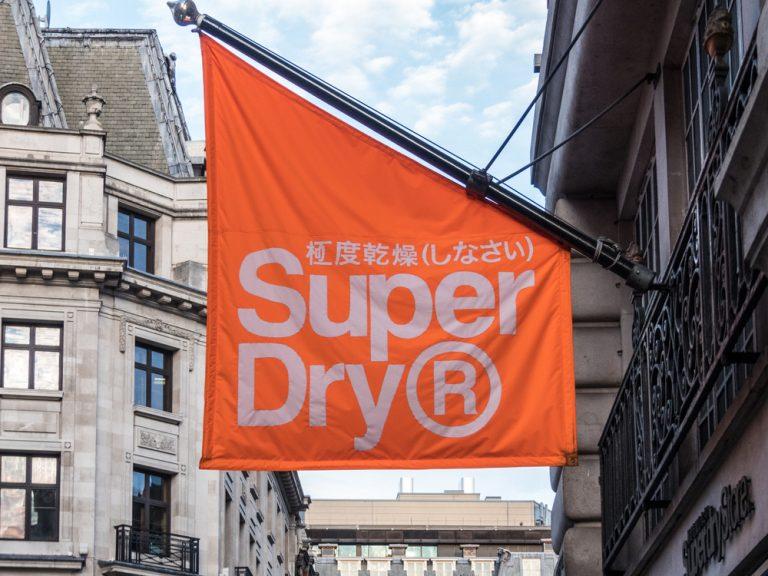
Superdry (LON:SDRY) shares shot up over 10 percent on Thursday morning, on the announcement of a special dividend after a year of double digit growth.
Both sales and profits soared in the fiscal year to April 28th, with revenue up 16 percent to £872 million after a strong performance from its wholesale division.
Retail revenue was up 9.2 per cent, boosted by a 25.8 per cent rise in online sales. Store revenue also did well despite challenging high street conditions, rising by 3.4 per cent. Underlying basic earnings per share rose 10.8 per cent to 93.6p.
Euan Sutherland, CEO of Superdry, said Superdry had had “another strong year”.
“We have made good progress in delivering our strategy and significantly strengthened our platform and capabilities, while delivering another year of double digit growth in sales and profitability,” he said.
“Our focus remains on executing our growth strategy and realising the potential we have identified across products, geographies and channels.
“Whilst the consumer environment continues to be challenging, the Board remain confident that Superdry is a uniquely advantaged, highly cash-generative business that will continue to deliver sustainable growth for our investors. This confidence is demonstrated through our second special dividend in two years.”
Shares in Superdry (LON:SDRY) are currently trading up 9.92 percent at 1,285.00 (0925GMT).
Sophos shares tank as revenues slow

Sophos (LON:SOPH) became the biggest faller on the FTSE 250 in early trading on Thursday, after it made an unexpected warning on slowing revenues.
The cyber security group’s billings growth was lower than expected in the first quarter, coming in at 6 percent for the quarter ended June.
According to Sophos, the lower billings were driven by its Enduser security business, which faced a “particularly challenging comparable”. Despite this, underlying Enduser billings growth in the first quarter of the previous financial year was “in excess” of 50 percent at constant currency.
The company said these factors would continue to impact on results during the second quarter as well:
“As the prior-year comparators normalise, we expect a return to mid-teens constant currency billings growth in the second half of the year,” the group said.
Its full year outlook remains unchanged. Shares in Sophos are currently trading down 22.01 percent at 480.00 (0906GMT).
AB Foods: Strong Primark performance offset by revenue falls at AB Sugar
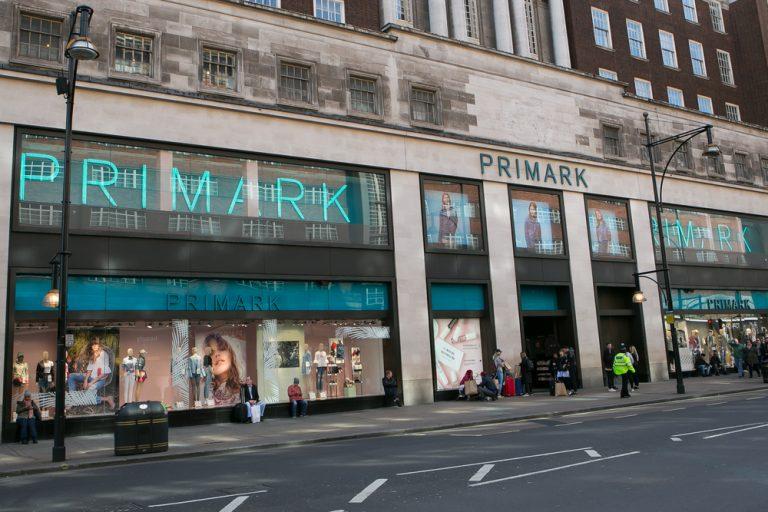
AB Foods (LON:ABF) kept full-year outlook unchanged on Thursday, as a strong performance from Primark partially outweighed weakness in its sugar business.
For the 40 weeks ended 23 June, group revenue from continuing businesses grew 3 percent compared with the same period last year at constant currency and 2 percent ahead at actual exchange rates. Excluding AB Sugar’s weakness, sales growth from continuing businesses was 6 percent ahead of last year at constant currency and 5 percent ahead at actual exchange rates.
After yet another strong performance from Primark the retailer raised its outlook on the group, saying it had been tightly managing its stock and adding that revenue from promotions, discounts and sales would be better than expected too.
“As a result, the profit from Primark will now be higher than expected,” AB Foods said.
However, AB Sugar’s revenue was down 17 percent after being negatively affected by lower EU prices.
“Compared to our previous expectation, we now expect a reduced profit from AB Sugar as a consequence of lower EU sugar prices and an increased profit from Primark driven by higher margins,” the company said in a statement.
“As a result, our full year outlook for the group is unchanged with progress expected in adjusted operating profit and adjusted earnings per share.”
Shares in AB Foods (LON:ABF) are currently down 4.49 percent on the news, at 2,595.00 (0853GMT).
Bovis Homes shares edge up on profitable half year
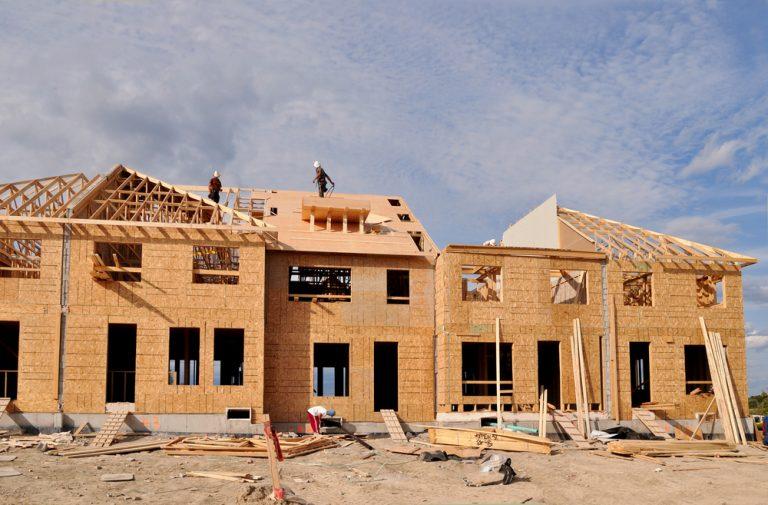
Bovis Homes (LON:BVS) shares edged up at market open on Thursday, after the group said it was on track to deliver a ‘significant’ step up in profitability for the half year.
In the six months to June 30th the group completed on 1,580 houses, coming in at 4 percent ahead of the prior year. The total average selling price fell to £261,000 for the period, down from from £277,400.
‘We are very pleased with the Group’s first half performance and are in a strong position to deliver upon our expectations for the full year,’ the group said in a statement.
“We expect to deliver a significant step up in profitability for the half year as we start to see the financial benefits from the strategic direction, changes implemented, and specific margin initiatives launched over the past 18 months. In addition, we have delivered another disciplined and orderly period end with our customer satisfaction score continuing to trend at well above 80 percent”.
Bovis Homes’ sales rate rose 8 percent to 0.52 from 0.48 net private reservations per site per week.
Affordable home completions rose to 550 from 372 a year ago, as part of the company’s response to the government’s scheme to make it easier to get on the property ladder.
Shares in Bovis Homes (LON:BVS) are currently trading up 1.25 percent to 1,136.00 (0834GMT).
National Express shares rally following €1bn Morocco contract

National Express (LON:NEX) have recovered from Monday’s dip, with the announcement of a new bus contact prompting their share price to rise.
The contract is a 15 year, 500 bus deal, expected to transport 109 million passengers a year across 61 routes. The deal is set to commence within a year, with an estimate of €1 billion of revenue to be brought in during its lifetime, and an option to extend the contact by seven years upon completion of the original deal.
“It is particularly pleasing that our track record for service excellence in Morocco played a significant part in this successful bid,” said chief executive Dean Finch.
“We hope to build on this success and secure further expansion in the coming years.”
National Express’ share price has increased 1.51 percent – or 6p – since markets opened. Analysts from Liberum Capital reiterated their ‘hold’ stance on National Express stock this morning, while UBS downgraded the stock from ‘buy’ to ‘hold’, as they anticipate the short-term cost of expansion in the US, Europe and the Middle East.
US extend helping hand to ZTE

US President Donald Trump has given a temporary reprieve to Chinese giant ZTE, after he gave the group a seven-year ban on trading in the US in April.
Trump initially banned the telecoms giant from operating in the US after ZTE illegally sold services to North Korea and Iran. ZTE said a total ban on operations with America would put them out of business, leading to the US government making a concession in June and agreeing to continue to let them operate if they paid a $1 billion fine, change their management and embed a compliance team.
On Wednesday Trump went further to alleviate concerns, saying ZTE would now be allowed to support its existing handsets in the US and continue operation of existing networks, amongst other activities.
However, the US government reiterated that the initial ban remained “in full effect”.
ZTE is a multinational telecoms operator, whose biggest source of revenues come from mainland China. 25 percent of its sales are to Europe and the Americas, it said in its annual report.
Nektan shares spike following strong quarterly report

Nektan plc (LON:NKTN) saw its share price increase sharply as they celebrate a record-breaking quarter and increased full-year profits, in the wake of launching new sites.
The AIM-listed gambling product firm reported that its net gaming revenue was up 48 percent from 2017, at £19.4 million. By the end of the year, the number of first-time-depositors increased by 20.4 percent to 156,703, and cash wagering was up 43.4 percent, to £559.8 million.
“We see the business continuing to strengthen further and growth opportunities within both existing markets and, most encouragingly, in the rapidly accelerating demand for our technology from international partners, especially in Asia.” said interim chief executive, Gary Shaw.
“In addition, with our licensed US mobile gaming platform, we are very well placed to take advantage of the huge opportunity presented by the opening up of the sector in the United States.”
As well as seeking to expand its successful US subsidiary, Rapid Gaming, Nektan will take on rivals such as Playtech (LON:PTEC) in the Asian market, which is becoming increasingly saturated.
The company can attribute much of its success to the 13 new sites and the 4 new partners it gained in the fourth quarter. Its share price has increased 26 percent, or 5.2p, since markets opened this morning.
Anglo American is FTSE 100’s biggest riser on Vedanta speculation
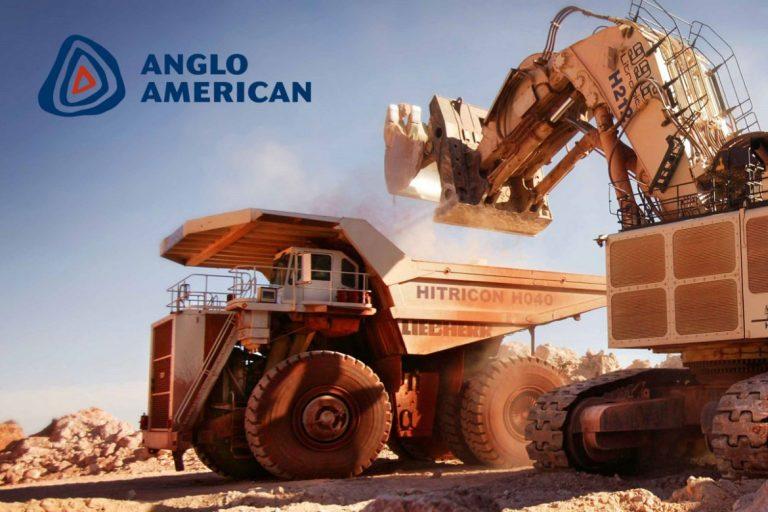
Anglo American (LON:AAL) was the biggest riser on the FTSE 100 on Wednesday morning, after reports that Vedanta is planning to acquire Anglo American’s South African business.
Founder Anil Agarwal is reported to be considering merging Vedanta Resources with the South African unit via a share swap, according to two people involved in the plan.
The merger would create a company valued at around $7 billion and give Vedanta Resource’s family trust company, Volcan Investments, control of the merged company. Agarwal already owns a 19.35 percent stake in parent Anglo American through Volcan.
Anglo American South African businesses include Anglo American Platinum Ltd, Coal SA, De Beers Consolidated Mines and Kumba Iron Ore Ltd, worth around $12 billion altogether.
Shares in Anglo American are soaring on the speculation, and are currently up 3.72 percent at 1,700.80 (1056GMT).
RM share price and profits up following Consortium acquisition
RM (LON:RM) shares rallied yesterday as the company announced increased profits and dividends per share, following the acquisition of Consortium.
Consortium was bought for £56 million in February, and has since contributed £24 million to the RM’s revenue. The transaction was designed to be earnings accretive, and indeed, the firm’s profit increased 47 percent in the first half, with Ebitda jumping from £3.8 to £6.9 million. Revenue also increased from £71.3 to £94.9 million between this year and last year, alongside dividends which grew 15 percent from 1.65p to 1.9p.
“RM Resources continues to grow in international markets, has achieved growth in the UK and the integration of The Consortium acquisition is progressing as planned. RM Results is gaining traction internationally with three contract wins and RM Education continues to reposition itself with a lower cost base and improved operating margins,” said RM Chief Executive David Brooks.
“This progress, together with a strong balance sheet, has enabled the board to increase the interim dividend by 15% and the board is confident of at least meeting full year expectations”.
Revenues in the first half have increased for all three of the company’s divisions – RM Resources, RM Education and RM Results. Analysts from Peel Hunt and Numis have reiterated their ‘buy’ stance on RM stock, as the company’s share price was up 6.7 percent at 240p, as markets closed yesterday.
Telegraph Media Group profits plunge 50pc

Telegraph Media Group saw profits plunge over the last year, after a significant drop in circulation and advertising revenue took its toll.
Pre-tax profits fell 50 percent from £27.1 million in 2016 to £13.7 million last year. Total revenues fell from £303 million to £285.7 million, weakened by a 9 percent fall in print and circulation revenue.
The group, who publish the Telegraph and the Sunday Telegraph, did make progress with its online offering, seeing digital subscription revenue rise by 30 percent year on year in 2017.
“We anticipate revenue to stabilise in 2018-19 with profit to follow,” the company said.
“We will continue towards our goal of 10 million registered customers and sustainable growth.”
The company have moved to emphasise ‘quality journalism’, launching several internship schemes and launching a £10 million investment programme instituted by new chief executive, Nick Hugh.