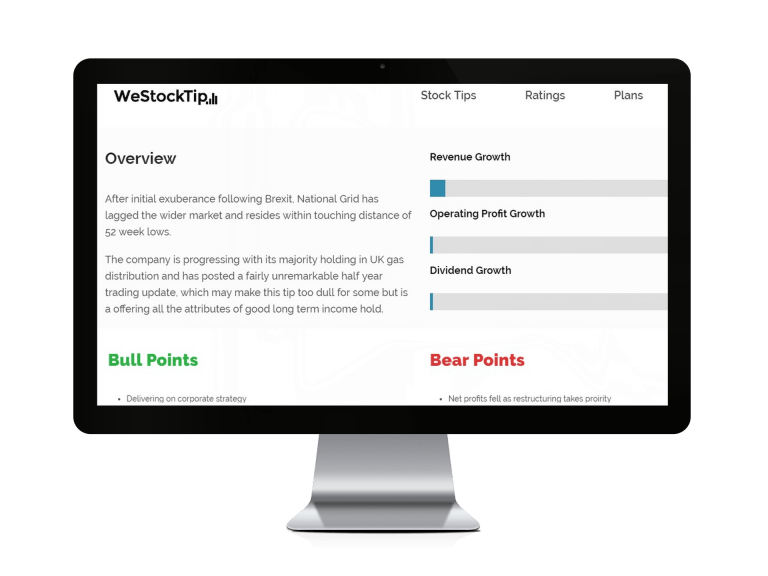
In a recent statement, the CEO of this London-Listed share said they just had their ‘best year ever’.
This is hard to argue against given:
22% increase in sales
28% increase in operating profit
16.5% increase in net profit
14.9% increase in dividend
The full tip is available below along with the unique rating of this stock.
Read full tip now and get rating for free:
The WeStockTip website and any associated communications are general in nature and are not investment advice. Any information presented on this website should not be taken as a recommendation, inducement or invitation to enter into any financial transaction. Please seek independent financial advice before you make any investments. WeStockTip accepts no liability or responsibility for any action taken by any company or individual using this website. By using WeStockTip you agree to the terms and conditions.
In uncertain times, the fine art market offers a reassuring investment opportunity. Largely immune to political change, it is less volatile than currencies or capital markets.
The global market was worth more than $45billion last year, a 1.7 percent annual increase, according to the European Fine Art Foundation Report 2017. Prices have fallen back a little from the peak of July 2015, but are around 15 percent higher than in the market trough of November 2012 and the market is ‘stable and robust’. The outlook is optimistic.
Wealth managers are looking beyond traditional investment products and there is a strong demand from investors – 88 percent of private offices and 75 percent of High Net Worth and Ultra High Net Worth individuals want art in their portfolios, according to the 2016 Deloitte Art and Finance report.
However, the market can be daunting to newcomers. It has a reputation for being opaque, and the major auction houses charge fees of up to 30 percent. Global auction house sales fell last year by 18.8 percent whilst sales by dealers increased by 20 percent to $27.9 billion; looking more closely at the figures, it turns out the big auction houses conducted more of their business privately, which does nothing for transparency in the market.
Most investors are not in the art market purely for sentimental reasons – the emotional benefit of collecting is a pull, but Deloitte Touche found that strong returns were more important to 64% of investors. They see art as a tax-efficient asset with the upside of capital appreciation and want as diverse a portfolio as possible.
Art funds can offer that, combining ‘defensive’ pieces by established artists with some rising stars and a few emerging faces. A balanced portfolio might look like this: 50 percent spread across Old Masters, such as Botticelli and Raphael, combined with an Impressionist, perhaps a Monet, and a 20th century name like Modigliani; 25 percent allocated to post-war or Modern greats, such as Liechtenstein, Bacon, Dalí; and the remaining 25 percent in high risk categories, such as emerging Latin or Indian art and British contemporary.
That is a good way of managing risk, but art funds are not liquid, and tend to have a long lock-in period. With minimum unit sizes normally upwards of $250k it can also be difficult for new art investors to join. And short-term investors should be aware that even the ‘blue chip’ names can have a bad patch – last year, there was a 68 percent drop in the auction sales volume of Andy Warhol paintings, a 50 percent fall in Picassos and falls of more than 60 percent in Modigliani and Francis Bacon.
Meanwhile, betting too heavily on an emerging artist is as risky as backing a promising start-up. Several graffiti artists have attempted to move on to gallery work – Banksy managed to do it and one of his drawings from ten or 15 years ago, which was then worth a paltry £2,500, can now reach 100 times that amount, but thousands more like him have disappeared without trace.
‘The building blocks of the art market depend fundamentally on quality and trust,’ concludes the European Fine Art Foundation report. ‘Key to this are maintaining reputation and credibility to ensure longevity, stability and resilience’.
But for investors, two of the fundamental problems in the market are a lack of transparency and a lack of liquidity. Now, a new art investment platform is promising a unique solution by creating an online marketplace where owners, collectors and investors can meet without intermediaries to trade in real time. It is taking the idea of art funds, where art pieces are evaluated in financial terms, to a new level by giving investors the opportunity to have fractional ownership in artworks.
Maecenas will use blockchain technology to tokenise and digitally allocate single pieces, or portfolios, to several co-investors who can trade with other parties though an art exchange. While the owner retains 51 percent of the piece’s value, the remaining 49 percent can be traded, transforming the dynamics of the market and bringing much greater granularity to art investing. Prices will be market driven and faster digital transactions will create more data points than ever before, allowing investors to monitor the evolution of pieces in a way that has never been possible.
Miguel Neumann, Founding Partner at Maecenas and Chief Operating Officer at DX Markets
This will democratise the fine art market, creating a secure, open global platform. Blockchain technology has been used to bring greater transparency to the provenance of artworks; last spring, at the ICT summit in Luxembourg, Deloitte Touche unveiled its ArtTracktive proof of concept, which provides a distributed ledger for tracking the provenance and whereabouts of fine art works. But this is the first time blockchain is being used to make art investment an easier, more transparent proposition. Lowering the barriers to entry will widen access to the market.
At the Affordable Art Fair in London, works by more than 1000 artists are on display, ranging in price from £100-£6000. Getting investors involved at the bottom end of the market is important, but creating the first real-time trading market for fine art is a more ambitious vision, opening up all sectors of the market and allowing anyone to own a share of a masterpiece.
That could be a catalyst for change in a market that has remained largely unaltered for 300 years. Just about every sector you care to mention has been disrupted by technology – now it’s time for art investors to reap the benefits.
By contributor Miguel Neumann, Founding Partner at Maecenas and Chief Operating Officer at DX Markets
Greece failed to secure a further EU bailout at a meeting with eurozone finance ministers on Monday, after it was found the country had not yet done enough to receive a further 7.5 billion euro in funds.
The country, which has been receiving bailout funds and debt relief from the EU after running up the equivalent of an estimated $350 billion in debt, needed to prove it had to eurozone ministers on Monday that it had implemented enough austerity measures to control its debt.
However talks with eurozone finance ministers broke down, meaning the country will have to wait for another meeting next month before having the opportunity to receive further funds. The cash is vital for Greece to avoid defaulting on a debt repayment due in July.
Eurogroup head Jeroen Dijsselbloem said there was still a gap “between what could be done and what some of us had expected should be done”, but added that they were “very close” to an agreement.
The failure to obtain further bailout funds comes less than a week after Greek MPs backed further austerity measures required to obtain the next package of finance. Last week news broke that Greece had fallen back into recession in the first three months of the year, after gross domestic product (GDP) fell by 0.1 percent on top of a 1.2 percent fall in the final quarter of 2016.
Brexit and the snap General Election have impacted the investment decisions of UK investors more than any other political event in their lifetime, with many waiting until the effects of both events are clear before taking further action.
34 percent of respondents to a survey by loan company Kuflink found that Britain’s decision to leave the European Union has drastically affected the way people manage their investment strategies. Those most worried by the effects of Brexit were investors in London and those between the ages of 18-34, with the figure moving up to 71 percent and 61 percent respectively.
An even higher proportion of investors are worried about the effects of the upcoming General Election, with 38 percent of Uk investors choosing to wait until after the results to make further investment decisions.
As the country’s economic future remains uncertain, the survey also showed that many investors see property investment as the safest option. 30 percent of the investors surveyed said that during the 2017/2018 financial year they would be investing mainly in traditional asset classes such as property, equating to around 8.78 million people.
Tarlochain Garcha, CEO of Kuflink, commented on the survey’s findings:
“The EU referendum has set in motion a number of political and economic shifts that are inevitably impacting the way the UK’s investors think and act. Today’s resserach has underlined the faith people place in property as an investment vehicle, with a huge number of investors gravitating towards this safe haven asset amidst the uncertainty caused by Brexit and the approaching General Election.
“There is undeniable investment value in retrospective data and historical evidence to support the strength of any investment class. For this reason, I have great faith in the resilience and strength of the UK property market and take confidence in the fact that UK investors agree.”
President Trump poses the greatest risk for regular investors in the world – even ahead of a possible recession in China – but there are also important opportunities, affirms the CEO of one of the world’s largest financial services organisations.
deVere Group founder and CEO, Nigel Green, is speaking out after significant Trump-triggered global market sell-offs last week ahead of his maiden foreign trip as president.
Green believes President Trump and his administration is the single biggest threat to investors’ portfolios in the near term for several reasons, including the uncertainty caused by allegations that he attempted to prevent ex-FBI director James Comey investigating ormer national security adviser, Michael Flynn, and the Trump administration’s alleged links to Russia.
Green said: “Being the CEO of the world’s largest economy, a U.S. president’s actions and policies will always have an effect on markets and, therefore investors’ returns. But Trump’s unpredictability, the scandals that swirl around him, and the media’s obsession and magnification, make this a unique set of circumstances.
“Trump is creating volatility and is likely to continue to do so. But whilst this can pose a real threat to those who are unprepared, complacent, or who overreact, volatility is good for markets and savvy investors alike, because it generates important investment opportunities,” he concluded.
President Trump is currently on a visit to the Middle East, where he has urged Arab and Islamic leaders to unite to defeat Islamist extremists. Speaking in Israel on Monday, he said he had come away from his recent state visit to Saudi Arabia with high hopes for peace and stability in the Middle East.
Trading on the Brazilian stock market was halted on Thursday, after stocks plunged in the wake of corruption allegations against President Michel Temer.
Stocks fell over 10 percent in early morning trade, triggering circuit breakers and preventing further trades. The fall was triggered after President Temer was forced to deny a major report that he paid off a witness in a corruption scandal.
Newspaper O Globo ran a report that Temer had been caught on tape having a conversation that referred to paying for the silence of the jailed former Speaker of the House, Eduardo Cunha. THis report was then confirmed by Folha de São Paulo.
Brazilian markets sunk swiftly on Thursday morning, with iShares MSCI Brazil Capped ETF, the biggest exchange-traded fund in the external market investing in Brazilian equities, falling 14 percent. The American Depositary Receipt (ADR) of Petrobras also fell nearly 17 percent.
UK investment trust RM Secured Direct Lending confirmed its intention to issue further shares, in order to raise funds to invest in an attractive pipeline of opportunities across a range of sectors.
The company, who specialise in secured debt lending to businesses, said they had fully committed the funds raised at its IPO in December 2016 and are now looking for further financing.
The New Ordinary Shares will be issued at a price of 101.25 pence per New Ordinary Share, being a premium of 3.84 per cent. to the Company’s NAV per Ordinary Share,.
RM Secured Lending also confirmed that remains on track to achieve its stated annualised dividend yield target of 4 percent p.a in its first year, rising to 6.5 percent thereafter for the year to 31 December 2018
In a statement, the group said its Board was “committed to growing the Company over time which will enable it to further diversify its existing portfolio, spread the fixed costs of running the Company across a wider base and increase secondary market liquidity for investors.”
“Accordingly the Company will look to issue further shares under the Placing Programme as and when appropriate,” it added.
The company also confirmed it is in the “advanced stages” of negotiating a rolling credit facility to provide added flexibility for new investments.
The average investor lacks information on the nature of market cycles and struggles to understand the nature of bull and bear markets, making prudent investing a difficult task.
According to new research from Fisher Investments UK, most investors have heard the terms bull and bear market, but many struggle to define them and can’t identify important traits.
For example, throughout this eight-year-long US bull market that began March 9, 2009, many investors fear stocks have gone “too far, too fast.”
The infographic helps put the current market environment in historical context, shedding light on the evolution of bull markets and their tendency to overcome common fears. By differentiating bull and bear market lifecycles and identifying key points along with way, investors can see the important signs to watch along the way.
A core concept is sentiment’s evolution during a bull market. Many investors miss the fact stocks move on the gap between sentiment-based expectations and reality. For example, if the public is deeply pessimistic—as it was in early 2009—then anything less than catastrophically awful data can be the impetus for a nascent bull market. Conversely, if investors’ expectations are euphorically lofty, robust data that misses the mark may be the recipe for stocks to fall. Looking at data or sentiment alone is a common investor error.
The UK unemployment has fallen to its lowest level in 42 years, with the unemployment rate falling to just 4.6 percent.
According to figures from the Office for National Statistics released on Wednesday, the number of people unemployed fell by 53,000 to 1.54 million in the three months to March.
This significant increase drove the employment rate to a new record high of 74.8 percent.
However, the gap between inflation – at 2.7 percent in April – and basic pay growth – 2.1 percent between January and March – has widened, driving real wages down and creating difficulties for the average household consumer as Britain prepares to leave the European Union.
Professor Geraint Johnes, Director of Research at the Work Foundation, told the Guardian that Wednesday’s figures constitute a “remarkably strong performance”, but added that the data was “less encouraging” concerning pay.
“The pay data indicates a collapse in wage settlements in the construction industry, and this is significant because much of the employment growth in the last part of 2016 came from that sector.
“While welcoming the strong employment growth evidenced in the first quarter’s figures, sustaining this into the longer term may therefore prove challenging,” he said.
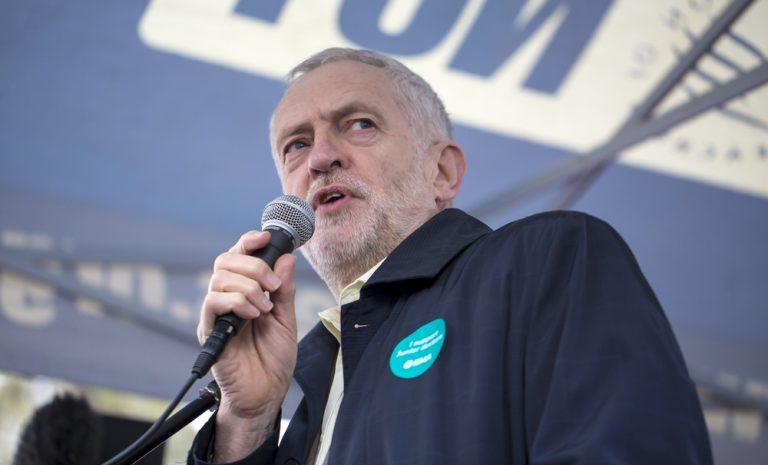
Labour have announced plans to impose £48.6 billion of tax rises on the wealthy and businesses, as part of their official 2017 election manifesto.
The extra money raised will fund an equivalent surge in public sector spending. In a document entitled ‘For the Many, Not the Few’, Labuor addressed their tax goals:
“We believe in the social obligation to contribute to a fair taxation scheme for the common good. We will take on the social scourge of tax avoidance through our Tax Transparency and Enforcement Programme, and close down tax loopholes.
“But we will not ask ordinary households to pay more. A Labour government will guarantee no rises in income tax for those earning below £80,000 a year, and no increases in personal National Insurance Contributions or the rate of VAT.”
The biggest tax rise in Labour leader Jeremy Corbyn’s proposals is an increase in corporation tax to 26 per cent, a 7 percent increase on the current rate of 19 per cent.
High earners would also take a hit, with a dramatic proposal to lower the threshold for the 45p additional rate from £150,000 to £80,000 and reintroducing the 50p rate on earnings above £123,000. The changes to the higher tax rate will raise another £6 billion a year, with the Institute for Fiscal Studies says Labour’s plans forwould take tax as a proportion of GDP to its highest level for 70 years
Carolyn Fairbairn, director general of the Conferation of British Industry, said:
“Some of the Labour policies deserve ‘three cheers’ and show what business and government can achieve together in partnership, for example on apprenticeships and innovation.
“Others, such as the future of the UK’s digital infrastructure, pose important questions yet need real collaboration with business to make them work. But too many – from renationalisation to new rules that potentially undermine the UK’s flexible labour market – are far wide of the mark.”