
Morrisons strong on “biggest ever” Halloween
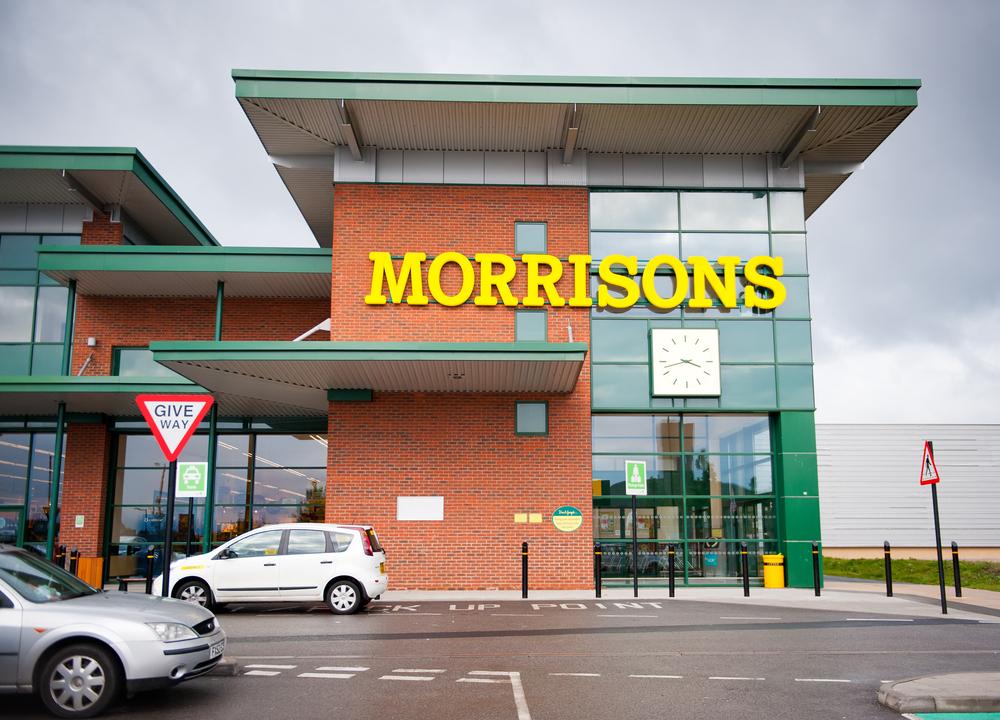
Troubled supermarket Morrisons revealed its fourth consecutive quarter of growth on Thursday, sending shares up over 2 percent.
Like-for-like sales rose 1.6 percent in the three months to 30th October. Total sales group sales excluding fuel are still down 1.2 percent on the year, with restructuring – including supermarket closures and the exit of M local – continuing to have an effect.
Halloween turnover was the group’s “biggest ever”, up 20 percent on last year and the supermarket moves its focus to holiday merchandise. The third quarter also saw Morrisons take home several awards, including In-store Bakery Retailer of the Year at the Baking Industry Awards and National Café Chain of the Year at the Café Quality Food Awards.
The positive figures are further evidence that the turnaround plan of chief executive David Potts’, who took over the company last year following the removal of former boss Dalton Philips, may be making progress. Potts commented:
“This year’s Halloween was our biggest ever, with our great value offer proving popular with customers. Our financial position is strong, and we are committed to further strengthening our balance sheet and lowering debt. Our net debt target remains c.£1.2 billion by year end.
“Our like-for-like sales have now been positive for a year, which is thanks to the hard work and dedication of the whole Morrisons team. There is a lot more we plan to do. We will keep investing in becoming more competitive and improving the shopping trip, and I am confident we will serve our customers even better during the important trading period ahead.”
Morrisons (LON:MRW) shares have steadily risen on the London market this morning, currently trading up 2.53 percent at 226.90 (1014GMT).
Morning Round Up: Morrisons sales strong, fuel prices spike, service sector expands in Oct

Morrisons sales strong in Q3
Struggling supermarket Morrisons revealed its fourth quarter of rising sales on Thursday, helped by strong demand for Halloween merchandise. Sales rose 1.6 percent in the three months to 30th October, with prices down 1 percent. However, total group sales fell 1.2 percent to reflect the continuing impact of supermarket closures and the exit of M local. Morrisons have made more effort to focus on key seasons in recent months, and were boosted by a 20 percent rise in sales of Halloween goods. The latest results are further evidence that the supermarket chain’s turnaround plan may be beginning to have an effect. Morrisons’ (LON:MRW) shares are currently trading up 1.40 percent at 224.20 (0943GMT).Petrol prices at highest level in over a year
The price of petrol and diesel shot up in October, taking it to its highest level since July 2015 as rising oil prices and a weaker pound come into effect. This marks the highest monthly jump in three and a half years, with average petrol prices rising 4.4p to 116.7p per litre and average diesel prices up by 5.2p to 118.7p per litre. However, the RAC have said prices may settle in the next few months. Fuel spokesman Simon Williams said: “Opec, which represents some of the world’s biggest oil producers, recently agreed in principle a cut in production. “But a final deal is still to be agreed at an Opec meeting at the end of this month and, with some analysts suggesting a deal might yet stall, this leaves open the prospect oil prices might stabilise or even fall before the end of the year.”Service sector strong despite growing inflation
The UK service sector expanded in September, rising to its highest level since January, despite growing inflationary pressures. The Markit/CIPS UK Services Purchasing Managers Index (PMI) figure rose to 54.5 in September, up from 52.6 the month before and well above the 52.4 expected by analysts. However, it also showed a sharp jump in inflationary pressures faced by companies, which grew at its fastest rate since the survey started in 1996. Chris Williamson, chief economist at survey compiler IHS Markit, said it “marred” the “encouraging picture of the economy” in October.03/11/2016
Logistics sector presents growing investment opportunities, says research

Logistics, residential and retirement sectors are set to be represent the largest European real estate investment opportunities across the next 12 months, according to research by BrickVest.
According to newly released research, BrickVest of those property-focused investors polled, 44 percent consider Logistics to be the largest European real estate investment opportunity across the next year, similarly 37 percent considered retirement as profitable and 33 percent for residential.
“In a background of Brexit, income is considered a priority and we prefer investments that will provide strong diversification and increased stability throughout their hold period. We have seen plenty of appetite from investors and it is clear that many of our users want to take advantage of the Brexit vote with the confidence that they have a secondary marketplace to trade.”
In addition, the research also examined the factors that proved deterrents for investors looking into commercial real estate previously. According to their findings, two in five emphasized that the process to do so was not efficient enough. Morever a third of participants cited the lack of liquidity of the market as a result of the absence of an “efficient secondary market”.
In regards to European real-estate, a recent ranking by The Telegraph named Budapest in Hungary as the the best locations to invest. The broadsheet cited “good yields, relatively low transaction costs and pro landlord law” as key investment incentives. The remainder of the top five consisted of Skopje, Macedonia (2), Amsterdam, Netherlands (3), Istanbul, Turkey (4) and Zagreb, Croatia.BrickVest is an online investment platform that operates across Europe. The start-up was launched early in 2016 in February and has been featured by Bloomberg Business and The Financial Times among others.
“Global Careers Company” seeks crowdfunding loan to grow $50 billion African market

Recruitment consultancy Global Career Company are seeking a £100,000 investment on Crowd2Fund.com, in order to expand business activity in the African market.
Africa’s business environment has continued to excel in recent years and is predicted to have the largest workforce by 2035. Global Career Company started in 2002, originally focusing on the South African recruitment market. With the end of the apartheid, founders Rupert and Sarah Adcock spotted an opportunity to connect businesses seeking diversity with the diaspora of South African professionals wanting to return.
Its service now incorporates markets all over the world, with the current revenue being led by Africa (77%), and followed by MENA (11%) and Asia (10%). Since its inception, Global Careers Company has consistently achieved gross margins of 75%-85%, and an EBITDA of 15%. The range of recruitment services offered by Global Careers Company include Recruitment Summits, Search & Selection, Digital Recruitment Marketing, Recruitment Campaigns and Talent Insight. The company’s strategic focus is based on growing and maintaining a global talent pool, which allows them to recruit high calibre and high potential emerging market talent from around the world.
The funds raised on Crowd2Fund will be exclusively used for growing the African part of the business, specifically rolling out business activity in Lagos and Abidjan with the “Introducing Talent Agenda” series. This will be focussed on investment into digital assets, events and marketing activity.
Sara Adcock says, “We will invest in running events in multiple locations around Africa, adding to the existing portfolio by moving into markets we have not previously visited. We will also be investing in an enhanced sales and marketing programme, which will better showcase our portfolio and support commercial outreach.”
The African market is currently worth $50 billion, and the company chose to seek their growth funds on Crowd2Fund in order to allow their user base to participate in their future success.
“Crowdfunding makes sense for us because our user base is significant and engaged with what we do. We hope that our user base will support us to row, and we want them to be the beneficiaries of that growth.”
Global Career Company chose Crowd2Fund as their platform due to its ability to help them build an investor team and run a marketing campaign to generate awareness for the business, something the other platforms don’t offer.
Morning Round Up: Inflation to rise 4%, Standard Chartered hits FTSE, house prices stagnate

Inflation to rise 4 percent next year
UK inflation may “accelerate rapidly” in 2017, a leading think tank has warned.
The National Institute for Economic and Social Research forecast inflation rising to 4 percent by the end of 2017, nearly four times its current rate, due to the weakening of the pound. It also warned that the economy faces “significant risks” in the upcoming months.
In August, the NIESR forecast a rise to 3 percent next year. CPI inflation rose to 1 percent in September, according to the Office for National Statistics.
Standard Chartered results hit FTSE
Standard Chartered shares fell on Wednesday, despite increasing pre-tax profits by over $500 million. The bank reported profits of $458m, compared with a $139m loss last year. However investors remained unimpressed by the figures, sending shares down nearly 4 percent in early trading. Chief executive Bill Winters said “income and profit levels are not yet acceptable”, and warned that the bank may be facing legal action from Hong Kong’s financial regulator. Standard Chartered (LON:STAN) shares are currently trading down 3.85 percent at 646.80 (0936GMT).House price growth stagnates in October
British house prices stagnated in October for the first time in 15 months. Mortgage lender Nationwide, who compiled the figures, said it was evident of a slowing housing market in the wake of Brexit. House prices were flat last month, compared to a 0.3 percent rise in September and a 4.6 percent rise in October last year. Reuters economists had estimated a 0.2 percent price rise.02/11/2016
Shell shares rise over 3 percent on strong Q3 results

Royal Dutch Shell shares propped up the FTSE 100 this morning after reporting better-than-expected results for the third quarter.
The company reported an 18 percent rise in third quarter profit on Tuesday, with underlying profits rising to $2.8 billion. Net income also rose to $2.8 billion, beating analysts’ expectations of $1.71 billion.
Shell’s Integrated Gas division saw a slight increase in profits to $931 million, with its refining and trading division falling to $2.01 billion, from $2.6 billion a year ago.
The figures were a welcome improvement on their disappointing second quarter results, which had been affected by outgoings related to its acquisition of BG in February. Shell missed expectations by around 50 percent, sending shares plunging.
Shell (LON:RDSA) are currently trading up 3.41 percent at 2,108.00 (1007GMT).
Consumer rights platform Resolver.co.uk secures £2.8m investment

Resolver.co.uk has secured funding of £2.8 million to make it easier for consumers to complain about brands and companies.
The independent website was set up in 2014 by James Walker to enable consumers to raise concerns with brands, companies and organisations in an effective way. The site helps individuals resolve issues and seek re-payments or compensation where necessary. According to resolver.co.uk, “65 percent of cases offered a resolution” with many consumers receiving hundreds of pounds of compensation.
In a statement, the company said “in our first institutional investment round parent company Resolving Limited has now secured funding from Draper Esprit and Imperial Innovations to allow it to double our team and invest in new technologies such as artificial intelligence and machine learning.”
The website’s founder Mr Walker commented:
“What we have done so far with a small but extremely dedicated team is awesome. We have made real tangible impacts on a range of industries and our presence has encouraged better customer service in many sectors. That’s down to the hard work of everyone at Resolver and shows why our funding round was so popular and oversubscribed.
“But there is much more to do. By the end of 2016, we expect to have resolved issues worth more than £100m and this initial round of institutional investment allows us to focus on increasing our user base. We will also put in place new emerging technologies to automate many processes that make raising cases faster and help us and the consumer to predict the likelihood of a resolution and what it may be. We also have plans to expand internationally.”
Resolver currently hosts around 556,000 of individual registered users and initiates an average of 1,500 new cases each day according to its figures. The website currently attracts more than 600,000 visits each month.
Pound’s turbulence could drive pensions overseas

The weakening of the pound has led to a “significant surge” in individuals seeking advice on how to re-locate their pensions out of the UK, according to the boss of one of the world’s largest independent financial advisory firms.
The trend has grown in the four months since the UK voted to leave the EU. During this period, the pound sterling has plunged in value 14.5 percent against the euro and 18 percent against the US dollar.
The CEO of deVere, Mr Green, stated:
“The pound has experienced major volatility since the Brexit vote was announced. This turbulence is likely to continue as there are still no definitive answers to the important questions about Britain’s future relationship with Europe or the rest of the world.
“The plummeting value of sterling has an important negative impact for the millions of Britons overseas who live off a fixed income from Britain, such as a UK pension. The cost of living becomes more expensive and a proportion of their disposable income is eroded away.
“For instance, there are a reported 1.3 million Brits living in the U.S., about a quarter of these are retirees. The majority of these 312,000 people will have taken an 18 per cent hit to their UK pension incomes since the referendum.”
He added: “Brexit is biting those abroad with a British pension. Therefore, they are, sensibly, considering their options about how to Brexit-proof their retirement incomes.
“We’ve experienced a 21 per cent hike in global enquiries about moving British pensions out of the UK since the Leave campaign was victorious. The enquiries are from those already living outside the UK and from people currently in the UK planning to retire abroad.
“This considerable surge potentially represents hundreds of millions of pounds of retirement funds leaving the UK as people seek to safeguard their retirement funds by transferring them into a secure, regulated, English-speaking jurisdiction outside Britain.
“An established way to help mitigate these problems of currency fluctuations, which can seriously erode retirement income, is to transfer your UK pension into a Qualifying Recognised Overseas Pension Scheme, or QROPS.
“One of the main benefits of a QROPS is that you can choose which currency you wish to receive payments in. This eliminates the risk of exchange rate fluctuations, which makes the individual’s financial situation more predictable, consistent and secure.”
Mr Green concluded : “Given the ongoing and growing Brexit fallout, we expect the trend for people seeking advice on overseas pensions transfers to gain momentum over the next couple of years and beyond.”
UK mortgage approvals rise in September

British mortgage approvals defied a negative post-Brexit environment in September, rising to their highest level since June.
Mortgage approvals for house purchases rose to 62,932 in September from 60,984 in August, according to Bank of England data released on Monday.
The figures easily beat the 60,150 forecast by analysts and will alleviate concern that the housing market has entered a prolonged period of negativity in the wake of the European referendum result. Mortgage approvals hit a 19-month low in August, and are still 15 percent down on this time last year.
Markets cautious ahead of US election
Asian markets had a shaky start to the week on Monday on the back of the latest hit to the Clinton election campaign. News that the FBI has reopened the case surrounding Hillary Clinton’s private email server just over a week before the election sent investors into a spin, pushing Asian markets down. The Shanghai Composite and the Nikkei 225 closed down 0.12 percent, with the Hang Seng down 0.09 percent. The FTSE 100 followed suit, currently trading down 0.31 percent at 6974.94.31/10/2016
Apple raise prices by 20% in the UK

Apple have announced a price increase of 20 percent for computer products in the UK, in response to the effect of Brexit on the British Pound.
The 13-inch Macbook Air, which is the company’s cheapest laptop now costs retails at £949, up from £849. In addition, their Mac Pro desktop computer now costs £2,999, up from the previous price of £2,499.
In a statement, Apple said: “Apple suggests product prices internationally on the basis of several factors, including currency exchange rates, local import laws, business practices, taxes, and the cost of doing business. These factors vary from region to region and over time, such that international prices are not always comparable to US suggested retail prices.”
“International prices are not always comparable to US suggested retail prices.”
However analysts have predicted further price increase could be on the horizon, as many companies attempt to adjust to the changing UK economic environment. Apple’s Wednesday reporting reflected this, revealing disappointing revenue sales in general, as the company saw profits fall for the first time in 10 years.
“Apple has to recalibrate prices after significant currency fluctuations, and since the EU referendum, UK prices are out of sync with the dollar,” said Patrick O’Brien, analyst at the Verdict Retail consultancy.
“Apple has taken the hit up until now. While price increases won’t look good to the consumer, it’s difficult to blame Apple.
“Once you strip out UK sales tax (VAT) and the currency conversion, the new UK prices could still be viewed as fair.”
This coincides with similar measures undertaken by other technology firm competitors such as Microsoft. Earlier this week, Microsoft announced an increase of up to 22 percent for business customers of its cloud products, to reflect the weakening value of the sterling against the euro.
Apple’s price announcement follows Thursday’s unveiling of the new Macbook Pro device, which features a new programmable “Touch Bar” to replace function keys.