The Canadian data-analysis company Greenlight Essentials has launched a Kickstarter campaign to fund the first feature film project, co-written by an artificial intelligence.
The company is seeking CA$30,000 (£17,300) on the world’s largest crowdfunding platform to produce the horror film “Impossible Things”.
The film project, five years in the making, produced a software which analyses success in the horror genre. It then utilise most successful plot points to create a script likely to appeal to the target audience.
Jack Zang, founder of Greenlight Essentials stated in a press release:
“A little over 85% of movies made today don’t make a profit [at the] box office, which is the result of a mismatch between the movies being produced and audiences’ tastes. […] We used [artificial intelligence] to generate the premise and the key plot points of the film. Before a single word was written, our AI told us that if we wanted to match audience taste, we needed to make a horror film that featured both ghost and family relationships, and that a piano scene and a bathtub scene would need to be used in the movie trailer to increase the likelihood that our target audience would like it.”
So far the project has already produced a finished script as well as a trailer making use of the software.
The script has been engineered to appeal to women under 25, a key customer segment for the horror film industry.
Its’ story line follows a couple with two children. The family decides to move to a secluded country house after the death of one of their twin-daughters. The mother, Madeline as well as her daughter begin to hear voices and experience violent visions which pit them against one another.
Film will be first of its’ kind, entering new depths of AI use in film making
Artificial intelligence has previously helped create the short film “Sunspring”, which received mixed reviews. “Impossible Things” will be the first feature length film partially written by a target engineered software.
Crowdfunding campaign raised close to 40% in first 1.5 weeks
So far the project’s Kickstarter Campaign has already raised CA$11,162 in the first one and a half weeks. Another 46 days remain to reach the target amount of CA$30,000.
Backers will be rewarded with a mention on the backer’s wall. Depending on contributed amount they will also receive extras such as a digital copy of the script and the film.
Donald Trump is set to outline an economic plan designed to appeal to working class Americans on Monday, despite the recent appointment of five of his wealthiest donors as economic advisors.
Trump’s PR team are no doubt hoping that the speech can help regain a little a credibility for the campaign, following a disastrous week in which Trump became embroiled in a fight with the Muslim parents of an American soldier killed in Iraq. Set to start at 12PM EDT at Detroit Economic Club, Trump is due to outline his plans for the US economy, including a freeze on new rules for banks and a repeal of the inheritance tax on estates larger than $5.45 million.
Trump appoints economic advisors
However, many will be watching the speech with a certain degree of scepticism – Trump’s speech will attempt to appeal to the working classes, despite simultaneously announcing a cut in corporate tax from the current rate of 35 percent to just 15 percent. With the appointment of five major donors – whose donations range between $339,400 and $449,400, and all of which are men – as his economic advisors, it seems unlikely that the working classes will get much of a look in.Trump v. Clinton
Donald Trump also plans to announce a moratorium on new financial regulations, as well as regulatory relief for small businesses. Trump has carefully chosen Detroit, the derelict home of the American car industry, in order to highlight the differences between his and Hillary Clinton’s economic policy:
She’s the candidate of the past and ours is the campaign of the future,” Trump will say, “Every policy that has failed Detroit has been fully supported by Hillary Clinton. The one common feature of every Hillary Clinton idea is that it punishes you from working and doing business in the United States.”
Finding the right mortgage provider can be a time-consuming and often fruitless search; conflicting advice, confusing options and a lack of clear knowledge makes finding a mortgage a difficult task. However Trussle, the new online mortgage service backed by Zoopla, is looking to mix up the market with its easy-to-use, hassle-free site.
Trussle makes it easier for first time buyers trying to secure the right mortgage, as well as helping homeowners looking to save money on their existing mortgage by offering a quick and easy tool to compare over 11,000 deals. After a mortgage has been secured through the site, Trussle then continues to monitor the mortgage and help you switch to a better deal later on – so you’re never paying more than you should.
Ishaan Malhi, Trussle founderTrussle was founded in August 2015 by Ishaan Malhi, who had experienced first-hand the difficulties of negotiating the mortgage market. Even with his background in finance – Malhi was previously a mortgages and real estate analyst at Bank Of America Merrill Lynch – the choice and advice was overwhelming and, ultimately, frustrating. With Trussle, the weight is lifted. Malhi said, “through technology, design and our expertise, we’re making a traditionally cumbersome process smarter, faster and more transparent than anything else, without charging you a penny.”Despite launching only 8 months ago, Trussle has really gained some traction. It raised £1.1 million in a funding round in January 2016, led by Robin and Saul Klein’s LocalGlobe, with others taking part including notable UK-based investors Ed Wray (co-founder of Betfair) and Ian Hogarth (co-founder and chairman of Songkick). Just one month later, in February 2016, high-profile housing site Zoopla announced a strategic long-term partnership and investment in Trussle.
For more information on Trussle and the services it offers, visit trussle.com
This morning’s publication of China’s continued drop in both exports and imports in June has sparked worry over the country’s industrial demand, which may weigh heavy on raw commodity suppliers. Lower figures on copper purchases of the world’s biggest consumer of the metal ring especially worrying for mining companies and lower pricing of the metal has largely affected the FTSE100 in the past.
Chinese exchange of goods and services continues to slide
The country this morning reported a 4.4% decrease in exports in July compared to the same month last year. The figure missed estimates by 1.4%.
Imports fell a total of 12.5% compared to a year ago, representing its largest decline in 6 months and the 21st consecutive slide in monthly import figures.
Lower than expected measures fuelled speculation that the country’s economic slowdown is worse than expected and will affect the country’s industrial demand of commodities. This may depress earnings of raw commodity suppliers and weigh heavily on stock prices.
Drop in China’s copper purchases weighs on the metal’s price
Most notably, copper purchases were down a total of 14.3%; worrying new for mining companies and the FTSE100. China is the world’s largest consumer of the metal and news of lower demand therefore has grave impact on its pricing.
Copper traded at its lowest since the 12th July hitting $4,783 a tonne on the London Metal Exchange on Friday. Monday saw a slight increase in price as Friday’s strong US job data helped spur positive economic sentiment. The metal was up 0.8% to $4,829 a tonne in morning trading. However, news of lower Chinese demand still managed to keep prices at a four week low.
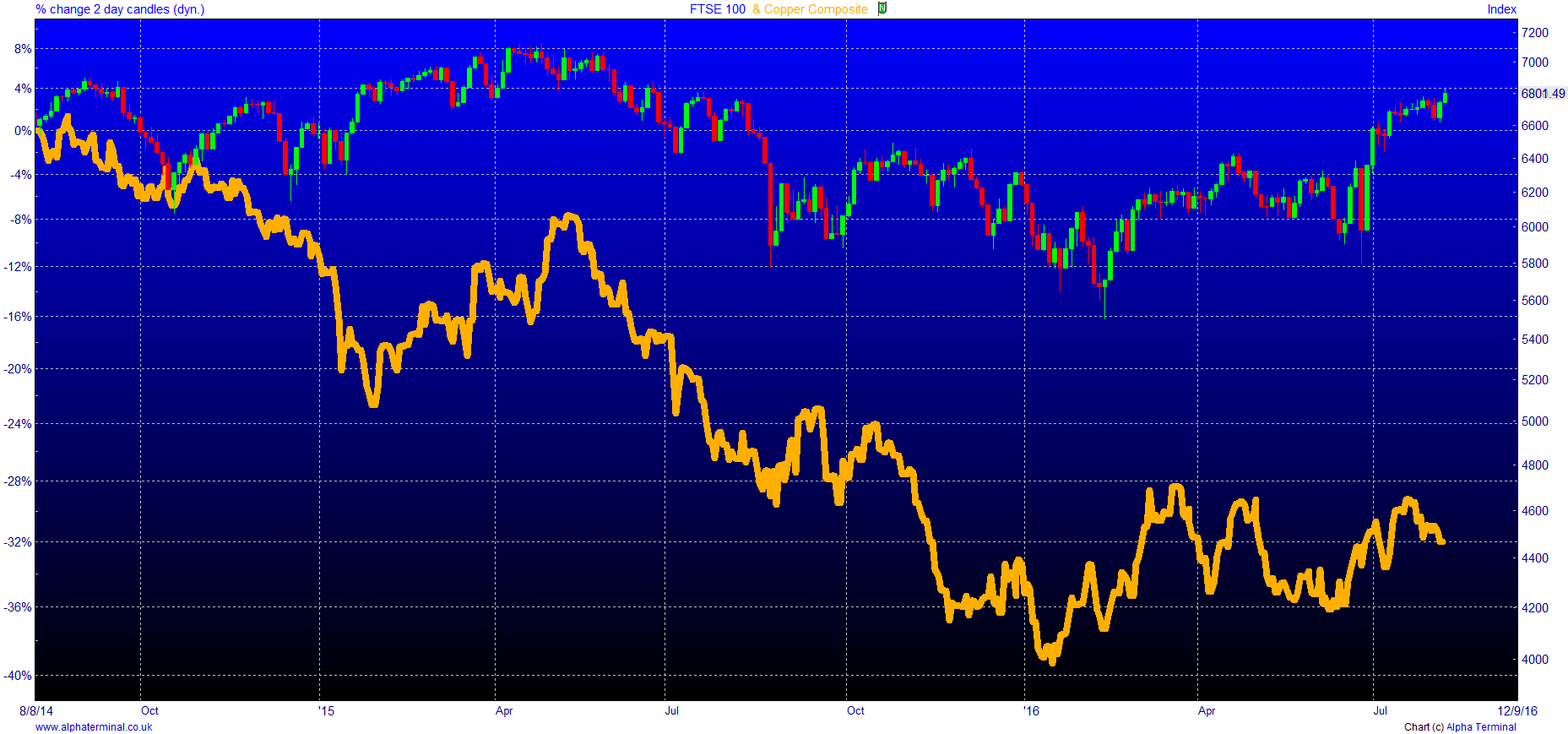
In the past sliding copper prices have not only depressed share prices of all major mining companies but it can also be observed that the FTSE100 moves greatly in response to changes in the metals pricing.
Co-movement of FTSE100 and copper prices
Earlier this year, China’s lower-than-expected figures on exports and imports and especially lower demand for the red metal send mining shares downwards and caused a considerable drop in the FTSE100.
China’s export data weighed heavily in FTSE100 in March
On the 8th March Beijing reported a reduction of 13.8% in imports and a whopping 25.4% drop in exports.
Copper prices were in between the worst hit by the news, dropping as much as 2.4%.
In the aftermath, shares in global mining companies dropped greatly on the London Stock Exchange. Glencore (LSE:GLEN) fell 18 percent to 139.75p, also affected by news of a mining accident in the DRC. Anglo American (LSE:AAL) was down 15 percent. Antofagasta (LSE:ANTO), as well as Rio Tinto (NYSE, LSE:RIO), both lost more than 9 percent. The FTSE100 closed 1% down.
FTSE100 still unaffected by latest data release
In the aftermath of today’s data release the FTSE100 and mining companies’ shares have remained largely unaffected. This could be the result of low expectations of the figures.
However, if decreases in copper prices persist, they may come to show their effect on the FTSE100 and in particular the shares of mining companies.
Italy’s troubled banks are offering huge fees in order to arrange their rescue, with 500 year old Monte dei Paschi di Siena (MPS) set to pay millions if a private rescue deal goes ahead.
Underwriting fees in the deal orchestrated to save MPS will hit around €250 million, with investment banks who are involved having the potential to earn around €1 billion. The deal begun being brokered after the bank received the worst results in European stress tests; several other Italian banks, including the country’s largest lender UniCredit, also performed badly in the most recent audit.
The deal to save MPS will be the third time the bank has needed a cash injection, paying €130 million to a pool of banks for a €3bn cash call last year. The rescue plan, coordinated by JP Morgan and Italian bank Mediobanca, is still in the development stages but would see the MPS unload its bad loans into a special purpose vehicle (SPV).
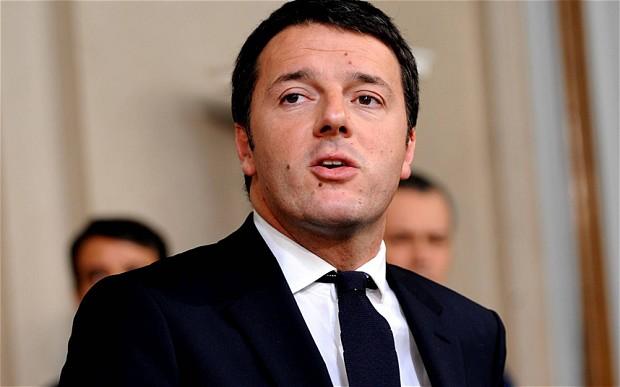
The current banking crisis comes at a tricky time for Italy, just months before the referendum on constitutional reform taking place in October, on which the future of Prime Minister Matteo Renzi’s leadership rests.
The Sentix indicator for Euro Zone investor confidence in August came in higher than expected. Figure still comes in second lowest since January 2015 amid post-Brexit uncertainty and growing worries about Italian banks.
Investor confidence records slight recovery from initial post-Brexit slump
Sentix GmbH this morning published its’ indicator of the Eurozone’s investor confidence in August. The figure came in at 4.2%, up 2.5% from last month’s figure and beating estimates by 1%.
The indicator is a composite figure of 36 different indicators capturing aspects of investor confidence in the EMU. It is based on a monthly survey of 1600 financial analysts and institutional investors.
Investor confidence in the EMU seems to be recovering from the past month’s post-Brexit shock, which produced the lowest rating in 17 months.
Investor confidence stays low due to Italian banking worries
However, the rating still represents the second lowest rating since January 2015.
This does not come as a surprise, as economic uncertainty over the long term effects of the UK’s decision to leave the European Union have been joined by renewed worry about the banking sector in Italy.
Italy’s Monte dei Paschi di Siena has made most headlines. Analysts’ speculate that the oldest bank in the world stands at the brink of collapse with billions in non-performing loans.
Germany records growth in industrial production
Some good news to spur positive economic sentiment in the EMU came from the German Federal Statistical Office (Destatis) this morning.
Industrial production in Germany rose by 0.8% in June. This represents an increase of 0.9% from Mays’ negative measure and beat estimates by 0.1%. The figure comparing June’s industrial production to the same month last year came in at 0.5%, also 0.9% higher than results recorded in May.
Euro stays unaffected by higher than expected figures
While positive data on investor confidence in the EMU and industrial production in Germany is usually considered to have bullish effects for the Euro, persistent concern about the economic situation in Europe due to the Brexit vote and Italian banking worries weigh heavily on the Euro, which prevented the EMU currency from recording any major gains against other currencies.
The EUR/USD is trading at 1.10856, the EUR/GBP at 0.84913 at 11.22am.
Theresa May’s decision last week to delay approving the Hinkley Point nuclear power station signalled a turnaround in government policy towards China, barely a year after David Cameron’s announcement of a “golden era of relations” between the UK and Beijing. Since then, the political ground has shifted dramatically; with the UK now set to exit the EU, will a UK-China relationship still be mutually beneficial?
For China, one of the main draws of a strong relationship with the UK was the access it could provide to the EU bloc. Despite the Foreign Ministry commenting on the referendum saying that China “respects the choice made by the British people”, the exit vote certainly came as a blow – President Xi Jingping made it clear earlier this year on a state visit that it “hopes Britain, as an important member of the EU, can play an even more positive and constructive role in promoting the deepening development of China-EU ties.”
Partnership outside the EU
Without access to Europe, will the UK still be a strong partner for China? The weakening of the economy since the vote will also weigh heavily as Beijing weighs up the pros and cons of continuing their relationship – and investment – with the UK. According to Philippe Le Corre, a policy analyst in China-Europe relations, this could be bad news for the UK: “The reality is that Britain will be of no use to China within the EU now, with no influence left whatsoever.”
Theresa May’s turnaround in government policy towards the Hinkley Point nuclear plant, strongly supported by the Cameron-Osbourne partnership, will come as another blow to China. May has signalled that she has “severe reservations” about closer ties with China over nuclear plant, citing long-term security worries and the possibility of French energy company EDF being able to complete. Going ahead with the project would have shown trust in the China General Nuclear Power Corporation, and opened the door to further trade between the two countries. Hesitation now is likely to weaken the partnership that Cameron and Osborne worked to hard to create.
Post-Brexit agreement
Moving forward, it remains to be seen how much of the £40 billion worth of trade agreements between the two countries will still go ahead. The EU exit may well allow the UK to form its own trade relationships with China, maintaining the friendly relationship between the two countries – but without UK influence in the EU to barter with, it seems China now has the upper hand. Any agreements made post-Brexit are likely to be on their terms.
The average pay for a CEO in the FTSE 100 is £5.48 million, according to the latest report by think-tank High Pay Centre, with no women making the list of top ten highest paid executives.
Chief executives of firms on London’s FTSE 100 index saw their mean average income rise by 10 percent in 2015, with bosses earning around 129 times the salary of their employees. The ‘excessive’ pay in Britain’s top companies recently prompted government scrutiny, with Theresa May looking to implement a series of boardroom reforms to counteract the “irrational, unhealthy and growing gap between what these companies pay their workers and what they pay their bosses”.
Several heads of large companies have come under fire recently for the size of their salary, with head of the advertising group WPP Sir Martin Sorrell recently being forced to defend his pay packet of over £70 million per year. Oil giant BP has also faced shareholder revolt over pay, with a salary of £14 million for CEO Bob Dudley being rejected at the company’s AGM.
Stefan Stern, director of the High Pay Centre, said: “There is apparently no end yet in sight to the rise and rise of FTSE 100 chief executive pay packages. In spite of the occasional flurry from more active shareholders, boards continue to award ever larger amounts of pay to their most senior executives.”
China import figures suggest drop in domestic demand
Chinese import and export figures came in lower than expected for July, suggesting a drop in domestic demand and global economic weakness.
Imports dropped 12.5 percent, their biggest decline since February, with exports also falling 4.4 percent according to China’s General Administration of Customs. China’s trade surplus stood at $52.31 billion in July, up from $48.11 billion in June.
These figures are the latest in several signs of weakness in the Chinese economy, with both exports and imports declining solidly over the past year. Analysts expect trade to remain weak, perhaps with a moderate increase towards the end of the year with Christmas manufacturing.
Japanese shares up on Monday after positive US jobs data
Japanese markets started the week on a high after the US announced a non-farm payroll figure of 255,000, far higher than expected by analysts.
Japanese exporters were helped by a weaker yen, and markets reacted well to the figure which heightened anticipation of a rate rise by the Federal Reserve before the year’s end.
The Nikkei 225 index closed 2.4 percent on Monday with other Asian markets having a similarly positive close: the Hang Seng closed up 1.57 percent, with the Shanghai Composite up 0.93 percent.
UK consumer spending rises in July
Consumer spending picked up in July, despite concerns of an economic slowdown in the wake of Brexit, according to the latest survey from card company Visa.
Consumer spending rose 1.6 percent in July compared with a year earlier, up 0.9 percent from June and hitting the strongest growth rate since January.
However, Visa warned that monthly consumer data can be volatile, with Visa’s managing Direction Kevin Jenkins commenting:
“July’s data suggests that UK consumer spending is holding up despite the ongoing uncertainty following the referendum, albeit at lower levels of growth than we’ve seen in the last couple of years.”
London based BlackRock Investment Strategy Trust this week announced that it will review its’ investment objectives and policies on terms of sustainability amid the changing economic conditions following last month’s Brexit vote.
In the announcement published on the London Stock Exchange the Trusts stated:
“Since the implementation of the new investment objective and policy, interest rates have fallen and there has been a significant decline in the universe of investments which could support a multi-asset approach to meeting the stated investment objective and total portfolio return target. Although in the last 12 months the Company has paid dividends totalling 6.64 pence per share, which represents a dividend yield of 5.6% (based on Friday’s closing share price), since the change in investment objective and policy the Company’s NAV (cum income, with debt at fair value) has declined by 14%.”
The announcement, made by the Board and the Investment Manager of BlackRock, comes only 18 months after the trust, formerly known as British Assets, changed its’ name to Black Rock Income Strategies, prompted by a switch in management from F&C to Black Rock, and launched its’ latest investment strategy, implementing a multi-asset dividend driven approach.
The Trust claimed that revision of its’ investment strategy became necessary “in the context of the prevailing market conditions and investment outlook post the recent UK Brexit Referendum.”
It was announced that all share buy-backs will be suspended while the review is in progress.
Share prices of BlackRock Income Strategies Trust PLC (LON:BIST) dropped 5.72% in the days following the announcement.
Shares are trading at 111.49pence (+0.21%) at 16.07pm.