
Nintendo sales fall despite strength of Pokemon Go

Brexit unlikely to affect 2017 mergers and acquisitions, says new survey

Post-Brexit challenges are unlikely to affect business mergers and acquisitions, according to the latest research from KBS Corporate.
The study revealed that 94 percent of Private Equity and Venture Capital Houses were confident about the long-term future of the M&A market, and the wider economy in general. 97 percent of the survey respondents planned to use their funds at the same rate for the rest of this year and going into 2017, showing an undeniable optimism about the UK economy going forward.
KBS Corporate’s director, Simon Daniels, commented:
“Our research also found that respondents were of the opinion that a fundamentally profitable business is an attractive acquisition no matter the circumstances, indicating that 2017 may well be in line with record levels experienced in 2015.
“Acquisitions of ‘UK centric’ businesses, whose operations are unaffected by the European Union, are also likely to continue at the current pace going into 2017.
“Meanwhile, UK exporting businesses are becoming increasingly more attractive following the recent depreciation of the value of the pound against other major currencies. The effect of this is cheaper UK imports for foreign businesses and consumers, which has accelerated demand.”
KBS Corporate see investors becoming more active in 2017, widening the pool of potential suitors to negotiate with and ultimately creating a more productive environment for businesses hoping to sell.
According to Daniels, now is also the most tax-efficient time in recent history to sell.
“Entrepreneurs’ tax relief, which grants business owners a preferential capital gains tax rate of just 10 percent on business gains of up to £10 million, has been extended to include long-term investors, whilst capital gains tax has been slashed by 8 percent for all business owners,” he added.
AT&T shares fall despite CEO’s confidence on Time Warner merger

Shares in US telecoms group AT&T fell nearly 2 percent today, despite its CEO saying he is confident the company’s proposed acquisition of Time Warner will be approved by US regulators.

US lawmakers and both presidential candidates have voiced concerns over the merger, which was announced on Saturday. However AT&T’s CEO Randall Stephenson believes the deal will be approved, saying in an interview with CNBC:
“While regulators will often times have concerns with vertical integrations, those are always remedied by conditions imposed on the merger, so that’s how we envision this one to play out.”
If the deal goes ahead, it will be the biggest merger announced so far this year. AT&T have agreed to pay $85.4 billion for the company, which owns CNN and HBO. It will combine AT&T’s 130 million strong customer base with content from Warner Brothers and three major US cable TV channels; HBO, Cartoon Network and CNN. A Senate sub-committee responsible for competition will hold a hearing in November and are set to examine any anti-trust issues arising from the merger. AT&T shares fell nearly 2 percent on Monday, currently trading down 1.63 percent at 36.88 (1753GMT). Several credit ratings companies have lowered their assessment of the companies in the wake of the announcement. MoffettNathanson downgraded Time Warner to “neutral”, saying in a report today: “We are unprepared at this point to assign anything higher than a 50/50 probability of deal approval.”24/10/2016
Manufacturing exports boosted by sterling weakness, CBI says

Manufacturing exports have benefited significantly from the weakness of the pound, according to the latest data by the Confederation of British Industry (CBI).
The industrial trends survey has revealed that exports grew by their fastest pace in over two and a half years in the three months up to October. The data showed around 29 percent of firms polled reported an increase in total orders, with 20 percent reporting a decrease. One in five companies said they were more optimistic about the business situation than three months ago, but 28 percent were less so.
“Manufacturers are optimistic about export prospects and export orders are growing, following the fall in sterling,” commented Rain Newton-Smith, CBI’s chief economist.
“However, the weaker pound is also feeding through to costs, which are rising briskly and may well spill over into higher consumer prices in the months ahead.
“Access to skills clearly remains a high priority, so manufacturers will be looking to the government to implement a new migration system that meets the needs of business while responding to clearly-stated public concerns.
“Maintaining a preferential route between the UK and the EU, our largest trading partner, will be important,” she stated.
Additionally, the CBI warned that the pound’s weakness was “a mixed blessing”, and its devaluation had resulted in the fastest rise for price of average units in over three years.
Moreover, 47 percent of those surveyed said the depreciation of the pound had impacted their business negatively, while 32 percent said deemed the impact to have been a positive development.
The CBI stated that companies will be largely focused on the Chancellor’s November Autumn Statement for further clarification on the Goverment’s intended industrial strategy.
“Ultimately, all businesses need greater clarity from the Government on the fundamental issues of skills and barrier-free access to EU markets as soon as possible,” added Ms Newton-Smith.
Hanjin announce closure of European operations
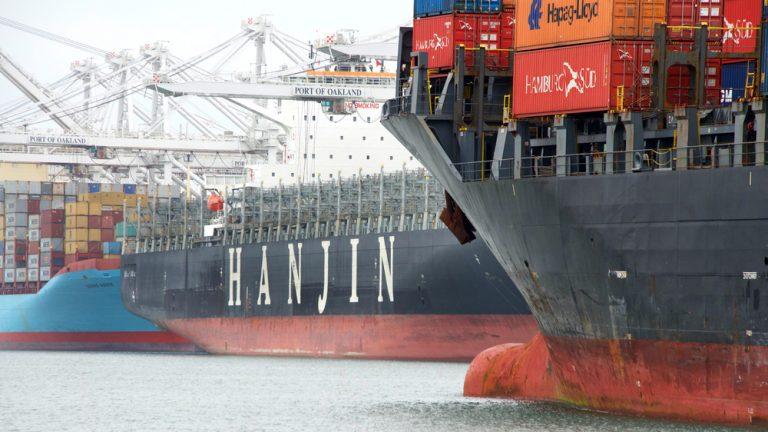
Global shipping firm Hanjin have announced their intention to close all European operations, causing shares to plunge by 12 percent.
The company has said it is likely to cease its activities in more than 10 countries, including its European headquarters in Germany. The firm expects to initiate the closure process in Europe as early as this week, following approval from the Seoul Central District Court. Earlier in the month, Hanjin received permission to auction major assets, including its Asia-US route network, in order to commence repayments to creditors.
The announcement resulted in a 13.9 percent plunge in share price during trading in Seoul. Almost 80 percent of Hanjin’s value has been wiped out over the past year following the report of a £342 million loss.
The South-Korean firm filed bankruptcy claims earlier this year after encountering persistent financial difficulties. Hanjin Shipping then filed for receivership in August, following the refusal of creditors to go ahead with a proposed restructuring plan for the firm’s $5.4 billion (£4.4 billion) debt. This has marked the biggest bankruptcy declaration in the shipping industry to date.
The continued financial struggles of The South Korean shipping company have been attributed to the ongoing general downturn in the container shipping industry in recent years. This has been considered to be as a result of a combination of factors including weak global GDP, overcapacity on container vessels, changing consumer spending patterns as well as the economic slowdown in China.
Hanjin is South Korea’s largest shipper, and it also makes up one of the top ten in the world’s largest carriers in terms of capacity potential.
London remains attractive to real estate investors despite Brexit

Four of the top ten European cities named in the research were German, highlighting a clear positive trend towards German commercial real estate.
Burberry soars 7 percent intra-day on bid speculation

Nestle shares sink as weak sterling impacts growth

20/10/2016
Robo-advisers could help reduce the “financial advice gap”, says FCA

Morgan Stanley profit report surpasses expectations
Morgan Stanley (NYSE:MS) reported a 57 percent rise in quarterly profits on Wednesday, after a strong growth in bond trading revenue.
The New York-based investment bank posted better-than-expected quarterly figures, reporting a profit of $1.6 billion (81 cents per share), marking a significant 62 percent increase on the $939 million reported for the same period of last year. Conversely, analysts commissioned by Reuters had initially predicted Morgan Stanley to earn around 63 cents a share, on revenue of $8.17 billion.
Morgan Stanley’s chief executive James Gorman said in a statement:
“While the environment was more challenging for our equity underwriting and asset management businesses, our expense initiatives remain on track. Overall the results reflect steady progress against our long term strategic goals.”
In particular the bank saw a rise in bond trading revenue, with profit almost tripling within this sector. Previously the area had been a continued source of concern, as it struggled to profit from difficult capital requirements. Earlier in the year, Morgan Stanley instigated an effective restructuring of the area, reducing 25 percent of staff as well as appointing new management.
Bond trading has generally been profitable across all recently released Wall Street revenue reports, having benefited on the back of the UK’s destabilising vote to leave the European Union.
Additionally, revenue from their wealth management sector, which the bank has been developing for several years, rose 7 percent to $3.9 billion. As a result, the business hit a 23 percent pre-tax margin effectively meeting Gorman’s last quarter target.
Despite strong revenue figures, Morgan Stanley shares were up by less than 1 percent at 0.5 percent in early trading. The Wall Street bank was the last of the leading US-based banks to post profit earnings for the last quarter this week. Similarly, Goldman Sachs Group Inc (NYSE:GS), Morgan Stanley’s largest competitor, reported a better-than-expected 58 percent growth in third-quarter profit on Tuesday.