EU referendum: new polls puts UK on course for Brexit

0
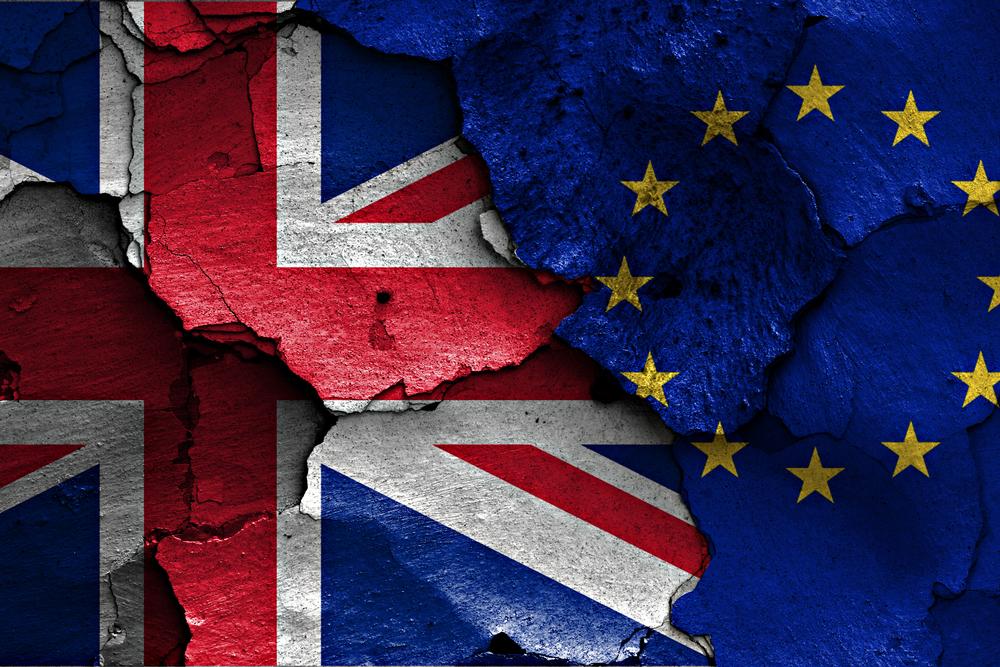
According to today’s ORB poll for the Telegraph, 49% of respondents would vote to leave the EU whilst 47% would prefer to remain part of the 28-member bloc. Whilst there is only a difference of 2%, it has highlighted the uncertainty of the up-coming referendum and has created concerns among David Cameron and others supporting the ‘stay’ campaign. Analysis of the survey by Sir Lynton Crosby shows that the results show greater support for the Brexit campaign due to greater motivation and enthusiasm. Crosby identified the potential problem with those in favour of staying within the EU: “The real risk for the Remain campaign is complacency. What is clear is that this campaign has a long way to run, and despite what voters currently believe, the outcome really is in the balance,” This was highlighted by the ORB poll, which showed that 76% of the ‘stay’ voters expected Britain to stay within the bloc, however a quarter of these were unlikely to vote. “It is obvious they have a preference for the UK to remain in the EU, but the outcome of the referendum is not currently important enough to them to motivate them to show up. This demonstrates the consequence of the outcome lacking personal relevance to them” said Crosby, who helped Cameron win an outright victory in last May’s national election. The survey also showed that the majority of respondents’ did not believe that their vote would make a difference, and expected that the UK would remain in the EU regardless.  
15/03/2016

Sainsbury’s announces growth in quarterly sales

Three days before its deadline to raise its offer for Argos-owner Home Retail, Sainsbury’s has announced it’s first increase in quarterly sales in more than two years. Sainsbury’s witnessed a 0.1% rise in sales in the nine weeks leading up to 12th March. This included an 11% rise in entertainment goods, helped by the sale of Adele’s latest album. This was a step-up from the 0.4% fall in sales over the Christmas period. The second largest supermarket’s growth is following its decision to cut-back on multi-buy promotions and lowered prices on everyday items in attempts to keep in competition with discount supermarkets such as Aldi and Lidl. Sainsbury’s chief executive, Mike Coupe, said: “We have traded well this year and are making excellent progress implementing our strategy. The market will remain competitive but we are confident that we will continue to outperform our major peers.” Sainsbury’s shares opened today at 279.90.
15/03/2016

Italy’s Campari to acquire Grand Marnier in €684m deal

0
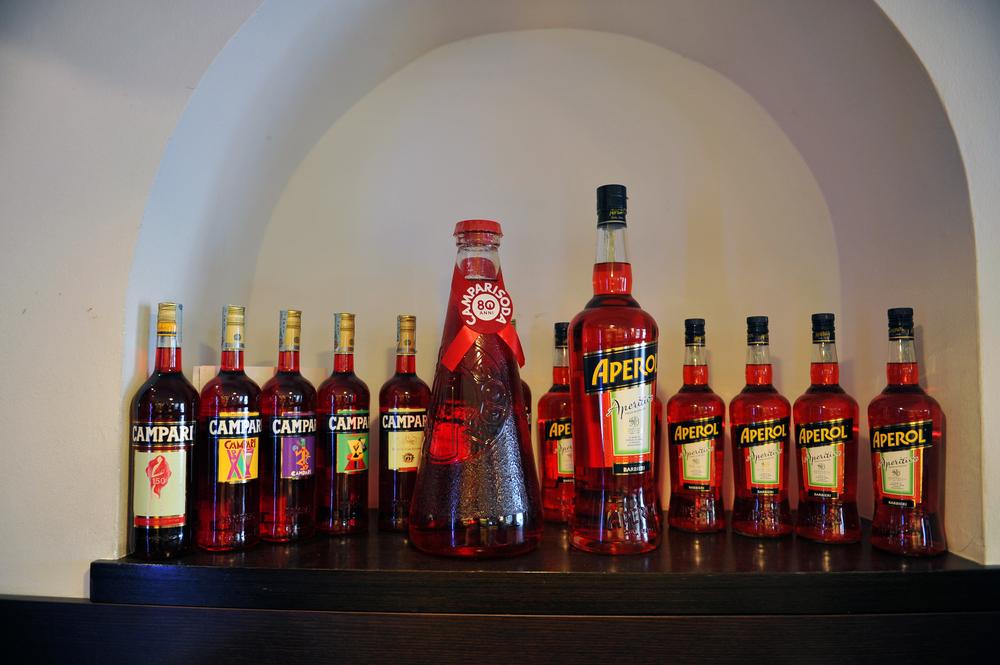
The world’s sixth largest spirits company, Campari (CPRI.MI) best known for its Spritz cocktail containing the orange aperitif Aperol, said today that it will buy Grand Marnier (GDMR.PA) for €684 dollars. Grand Marnier investors will receive €8.05 per share in cash a 60 percent premium to the stock value. Bob Kunze-Concewitz, Campari’s chief executive, has said that the deal was “a perfect fit with our external growth strategy. Grand Marnier strengthens our quest to further capitalise on the revival of classic cocktails, particularly in the US.” Shares in Campari rose 1 percent on Tuesday morning whilst shares in Grand Marnier were suspended from trading. Despite a spate of mergers and acquisitions in recent years, the global spirits industry remains to be relatively fragmented to beer.  

Dual nationality: an investor’s insurance blanket?

Investment into dual nationality programmes has increased over the past decade, with much of the trend attributable to international families wishing to protect their future and to be free from security threats. Europe, the Middle East, and Northern Africa have been vulnerable targets for terrorism, with the November 2015 Paris, Beirut, and Mali attacks serving as prime examples. Europe and the Middle East are also in the midst of one of history’s most dire refugee crises, with 6.5 million people displaced from war-torn Syria in 2014 alone. Dual nationality has become a security blanket for those who wish to protect themselves and their loved ones – and with the news continuously focusing on the immigration crisis and the threat of terror, it is no surprise that the concept of second citizenship has been adopted by more and more people across the globe. Many of those choosing this path value speed, especially where it is important that they shelter their families from harm. For this reason, the citizenship by investment programmes of the Caribbean. More specifically, the nations of Dominica, Grenada, and St Kitts and Nevis all process citizenship applications in three months, and are today’s most sought-after programmes. Citizenship by investment in these three nations may be obtained by either contributing to a national fund supporting the economic development of the islands, or by investing in government-approved real estate projects. For example, in the Federation of St Kitts and Nevis, which was the first-ever nation to establish citizenship by investment, applicants may make a contribution to the Sugar Industry Diversification Foundation (SIDF). The SIDF supports the country’s transition away from sugar farming, and spurs the creation of local jobs and economic growth. Alternatively, applicants may choose to invest in luxury real estate developments, including shares of 5-star world-class hotels. Similarly, in Dominica applicants may contribute to the Economic Diversification Fund (EDF), while in Grenada applicants may donate to the National Transformation Fund (NTF). Importantly for those who hold security close to their hearts, these Caribbean nations impose strict due diligence procedures on their applicants, ensuring that only individuals with clean histories are granted citizenship and the consequent right to reside on the islands. Dominica, for example, is renown for its transparent citizenship processes, and St Kitts and Nevis has recently implemented key changes to ensure strong applicant vetting and security checks. Grenada is the Caribbean’s safest island. For those global families concerned with political stability, these English-speaking Caribbean nations offer democratic rule, and a tested legal system entrenched in English common law. Furthermore, Dominica, Grenada, and St Kitts and Nevis are all part of the Commonwealth of Nations and Caribbean Community (CARICOM), enabling close and peaceful relations with the international community. Finally, with their advanced healthcare system, their business-friendly laws, their low tax regimes (including no tax on capital gains, inheritance or income from foreign earnings), their spectacular natural settings, and their year-round sunshine, Dominica, Grenada, and St Kitts and Nevis can all assure internal – as well as external – peace and tranquillity. In today’s volatile, global environment, the value of security cannot be underestimated.
Micha-Rose Emmett, CS Global 15/03/2016
This post is sponsored by CS Global. For more information, visit www.csglobalpartners.com

What to expect from George Osborne’s Budget 2016

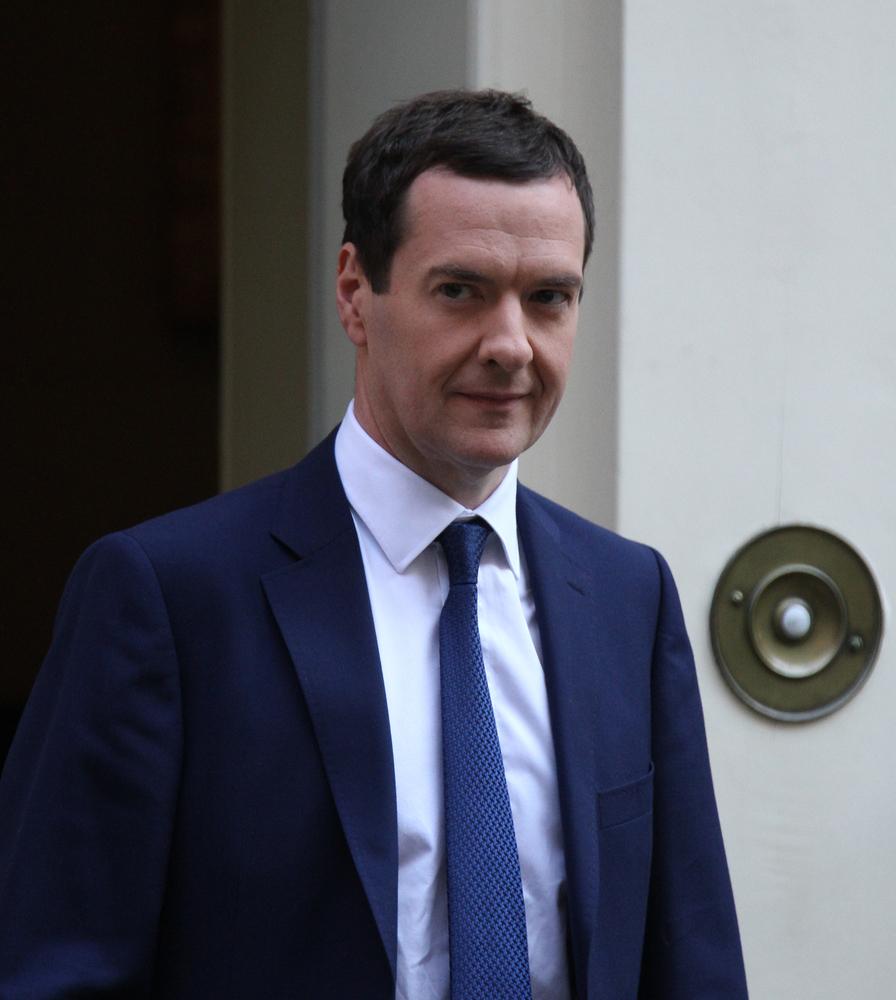
The Chancellor of the Exchequer is set to release 2016’s budget at 12.30pm on Wednesday 16th March, which will set out the governments future plans for the economy based the latest forecasts from the Office for Budget Responsibility. Osborne has previously hinted at possible outcomes of Wednesday’s budget, including promises to raise the personal allowance and introduce a new help-to-save-scheme. Along with this, the Chancellor of the Exchequer has also hinted towards some nastier surprises after saying there was a need to “act now to make sure we don’t pay later”. What is currently certain is the deterioration in public finances that will undoubtedly force the Treasury to make £4bn of savings by the end of the current parliament, something that Osborne has claimed to be “not a huge amount in the scheme of things”, a statement many Britons are likely to disagree with. Some of these reforms and cuts have already been announced by the government, which hugely affect the disability benefits – something that has been resisted by the Labour party and many disability charities. Labour has calculated that these reforms will result in 200,000 people losing the benefit all together and a further 40,000 receiving less money. What else are we likely to expect? Pensions In attempts to keep peace among backbench MPs, Osborne has already scrapped a package of pension reforms that would have reduced tax relief for higher earners however still hopes to makes some changes to pensions, with suspicions that he could end employers’ exemption from paying National Insurance on pension contributions, which costs the Treasury an estimated £13.8 billion a year. Petrol Prices The Chancellor is expected to increase fuel duty, despite backbenchers urging him against the move. This prediction is following figures in last year’s Treasury documents, which suggest that fuel duty is expected to continue to keep rising until 2010. Osborne also has not mentioned a fuel duty freeze, a topic he usually covers in his Autumn statement. The rise of fuel duty would inevitably lead to a backlash, with Richard Burnett, the chief executive of the Road Haulage Association, saying he would be “unbelievably disappointed” arguing it would amount to £450 or more per truck per year. Corporate Tax Avoidance

In attempts to recover his reputation, Osborne is likely to announce new measures to crack down of corporate tax avoidance. He is expected to cut tax relief for large corporations who shift debt to the UK to take advantage of HMRC’s generous tax credits system.

What can be safely predicted it that there will not be any changes that prove to be too controversial, so as not not distract from the government’s main focus at the moment, the EU referendum, set to be held on the 23rd June 2016.

Safiya Bashir - 15/03/2016
 

Morning Round-Up: Sainsbury’s growth, Fed stick on rates, poor European figures

0
Sainsbury’s posts sales growth Supermarket Sainsbury’s reported its first quarterly sales growth in over two years on Tuesday, another sign that British grocers are adjusting to the tough market. The group saw sales at stores open over a year rise by 0.1 percent in its fiscal fourth quarter, beating analysts expectations of a fall of 0.6 percent. An increase in sales is likely to help the supermarket’s bid for Argos owner Home Retail, a deal that has been in the running for some months. On Tuesday, Sainsbury’s chief executive Mike Coupe would not address press speculation that the group would make a higher offer for Home Retail, but added: “The Argos bid is not a must-do deal at any price and if it doesn’t go ahead then Sainsbury’s will continue,” Mr Coupe said. Federal Reserve unlikely to raise rates
The Federal Reserve will not be raising rates at their monthly meeting this week, as low oil prices and stock market volatility continues to have an effect. However, they are likely to make it clear that, as US inflation and jobs strengthen, rates will start rising again. At the beginning of this year, when the Fed raised rates for the first time in nearly a decade, they hinted that rates may be raised several times in 2016. It is now more likely that rate rises will be taken at a slower pace. France and Italy see slow economic growth Growth in the French economy will fall short of expectations in 206, according to the country’s central bank governor on Tuesday. Economists say 1.5 percent growth is the minimum needed to lower France’s persistently high unemployment rate, which remains above 10 percent. There was also disappointing news from elsewhere in Europe, as Italy reported that it fell back into deflation in February. Consumer prices fell by 0.2 percent, with inflation on a national basis fell by 0.5 percent.   15/03/2016
 

Oil falls 2 percent as Iran refuses to curb production

Oil prices fell by around 2% this on Tuesday morning, with Brent crude futures trading 77 cents down now at $38.76 per barrel and U.S. crude futures also down 77 cents trading at $36.41 a barrel. Concerns of the falling oil prices continue as Iran has put off plans to join the nations proposing a freeze on production, with the oil minister Bijan Zanganeh saying that Iran would only enter discussions after its production has hit 4 million barrels per day. Bijan Zanganesh said at the weekend: “I have already announced my view regarding the oil freeze and I’m saying now that as long as we have not reached four million in production, they should leave us alone. When we reach this level of production, we can then co-operate with them.” According to OPEC’s monthly oil report, Iran produced 3.1 million barrels in February. Analysts remain concerned with Iran’s reluctance to curb oil production. Oil prices have fallen 70% since prices were $115 a barrel in June 2014. In February, Saudi and Russia struck deals with OPEC to freeze production at January levels.

Daily Round-Up: Eurozone output up, oil down, Anbang in hotel deal

0

Eurozone industrial output into positive territory

Eurozone industrial output rose by 2.1 percent in January, after a sharp increase in production from Ireland pushed the figure up to its highest rate in over six years.

The 2.1 percent figure was well above the negative readings produced in both in November and December. Output was driven by a 12.7 percent increase in Irish industrial output, as well as strong growth in capital goods. However, analysts countered these figures with warnings that growth is unlikely to be sustained at this rate. Oil down on Iran dispute Oil prices fell around 3 percent on Monday, bringing prices down from last weeks highs after Iran said it would be unlikely to join in any production agreement in the near future. WTI Crude is currently trading at $38.50 per barrel, with Brent up slightly this afternoon at $40.39 (1556GMT). Chinese Anbang buys US hotels from Blackstone

Chinese insurer Anbang has agreed to buy Strategic Hotels & Resorts, the US luxury hotel chain that owns several Four Seasons resorts, for $6.5 billion.

Its current owners, equity giants Blackstone, are selling the group just three months after buying it themselves in a deal set to become the biggest US property purchase by a mainland Chinese buyer.

14/03/2016

Buy Rating: Defensive Stock to Provide Safe Haven in Brexit Uncertainity

Buy Note: FTSE 100 Safe Haven Defensive Stock

For those seeking safety in the run-up to this year’s ‘Brexit’ referendum and want stay clear of overvalued bonds and volatile gold, this may be the answer.

This stock can boast during the financial crisis it only fell 39% from peak to trough, whilst some of its peers plummeted more than 70%. The defensive characteristics of this share means it is likely to be steady throughout any Brexit concerns this year whilst paying a respectable dividend for income seekers.

Key Considerations:

  • Guidance for margin improvements in 2015

  • Consistent dividend increases

  • EPS increases of 8%

  • $4.6 revenue

Download this report now for free for a limited time.

A copy will be emailed to you immediately.

Copyright Fat Prophets® is a registered trade mark/trading name of Mint Financial (UK) Limited, which is authorised and regulated by the Financial Conduct Authority, Number 220591, registered in England and Wales, Number 04255908, with a registered office at 100 Fenchurch Street, London, EC3M 5JD. (www.fatprophets.co.uk)
DISCLAIMER The views and opinions expressed herein are for information purposes only. They are subject to change without notice, and do not take into account the specific investment objectives, financial situation or individual needs of any particular person. They should not be viewed as recommendations, independent research, or advice of any kind. The views accurately reflect the personal views of the author. They are not personal recommendations and should not be regarded as solicitations or offers to buy or sell any of the securities or instruments mentioned. The views are based on public information that we considers reliable but does not represent that the information contained herein is accurate or complete. With investment comes risk. The price and value of investments mentioned and income arising from them may fluctuate. Past performance is not an indicator of future results, and future returns are not guaranteed. We acknowledge an individual’s tax situation is unique and tax legislation may be subject to change in the future

UK growth forecast downgraded; public’s inflation expectation drops

The UK’s growth forecast has been downgraded today by the British Chambers of Commerce (BCC), who cited “global headwinds and uncertainty” facing the economy. The BCC now expects the UK’s economy to grow by 2.2 percent this year, a downwards revision from 2.5 percent. Its growth forecast for 2017 was cut to 2.3 percent, with growth of 2.4 percent forecast in 2018. However, services and consumer spending are expected to continue driving the UK economy. Public’s inflation expectations drop In other UK economic news, the British public’s expectation for inflation over the next 12 months fell to its lowest in more than 16 years, according to a survey released today by the Bank of England. Amongst the 4000 people polled last month, the average expectation for inflation sunk to 1.8 percent, down from 2 percent in November 2015.
11/03/2016