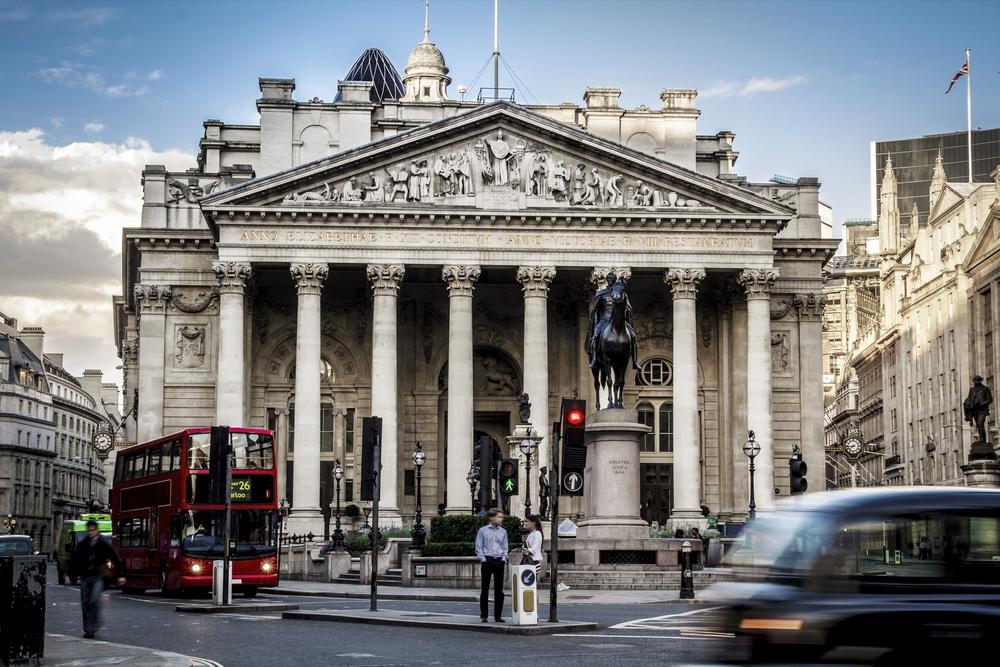
British banks pass stress test with flying colours

0

The Bank of England has once again subjected Britain’s major banks to ‘stress tests’, in order to ensure that financial institutions can withstand future economic crises, with the Royal Bank of Scotland and Standard Chartered showing the weakest results.

This is the second time the test has been conducted, this year involving oil falling to $38 a barrel and a slump in the global economy. No bank was ordered to come up with a new capital plan, but out of the seven banks tested, RBS and Standard Chartered were both found not to have enough capital strength. RBS chief financial officer Ewen Stevenson commented on the results: “We are pleased with the progress we have made relative to the 2014 stress test, but recognise we still have much to do to restore RBS to be a strong and resilient bank for our customers.” After the test, all banks were told they would have to set aside more capital as part of a new measure that the Bank of England is introducing, called a “countercyclical capital buffer”, with the extra cash allowing more room to absorb losses in the case of a future financial crash. Shares in the major banks have risen today on the results, with Lloyds Banking Group (LON:LLOY), Royal Bank of Scotland (LON:RBS) and Barclays (LON:BARC) in the top five risers on the FTSE 100, each rising more than 2 percent.  
01/12/2015

Construction firm ISG’s shares fall by nearly a third

Shares in construction services group ISG Plc (LON:ISG) have fallen nearly 30 percent this morning after a trading update showed disappointing losses for its UK construction arm. The company said in a statement: “We anticipate the results for the full year being in line with the Board’s expectations for all divisions except UK Construction. “Despite the many positive steps we have taken, we have continued to experience disappointing project outcomes on some older contracts. In addition, with margin and risk control remaining our priority rather than volume and some customers delaying the start on site of their projects, volumes this year will be below our expectations with profit deferred to later periods.” ISG announced that UK Construction will end up in the red this year, impact the Group’s finances by up to £5 million. However other parts of the company are performing well, with its total order book increasing by 12 percent to £1,130 million, and results on track to end the year with a net cash position in excess of £50 million, up nearly £12 million on 2014. ISG plc have a 52 week range of between 140 and 356, and are currently trading down 26.81 percent at 150.40 pence per share.

Asian shares shrug off weak PMI figures

0
Key economic indicators across Asia continue to show disappointing results, with the latest factory activity survey showing deterioration and little sign of recovery in November. China’s factory data sunk to a three-year low, as the the official purchasing managers’ index (PMI) fell to 49.6, down from the previous month’s reading of 49.8. These figures mark the fourth month of shrinking factory activity in the world’s second largest economy. A reading below the 50-mark on the PMI survey indicates contraction in the sector, while one above suggests growth. Recent figures also shown that South Korea’s exports fell by 4.7 percent from a year earlier, contracting for the 11th month. The figures come as speculation increases over the US rate rise, which is expected to be announced at the Federal Reserve’s December meeting later this month. There is hope that this may remove some of the uncertainty in currency and stock markets.However, Asian exporters will be hoping that the move benefits the US, and doesn’t risk damaging their economy and affecting demand for exports. However, Asian shares seemed to have shrugged off the news this morning, with the Shanghai Composite reversing early losses to rise 0.2 percent, with the Hang Seng index also up by 1.9 percent. Japan’s benchmark index closed up 1.3 percent, breaching the key psychological level of 20,000 for the first time in over three months.
01/12/2015
 

India’s economic growth picks up

0
According to the Statistics Ministry, India’s economic growth outpaced China’s in July-September, at 7.4%, compared to 7% in April-June. An acceleration that could persuade the country’s central bank at its Tuesday meeting to keep interest rates unchanged. Indranil Pan, the chief economist at Mumbai-based IDFC Bank, has said; “Growth is on a relatively stable path. There will be enablers to improve growth through consumption and low interest rates in the economy.” India managed to stride ahead due to its divergent economy and windfall gains from a plunge in commodity prices, whilst other emerging economies such as Russia and Brazil are struggling amid China’s slowdown. Whilst this data shows India to be the fastest growing economy in the world, it is still not enough for its large population. To create jobs for its population, India will require big investments and therefore a business friendly environment. However, economist Pan doesn’t think that growth will continue at this rate; “Growth is likely to moderate in the next few quarters as government expenditure was front-loaded, and it will get slower going ahead,”  

Nikkei purchases Financial Times for $1.3bn

Nikkei Inc., publisher of Japan’s leading business daily said on Monday that it will purchase the Financial Times in a $1.3 billion (£866 million) deal. The chairman,Tsuneo Kita, has said that the acquisition hopes to use data to win new clients and harness the British newspaper’s skill at getting subscribers to pay for content. Tsuneo Kita has said; “Our management objectives at Nikkei are global and digital – those are the two key words – and so for the future, in order to grow as global media and to further promote our digital media business, the best partner is definitely the FT,” Nikkei and the Financial Times together will now become the world’s largest business media group by number of subscribers, after purchasing all shares in the Financial Times Group following approval from from antitrust authorities in the U.S., the U.K. and other countries. Combined, the two newspapers have a circulation over double than The Wall Street Journal at approximately 2.97 million.  

Greece in need of debt relief in February 2016

0
The Greek finance minister Euclid Tsakalotos said on Monday that Greece aims to achieve a deal on debt relief in February with euro zone creditors to spur economic recovery and remove financial uncertainty. To the America-Hellenic Chamber of Commerce, Tsakalotos said; “If we don’t make the critical decision in let’s say February 2016, and we push the critical decision back to next summer or even 2017, then all the results will be delayed,” Once the first review of Greece’s third bailout programme has been deemed successful, Euro zone leaders have agreed to consider additional debt relief. The International Monetary Fund has said that Greece’s sovereign debt, which is projected to reach 187.8% of Greece’s 2016 GDP, is unsustainable and will need debt relief far beyond anything the euro zone has ever been willing to contemplate.

AB InBev to consider selling SABMiller’s Peroni and Grolsch brands

Amid worries of the combined entity having too much dominance over Europe’s beer market, AB InBev plans to sell the Peroni and Grolsch brands it would gain from SABMiller.

Although no deal has been confirmed, the Budweiser owner AB Miller may attempt to sell the brands to satisfy EU regulators, who usually get involved if a combined company has a market share of over 40%

Potential buyers have been named and include U.S.-based Molson Coors, Dutch group Heineken and Ireland’s C & C Group.

The deal, which involves two of the largest players in the industry, is expected to be completed in the second half of 2016 and will be the eighth-largest takeover of all time.

SABMiller and AB InBev are yet to confirm a deal.

Volkswagen to recall 2.46 million cars in Germany

Reported on Monday by German newspaper Die Welt, Volkswagen (VOWG_p.DE) will have to recall over 2.46 million cars that were rigged with the illegal emission software in Germany alone. Alexander Dobrindt, Germany’s transport minister, said; “The VW group must resolve the damage quickly. It cannot be that customers will be hit by the disadvantages… Weeks ago, we arranged a recall regarding all diesel vehicles, which will kick off in January 2016. We are dealing with the VW affair much more [in Germany] than, for example, in the United States.” The Volkswagen scandal, which was uncovered by the Environmental Protection Agency, has also had many consequences all over the globe, where in India, Volkswagen will have to recall up to 100,000 that falsify emission levels and fuel efficiency figures. South Korea are also fining the company $12.3 million and ordering thousands of cars to be recalled. Analysts have said the costs of fines, lawsuits and vehicle refits caused by VW’s rigging of diesel emissions tests could top 40 billion euros.

Oil price falls ahead of OPEC meeting

0
On Monday, oil prices took a dip, with declines as high as 10% due to a firmer US dollar making contracts more expensive for holders of other currencies and no signs of ease from the supply glut. Oil analyst at the London brokerage PVM Oil Associates, Tamas Varga, has said; “We are going to have some volatility this week as lots of market-moving events will take place,” This fall in oil prices comes just before an OPEC policy meeting on Dec. 4, where they shall discuss whether to adjust its production strategy. Whilst most analysts doubt OPEC will cut production, they are aware that Saudi Arabia could warm towards the idea of working with other oil producers on price support measures. This is following Ali bin Ibrahim Al-Naimi, Saudi Arabia’s oil and mineral minister stating that as they are one of the biggest exporters of oil, they are ready to work with others to help stabilize the market. Chief investment officer at Sydney’s Ayers Alliance, Jonathan Barratt, highlights Russia’s role as well as OPEC countries to control production, stating that it is important for “some sort of co-ordinated attempt to reduce production” between exporting countries. For January, Benchmark Brent was down 25 cents at $44.61 a barrel (0728 GMT). U.S. crude dropped 10 cents to $41.61.  

Refugee Crisis: What it means for Germany’s economy

Comparing refugees to swarms and cockroaches, the media has not acted kindly to those escaping poverty and war from Syria. Many, including Janet Daley from The Telegraph, believe that Europe cannot handle such an influx of migrants and that they will only add to “the pressures on their hospitals and GPs’ surgeries, and of shortages of housing and school places”. Despite so many popular discourses maintaining similar views, evidence emerging from Germany suggests anything but a strain on the economy. With Germany expected to receive up to 800,000 refugees and migrants by the end of 2015, many economists agree that this influx can only be good for the economy. This is largely due to the fact that Germany, like the UK, has an ageing population. With an average age of 44.5 years, the influx of young migrants are expected to turn around Germany’s precarious demographic situation and help pay the pensions of tomorrow, whilst filling the country’s workforce hole. As reported by the Independent, the high influx of refugees from Syria are expected to contribute to significant growth boost in Germany, with Deutsche Bank forecasting the country’s GDP to come in at 1.9% in 2016. Andrea Nahles, the German Labour minister, addressed sceptics saying; “We will profit from this, too, because we need immigration. The people who come to us as refugees should be welcomed as neighbours and colleagues.” This profit can be seen in a report, stating that those 6.6 million living in Germany in 2012 with a foreign passport paid an average $4,127 more in taxes and social security than they took in social benefits, leading to a surplus of 22 billion euros that year. However, it is important to recognise that this evidence might take years to be acknowledged by critics, with well-known German futurologist, Horst Opaschowski stating; “It will only be in the long run that Germany can prove the pessimists wrong — and the economists right.”  
Safiya Bashir on 30/11/2015