Richmond Hill Resources (LON: RHR) shares have risen 21.7% to 2.8p following yesterday’s £600,000 placing at 2.6p, which was at a premium to then then market price. A WRAP retail offer could raise up to £100,000 more and it closes at 4pm on 30 January. Richmond Hill Resources has entered an agreement to acquire the Martello gold project. An initial £100,000 cash payment is being made and 38.75 million shares issued at 2p each.
Great Western Mining (LON: GWMO) has announced assay results from a machine-cut channel sampling programme at the Defender tungsten project in Nevada. Channels A and B showed significant tungsten mineralisation. Silver mineralisation was found in Channel B. The share price recovered 12.2% to 1.75p.
Alien Metals (LON: UFO) says joint venture partner GreenTech Metals is accelerating the phase 1 drill programme at the Munni Munni platinum palladium copper nickel project. A second drill rig will be used. The share price increased 10.3% to 0.215p.
Oil and gas company Seascape Energy (LON: SEA) has upgraded the Keladi prospect. The competent persons report indicates 950bcf of net mean unrisked prospective resources on the Temaris block. Management believes Temaris and Tembakau could become a transformative gas hub for Peninsular Malaysia. The share price improved 11.5% to 77.5p.
FALLERS
Eqtec (LON: EQT) is raising £1.3m at 0.035p/share and this represents 36% of the enlarged share capital. A restructuring of £5.79m of debt will lead to £1.93m being converted into shares. The rest will be changed into £1.93m secured, zero-coupon debt and £1.93m. There is £166,000 of debt owed on the convertible facility with GIS. As part of its new strategy Eqtec is acquiring 99% of the Green Rock copper gold exploration project in Western Australia. It is paying $150,000 in cash and shares. The remaining 1% stake has a carry up to $350,000 and after that it will be lent cash by Eqtec to pay for its contribution with repayment out of future revenues. There is also an option over a 99% interest in the Peak Hills gold copper exploration project in Western Australia. The waste to energy activities will continue to be a core part of the group. The share price slid 27.8% to 0.065p.
Arkle Resources (LON: ARK) is paying £2.03m in cash and shares for an 85% interest in Namibia Uranium, which has four prospecting licences. A placing raised £1.7m at 0.4p/share. There is up to 4,000 metres of drilling planned. The licences are near to three major uranium deposits in Namibia. The share price decreased 14.3% to 0.45p.
Georgia-focused oil and gas producer Block Energy (LON: BLOE) has extended its $2m loan facility until 2 August 2027 on broadly the same terms. The share price fell 3.85% to 1.25p.
Mark and Diana Dixon have increased their stake in SkinBioTherapeutics (LON: SBTX) from 17.8% to 19.3%. The share price declined 3.53% to 20.5p.
Ex-dividends
BP Marsh (LON: BPM) is paying a dividend of 22.33p/share and the share price dipped 6p to 672p.
Gooch & Housego (LON: GHH) is paying a final dividend of 8.3p/share and the share price fell 4p to 704p.
Tracsis (LON: TRCS) is paying a final dividend of 1.4p/share and the share price declined 5p to 360p.
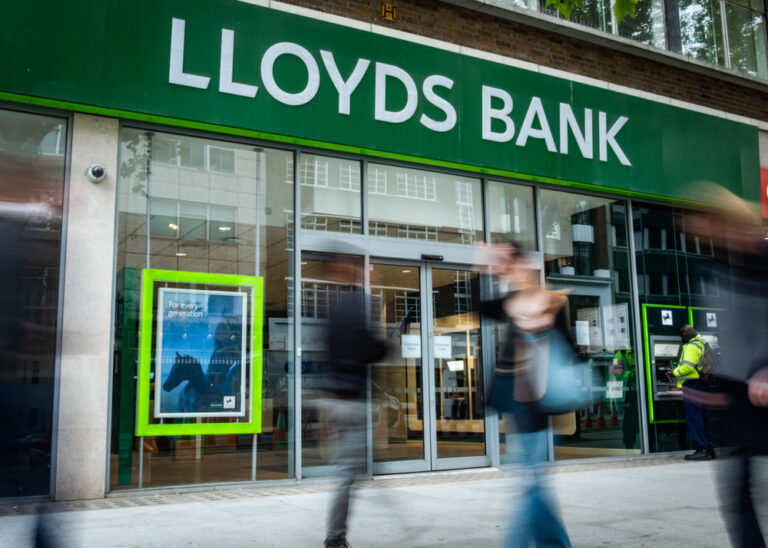
Lloyds kicked off the latest installment of FTSE 100 banking earnings with Q4 and full-year results that exceeded expectations and underscored the bank’s ability to take economic concerns in its stride.
Underlying pre-tax profit for the fourth quarter came in at £1.9bn, 9% higher than expectations, and full year underlying profit rose to £6.8bn, 7% than the prior year.
“Lloyds is galloping ahead of expectations this morning, delivering a clear profit beat against consensus and upgrading its guidance through 2026,” said Max Harper, Analyst at Third Bridge.
“The bank’s income diversification strategy looks increasingly promising; specifically, the acquisition of the remaining stake in Schroders Personal Wealth presents a significant opportunity to boost revenue through strategic cross-selling.”
Underlying net interest income rose 6% to £13.6 billion, supported by an improved banking net interest margin of 3.06%, up 11 basis points year-on-year. Other income climbed 9% to £6.1 billion, reflecting stronger customer activity and the benefit of strategic initiatives, including a focus on wealth and retail banking.
Strategic initiatives contributed £1.4 billion in annualised additional revenues, putting the business on track to exceed its revised 2026 target of approximately £2 billion.
LLoyds net interest margin expanded to 3.10% in the fourth quarter, whilst average interest-earning banking assets increased to £462.9 billion. The increase in net interest margins is extremely encouraging, given the falling base rate.
“Lloyds is quietly proving itself one of the smartest operators in UK banking, with fourth‑quarter profits coming in 9% ahead of expectations,” explained Matt Britzman, senior equity analyst, Hargreaves Lansdown.
“The market is still underestimating the resilience of its customer base, but the data tells a different story. Arrears remain low, early warning signs are calm, and impairments are once again impressively contained. It’s the sort of backdrop that shows a bank not just coping with stress, but gliding through it.
“Guidance for 2026 landed pretty much where the market expected, with Lloyd’s pencilling in a couple of rate cuts, low single‑digit house price gains and a touch of GDP growth. Together, guidance points to roughly £20.3 billion of top-line net income next year – a shade above consensus, and likely enough to nudge analyst numbers upward.”
Investors will be rewarded via a fresh £1.75bn buyback and 15% increase in the total dividend for the year.
Lloyds shares were fairly flat on Thursday, reflecting a strong run-up ahead of results.
Analysis for informational purposes only. Capital at risk.
Highlight
Alibaba’s Lead in the AI Agent Race: While Google is still trying to tackle the API walls created by a fragmented industry, Alibaba has already showcased its Qwen AI agent, which delivers seamless AI shopping across online retail, food delivery and travel.
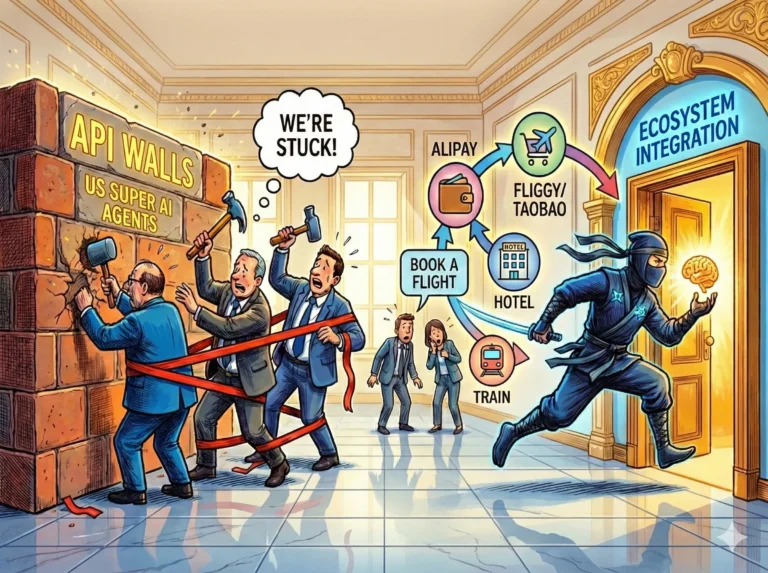
The “Silent Killer” Strategy: Qwen intercepts user intents such as booking flight or ordering bubble teas and routes transactions into Alibaba’s ecosystem, effectively disintermediating vertical rivals such as Meituan and Trip.com.
Strategic Trade Off: Alibaba is consciously willing to cannibalize ad revenue from merchants in order to recapture market shares. It prioritises growing user base over maximizing yield from marketing services.
Source: AP
Agentic AI – The Next Major Leap
Agentic AI, or “Super AI Agents,” is widely seen as the next major step in AI. These agents can execute real‑world tasks such as shopping, booking hotels and making payments from a single user command. The prevailing narrative is that AI agents will displace websites and apps, and users will simply ask and receive.
The “Brain Without Hands” Problem in the US
However, US attempts to build Super AI Agents have run into practical obstacles.
The “API Wall”: Major online verticals such as Amazon are concerned about being disintermediated and therefore limit direct API access to OpenAI, Google, and other third-party agents. Without authorized access, AI agents cannot integrate seamlessly with transactional systems.
The Optical Workaround: Some companies, including Microsoft and Anthropic, resort to “optical simulation”, which takes screenshots, interprets pages, and simulates user inputs. However, it is slower and more error-prone than human interaction, sensitive to UI changes, and prone to breaking on multi-step flows.
Google’s Universal Protocol: Google recently announced the Universal Commerce Protocol, or UCP, a standardized language intended to let AI agents communicate with merchants and platforms. The initiative has attracted support from partners including Shopify, Etsy, Wayfair, Target, and Walmart. However, Amazon has not joined the alliance, so there is still no single entry point for shoppers. Implementation timelines remain unclear, so UCP’s ability to enable seamless agent execution and payments is still unproven.
Alibaba’s “Walled City” Solution
On the other hand, Alibaba already showcased its Qwen AI Agent by leveraging its existing ecosystem. Qwen does not need to simulate mouse clicks. It integrates natively across Alibaba’s services.
Alibaba owns the payment (Alipay), the inventory (Fliggy, Taobao, Ele.me, and others), and the Map (Amap). Qwen operates via native API rather than optical simulation.
Source: AP
User case 1: Instant commerce—buying bubble tea
User prompt: “Order 40 cups of bubble tea from Bawang Chaji.”
Qwen action: Searches Taobao Instant Commerce, applies the best coupon, and generates an Alipay order.
User action: Confirms payment with one tap inside the chat. No app switching, no links.
User case 2: Business trip—flight booking
User prompt: “Book the first flight to Beijing tomorrow on Air China.”
Qwen action: Queries Fliggy inventory, auto-fills passenger ID from Alipay and completes the booking.
User action: Confirms with one tap.
User case 3: Movie night—ticket purchase
User prompt: “Two tickets for Avatar 3 at the nearest IMAX tonight.”
Qwen action: Geocodes location with Amap, filters IMAX screens, selects middle seats, and generates the order.
User action: Confirms with one tap.
With 400+ operational capabilities, Qwen has transitioned from a Large Language Model (LLM) to a Large Action Model (LAM).
Qwen can complete end‑to‑end transactions reliably and securely because it operates through APIs and unified account data. In addition, one‑tap flow reduces friction and keeps users inside Alibaba’s ecosystem, increasing monetisation potential.
Why the US Can’t Achieve This?
Key question: Why Amazon, Apple or Google not able to build a true Super App that executes end‑to‑end transactions via AI?
The Answer: A true “Super App” requires three key assets under one roof:
Brain — proprietary AI that understands intent and controls actions.
Wallet—a payment and settlement system that can complete transactions and handle post‑payment flows.
Inventory—direct access to goods and services (retail, travel, food, tickets, etc.).
Alibaba has all three. Its native API integration plus unified identity and payments allow it to complete end‑to‑end flows reliably.
Alibaba (The Benchmark)
The Trinity: Owns the AI (Qwen) + payment (Alipay) + Inventory (Fliggy/Taobao).
The Verdict: The Only “True Agent.” It commands the entire transaction loop.
In the US, the necessary assets are split across different companies with conflicting incentives, creating an API wall and preventing a single firm from becoming the de facto execution layer.
The practical result is that Alibaba can offer a one‑tap agentic experience today, while US agents remain constrained by fragmented ownership and commercial frictions.
Amazon — The shopping assistant
Strength: Owns retail inventory and has Amazon Pay.
Gap: Limited service inventory (travel, local on‑demand transport) and Amazon Pay behaves like a credit‑card wrapper rather than a unified settlement layer.
Limit: Great for buying commodities, but it struggles to fully automate multi‑step service transactions such as booking flights or hailing taxis.
Apple — The middleman
Strength: Tight integration across devices and a widely used wallet (Apple Pay).
Gap: No owned inventory; third‑party apps must opt in to deeper control.
Limit: Most partners provide only read‑level access to Siri for status queries, not write‑level access for booking or ordering, preserving their app traffic.
Google — The ad trap
Strength: Unmatched intent data from search and maps.
Gap: No owned inventory and a structural conflict with its core ad business.
Limit: If Google’s agent executes transactions directly, it risks cannibalising search ad revenue.
Source: AP
The “Silent Killer” of Vertical Apps
If Qwen becomes the new browser for China, who will lose? We believe vertical super apps such as Meituan (food and services) and Trip.com (travel) are at risk.
How disintermediation works
Intercept: Users no longer open vertical apps. They tell Qwen, “Book a hotel.”
Routing: Qwen resolves intent upstream and routes the transaction to Alibaba’s subsidiaries (Fliggy for travel, Ele.me for food).
Result: The vertical app never sees the user and is effectively disintermediated.
Source: AP
Margin Expansion for Alibaba
In our view, such disintermediation creates margin expansion opportunities for Alibaba.
Old model: Alibaba spent heavily on marketing and subsidies to acquire users, compressing margins in food delivery and quick commerce.
New model: If Qwen becomes the default entry point, traffic is generated organically within the ecosystem, lowering customer acquisition cost.
Impact: Lower customer acquisition cost (CAC) translates into meaningful margin improvement potential across Alibaba’s consumer businesses.
Source: The company, AP
The Regulatory Twist: While Alibaba suffered from China’s antitrust law several years ago, China’s Anti-Unfair Competition Law (Oct 2025), which tightens rules on illegal data crawling and scraping, effectively strengthens Alibaba’s competitive edge.
Kills the “Aggregator”: Third-party AIs cannot simply scrape Taobao or Fliggy to execute transactions.
Forces “Native Ownership”: Legal execution requires authorised access via APIs and permissions. As Alibaba owns the data and APIs, Qwen retains native execution rights by default, reinforcing Alibaba’s market position.
The Strategic Balance: Cannibalization vs. Conquest
Like Google, Alibaba faces a trade‑off between cannibalisation and conquest. Qwen can streamline discovery and execution so effectively that it risks displacing Alibaba’s own advertising and value‑added services for its merchants on Taobao and Tmall. If Qwen handles intent and fulfillment directly, its marketing services could see lower yield.
That said, Alibaba appears to accept short‑term yield dilution in pursuit of long‑term share conquest.
Upstream capture: Qwen acts as a universal interface that intercepts user intent before competitors such as Pinduoduo, Meituan and Trip.com.
Volume over yield: Capturing higher transaction volume, even at lower monetisation, can be more valuable than preserving high margins on a shrinking traffic base.
Lifecycle monetisation: Owning the end‑to‑end relationship increases opportunities to monetise across services (payments interchange, financial products, instant commerce, loyalty), partially offsetting lower ad yields.
Competitive defense: Gaining share today establishes barriers to rivals, creating a durable advantage over time.
Alibaba is prioritising ecosystem control and sustained user engagement over short‑term yield, betting that long‑term economic value from native transactions, payment flows, and cross-sell will exceed the lost yield.
Source: AP estimates
This article is a “periodical publication” for information only and is not investment advice or a solicitation to buy or sell securities. This article does not constitute a “personal recommendation” or “investment advice” under UK FCA regulations. Investing in equities involves significant risk. The author holds NO position in the securities mentioned. There is no warranty as to completeness or correctness. Please do your own due diligence or consult a licensed financial adviser. Please read the Full Disclaimer before acting on any information. Images created with the assistance of Gemini AI.
Oil prices rose on Thursday after Trump said a ‘massive armada’ was heading towards Iran as the US President increased pressure on the regime to agree a nuclear deal.
Brent crude prices were 1.7% higher at $69.61 at the time of writing. WTI rose 1.96% $64.45.
“US naval and air forces are building up in the Gulf as the US has ratcheted up threats on Iran,” Susannah Streeter, Chief Investment Strategist, Wealth Club said.
“President Trump has warned that the US is ready to act, if Tehran does not reach a nuclear agreement. Given that similar build ups were a precursor to the assault on Venezuela and the previous strikes on Iran, there’s an expectation that action is imminent.
“So, supply concerns are swirling given that such conflict would disrupt crude shipments from Iran and across the region, particularly if the Strait of Hormuz, a key route is made impassable. The benchmark Brent Crude has hit the highest level since September, flirting with $70 dollars a barrel.”
The building presence of the US military coincided with a draw in crude inventories yesterday, which together builds a picture of potential supply constraints that are likley support prices in the near term.
“From the supply perspective, according to the latest EIA report, U.S. commercial crude oil inventories declined by around 2.3 million barrels, a sharp reversal from the previous week’s build and well below market expectations,” explained Linh Tran, Market Analyst at XS.com.
“This development suggests that the short-term supply–demand balance has tightened, reflecting steady refinery demand and constrained barrels available to the market. In addition, winter storms in the U.S. disrupted part of domestic production, with temporary outages estimated at nearly 2 million barrels per day, equivalent to about 15% of total U.S. oil output, while also affecting logistics operations along the Gulf Coast. These factors have increased short-term supply risks and have been partially priced into oil markets.”
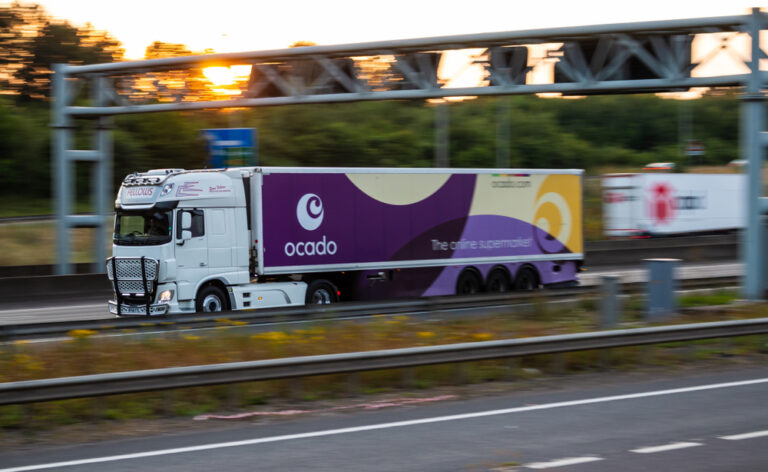
Ocado Group will lose £7 million in annual fee revenue following Sobeys’ decision to shut its Calgary customer fulfilment centre, the company announced today.
The closure stems from slower-than-expected growth in Alberta’s online grocery market, which failed to meet original projections for size and expansion pace.
In isolation, losing the Calgary centre isn’t the end of the world for Ocado, but it follows a string of closures by Kroger in the US that are becoming a concerning trend.
Ocado shares were down 9% at the time of writing.
Ocado will receive £18 million in compensation this financial year for the closure of the Alberta site. Despite the revenue hit in FY26 from the closure, the company still believes it can become cash flow positive during that period.
The Canadian grocer will continue operating Ocado-enabled facilities in the Greater Toronto and Montreal areas, serving Ontario and Quebec markets where e-commerce penetration shows stronger growth potential. Development of a Vancouver-area fulfilment centre remains paused, with the timeline under regular review.
Ocado is deploying new technology to the remaining sites, including its Swift Router functionality for same-day deliveries and integration with third-party platforms. Sobeys continues to use Ocado’s AI-powered in-store fulfilment software across 87 stores nationwide.
“Sobeys is an important partner to Ocado, and we have taken a pragmatic approach to refining the network and placing our partnership on the right footing to secure long-term, sustainable growth in the Canadian market,” said Tim Steiner, CEO of Ocado Group.
“This has meant addressing some key challenges from early network planning decisions, in particular where the market has not developed as anticipated. It has also led to agreement on deepening our partnership in key markets.”
“Online grocery in North America has continued to develop, and Ocado’s technology has evolved significantly since our first CFCs were launched in the region. The changes we have made in our relationships with both Sobeys and Kroger represent a reset of our North American business, placing those partnerships in the best position to secure long-term growth, while reopening a substantial market for Ocado’s much evolved technology.”
The Association of Investment Companies (AIC) was founded in 1932 to represent investment trusts – the oldest form of collective investment. Today, the AIC represents 350 investment companies, investment trusts, venture capital trusts (VCTs) and other closed-ended funds.
Managed by Neuberger Berman, a leading private markets investor, NBPE leverages the strength of Neuberger Berman’s platform, relationships, deal flow and expertise to access the most attractive investment opportunities, providing shareholders with access to a portfolio of direct investments diversified by manager, sector, geography and size.
HarbourVest Global Private Equity (HVPE) is a listed investment company that provides investors with access to private company investments. Listed on the Main Market of the London Stock Exchange, HVPE sits in the FTSE 250 and has a net assets of $4.2 billion and a market capitalisation of approximately £2.2 billion as at 31 October 2025.
The FTSE 100 was lower on Wednesday as traders dumped the dollar and the strength in the pound hit London’s cohort of overseas earners.
Although many strategists have poured cold water on the ‘Sell America’ trade, moves in the foreign exchange markets overnight suggest there is some merit in the approach as confidence in the US president wanes.
London’s leading index was down 0.4% at the time of writing on Wednesday as its inverse relationship with the pound kicked in amid a sell-off of the dollar.
“The pound is now at levels not seen since September 2021, touching $1.37 before falling back slightly,” explained Susannah Streeter, Chief Investment Strategist, Wealth Club.
“The sharp moves in currencies, with sterling strengthening are acting as a dampener on the FTSE 100. It puts pressure on the overseas earnings of listed multinationals, with pharma giants GSK and AstraZeneca, chemicals company Croda, and fashion house Burberry among the fallers in early trade.”
GSK was the FTSE 100’s top faller, losing 2.6%, while AstraZeneca shed 2%. As two of the largest FTSE 100 constituents, the weakness here was more than enough to overshadow minor strength in precious metals miners and UK-centric retailers.
There were also losses for Experian, HSBC, and Airtel Africa – all of which have substantial overseas earnings.
The FTSE 100’s drop was at odds with a continuing rally for US equities, where stronger tech stocks helped the S&P 500 to within touching distance of 7,000.
A good session for US tech yesterday helped the Polar Capital Technology Trust 1.8% higher on Wednesday.
One would expect the rest of the European and US sessions to be choppy as investors prepare for the US interest rate decision later tonight. Rates are expected to be held.
A fresh record for gold helped Endeavour Mining to the top of the leaderboard once more, with gains of 3%. Fresnillo was slightly lower after releasing its Q4 production report. Silver production was higher quarter-on-quarter, but was lower than the same period a year ago. But the main story here is higher precious metals prices, and any fluctuations in production are a sideshow.
“Fresnillo can hardly be accused of exaggeration in its coy reference to a ‘supportive metals price environment’,” said Chris Beauchamp, Chief Market Analyst UK at IG.
“This is a modest way of referring to price surge not seen in over a decade, one that stands poised to deliver significant profit increases. Indeed, it was the sole reference to price in the entire update, which showed that the group’s production remains on track. While the shares stumbled yesterday, the price is still up by more than a fifth in January, with new record highs for both it and silver seemingly just a matter of time.”
British Land shares were flat after news of its offer for Life Science REIT broke. Given the depressed valuations of the UK-focused property sector, analysts are questioning whether it could be the next to enjoy a rerating.
“The big banks used to trade at discounts to net asset, or book, value per share and so did many of the leading London-listed gold miners. Their share prices have all rocketed, so it will be interesting to see if investors turn their attention to another sector where valuations look very depressed, namely real estate,” said AJ Bell investment director Russ Mould.
“Many of the leading names trade at discounts to book value and trade buyers are paying attention, as British Land’s cash-and-stock offer to take over Life Science REIT is the latest in a series of deals in the sector.”
Sancus Lending (LON: LEND) shares jumped 362.5% to 1.8p on an unexpectedly strong trading performance in 2025. The finance provider increased revenues by one-third to £22.1m and a 2025 pre-tax profit of more than £1m is estimated, although that includes gains of £2.6m from repurchasing ZDPs. New lending facilities nearly doubled to £212m and total loans were one-third higher at £317m.
Late on Tuesday, Mind Gym (LON: MIND) admitted that it is in discussions with third parties as part of a strategic review that could lead to a bid for the education and training company. The share price rebounded 20.8% to 14.5p.
Medical technology developer Inspiration Healthcare (LON: IHC) says US subsidiary Airon has secured a three-year purchasing agreement with a US healthcare provider. The initial order is 150 critical care ventilators and then there will be consumables and services revenues. This is part of a strategy to grow in the US. The share price increased 13% to 15.25p.
Spirits brands owner Distil (LON: DIS) is appointing Philip Naughton as a non-executive director at the beginning of February. He has experience in finance and compliance and believes he can help Distil to scale its business. The share price rose 8.7% to 0.125p.
FALLERS
Rail infrastructure inspection technology services provider Cordel (LON: CRDL) was hit by delays in the first half. Interim revenues fell from £2.28m to £1.73m and the loss increased. Cash was £1.02m at the end of 2025. Cordel has been winning contracts, but the spending did not occur in the first half. Opportunities are increasing and management believes that business will come through in the six months to June 2026. Edison still expects full year revenues to improve from £4.8m to £6.2m enabling breakeven. However, the market is cautious, and the share price dived 24% to 4.75p.
Great Western Mining (LON: GWMO) has revealed the results of the geographical survey and the assay results of a drilling programme at Rhyolite Dome, which is part of the Olympic gold project in Nevada. The survey identified a deeper untested chargeable feature at more than 300 metres in depth. The drilling found low grade gold and more significant silver mineralisation. The geological model will be refined. The share price declined 14.7% to 1.45p.
Rosslyn Data Technologies (LON: RDT) edged up interim revenues from £1.4m to £1.5m and improved gross margins. Higher overheads meant that the pre-tax loss was flat at £1.48m. The cash burn rate is being reduced from £175,000/month to £110,000/month, which should reduce the full year loss. Cash was £684,000 at the end of October 2025, which may mean more cash will be required before the software company becomes cash generative next year. There have been delays to securing contracts. The share price slipped 11.4% to 3.1p.
CT Automotive (LON: CTA) finance director Dalman Mohammed has resigned. The board expects the automotive interiors company to report revenues in line with expectations and net debt of $7.7m. The share price fell 15.5% to 24.5p.