

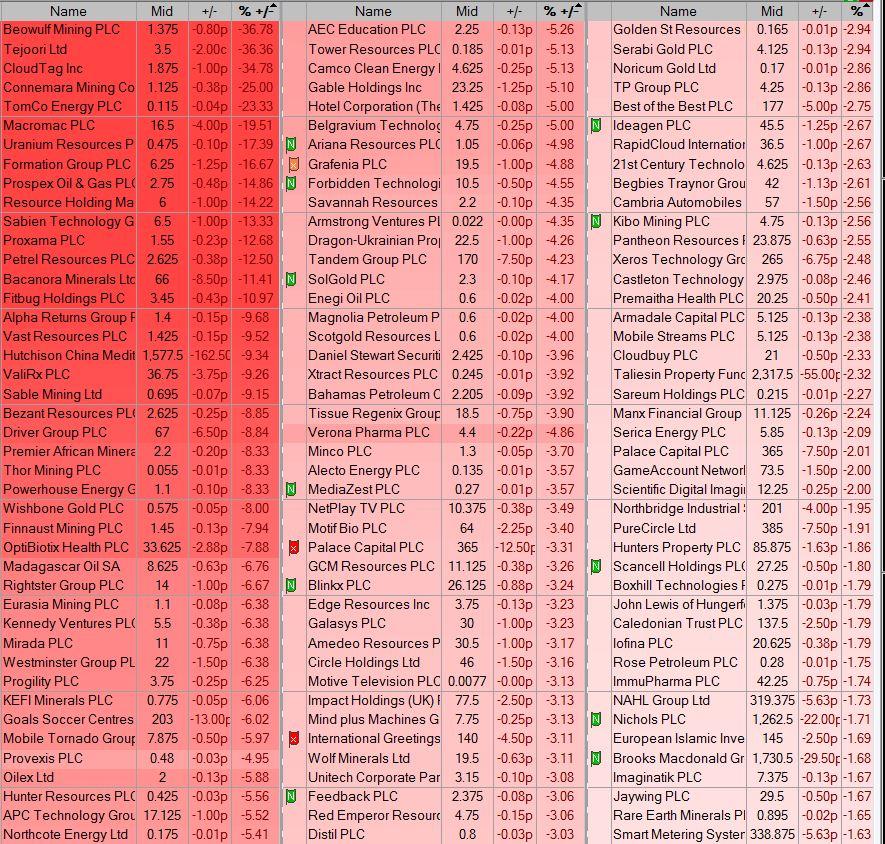
Aquis weekly movers: Chris Akers increases Asimilar stake

Chris Akers continues to build up his stake in Asimilar Group (LON: ASLR) and it has reached 8.01%. The share price improved 28.6% to 3.375p, the high for the year but well below the 8p it was in November.
Marula Mining (LON: MARU) says that initial deliveries of 1,000 tonnes of high-grade lithium ore from the Blesberg mine will commence shortly and take four weeks. Processing of existing stockpiles is ongoing, while site infrastructure is upgraded. The share price is up by 11.2% to 6.45p.
Invinity Energy Systems (LON: IES) says existing contracts underpin growth in in 2023. There are £22m of vanadium flow battery systems due for delivery in 2023 and a further £7.4m order book for 2024. There was £5.1m of cash in the bank at the end of 2022. Pilot projects with Siemens Gamesa should begin in the summer and a next generation product should be available in the first half of 2024. The share price is 10.3% ahead at 43p.
The Tap Global (LON: TAP) share price continues to rise following its reversal into Quetzal Capital earlier in the month. It is 7.14% higher at 5.25p.
Aquis Stock Exchange owner Aquis Exchange (LON: AQX) says 2022 trading was in line with expectations. The 2022 results will be published on 30 March. The share price moved ahead by 5.41% to 390p.
==========
Fallers
There were significant levels of trading in the shares of ProBiotix Health (LON: PBX) and they were predominantly sells early in the week. The share price stabilised near to the end of the week, but was still down by two-fifths to 10.5p. The March 2022 placing price was 21p.
AQRU (LON: AQRU) has launched its lending pool via subsidiary Accru Finance. This allows investors to generate yield from tax credit receivables originating from the IRS in the US. Annual returns of up to 10% are indicated. The share price dipped by 9.8% to 0.46p.
Good Energy (LON: GOOD) was one of three energy suppliers criticised for not providing enough help to their prepayment customers to claim the £400 of support vouchers from the government. The share price slipped 8.7% to 157.5p.
Electric vehicle drivetrain technology developer Equipmake Holdings (LON: EQIP) has raised £6.235m at 5p a share. That was slightly more than initially indicated. A lease is being secured on additional premises. The contracted order book is worth £8.6m. Interim revenues were £1.05m and the full results will be announced on 15 February. The share price fell 6% to 5.875p.
Cadence Minerals (LON: KDNC) has completed the sale of its joint venture interest in Yangibana rare earths project for A$9m of shares in ASX-listed Hastings, which is equivalent to 1.9%. Evergreen Lithium is expected to list on the ASX on 10 March – Cadence Minerals owns 15.8 million shares, which are expected to be valued at A$3.96m. The share price dived by 5.28% to 15.25p.
A full year update from Chapel Down Group (LON: CDGP) shows string growth in sparkling wine sales. Group revenues were 10% ahead at £15.6m with momentum increasing in the second half. Margins should have improved. The share price was 1.32% lower at 37.5p.
AIM weekly movers: Inspecs share price recovery
There were relatively significant trading volumes in investment company Craven House Capital (LON: CRV) in the last three days of the week. There had been hardly any trading in the rest of January. There were seven trades last week totalling just over 39,000 shares worth around $7,300. The AGM was held on Friday and all the resolutions were passed. The share price jumped 268% to 35 cents a share.
A slightly better than expected outcome for spectacles supplier Inspecs (LON: SPEC) was enough to push the share price 74.4% higher to 102p. This is the highest the share price has been since the profit warning in October. The figures are still much worse than expected prior to that warning due to destocking and poorly performing businesses. Sales were flat at $246m, although there was growth before currency movements. Pre-tax profit is set to more than halve from $17.9m to $7.7m.
The CPP Group (LON: CPP) share price held onto most of its gains even though on Tuesday afternoon the company put out a statement saying it did not know why it had risen. The share price reached 234p during the week and ended 65.9% higher at 182.5p.
Battery technology developer Ilika (LON: IKA) has been awarded a UK government grant of £2.8m for taking a leading role on a 24-month Faraday Battery Challenge in collaboration with BMW and Williams. This will further the development of Ilika’s Goliath battery, which is designed to be cost-effective and recyclable. There were no surprises in the interims earlier in the week. In the six months to October 2022, revenues improved from £179,000 to £204,000, which all came from UK grants. Net cash outflow from operating activities increased from £2.19m to £3.84m. Net cash is £17.8m. The Stereax M300 miniature battery should be launched by the summer. The share price increased by 48.1% to 60p.
Shares in Fiinu (LON: BANK), which offers the Plugin overdraft to individuals with accounts with other banks, perked up after the latest trading statement. They were 36.4% ahead at 13.5p, which is still lower than when the reversal into the shell happened last July. The full year figures will be published in late April. The core banking platform configuration and testing have been completed. Testing of the service is continuing. There is £35m-£40m required to fund the bank and a staged fundraising will commence before Easter.
==========
Fallers
Following the departure of the recently appointed chief executive Inland Homes (LON: INL) has sold its greenfield strategic land portfolio. There was a £3.5m profit on the sale that raised £9.5m in cash. There will also be fees generated for assisting the purchaser. Despite the disposal, net debt has risen to £100m and trading conditions have deteriorated. The 2021-22 loss is expected to be £91m and NAV has fallen to 40p a share. The share price slumped 44.4% to 9.8p, reflecting concerns about the debt.
Plexus Holdings (LON: POS) lost some of the share price gain from the previous week falling 34.9% to 2.7p. Trading volumes continued to be relatively high.
Credit provider Morses Club (LON: MCL) fell back following a sharp recovery at the end of the previous week and the shares ended 34.3% lower at 0.69p. In the previous week, JO Hambro sold its shareholding of 8.8 million shares and Pendal Group sold its 5.16% stake.
Supercapacitors manufacturer CAP-XX (LON: CPX) shares declined by one-third to 2.95p after it reported interim revenues that were one-third lower at A$1.6m. A full year loss of A$1m is expected.
Beowulf Mining (LON: BEM) is raising up to £9.1m to finance the development of the Kallak iron mine. This includes a £2.1m PrimaryBid offer at 2.06p a share, compared with a market price of 3p, down by one-quarter on the week. The cash will fund a pre-feasibility study and resource drilling, as well as reducing debt.
FTSE 100 steady as Sainsbury’s jumps on stake purchase
The FTSE 100 was muted on Friday after a week of company updates and economic data saw London’s leading index range bound.
The FTSE 100 was trading down 6 points at the time of writing, after spending much of the mornings session in positive territory.
“Despite a good showing on Wall Street last night thanks to better-than-expected US GDP figures, Friday was a damp squib for European stocks, with little change on the main indices,” said Russ Mould, investment director at AJ Bell.
Sainsbury’s
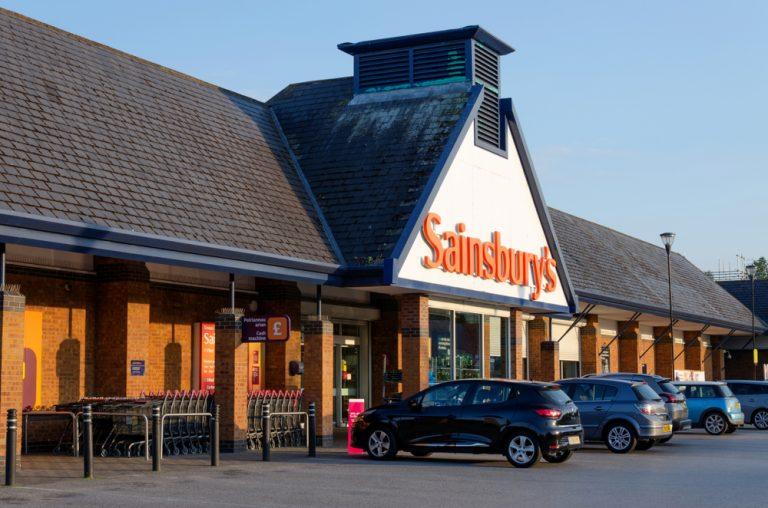
Despite the FTSE 100 bereft of direction on Friday, investors were surprised with the approximate £200m purchase of Sainsbury’s shares by wholesaler Bestway.
Merger and acquisition news has been thin on the ground of late and hints the Uk supermarket were once more catching the attention of potential suitors saw Sainsbury’s shares rise, taking Tesco with them.
Sainsbury’s shares were 4% higher while Tesco gained 0.8%.
“Bestway’s purchase of a stake in Sainsbury’s has come out of the blue. While Bestway says it doesn’t intend to make a bid now, there is logic in putting the two companies together, with echoes of how Tesco thrived from buying Bookers,” said Russ Mould.
“As the UK’s largest independent cash and carry business, Bestway’s strategy is to be seen as a place where retailers, caterers and cafes can obtain all the stock they need at a good price.”
“If Sainsbury’s was part of the same group, both sides could benefit. In theory, Bestway could tap into the supermarket’s buying power and obtain stock at a lower price, thus making its proposition more appealing for its customers. Sainsbury’s could expand its reach and have good access to a broader customer base including foodservice and pet shops, while also being able to compete better against Tesco.”
Morrisons was acquired by US private equity in recent years after a bitter takeover battle and speculation about interest in the UK’s other major supermarkets raises its head periodically.
There is not yet any evidence Bestway’s intention is to attempt a full takeover of Sainsbury’s.
Elsewhere, oil majors BP and Shell were supporting the index as oil prices rose and UK-focused stocks put in a respectable performance.
Housebuilders were stronger, as were the UK banks, ahead of the Bank of England’s rate decision next week. Although the BoE is set to raise rates next week, there is a school of thought the UK’s central bank is nearing the end of their hiking cycle, and could even cut rates this year.
Cadence Minerals’ lithium portfolio bolstered by Evergreen IPO update
Cadence Minerals announced a significant development in their Evergreen Lithium investment this week as the Australia-focused lithium explorer files for admission to the ASX.
Evergreen Lithium’s step towards becoming a listed company further supports Cadence’s lithium portfolio which will consist of two listed lithium plays within months.
According to the listing documents filed with the ASX, Evergreen are seeking to raise A$7m at an issue price of A$0.25. The fundraise will value Evergreen Lithium at A$45.3m – Cadence’s 8.7% stake will be worth A$3.9m.
Evergreen Lithium’s flagship project is the Bynoe Lithium Project located near the Port of Darwin in the Northern Territory Australia.
The project is adjacent to Core Lithium’s Finnis project which hosts a JORC resource of 18.9mt at 1.32% Li2O. Core Lithium’s market cap is $2.06bn.
Given the proximity Core Lithium producing Finnis lithium project, the proposed A$45.3m valuation leaves plenty of room for upside in the value in Evergreen share price, should Evergreen’s Bynoe project hold anywhere near the same grade or size of lithium resource as Finnis.
The IPO will fund an exploration programme that will focus on the EL31774 tenement, the sole license within the Bynoe project.
Cadence could possibly benefit from further milestone payment made in shares should the exploration programme prove fruitful. If Evergreen’s Bynoe project is found to host a lithium JORC resource, Cadence will receive additional shares on a tiered basis, depending on the size of the resource. The milestone are a JORC resources of 4mt, 8mt and 12mt, at a grade of not less than 1.1% lithium oxide.
Of the individual parties in line to receive additional shares should the milestones be met, Cadence Minerals is set to receive the most shares.
Cadence Minerals Lithium portfolio
The Evergreen IPO will provide Cadence Mineral’s investors with clearer visibility of the valuation of their now substantial lithium portfolio, which also includes European Metals Holdings.
European Metals Holdings operates the Cinovec project in the Czech Republic which is thought to be Europe’s largest hard rock lithium deposit.
Cadence Minerals holds a 8.1% stake in £72m market capitalised European Metals Holdings.
At current valuations, Cadence’s stakes in European Metals Holdings and Evergreen combined are worth in the region of £8m.
Tekcapital demonstrates ability to create value ahead of MicroSalt IPO

This week, Tekcapital have further validated their strategy to develop university technology into businesses that have the potential to help a great number of people after their portfolio company MicroSalt achieved a $20m valuation.
Tekcapital has a 97% stake in MicroSalt and the latest valuation is well in excess of $7m valuation given to MicroSalt through a VC investment in mid-2022.
Tekcapital converted the outstanding convertible loan note in MicroSalt at $2.18 which now values MicroSalt at $20m.
Having appointed Zeus Capital as their AIM NOMAD in December, MicroSalt are gearing up for an IPO in 2023 which will unlock the value created in MicroSalt by Tekcapital.
MicroSalt’s technology reduces sodium in salt by 50% and can help the millions of people suffering from cardiovascular diseases.
There is a proven link between high sodium salt intake and cardiovascular disease which is responsible for the deaths of 17.9 million people each year.
MicroSalt’s products are now available in thousands of Kroger supermarkets in the United States and there is an understanding the company plans to launch their low-sodium salt shakers and crisps in additional markets.
Tekcapital portfolio
Should MicroSalt float this year, it will be the latest in a series of Tekcapital success stories that include Belluscura and Innovative Eyewear.
Tekcapital seek to provide a broader range of investors with access to technology companies at the early stage of their growth cycles through IPOs.
This is notably different approach to keeping companies private for longer and restricting the number of investors able to secure a stake in companies at the stages with potential for significant long term returns.
This has been demonstrated in Belluscura and the IPO at 45p in 2021. Belluscura subsequently provided early investors and IPO participants with share price highs above 130p, before falling back.
Tekcapital have also recently navigated challenging market conditions to secure growth capital for Innovative Eyewear through a NASDAQ listing in August 2022.
AIM movers: Sovereign Metals drilling release expected and Alpha Growth NAV decline
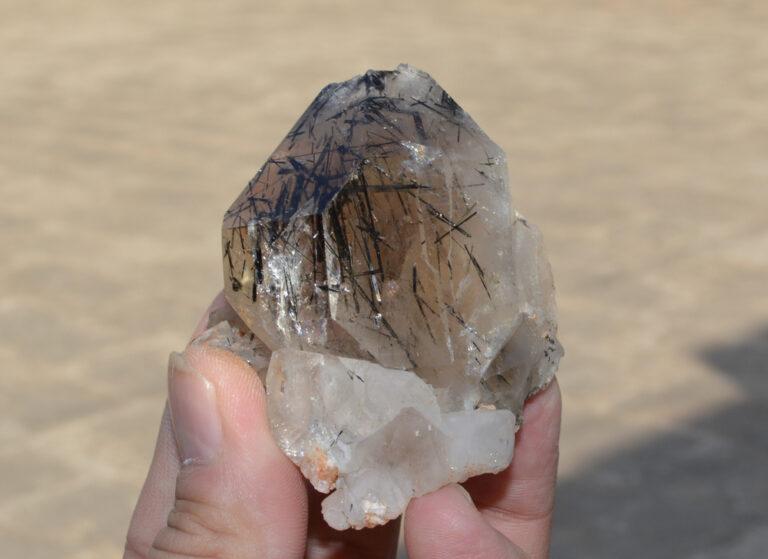
Trading in Sovereign Metals (LON: SVML) shares has been halted on the ASX, but on AIM there has been a 19.6% rise to 27.5p. There are plans to release infill drilling results at the Kasiya rutile project in Malawi. This is near to the Mkango Resources (LON: MKA) Songwe Hill rare earths project, which has received approval from the environmental authorities. Sovereign Metals is demerging its graphite interests.
Inspecs (LON: SPEC) shares continue to rise following yesterday’ positive trading statement. It is a 21.8% ahead at 114.5p. The share price is back to around the level it was before the previous profit warning.
Ironveld (LON: IRON) is entering into a joint venture with Pace SA to produce and sell Dense Media Separation grade magnetite from the company’s mine in Limpopo, South Africa. Pace will provide the initial cash investment of £1.65m for a 50% stake in the joint venture. First production is expected in the middle of 2023. The share price is 3.23% higher at 0.32p. This is the highest it has been for more than six months.
Investment company APQ Global (LON: APQ) reported net assets of 7.29p a share at the end of 2022, down from 981p a share at the end of November 2022. The share price fell 7.14% to 6.5p.
Faron Pharmaceuticals (LON: FARN) has raised €12m at €3.25 a share. Additional data from the study of Bexmarilimab as a treatment for haematological malignancies is encouraging and the cash will accelerate the development. The cash was also required to meet financial covenants. The share price improved by 6.62% to 317.5p.
Goldstone Resources (LON: GRL) issued a £2.4m convertible loan note and 60 million warrants exercisable at 4p each to Blue Gold International. The share price fell 5.19% to 3.65p. The conversion price is 3.25p a share. The cash will help to expand the Homase gold mine in Ghana. Blue Gold owns 90% of the Bogoso Prestea gold mine in Ghana.
Trading in Applied Graphite Materials (LON: AGM) shares will be suspended on 1 February due to the annual report not being published. The share price fell 6.5% to 5.75p.
Superdry – strong Christmas period retail sales but remaining cautious for this year
Boss Julian Dunkerton believes that his iconic Superdry (LON:SDRY) brand now has real momentum and he was delighted by how the group’s retail trading had continued to strengthen.
However, in the first half year, covering the 26 weeks to 29th October, the group was let down by the poor performance of its wholesale operations.
The interim results reported a 3.6% increase in group revenue to £287.2m (£277.2m) with the adjusted pre-tax loss coming out at £13.6m (£2.8m loss).
Including the nine weeks to end December the group saw stores revenues rising 14.3% to £117.7m as its customers returned to the high streets, with the group seeing strong demand for its womenswear, denim and jackets.
The wholesale side suffered from the lagged recovery after Covid combined with shipment timing.
The group is known globally for its distinct collections of affordable, premium quality clothing, accessories and footwear. There are 219 physical stores, around 450 franchisees and licensees, with the group selling in over countries across the world.
Boss Julian Dunkerton stated that:
“The Superdry brand has real momentum and I’m delighted by how our retail trading continues to strengthen. We’ve done this against a difficult macroeconomic backdrop by delivering well-designed, affordable, and responsibly sourced products which have resonated well with customers.
Our coats performed really well in the run up to Christmas, and womenswear continues to be a highlight for us. Stores continued to recover strongly and online had its biggest ever week over Black Friday, helped by our new ecommerce platform which is delivering real benefits.
Despite the underlying brand recovery, our profits in the first half fell short of expectations mainly due to the underperformance of Wholesale.
Whilst we did trade well through November and December, the outlook for the remainder of the year is uncertain and as a result, we are moderating our profit outlook to broadly breakeven. We don’t expect market conditions to become easier any time soon, but with a new financing package in place and the brand in great health, we approach the year ahead with optimism.”
Analyst Wayne Brown at Liberum Capital has reiterated his view that Superdry shares are cheap and offer significant long-term value.
For the year to end April 2023 he is estimating £604m (£610m) group revenues, with a £5.8m pre-tax loss (£21.9m profit), but with net debt falling by £20m to £198m.
The coming year sees Brown looking for £645m sales, £8.8m profits and earnings of 8.2p per share.
He has a Buy rating on its shares looking for 500p in due course.
FTSE 100 extends gains after the US grows more than expected
The FTSE 100 extended gains on Thursday afternoon after the United States grew more than expected in the 4th quarter and US tech stocks continued to rally. US GDP grew 2.9% on an annualised basis, compared to estimates of 2.6% growth.
US GDP figures released on Thursday provided the cue for investors to buy risk assets on hopes the damaging recession predicted last year may not come to pass.
After the release of US GDP today, attention will quickly shift to tomorrow’s instalment of US personal spending and housing data. These data points will influence the Federal Reserve’s next decision on interest rates due next month.
The FTSE 100 was gaining 0.3% at the time of writing.
Despite a raft of updates from UK companies, the focus has largely been on the United States this week and UK equities have broadly been ebbing and flowing in line with markets over the pond.
In addition to key economic data, the US tech sector has been a major factor driving sentiment as giants such as Microsoft and Tesla update investors.
Tesla beat earnings expectations overnight and jumped over 10% on Thursday as US trade began.
Diageo
FTSE 100 stalwart Diageo disappointed markets on Thursday and dragged on the index after the alcoholic drinks company said they saw weaker organic growth. Nonetheless, reported net sales in the six months ended 31st December grew 18.4% in a challenging environment.
“It’s glass half empty time for Diageo, which poured out some resilient results showing a surge in super-premium brand drinks, but disappointed in its outlook for the all-important American market,” said Susannah Streeter, senior investment and markets analyst, Hargreaves Lansdown.
“Shares fell as investors eyed up the lack of cheer ahead as Americans tighten their belts amid the downturn. Diageo has been benefiting from ongoing pandemic habits, when people turned to favourite pricier tipples, including the likes of Johnnie Walker and Tanqueray, for lockdown distraction.”
A sharp increase in net asset value (NAV) helped 3i Group shares rally 9% on Thursday. The private equity and infrastructure group enjoyed a 26.8% increase in NAV for the nine months to 31 December 2022.
Inspecs sees improvement and ex-dividends

Slightly higher than expected 2022 revenues and profit were enough to push spectacles supplier Inspecs (LON: SPEC) was enough to push the share price 36.8% higher at 85.5p. The figures are still much worse than expected six months ago due to destocking and poorly performing businesses. Sales were flat at $246m, although there was growth before currency movements. Pre-tax profit is set to more than halve from $17.9m to $7.7m. Trading is improving.
Healthcare data analysis provider Diaceutics (LON: DXRX) beat expectations with revenues 44% higher at £20m, helped by currency movements, and margins are being maintained despite inflationary pressures. Diaceutics has secured two agreements with top ten global pharma companies. The order book is worth £15.6m. Investment in data and technology is being increased. The share price jumped 20.9% to 95.5p.
Competitions organiser Best of the Best (LON: BOTB) reported interim revenues in line with expectations. Two midweek competitions have been consolidated, which will reduce revenues, but profit forecasts are maintained at £5.5m. New shareholder Globe Invest is in discussions with the company concerning potential international expansion. The share price is 15.9% higher at 475p – the highest it has been since July.
Bus operator Rotala (LON: ROL) is returning £10m to shareholders via a tender offer at 55p a share. The share price rose 17.1% to 48p. Eligible shareholder can tender 35.7% of their shares. Cash will be generated by the sale of the Bolton depot and bus fleet.
Battery technology developer Ilika (LON: IKA) will receive a UK grant of £2.8m for development of its Goliath battery and taking a leading role on a 24-month Faraday Battery Challenge collaboration with BMW and Williams. This is designed to develop cost-effective, recyclable batteries. The share price continued its improvement rising a further 15.3% to 56.5p.
Supercapacitors manufacturer CAP-XX (LON: CPX) is the worst performing company with a 29.1% decline to 3.175p after it reported that interim revenues were one-third lower at A$1.6m. A full year loss of A$1m is expected.
Window fittings manufacturer Titon (LON: TON) slipped into loss last year and it is set to continue to lose money this year. Software problems appear to have been sorted out and supply chain problems are easing. Revenues should start to grow again. The share price slipped 6.67% to 70p. Net cash is £1.7m and Titon is trading at discount to book value of well over two-fifths.
Animalcare (LON: ANCR) says 2022 revenues fell from £74m to £71.6m. Spending on pets has fallen from high levels during Covid lockdowns and distribution agreements ended. Net debt is £5.4m. The share price dipped 6.25% to 187.5p.
Mixer drinks supplier Fevertree Drinks (LON: FEVR) surprised the market with full year revenues 3% below expectations. This led to EBITDA guidance being cut to £36m- £42m. Taking the mid-point of the range that is a reduction of more than one-fifth on the previous consensus forecasts. Costs are continuing to rise, and profit could be flat in 2023. The share price fell 4.43% to 1067.5p, although it had been below 1000p at one point.
Ex-dividends
BP Marsh (LON: BPM) is paying an interim dividend of 1.39p a share and the share price is unchanged at 338p.
Brickability (LON: BRCK) is paying an interim dividend of 1.01p a share and the share price is down 1p to 64.5p.
Panther Securities (LON: PNS) is paying a dividend of 10p a share and the share price is unchanged at 315p.
RWS Holdings (LON: RWS) is paying a final dividend of 9.5p a share and the share price is 8.1p lower at 378.7p.
Solid State (LON: SOLI) is paying an interim dividend of 6.5p a share and the share price is unchanged at 1325p.
Tracsis (LON: TRCS) is paying a final dividend of 1.1p a share and the share price is unchanged at 981p.