Direct Line Insurance Group shares tumble on high inflation, share buyback programme suspended

0

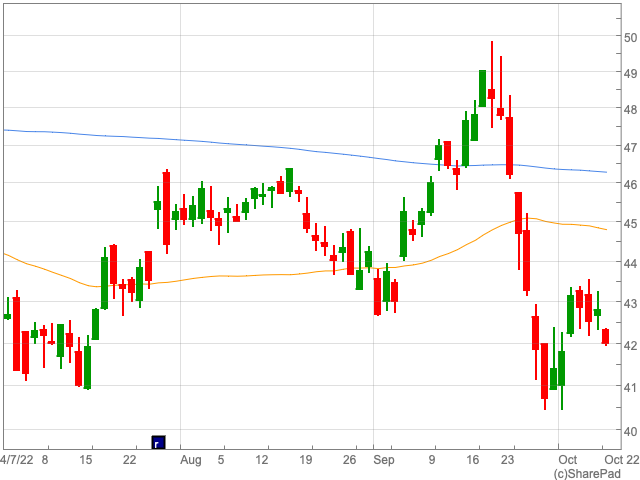
Direct Line Insurance Group shares tumbled 12.3% in early morning trading following volatile market conditions, leading to severe claims inflation above priced-in levels for the company at overall motor claims severity inflation of approximately 10% in the year-to-date.

The insurance firm commented its HY1 2022 current year motor loss ratio was expected to be in the region of 86%.

However, Direct Line said it expected its HY1 releases to remain in line with expectations as a result of its conservative reserving over 2021.

The company added its additional business units were performing in line with management expectations, with an overall expected combined operating ratio of 96.5% for the financial period, normalised for weather and gross written premium of approximately £1.5 billion.

The group said it had worked to restore margins in Q2 through increased prices to reflect higher than anticipated claims inflation.

It further mentioned its recently launched updated motor risk pricing model, which the company believes will improve risk selection.

Direct Line confirmed an expected FY 2022 operating ratio between 96% to 98%, normalised for weather.

The company added a projected operating costs reduction to £690 and £700 million, with a FY 2023 operating expenses target of around £670 million, representing an estimated reduction of £76 million from 2021 to 2023.

The firm also noted its continued target of a 20% expense ratio, however it confirmed the goal was currently unlikely to be reached due to a reduction in motor market average premiums as a result of structurally lower claims frequency.

Direct Line said it expected a combined operating ratio of 95% for FY 2023 and a return to target range of 93% to 95% over the medium term.

The insurance group reported an intention to pay out its dividend based on satisfactory its satisfactory balance sheet.

However, the company announced the cancellation of its second £50 million tranche of its £100 million share buyback programme launched earlier this year.

“Today’s trading update follows a period of heightened volatility across the UK motor insurance market, in which we have seen claims inflation in motor in the first half of 2022 spike above the levels assumed in our pricing. As a result, we are revising our combined operating ratio target range for 2022 to 96-98%,” said Direct Line CEO Penny James.

“We have already taken actions including increasing prices and deploying new pricing capability to restore margins, which mean we expect our 2023 combined operating ratio will improve to around 95% and we reiterate our medium-term target range of 93-95%.”

“This, combined with our diversified business model, our strong balance sheet and our continuing actions to further improve resilience, gives us confidence in the sustainability of our regular dividends for this year and as we look ahead.”

WPP acquires Latin American ecommerce group Corebiz

0

WPP shares were up 0.7% to 804.4p in early morning trading on Monday after the company announced its acquisition of Latin American ecommerce agency Corebiz for an unspecified amount.

WPP stated the acquisition would strengthen its digital commerce capabilities in South America as a part of the VMLY&R COMMERCE global network.

The agreement follows WPP’s recent purchase of Australian marketing firm Bower House Digital in a move to strengthen its marketing footprint across Australia and the Asia-Pacific region.

Corebiz reportedly specialises in VTEX implementation, and currently employs 600 people across Latin America, with most of its employees based in its São Paulo and Franca offices in Brazil.

The company’s Brazilian operations will join the VMLY&R COMMERCE global network, with additional regional outposts of the group coming onboard over the next year.

“Over the last few years, we have actively participated in the acceleration of the ecommerce market in Latin America,” said VMLY&R COMMERCE CEO Beth Ann Kaminkow.

“Now, our goal is to take this expertise to the rest of the world. This will only be enhanced by joining WPP and the VMLY&R COMMERCE network and we are excited to strengthen ecommerce enablement for VMLY&R COMMERCE’s global clients.”

WPP also mentioned Corebiz’s range of “industry leading” clients, including Casino Group, Carrefour, Walmart, Whirlpool, Estée Lauder and Decathlon.

Corebiz specialises in a selection of ecommerce solutions covering the three pillars of acquisition, such as creating visuals and maximising SEO, conversion, including full stack development, and loyalty, including managing consumer data and running targeted promotional campaigns.

https://twitter.com/WPP/status/1548913540618022912

WPP said the acquisition would reduce time-to-market for clients, reach audiences across a selection of channels and uncover new growth opportunities across the continent and beyond.

“Companies both in Latin America and around the world are looking to grow their ecommerce capabilities, having seen over the last two and half years the impact that strong digital commerce strategies can have on business growth,” said WPP Brazil manager Stefano Zunino.

“Corebiz’s market-leading knowledge of enterprise commerce platforms such as VTEX will further strengthen our commerce expertise. I look forward to welcoming the Corebiz team as we expand our offer to clients here in Brazil and beyond.”

Aquis weekly movers: Chapel Down stake buying

IPGL Ltd, which is associated with Chapel Down Group (LON: CDGP) non-exec Samantha Wren, has acquired 250,000 shares in the wine maker at 19.2795p each. The share price rose 18% to 22.9p, which means that it has recovered the previous decline during July.  

Cadence Minerals (LON: KDNC) chief executive Kiran Morzaria bought 100,558 shares at 9.9p each. This takes his stake to 1.43 million shares. The shares are 10% higher at 10.975p.

Hydrogen Utopia International (LON: HUI) has announced a proposed joint venture with Powerhouse Energy (LON: PHE) in Tipperary, Ireland. This will be a 50/50 joint venture and it will build a plant on a site leased by Trifol Resources. Negotiations concerning the site should be completed over the coming months. The share price recovered 7.69% to 5.25p.

Oscillate (LON: MUSH) non-exec Narisha Ragoonanthun has stepped down from the board. The share price rose 2.13% to 1.2p.

Arbuthnot Banking Group (LON: ARBB) is reporting interims on 19 July. The share price edged up 1.82% to 840p.

==========

Fallers

Invinity Energy Systems (LON: IES) executive director Jonathan Marren has acquired 44,101 shares in the battery storage technology developer at 45.35p a share. He owns 0.17% of the company. The share price fell 8.79% to 41.5p.

Reflexivity Research Ltd has increased its stake in KR1 (LON: KR1) from 7.6% to 20.3%. This relates to a performance fee of £30.1m. The share price fell 8.33% to 27.5p.

EPE Special Opportunities Ltd (LON: EO.P) had net assets of 283.05p a share at the end of June 2022. The share price declined 6.58% to 177.5p a share.

AQRU (LON: AQRU) has launched ByBrix in partnership with Blimp Technologies Inc. This new business is involved in the crypto-mortgage market. Blimp has expertise in embedding blockchain technology in the real estate market. There was a 1.82% dip in the share price to 1.35p.  

AIM weekly movers: CMO Group shares fall by nearly three-quarters from float price

1

CMO Group (LON: CMO) fell 54.8% to 35p, making it the worst performer of the week. Last year’s placing price was 132p. The online retailer of building products says revenues in the 27 weeks to June 2022 are 10% ahead, or 2% higher like-for-like. Full year guidance is that 2022 revenues will increase from £76.3m to at least £86m, but previously £95.5m was expected. The EBITDA estimate has been reduced from £5.55m to around last year’s level of £3.7m. Supply problems have increased costs and trading is getting tougher. CMO still appears to be winning market share. The shares are trading on less than 17 times prospective 2022 earnings.  

Fashion retailer Joules (LON: JOUL) shares declined every day last week and ended at 20.8p, down 37.3% to a new all-time low. Fears concerning the company’s financial position hit the share price, following reports about the appointment of KPMG as debt adviser. Joules is trying to manage its cash so that it gets through the seasonal borrowing peak. Net debt was £21.4m at the end of May 2022 and there was headroom of £11.3m. Chief executive Nick Jones is leaving the board and a successor is being sought.

Capital equipment manufacturer Mpac Group (LON: MPAC) warned that full year profit will be significantly below expectations. There was a small share price recovery at the end of the week, but it was still 36.2% lower at 242.5p. Interim revenues are better than last year, and the order book is higher. However, difficulties sourcing components and delays to the timing of orders have hampered progress. The longer lead times for components and inflationary pressures will continue for the rest of the year. There was cash of £14.5m at the end of 2021, which has enabled investment in inventories. The interims will be published on 8 September.

A £3.75m fundraising at 0.5p a share by EQTEC (LON: EQT) was not well received by the market and the share price fell 35.7% to 0.45p. EQTEC raised more than the minimum of £3m that it was seeking. The cash will fund wase to energy projects. These include a 9.9Mwe advanced gasification technology facility and 2MW anaerobic plant at Deeside. Black and Veatch has been appointed as engineering and construction consultant for part of the facility. EQTEC has to invest £2.3m to gain a 32% stake in the company owning the project. The completion data has been extended.

Fevertree Drinks (LON: FEVR) has lost more than two-thirds of its value this year and it declined 33.1% to 866.5p last week. The mixer drinks supplier says first half sales were 14% higher at £160.9m and full year revenues are still expected to be £355m-£365m. However, margins are under pressure from higher freight and glass costs, which have doubled. This means EBITDA guidance has been slashed from £63m-£66m to £37.5m-£45m.

==========

Fallers

Ncondezi Energy Ltd (LON: NCCL) has launched a feasibility study for its solar photovoltaic and battery energy storage system project in Tete, Mozambique. Initially, the share price more than doubled in early trading on the day of the announcement and it ended the week 50% higher at 1.275p. Pre-money NPV is estimated at between $60m and $65m.

Shares in Nanosynth Group (LON: NNN) continue to rise and were 41.5% higher on the week at 0.695p. Directors were buying shares at 0.6p a share each early in the week.

Shares in 88 Energy Ltd (LON: 88E) rose ahead of the quarterly figures and then lost some of the gains after they were published, ending 38.1% higher at 0.725p. The Australia-based oil and gas company had A$10.5m in the bank at the end of June 2022, although there was a cash outflow from operating activities.  

FTSE 100 gains despite Chinese economic slowdown

4

The FTSE 100 closed 1.5% higher at 7,151.2 on Friday as investors piled into defensive sectors providing reliable dividends.

“On the UK market, the FTSE 100 was propped up by oil, tobacco, pharmaceutical and banking stocks. All four of those sectors are known for generous dividends, suggesting that investors may be looking for safety in income stocks once again,” said AJ Bell financial analyst Danni Hewson.

British American Tobacco shares climbed 3.3% to 3,477.5p, Barclays increased 3.5% to 150.7p and NatWest rose 2.7% to 216.5p.

Meanwhile, AstraZeneca shares rose 2.6% to 11,060p, GSK gained 1.8% to 1,711.4p, Hikma increased 1.4% to 1,687.5p and Smith & Nephew climbed 2.3% to 1,153.5p.

Shell shares gained 3.3% to 2,000.5p and BP shares rose 3%% to 375p as the price of benchmark Brent Crude oil climbed above the $100 per barrel mark to $101 after its fall below the level earlier this week.

However, reports that China’s economy fell dramatically below analyst estimates in Q2 gave commodities groups reason for concern, as fears of falling demand in the largest global consumer sent investors scrambling.

Chinese GDP grew 0.4%, coming in far below expectations of 1.2% growth in previous economic forecasts as the country’s continued series of lockdowns sent economic activity plummeting as a result of the region’s “zero-Covid” policy.

Asian markets sank, with the Shanghai SSE falling 1.6% and the Hang Seng sliding 2.4% in Friday trading.

Rio Tinto warns of weakened economic outlook

Rio Tinto shares gained 0.2% to 4,579, rebounding from its slide earlier in trading after the mining company reported a weakened economic outlook partially due to reduced demand from China, with the news of China’s economic slowdown serving to confirm its fears and send shares falling.

“This doesn’t bode well as recession fears grow in many parts of the world, and it could fuel speculation that China’s commodities appetite may wane if economic activity is stalling,” said Hewson.

“It’s no coincidence that Rio Tinto has given a warning about China in its latest production update, flagging uncertainties for this important commodities market.”

Burberry sales stumble on Chinese lockdowns

Burberry shares tumbled 4.4% to 1,575.5p on a meagre 1% growth in sales over Q1 2023 against a 90% climb in Q1 2022 as a result of lockdowns in mainland China dragging its revenues down.

“Burberry’s first quarter performance has sorely disappointed the market, with concerns around lacklustre growth rates,” said Hargreaves Lansdown analyst Sophie Lund-Yates.

The fashion group reported a retail revenue of £505 million compared to £497 million the last year, and mentioned its £400 million share buyback scheme launched over the financial period, which is scheduled for completion by the end of FY 2023.

“Burberry said in its latest update that trading had been impacted by lockdowns in China,” said Hewson.

“While the country’s latest GDP figures included news that retail sales had picked up in June, there is a feeling that boost may only reflect pent-up demand from people who couldn’t get out during lockdowns, meaning the month’s sales recovery might be unsustainable.”

DP Poland LFL sales increase 23.5% in June, appoints new executive Nils Gornall

0

DP Poland shares rose 4.4% to 6% in late afternoon trading on Friday after the firm announced a like-for-like systems sales increase of 23.5% in June 2022 against June 2021.

The Dominos Pizza Polish arm reported a 55.8% growth in dine-in sales year-on-year, alongside a 9.6% delivery like-for-like system sales rise, despite a resurgence in dine-in sales on the back of easing Covid-19 restrictions.

DP Poland mentioned a total system sales climb of 20.5% in June against the same term the last year, and commented its June 2022 system sales were substantially ahead of pre-Covid levels.

The firm highlighted a like-for-like systems sales growth of 23.1% in June 2022 compared to June 2019, along with a total systems sales increase of 15.1% in the same term.

DP Poland noted a drop in cash to £800,000 at 30 June 2022 against £1.8 million at 31 December 2021, linked to CAPEX for two new store openings, the purchase of six new ovens, 30 new fuel scooters, 50 e-bikes and covering working capital requirements.

The eatery group also confirmed the continued reorganisation of All About Pizza following its proposed acquisition of the company announced on 15 June 2022.

DP Poland said it expected the reorganisation to complete ahead of its previously reported longstop date of 29 July 2022, and would release further updates in the near future.

“I am delighted to see the strong sales performance achieved in the first half of 2022 continuing which is a consequence of our hard work in prior months and investment in customer acquisition,” said DP Poland CEO Piotr Dzierżek.

New executive appointment

The company also welcomed new executive Nils Gornall, who has worked with Dominos Pizza as a store operator in Australia and is set to move to the group’s operations in Poland.

“I welcome Nils Gornall to the company and I am convinced that his outstanding track record, supported with guidance from Andrew Rennie, we can accelerate this growth to the benefit of our customers and shareholders,” said Dzierżek.

Gornall added: “I started my Domino’s career at the age of 15 and had the privilege of running 5 of the 10 best stores in Australia, one of the most successful Domino’s markets globally and the birthplace of Domino’s Pizza Enterprises.”

“My experience in Australia helped to build the success of our Croatian business and my goal is now to transfer those learnings to the Polish market.”

“I’ve now spent a number of weeks on the ground in Poland and I am excited by the opportunity for the Domino’s Pizza brand in the country.  I feel confident we will emulate the success of the brand in other markets.”

Fevertree shares tumble 26% after company downgrades annual EBITDA guidance

0

Fevertree shares tumbled 26.3% to 883p in early afternoon trading on Friday after the drinks company announced a revised FY 2023 EBITDA between £37.5 to £45 million, down from £63 million to £66 million.

The drinks producer reported a significant worsening of cost headwinds in the last few months, predominantly linked to freight and glass expenses.

“Markets have reacted badly to news that costs are significantly higher than expected. Issues getting inventory into the US mean the group’s been more exposed to soaring freight charges,” said Hargreaves Lansdown equity analyst Matt Britzman.

“At the same time, the cost of glass, which makes up 30% of the total cost base, has doubled. The result, a significant hit to gross margin and cash profit guidance for the full year.”

“We’d hoped that local bottling partnerships in the US would start to ease inventory pressures, but labour shortages have scuppered those plans, at least for now. That means, aside from soaring costs, Fevertree hasn’t been able to fully service the demand that clearly exists.”

Fevertree highlighted a HY1 revenue climb of 14% to £160.9 million, led by Europe but reflecting growth across all geographies.

The company said its bar and restaurant sales displayed signs of recovery, and noted a continued strength in consumer demand.

The group confirmed a revenue guidance between £355 to £365 million for FY 2023 on the basis of maintained customer sales.

“That brings us to the positive side, demand for Fevertree’s products is clearly there and that comes through in the stable revenue guidance,” said Britzman.

“The challenge from here is getting costs back under control, and that’s a hefty challenge.”

Five reasons to be optimistic about UK equities

There is a considerable level of doom and gloom in markets at the moment. Rising prices are increasing concerns around a cost of living crisis and central banks seem hellbent on increasing rates, just at a time economic indicators start to weaken.

However this is not all bad news for UK equities, and one may argue much of the negativity is already priced in. Here are five reasons to be positive about UK equities in the current environment.

1: Defensive Composition

The FTSE 100 is highly weighted towards defensive sectors that have so far held up fairly well during this year’s sell off. The FTSE 100 is down just 3.7% so far in 2022 whilst the S&P 500 has shed 20%. This is due to the FTSE 100’s weighting towards sectors such as pharmaceuticals, financials, and oil companies.

Oil major have benefitted from soaring energy prices and financial’s thrive in higher interest rate environments.

Energy prices and interest rates have caused severe volatility in some areas of the market, not so for the FTSE 100.

2: Central Bank Options

Central Bank action is largely responsible for the sell off in global equities this year. The selling was pronounced in US equities, in particular the tech sector that suffered as the Federal Reserve began rising rates.

The Bank of England has also raised rates, and will likely raise rates further. However, this is broadly priced into stocks now and we are actually in the favourable situation of central banks having plenty of room for manoeuvre to stimulate the economy, should we enter a recession.

If central banks continue to hike rates through the summer, they will be at the highest levels for well over a decade and will provide MPC and Fed voters with significant scope to ease monetary policy in the future, and markets love an easing of monetary policy.

3: Resilient Earnings

Investors will be looking forward to bumper updates from BP and Shell at the end of July which will likely provide support for the broader index.

The oil majors will of course be standout earners but the picture throughout the rest of the market isn’t as bad as one would think, given the backdrop of rising prices and softer growth.

For all the concern around Chinese growth, Burberry still managed to carve out a 1% increase in group sales in Q1 while comparable sales excluding mainland China rose 16%.

This resilience is not limited to FTSE 100 companies. For example, Topps Tiles provided a positive trading update for the 13-week period ended 2 July 2022.

“Despite the continuing headwinds from lower consumer confidence, supply chain challenges and high inflation, trading remained encouraging and in line with our expectations in the third quarter, with Group sales up 9.2%,” said Rob Parker, Topps Tiles CEO.

Hostelworld recently said revenue was at 104% of pre-pandemic levels while housebuilder Vistry said they were seeing “good demand across all areas of the business” and saw earnings at top end of forecasts.

Although these recent trading updates don’t provide a full picture of how costs are impacting profits, a strong top-line will support earnings.

4: Bumper UK Dividends

Should we see further volatility in UK shares, forcing investors to wait for capital appreciation from their portfolio, they will be handsomely rewarded for the wait through bumper dividends from UK companies.

“The FTSE 100 is now expected to yield 4.2% in 2022, thanks to the combination of share price falls and increases in dividend forecasts. The index’s total dividend pay-out is expected to reach £85 billion in 2022 excluding special dividends, up from £78.5 billion in 2021,” explains Russ Mould, investment director at AJ Bell.

“It means total payments could surpass 2018’s record, although the current expectation is that they come in just shy of the £85.2 billion record.”

5: There’s No Guarantee of Recession

Higher grocery prices, mortgage payments and fuel costs will curtail household spending power, but it doesn’t neccessarily guarantee a recession. Indeed, the UK economy grew 0.5% in May dispelling concerns we are currently in a recession.

Market commentators like to throw the word ‘recession’ around as it gets people attention. However, the reality is we are looking at a period a slowing growth, rather than sustained economic contraction.

AIM movers: Fevertree Drinks goes flat and Ncondezi Energy feasibility study for solar power plant

0

Fevertree Drinks (LON: FEVR) was already one of the worst performing large AIM companies this year before the latest 27.6% sump to 867.75p. The share price has fallen by two-thirds during 2022 and, because of its size, this is one of the major reasons why AIM has underperformed so hugely this year. The mixer drinks supplier says first half sales were 14% higher at £160.9m and full year revenues are still expected to be £355m-£365m. However, margins are under pressure from higher freight and glass costs. Glass is 30% of cost and its price has doubled. This means EBITDA guidance has been slashed from £63m-£66m to £37.5m-£45m. Chief executive and co-founder Tim Warrilow has bought 115,000 shares at 870.887p each. In September 2020, he exercised options and made a profit of £3.46m selling the shares at 2019p each. In the previous five years he sold £34.3m worth of shares – the majority at 1925p a share.

Ncondezi Energy Ltd (LON: NCCL) has launched a feasibility study for its solar photovoltaic and battery energy storage system project in Tete. Mozambique. The study will assess a solar photovoltaic power plant of up to 300MW and will take four months. Pre-money NPV is estimated at between $60m and $65m. The share price more than doubled in early trading and it is still 77.4% higher at 1.375p.

Positive analysis of blood and tissue samples from a study of TNF-alpha using Nuvec as a delivery mechanism has helped the N4 Pharma (LON: N4P) share price to add 14.9% to 2.7p. Nuvec is a delivery mechanism developed by N4 Pharma that drug companies can use to get the antigens they have developed into cells to express the required protein. The study shows that the treatment resulted in an increase in circulating plasma TNF-alpha levels. This helps to better understand how the mechanism works.

Novacyt (LON: NCYT) says that its exsig Covid-19 Direct Real-Time PCR test has been approved by the UK regulator. The test can be used with rival systems, as well as Novacyt systems. The share price is 8.53% higher at 117p.

Shares in Angle (LON: AGL) have fallen 12.6% to 81.75p following yesterday’s £20m fundraising at 80p a share. The cash will be used to take full advantage of the recent FDA approval for the use of its Parsortix diagnostic technology in harvesting breast cancer cells for analysis. Discussions are ongoing with medtech and pharma companies. The pharma services operation will be expanded, and laboratory developed tests launched. The liquid biopsy market could be worth up to $100bn in the US.

Allergy Therapeutics (LON: AGY) is down 6.85% to 17p following its full year trading statement. In the year to June 2022, revenues were £4.7m lower than forecast at £72.8m and cash was £4m lower than forecast at £20.5m. The phase III Grass MATAMPL trial and phase I VLP peanut allergy vaccine trial will start recruiting in the second half of 2022.  Debt will be required to finance the completion of these trials.

Chinese economic slowdown sparks recession fears

0

China’s economy saw a significant slowdown in Q2 2022, coming in significantly below expectations with a 0.4% growth compared to a 1.2% forecast and sparking recession fears across the globe.

The figures mark the country’s most devastating performance since Q1 2020, which saw China’s economy shrink 6.9% as the first wave of Covid-19 hit Wuhan.

Asian markets tumbled as the Shanghai SSE dipped 1.6% and the Hang Seng fell 2.4% in Friday’s trading session.

The Chinese economy suffered from continued lockdowns across its major production hubs as part of its “zero-Covid” policy, including Shenzhen, Beijing and Shanghai.

The lockdowns meant consumption and demand ground to a halt, sending ripple effects across the global markets as demand dried up for offerings from fashion to iron ore.

The reports signal potential trouble for global markets, as commodities companies, which the FTSE 100 remains anchored on, look set to suffer even lower commodities prices.

“China is one of Asia’s key growth powerhouses. We already knew that growth expectations were being pared back, but the latest GDP figure is the sort of pedestrian number one might expect from a developed Western nation,” said AJ Bell financial analyst Danni Hewson.

“This doesn’t bode well as recession fears grow in many parts of the world, and it could fuel speculation that China’s commodities appetite may wane if economic activity is stalling.”

Mining group Rio Tinto flagged concerns about its production linked to China’s slowdown, and mentioned a drop in consumption in China over Covid-19 lockdowns had served to send metals prices down.

“It’s no coincidence that Rio Tinto has given a warning about China in its latest production update, flagging uncertainties for this important commodities market,” said Hewson.

Meanwhile, high fashion retailer Burberry announced a dramatic slowdown in sales in its latest trading update, attributing its lower sales to lockdowns across its Chinese stores.

The news follows the impacts of Covid-19, the Ukraine war and rising inflation across the world’s biggest markets, with the Chinese economic data representing the latest recession alarm on the rising tide of economic concerns.