The Pound rose against the dollar on Wednesday morning after UK inflation fell below the double digits to 9.9% in August, following a 40-year record of 10.1% in July.
The Sterling rose to $1.1546 earlier in the morning and was trading at $1.1543 in late morning trading.
UK inflation fell primarily on lower petrol prices, which saw inflation at the pump drop to 32.1% from 43.7% month-on-month as petrol costs slid 14.3p per litre. Meanwhile, diesel prices declined by 11.3p per litre on an annual basis, compared to a 1.5p per litre rise the last year.
The Pound hit a 37-year low of $1.14070 last week after soaring energy prices threatened to plunge the UK into a cold winter recession. However, the energy price cap freeze introduced by Prime Minister Liz Truss last Thursday served to assuage the immediate fear of critical damage to households over the next several months.
UK inflation fell to 9.9% in August, returning below double-digits after hitting a 40-year record of 10.1% in July.
Falling petrol prices were the main driver behind the inflation slowdown, with the annual rate for motor fuels easing to 32.1% from 43.7%, as a result of petrol prices falling 14.3p per litre over the period.
Diesel prices also fell by 11.3p per litre over the year, against a 1.5p per litre rise a year previously.
“It’s way too early to say that inflation has peaked, but the dip below double figures is psychologically important for households getting ready for what they’re expecting to be a difficult winter,” said AJ Bell financial analyst Danni Hewson.
“Prices are still excruciatingly high but there have been falls in key goods, most notably the price of petrol.”
“A litre of unleaded fell by 14.3 pence over the month with diesel down by 11.3 pence, making the cost of filling up slightly more manageable for families and businesses.”
Food prices
However, food prices saw the largest spike month-on-month since 1995, increasing 13.1% year-on-year against a 12.7% surge in July.
The biggest contributors to the food price growth were milk, cheese and eggs, while the overall prices for food and non-alcoholic beverages rose across 2022, with the 1.5% climb between July and August marking the largest July to August rise since 1995.
“[Don’t] be fooled into thinking the cost-of-living crisis is over. Anyone who wheeled their trolly down supermarket aisles last month will know this,” said Hewson.
“Food prices rose by 13.1% over the year to August, and the jump month on month was the biggest since 1995. Milk, cheese and eggs were singled out by the office for national statistics – dietary staples people rely on and usually consider affordable options.”
Bank of England interest rates decision
The figure will likely boost hopes of a less severe cost of living crisis as winter draws nearer, however it remains to be seen how the Bank of England will react in its next interest rates decision.
“On the one hand, headline CPI inflation came in lower-than-expected, but the underlying core CPI measure remains stubbornly high, increasing the pressure on the Bank of England to raise interest rates by more than the 50bps expected by the Bloomberg consensus of economists when it meets on 22 September,” said Evelyn Partners chief investment strategist Daniel Casali.
Energy price cap freeze
However, the recent energy price cap freeze has helped assuage fears of soaring 20% inflation some analysts had estimated before the energy prices assistance.
“There’s no denying August’s fall is good news for UK households and there’s a real sense of expectation that the spectre of 20% inflation has been pushed firmly aside following the government’s energy price freeze announcement, but there is still a real possibility that there will be more bumps on the long road back to the two percent target,” said Hewson.
“While energy prices have been capped, people will still be paying more for their gas and electricity come October and, as the nights draw in, they’ll also be using more power.”
“Then there’s the big question about what else the new Chancellor might pull out of his hat when he finally delivers his emergency budget expected next week. And with concern mounting that the promised help with energy costs for businesses might not be ready for roll out before November, there are still huge variables to consider which may well stoke the inflationary fire once again.”
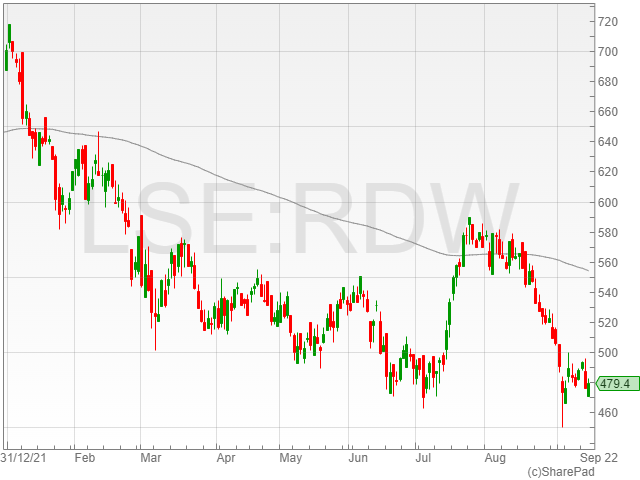
The firm highlighted an underlying pre-tax profit of £410 million in FY 2022 from £314 million last year, alongside a statutory pre-tax profit of £246 million against £314 million.
Redrow mentioned a £2.1 billion revenue compared to £1.9 billion as the business strengthened on post-Covid recovery.
“I am delighted to report a year of strong growth which has resulted in our underlying profits returning to the record levels achieved in 2019 prior to Covid. Revenue increased by 10% to £2.14bn and underlying profit before tax was up 31% year on year, both ahead of our pre-Covid 2019 figures,” said Redrow non-executive chairman Richard Akers.
Meanwhile, the company hit 5,715 legal completions against 5,620 year-on-year, along with a total order book of £1.44 billion from £1.43 billion.
“Given rising inflation and higher interest rates it is not surprising the buoyant housing market has moderated recently and demand has returned to historically average levels,” said Akers.
“It is on this basis we have prepared our medium term plan and we are confident our timely investment in land, combined with strong demand for our Heritage homes, will support our continued growth.”
“In addition, our opening order book of over £1.4bn has put us in an excellent starting position for the 2023 financial year. As a result, the business is well placed to deliver another set of strong results.”
Redrow noted an underlying ROCE of 24.5% against 18.5% in the previous year.
The house building firm announced net cash at 3 July 2022 of £288 million from £160 million the year before.
“House prices have proved remarkably robust since the pandemic struck, buoyed by pent-up savings and cheap mortgages. Redrow, like other housebuilders, has gushed cash in this environment and is earning huge margins to boot,” said Wealth Club head of equities Charlie Huggins.
“Redrow’s premium quality housing is resonating strongly in the current environment, with the ‘race for space’ supporting demand for larger, family homes. But, make no mistake – the biggest reason for Redrow’s success is high house prices, and the general strength of the housing market.”
Analysts noted the slowdown in the housing market, along with the looming threat of crippling interest rates and the potential of a freezing recession as winter approaches.
“That is something over which it has no control, and the big bad wolf of recession could be about to blow away the good times,” said Huggins.
“Increasing house prices in recent years mean home buyers are having to borrow more to get on the housing ladder. Combine that with rising interest rates, which ultimately mean more expensive mortgages, and the affordability of property could fall substantially. If interest rates keep rising, it’s hard to see how the housing market would be immune.”
“This is the kind of environment where you find out which housebuilders have built their success on a base of bricks, and which are about to have their sticks and straw blown away by.”
The group confirmed an underlying EPS of 96p compared to 73.7p and a statutory EPS of 57.7p from 73.7p.
Redrow declared a final dividend per share of 22p against 18.5p over FY 2022 and also noted its £100 million share buyback launched in July 2022.
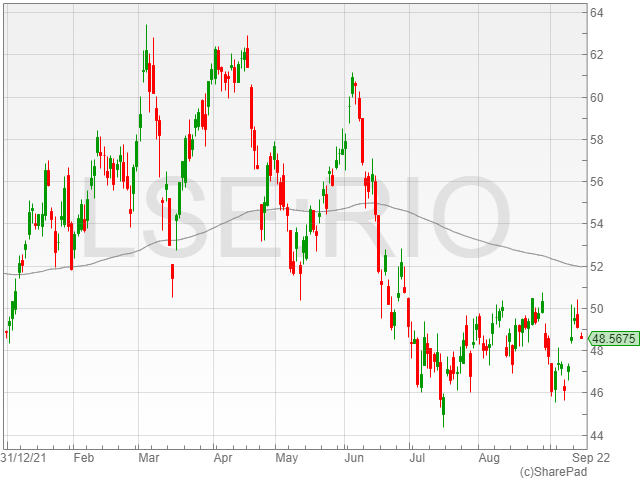
Rio Tinto shares dropped 1.9% to 4,858.2p in early morning trading on Wednesday, after the group announced its joint venture with China Baowu Steel Group to develop the Western Range ore project in Pilbara, Western Australia.
The mining company said the Western Range’s 25 million tonnes of iron ore would help sustain production of the Pilbara Blend from the firm’s existing Paraburdoo mining hub.
The project currently includes the construction of a primary crusher and an 18 km conveyor system linking it to the Paraburdoo processing plant.
Rio Tinto confirmed construction was scheduled to start in early 2023, with first production expected in 2025.
The mining group noted its share of the capital costs were already included in its capital expenditure guidance of approximately $9-$10 billion for each of 2023 and 2024.
Rio Tinto commented there was no upfront consideration being paid by either firm.
The two commodities companies agreed to enter an iron ore sales agreement at market prices, covering a total of up to 126.5 million tonnes of iron ore over approximately 13 years, together with the joint venture.
“This is a very significant milestone for both Rio Tinto and Baowu, our largest customer globally. We have enjoyed a strong working relationship with Baowu for more than four decades, shipping more than 200 million tonnes of iron ore under our original joint venture, and we are looking forward to extending our partnership at Western Range,” said Rio Tinto CEO Simon Trott.
“The development of Western Range represents the commencement of the next significant phase of investment in our iron ore business, helping underpin future production of the Pilbara Blend, the market benchmark.”
Baowu Resources chairman Shi Bing added: “The signing of the joint venture agreement for the Western Range Project is a significant event in the history of cooperation between Baowu and Rio Tinto. We fully appreciate the persistent efforts of both teams in accomplishing the important achievement. The Bao-HI joint venture has been successfully operating for more than 20 years, leading us to a win-win result, and reaping friendship and trust.”
The dollar gained against the Sterling at 13:30 BST following the latest US inflation report, which revealed inflation lowered to 8.3% in August, yet failed to meet analyst expectations of 8.1%.
The unexpectedly hot report sent the Pound spiralling from $1.17330 to $1.15593 at 14:00.
The Sterling was trading at $1.15804 at 14:50 as markets digested the figures.
Investors hoped a lower inflation rate might curb the US Federal Reserve’s hawkish stance on interest rate moves, however the slight fall in inflation confirmed fears the figure will come nowhere near dissuading the Fed from further aggressive rate hikes.
However, the prospect of higher rates served to send dollar strength higher, with the currency also gaining against the Euro, which dropped from $1.01765 to $1.00326.
US CPI inflation dropped to 8.3% from 8.5% in August, however the figure came in above analyst expectations of 8.1% and month-on-month prices excluding excluding food and fuel rose 0.6%.
The FTSE 100 plunged in line with global equities as markets adjusted for even more sharp rate hikes.
US stocks opened on a pessimistic note, with the Dow Jones falling 1.9% to 31,762.1, the S&P 500 sliding 2.3% to 4,014.9 and the NASDAQ dropping 3.1% to 11,886.
US Federal Reserve chair Jerome Powell confirmed hawkish sentiment at the Jackson Hole convention last month, announcing he would continue to hike rates until inflation was far closer to the Fed’s 2% aim.
“Inflation is running well above 2%, and high inflation has continued to spread through the economy. While the lower inflation readings for July are certainly welcome, a single month’s improvement falls far short of what the committee will need to see before we are confident that inflation is moving down,” said Powell.
He added at the conference that the Fed’s decision would be based on economic data from August, including the inflation report.
“We our moving our policy stance purposefully to a level that will be sufficiently restrictive to return inflation to 2%. Our decision at the September meeting will depend on the totality of the incoming data and the evolving outlook.”
Investors had hopes pinned on lower inflation to dissuade Powell from an aggressive rates move. However, it appears the latest report will do little to slow the pace of rate hikes at the next policy meeting.
Supermarket stocks fell to the bottom of the index, with the cost of living crisis driving customers away from higher end grocers to discounters as food inflation soars.
Kantar announced Morrisons had lost its spot as a Big 4 grocer, and had been replaced by German budget retailer Aldi.
“The appeal of the German discounters continues to grow as household budgets are increasingly squeezed. This presents a challenge to Tesco and Sainsbury’s too,” said AJ Bell investment director Russ Mould.
“The fact that Aldi and Lidl offer not only bargain prices but also decent quality products and produce makes the established players jobs much harder.”
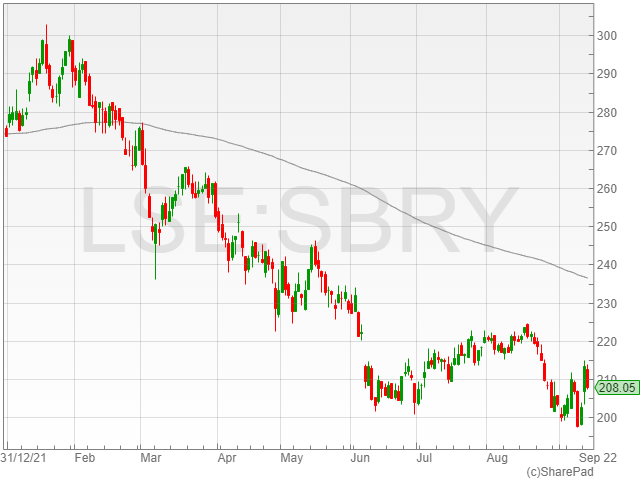
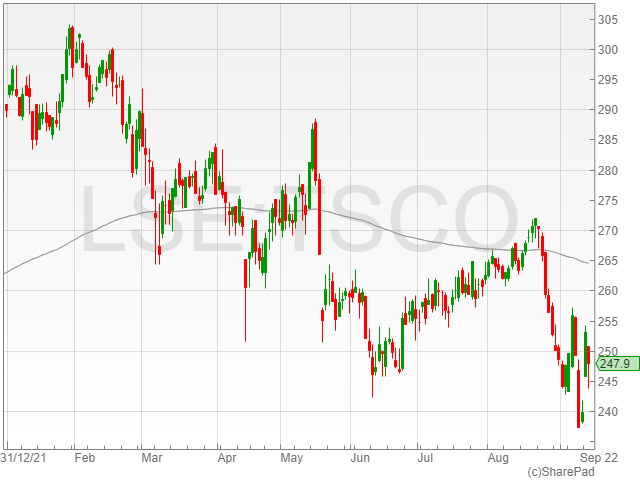
Sainsbury’s shares fell 2.7% to 207.5p and Tesco shares dropped 3.4% to 244.3p.
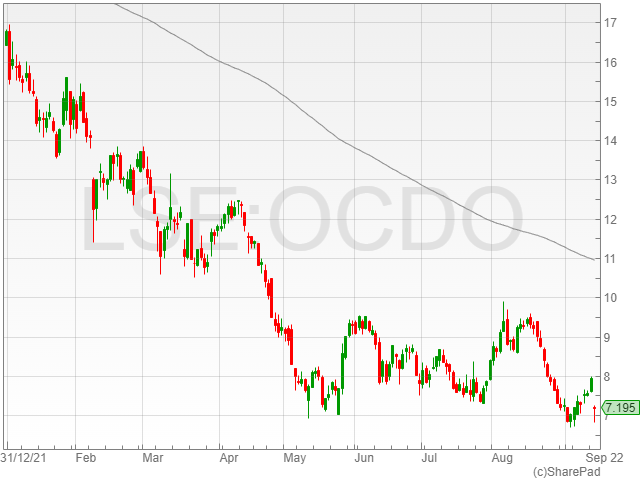
Ocado shares tumbled to the bottom of the FTSE 100, spiralling 13% to 691.5p after the supermarket reported lower sales and rising energy costs in its pre-close FY 2022 trading update.
“We remain focussed on providing Ocado Retail customers with the best possible value to help them navigate the cost of living crisis, and are encouraged by the positive underlying trends in the business which underline the value of Ocado’s differentiated proposition to customers,” said Ocado Retail chairman Tim Steiner.
“As consumer spending stabilises, we expect Ocado Retail will again deliver attractive and accelerating growth in sales and a strong recovery in profitability.”
“For … these reasons, we are optimistic for the future even while recognising the challenges that higher energy bills and other inflationary pressures are creating for our customers today.”
US inflation fell to 8.3% in August, dropping from 8.5% in July in the latest report on Tuesday.
The figure marks the lowest reading in four months, however it still beat market forecasts of 8.1%.
The result sent US futures tumbling as the figure confirmed fears the US Federal Reserve was set to remain on course with aggressive rate hikes.
The Dow Jones slid 1% to 32,166 in pre-open trading, with the S&P 500 falling 1.4% to 4,067.5 and the NASDAQ dropping 2.1% to 12,546.
The US energy index climbed 23.8%, decreasing from 32.9% in July as a result of a huge slowdown in gasoline expenses and fuel oil to 25.6% against 44% and 68.8% compared to 75.6%, respectively.
Meanwhile, natural gas costs rose to 33% from 30.5% and electricity prices accelerated at their fastest rate since August 1981 by 15.8%.
Food inflation grew 11.4%, while shelter rose 6.2% from 5.7% and used cars and trucks inflation climbed 7.8% from 6.6%.
Consumer prices increased 0.1% since July following a flat reading the month before, exceeding analyst expectations of a 0.1% fall.
The UK Investor Magazine was thrilled to be joined by Alexandra Govorukha, Head of Global Affairs at Sigma Software, to discuss the Ukrainian tech sector and an upcoming ‘Hack for Peace’ Hackathon.
Alexandra is the driving force behind Hack for Peace, a Hackathon designed to develop anti-war tech solutions across five European countries; the UK, Ukraine, Poland, Portugal and Sweden.
The Hackathon was a response to the unprovoked aggression by Russia on Ukraine and is setting about creating solutions to help the problems caused by the war.
We discuss in detail how the Ukrainian tech sector has adapted to the war by utilising remote working and even providing services for clients from bomb shelters. Alexandra explains the assistance the sector is giving to the defence of Ukraine with the prepayment of taxes and developing cyber security solutions.
We finish by looking forward to Websummit and the Ukrainian Pavilion which will showcase the best of the Ukrainian tech sector in Lisbon this November.
Tungsten West (LON: TUN) has secured a term sheet for non-dilutive funding for the Hemerdon tungsten and tin mine in Devon and the final capital expenditure estimates are expected by the end of September. Royalty financing of $30m has been obtained at an initial rate of 4.75%, which drops to 2.375% after 7mmtu of tungsten is produced. There is also up to £10m of asset backed financing. Tungsten West had £17m in the bank at the end of August. The share price rose 20.8% to 29p.
Transense Technologies (LON: TRT) shares have bounced back after it announced that it was evaluating licencing opportunities for its surface acoustic wave sensor technology in the aerospace sector with Meggitt. This could lead to a licence agreement before the end of 2023. The shares are up 31.3% to 65p.
Mixer drinks supplier Fevertree Drinks (LON: FEVR) still believes it can achieve previous guidance even though costs are increasing. This helped the share price to recover some of its previous losses and rise 11.7% to 1060p, although it is still down by three-fifths this year. Revenues from sales to pubs and bars recovered from weak levels last year, but off-trade sales fell.
Energy supplier Yu Group (LON: YU.) says profit has significantly exceeded expectations and underlying EBITDA should be £4.7m. Interim figures will be announced on 27 September. The shares are 9.7% higher at 197.5p.
Bradda Head (LON: BHL) has intersected spodumene in its first hole at San Domingo in Arizona. Visible lithium-bearing minerals were identified, including spodumene and lepidolite. The shares rose 10.5% to 9.45p.
Union Jack Oil (LON: UJO) has fallen 18.1% to 41.75p after publishing an independent report that says that 40% owned Wressle oilfield could have a recoverable resource of 2.43 MMB barrels of oil. An illustrative production scenario shows a constrained production rate of 800 barrels of oil per day for five years. The Union Jack Oil share price is still higher than at the beginning of September. Egdon Resources (LON: EDR), which owns 30% of Wressle and is the operator, fell 10.3% to 7.8p. The other 30% is owned by Europa Oil & Gas (LON: EOG), which is 9.09% higher at 3p. Union Jack Oil is providing an 18 month, £1m loan facility with an annual interest rate of 11% to Europa Oil & Gas.
CleanTech Lithium (LON: CTL) shares fell 11.5% to 54.5p even though the JORC resource estimate was upgraded to 1.51 million tonnes of lithium carbonate equivalent at a grade of 206mg/L at the Laguna Verde project in Chile. That is effectively profit-taking after the strong gains earlier in the month.
Interim figures from Accesso Technology (LON: ACSO) sparked a 8.8% decline in the share price to 538p. The queueing and ticketing technology company reported a 26% increase in revenues to £63.7m and an improved pre-tax profit of £2.92m in what is the seasonally weaker half. Visitor levels are recovering and full year figures are likely to be in line with expectations.
TV and film production services provider Facilities by ADF (LON: ADF) had tough comparisons for its interim figures and reported pre-tax profit was lower. Revenues improved from £11.5m to £12.6m, but the lack of large productions and higher overheads since flotation mean that profit was lower. There will be more, and higher value, productions in the second half, so some of the profit shortfall should be offset. Flotation funds are being used to increase the size of the vehicle fleet.
All eyes were across the Atlantic ahead of the US inflation figures for August, with US futures rising as analysts anticipated positive news from the report.
“Rising prices will be in focus this lunchtime as the US posts its CPI reading for August,” said AJ Bell investment director Russ Mould.
“July’s figures were a key factor in driving a mid-August rally in stocks, before Federal Reserve chairman Jerome Powell poured cold water on hopes of a ‘dovish pivot’ on interest rates, so this latest update is likely to garner plenty of market attention.”
“Forecasts are for this measure of inflation to have dipped month-on-month and if instead prices have ticked higher once again it could knock markets off course.”
The Dow Jones was 0.4% higher at 32,641 in pre-open trading, with the S&P 500 rising 0.4% to 4,149 and the NASDAQ climbing 0.4% to 12,877.7.
Meanwhile, the FTSE 100 increased 0.3% to 7,497 in lunchtime trading, as the index failed to maintain its momentum from Monday’s strong gains.
Supermarkets
Supermarkets were in focus today, with the latest data from Kantar reporting bad news for Morrisons, which fell from its Big 4 grocer status to be replaced by budget retailer Aldi.
The cost of living crisis has seen customers turn to lower cost alternatives in higher numbers, with soaring food inflation driving consumers towards the cheaper German supermarkets in droves.
“The appeal of the German discounters continues to grow as household budgets are increasingly squeezed. This presents a challenge to Tesco and Sainsbury’s too,” said Mould.
“The fact that Aldi and Lidl offer not only bargain prices but also decent quality products and produce makes the established players jobs much harder.”
Tesco shares dipped 2.2% to 247.4p and Sainsbury’s shares slid 1.4% to 210.3p.
Ocado
However, the main disappointment in the supermarket sector came from Ocado, which reported concerning results in its pre-close trading update for FY 2022.
The online retailer announced lower sales despite a growth in customer numbers, with an expected minor sales decline over the financial term and close to break-even EBITDA.
Ocado reported the average customer basket had fallen to 6% to £116 as shoppers purchased value for money products in response to inflationary pressures.
Meanwhile, the company noted cost headwinds including £15-£20 million in additional dry ice costs and a 15% rise in fuel expenses, along with tripled energy costs projected to triple on an annual basis.
“We remain focussed on providing Ocado Retail customers with the best possible value to help them navigate the cost of living crisis, and are encouraged by the positive underlying trends in the business which underline the value of Ocado’s differentiated proposition to customers,” said Ocado Retail chairman Tim Steiner.
“As consumer spending stabilises, we expect Ocado Retail will again deliver attractive and accelerating growth in sales and a strong recovery in profitability.”
“For … these reasons, we are optimistic for the future even while recognising the challenges that higher energy bills and other inflationary pressures are creating for our customers today.”