Deliveroo announces plans to pull out of Spain

0

Spain accounted for fewer than 2% of Deliveroo’s overall sales in H1 2021

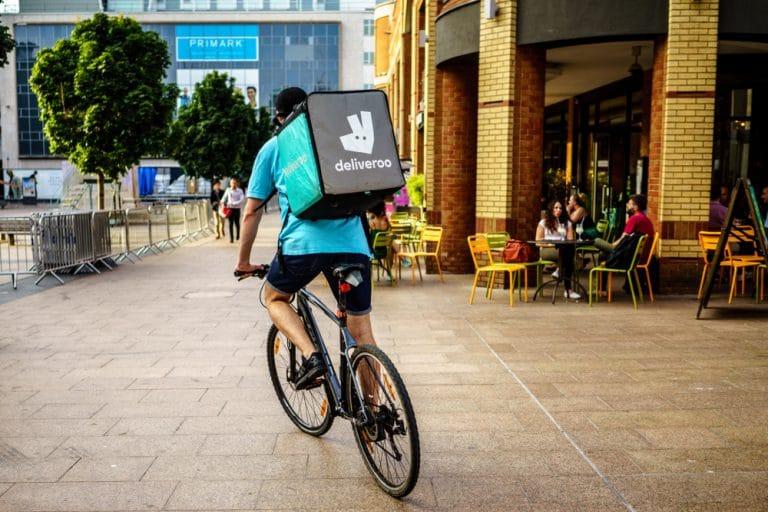
Deliveroo (LON:ROO) is weighing up the possibility of ceasing its services in Spain because of the high costs involved in operating in the country.

The food delivery company added on Friday that it may seek to focus its resources on other markets by expanding into new locations.

“The company has determined that achieving and sustaining a top-tier market position in Spain would require a disproportionate level of investment with highly uncertain long-term potential returns,” Deliveroo said in a statement.

A spokesperson for Deliveroo specifically said that Spain’s employment rights law was not the reason, although it was confirmed that it did contribute to the earlier than initially expected withdrawal.

Back in March the Spanish government revealed its intention to give employment rights to workers food delivery companies and similar platforms in what was a landmark ruling.

According to Deliveroo, Spain accounted for fewer than 2% of its overall sales in H1 2021.

The Deliveroo share price is up by 2.77% on Friday following the announcement.

The London-listed food delivery company operates in 12 markets across Europe, as well as Hong Kong, with around 50% of its revenue coming from the UK and Ireland.

The Deliveroo share price surged towards the end of June as a UK court ruled that the people who deliver the food on bikes are self-employed. The ruling was passed by three judges who came to a unanimous agreement.

“Concern about the company’s reliance on the gig economy model was one of the factors which contributed to its disastrous IPO in March,” said Susannah Streeter, senior investment and markets analyst at Hargreaves Lansdown.
Problems continue for the ECB as CPI rises

0

CPI reached 2.2%, surpassing expectations

EU GDP surpassed expectations of 1.5%, reaching 2% for the quarter gone, according to Eurostat.

Among the EU nations for which data are available for Q2 2021, Portugal, up by 4.9%, recorded the highest increase compared to the quarter before.

Consumer price index (CPI), a measure that examines the weighted average of prices of a basket of consumer goods and services, reached 2.2%, 0.2% above analysts’ expectations.

The news comes amid concerns over inflationary pressures across the world and the potential impact.

Commenting on EU GDP and CPI, Jesús Cabra Guisasola, Associate at Validus Risk Management, said: “The eurozone economy expanded at a rate not since in decades, with GDP during Q2 rising at 2%. The strongest rebounds came from the southern countries as the economies continue lifting restrictions for the summer season. In addition CPI numbers in the Eurozone rose in July 2.2% and came above the market expectations of 2.0%. However, the core CPI was lower compared to a month ago and in line with most forecasters at 0.7% vs 0.9% in June.”

Similar to the Fed, Guisasola does not expect today’s news to compel the ECB to change its stimulus measures aimed at boosting the EU.

“Nevertheless, we do not expect these figures would change the ECB’s plan to continue supporting the economy with favourable financing conditions in the coming months, as the institution recently signalled the regions still a “long way to go” to recover from the pandemic. Moreover, the central bank recently changed its inflation target by letting the CPI to move above or below the 2% level when needed.”

The dollar lost ground against the euro over the past as the Fed took a dovish tone, according to Guisasola.

“On the FX market, the dollar has depreciated against the euro in recent days after the dovish tone from the Fed, and the disappointed Q2 GDP numbers from the US released yesterday, where the economy posted a growth lower than expected.”

Eurozone inflation fell in June amid a fall in the price of oil, according to data published last month.

Inflation across the EU was down by 0.1% from May to 1.9% in June.

The figure matched the European Central Bank’s inflation target of below but close to 2%.

SolGold share price set to close in the red for fifth consecutive week

0

SolGold Share Price

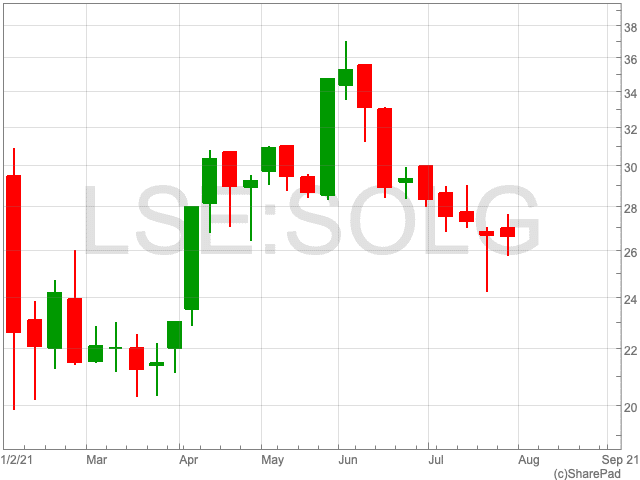
The SolGold share price (LON:SOLG) is down by 2.92% on Friday, as the emerging copper-gold major looks set to close in the red for the fifth week in a row. Over the past month the SolGold share price gave away 6.67%, now trading at 26.6p per share. Investors may be concerned over the recent trajectory, while others may be excited by the possibility of buying the dip. The hierarchy at SolGold remains optimistic about the near-term outlook of the company.

Outlook

SolGold is confident it will put forward strong results for the remainder of the current year.

The current quarter will see increased active exploration activity at SolGold’s regional exploration projects with preparations advancing for the commencement of drilling at the Rio Amarillo and Sharug projects, SolGold said in its recent update, while drilling at the Porvenir and Blanca projects is currently underway.

About SolGold

SolGold is a leading resources company focussed on the discovery, definition and development of copper and gold deposits. The London-listed company, with 76 concessions covering approximately 3,100km², is the largest and most active concession holder in Ecuador and is aggressively exploring the length and breadth of this highly prospective and gold-rich section of the Andean Copper Belt which is currently responsible for c40% of global mined copper production.

SolGold employs a staff of over 800 employees of whom 98% are Ecuadorean.

Budget day could be in 2022 as Rishi Sunak avoids naming day

0

In recent years budgets have been postponed until March due to unprecedented events

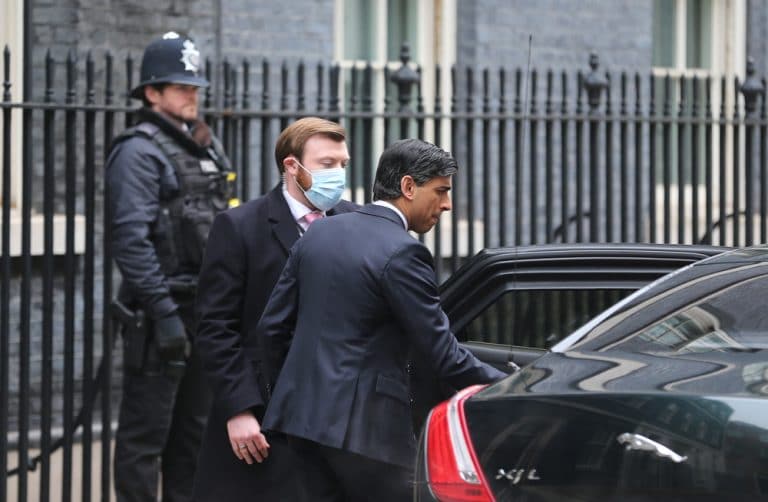
Rumours are circulating that chancellor Rishi Sunak will delay his budget until 2022.

The speculation came after Sunak asked the Office for Budget Responsibility (OBR) to prepare an economic forecast to be put to parliament at the end of October.

It is customary for the OBR’s release to come with a budget or spending review, however, Sunak did not announce either.

It was reported earlier in July that Rishi Sunak is considering delaying the budget until the spring, as there will be a clearer picture of the UK’s economic outlook.

This is especially true at the present time as the furlough scheme is set to end, while inflation and tax breaks are on the horizon, meaning there will be a great day of economic upheaval.

Since 2017 yearly budget are supposed to take place in October or November to allow time to implement tax changes before the new tax year begins in April.

More recently budgets have been postponed until March due to unprecedented events including elections and the coronavirus pandemic.

Soggy end to July for the markets across the world

0

Friday appears to be a downbeat finish to the week and month for markets in the UK and abroad, as the FTSE 100 gave away 0.8%, falling to 7,022 points.

“It’s looking like a soggy end to July both in meteorological terms and with the markets as so-so numbers from Amazon and a sell-off in Asia linked to Covid concerns had a dampening effect on sentiment,” says AJ Bell financial analyst Danni Hewson.

Disappointing results from highly rated testing specialist Intertek and IAG, as well as a downbeat reaction to Natwest’s latest numbers, did little to lift the mood.

“The mining sector also slumped and investors continued to fret about the Chinese crackdown on its technology sector, despite Beijing’s efforts to dial back some of its recent rhetoric. There was talk about targeted rather than broad-based action,” said Hewson.

“As the flood of corporate updates on both sides of the Atlantic slows to a stream and then a trickle, we enter the summer lull for the markets – although this can be a dangerous time for equities.”

“With experienced investors away from their desks on holiday and trading volumes lower, it sometimes doesn’t take much for a market correction to begin and with Covid-19, inflationary pressures and regulatory crackdowns all in the background, there are a plenty of a potential catalysts for a sell-off.”

FTSE 100 Top Movers

Pearson (2.36%), the only company to get beyond a decimal place at the time of writing, along with Segro (0.96%) and Sage Group (0.92%), are leading the way on the FTSE 100 during the morning session.

At the bottom end, Intertek (-7.53%), IAG (-3.35%) and Weir Group (-2.97%) are dragging on the FTSE 100.

IAG

IAG, the owner of British Airways, confirmed on Friday that it fell to a €2bn (£1.7bn) H1 loss as travel restrictions continue to work against the airline.

The FTSE 100 firm flew at a capacity of 21.9% during Q2, while it is expecting this figure to rise to 45% for the coming quarter.

Natwest

NatWest will return more than £3bn to shareholders via dividends and share buybacks over the coming years, as the FTSE 100 bank swung into the black on the back of the brightening outlook of the UK economy. 

The banking giant made a £1.6bn profit before tax for the three month period to June, swinging from a £1.3bn loss for the same period a year ago, surpassing analyst forecasts.

Cineworld secures £143m loan ahead of a busy period of film releases

0

The loan provides ‘operating flexibility‘ says Cineworld CEO

Cineworld (LON:CINE) confirmed on Friday that it will receive £143m in loans to help secure its finances as the company looks ahead to a busy period of film releases for the remainder of 2021.

The FTSE 250 company’s loan was agreed with already existing lenders and will mature in May 2024.

The cinema chain also said it agreed amendments to covenants on some of its existing debt facilities, including reducing the minimum liquidity requirement and relaxing limitations on the use of cash, as well as other modifications that will provide further support as its cinemas restart trading.

It is the most recent portion of fundraising after Cineworld secured $203m via the US CARES Act in May and raised $213m though a convertible bond in March.

Cineworld said these measures will boost its balance sheet as it recovers from the impact of repeated closures during lockdown.

Cineworld said that its trading has continued to improve as its cinemas began reopening in April.

“The additional liquidity announced today provides the group with significant operating flexibility now that cinemas have opened across the world,” said chief executive Mooky Greidinger.

“We are monitoring the evolution of the virus and its potential impact on our business, but we are very excited about the potential of the unprecedented slate of films in the second half of 2021 (mainly in the fourth quarter). We remain confident in the prospects for our business and continue to look forward to welcoming our customers back to the best place to watch a movie.”

The Cineworld share price is down by 1.17% during the morning session on Friday.

NatWest to payout £3bn to investors as UK bank records profit

0

UK government set for bumper payout from NatWest

NatWest will return more than £3bn to shareholders via dividends and share buybacks over the coming years, as the FTSE 100 bank swung into the black on the back of the brightening outlook of the UK economy.

The banking giant made a £1.6bn profit before tax for the three month period to June, swinging from a £1.3bn loss for the same period a year ago, surpassing analyst forecasts.

As a result Natwest will pay investors dividends worth £347m, valued at 3p per share.

The UK government retains a 54.7% holding in Natwest, as the bank was bailed out on the back of the 2008 financial crisis. This means that at least half of the payout will go to government coffers.

Improving economic forecasts allowed Natwest to make a profit and reduce the stack of cash it set aside in the event of loan defaults by £605m.

Analysts expected the bank to release £84m, after it had initially put aside £2.1bn two cover any potential bad debts.

Natwest, Barclays and Lloyds have now reduced the size of their reserves against bad loans by a total of £1.7bn, while HSBC, is set to report its Q2 earnings on Monday.

“These results have been driven by good operating performances across the group, underpinned by a robust loan book and a strong capital position,” the chief executive of Natwest, Alison Rose, said. “While we see the potential for a more rapid recovery, we will continue to take an appropriate and conservative approach as the government schemes wind down and the economy reopens”.

NatWest will soon be able to buy back some of the government’s shares, after the UK government said it would begin selling them on the open market.

IAG makes £1.7bn loss in H1 as airline expects to double its capacity over next period

0

IAG will not provide a profit guidance because of the uncertainty surrounding restrictions

IAG, the owner of British Airways, confirmed on Friday that it fell to a €2bn (£1.7bn) H1 loss as travel restrictions continue to work against the airline.

The firm flew at a capacity of 21.9% during Q2, while it is expecting this figure to rise to 45% for the coming quarter.

Despite the loss being significant, it is half the level of the loss recorded by IAG in 2020, when the pandemic first impacted flights.

Chief executive Luis Gallego praised the UK government’s decision to exempt vaccinated travellers from the EU and US from needing to quarantine on arrival in the UK.

IAG, however, said it would not provide a profit guidance because of the uncertainty surrounding travel restrictions.

As H1 finished, ending on 30 June, the FTSE 100 company had €10.2bn of liquidity after spending previous facilities and issuing €1.2bn of senior unsecured bonds and €825m of convertible bonds, both oversubscribed.

British Airways will defer its monthly pension deficit contributions for £450m between October 2020 and September 2021, as it secured a new revolving credit facility.

“Our focus is on ensuring our operational readiness, so we have the flexibility to capitalise on an environment where there’s evidence of widespread pent-up demand when travel restrictions are lifted,” said chief executive Luis Gallego.

“We welcome the recent announcement that fully vaccinated travellers from amber countries in the EU and the US will no longer have to quarantine upon arrival in the UK. We see this as an important first step in fully re-opening the transatlantic travel corridor.”

The IAG share price is down by 3.33% during the morning session on Friday.

Fresnillo share price bounces as miner reasserts guidance

Fresnillo Share Price

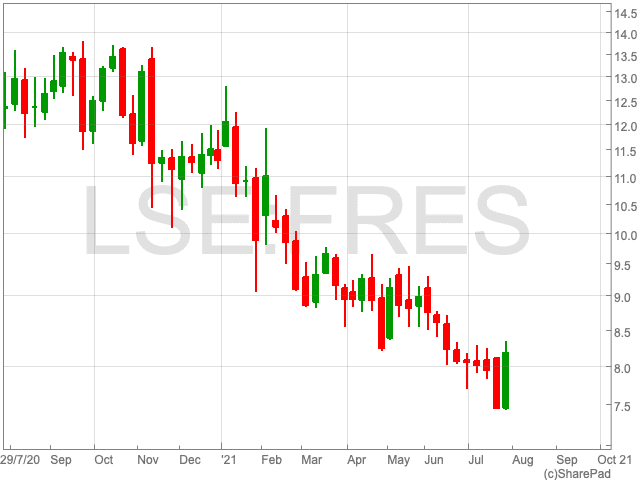
The Fresnillo share price (LON:FRES) is up by 6.55% over the past five days as the FTSE 100 company divulged some positive news. The move comes on the back of a sustained downturn in the Fresnillo share price, particularly since November 2020 onwards.

This was in part down to the fact that interest in precious metals cooled following an upturn on the back of the pandemic-induced stock market crash. While the debate will go on about the place precious metals have in the modern world economy, this article will look at some recent news regarding Fresnillo, and what it could mean for its share price going forward.

Guidance

Fresnillo yesterday reaffirmed its annual outlook after the FTSE 100 company saw improvements in its silver output during Q2.

The precious metals miner said it is on course to meet its guidance for the current year of between 675,000 and 725,000 ounces of gold and between 53.5m to 59.5m ounces of silver.

“We remain on track to meet our full year targets and our production guidance for 2021 is unchanged, though we remain vigilant around the continued evolution of the pandemic and its potential future effect on our operations, in particular the implementation of any future new work restrictions,” said chief executive of Fresnillo Octavio Alvidrez.

RBC Capital Forecast

RBC Capital Markets, the global investment bank, upgraded its rating for the Fresnillo share price to ‘outperform’ from ‘sector perform’, it was revealed this month. RBC’s change in outlook came about as it considers the market to have reset following weak Q1 silver production and lower guidance.

RBC is expecting to see a growth phase from Fresnillo, as its Juanicipio project has been accelerated.

“With the shares underperforming peers and trading at the low end of its historical multiple ple range, we upgrade our recommendation,” RBC said.

Anglo American share price: CEO hints at more to come beyond dividend

0

Anglo American Share Price

The Anglo American share price (LON:AAL) is up by 4.91% during the afternoon session on Thursday as rising commodity prices helped the miner record its best H1 profits in its over 100-year history. Today’s movement is a continuation of a mini-surge over the past five days which has seen the FTSE 100 mining company add 11.03%.

Looking back over the past five years, Covid aside, it has been smooth sailing for the Anglo American share price, which is up by 296.23% over the time period. However, investors will do will to remember the cyclical nature of mining stocks. After all, the Anglo American share price has not reached its high of around ten years ago, when it was above 3,300p.

Results

Anglo American, whose portfolio spans diamonds, platinum, copper, iron ore & more, reported profits before tax of $10.1bn for six months ending in June. This figure is up from $1.7bn compared to the same period a year ago.

“The first six months of 2021 have seen strong demand and prices for many of our products as economies begin to recoup lost ground, spurred by stimulus measures across the major economies,” said Anglo chief executive Mark Cutifani.

Among the main factors in improving Anglo American’s profit were iron ore, the commodity used to make steel, as well as the London-listed company’s platinum-group metals (PGM). The average market prices for Anglo’s commodities rose by 62% in H2, compared to a year ago.

The subsequent cash generated from those sectors enabled Anglo to reduce its net debt to $5.6bn, down from $7.6bn. In addition, Anglo was able to make a substantial payout to shareholders.

Dividend

Following its record half-year profits, Anglo American is to return $4.1bn to its shareholders.

Anglo declared a $2.1bn ordinary dividend, as well as confirming it will return an additional $2bn of “excess cash” to shareholders via a $1bn special dividend and a $1bn share buyback.

“The share buyback should tell you that we don’t think this is as good as it gets,” said Mark Cutifani, which could be music to the ears of investors.