Reasons to be cheerful: UK leisure ready and waiting

0

As the third lockdown comes to an end, hopefully for the last time, the UK’s leisure industry is all set for a substantial recovery. This is on the assumption that the the government eases out of lockdown restrictions in a proper way. According to research conducted by Edison Group, the confidence is driven by lessons learned during the pandemic, from pent-up demand on 2020 reopening and the benefits of technology. Another driver has been the prospect of a new post-Covid structural environment, in addition to a positive change consumer behaviour patterns, which has followed delivery uptake as a growth channel for hospitality. While the continuation of curbs on international travel is bad for the airline industry, it will be a positive for the domestic’s leisure sector.

The pandemic’s silver lining

There is a grim irony that COVID-19’s exacerbation of longstanding structural difficulties in UK hospitality has thrown up undeniable growth opportunity for well-funded businesses. There has been an increasing availability of prime sites at ever cheaper prices, in addition to being on more flexible terms. This has come about as businesses have been forced to close down which has led to an increase in the supply of high-quality staff. The outlook is starkly contrasted to chronic capacity before the pandemic, which caused intense cost pressures and narrow margins, compounded by Brexit-led economic uncertainty.

To this end, surviving companies have strengthened finances and accelerated implementation of initiatives, such as the use of technology in managing labour costs and driving customer loyalty. Delivery has predictably excelled, offering scope for operators with the right scale and brands.

Pushing at an open door

In addition to the boost to domestic leisure from persisting uncertainty about foreign holidays in 2021, there is welcome industry consensus ahead of reopening about pent-up consumer demand. Since the start of the pandemic, household savings have increased and household debt remains mostly unchanged, largely owing to a fall in spending on non-essential items over lockdown (the Q220 household savings ratio was the highest ever).

For those who have suffered financially, low-ticket domestic leisure may well be an attractive option. Potential beneficiaries cover a mix of activities from family entertainment centres and escape rooms to gyms and hospitality.

The value of vaccination

The UK has pushed ahead with a world-leading vaccination programme and looks set to emerge at the head of the pack from the pandemic. As social distancing and lockdowns give way to social spending, the leisure entertainment and travel sectors may be set for an earnings-based recovery. Valuations may have recovered but this relative earnings momentum may point to further outperformance in the months ahead.

While the negative impact of the pandemic are well documented, there are reasons for optimism for Brits looking ahead. The UK leisure industry is primed for recovery with huge opportunities for the fittest businesses.

FTSE 100 breaks through 7,000 for first time since pre-pandemic

0

The FTSE 100 jumped through the 7,000 level for the first time since February 2020, rising 0.51% to 7,019.

“This represents a massive milestone in recovering from the terrible pandemic and shows how investors’ confidence has completely changed since just over a year ago,” says Russ Mould, investment director at AJ Bell.

While the market experienced a shock as the coronavirus pandemic gripped the world, it has now turned its attention on the future in anticipation that corporate earnings will recover, “in true market style”, Mould said.

FTSE 100 miners and oil producers were in demand on Friday following new data that showed China’s economy jumped by 18.3% in Q1 of 2021. “The key issue from the market’s perspective is how quickly stimulus measures will be withdrawn in the country. Officials say it will be a gradual process but not everyone trusts China’s authorities to be true to their word,” Mould commented.

FTSE 100 Top Movers

Making the most gains on the FTSE 100 at mid-morning trading is BT (2.49%), Ocado (2.34%) and Evraz (2.31%).

At the other end, Aveva (-2.27%), Barrratt Developments (-1.50%) and Intermediate Capital Group (-1.29%), are the day’s biggest fallers so far.

Ocado

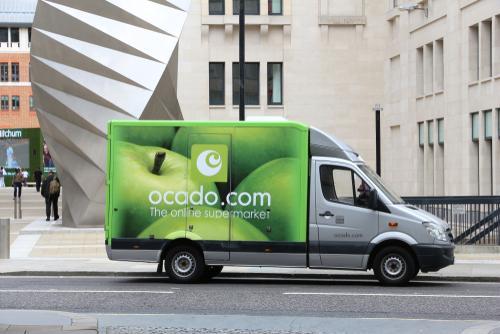
Ocado, the British online supermarket, confirmed on Friday that it is taking a £10 million stake in Oxbotica, a UK startup that develops autonomous driving systems.

The FTSE 100 company is making a strategic investment to develop AI-powered, self-driving vehicles that will operate its operations, including inside its warehouses. The aim for the new technology is to reduce Ocado’s delivery costs in order to boost its customer’s value proposition through a shift to electrically powered cars.

NFT Investments fares well on London stock market debut

34

NFT Investments issued a total of 1bn shares giving a market capitalisation of £50m

NFT Investments (LON:NFT), an investment company specialising in the non-fungible token (NFT), got off to a strong start as its shares began trading on Aquis Exchange’s AQSE Growth Market on Friday morning.

The investment company, which is the first focused solely on NFTs to launch on a stock market in a major worldwide jurisdiction, said it has been admitted to the Access segment of the market following a “substantially oversubscribed” share placing which raised £35m according to Proactive Investors. This was more than three times the amount initially planned, with an order book of demand that exceeded £100m.

The funds raised by the company set a new record on the Aquis Exchange and was raised from its original £10m target on account of what NFT said was “unprecedented investor demand”.

The company said the money made from its IPO will now be allocated to “identify and carry out due diligence on potential investments” and to provide further capital to support its acquisition and investment strategy.

The company issued a total of 1bn shares which gave NFT Investments a market capitalisation of £50m.

“NFT Investments’ admission to the AQSE Growth Market marks a significant milestone for the non-fungible sector. Our record-breaking raise on AQSE provides a strong foundation on which the company can execute its long-term growth strategy and capitalise on its first-mover advantage,” executive chairman Jonathan Bixby said in a statement.

“We are delighted with the strong support we have received from a wide range of investors and our oversubscribed placing is a real endorsement of our investment plans in a promising market set for growth,” he added.

NFT Investments has been launched by the co-founders of Argo Blockchain, a leading crypto miner valued at more than $1 billion.

The firm had originally expected its market capitalization to be around £25 million ($34 million) and claims to be the first investment company focused solely on the NFT market to launch on a stock market in a major jurisdiction.

UK online job adverts climb back to pre-pandemic level

0

Catering and hospitality jobs increased by 10% to 58% of the average in February 2020

The number of new job postings is rapidly rising as the UK is finding its way out of the pandemic.

The Office for National Statistics (ONS) said on Thursday that job listings have now reached the level they were at in February 2020, before the beginning of the pandemic and when lockdown restrictions were first introduced.

Some of the biggest increases came from the legal and hospitality industries while vacancies increased across 16 out of the 28 industries counted. The report by the ONS used data collected by search engine for jobs ads Adzuna.

Catering and hospitality jobs increased by 10% to 58% of the average in February 2020 as the industry went on a hiring spree ahead of reopening.

Since 12 April “non-essential” retail outlets have been reopening, as well as outdoor operations for hospitality venues, including pubs, restaurants and cafes.

The report by the oNS estimated that UK dinner reservations at the beginning of this week were at around 79% of levels seen two years prior.

“We have seen a marked shift in the number of companies seeking to book and organise events in recent weeks,” said Jo Ferreday, managing director of hospitality and events company Sheer Edge. 

“The economy is starting to open up and many hospitality businesses are beginning to hire staff so that they can hit the ground running when things hopefully return to normal in the not-too-distant future.”

Data released on Thursday by Morgan McKinley, and conducted separately, showed that finance vacancies in London had jumped up by 70% as confidence increased.

However, while some sectors saw rises in job openings, many saw declines. Listings in travel and tourism fell by 16% to 84% of February 2020 levels.

The international travel and indoor hospitality sectors are waiting patiently until 17 May to see if the relevant restrictions will be lifted.

China posts record GDP growth on road to recovery from pandemic

0

China grew by 18.3% in Q1 of 2021

China has reported its strongest economic growth since records began nearly 30 years ago.

The world’s second biggest economy, behind the US, grew by 18.3% in Q1 of 2021 compared to the year before when lockdowns and travel restrictions shut the world down.

Up from 6.5% in Q4 2020, it is China’s best year-on-year growth since 1992 when the country began recording such figures.

China‘s recovery has been pushed in part by a surge in consumer spending. Retail sales surged in march by 34.2%, surpassing the forecast by 6%.

National Bureau of Statistics spokesperson, Liu Aihua, told the media that the national economy’s strong start to the year was in part down to a low base effect.

The sharp spike was partly due to “incomparable factors such as the low base figure of last year and increase of working days due to staff staying put during the lunar new year” holiday, said Liu.

But she added that quarter-on-quarter growth has “demonstrated a steady recovery”.

Julian Evans-Pritchard, senior china economist at Capital Economics, warned that China’s recovery could level off this year.

“The upshot is that with the economy already above its pre-virus trend and policy support being withdrawn, China’s post-COVID rebound is levelling off,” Evans-Pritchard said.

“We expect quarter-on-quarter growth to remain modest during the rest of this year as the recent boom in construction and exports unwinds, pulling activity back towards trend.”

Kyle Rodda of IG says the economic data is a little mixed — and suggests the surge in retail sales in March [34.2% year-on-year] could concern the People’s bank of China:

“GDP growth year-over-year expanded by the 18.3% forecasters had tipped, but indu”strial production and fixed asset investment missed estimates,” Rodda said

“Retail Sales shot the lights out, although that might not be seen as a totally good thing from the market’s perspective – with very hot consumer sentiment perhaps a reason for the PBOC to tighten financial conditions further and remove support for the markets.”

China’s economic growth rate for this year has been raised by the International Monetary Fund (IMF) as the organisation says the route out of the pandemic-induced economic crisis is “increasingly visible”.

The IMF, based in Washington DC, increased its forecast for economic growth for China in 2021 to 8.4%, 0.3% higher than its prediction earlier in the year.

Ocado invests in autonomous vehicle software company Oxbotica

0

Ocado news comes one day after rival buys stake in autonomous vehicle company

Ocado (LON:OCDO), the British online supermarket, confirmed on Friday that it is taking a £10 million stake in Oxbotica, a UK startup that develops autonomous driving systems.

The FTSE 100 company is making a strategic investment to develop AI-powered, self-driving vehicles that will operate its operations, including inside its warehouses.

The aim for the new technology is to reduce Ocado’s delivery costs in order to boost its customer’s value proposition through a shift to electrically powered cars.

Alex Harvey, Chief of Advanced Technology at Ocado, commented: 

“We are excited about the opportunity to work with Oxbotica to develop a wide range of autonomous solutions that truly have the potential to transform both our and our partners’ CFC and service delivery operations, while also giving all end customers the widest range of options and flexibility.”

In similar news, Walmart, the American supermarket giant took a stake in Cruise, another autonomous tech company, as part of a recent $2.75bn monster round. Walmart also owns Asda, one of Ocado’s major competitors in the UK.

Paul Newman, Co-Founder & CTO of Oxbotica, shared his excitement at the prospect of the partnership.

“This is an excellent opportunity for Oxbotica and Ocado to strengthen our partnership, sharing our vision for the future of autonomy. By combining both companies’ cutting-edge knowledge and resources, we hope to bring our Universal Autonomy vision to life and continue to solve some of the world’s most complex autonomy challenges.”

During the last lockdown there was a surge in demand for online retailers demand for food at home as Ocado confirmed in March that its sales surged by 39% in Q4 of the past financial year.

The size of an average order was recorded at £147 as families that remained in their homes purchased more goods. As a result, sales went up by two-fifths from the quarter the year before which was unaffected by the pandemic.

600 Group share price surges on positive trading update

0

600 Group’s order book increased by 70% during March

600 Group’s (LON:SIXH) share price soared by 28.8% on Thursday, closing at 11.27p per share, following a positive trading update.

The machine industry company said it expects its revenue to fall by 20% to $53m due to the impact of the coronavirus pandemic.

Despite this reduction in revenues, the firm expects to report underlying EBIT of approximately $2.5m for the full year due to the implementation of operational cost savings and government assistance programmes.

The performance surpassed the AIM-listed company’s expectations, and a robust increase in activity during March, means the order book increased by 70% from the previous year to $14m.

So far in April, 600 Group has received another $4m worth of orders.

The improvement in the order book, the company said in its statement, was helped by a good performance from the custom laser side of the business, which has higher margins.

Paul Dupee, group executive chairman, commented on 600 Group’s response to the Covid-19 crisis:

“The particularly strong order activity over the last two months, supported by a level of government assistance, has enabled the business to maintain its skilled workforce during the pandemic. This has allowed us to respond quickly to recent demand and significantly improve the size and quality of the Group’s orderbook, leaving the business well placed as markets improve.”

Facebook now running entirely on renewable energy

0

Facebook will aim to reach net-zero emissions across its entire “value chain” by 2030

Facebook (NASDAQ:FB) said on Thursday that it has reached its target of powering its worldwide operations from renewable energy.

The social networking company, founded by Mark Zuckerberg in 2004, confirmed it fell short of reaching its initial 2020 deadline.

Facebook will now expand its efforts on reaching net-zero emissions across its entire “value chain” by 2030. This includes suppliers as well as actives such as travel and employee commuting.

The Nasdaq-listed company first disclosed plans to push for 100% renewable energy in 2018 as major technology companies made efforts to offset their impacts on the environment. That was two years after the Paris Climate Accord which saw 143 countries make pledges to keep global temperatures below 2 degrees Celsius.

Facebook also confirmed an agreement to purchase renewable electricity from a power plant in India as part of a wider plan to become a supplier of green power in the country.

The social media giant said it will buy electricity from a 32Mw wind power project in southern Karnataka state run by partner CleanMax.

The deal is one of several projects that CleanMax are working on and India is one of Facebook’s largest markets in terms of its user base.

Power usage by data companies and also bitcoin mining and how it affects the world’s climate are becoming increasingly important issues for companies such as Facebook.

Data centres such as those used by Facebook use up as much as 1% of the world’s total energy.

Fellow FAANG stocks – Apple, Amazon and Google – as well as Microsoft, have all put forward respective climate targets and spent vast sums in an effort to eliminate carbon-emitting generation.

Pressure could come from investors not only to abide by ESG principles but to maintain growth and so it could be a fine balancing act for the companies.

Deliveroo expecting slowdown in growth as restrictions ease

0

Deliveroo shares trading at 256.8p

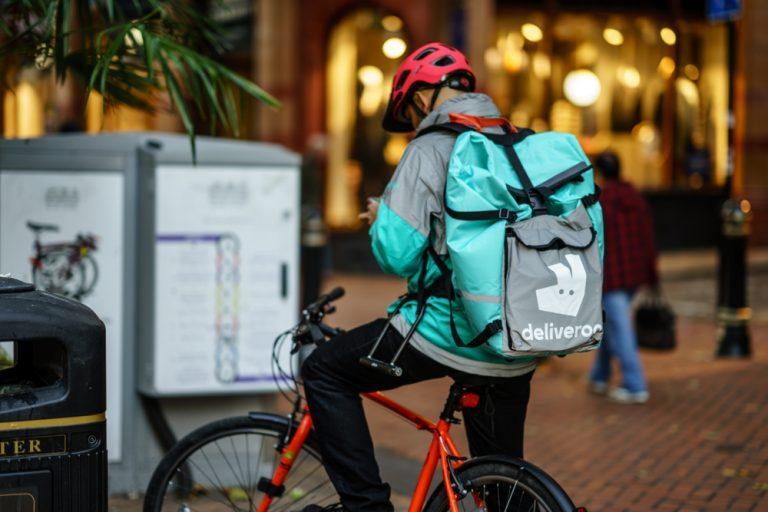
Deliveroo (LON:ROO) is expecting its current rate of growth to slowdown as the easing of lockdown restrictions comes into effect, while the food delivery company could not say by how much its sales will be impacted.

The recently listed firm conceded that it was difficulty to say how much its recent performance was a result of “special circumstances”.

The company said on Thursday via a trading statement that its current situation remains uncertain and could remain that way as it unclear precisely how lockdowns will be lifted.

Following its stock market debut at the end of March, when its share price slumped by 30%, Deliveroo is now trading at 256.8p per share.

“Troubled investors who backed Deliveroo at its IPO will have been keeping their fingers crossed for a bit of kangaroo action with the share price following its latest trading update. Alas there is no hopping forward on this news, despite impressive growth figures,” says Russ Mould, investment director at AJ Bell.

“Chief executive Will Shu has thrown cold water over earnings expectations, taking a cautious view because the company doesn’t know how easing of lockdown restrictions will affect trading,” Mould added.

Mould argues that there are two ways of viewing Deliveroo’s current predicament:

First, Deliveroo could see a drop in demand as more people are able to get out and about, particularly going out for meals rather than sitting at home waiting for the food delivery driver to arrive.”

“Second, the company has no doubt been told by its advisers that it is better to under-promise and over-deliver in the first year as a listed company. Deliveroo’s reputation has already been shattered because of the big share price drop straight after listing. It doesn’t want to risk another slump by being too aggressive with earnings guidance and failing to meet it,” Mould continued.

“We have a lot of work ahead of us to both grow the business over the long term, and to prove ourselves to the markets,” chief executive Will Shu was reported as saying by Reuters.

In Q1 to March 31, its orders soared by 114% to 71m with GTV up 130% £1.65bn from the year before.

Deliveroo also grew its monthly active customer base by 91% to 7.1m compared to the same period a year ago.

Rio Tinto Share Price: long-term outlook for iron ore price in double digits

0

Rio Tinto Share Price

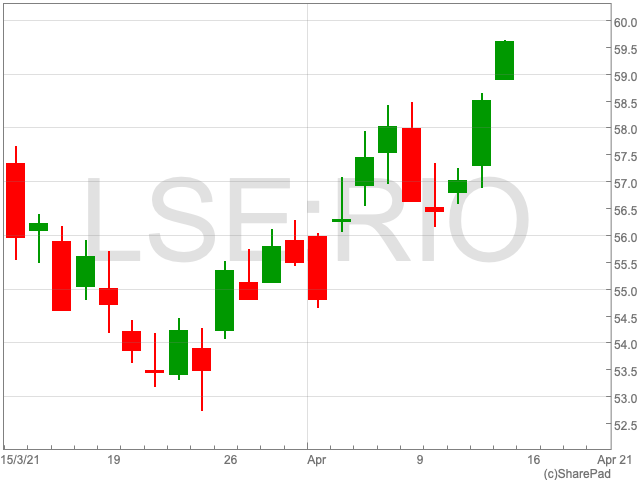
Rio Tinto’s share price (LON:RIO) is up by 2.96% on Thursday to 5,959p. It is a continuation of a recent trend for the mining company which has grown by 6% over the past month, although Rio remains down from its all-time high of 6191.7p in February 2021. After shareholders in the mining company received their $5.17 per share dividend today, they will be wondering whether the company, founded in Andalusia, Spain in 1873, remains a viable investment option.

Iron Ore

A month ago UK Investor Magazine reported that the Rio Tinto share price could be vulnerable to its overweight iron ore exposure. However, in recent days and over the past month the FTSE 100 company has continued to benefit from its reliance on the commodity.

Iron ore prices have been picking up again on tight near-term supply, helping to drive up Rio Tinto. Benchmark iron ore futures in China extended gains for the third session in a row, closing at the highest price in over a month. Deliveries from Australia and Brazil – two of China’s largest suppliers – dropped by 4m tonnes to 24m tonnes as of April 9 from the week before, according to data from Mysteel consultancy.

“Domestic demand and consumption driven by overseas economic recovery also helped sustain iron ore prices,” analysts with Huatai Futures wrote in a note.

However, while iron ore was the best performing commodity during 2020, these supply and demand factors may not last, which could cause the Rio Tinto price to come back down. While iron ore prices are way way above the levels seen a year ago, they have eased since hitting levels last seen in 2011 in early March.

Furthermore, Australia’s office of the chief economist says there are a number of factors causing downward pressure on prices over the coming months. Firstly, Brazilian output is expected to recover towards the end of 2021. While the Chinese government could be phasing out some of its stimulus measures, thereby reducing demand-side pressure on the price of iron ore.

Prices are expected to halve by the end of next year and then gradually decline to reach $72 a tonne in real terms by the end of 2026. In that case Rio’s upwards movements over the past month, and its massive growth since the beginning of the pandemic, could come into question.