Alan Green joins the Podcast for a broad ranging discussion around the most pressing factors in financial markets.
We look at the equity markets and explore the threat of inflation in the medium term and whether investors should be concerned about a policy mistake by central banks that could derail the current equity market run.
NFTs have grabbed headlines in recent weeks as artwork fetched $60 million at a recent auction by Christies. Alan explains the NFT market and ties it in with the operations of a London-listed stock harnessing the wave of interest in digital artwork and collectables.
We also discuss Power Metal Resources (LON:POW) and Coinsillium (LON:COIN).
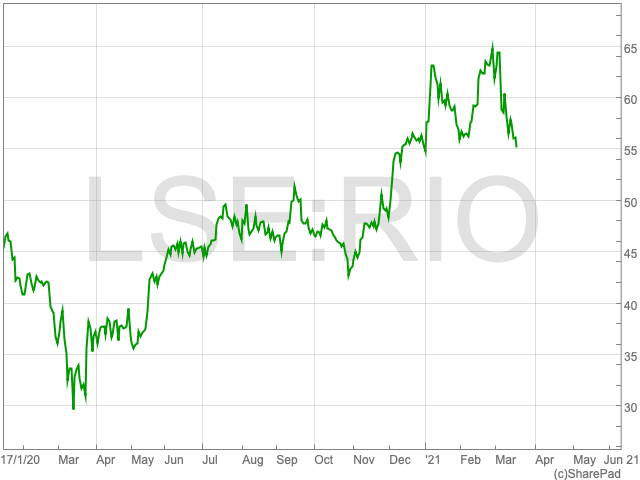
At one point, Rio Tinto (LON:RIO) doubled its valuation over the past year, from 3,212p per share in March 2020 to 6,352p per share in February 2021, as a result of a sharp rise in commodity prices.
During March 2020 the Rio Tinto share price has seen a dip, to 5,496.82p per share, which was caused by iron ore prices dropping from recent highs.
Results
Rio Tinto announced in February a 22% rise in annual net profit of $9.77bn for 2020 , up from $8.01bn the year before. The world’s leading producer of iron ore also reported a 20% increase in underlying earnings to $12.45bn, above analyst forecasts of $11.75bn. While its revenue in 2020 grew by 3.3% year-on-year to $44.6bn.
In addition to a positive cash flow in each of the past five years, Rio Tinto’s free cash flow was $9.4bn in the 2020.
Rio Tinto revealed a record $6.5bn final dividend, or $3.09 a share, plus a one-time payout of 93 cents per share. In addition to the company’s half-year dividend, Rio Tinto’s payout for the financial year amounted to $9bn.
Production
Rio Tinto maintained expenditure of $625 million on exploration and evaluation, as the company progressed its greenfield programmes and other evaluation projects, in particular Resolution Copper in Arizona, Jadar lithium-borates in Serbia and Winu copper-gold in Western Australia.
The FTSE 100 mining company also is due to start negotiations with the government of Mongolia as it seeks to complete the $6.75bn expansion of a large-scale copper project in the Gobi dessert.
Commodities
Iron ore’s price thrived throughout 2020, and Rio Tinto’s outlook will depend on whether or not the commodity can continue its rise into 2021, as it makes up 63% of the mining company’s revenue.
However, a recent pollution crackdown by China began to suppress the price of iron ore. There are now question marks over the future prospects of the commodity, which could in turn lead to concerns over the FTSE 100 company’s future prospects.
Having risen from $80 per tonne in March 2020 to nearly $180 per tonne a year later, the commodity has retreated following China’s new policies.
Nicholas Snowdon, analyst at Goldman Sachs, predicts the Chinese government will increasingly look to limit emissions which will cap the production of iron ore, causing downward pressure on the price of the commodity.
“We now see iron ore prices turning lower in the coming months,” said Snowdon, who has set a 12-month price target of $100 a tonne. “This reflects mounting evidence that supply is shifting toward a sustained recovery and also that China’s environmental policies will reinforce a peak in iron ore imports.”
The FTSE 100 dipped by 0.3% to 6,784 as European and Asian markets barely moved on Wednesday.
“Investors were waiting patiently for the Federal Reserve’s latest meeting, which is expected to see the central bank upgrade its forecasts for the US economy,” said Russ Mould, investment director at AJ Bell.
“It tends to be the case on Fed Wednesdays, the markets were cautious-to-negative out on the gate,” Connor Campbell, financial analyst at Spreadex, added.
“The spotlight is going to be put on the issue by this evening’s Federal Reserve meeting, and Thursday’s Bank of England chaser,” Campbell said.
FTSE 100 Top Movers
BT was the top riser (5.22%) on Wednesday morning after its mobile and internet service provider EE won a new 5G spectrum in an auction, followed by Rolls-Royce (3.32%) and RELX Group (2.44%).
The day’s top fallers so far are Evraz (-3.10%), Anglo American (-2.65%) and Johnson Matthey (-2.36%).
Dignity
Dignity confirmed a £19.6m loss last year even though the number of deaths soareddue to the scourge of the coronavirus pandemic. The company confirmed the total number of deaths for the year to 25 December was 663,000, up by 14% from 2019, and the highest since 1918.
Dignity organised a record breaking 80,300 funerals last year, nearly 11,000 more than the year before.
Hostleworld
Hostelworld (LON:HSW)swung to a loss as the company’s bookings dropped by 79% during the past year. The Dublin-based accommodation provider also reported a €17.3 million loss at ebitda level, down from €20.5 million profit in 2019. Net annual revenue fell by 81% from €80.7 million to €15.4 million in 2020.
Dignity spent more on PPE while earning less per service
Dignity (LON:DTY) confirmed a £19.6m loss last year even though the number of deaths soared due to the scourge of the coronavirus pandemic.
The company confirmed the total number of deaths for the year to 25 December was 663,000, up by 14% from 2019, and the highest since 1918.
Dignity organised a record breaking 80,300 funerals last year, nearly 11,000 more than the year before.
The company confirmed it became stretched on a number of occasions as deaths during the peak of the pandemic in Q2 47% higher than a year before.
Dignity faced rising costs in addition to limitations on the type of funeral service the company was able to offer.
The company spent more money on personal protective equipment while earning less per service as it withdrew the use of limousines, in addition to limiting the number of guests and, at times, ceasing church services.
Clive Whiley, Chairman of Dignity plc, commented: “During 2020, we have continued to be focused and resilient in the light of many changes, however the business has remained robust.”
“Whilst COVID-19 featured heavily in our day-to-day activities into the first quarter of 2021, we did not lose sight of the numerous project work-streams initiated in the last year, aimed at affording the Board the time and collateral necessary to allow the business to self-heal, without recourse to dilutive funding initiatives,” Whiley added.
“In a unique and challenging year, it is the dedication of our staff that has enabled continued delivery of our services, supported by a refreshed strategy and management team. Our people are fundamental to both the Group’s success and sustainability and I would like to thank them for their significant contribution, resilience and commitment to service during what has been an exceptional time for society, bereaved families, our people and our business.”
Hostelworld (LON:HSW)swung to a loss as the company’s bookings dropped by 79% during the past year.
The Dublin-based accommodation provider also reported a €17.3 million loss at ebitda level, down from €20.5 million profit in 2019.
Net annual revenue fell by 81% from €80.7 million to €15.4 million in 2020.
The fall meant the firm swung to an earnings loss of €17.3m, down from a €20.5m profit in 2019.
Hostelworld confirmed €6.2m in cancellations fees as travellers ditched their plans due to the effect of the pandemic.
The group announced it would not be paying out a dividend for the year on account of its performance.
Gary Morrison, chief executive at Hostelworld, commented on the results:
“2020 has been an extremely challenging year for both Hostelworld and the entire global travel industry. In light of the unprecedented challenges presented by the pandemic, our key priorities have been to (i) support our employees, customers and hostel partners; (ii) increase our liquidity, and (iii) accelerate the execution of our core platform roadmap,” Morrison said.
“During the year we delivered significant improvements in marketing capabilities, user experience and inventory competitiveness. These improvements will have further strengthened the competitiveness of our platform relative to our capabilities in Q4’19, when we had returned bookings to growth.”
“As vaccination programmes continue to be rolled out in our key geographies across the world, I am confident our loyal customer base has a strong desire to travel once restrictions allow, even more so after a prolonged period of confinement. Furthermore, I continue to see significant opportunities to build a broader catalogue of relevant experiential travel products and services beyond hostel accommodation, and opportunities to connect like-minded travellers with each other via social features on our platform.”
“I remain confident that Hostelworld will emerge from the pandemic stronger than before and able to seize market opportunities when normal travel patterns resume”.
Capita to raise £700m from selling its non-core assets
Capita (LON:CPI), the outsourcing and professional services company, revealed plans on Monday to restructure the business in addition to the planned sale of non-core assets, following a challenging year.
The FTSE 250 company will compact its operations into three divisions, down from six, while seeking to raise £700m from selling its non-core assets in an effort to secure its finances.
Capita’s plan is to offload £500m worth of assets this year, with the remaining £200m to be sold at a later date.
Following a challenging year during the pandemic, the company reported a 9% drop in revenue to £3.18bn during 2020, down from £3.5bn the year prior.
Capita’s operating profit also fell by 56% to £111m for the year, while its pre-tax profit sank by 67% to £65.2m.
John Lewis, chief executive of Capita, commented on the company’s performance during the pandemic, as well as its foundation for moving forward:
“I’m pleased with our robust response to the Covid-19 crisis and the challenges of 2020, protecting our business, client services and – most importantly – our people, whom I would like to thank for their hard work and commitment,” Lewis said.
“Despite the challenges, we have continued to make good progress, improving client relationships and winning significant new contracts. Capita is a much better business than it was three years ago when we began our transformation.”
“We are now building on that stronger foundation to move onto the next phase of our transformation by simplifying from six divisions to three. Two core divisions will be focused on the needs of our government and blue-chip customer experience clients, in growing markets where we know we can win. The third will comprise a portfolio of non-core businesses from which we are targeting significant disposal proceeds.”
“We are planning a return to organic revenue growth this year and sustainable cash generation in 2022, as we continue to build a more focused, client-centric and streamlined Capita for the long term.”
Alpha FX Group (AIM:AFX), a provider of FX risk management and alternative banking solutions, confirmed on Wednesday that the company’s revenue rose by 31% to £46.2m in 2020.
This is up from £35.4m in 2019 as the company said its market position “remains strong” under testing conditions.
Alpha’s underlying profit before tax also jumped by 20% to £17.5m, up from £14.6m in 2019.
The AIM-listed company grew its client numbers for the year ending 31 December 2020 by 16% to 754, while average revenue per client increased by 12%.
Alpha outlined its “solid cash position” and confirmed the company is debt free with £91m of net assets and £52m in free cash.
The company confirmed a final dividend of 8p per share which is set to be paid in May 2021. Having cancelled dividend payments for 2020, this figure exceeds the company’s 2018 and 2017 payouts, which were 6.5p and 4.9p respectively.
A year ago, after one client was unable to lodge its collateral leaving a £30.2m black hole, Alpha confirmed it was cancelling its dividend payment.
The company confirmed in a statement on Wednesday that while the pandemic remains a cause for concern, Alpha FX Group remains on track to deliver another year of strong growth, having already made an excellent start to the year.
Morgan Tillbrook, chief executive of Alpha FX, commented: “For many companies across the world, 2020 has represented their greatest challenge to date, and Alpha was no different. However, what I witnessed last year was a team that grew more ambitious, more determined and more connected with every challenge that was thrown at them.”
“The result that the market will see today was another year of consecutive growth across all divisions, and I am naturally delighted with this. However, I believe the long-term benefits for our team and culture, having overcome this experience together, will prove far more valuable still.”
Active investor Gresham House Strategic (LON: GHS) has increased its stake in Universe Group (LON: UNG) following the appointment of a new chief executive at the retail management and loyalty systems developer and installer.
The shareholding has increased from 12.84% to 17.06%. Gresham House Strategic reported its initial 4.83% stake in October 2017 and it was increased to 9.4% in November 2018. There were further purchases up until April 2019. The Universe share price has recovered to 4.6p, but it is still well below the level when the original stake was bought.
Neil Radley is joining Univers...
The outlook for the UK economy is improving as the so far successful vaccine roll-out has led the governor of the Bank of England to hint at stronger than anticipated growth in the coming months. While Andrew Bailey warned against complacency, he suggested that the United Kingdom could return to its pre-pandemic level before the end of the year.
With the Brexit deal completed and the end of lockdown in sight, Britain’s economy could be worth another look for investors who largely turned their backs on UK companies.
David Smith, the manager of Henderson High Income Trust, said: “Now that effective vaccines are being rolled out there is a credible path to life returning to some form of normality sooner rather than later.”
“With strong global economic growth expected as the recovery from the pandemic comes through, and continued monetary and fiscal support from governments, the backdrop is positive for equities.”
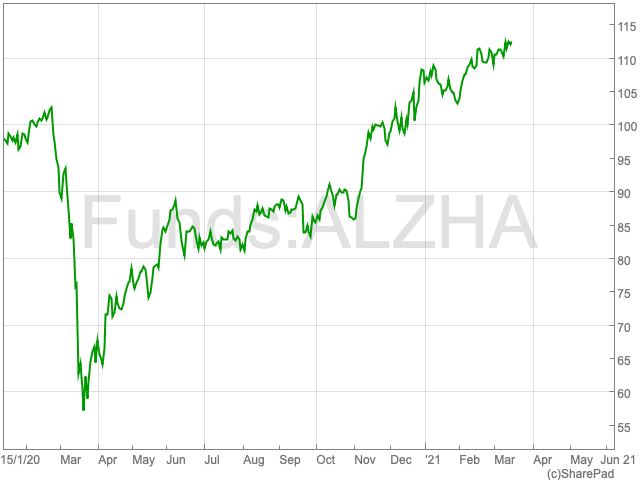
Aberdeen Standard Sicav UK Equity and Allianz UK Mid-Cap are two funds which could reap benefits from a resurgent UK economy.
Aberdeen Standard Sicav UK Equity
The fund’s aim is to outperform the FTSE All-Share Index, achieving a combination of growth and income by investing in British companies.
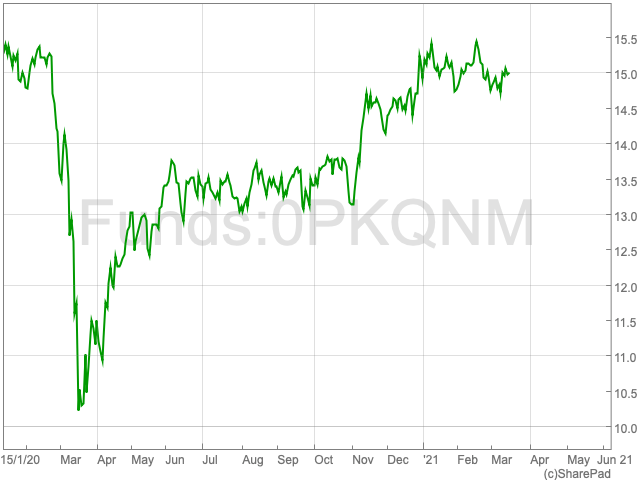
As the economy crashed as news of the impact of the pandemic became known, the Aberdeen Standard Sicav UK Equity avoided negative growth. It remained above its benchmark index and quickly recovered toward its pre-pandemic level.
Over a five-year period the fund saw a yearly rise of 8.22%, exceeding its performance target of 5.87%. While over a three-year period the UK-based fund outperformed its target by 4.67%.
Aberdeen Standard Sicav UK Equity
The company’s top holdings are AstraZeneca (6.95%), Prudential (4.7%) and Close Brothers Group (3.9%), while it is defensively weighted towards the financials (21.8%), healthcare (17.2%) and consumer goods (15.7%) sectors in response to current market conditions.
The fund’s dividend yield is historically around 0.8%.
Allianz UK Mid-Cap
The fund aims to achieve capital growth by generally investing in UK mid-cap stocks listed on the London Stock Exchange.
The Allianz UK Mid-Cap has outperformed its benchmark, the FTSE 250 Mid ex-ITs, over the last two years, 30.38% to 16.15%, as well over the course of the past year, 47.89% to 40.64%. In addition, the fund’s share price has climbed by 79.4% over the past year.
Allianz Uk Mid-Cap’s top holdings are in Howden Joinery Group (5.52%), Travis Parkins (5.36%) and Wizz Air Holdings (5.26%). While it is most weighted towards consumer services (31.54%), industrials (24.52%) and consumer goods (16.03%).
The fund’s yield is 1.02% which is reinvested annually.
DAX up despite concerns of blood clots from Oxford/AstraZeneca vaccine
France, Germany, Italy and Spain came together to suspend the Oxford/AstraZeneca Covid-19 vaccine in an effort to protect public confidence, it has been reported today.
The number of countries to have suspended or limited use of the jab stands at 16, despite the European Medicines Agency saying there has been no evidence found of a link between the vaccine and incidences of blood clots.
However, authorities in Spain and Germany have expressed concern over the cases of blood clots seen in people who have taken the Oxford/AstraZeneca vaccine.
Ann Taylor, AstraZeneca’s chief medical officer, said that while 17m people in the UK and the EU had received the jab, cases with blood clots were “lower than the hundreds of cases that would be expected among the general population”.
“The nature of the pandemic has led to increased attention in individual cases and we are going beyond the standard practices for safety monitoring of licensed medicines in reporting vaccine events, to ensure public safety,” Taylor added.
Russ Mould, investment director at AJ Bell, commented on the impact of the news on investor sentiment.
“The decision by several European countries to suspend use of the AstraZeneca vaccine around disputed safety concerns is not helpful to sentiment and investors will be hoping the situation can be resolved sooner rather than later,” Mould said.
However, European stock markets rose on Tuesday amid concerns about the immediate future of the roll-out.
At 1335 GMT the FTSE 100 is up by 0.69% as the pound weakened while the DAX is up 0.74%.
Chris Beauchamp, chief market analyst at IG, said the EU’s decision could come back to haunt it following an already stumbling vaccine roll-out.
“The EU’s inability to construct an effective vaccine policy months ago continues to haunt it, with the latest decision appearing to arise from an overreaction to isolated incidences,” Beauchamp said.
“With Italy facing another wave of infection now really isn’t the time to reduce the vaccine options available to European populations, and the prospect of an extended crisis in Europe even as the UK and US move fully into the recovery sage threatens to undo much of the rally in European markets of recent months.”