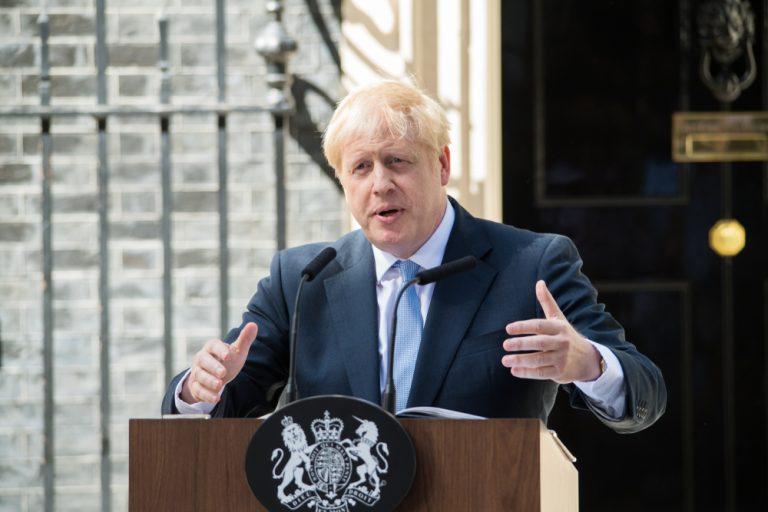
UK considering rapid testing to allow return of mass gatherings

0

Vaccine passports ‘unlikely’ for those remaining in the UK

The UK government is looking at its options around rapid testing for coronavirus as a route to reopening venues where social distancing is unfeasible.

“Quick turnaround testing is part of a plan to get mass gatherings back,” one insider said, according to the Financial Times. 

Prime Minister Boris Johnson has said rapid testing is the best route to opening up venues and events where people typically gather in the largest crowds.

Allowing people to safely return to entertainment values is the “toughest nut to crack”, according to the Prime Minister.

Boris Johnson has also said, while vaccine passports may be required for international travel, they would be unlikely for those remaining in the UK.

“Some countries clearly are going to be wanting to insist people coming to their country have evidence of a vaccination, just as people insisted in the past you had evidence you were vaccinated against yellow fever,” Johnson said.

“What I don’t think we will have in this country is — as it were — vaccination passports to allow you to go to, say, the pub or something like that.”

The Government is weighing up plans for a “test with a ticket” scheme, where attendees will receive a quick turnaround test for coronavirus as part of attending a mass gathering, such as a concert. 

“Those kind of things can really help us open up things with bigger numbers, where social distancing affects their ability to operate in an economic way,” a source told the Financial Times.

The World Health Organisation’s special envoy on coronavirus, supported the approach as a means of returning the UK to a form of normality.

“The secret to getting life back to some degree of normality for most of us is going to be the availability of really reliable, super-quick tests,” he told Good Morning Britain.

House prices up 0.5% despite stamp duty holiday coming to an end

0

House prices expected to fall in April

UK house prices rose this month as house buyers were unphased by the pending expiration of the stamp duty holiday.

Following a 0.3% dip in January, average house prices coming to the market increased by £1,511, or 0.5%.

Although the stamp duty holiday is yet to end, buyers coming to the market now are unlikely to complete by the deadline on the last day of March.

Rightmove’s director of property data, Tim Bannister, suggested working from home is motivating people to seek more suitable properties.  

“Last year the market was unexpectedly buoyed by buyers’ determination to move and satisfy their new lockdown-induced housing needs,” Bannister said. 

“We may well be seeing a continuation of that this year. Rightmove’s early 2021 buyer data shows that despite the imminent end of the stamp duty incentive, all of the key buyer metrics are ahead of early 2020, itself an active period as the market was boosted by the post-election ‘Boris bounce’.”

Lockdowns also limited supply, as people decided against selling. This created upward pressure on house prices.

“As well as the current lockdown motivating buyer demand again, the restrictions have also been a factor in limiting new supply, leading to some modest upwards price pressure. These are strong signs that new buyer demand is not facing a cliff-edge after the 31st of March, said Bannister.

“It remains to be seen if this momentum will be enough to make up for the removal of the stamp duty savings that are benefitting many buyers and have been adding a sense of urgency to the whole market,” Bannister continued. 

A question remains over the sustainability of this demand as the removal of stump duty comes into play. Reallymoving, the home moving company, forecasted house prices in England and Wales to fall by 4.1% in April, the month after the stamp duty holiday comes to an end.

Mast Energy Developments: Sustainable high growth power plants in the UK

The UK Investor Magazine Podcast is joined by Louis Coetzee, Non-exec Chairman of Mast Energy Developments. Mast Energy Developments is set to IPO on the London Stock Exchange in the coming weeks and we discuss Mast’s plans for supporting the UK grid with their Reserve Power plants.

Mast Energy Developments has a series of shovel-ready projects to begin work on after their IPO and Mr Coetzee outlines the investment case for Mast as they roll out their sustainable power generation business.

Mast Energy Developments are holding an IPO presentation This Thursday 18th February at 10.30am, please register here.

Risk Warning:

Investments in IPOs involve a high degree of risk and are not suitable for all investors. Capital is at risk.

FTSE 100 index reaches one month-high

0

The FTSE 100 creeped forward again as the market opened on Tuesday, adding 0.2%, or around 10 points. At 9am the FTSE made it as high as 6,792, its highest point in over a month. 

“It was a fairly predictable start from the FTSE, following up Monday’s blowout gains – spurred on by the UK speedily reaching a key milestone in the race to vaccinate the nation – with a timid, contemplative open,” said Connor Campbell, financial analyst at Spreadex. 

Today was a big day for corporate results as mining giants, Glencore and BHP announced positive dividend news on the back of surging commodity prices. 

FTSE 100 movers

Glencore (3.58%) capped its positive dividend news by leading the early morning trade on the FTSE, closely followed by HSBC (3.14%) and Rolls-Royce (2.64%), Tuesday’s next biggest risers so far. 

At the other end, Compass Group (-1.67%), Just Eat (-1.28) and Pearson (-1.04), were the biggest fallers during Tuesday morning’s trade. 

BHP

BHP, the mining giant, has revealed a record $5.1bn interim dividend as its profits half way through the year climbed to a seven-year high. The FTSE 100 mining company, which removed its last dividend in an effort to reduce swelling debt, has put forward a shareholder payout of $0.12 per share. 

If the price of the company’s two main commodities – iron ore and copper – remain stable, then BHP will again surpass its debt target of $12-17bn. This could pave the way for another large dividend payment at the end of the fiscal year, according to analysts.  

Glencore

Glencore has today announced it will reinstate its dividend having reduced its debt levels. The FTSE 100 mining company, which removed its last dividend in an effort to reduce swelling debt, has put forward a shareholder payout of $0.12 per share. 

Following a close at 282.3p a share following Monday’s trading, Glencore opened up on Tuesday at 290p, following the company’s financial results announcement. Having dipped as low as 112.5p in March 2020, Glencore’s share price has recovered steadily since.

BHP pays out record dividend thanks to commodities boom

0

BHP profits hit seven-year high

BHP, the mining giant, has revealed a record $5.1bn interim dividend as its profits half way through the year climbed to a seven-year high. 

BHP’s ‘very strong’ results came on the back of a surge in the prices of iron ore and copper.

Copper and iron ore, two of BHP’s most important commodities, saw 33% and 28% respective year-on-year price increases during the half. 

Shareholders will receive an interim dividend of $1.01 per share, up from $0.65 at the same point one year ago. BHP pays out a minimum of 50% of its underlying profit as a dividend in line with company policy. 

Russ Mould, investment director at AJ Bell, says the dividend payout is a signal of a wider trend in the mining industry, especially compared to oil and gas.

“While a bump in the oil price has given Royal Dutch Shell and BP a lift recently, the divergent fortunes in the resources sector between oil and gas firms and miners is evident in the record first half dividend paid by BHP not too long after the oil majors had slashed their own payouts,” said Mould.

The rise of the price of these commodities is down in part to the speedy recovery of the Chinese economy and the country’s ever-growing demand levels.

BHP reported a half-year profit of $3.8bn, down $1bn from the same period the year before. The mining giant also revealed a net debt of $11.84bn.

If the price of the company’s two main commodities – iron ore and copper – remain stable, then BHP will again surpass its debt target of $12-17bn. This could pave the way for another large dividend payment at the end of the fiscal year, according to analysts.  

“If commodity markets stay strong, as we expect, a larger capital return will be likely with full-year results in August,” said Jefferies analyst Christopher LaFemina. 

Mike Henry, chief executive of BHP, expects demand levels for the company’s goods and services to continue to rise. 

“Our outlook for global economic growth and commodity demand remains positive, with policymakers in key economies signalling a durable commitment to growth and signalling ambitions to tackle climate change,” Henry said. 

“These factors, combined with population growth and rising living standards, are expected to drive continuing growth in demand for energy, metals and fertilisers.”

Glencore to reinstate dividend despite $1.9bn loss

0

Glencore chief Ivan Glasenberg set to step down

Glencore has today announced it will reinstate its dividend having reduced its debt levels. 

The FTSE 100 mining company, which removed its last dividend in an effort to reduce swelling debt, has put forward a shareholder payout of $0.12 per share. 

This amounts to $1.6bn in total, while Glencore’s debt is down from nearly $20bn to $15.8bn. 

Outgoing chief executive, Ivan Glasenberg, who owns shares worth around $4bn, said the board will be considering special 2021 “top-up shareholder distributions”, alongside its interim results in August.

Following 20 years in charge at Glencore, Glasenberg will be making way for Gary Nagle, who heads up the company’s coal assets.

Glencore’s performance has improved as a result of a surge in the price of a number of commodities. 

The mining company’s earnings remained steady at $11.6bn, as strong prices for marketing and industrial metals were evened out by weaker coal prices. 

Overall, Glencore made a loss of $1.9bn for 2020 after taking a number of impairment charges against copper and coal assets. 

Glasenberg drew attention to the need for commodities as the world looks to move towards a recovery and a more sustainable future.

“As the world focuses on the pathway to recovery from Covid-19, it is clear that meeting the goals of the Paris Agreement has taken on even greater urgency. While innovation and technological advances have transformed how we live and work, the commodities needed to enable this have not,” Glasenberg said. 

“Our commodities are essential in developing all facets of infrastructure needed to deliver the goals of energy and mobility transition.”

Russ Mould, investment director at AJ Bell, echoed the CEO’s sentiments.

“Now the most valuable company on the FTSE 100, BHP and other companies focused on metals and minerals, like Glencore which resumed its own dividend today, are potential beneficiaries rather than the potential victims of an energy transition which the traditional oil firms appear to be,” said Mould.

Following a close at 282.3p a share after Monday’s trading, Glencore opened up on Tuesday at 290p. Having dipped as low as 112.5p in March 2020, Glencore’s share price has recovered steadily since.

Oilex and Hurricane Energy lead AIM oil and gas companies higher

0

There were a series of eye-catching performances from AIM-listed companies on Monday, as the London stock exchange for small and medium size growth companies bore the fruits of positive macroeconomic news. A number of the exchange’s top performers were oil and gas companies which are specifically benefitting from the resurgence in oil prices. 

Oilex, Petroneft Resources and Hurricane Energy were among the top performing oil and gas companies on the AIM. In addition, all three have established plans to increase output capacity moving forward. While BP and Shell also saw significant gains throughout the day, their AIM-listed counterparts outperformed the oil giants as they had been lagging behind in recent weeks.

Oilex (LON:OEX)

Oilex’s share price doubled on Monday as the oil and gas company headed up a day of outstanding gains on the AIM. Oilex opened at 0.10p a share, then soared to 0.21p before easing back to 0.17p per share. 

The news followed the AIM company’s recent announcement that it is in the later stages of discussions to acquire Gujarat State Petroleum Corp’s (GSPC) 55% interest in the Cambay oil field in India. Oilex first announced it had reached an agreement to buy GSPC’s stake in September 2019 however the sale process is yet to complete.

Petroneft Resources (LON:PTR)

The next best performing oil company on the AIM on Monday was Petroneft Resources. Having opened at 1.22p, Petroneft Resources shares jumped up to 1.78p, over a 30% increase, before the day’s end. 

Petroneft Resources is well positioned to capitalise on the resurgence of oil prices as the AIM company recently unveiled plans to grow its production base significantly. Operating in Russia, Petroneft’s assets are split into two licenses both within the Tomsk Oblast in Russia.

Hurricane Energy (LON:HUR)

Finally, the third largest gains out of oil companies listed on the AIM on Monday, came from Hurricane Energy. The oil and gas exploration firm saw a 30% increase in its share price in early-afternoon trading, up to 4.31p per share. 

The company’s impressive performance comes less than two months after the oil producer warned shareholders their shares could be worth nothing as its future looked so precarious.  Hurricane’s CEO, Antony Maris, more recently outlined plans to secure funding to further develop its portfolio within the Lancaster oil fields.

Oil reaches its highest price in over a year as Texas freezes over

Cold spell in Texas causes pressure on supply and demand

Oil prices soared to their highest point since January 2020 as vaccine roll-outs provide hope, in addition to a cold spell in energy-rich Texas intensifying demand. 

Brent crude oil was up as high $63.76 before coming back down to $63.25 at midday. An increase of its opening price of 1.3%.  

West Texas Intermediate reached as high as $60.85, before settling at around $60.0, a rise of 1.9% from market opening.  

The news is a continuation of a recent resurgence in oil prices which rose by 5% last week.

While typical factors are at play, including vaccine roll-outs and news of pending stimulus checks, an Artic blast sweeping across Texas is also impacting oil markets.  

After a week of uncharacteristically cold weather across large swathes of the US, temperatures have been forecast to reach all-time lows. Dallas is tipped to fall to -14C.

The Lone Star State’s grid operator warned of “tight grid conditions” ahead as electricity prices raced beyond $2,000 per megawatt-hour last week, way above last year’s average of $25. 

North American natural gas analyst at S&P Global Platts, Luke Jackson, described the effect of the unusual weather conditions on both the supply and demand side. 

“This is kind of like a perfect storm: You have record demand, and you’re losing gas production. It starts creating a competition for gas. There’s not enough gas to go around for everyone,” he said.

Hope remains for a stimulus package being passed shortly to aid the US economy.

Tamas Varga, oil analyst at London brokerage PVM Oil Associates, says Joe Biden’s stimulus package will be approved despite procedural delays. 

“The long-awaited $1.9trn package has not been passed. As the latest US job data hints at struggling market the relief package cannot come soon enough for some,” said Varga.

“The stimulus will likely be approved in some shape or form.”

Pound at highest level against US dollar since 2018 following vaccine news

Pound above $1.39 on optimistic outlook for UK economy

The pound has risen again today following news that the vaccine roll-out is surpassing expectations, in addition to a weak US dollar.

For the first time since April 2018, the pound is valued at $1.39, as optimism over a global recovery lifted the FTSE 100. 

The pound has strengthened since December when the UK and EU put pen to paper on a trade deal. 

This was compounded more recently as the UK shared positive news around its vaccination efforts.

Now up to 15m people have received a vaccination, while the total number of cases has reached 4m. 

Russ Mould, investment director at AJ Bell, feels lowered expectations have caused markets to react positively to the news.

“Government attempts to manage expectations on Covid better are helpful to the market which is now probably pleasantly surprised at just how quickly the UK has vaccinated the most vulnerable sections of its population,” Mould said.

Milan Cutkovic, market analyst at Axi, expects the pound to continue its momentum over the coming weeks. 

“The British Pound is set to extend its winning streak in the near-term, as the successful vaccination campaign could give the UK a major advantage,” said Cutkovic. 

“The currency is likely to test the 1.40 level against the US dollar soon and gain further ground against the Euro.” 

The pound is now at 1.46 against the euro, its highest point since May 2020.

A report by the Bank of England has suggested UK GDP will recover towards pre-Covid levels during the coming year.

“GDP is projected to recover rapidly towards pre-COVID levels over 2021, as the vaccination programme is assumed to lead to an easing of COVID-related restrictions and people’s health concerns,” the report said.

The Bank of England predicts growth of 7.25% during 2022, up from a previously forecast 6.25%.

FTSE 100 starts off ‘without a hint of a hangover’

0

Following a combination of the US stimulus package, positive news over vaccines and rising oil prices, the FTSE 100 began the week in a buoyant mood. The index rose by 70 points, up nearly 1%, as positive economic news broke across the world. 

“After finally getting some impetus on a Friday afternoon, at a time when most of us were winding down for the week, the FTSE 100 has started Monday morning without a hint of a hangover from the weekend,” said investment director at AJ Bell, Russ Mould.

“Government attempts to manage expectations on Covid better are helpful to the market which is now probably pleasantly surprised at just how quickly the UK has vaccinated the most vulnerable sections of its population,” Mould continued. 

Investors are now more able to see the light at the end of the tunnel, albeit with further complications likely along the way. This has been reflected by strong performances this morning across the FTSE 100.

FTSE 100 movers

International Consolidated Airlines (4.97%), Barclays (4.87%) and JD Sports (4.69%) made the most sizeable gains on the FTSE 100 during Monday’s early morning trading.

Tesco (-19.7%) was down after its shares were consolidated, while AstraZeneca (-1.01%) and RELX Group (-0.75%) were the worst performers on market opening, as the company’s share prices did not reflect the day’s positive macroeconomic news.

Rolls-Royce

Rolls-Royce has appointed Panos Kakoullis as the engineering company’s new chief of finance officer. Rolls-Royce announced earlier this year that flying hours would plummet by 45% as increased travel restrictions continue to impact the company. 

The FTSE 100 company’s share price is up by 1.5% in early Morning morning trade upon news of the company’s directorate change.