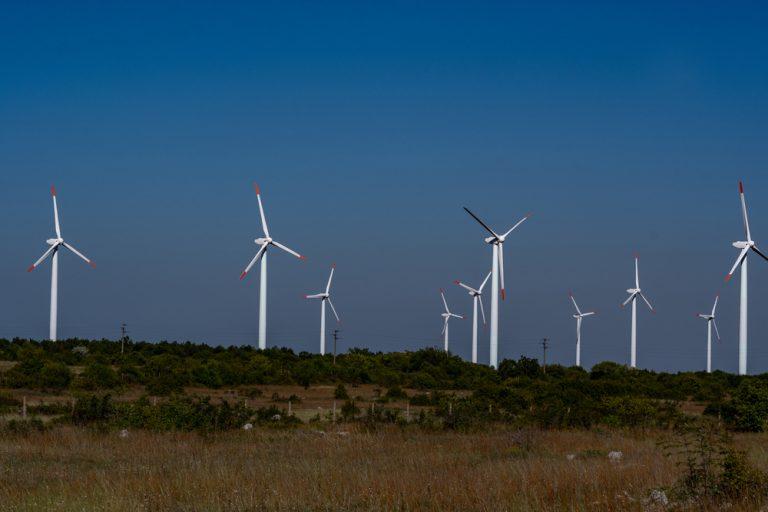
Octopus Renewables Infrastructure Trust: a diversified option as the world looks to renewables

Renewable energy

Towards the end of 2020 Boris Johnson launched a green plan, vowing to expand the renewable energy sector. This included a pledge to quadruple the capacity of offshore wind power within the next ten years. The UK prime minister also announced his intention to ban the sale of diesel and petrol cars by 2030.

The policies, in addition to the wider economic mood, has brought on confidence that the renewable energy sector is the place to be for investors in 2021. Investment trusts are an increasingly viable option for investors seeking to gain exposure to renewables while gaining diversification, in addition to helping the environment.

Octopus Renewables Infrastructure Trust (ORIT)

The prospects of the renewable energy sector in the UK and across the world means ORIT (LON:ORIT) is an attractive option to capture growth in the sector. 

ORIT is an investment trust listed on the London Stock Exchange, operating a diversified portfolio of renewable energy assets in Europe and Australia. Managed by Octopus Investments Limited, ORIT aims to provide investors with sizable and sustainable dividends, alongside capital growth. 

The company produces 502GWh of electricity per year, powering 114,000 homes through clean energy. ORIT estimates that 79,000 tonnes of carbon emissions are avoided as a result of its operations. This is the equivalent to 389,000 new trees.

ORIT metrics

The board announced that the unaudited net asset value (NAV) of ORIT as at December 2020 on a cum-income basis was £343.9m or 98.26p per share. This represents a 1.05p increase in ORIT’s NAV per share since September 2020.

Key drivers of the increase in NAV were an increase in the valuation of one of the company’s wind farm investments in Sweden, and an increase in power price forecasts. This allowed the company to secure pricing on its UK solar portfolio. Prices are now fixed until the end of September on seven of the company’s eight UK sites, and until March 2022 on the other one. The resulting minimisation of revenue risk led to a valuation increase in the company.  

In Q4 of 2020 ORIT paid a dividend of 1.06p, which meant the trust met its 3% annualised dividend yield target based on a total dividend payment of 3.18p and an IPO of 100p. The company is setting a target for its 2021 dividend yield at 5%. 

With ORIT’s share price at 113.8p, the company’s premium to NAV is at 15.8%.
Beazley swings to $50m loss

0

Pandemic a testing time for Beazley

Beazley posted a $50m loss this morning following an increased number of claims due to the global pandemic, in particular payouts related to postponed of cancelled events.

The insurance company’s announcement comes a year after making a profit of $267.7m. 

Beazley fell to a loss despite solid investment income of $188m and a 19% increase in new premiums written to $3.5bn. 

Insurance claims for cancelled events, including music festivals and conferences, piled up due to the spread of coronavirus throughout 2020. 

Chairman of Beazley, David Roberts, outlined the scale of the pandemic’s impact on wider society and the insurance industry. 

“The spread of COVID-19 has triggered a deep global recession and widened existing wealth and health divisions, having a more extensive effect on society than one could have imagined.

It has tested the insurance industry and our role in protecting society against risk and unforeseen events,” Roberts said. 

Despite the loss Beazley’s share price jumped up by 27p at Friday’s market opening, over 13%, to 363p per share. 

Chief executive Andrew Horton reflected on Beazley’s performance and prospects for the coming year, as well its ability to resume shareholder payouts. 

“Beazley’s gross premiums written increased by 19% to $3,563.8m, supported by rate rises across most of our divisions.  We also achieved a strong investment income in the face of volatile conditions.

I am very positive about the year ahead. We have the capital strength to support our growth plans and look forward to a continued favourable rate environment and expansion of our specialist products globally. I am confident we can return to paying dividends during the course of 2021,” Horton said. 

Given the company’s financial predicament and uncertainty over the future surrounding Covid-19, the Beazley board decided not to payout to shareholders at the end of 2020. 

Beazley’s last dividend payment of 8.2p per share came in March 2020.

Emortal: investing in the preservation of our digital legacies

Emortal are currently raising funds on Crowdcube to finance the development of their solution to preserve our digital life and memories.

As technology evolves, the memories held in digital bits & bytes may be safely backed up in the cloud now, but this doesn’t mean the formats will be accessible in the future.

Emortal has identified a 2.3bn addressable market and having spent 10 years in R&D, is set to launch in 2021

The UK Investor Magazine Podcast is joined by CEO & Found Colin Culross to discuss the history of the business and plans for the future.

Visit the Emortal Crowdcube page to find our more here.

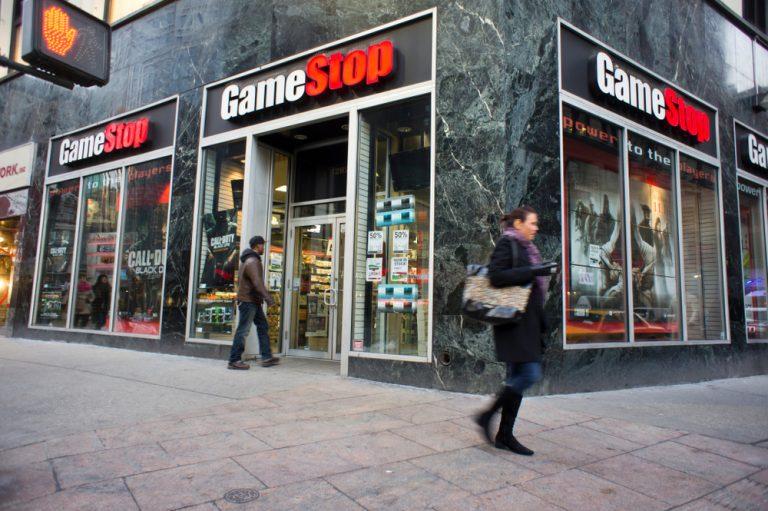
GameStop plummets below $65 as Reddit traders feel the pressure

0

$30bn wiped from GameStop’s valuation

Investors are increasingly selling their stock in GameStop as the company’s shares dropped further today. 

The company began trading on Thursday at $91.20. Before midday GameStop’s share price had fallen by over 30% to $63.32. 

On January 28 shares in Gamestop were at $483 each. The trading events over the past week have taken around $30bn off the company’s market capitalisation. 

GameStop shares soared towards the end of January as Reddit traders coordinated a ‘trade war’ on social media against Hedge Funds deemed to have betted against the stock. 

The Redditors attempted similar acts of rebellion with AMC and the silver market but didn’t fare so well.  

“The supposed attempt by Redditors to engineer a short squeeze in silver is not going as well,” said a recent report from New York-based bank Brown Brothers Harriman.

The question now is whether the Redditors can remain a force in the stock market and what the future holds if they do.

“I think now that they’ve recognized their power and now that they’ve learned some lessons, we’re going to get more of it, not less of it,” said Mark Cuban, the billionaire entrepreneur. 

A report by the RBC strategists team sang from the same hymn sheet.

“Unless the door closes, we fail to see why retail investor interest in trading specific names will completely go away given how elevated cash on the sidelines is among consumers,” the team led by Lori Calvasina said in a Tuesday note to clients. 

Analysts have shared concerns for retail traders getting caught in the headlights of the stock market. 

“Any purchase or sale they make fits with their overall strategy… and appetite for risk. Departing from these key disciplines can lead to trouble especially as financial markets are often at their most treacherous when making money looks easiest (just think of the peaks in 1999 or 2007),” said Russ Mould, investment director at AJ Bell.

Oil rises to highest point for over a year

Oil continued its rally following a 2% jump on Tuesday after Saudi Arabia said it would be raising the price of oil for buyers in the US and Europe. Hopes of increased demand as economies reopened also buoyed prices.

Both global and US crude benchmarks rebounded as President Joe Biden pressed ahead with the US economic stimulus, in addition to OPEC production levels being less than expected. 

Brent crude oil jumped by over 5% at $58.46 a barrel on Wednesday after its fourth straight day of gains. West Texas Intermediate rose by 6% to $55.69 over the same time period.

Saudi Arabia will voluntarily cut 1 million barrels per day from the start of February to the end of March, in line with the OPEC pact

Analysts ascribed the bounce in oil prices to the US’s willingness to implement its long-awaited coronavirus stimulus package, in addition to continued cooperation by producers on the supply side. 

“You got the US economic stimulus package that no one though we would get,” said Bob Yawger, director of energy futures at Mizuho in New York. 

“The oil market continues to look for better days ahead with an increasing rollout of the vaccine, encouraging demand, while OPEC continues to restrain production,” said Andrew Lipow, president of Lipow Oil Associates in Houston.

The oil industry was one of the worst affected by the pandemic during 2020 with the price of crude oil falling as low as $20 per barrel after lockdowns cut demand. 

In this morning’s trade Shell’s share price was largely flat, down to 1,330p. The Shell share price was as high as 1,503p in January 2020. 

This was despite swinging to a $21bn loss, and thanks in part to this week’s rally of oil prices.

BP share price: all eyes on the vaccine roll-out

0

BP announced a loss of $5.6bn for the year as the industry took a year-long beating from the coronavirus pandemic. As reported earlier this week, BP said the results were caused by falling energy prices, significant exploration write-offs, reduced demand and weaker refining margins. 

A number of question marks remain for investors over the company. Firstly, the prospects for the BP share price which is 45% down compared to 12 months ago. Secondly, the company’s dividend looks precarious while the oil giant is recording sizable losses. Finally, investors are looking to see assurances for the long-term, as the world economy transitions into renewable energy sources.

BP share price

The BP share price dropped by 4.5% on Tuesday after the company revealed a full-year loss of $5.6bn. The price then rallied late on Wednesday and into the Thursday session upon news of an above 1% increase in oil prices. 

BP shares, along with those of its competitors, were among the biggest losers from the coronavirus pandemic. The company’s shares lost around 45% over the last year. However, BP could stand to gain from a successful vaccine roll out. In the same way oil stocks took a battering from the pandemic, they could make the quickest recovery.

BP dividends

Many investors purchase BP shares for their historically outperforming dividend income. Similar to the fate of the company’s share price over the last 12 months, BP’s dividend has been halved. In August the oil giant cut its dividend from 10.50 cents per share to 5.25.

Though it is not all bad news. A 50% cut to a dividend does not look so bad to shareholders when considering the current low interest rates environment. This is especially true as rumours of proposals by the Bank of England to introduce negative rates are circulating.

BP needs to go green

Investors are concerned over the long-term prospects of the company. While oil demand is expected to rebound in 2021, there are doubts over BP’s transitions into the renewable energy sector as the global economy inevitably makes the shift.

The company has set out plans to have 50GW of renewable energy in its portfolio by 2030. If BP demonstrates its ability to meet this goal, as well as others, investors may be more at ease. This strategy will also lessen BP’s dependence on volatile oil prices.

GBP/USD jumps as Bank of England holds interests rates

Bank of England says no negative interests rate in the near future

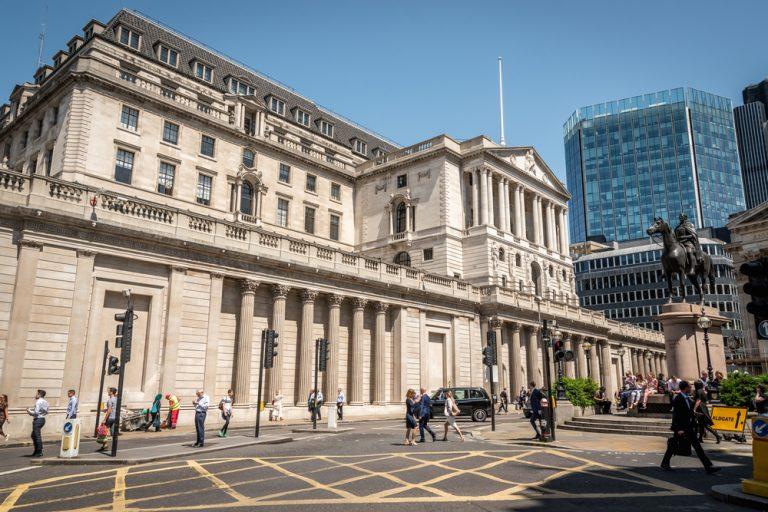
The Bank of England today announced it will not implement a policy of negative interest rates. 

Instead, following a vote by the Monetary Policy Committee, the central bank held interest rates at 0.1%. 

The Bank of England’s confidence in the UK economy caused the pound to strengthen against the dollar. GBP/USD was trading firmly above 1.3650 levels. 

The decision by the Bank of England, as outlined by a statement on its website, was based on a positive outlook for the UK economy. 

“Covid-19 (Covid) vaccination programmes are under way in a number of countries, including the United Kingdom, which has improved the economic outlook,” the statement read.  

The central bank had been considering implementing negative interest rates in recent months, consulting with UK banks and building societies. 

However, today’s report confirmed, while there is no prospect of imminent negative rates, there is a possibility in the future.

“While the Committee was clear that it did not wish to send any signal that it intended to set a negative Bank Rate at some point in the future, on balance, it concluded overall that it would be appropriate to start the preparations to provide the capability to do so if necessary in the future,” the Bank of England report stated. 

Analysts echoed the central bank’s sentiments around the possibility of a strong economic recovery.

“The pace at which the vaccine rollout has progressed has been incredibly encouraging and will provide much needed hope for people and businesses alike,” said Ian Wawrick, managing partner at Deepbridge Capital. 

While Warwick was optimistic about the vaccine rollout, he asserted the need for support for UK companies. 

“Agile companies, which have survived 2020 and provide a product or service which has a genuine medium to long term solution to a recognised problem, will continue to develop and grow but require capital to do so,” Warwick said.

Trident Royalties: exposure to a diversified portfolio of mining commodities

Trident Royalties Plc (LON:TRR) invests in mining royalties at different stages of the mine lifecycle to ensure a strong pipeline of revenue over the long term and acting as an inflation hedge for investors.

Having established a portfolio of 11 mining royalties thus far, Trident Royalties is already enjoying the revenue from royalties over in-production assets whilst investors can look forward to additional revenue from projects set to come online in the near future.

Trident’s portfolio is designed to represent the exposure of the global metals market, leading to a diverse range of projects and commodities, a selection of which are detailed below.

Koolyanobbing Iron Ore

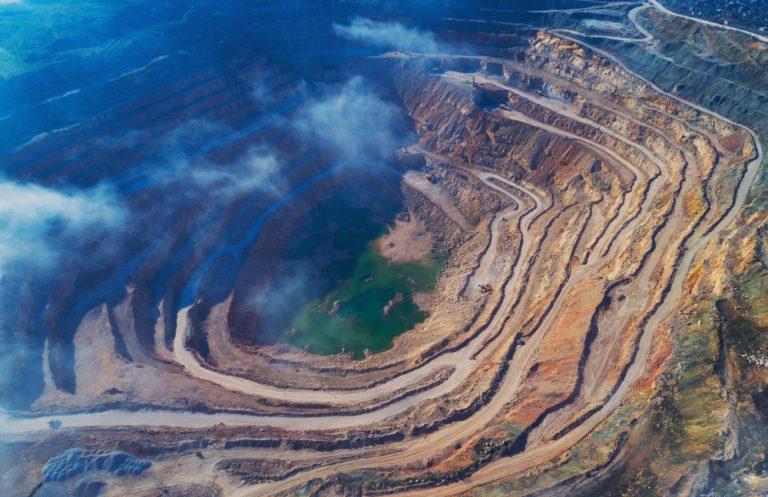
The Koolyanobbing project is situated in Western Australia and is operated by Mineral Resources, a large mining company listed on the Australian Stock Exchange. 

Trident owns a 1.5% free on board (FOB) royalty on the project which produces at a rate of 12-12.7 Mtpa (million tonnes per annum) as of December 2020.

The royalty generated over A$2.4m in revenue in 2020 and was acquired for A$6.65m, with the second quarter revenue increasing 67% from the first quarter as iron ore prices rose alongside further increases in mine production.

There are plans to increase the production rate at the mine to 13 Mpta, representing a great example of how Trident’s revenue can grow in line with a mine, without additional expenditure on the part of Trident.

Lake Rebecca Gold Project

In addition to royalties such as Koolyanobbing which are already providing Trident with revenue, there are a number of projects in the exploration and development phase that will commence revenue generation in the future.

An example of this is the Lake Rebecca Gold Project in Western Australia. The project is operated by Apollo Consolidated and Trident owns a 1.5% Net Smelter Royalty over the entire +1 million ounce deposit.

The royalty was acquired in October 2020 for a total consideration of A$8 million satisfied by $A7 million in cash and the issue of $A1 million shares in Trident Royalties at a price of 29.39p.

Despite the royalty not yet providing revenue, Trident believes such acquisitions are essential for delivering shareholder value over the long term as it expects first gold production in 2023.

There aren’t any revenue estimates attached to the royalty, most probably because forecasts will be subject to gold price fluctuations, but the company has given production guidance of 90-100koz/year.

Mimbula Copper Mine

Trident’s 1.25% Gross Revenue Royalty (GRR) over the Mimbula Copper mine in Zambia is another good example of delivering on its goal to provide exposure to the full suite of mining commodities.

With the global copper market forecast to fall into a supply deficit as copper is a key component of electrification, Mimbula is currently ramping production and provides exposure to a 93.7mt 1.1% copper resource in close proximity to other mines and with access to infrastructure.

There are conditions attached to the Mimbula royalty which see the GRR fall to 0.3% once US$5 million has been paid to Trident. This will again fall to 0.2% after the royalty has paid on 575,000 tonnes of copper. In addition, there is a minimum payment schedule such that Trident will receive minimum payments to recover its investment within 2.5 years, after which it will step-down to 0.3% GRR thereafter.

FTSE 100 reverses early gains following Bank of England rate decision

0

FTSE 100 reversed early gains on Thursday afternoon after the Bank of England kept rates on hold and gave a more positive outlook on the UK economy than expected.

The Bank of England’s optimism around the UK economy saw the pound stage a rally against the dollar and reversed much of the earlier gains seen in dollar earning shares.

The FTSE 100 was trading at 6,495, down 0.2% shortly after 1pm on Thursday. GBP/USD was up 0.22% at 1.3674. 

It was a busy day for the FTSE 100 as a number of high-profile companies announced their results. Shell, BT and Unilever, among others, released trading updates and results early this morning, leading to gains in the morning session.

Shell dividends

The FTSE 100’s biggest story of the day came from oil giant Shell. The company, like its competitor BP, is still feeling the effects of a tough year on the oil industry. However, despite posting a $21bn loss, Shell announced it would be increasing its dividend. The company’s mid-morning trade was largely flat, down to 1,319p. 

In better news for the industry, oil prices rose by just under 2% this week as reports showed US crude stockpiles to be at the lowest point since March. “Oil prices continued to show strength after yesterday’s big gains on signs of tight supply, helping Royal Dutch Shell shares to remain steady despite a patchy set of results,” said Russ Mould, investment director at AJ Bell.

BT

The telecommunications giant’s revenue plunged by £16bn over the first nine months of the financial year. The FTSE 100 company put the fall down to the coronavirus pandemic. As announced in May 2020, BT will not be paying a dividend to its shareholders until 2022, when it will be cut to 7.7p per share.  After an initial early morning rise, BT’s share price dropped back down to 128p, around the closing point from the previous day’s trading.

“It feels like BT should have fared better than it did through the course of the last year. You would have expected a properly structured business which faced a relatively modest impact from both Brexit and Covid to have outperformed rather than underperformed the wider market,” said Russ Mould, investment director at AJ Bell.

Unilever

The share price of Unilever, one of the biggest companies on the FTSE 100, took a dip despite reporting a rise of 3.5% in underlying sales for Q4. In mid-morning trading Unilver shares dipped by nearly 4.5%. 

“Unilever is seen as the market’s old reliable friend, trustworthy and dependable no matter the economic backdrop. Coming in short of full year sales forecasts is not the done thing and so Unilever is somewhat punished by investors today for not delivering the required goods” said Russ Mould, investment director at AJ Bell.  

Unilever shares sink in spite of underlying sales jump

1

Unilever results restore confidence

Unilever, the British consumer goods company, has today announced a rise of 3.5% in underlying sales for the fourth quarter. 

The company’s positive performance was buoyed by strong demand in emerging markets and was in line with analysts’ forecasts. 

Sales grew by 1.9% over the full year with turnover falling by 2.4%. 

Underlying profit fell to €9.4bn, down 5.8% from the year before, due to currency movements. 

In early morning trading Unilever’s share price fell by 4.4%. 

Chief executive of Unilever Andy Jope looked ahead cautiously while taking the positives from the year gone. 

“While volatility and unpredictability will continue throughout 2021, we begin the year in good shape and are confident in our ability to adapt to a rapidly changing environment,” Jope said.

“As a result, we are winning market share in over 60% of our business in the last quarter, on the basis of measurable markets. The business also generated underlying operating profit of €9.4 billion and free cash flow of €7.7 billion, an increase of €1.5 billion.”

The pandemic caused a rise in demand for hygiene goods to the benefit of Unilever. 

Sales of Domestos bleach rose by over 25% year-on-year, while sales of Lifebuoy soap went up by 50%. 

However, the pandemic has caused a sharp fall in foods served in public places, another of the company’s many products and services. 

Strong recoveries in emerging markets helped too, including China and India, where demand picked up during Q4. 

“Unilever is seen as the market’s old reliable friend, trustworthy and dependable no matter the economic backdrop. Coming in short of full year sales forecasts is not the done thing and so Unilever is somewhat punished by investors today for not delivering the required goods” said Russ Mould, investment director at AJ Bell. 

“Full year sales of €50.7 billion is slightly below the expected €51.6 billion figure, which is disappointing but far from disastrous. In its defence, €7.7bn free cash flow is better than €6.7bn expected by analysts as the company has paid more attention to ensuring it is paid efficiently by third parties.

The company has laid out future growth plans which include a major focus on the US, India and China, and making more of the e-commerce channel. Restructuring costs of around €2 billion for the next two years may [be] hard for some Unilever fans to stomach but the company is also targeting €2 billion annual cost savings,” said Mould.