Online fashion retailer ASOS (LON:ASC) has thrown its hat in the ring for the purchase of brands owned by Arcadia. It does not want the high street shops, though.
ASOS is keen on the TopShop and associated TopMan brands. Miss Selfridge could also be included in the package. There are rival bidders and there is no certainty it will acquire the brands. AIM-quoted rival boohoo (LON: BOO) is also interested, along with other bidders. boohoo has a track record of buying other brands, whereas ASOS has always concentrated on its core brand.
There could be a decision by the end of this month or early ...
MySale shares rise on trading update
MySale Group shares rose almost 8% on Friday’s after the company shares a half year trading update.
The retailer is trading ahead of management expectations at A$2.5m, which is an improvement of A$6,1m from the A$3.6m loss in the same period a year previously. Group revenues were A$63.3m, which is a 14% increase on the prior-year period.
MySale Group has a cash balance of A$15.8m from the end of December and the group continues to operate on a debt free basis.
Looking forward, the broader consumer and economic outlook remains uncertain amid the impacts of the pandemic. However, the group has a robust balance sheet and is operating on a cash generative and debt free basis, with a strong underlying cash position.
The Board is also confident that MySale Group will continue to make progress executing its strategy over the second half of the year.
Carl Jackson, the chief executive of MySale, commented: “We have made excellent progress in the last six months and are beginning to see the benefits of our “ANZ First” strategy come through. The Board remains very confident about the Group’s attractive positioning as an off-price specialist, with a clear customer offering built around MYSALE Solutions.
“We remain focussed on executing our strategy and scaling the number of brand partners we work with on the platform, as well as selectively increasing the amount of high margin, own stock inventory by adopting a disciplined test and repeat strategy.”
MySale Group shares (LON: MYSL) are trading +1.69% at 9.00 (1259GMT).
Pubs & restaurants close at record rates in 2020
Over 150 London pubs, bars and restaurants closed permanently in 2020.
As the pandemic has led to huge impacts in the sector, the number of venues dropped from 3,460 venues to 3,303 – a 4.5% drop.
Closures over 2020 were approximately three times higher than closures in 2019. In addition to London, Birmingham and Leeds also saw a large number of closures in the sector with a drop of 8.5% and 5.6% respectively.
Across the whole of the UK, 10,000 pubs and restaurants closed in 2020.
Mark Lynch, Partner at corporate finance house, Oghma Partners, commented on the number of closures for pubs and restaurants in 2020: “This is sadly not the last time we will see this type of data for pubs, restaurants and casual dining as thousands more will close throughout 2021, impacting directly and indirectly on huge sections of the UK population. Lockdown restrictions have essentially frozen Food to Go and food service providers that are unable to service clients as per normal. Pubs, restaurants and food service manufacturers and, to a lesser extent, Food to Go capacity are disappearing from the market. However, we are seeing positive sales growth for direct to consumer and supermarket companies. Indeed, we have already seen a significant shift in consumer behaviour which has boosted growth for those companies in 2020 and could be set to increase as they acquire more market share.
“Unsurprisingly, both overall deal volume and value for 2020 are the lowest recorded since we began this review back in 2009. Despite all the market uncertainties surrounding Covid-19 and Brexit, the appetite from overseas and financial investors has remained relatively positive throughout 2020, accounting for 27.1% and 20.3% of total deal volume, respectively. In 2021 we expect distressed deals to be a continued feature of activity, but our expectation remains that it won’t be until Q2 2021 that we will see year on year increases in M&A activity,” he added.
A major gap in the craft alcoholic drinks market with Ace + Freak
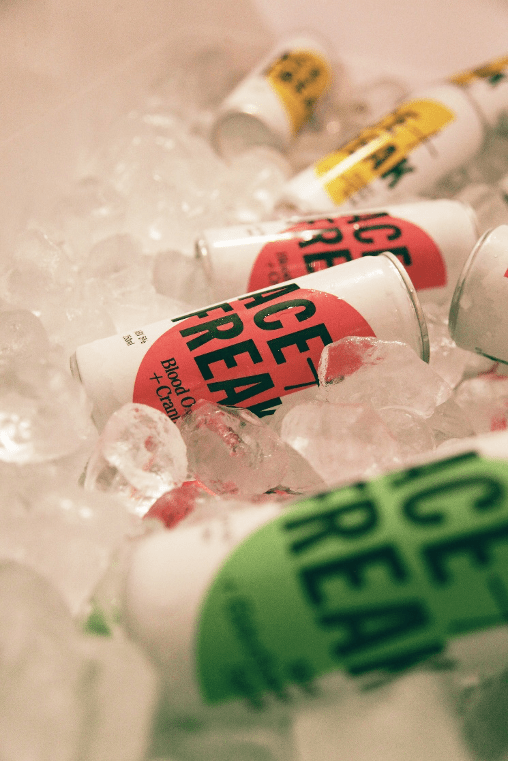
Ace + Freak are breaking in to the rapidly expanding ready-to-drink (RTD) cocktail market, estimated to be worth some $20 billion.
We speak with CEO Thomas Soden and COO Chris Davis for a deeper insight into the ready-to-drink craft cocktail market and how Ace + Freak are planning to harness future expansion in the sector.
With a number of craft beers grabbing huge amount of market share in recent years, we pay particular attention to a major gap in this area of alcoholic drinks market.
Ace + Freak are currently seeking £250,000 investment on Seedrs to fund further growth.
Find out more about the Ace + Freak crowdfunding campaign on Seedrs here.
John Lewis to repay £300m government loan
John Lewis has announced plans to repay £300m in government loans following strong Christmas trading.
The department store will be paying the loan two months earlier than it was due to be repaid thanks to stronger than expected sales over the Christmas period.
John Lewis said in a statement: “Despite the headwinds of the last year when John Lewis stores were closed for several months, and future trading volatility, the partnership believes it has sufficient liquidity [to repay the loan early],”
“Trading during the peak, which includes Black Friday and the Christmas period, held up better than anticipated. As a result, we expect our full-year profits to be ahead of profit guidance provided at our half-year results last September, where we said the most likely outcome would be for a small loss or a small profit for 2020-21.”
Whilst the department store has said it will be repaying the loan, it has still refused to repay the business rates relief received.
In November, the group revealed plans for a £300m cost-cutting drive, which involved cutting 1,500 head office jobs.
Sharon White, the chairman of the John Lewis Partnership, said: “Our partnership plan sets a course to create a thriving and sustainable business for the future. To achieve this we must be agile and able to adapt quickly to the changing needs of our customers.
“Losing partners is incredibly hard as an employee-owned business. Wherever possible, we will seek to find new roles in the partnership and we’ll provide the best support and retraining opportunities for partners who leave us.”
RTDs are the next big investment opportunity, with global sales expected to grow by a CAGR of 20% over the next 10 years
Sponsored by Ace + Freak
The “craft revolution” has changed the beverage industry permanently, leaving its mark on everything from beer, think Camden Town to Brewdog, or tonic water from Fentimans to Fever Tree. Through providing better quality and more accessible products, these new FMCG brands have been highly successful in disrupting their markets, taking a large share of profits with them as they continue to meet the changing needs of the consumer.
Industry experts point to the Ready to Drink (RTD) market being the next high growth sector riding the craft revolution wave,with 60%+ of the current RTD cocktail market composed of Millennials and Gen Z’s, and the former about to reach their spending prime. These consumers are tech natives, growing up with ‘on demand’ and convenience as key needs but without wanting to compromise on their quality, values or the consumer experience.
The $20bn RTD (ready to drink) cocktail market witnessed substantial growth this year at 43%, even more impressive given the collective decline of 8% in global alcohol sales, largely due to government restrictions placed on events and hospitality during the pandemic. Moreover, in the first 2 quarters of 2020, the UK market grew 86% alone, whilst the EU & US Markets are expected to be worth £7.1bn and £6bn respectively by 2026, with the global market for RTD cocktails predicted to hit £146bn by 2030.
Ace + Freak aim to be at the forefront of this next wave of disruption, creating internationally awarded, craft RTD cocktails in both alcoholic and non-alcoholic format, made of all natural, bespoke ingredients, for a generation of drinkers that give AF*.

With their unique branding and award winning flavours, partnered with an ethical and sustainable culture, Ace + Freak are positioned perfectly in the market. With funds allocated to move production to a high speed canning facility in 2021, reducing associated costs by >50%, as well as scaling their online offering, sales and marketing capabilities, they are looking to gain significant share in a rapidly growing and underserved market.
Ace + Freak are offering a rare opportunity to participate in their growth as they look to execute on 2021’s plan to scale across the UK, in select international markets, and develop new products. Through their latest funding round, they have recently launched a campaign to raise £250k investment – a target they have nearly reached.
To date, Ace + Freak have received rave reviews from customers and press alike with features in The Sunday Times, DAZED and Time Out, to name a few. They’ve received 6m+ Social media impressions and recently won “Best in class RTD cocktail” in the first canned challenge taking place in the USA, beating established competitors such as Cutwater spirits.
So what’s driving this rapid growth right now?
Covid-19 has obviously had a massive effect on how we socialise and on drinking behaviours, with people looking to enhance their drinking experience outside of traditional environments such as restaurants, pubs and bars. According to a recent Mintel report, 55% of Millennials and Generation Z prefer to drink at home. Allied, with this, these target consumers are more discerning of taste, mindful about their purchasing and demanding of lower price points for quality flavours and ingredients, all creating a perfect storm of growth for RTDs and brads ready to meet these trends.
As better quality, naturally sourced, healthier, and more exciting ingredients, can be canned and enjoyed outside of the traditional environments, this market is expected to continue to outpace other alcohol categories in the near future, as well as gaining a share of discerning beer, wine and spirits drinkers.
All of this creates a compelling high growth narrative, and if you are looking for an exciting investment opportunity – don’t miss out, join a community of over 100 investors hoping to help shape the future of Ace + Freak and the RTD industry.
Potential returns at exit are high, with a strong track record of larger industry players acquiring emerging or successful disruptors to enhance their portfolios. Beverage businesses with <£10m revenues are exiting at 8-10x multiples revenue and craft breweries are exiting on average 31.9x EBITDA.
If you’re interested in learning more, request a copy of the investment deck or if you’re ready to dive right in – join Seedrs campaign HERE
* Target market phrase for caring a lot!

Next pulls out of race to buy Topshop
Next has pulled out of plans to buy Arcadia’s Topshop.
In a statement, the retailer said it had “withdrawn from the process to acquire any or all of the Arcadia Group from the administrator”, adding “our consortium has been unable to meet the price expectations of the vendor”.
“Next wishes the administrator and future owners well in their endeavours to preserve an important part of the UK retail sector,” it added.
Other retailers that are in the race to purchase Topshop include Chinese online fashion retailer, Shein, and Authentic Brands. It is also thought that Asos and Boohoo are involved in the conversation.
Shein put an offer of £300m for Topshop and Topman, whilst it is running another process for some other of Arcadia’s brands.
Arcadia’s brands include Topshop, Topman, Dorothy Perkins, Wallis, Miss Selfridge and Burton. Evans has already been sold to City Chic Collective in a £23m deal.
Sir Philip Green bought Arcadia for £850m in 2002, Its collapse was one of the high streets biggest casualties, putting 13,000 jobs at risk.
Ian Grabiner, the chief executive of Arcadia, said in November when the group fell into administration: “This is an incredibly sad day for all of our colleagues as well as our suppliers and our many other stakeholders.
“The impact of the Covid-19 pandemic, including the forced closure of our stores for prolonged periods, has severely impacted on trading across all of our brands. Throughout this immensely challenging time, our priority has been to protect jobs and preserve the financial stability of the group in the hope that we could ride out the pandemic and come out fighting on the other side. Ultimately, however, in the face of the most difficult trading conditions we have ever experienced, the obstacles we encountered were far too severe.”
Retail sales fall 1.9% in 2020 – online sales boom
UK retail sales increased by 0.3% in December – much lower than the 1.2% rise expected by economists.
New figures from the Office for National Statistics also showed that despite an online boom, retail sales fell 0.4% in the fourth quarter.
Looking at 2020 as a whole, online sales boomed and hit record highs, however, retail sales in total fell 1.9% compared to 2019. This is the biggest yearly drop on record.
Over 2020, clothing sales were down 25.1%, petrol stations were down 22.2% and department stores fell 5.2%. Online sales and mail order sales saw a record increase of 32% over 2020.
Internet sales at food stores shot up 79.3%, department stores were up 65.9% and household goods stores up 73.4%.
“December’s retail sales increased slightly, driven by an improved month for clothing sales, as the easing of some lockdown measures for parts of the month meant more stores were able to open,” said Jonathan Athow, deputy national statistician for Economic Statistics. “Food store sales this month were subdued as retailers reported lockdowns and restrictions on the sale of non-essential items impacted on footfall. “
“Retail sales for 2020 saw their largest annual fall in history as the impact of the pandemic took its toll. Clothing retailers fared particularly badly, with a record annual fall of over 25%, while movement restrictions led to a record year-on-year decline for fuel sales.
“Some sectors were able to buck the trend in 2020. The increased popularity of click and collect and people buying more items from home led to a strong year for overall internet sales, with record highs for food and household goods sales online,” he added.
In separate news, government borrowing continues at a record pace. In December, the government borrowed £34.1bn.
Paul Craig, portfolio manager at Quilter Investors, commented: “With Brexit concluded, albeit rather weakly, and the vaccine rollout well underway, Rishi Sunak may be receiving the message from the backbenchers that the time is right to bring the borrowing under control.”