Hostelworld swings to a loss as revenues plummet during pandemic

0

Hostelworld cancels dividend payout for 2020

Hostelworld (LON:HSW) swung to a loss as the company’s bookings dropped by 79% during the past year.

The Dublin-based accommodation provider also reported a €17.3 million loss at ebitda level, down from €20.5 million profit in 2019.

Net annual revenue fell by 81% from €80.7 million to €15.4 million in 2020.

The fall meant the firm swung to an earnings loss of €17.3m, down from a €20.5m profit in 2019.

Hostelworld confirmed €6.2m in cancellations fees as travellers ditched their plans due to the effect of the pandemic.

The group announced it would not be paying out a dividend for the year on account of its performance.

Gary Morrison, chief executive at Hostelworld, commented on the results:

“2020 has been an extremely challenging year for both Hostelworld and the entire global travel industry. In light of the unprecedented challenges presented by the pandemic, our key priorities have been to (i) support our employees, customers and hostel partners; (ii) increase our liquidity, and (iii) accelerate the execution of our core platform roadmap,” Morrison said.

“During the year we delivered significant improvements in marketing capabilities, user experience and inventory competitiveness. These improvements will have further strengthened the competitiveness of our platform relative to our capabilities in Q4’19, when we had returned bookings to growth.”

“As vaccination programmes continue to be rolled out in our key geographies across the world, I am confident our loyal customer base has a strong desire to travel once restrictions allow, even more so after a prolonged period of confinement. Furthermore, I continue to see significant opportunities to build a broader catalogue of relevant experiential travel products and services beyond hostel accommodation, and opportunities to connect like-minded travellers with each other via social features on our platform.”

“I remain confident that Hostelworld will emerge from the pandemic stronger than before and able to seize market opportunities when normal travel patterns resume”.

Capita announces restructuring as profit dives

0

Capita to raise £700m from selling its non-core assets

Capita (LON:CPI), the outsourcing and professional services company, revealed plans on Monday to restructure the business in addition to the planned sale of non-core assets, following a challenging year.

The FTSE 250 company will compact its operations into three divisions, down from six, while seeking to raise £700m from selling its non-core assets in an effort to secure its finances.

Capita’s plan is to offload £500m worth of assets this year, with the remaining £200m to be sold at a later date.

Following a challenging year during the pandemic, the company reported a 9% drop in revenue to £3.18bn during 2020, down from £3.5bn the year prior.

Capita’s operating profit also fell by 56% to £111m for the year, while its pre-tax profit sank by 67% to £65.2m.

John Lewis, chief executive of Capita, commented on the company’s performance during the pandemic, as well as its foundation for moving forward:

“I’m pleased with our robust response to the Covid-19 crisis and the challenges of 2020, protecting our business, client services and – most importantly – our people, whom I would like to thank for their hard work and commitment,” Lewis said.

“Despite the challenges, we have continued to make good progress, improving client relationships and winning significant new contracts. Capita is a much better business than it was three years ago when we began our transformation.”

“We are now building on that stronger foundation to move onto the next phase of our transformation by simplifying from six divisions to three. Two core divisions will be focused on the needs of our government and blue-chip customer experience clients, in growing markets where we know we can win. The third will comprise a portfolio of non-core businesses from which we are targeting significant disposal proceeds.”

“We are planning a return to organic revenue growth this year and sustainable cash generation in 2022, as we continue to build a more focused, client-centric and streamlined Capita for the long term.”

Alpha FX Group expects another year of growth as revenues jump in 2020

0

Alpha FX Group to payout 8p dividend

Alpha FX Group (AIM:AFX), a provider of FX risk management and alternative banking solutions, confirmed on Wednesday that the company’s revenue rose by 31% to £46.2m in 2020.

This is up from £35.4m in 2019 as the company said its market position “remains strong” under testing conditions.

Alpha’s underlying profit before tax also jumped by 20% to £17.5m, up from £14.6m in 2019.

The AIM-listed company grew its client numbers for the year ending 31 December 2020 by 16% to 754, while average revenue per client increased by 12%.

Alpha outlined its “solid cash position” and confirmed the company is debt free with £91m of net assets and £52m in free cash.

The company confirmed a final dividend of 8p per share which is set to be paid in May 2021. Having cancelled dividend payments for 2020, this figure exceeds the company’s 2018 and 2017 payouts, which were 6.5p and 4.9p respectively.

A year ago, after one client was unable to lodge its collateral leaving a £30.2m black hole, Alpha confirmed it was cancelling its dividend payment.

The company confirmed in a statement on Wednesday that while the pandemic remains a cause for concern, Alpha FX Group remains on track to deliver another year of strong growth, having already made an excellent start to the year.

Morgan Tillbrook, chief executive of Alpha FX, commented: “For many companies across the world, 2020 has represented their greatest challenge to date, and Alpha was no different. However, what I witnessed last year was a team that grew more ambitious, more determined and more connected with every challenge that was thrown at them.”

“The result that the market will see today was another year of consecutive growth across all divisions, and I am naturally delighted with this. However, I believe the long-term benefits for our team and culture, having overcome this experience together, will prove far more valuable still.”

Gresham House Strategic expands Universe

Active investor Gresham House Strategic (LON: GHS) has increased its stake in Universe Group (LON: UNG) following the appointment of a new chief executive at the retail management and loyalty systems developer and installer.
The shareholding has increased from 12.84% to 17.06%. Gresham House Strategic reported its initial 4.83% stake in October 2017 and it was increased to 9.4% in November 2018. There were further purchases up until April 2019. The Universe share price has recovered to 4.6p, but it is still well below the level when the original stake was bought.
Neil Radley is joining Univers...

Two UK-focused funds set to benefit from a recovery

The outlook for the UK economy is improving as the so far successful vaccine roll-out has led the governor of the Bank of England to hint at stronger than anticipated growth in the coming months. While Andrew Bailey warned against complacency, he suggested that the United Kingdom could return to its pre-pandemic level before the end of the year.

With the Brexit deal completed and the end of lockdown in sight, Britain’s economy could be worth another look for investors who largely turned their backs on UK companies.

David Smith, the manager of Henderson High Income Trust, said: “Now that effective vaccines are being rolled out there is a credible path to life returning to some form of normality sooner rather than later.”

“With strong global economic growth expected as the recovery from the pandemic comes through, and continued monetary and fiscal support from governments, the backdrop is positive for equities.”

Aberdeen Standard Sicav UK Equity and Allianz UK Mid-Cap are two funds which could reap benefits from a resurgent UK economy.

Aberdeen Standard Sicav UK Equity

The fund’s aim is to outperform the FTSE All-Share Index, achieving a combination of growth and income by investing in British companies.

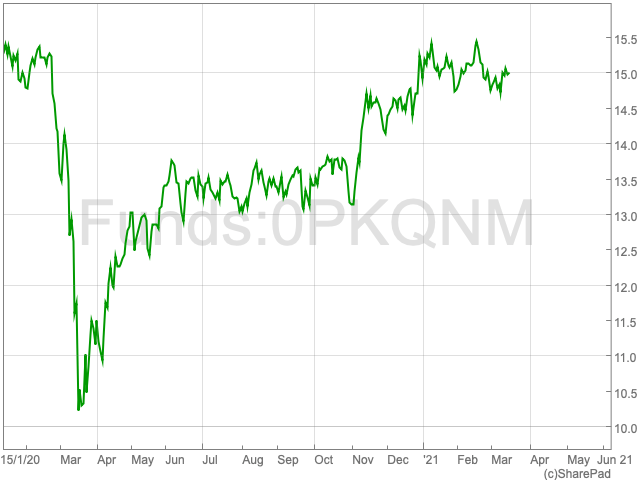
As the economy crashed as news of the impact of the pandemic became known, the Aberdeen Standard Sicav UK Equity avoided negative growth. It remained above its benchmark index and quickly recovered toward its pre-pandemic level.

Over a five-year period the fund saw a yearly rise of 8.22%, exceeding its performance target of 5.87%. While over a three-year period the UK-based fund outperformed its target by 4.67%.

Aberdeen Standard Sicav UK Equity

The company’s top holdings are AstraZeneca (6.95%), Prudential (4.7%) and Close Brothers Group (3.9%), while it is defensively weighted towards the financials (21.8%), healthcare (17.2%) and consumer goods (15.7%) sectors in response to current market conditions.

The fund’s dividend yield is historically around 0.8%.

Allianz UK Mid-Cap

The fund aims to achieve capital growth by generally investing in UK mid-cap stocks listed on the London Stock Exchange.

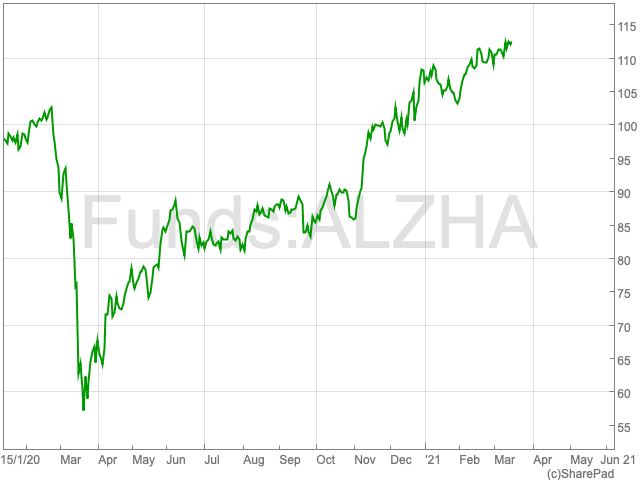
The Allianz UK Mid-Cap has outperformed its benchmark, the FTSE 250 Mid ex-ITs, over the last two years, 30.38% to 16.15%, as well over the course of the past year, 47.89% to 40.64%. In addition, the fund’s share price has climbed by 79.4% over the past year.

Allianz Uk Mid-Cap’s top holdings are in Howden Joinery Group (5.52%), Travis Parkins (5.36%) and Wizz Air Holdings (5.26%). While it is most weighted towards consumer services (31.54%), industrials (24.52%) and consumer goods (16.03%).

The fund’s yield is 1.02% which is reinvested annually.

European nations pull together to suspend Oxford/AstraZeneca vaccine

0

DAX up despite concerns of blood clots from Oxford/AstraZeneca vaccine

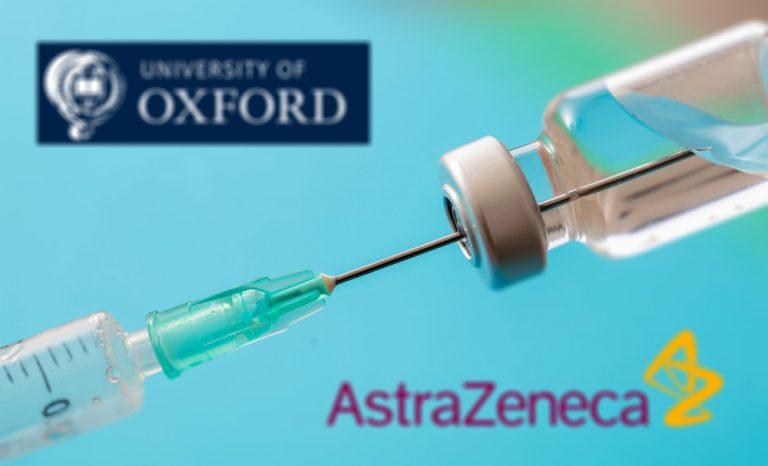
France, Germany, Italy and Spain came together to suspend the Oxford/AstraZeneca Covid-19 vaccine in an effort to protect public confidence, it has been reported today.

The number of countries to have suspended or limited use of the jab stands at 16, despite the European Medicines Agency saying there has been no evidence found of a link between the vaccine and incidences of blood clots.

However, authorities in Spain and Germany have expressed concern over the cases of blood clots seen in people who have taken the Oxford/AstraZeneca vaccine.

Ann Taylor, AstraZeneca’s chief medical officer, said that while 17m people in the UK and the EU had received the jab, cases with blood clots were “lower than the hundreds of cases that would be expected among the general population”.

“The nature of the pandemic has led to increased attention in individual cases and we are going beyond the standard practices for safety monitoring of licensed medicines in reporting vaccine events, to ensure public safety,” Taylor added.

Russ Mould, investment director at AJ Bell, commented on the impact of the news on investor sentiment.

“The decision by several European countries to suspend use of the AstraZeneca vaccine around disputed safety concerns is not helpful to sentiment and investors will be hoping the situation can be resolved sooner rather than later,” Mould said.

However, European stock markets rose on Tuesday amid concerns about the immediate future of the roll-out.

At 1335 GMT the FTSE 100 is up by 0.69% as the pound weakened while the DAX is up 0.74%.

Chris Beauchamp, chief market analyst at IG, said the EU’s decision could come back to haunt it following an already stumbling vaccine roll-out.

“The EU’s inability to construct an effective vaccine policy months ago continues to haunt it, with the latest decision appearing to arise from an overreaction to isolated incidences,” Beauchamp said.

“With Italy facing another wave of infection now really isn’t the time to reduce the vaccine options available to European populations, and the prospect of an extended crisis in Europe even as the UK and US move fully into the recovery sage threatens to undo much of the rally in European markets of recent months.”

Boku earnings soar as mobile payments company sees 48% increase in monthly users

0

Boku cash balances increased to $62.7m

Boku (LON:BOKU) confirmed a 107% increase to $15.3m in its adjusted EBITDA as the mobile payments technology company released its results on Tuesday.

The firm announced its revenues at $56.4m, an increase of 20% in 2020, while its net pre-tax loss jumped from $1.3m to $17.3m.

The AIM-listed company said its loss was a result of a $20.8m goodwill impairment for its identity division.

Boku generated $11.5m in cash from operations before working capital changes, rising from $6.1m, while its closing cash balances increased to $62.7m from $35.6m in 2019.

The mobile payments company saw a 48% increase in its monthly active users for payments to 28.8m, including 4.6 million users from Fortumo. Its total payment volume rose to $6.9bn in 2020, from $5bn in 2019.

Jon Prideaux, chief executive of Boku, commented: “Boku performed strongly in 2020 with revenues up and Adjusted EBITDA more than doubled compared to 2019, driven by the performance of Boku Payments but the central fact of 2020 was COVID-19.”

“It has changed the way that we work and live and had an adverse impact on our Identity business, requiring its value to be re-assessed. Restrictions have affected the way that we travel, communicate and get entertained. Coronavirus has depressed spending, but that spikey ball of RNA has also changed the things we buy and the way we pay.”

“Industries dependent on face-to-face contact have been decimated. Some – hospitality, for example – will bounce back when restrictions are released, but for others, the pandemic has accelerated pre-existing trends. It turns out that many people didn’t really like driving into town to go shopping and for many types of goods the switch to online will be permanent.”

“The way we entertain ourselves has been changing for a while. CDs have been cleared from the shelves and DVDs sent to the car boot sale, as we switch to digital consumption. Games, especially mobile games, were already growing rapidly pre-COVID-19.”

Shanta Gold reports ‘promising’ results across assets

Shanta Gold sees potential for upgrading the existing resource estimate at Luika

Shanta Gold (LON:SHG) confirmed encouraging drilling results from 22-hole programmes at the New Luika gold mine in Tanzania, the West Kenya project and the Singida gold project.

Drilling at Luika at hole CSD206 intersected 9.29 m grading 11.27 g/t Au from 441 m, incl. 4.88 m at 20.07 g/t Au. The company is targeting the inferred resource extension of the westerly plunging deposit at Luika with attractive potential for upgrading the existing resource estimate.

Additionally, high-grade intersections were also found in early holes at the West Kenya project, where one hole at Isulu intersected 2.00 metres at 15.9 g/t gold and one at Bushiangala intersected 22.9 metres at 4.81 g/t gold.

The AIM-listed company will continue drilling at the West Kenya project will during 2021 focusing on upgrading the inferred resource at Isulu and Bushiangala to the indicated category.

At the Singida gold project in Tanzania, drilling identified a potential new hanging wall zone that is richer than the main zone at Cornpatch West.

Eric Zurrin, chief executive at Shanta Gold, commented on the company’s results:

“Early drilling results have been positive across all three assets including one of the best holes drilled at the Luika deposit over 162 holes drilled in its history.”

“At the West Kenya Project, we intersected visible gold at Isulu, while Bushiangala has returned a very wide and high-grade zone over 23 meters.”

“The Singida Project remains underexplored, particularly for a greenstone deposit, and drilling has illustrated a potential new hanging wall zone that is richer than the main zone at Cornpatch West. These drilling results have the potential to increase the size of mineable resource at Cornpatch West.”

“Exploration remains core to delivering future value and growth within our portfolio to support long-term sustainable returns to shareholders. Today’s announcement covers 7% of total drilling metres planned in 2021. I look forward to providing ongoing exploration updates throughout the course of this year.”

Why the Lloyds share price now looks unattractive

1

Lloyds share price (LON:LLOY) took a hit during 2020, but despite making a recovery, investors could be tempted to look elsewhere in the coming months.

Lloyds Earnings

The bank announced in February that its pre-tax profit fell by over 72% to £1.2bn, while loan losses totalled £4.2bn during 2020. Lloyds’ profit could be further impacted if low interest rates remain, narrowing the difference between the rate the bank offers borrowers and savers.

Lloyds has a price-to-earnings ratio of 25.8. While it could be a signal of the market’s expectations of higher earnings going forward, it does make the Lloyds share price seem expensive. The bank’s price-to-NAV ratio is currently 0.6. With Lloyds trading below a Price-to-NAV of one, it suggests the market doesn’t have a high degree of confidence in the current health of banking assets such as loans and mortgages.

Lloyds Share Price

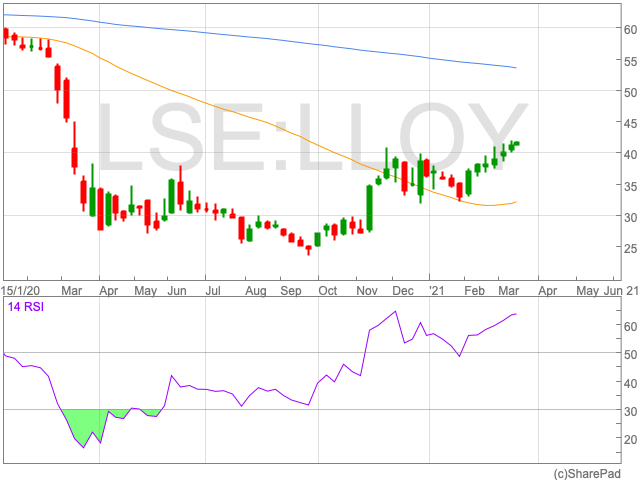
Since February the Lloyds share price moved from below 35p per share to above 40p per share. It also moved away from its 50-day moving average, as the 200-day moving average continues to trend to the downside. Over time the moving averages are expected to converge as the 50-day moving average acts as a magnet for the Lloyds share price. This means Lloyds shares could retrace over the coming months.

Lloyds RSI, as seen below, was knocking on 70 at the end of 2020 and again during March. This suggests that Lloyds shares are overbought which could mean a sell-off in the near future. From March through to April, Lloyds’ RSI was below 30, meaning its shares were underbought. The bank’s share price has risen since then.

Lloyds Share Price, moving averages and RSI

Lloyds Dividends

Lloyds confirmed a final dividend for 2020 of 0.57p after shareholder payouts were cancelled in 2019. The dividend is well down on 2018 and 2017 when it was 2.14p and 2.05p respectively. In comparison, Natwest confirmed in February that it paid its shareholders 3p per share.

These dividends are a long way off the yields investors had become accustomed to prior to the pandemic. Due to ongoing guidance from regulators, payments to investors may remain tepid in the short-term. The bank’s dividend is historically a big pull factor for investors. At the current rate they could be tempted to look elsewhere.

Are Unilever shares a good buy?

0

Unilever Shares Decline After Strong Rally

In March 2020, when many companies saw downturns due to the pandemic, Unilever shares (LON:ULVR) were valued at 3,854p per share. By the end of August they were up by nearly 35% to 5,196p.

However, as the road to recovery became more apparent, investors began looking towards more “exciting” high-growth stocks.

Investors deserted Unilever for cyclical companies such as miners, where they anticipated higher returns as the economy bounced back from the coronavirus pandemic. In February 2021, Unilever shares had fallen to 3,733p per share.

This has caused the Unilever share price to fall well below its 50-day (yellow) and 200-day (blue) averages, as seen below. In addition, the company’s RSI is at the 40 level having dipped to 30, suggesting its shares may be oversold.

These technical analysis indicators could point towards the possibility that the Unilever share price is set to reverse recent declines in the coming months.

Dividends

Unilever’s dividend remained in place throughout 2020, rising in line with yearly increases. The total dividend for the year came in at €1.73 per share, up from €1.66 and €1.58 in 2019 and 2018. The company held its dividend at 2.9%, while confirming its intention to pay a growing dividend moving forward.

A Stable Option

In the event of a downturn, investors seek “defensive stocks” in their portfolio to help weather the storm. Unilever, a company which sells an assortment of home care and personal care products, is well positioned to maintain its revenue levels during periods of uncertainty.

While some Unilever products – food services and ‘prestige beauty’ – took hits during the pandemic, many, such as household care and cleansing, showed resilience. Unilever’s turnover fell by only 2.4% during 2020, mainly due to the impact of adverse currency fluctuations, while its underlying sales growth was 1.9%, showing the company’s resilience. Over the same period, Unilever’s underlying operating profit decreased 5.8%, but increased by 0.7% at constant exchange rates.