Brexit No-Deal could upset FTSE value stock rally

0

Capping off an altogether mixed week, FTSE indexes finished Friday with a slump, having decided to go into the weekend with the prospect of a No-Deal Brexit as the main takeaway.

Down by 0.80%, the FTSE 100 reversed its mid-week gains and finished at 6,546 points, just shy of where it began on Monday. Meanwhile, the FTSE 250 dropped by 0.68%, to 19,622 points – more than 500 points below its Monday open, following a rough week for the index.

The story on Friday was disappointingly glum, what with the first COVID vaccines being rolled out just a couple of days prior, and a low pound and new trade deals with Singapore and Vietnam, all looking to jack up the sentiment towards UK equities.

Alas, it was the continuing Brexit impasse, and increasing likelihood of a No-Deal scenario that ruled traders’ thoughts at the end of the week. Speaking on the FTSE’s underwhelming performance, and the likelihood of No-Deal, IG Senior market Analyst, Joshua Mahony, said:

“Wednesday’s Brexit dinner appeared to provide little more than clarity that both sides remain as far apart as ever, with a growing consensus that a no-deal Brexit now appears to be the most likely eventuality.”

“Sceptics will see the current impasse as a way to fame any eventual deal as a success on both sides, yet we have just three weeks to both finalise and sign off a deal that needs to pass through all 27 EU nations.”

“From a market standpoint, the value-led recovery seen over the past month is coming into question, with the FTSE 250 outperformance likely to reverse if a no-deal Brexit comes back to hurt domestically-focused firms.”

The situation was hardly peachy for the UK’s largest international financiers, either. Despite the Bank of England lifting the ban on bank dividend payments on Thursday, Lloyds shares fell almost 4.5%, while NatWest shares shed more than 6.60%.

“The prospect of a no-deal Brexit is doing little to bolster optimism for the UK banks, with the likes of Lloyds, NatWest, and Barclays leading the FTSE losses in early trade”, Mr Mahony added.

“The latest BoE financial stability report highlighted that banks are in a very healthy position as they head into what could be a very turbulent few months.”

“However, with the government having staved off a wave of insolvencies and administrations through the pandemic, the next question is just how they can avoid any short-term economic suffering that could come with a disorderly exit from the EU.”

Finishing on a smaller and brighter note – should a No-Deal Brexit materialise, some investors are heartened by the opportunities this could offer UK-focused SMEs and micro-caps, especially given that the potential for tariffs may give them a price advantage in the domestic market.
Unfreezing bank dividends: wise or woeful?

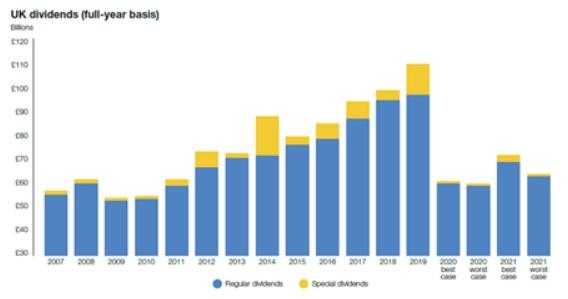
With bank pay-outs on ice, Q3 dividends hit their lowest level since the financial crash aftermath in 2010 – down by 49.1% on a headline basis, to £18.0 billion.

Of the estimated £14.7 billion of cuts during the third quarter, some two fifths of this number came from bank dividend reductions, due to Bank of England restrictions. Similarly, chopped oil and mining dividends accounted for one fifth and one eighth of cuts respectively.

While two-thirds of companies cutting or cancelling their dividend sounds drastic, these figures are certainly more modest than the second quarter, where dividends dropped by 57.2% and 75% of companies cut or cancelled their coveted investor income.

According to Link Group, the hardest-hit areas were airline, travel, leisure, general retail, media and housebuilding. Within travel and retail in particular, pay-outs fell year-on-year by 96%, while dropping by approximately two-thirds in the remaining sectors. Meanwhile, food and basic consumer goods retailers increased their pay-outs, and BAE and IMI caught up on all the dividends they missed during the year-to-date.

Link Group UK yearly dividends data

The question is: following the Bank of England’s recent decision, was it right to remove the ban on banking sector dividends?

On the one hand, reinstating payments will likely provide lenders and savers with additional cash. On the lender side (banks), dividends returning will likely encourage investors to look towards the biggest financial stocks on the FTSE for reliable, long-term investment. This may in turn drive up banks’ share prices, and give banks the capital flexibility to be more generous with products such as mortgages or business loans (whether this comes to fruition is another story).

On the saver side, those with financial equities in their pension pots will benefit from the extra income which will be compounded and used to build up their retirement funds.

Now, on the other hand, while encouraging investors capital to flow into banks, reinstating dividends also – inevitably – come at a cash cost. As stated by Positive Money Executive Director, Fran Boait: “It is deeply concerning that the Bank of England is pandering to commercial banks and allowing them to prioritise shareholder payouts instead of supporting the Covid-19 recovery.”

“The Bank rightly suspended dividend payouts in March to make sure lenders were preserving capital to support struggling households and businesses across the economy. Private banks have been lobbying to overturn this intervention ever since, proving once again that they cannot be trusted to work in the public interest, even during a global pandemic.”

“The Bank is now also considering watering down its guidance on limiting executive bonuses. With considerable economic uncertainty and unemployment set to rise sharply, this would be premature and irresponsible.”

Rolls-Royce shares slide ahead of tough recovery

0

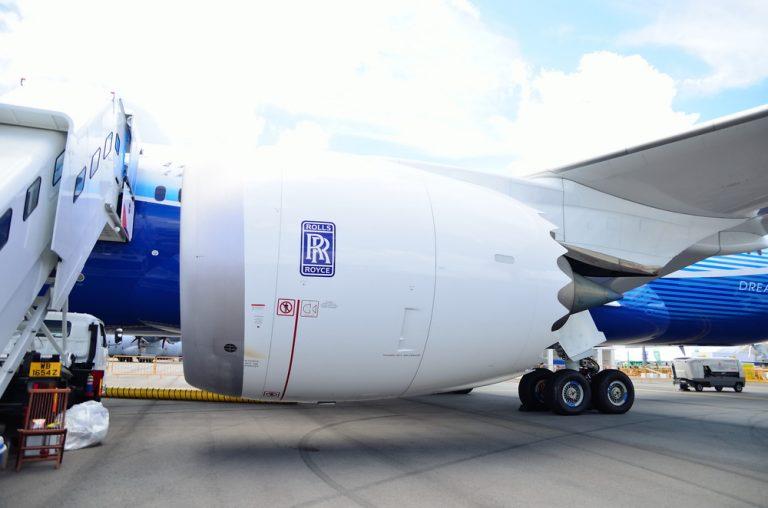
FTSE 100 listed engineering firm, Rolls-Royce Holdings plc (LON:RR), watched its shares drop around 9% on Friday, as the company laid bare the challenging year its had, and the harsh realities of restructuring.

During the 11-month period to the end of November, the company reported that large engine LTSA invoiced flying hours fell to approximately 42% of what they were the year before. Rolls-Royce said that although flying hours had picked up since April, the pace of recovery has since dropped, as a result of a second wave of infections in some geographies.

During Q3, large engine flight hours were around 29% of what they were the previous year, though this was a marked improvement from Q2, where traffic was just 24% of what it was in 2019. As a result of the slowing recovery, the company said its guidance remains unchanged, though it has reduced the pace of it large-engine production.

Speaking on its other business segments, Rolls-Royce said that business aviation has been less impacted than commercial flights, in spite of border restrictions coming into force in many regions. Similarly, it said that its defence business has remained ‘resilient’, with a strong order book – including 56 EJ200 jet engines bought by the German Air Force – and an encouraging 2021 forecast (partially led by the UK’s bolstered MoD budget).

Its Power Systems business saw a ‘significant fall in demand’ in non-governmental sectors during 2020, with some signs of recovery during the second half, spearheaded by the Chinese market. On a brighter note, its Small Modular Reactor consortium benefitted from the increasing favour for nuclear power, securing strategic agreements with Exelon Generation and CEZ, and the UK Government signing a £215 million four-year development deal.

Speaking on the company’s performance and the long road to recovery, Rolls-Royce CEO, Warren East, said: “We have made rapid progress on our restructuring programme and the consolidation and reorganisation of our Civil Aerospace footprint is well underway. Our £5 billion recapitalisation package in November was well supported and has increased our resilience and strengthened our balance sheet. The outlook remains challenging and the pace and timing of the recovery is uncertain. However, our actions have given us a strong foundation to deliver better returns as our end markets improve and we continue to drive our ambition of delivering more sustainable power to support the creation of a net zero carbon economy.”

With its credit facilities in mind, and excluding lease liabilities of around £2.1 million, and liquidity of up to £9.0 billion, the company expects to end the year with net debt of between £1.5 billion and £2.0 billion.

Rolls-Royce added that on the whole, “The pandemic is causing a reduction in demand for our Civil Aerospace products and services that we expect will take several years to recover”.

The upshot of this view has been the company’s ‘major reorganisation’ programme, announced on May 20. Having made progress towards its £1.3 billion cost saving target, the company says it will have to cut 9,000 jobs by 2022, with the 5,500 job losses expected by year-end being 500 more severe than the previous estimate of 5,000 redundancies.

Though undergoing a process of consolidating the manufacture of its aero-engine structures into ITP Aero, the company is actually considering of disposing of ITP Aero altogether, having just confirmed the £2 billion disposal of its nuclear instrumentation and control business.

Commenting on challenging road ahead for Rolls-Royce, Third Bridge Senior Analyst, Ben Nuttall, said: “Rolls Royce’s cash receipts will recover as the world starts to fly again.”

“Recent vaccine news creates an interesting upside case for Rolls Royce, which could see a quicker end to this period of high cash burn without them having to raise further liquidity.”

“Rolls Royce is experienced at restructuring. The company undertook major restructuring after the financial crisis in 2010, then again in 2013 and 2016.  They know how to make significant savings, but the aerospace giant will still have to navigate a bumpy period of operational challenges.”

Following the rather sombre update, Rolls-Royce shares dropped by 8.98%, down to 115.60p a share 11/12/20 12:30 GMT. The Marketbeat community issues a 70.54% ‘Underperform’ rating on the stock, while analysts give the stock a consensus target price of 393.17p a share, and a Hold stance.

Airbnb achieves biggest US flotation of 2020

Airbnb shares more than doubled on Thursday on the company’s Wall Street debut, valuing the group at $100bn.

Shares opened at $146, well ahead the initial public offering (IPO) price of $68. The stock soon after hit a high of $165 and marked the biggest US floatation of 2020.

Brian Chesky, Airbnb’s chief executive officer, commented on the surge in share price: “I don’t know what else to say. I’m very humbled by it.”

Based on Thursday’s share price, Airbnb’s three co-founders will become multi-billionaires.

Chesky founded the company in 2008 in his San Francisco apartment. The company now has over seven million short-term listings worldwide.

Commenting on Airbnb’s IPO, Jay Ritter, a finance professor at the University of Florida, said: “20 years ago in the internet bubble as similar things were going on. [Airbnb’s] valuation numbers being talked about a month ago, a week ago, were nowhere close to the numbers today. It’s a great company, but that high a valuation is pretty remarkable.”

In November, the group posted a $697m (£527m) loss for the nine months to the end of September. The loss has widened from the $323m loss that was posted for the same period a year earlier.

Whilst proving to be wildly successful, Airbnb has come under fire and has not gone without its controversy. Residents and local governments in many cities are cracking down on the group due to its impact on the local residents.

This week also saw Amnesty International call on the group to remove the 200 rental listings in the illegal Israeli-occupied Palestinian Territories.

Saleh Higazi, Amnesty International’s Middle East deputy director, said: “No company should be party to human rights abuse and until Airbnb ends its business relationship with the Israeli settlements it will be deeply compromised.”

Sterling tumbles on no-deal Brexit risk

Following the news that the likelihood of a no-deal Brexit is a “strong possibility”, the pound was down almost 0.4% against the euro to 1.091.

European Commission president Ursula von der Leyen told EU leaders on Friday: “The probability of a no deal is higher than of a deal…To be seen by Sunday whether a deal is possible.”

Susannah Streeter, a senior investment and markets analyst at Hargreaves Lansdown, said:

“With the UK now looking like its hurtling towards a no-deal Brexit, investors should adopt the brace position for swings in sterling and shares in domestic focused companies. This morning the pound is struggling to rise above 1.09 against the euro with a distinct lack of direction before the fresh deadline of Sunday looms.

“Warnings from Prime Minister Boris Johnson, that companies should prepare for a no-deal scenario, will not have added to confidence, given that there are just three weeks until January 1, when WTO rules would come into force.”

As well as the pound, European stocks were also down on Friday’s opening. The FTSE 100 is down 0.4%, Germany’s DAX is 0.3% lower, France’s CAC 40 is down 0.27%, and Spain’s IBEX opened 0.4% lower.

Michael Hewson, CMC Markets UK’s chief market analyst, remains confident that a deal could still be struck and said:

“Overall, there still seems to be some optimism that pragmatism will prevail as the 31st December deadline gets closer, and the realisation slowly dawns of the potential economic damage that could ensue in the days after a no-deal outcome.

“An outcome that in the current circumstances would simply heap economic pain on top of economic pain.”

This week, the UK has signed free trade deals with Singapore, Vietnam, Norway, Iceland, and Canada. The deals have come just weeks before the end of the Brexit transition period.

The Vietnam embassy said in a statement: “Today, UK International Trade Secretary Liz Truss and Vietnam Minister of Industry and Trade Tran Tuan Anh concluded the UK-Vietnam Free Trade Agreement. This will be a further boost to UK-Vietnam bilateral trade, which has tripled between 2010 and 2019 to £5.7bn ($7.58bn)”.

UK signs free trade deals with Singapore & Vietnam

The UK has signed free trade deals with Singapore and Vietnam.

The deal with Singapore was announced on Thursday and covers a trade relationship worth over $22bn (£17bn) and is similar to the trade relationship the country currently has with the EU.

The deal between the UK and Vietnam was concluded on Friday, just weeks before the UK’s transition period ends.

The embassy said in a statement: “Today, UK International Trade Secretary Liz Truss and Vietnam Minister of Industry and Trade Tran Tuan Anh concluded the UK-Vietnam Free Trade Agreement. This will be a further boost to UK-Vietnam bilateral trade, which has tripled between 2010 and 2019 to £5.7bn ($7.58bn)”.

Earlier this week the UK announced trade deals with Norway, Iceland, and Canada.

For the UK’s deal with Singapore, the agreement means the removal of tariffs and will enable both countries with access to each other’s markets in services. In addition, the deal will cut non-tariff barriers for pharmaceutical products, medical devices, renewable energy generation, and electronics, cars and vehicle parts.

The news of the various trade deals comes as Boris Johnson has said that the likelihood of a no-deal Brexit is a “strong possibility”.

Following talks with the European commission chief, Ursula von der Leyen, Boris Johnson said the EU’s current offer was unacceptable.

“It was put to me that this was kind of a bit like twins, and the UK is one twin the EU is another, and if the EU decides to have a haircut then the UK is going to have a haircut or else face punishment. Or if the EU decides to buy an expensive handbag then the UK has to buy an expensive handbag too or else face tariffs.”

“Clearly that is not the sensible way to proceed and it’s unlike any other free trade deal. It’s a way of keeping the UK kind of locked in the EU’s … regulatory orbit.”

Adding the likelihood of a no-deal Brexit, Boris Johnson said:”There’s a strong possibility that we will have a solution much more like Australian relationship with the EU than a Canadian relationship with the EU.”

RWS shares fall on full-year results

0

RWS Holdings shares opened 4.47% lower on Thursday after the group posted results for the year ended 30 September 2020.

The provider of language services and language technology shared a 5.5% fall in adjusted profit before tax to £70.2m.

The RWS Life Sciences division saw increased revenues of 6% to £69.5m, which was a record high thanks to growth in all key areas and particularly linguistic validation services.

Andrew Brode, Chairman of RWS, commented: “The Group has delivered a resilient performance, reflecting its diversified revenue streams across its three specialized divisions, with stronger levels of activity in Life Sciences and Moravia mitigating headwinds in IP Services.

“The Group’s focus on Life Sciences and technology customers, who are thought to be likely beneficiaries in a post Covid-19 world, and the importance to our customers of managing their research and development investments through a strong global patent strategy, puts RWS in a strong position.

“The merger with SDL offers an unrivalled opportunity to consolidate the Group’s world-leading language services offering and provide our extensive blue-chip client base with best in class solutions for all of their language requirements.

“The new financial year has begun positively, slightly ahead of our expectations. We have no net debt and whilst our focus is on integrating SDL, our strong balance sheet places us in pole position to compete for the most attractive acquisition opportunities,” he added.

RWS has proposed 7.25p, which is a 3.6% increase on last year.

RWS shares are trading -4.66% at 553,00 (1554GMT).

Novethic launches sustainable funds database

Sustainable Transformation Accelerator’, Novethic, announced on Thursday that it has launched ‘MARKET DATA’, a quarterly summary of three trends within the European sustainable funds market.

The organization said that the three thematic Market Data publications are based on ‘in-depth’ research and new additions to the Novethic databases. It added that investors will benefit from the quarterly summary, and its mapping and analysis of responsible investment products (SRIs).

With the demand for ESG growing from individual and institutional investors, and regulatory pressure mounting, the number of funds classifying as sustainable is ‘continuously multiplying’, according to Novethic. To protect consumers and fund managers from greenwash marketing campaigns, Market Data seeks to separate pretenders from those that have sustainable transformation at the heart of their business model.

Novethic says that its reliable and qualified data will help investors to address sustainable funds from three angles: Green Funds Europe, Sustainable Labels Europe, and Sustainable Funds France.

On Green Funds Europe, the organization says that the growing number of supposedly eco-friendly funds come in ‘different shades of green’ and that investors often struggle to separate the wheat from the chaff. Its analysis considers the evolution of the sector, for stance: the number of funds on the market, their environmental characteristics, and impact indicators. It then analyses the individual wording, documentation, and verifies whether each fund has an investment strategy that explicitly focuses on the environment and climate.

Its Sustainable Labels Europe publication acknowledges the attempt by the financial sector to ‘normalise’ the market with their sustainable finance labels. This analysis is similar to the previous publication in the areas it covers, but focuses mainly on listed investment funds, and excludes unlisted funds, savings products and insurance funds.

Finally, and unsurprisingly, the Sustainable Funds France publication focuses on the sustainability credentials of French UCITS funds, excluding employee investment funds.

Concluding its statement, the organization said: “As a long-time observer of the responsible investment market, Novethic has reviewed best market practices since 2004, comparing fund strategies and carrying out studies to identify best practices and compare different approaches. Following the publication of the French Responsible Investment Market Figures and the Novethic Indicator for Sustainable Funds available to individual investors, the launch of Market Data helps us support a new stage in the development of sustainable finance by offering accurate and reliable market data.”

Sterling quakes amid no-deal Brexit fears

Sterling broke on a bad note on Thursday morning after the highly-anticipated talks between UK Prime Minister Boris Johnson and European Commission chief Ursula von der Leyen failed to culminate in a Brexit trade deal. Although an agreement to continue negotiating has reportedly been reached, hopes of a deal are becoming slimmer by the moment, as Foreign Secretary Dominic Raab warns that talks are “unlikely” to continue beyond Sunday.

“The pound weakened in the absence of a breakthrough during the talks,” says Khatija Haque, Head of Research & Chief Economist at Emirates NBD, “growing Brexit concerns continue to weigh on the GBP”.

The UK currency has weathered a significant drop over the past 24 hours, with the Pound-to-Euro exchange rate sinking 0.75% to trade at 1.09702 and the Pound-to-Dollar dropping 0.70% to 1.32917. The past few weeks have seen Sterling struggle with turbulence, after the allocation of post-Brexit fishing rights ended in a stalemate two weeks ago and pushed the currency down to fresh lows.

Today’s publication of the European Union’s no-deal contingency plan has added fuel to speculation that the UK will leave without a deal, stating: “While the Commission will continue to do its utmost to reach a mutually beneficial agreement with the UK, there is now significant uncertainty whether a deal will be in place on 1 January 2021”.

Meanwhile, the European Central Bank launched a €500bn stimulus package on Thursday afternoon, which has already seen the Euro gain 0.3% within minutes of the announcement.

Both the UK and the EU have confirmed that the obstacles ahead remain substantial as negotiations appear to enter another final phase at the end of the week. A statement from the office of the Prime Minister read:

“The PM and Mrs von der Leyen agreed to further discussions over the next few days between their negotiating teams. The PM does not want to leave any route to a possible deal untested. The PM and Mrs von der Leyen agreed that by Sunday a firm decision should be taken about the future of the talks”.

Doubts that the UK will leave without a deal have ramped up in recent days nonetheless, with Joseph Capurso, Head of International Economics at CBA, commenting on what this means for Sterling: “We are not confident of a deal because the same three issues (fishing, governance and competition) remain unresolved. The bottom line is the near term risk to GBP/USD is for a sharp fall, something one week risk reversals are increasingly pricing”.

There is still not total consensus, however, as Jordan Rochester from Nomura adds: “We continue to expect a deal to be the final outcome, the timing is the tricky issue. If we are wrong and the UK opts for a no-deal Brexit, GBP would have a long way to fall”.

Pound Sterling LIVE weighed in, explaining: “If the EU and UK do find a way forward and strike a deal the Pound is widely expected by foreign exchange analysts to strengthen into year-end and through 2021 as a cloud of lingering uncertainty is finally lifted”.

BiON breaks into the solar power market

0

Environmental engineering, wastewater treatment and renewable energy solutions company, BiON (AIM:BION), has made its first strides into the solar photovoltaic market, with the establishment of its new subsidiary, BiON Suria Sdn Bhd, and the conditional acquisition of solar assets.

Through BiON Suria, the company hopes to leverage the market opportunity offered by Malaysian government support for solar PV, and the country’s natural sunlight and irradiance levels, to be part of the push to increase solar PV from 194 GWh today, to 13,540 GWh by 2050.

By acquiring existing assets that have completed the Feed-in-Tariff bidding process, and secured a power purchase agreement, BiON says that all of its acquisitions will be immediately earnings accretive and support company cash flow upon completion.

The company’s first conditional acquisition is a 77% interest in the right-of-use assets of rooftop solar panels that supply 0.95MW to TNB under the government’s NEM programme. Acquired for RM6 million, the solar panels are situated on top of 54 religious buildings in the state of Perak and state of Sabah. Both have long-term power purchase agreements in place, all of which expire between the end of 2038 and end of 2040, with expected annual profit after tax of RM0.4 million per annum, from 2021.

Speaking on the news, CEO of BiON, Datuk Syed Nazim bin Syed Faisal, said: “The establishment of our BiON Suria subsidiary and acquisition of solar PV assets marks an important milestone for BiON as we enter into a new renewable energy sector for the first time – delivering on our stated strategy to diversify our portfolio.”

“We believe solar PV offers great potential for supporting our cash flow while we continue to focus on developing our biogas power plants and expanding into further waste-to-energy activities. The solar PV opportunity is demonstrated by this acquisition, which is earnings accretive and provides a secure income for the next 20 years. With the solar market in Malaysia expected to grow substantially, supported by government incentives, we look forward to expanding our portfolio in this sector.”