Hovis receives offer from Milan’s Newlat Food
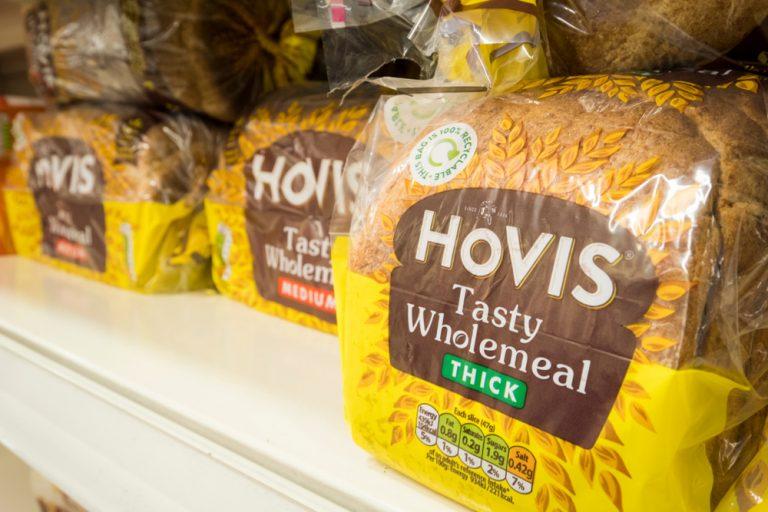
Italy’s Newlat Food (BIT: NWL) has become the latest group to launch a bid to buy Hovis.
Owned by Premier Foods (LON: PFD) and US investment firm, Gores Group, the 134-year old bread brand was described by Newlat Food as a brand with “a great tradition and recognisability in the United Kingdom”.
Newlat is listed in the Milan stock exchange and also has a substantial market share in Germany.
Hovis employs 2,800 people across the UK. Sales at the brand surged over lockdown as consumers stockpiled.
Newlat Food is not the only company that has launched bids for Hovid. Other bidders include Endless, Epiris, and Aurelius Equity Opportunities.
In a statement on their website, Newlat said: “Newlat Food is awaiting feedback from Hovis shareholders and, therefore, any other details regarding the transaction will be communicated with the evolution of the negotiations.”
Shares in Premier Foods are trading -1.62% at 97,20 (1356GMT).
COVID-19 has been the pet insurance sector’s pawfect opportunity

According to a report published earlier this year, the global pet insurance market is predicted to grow to $11.25 billion by 2026 from $6.05 billion in 2018. This, along with the insurance sector being rocked by COVID-19, has encouraged providers to re-evaluate the type of products they offer. For example, recognising the opportunity for business development, US insurance provider Lemonade has recently introduced its own pet insurance policies, entering a new sector for the first time since the launch of its homeowner’s policies in 2016.
COVID put a premium on puppies
“Although COVID-19 has significantly disrupted global economies and many household incomes, there has been a surge in pet ownership since lockdown restrictions were implemented across the globe this year”, said Mark Colonnese, Director of insurance tech company, Aquarium Software. In the UK, recent research from the Kennel Club revealed a 180% rise on last year’s enquiries from people wanting to buy a dog. Meanwhile, Dogs Trust noted that Google searches for ‘buy a puppy’ have increased by 166 percent since the nation went into lockdown on 23rd March. This trend has contributed to annual dog insurance prices hitting a record high of £753 in May, up 50% year-on-year. Another factor contributing to growth in the pet insurance market is recent innovations in pet medicine and the associated rising veterinarian costs. As medicine continues to advance, healthcare which was previously only available for humans is now attainable and sought after by pet owners. It is becoming possible for vets to help pet owners manage complex conditions that would previously have been seen as impossible to treat. Advanced medical techniques such as magnetic resonance imaging (MRI) scans and complex pharmaceutical treatments such as insulin for pets with diabetes is now possible but increasingly costly. As the potential costs of treatments rise, so too does the demand for insurance policies that cover such eventualities.Pushing the pet insurance digitalisation drive
Technological developments are another force driving change in the pet insurance industry. By utilising digital platforms, pet insurance providers can gather large quantities of data that can identify animals that are susceptible to a certain type of illness because of their breed, geographical location or other lifestyle factors. Improvements in artificial intelligence (AI) and machine learning mean insurers are less reliant on human expertise and customers can receive premiums that more accurately reflect their specific circumstances. By relying on increasingly paperless cloud-based systems, mobile apps and online claims, insurance providers are reducing costs and saving time with less busy phone lines and physical paperwork. Mr Colonnese adds that: “Although the global pandemic has caused unprecedented challenges throughout the insurance industry, disruptive innovation is driving growth in the pet sector. We expect the pet insurance market to continue developing as more people purchase pets and seek insight to protect their pet’s long-term health.”Weir shares rally 18% on £314m sale of its oil and gas division

FTSE 250 listed Weir Group (LON:WEIR) posted the largest gains of any British large-cap on Monday morning, on the news that it had successfully completed the sale of its oil and gas arm, to Caterpillar Inc (NYSE:CAT).
The sale took place for an agreed £314 million, and comes as part of Weir Group’s broader strategic shift into premium mining technology pureplay.
Net proceeds from the sale are expected to go towards reducing the Group’s leverage, with the company reporting net debt/EBITDA of 1.9x at 30 June 2020. Weir added that the transaction also facilitates a $70 million US tax benefit to be realised over the medium term.
The company added that the transaction is subject to shareholder approval, but that completion is expected by the end of 2020, assuming normal regulatory processes are cleared.
Going forwards, the company says it wants to take advantage of a low carbon society and the new mining technologies this will require. It will look to build on mission-critical position sin the mining supply chain, from extraction, to concentration and tailings management. Speaking on the deal and the ensuing strategic shift, Weir Group CEO, Jon Stanton, commented:“We are pleased to have reached this agreement that delivers a great home for the Oil & Gas division and maximises value for our stakeholders. Alongside the previous sale of the Flow Control division and the acquisition of ESCO, it is a major milestone in transforming the Group into a focused, premium mining technology business.”
“It means Weir is ideally positioned to benefit from long-term structural demographic trends and climate change actions which will increase demand for essential metals that must also be produced more sustainably and efficiently. This will require the innovative engineering and close customer partnerships that define Weir, and it is why we are so excited about the future.”
Following the news, Weir shares rallied by 18.32% or 234.50p, to 1,514.50p a share 05/10/20 12:27 BST. The company currently has a p/e ratio of 14.56 and a dividend yield of 1.09%. Marketbeat’s community currently has a 58.75% ‘Underperform’ stance on the stock. And, prior to today’s annoncement, analysts had a 12-month target price of 1,263p for the stock.Wishbone Gold acquires option to own tenements adjacent to Havieron and Telfer

Precious metals mining company, Wishbone Gold (AIM:WSBN), added to the list of recent developments coming out of the Patersons Range region of Western Australia, by informing investors that it has signed an exclusive 45 day option to acquire 100% ownership of three exploration tenements.
The tenements make up 67 square kilometres combined, with the largest of the exploration licences, EL 45/5297 (57.4km sq), sitting just 13km southwest of Newcrest Mining’s (ASX:NCM) Telfer Gold Mine.
The second and third, smaller licences, EL’s 45/5408 (6.38km sq) and 45/5409 (3.19km sq), are located just 15km southeast of Telfer, and some 25km southwest of Newcrest and Greatland Gold’s (AIM:GGP) celebrated Havieron gold discovery.
Wishbone says it has agreed to pay vendors an option payment of £50,000, with the company already having commenced it due diligence.
Should it choose to acquire the projects, it will offer the three vendors an additional £183,333 in cash, issue 11,111,111 new ordinary shares at 3.30p, and 5,555,555 warrants to subscribe for one new ordinary share in the capital of the company.Wishbone excited to take a slice of the Paterson pie
Speaking on the acquisition option, company Chairman, Richard Poulden, commented:
“The Paterson Ranges host some of the most exciting gold and copper mines and discoveries in the Western Australian Pilbara region made in recent years. The best acreage is tightly held and thus to secure a deal on these assets is a very significant development for Wishbone.”
“As previously advised, Wishbone already has advanced exploration assets in Australia and therefore has the necessary geological consultants in place to progress all exploration programmes. I look forward to updating the market over the coming weeks on the progress of this very significant transaction for the Company.”
Investor notes
Having started with a 19% rally, the Wishbone Gold share price has slightly relaxed, but still rallying by 15.94% or 0.55p, to 4.00p a share 05/10/20 11:45 GMT. The Marketbeat community had a 57.92% ‘Underperform’ rating on the stock, prior to today’s update. Its current price is well above its year-to-date nadir of 1.13p a share, but slightly short of its recent high of 4.35p.
FTSE 100 recovers as Trump’s health improves
The FTSE 100 opened higher on Monday morning on news that Donald Trump’s health was improving.
The FTSE 100 opened 1.2% on opening whilst the FTSE 250 rose 0.62%, despite Cineworld shares plummeting 57%.
News that the US President’s health was improving led to the blue-chip index to climb on Monday, easing the global uncertainty as the news of his illness broke.
Connor Campbell from Spreadex commented: “Regardless of its accuracy, word that Donald Trump is ‘improving’, and could be back in the White House this Monday, allowed the markets to rebound as the session got underway.
“It’s hard to ascertain what state the President is actually in, given his history of misinformation and obfuscation on every topic, but especially his own health. Nevertheless, another video message on Sunday afternoon, and an irresponsible drive-by appearance to wave at MAGA fans outside the Walter Reed medical center, seems to have backed-up the shaky idea that Trump is doing better.
“It was how investors took it, at least, with Europe uniform in its green open. The FTSE climbed back across 5900, and neared 5950, as it jumped 0.8%, with the DAX edging towards 12750 with a 0.6% increase, and the CAC a touch below 4850 following a 0.7% rise,” he added.
In Asia, Japan’s Nikkei 225 grew 1.23%. Hong Kong’s Hang Seng index increased by 1.45%.Wizz Air: passenger numbers fall 60%
Wizz Air flew just 1.56m passengers last month, down 20% from August.
As quarantine rules are impacting airlines, Wizz Air reported a 60% drop in passengers compared the September previously.
The airline flew almost four million passengers in September 2019, compared to 1.56 million in September 2020.
Despite the new quarantine rules still in effect, the airline said it is continuing to expand across Europe.
Other airlines are also feeling the effects of the pandemic and limited travel.
Ryanair flew 5.1 million passengers in September, compared to the 14.1 million the same period a year ago.
A spokesperson for the airline said: “However, as customer confidence is damaged by government mismanagement of Covid travel policies, many Ryanair customers are unable to travel for business or urgent family reasons without being subjected to defective 14-day quarantines.”
Airlines have called on the government to make a change to the current quarantine rules and introduce airport testing.
Car sales: registrations fall to record low in September

New figures from the Society of Motor Manufacturers and Traders (SMMT) have revealed new car registrations to fall to the lowest level since records began.
Last month saw 328,041 cars registered, which is a 4.4% year-on-year decline and the lowest figure since 1999.
September usually boasts strong figures for car registrations as it is when license plates change.
“During a torrid year, the automotive industry has demonstrated incredible resilience, but this is not a recovery,” said Mike Hawes, the chief executive of SMMT.
“Despite the boost of a new registration plate, new model introductions and attractive offers, this is still the poorest September since the two-plate system was introduced in 1999.
“Unless the pandemic is controlled and economy-wide consumer and business confidence rebuilt, the short-term future looks very challenging indeed,” Hawes added.
The number of electric or plug-in hybrid cars, however, jumped 184.3% compared to the same period last year, which the SMMT said was due to a higher choice of models.
Thanks to the challenging trading environment and impacts of the pandemic, the sector is expected to lose £21.2bn in sales overall in 2020.
Whilst sales looked positive in July as car showrooms re-opened, sales have since declined. August saw just 88,000 new cars registered, which was 5.8% in the same month in 2019.
Karen Johnson, who is the head of retail and wholesale at Barclays Corporate Banking, said that whilst the sector is clearly in a “rut”, there could be a brighter future on the horizon.
“Lots of consumers now have both the funds and the motivation to commit to a big ticket purchase like a new car.
“Months of lockdown allowed many to save significant chunks of money, whilst evolving working patterns mean buyers are investing in motors that will work for them no matter what changes lay ahead,” she said.
Cineworld shares dive 57% on US & UK closures

Cineworld shares (LON: CINE) plummetted over 57% on Monday’s opening.
The group announced that it would be temporarily closing all of its US and UK cinemas after delays to the new James Bond film.
The cinema closures will begin this week and will risk 45,000 jobs across the US and UK.
“As major US. markets, mainly New York, remained closed and without guidance on reopening timing, studios have been reluctant to release their pipeline of new films,” said Cineworld in a statement.
“In turn, without these new releases, Cineworld cannot provide customers in both the US and the UK – the company’s primary markets – with the breadth of strong commercial films necessary for them to consider coming back to theatres against the backdrop of COVID-19.”
The delay of the new James Bond blockbuster has been blamed for causing havoc on the industry.
Philippa Childs, head of the arts union Bectu, said: “The announcement that the release of No Time to Die, the 25th film featuring the secret agent, would be delayed again has left cinemas facing financial obliteration because of the absence of other forthcoming blockbuster films…..
“According to industry sources, the cinema industry is caught in a Catch-22 situation. Movie studios are reluctant to release blockbuster films until they are sure that audiences will return – and cinema owners are unable to prove they can lure back audiences given the absence of blockbusters.
“The stark reality is that without new releases it is unlikely that footfall will increase to a level that makes opening financially viable,” said Philippa Childs, head of the arts union Bectu.”
The closure of Cineworld cinemas in the UK risks 5,500 jobs.
The group has struggled this year as cinema closures led to the company posting losses of £1.3bn for the first half of 2020, compared to profits of £110m a year earlier.
Cineworld shares (LON: CINE) plummeted 57% this morning to 17p. In January 2020, before the pandemic, shares at the company were worth 220p.
Mulberry shares slip as group swings to £14.2m loss
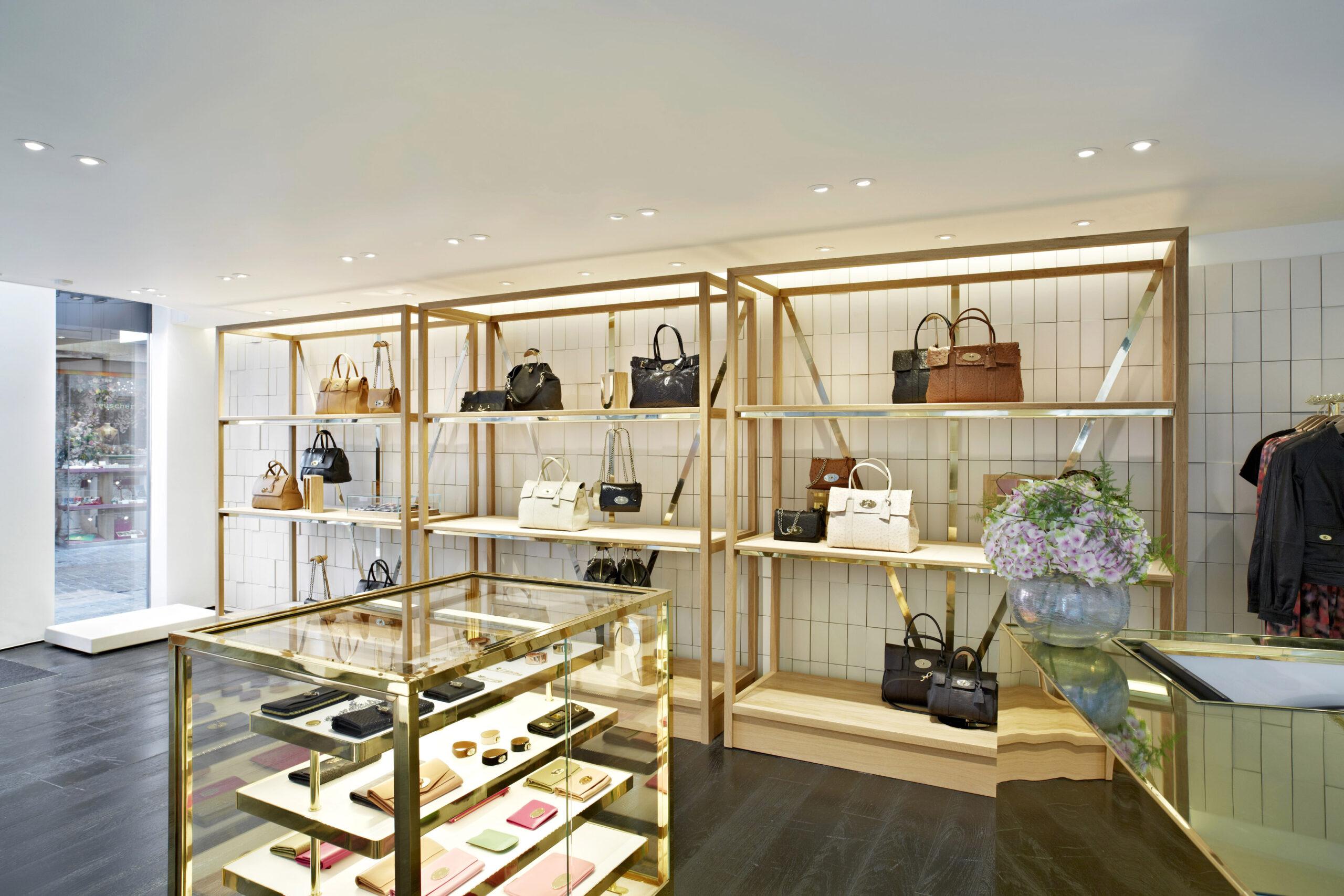
Mulberry (LON: MUL) has reported a £14.2m loss in the year ending 28 March.
Due to the impact of the pandemic and a “challenging UK market”, the group reported a 10% fall in revenue to £149.3m – down from £166.3m the year previously.
Mulberry said that was on track to reach profit before the UK’s lockdown forced the group to close stores.
International retail sales increased by 4% from £31.3m to £32.4m. International sales accounted for 26% of total retail revenue.
The fashion retailer said that it will not pay a full-year dividend “in order to maintain a robust liquidity position given the uncertainty and duration of COVID-19.”
The group remained positive and said that trading since the start of the financial year is ahead of expectations.
Thierry Andretta, the group’s chief executive, said: “The Group has made strategic and operational progress during the most challenging market conditions in the history of the brand. Prior to the impact of the Coronavirus pandemic we were performing well and on-track to record a pre-tax profit in the second half of the year.
“This was due to progressing our fourpillar growth strategy: our omni-channel distribution, our international development in Asia, a drive for constant innovation, and sustainability. The Group has been able to withstand some of the pressures that we, and indeed the entire retail industry, have been faced with.
“Post year end, the Group has continued to benefit from its long-term strategic focus with initial sales ahead of our early expectations. However, we cannot escape the reality that British luxury and UK cities face a very uncertain future, hampered by necessary but dramatic social distancing measures and alarmingly low levels of footfall, as well as the pressures of high rents and business rates and the upcoming changes to tax free shopping.”
Mulberry shares (LON: MUL) opened 3% lower and are trading at 161,00 (0818GMT).